Virginia
Refrigeration trailer rentals for Virginia data center sites
Catering cold storage for the biggest daily crew counts in American construction, delivered inside Loudoun's access rules.
Catering cold storage for the biggest daily crew counts in American construction, delivered inside Loudoun's access rules.
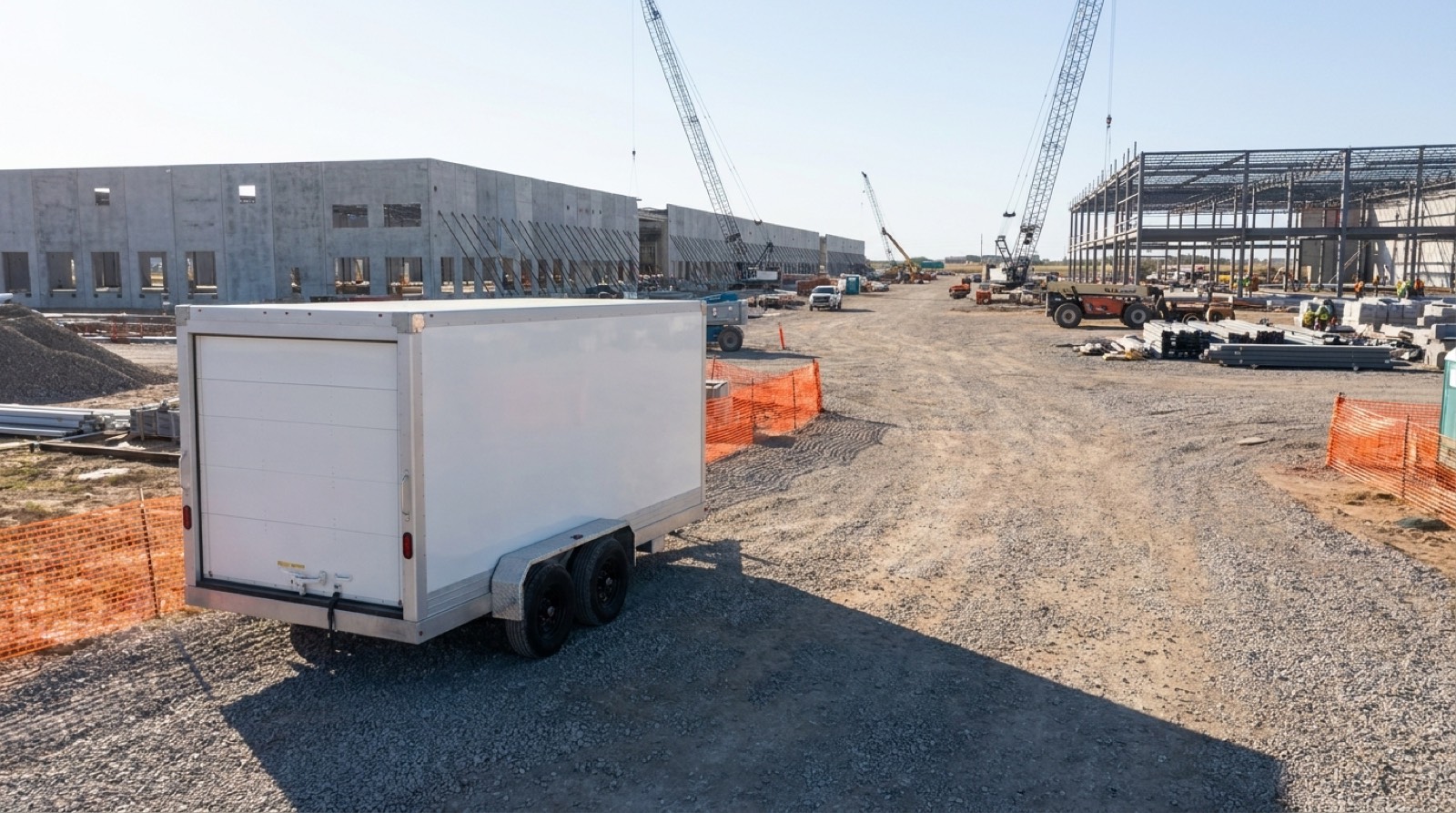
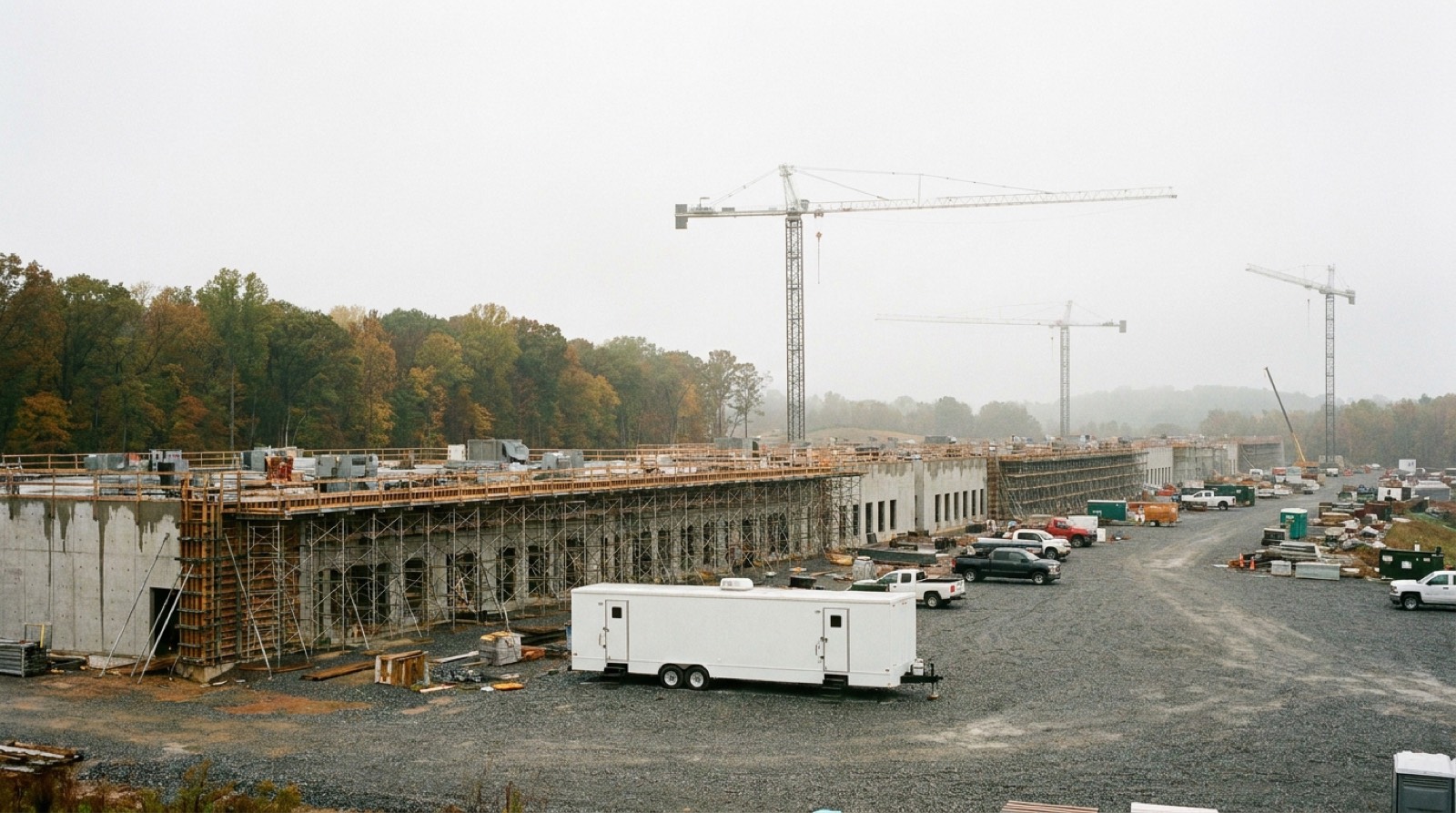
Loudoun and Prince William campuses feed huge crews every day. A food program that size lives or dies on cold storage at the serving point. Our trailers hold the food to code right on the pad, with freezer space where the menu needs it.
Late-phase work brings sealants, glues and lab supplies that have to stay in a set range. A summer conex box breaks that range by nine in the morning. Cold storage on site protects the material spend and the warranty paperwork that goes with it.
Like all our work in this corridor, drops and service visits fit inside the site's access windows. The paperwork gets filed ahead of time.
Most Virginia deployments bundle several units under one route. One contracted vendor, one dispatch, one escalation path, and a site plan that arrives already coordinated.
Where crews rotate in from out of the area, the end of shift is its own rush hour. Shower trailer rentals in Virginia carry that peak so the workforce goes home clean.
The paperwork side of the job needs a roof too. Office trailer rentals in Virginia give supervision and inspections a place to meet without leaving the gate.
Extended-stay crews generate wash loads every week of the schedule. Laundry trailer rentals in Virginia keep that cycle on site instead of in a hotel sink.
Restroom capacity anchors the plan. Restroom trailer rentals in Virginia sit closest to the workface and set the service route that every other unit rides on.
Water is the first thing safety plans ask about. Hydration station rentals in Virginia run on the same supply logistics as the rest of the package, so adding them costs one stop, not a second vendor.
The full reach of our refrigeration trailer rentals program runs beyond Virginia, covering every corridor we serve.
Questions we get
Walk-in refrigerated capacity at the serving point, sized to the daily headcount, with freezer space where the menu calls for it.
No. Food and materials get separate units, which keeps the food program to code and the materials uncontaminated.
Yes. Placements and maintenance schedule inside your access windows, paperwork filed in advance.
Where we deploy
Heaviest concentration in the corridors carrying the most active data center construction, with nationwide mobilization beyond them.
Loudoun County and Prince William run the densest data center concentration on earth. Multi-year campuses, badge-controlled access, crews in the hundreds, and facility requirements written into the subcontract.
View Northern Virginia →
Dallas, Fort Worth, San Antonio and Abilene are carrying some of the largest campuses in the country. Summer heat makes hydration and shower capacity a safety line item, not an amenity.
View Texas →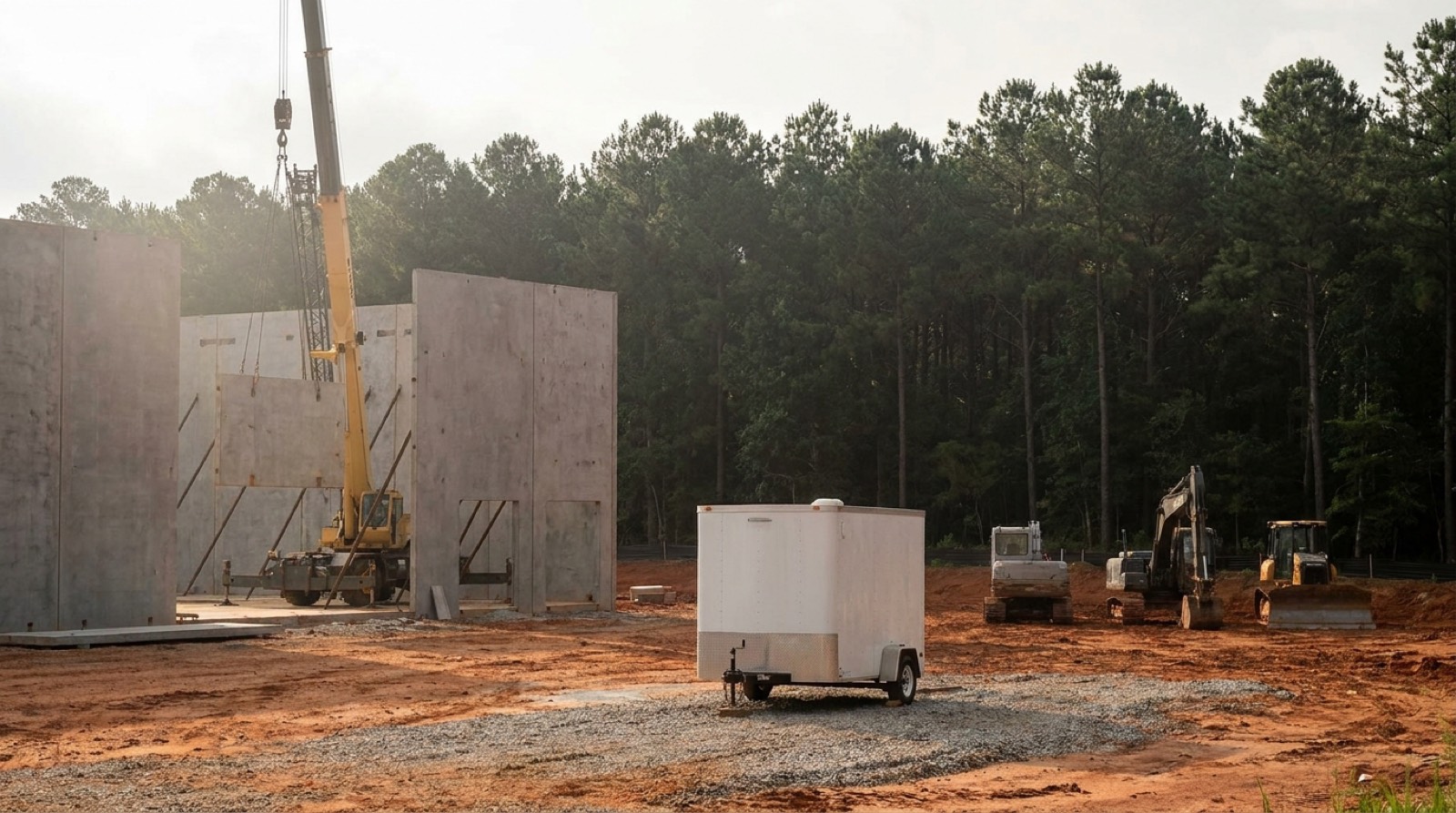
Atlanta metro and Douglas County, extending along I-20. Humid summers, long hauls between laydown and pad, and multi-phase schedules that keep facilities on site for years.
View Georgia →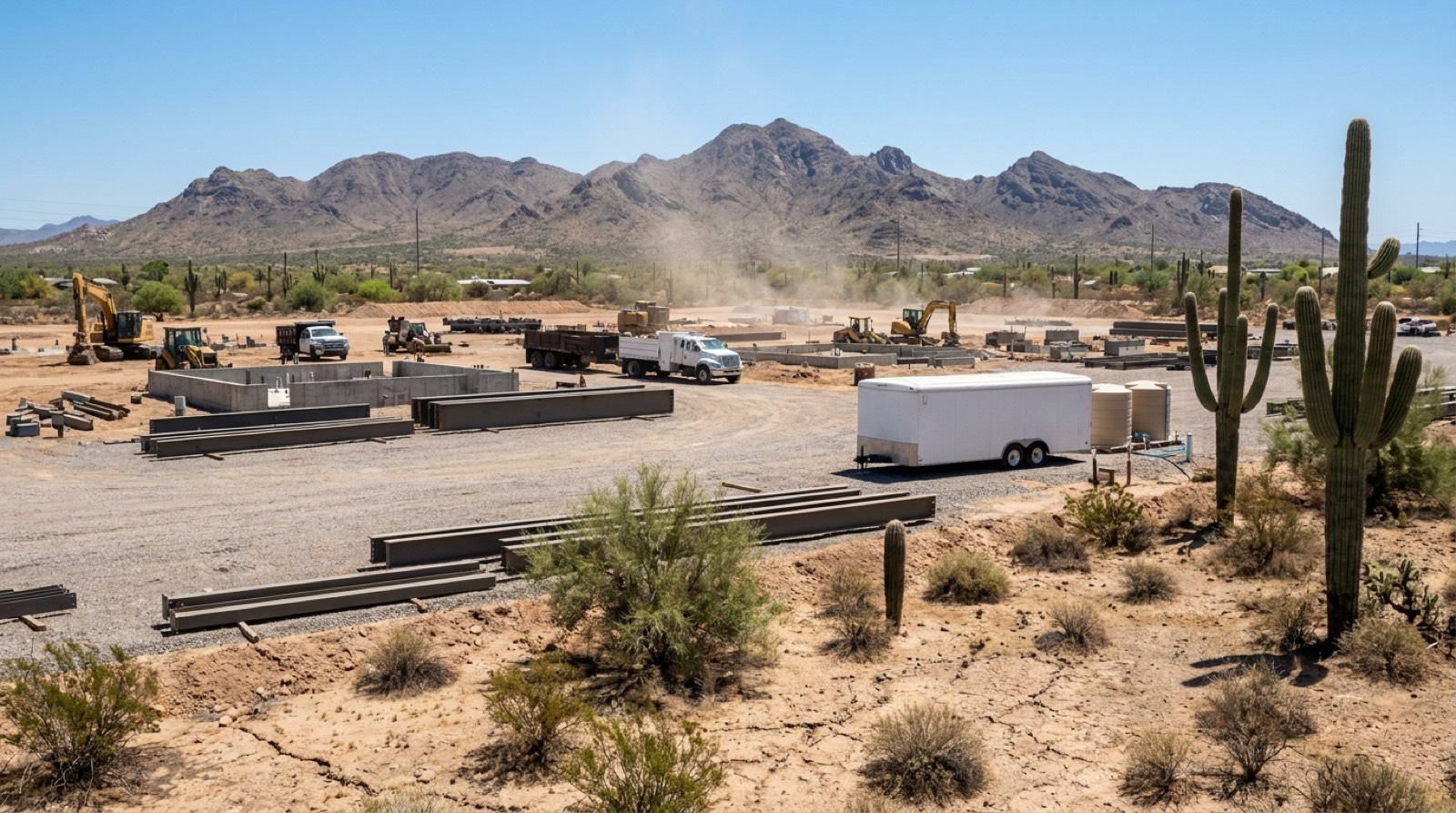
Phoenix and Mesa build through heat that regularly exceeds 110 degrees. OSHA heat-illness prevention drives water and shade requirements that our units satisfy directly.
View Arizona →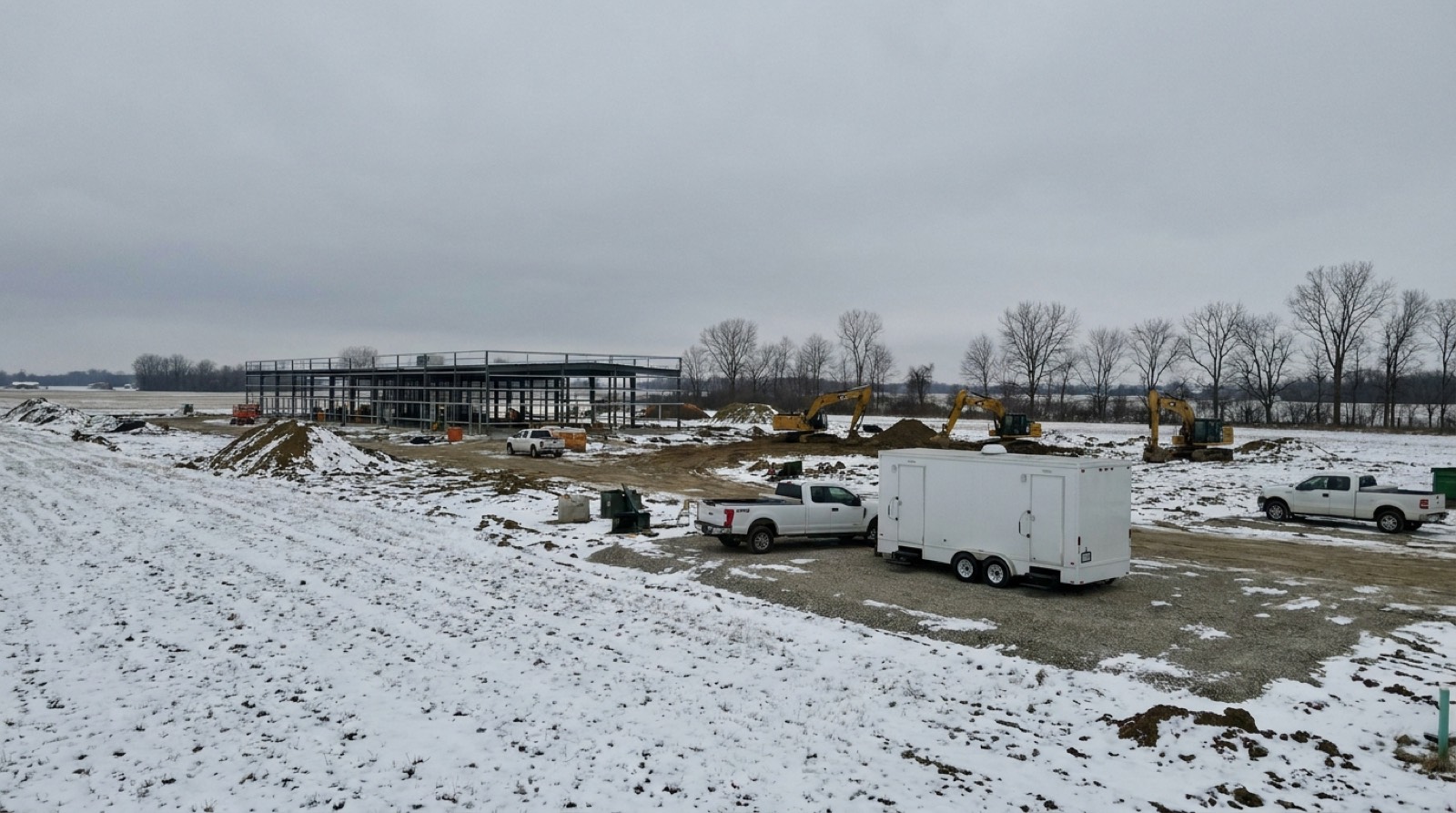
Columbus and New Albany. Freeze protection and winter service access matter here in a way Sun Belt corridors never see.
View Ohio →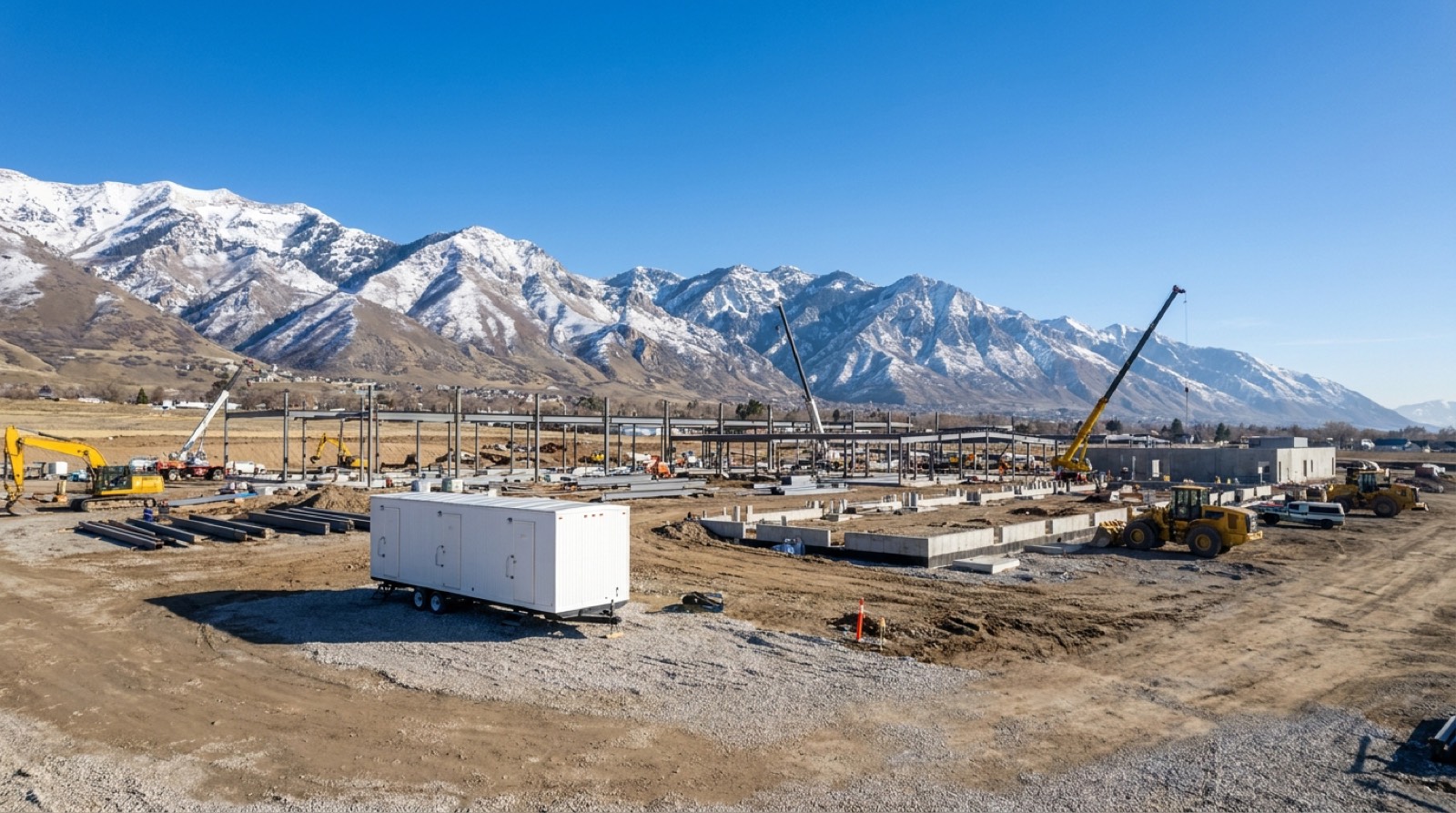
The Wasatch Front corridor runs through hard winters at elevation. Units are winterized and service intervals hold through snow.
View Utah →Go deeper
Longer reads for teams writing the site plan. Open what applies to your build.
Northern Virginia builds bigger data center campuses than anywhere else in the country, and Loudoun County sits at the center of it. A single campus can carry more than a thousand badged workers across its phases, with multiple general contractors running parallel buildings. Feeding that population is closer to running a small institutional kitchen than a food truck stop. The cold storage math changes with it. A program that worked fine on a 200 person site in another market will run out of capacity here in the first month.
The pattern we see on Loudoun campuses is stacked demand. Structural crews overlap with mechanical and electrical trades. Then commissioning teams arrive while fit out is still running. Headcount does not step up politely. It jumps, and lunch counts jump with it.
Ask the GC for the manpower loading chart before you commit to a trailer size. If the site peaks at 1,200 workers in month nine, the food program should be sized for that peak even if today's badge count is 400. On multi building campuses it often makes sense to run more than one refrigerated trailer, placed at separate serving points, instead of one large box everyone walks to. Walking time is lost production, and a superintendent watching 800 people queue at a single serving window will change the plan for you.
Delivery logistics favor the multi trailer approach too. Loudoun has strong food distribution because of the density of demand, so daily or every other day deliveries are realistic. That lets each trailer run leaner stock than a remote site would ever get away with.
These campuses build for years. A cold storage rental in Loudoun is rarely a six week engagement. Trailers stay through phases and often shift position as the work moves across the site. Sometimes they hand off from one contractor's program to the next. Set the rental up with that horizon in mind. Ask about long term rates and scheduled maintenance visits. Settle in advance what happens when the trailer needs to relocate fifty yards because the laydown yard just became a substation. We build all of that into campus scale placements, because the sites that treat cold storage as permanent infrastructure run calmer food programs than the ones treating it as a short term patch.
When a Virginia data center moves from construction into commissioning, a new class of material shows up on site. Batteries for UPS systems, certain sealants and adhesives, water treatment chemicals, and some test instruments arrive with manufacturer storage ranges printed on the packaging. Some specify a ceiling, often something like 77 degrees. Others specify a band with both a floor and a ceiling. A conex box in a Virginia summer can pass 120 degrees inside. The same box in January can drop below freezing. Neither one meets a printed storage range, and on a commissioning schedule, out of spec material is a delay you cannot buy back quickly.
The right approach is boring and it works. Collect the storage requirements from the submittals before material lands. Group products by the range they need. Most of what we see falls into a cool band that a refrigerated trailer holds easily, and the trailer gives you something a conditioned room inside the unfinished building cannot. It holds setpoint independent of the building's own systems, which are the very systems being commissioned. Relying on the permanent cooling plant to protect the materials used to commission the permanent cooling plant is a circular bet. Owners' commissioning agents tend to flag it for exactly that reason.
Keep a simple log on the door showing setpoint and daily readings. When a vendor questions whether their product was stored to spec, that log answers the question in thirty seconds. Without it, the argument can cost you a replacement order with a long lead time attached.
Loudoun and the growing Virginia markets around it usually run large catering programs on the same sites. It is tempting to share one cold box between lunch stock and commissioning materials. Do not. Food and chemicals never share storage, and the two programs usually want different setpoints anyway. The clean layout is one trailer at the serving area for food and a separate trailer near the commissioning laydown for materials, each labeled and each with its own log. Rental cost for the second box is minor against the value of the material inside it. Ask any commissioning manager what a spoiled pallet of batteries does to an energization date, and the second trailer becomes an easy call to make.
Data center campuses in Northern Virginia run some of the strictest site security in construction. Every driver badges in or gets escorted. Delivery gates open on set windows. Some owners require background checks filed days ahead for anyone entering, including the driver dropping bread. A food distributor used to backing up to a restaurant at 6 a.m. finds a very different world at an Ashburn gate. Miss your window and the truck waits hours or comes back tomorrow. For dry goods that is an annoyance. For a refrigerated load in July, it is a product loss.
This is where on site cold storage changes from convenience to necessity. A refrigerated trailer inside the fence lets the catering crew receive large deliveries during whatever window security grants, then work out of their own stock on their own schedule. Instead of five tight deliveries a week threading the badge process, run two larger ones. Fewer gate transactions means fewer chances for a missed window, and the crew stops planning meals around security's calendar. Night and weekend meal services get easier too, since the stock is already inside the fence when the shift starts.
Sizing follows from that. If your realistic delivery cadence is twice a week, the trailer holds three to four days of product plus margin. That usually means sizing up one step from what pure headcount math suggests. The extra space is cheap insurance against the Friday the escort never showed up.
The trailer delivery is a gate transaction too. Book it like one. Give the security team the driver's information as early as their process requires, and confirm the placement spot with the superintendent so the trailer is not parked twice. Ask where the power drop is before delivery day. On escorted sites, the electrician's connection visit may need its own scheduled window, so line those up together and the box is cold before the first food order arrives. We handle this coordination as part of placement on secured campuses, because one clean delivery beats three attempted ones. Once the trailer is inside the fence and running, the badge process stops being a food safety variable. It goes back to being a security process, which is all it was ever supposed to be.