Texas
Refrigeration trailer rentals for Texas data center sites
Food safety and ice at scale for Texas heat, from DFW catering programs to West Texas camps where the freezer is the town's only cold storage.
Food safety and ice at scale for Texas heat, from DFW catering programs to West Texas camps where the freezer is the town's only cold storage.
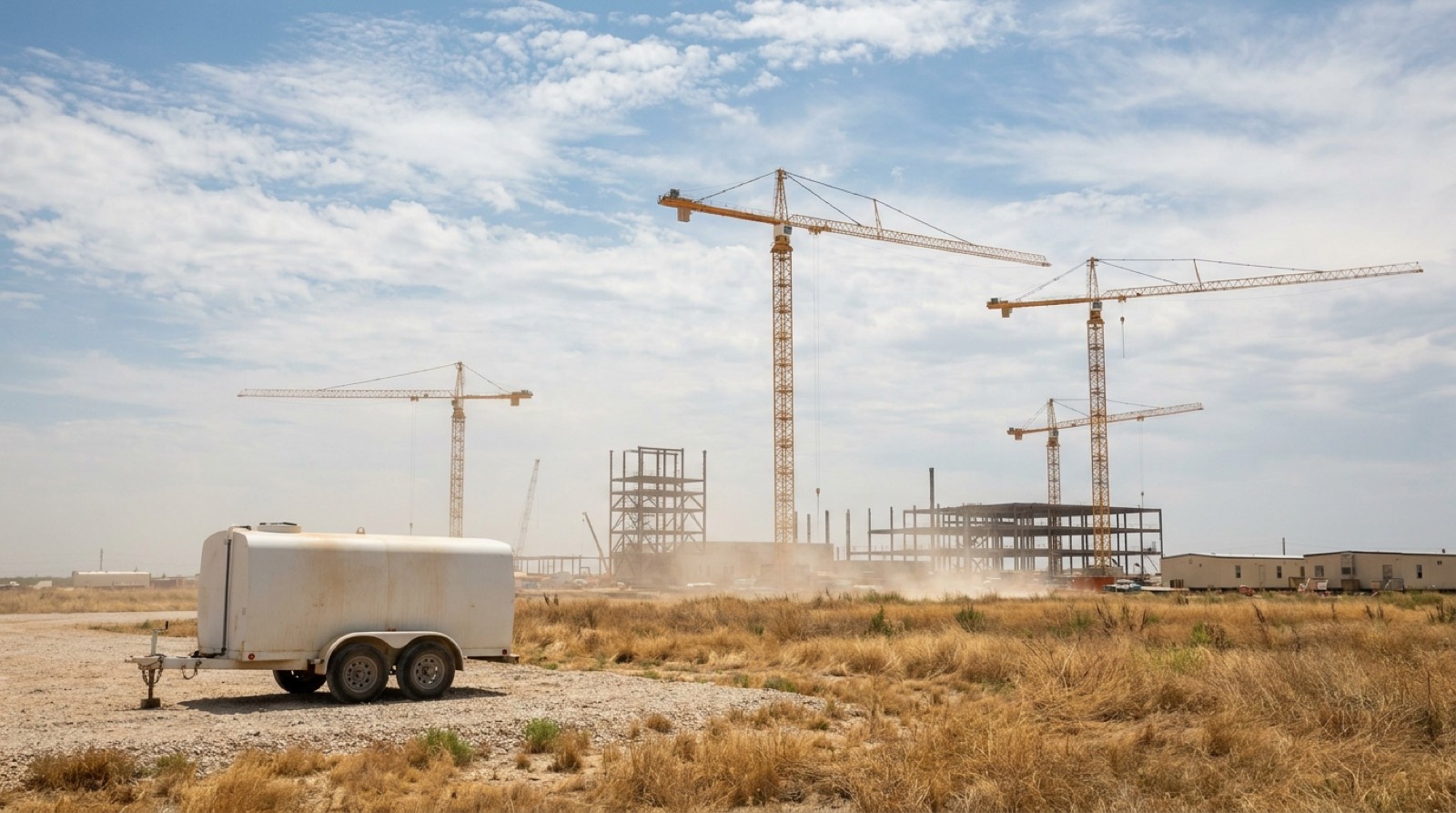
Feeding a Texas crew in August is a race against ambient heat. Refrigerated trailers at the serving point keep catering legal at 105 degrees, specified to hold setpoint in exactly that heat, because a unit that holds 38 degrees in Ohio can drift in a Texas parking lot.
Hot-corridor sites run ice all day: coolers, hydration support, sometimes ice vests. Freezer trailers hold the day's supply on site so the heat program never waits on a store run that melts on the drive back.
West Texas camps sit an hour from the nearest commercial cold storage. The site's refrigeration trailers carry the food program for the whole camp, stocked on the contracted supply route.
Where we deploy
Heaviest concentration in the corridors carrying the most active data center construction, with nationwide mobilization beyond them.
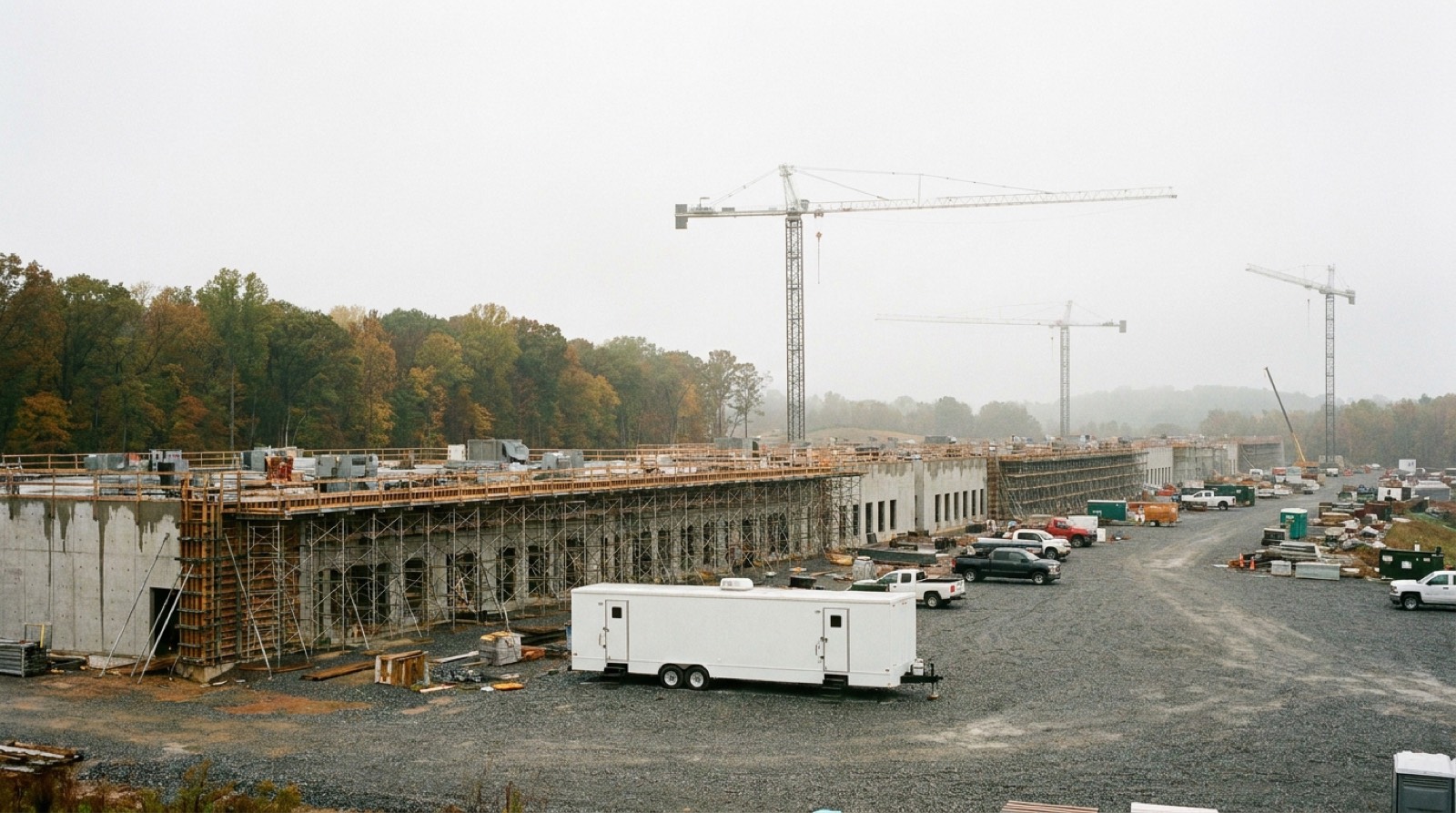
Loudoun County and Prince William run the densest data center concentration on earth. Multi-year campuses, badge-controlled access, crews in the hundreds, and facility requirements written into the subcontract.
View Northern Virginia →Dallas, Fort Worth, San Antonio and Abilene are carrying some of the largest campuses in the country. Summer heat makes hydration and shower capacity a safety line item, not an amenity.
View Texas →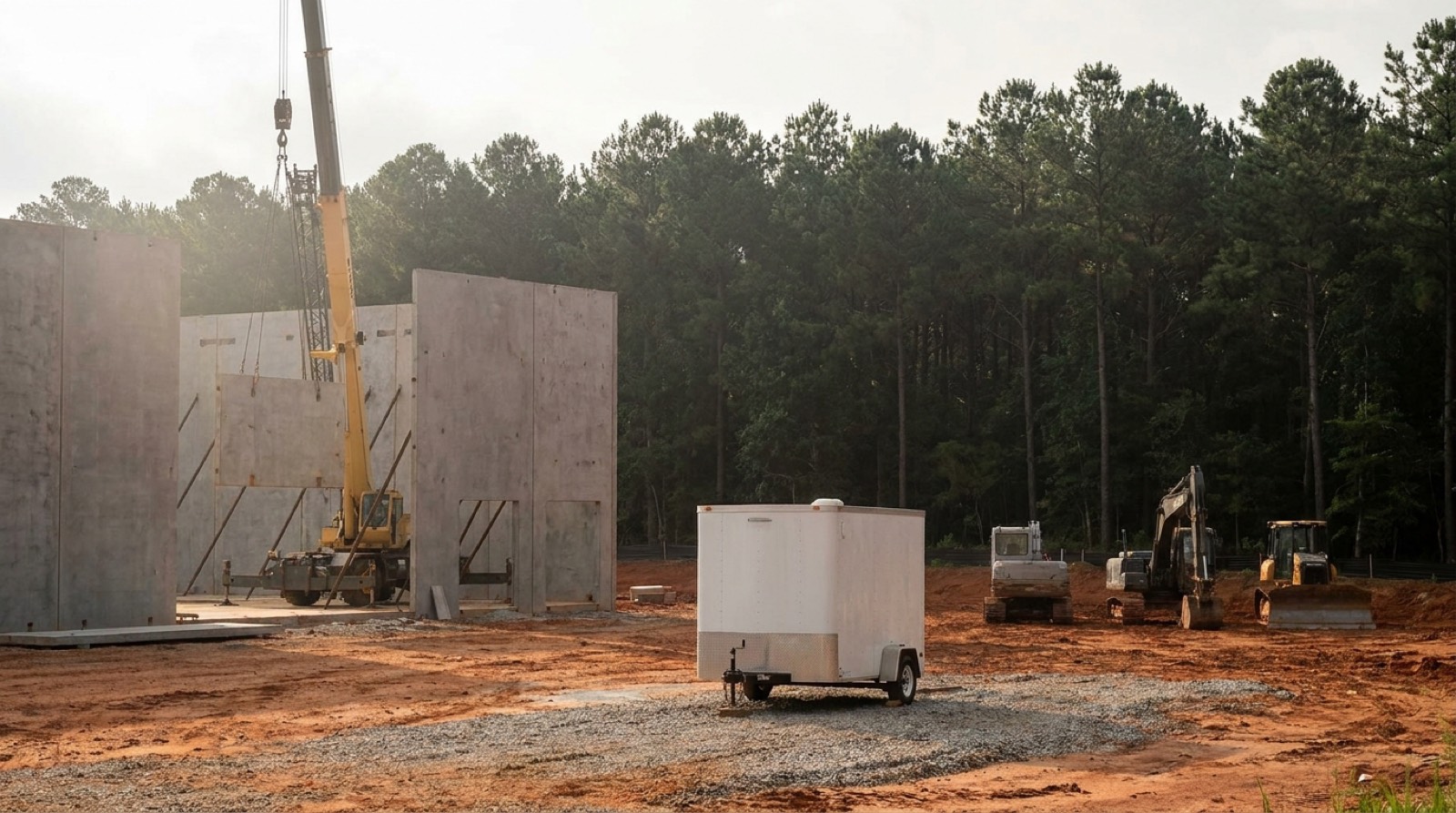
Atlanta metro and Douglas County, extending along I-20. Humid summers, long hauls between laydown and pad, and multi-phase schedules that keep facilities on site for years.
View Georgia →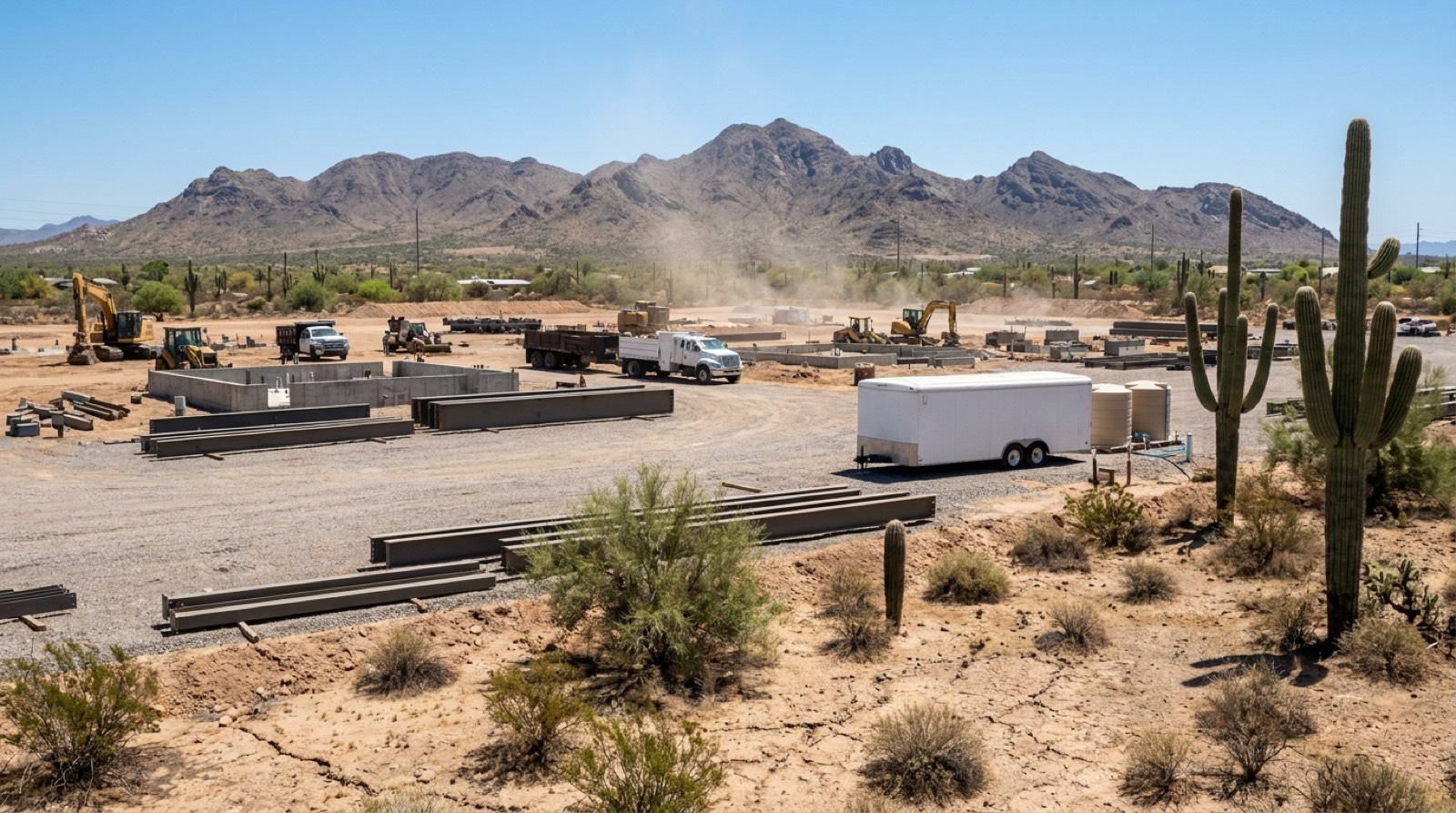
Phoenix and Mesa build through heat that regularly exceeds 110 degrees. OSHA heat-illness prevention drives water and shade requirements that our units satisfy directly.
View Arizona →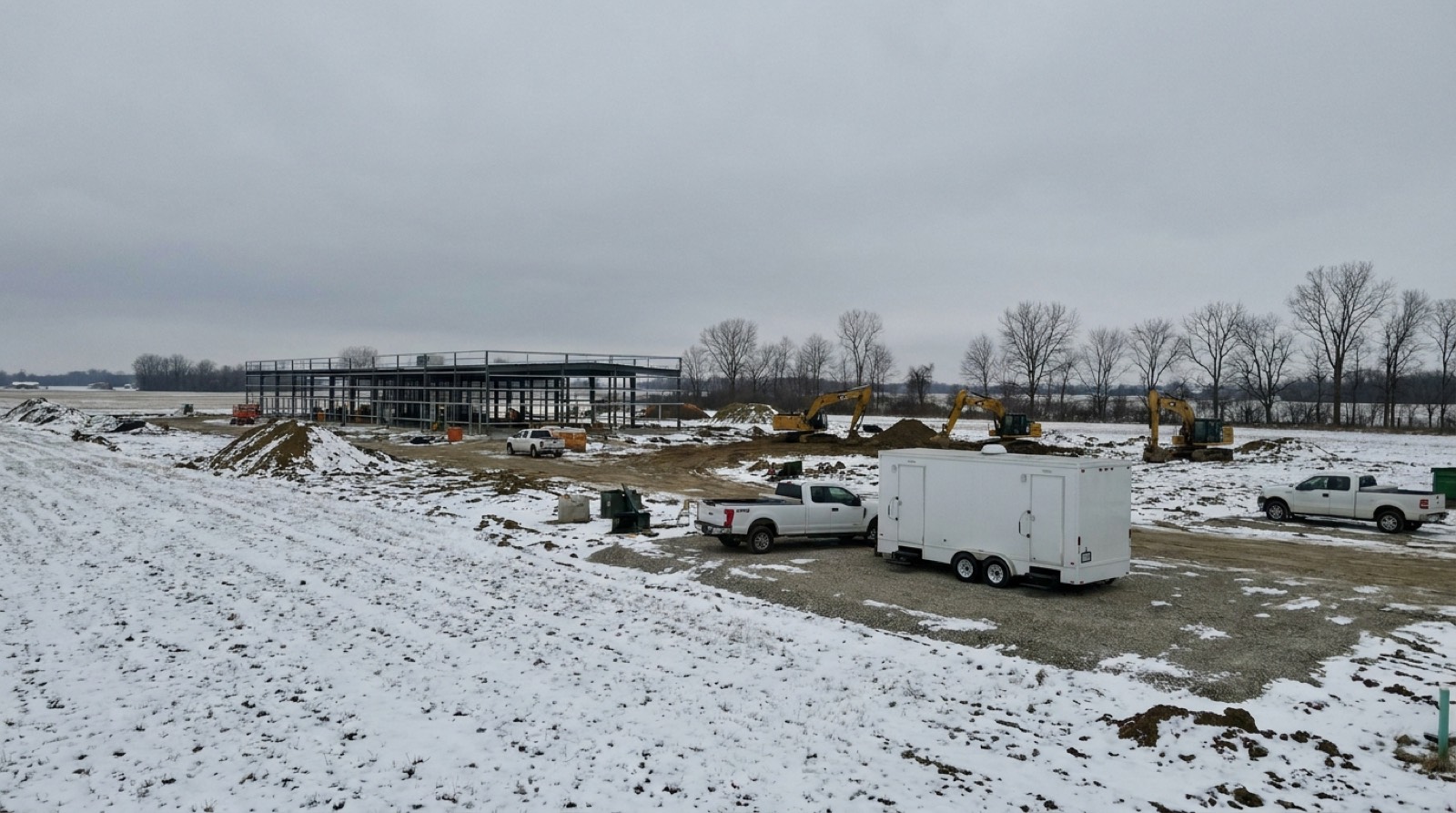
Columbus and New Albany. Freeze protection and winter service access matter here in a way Sun Belt corridors never see.
View Ohio →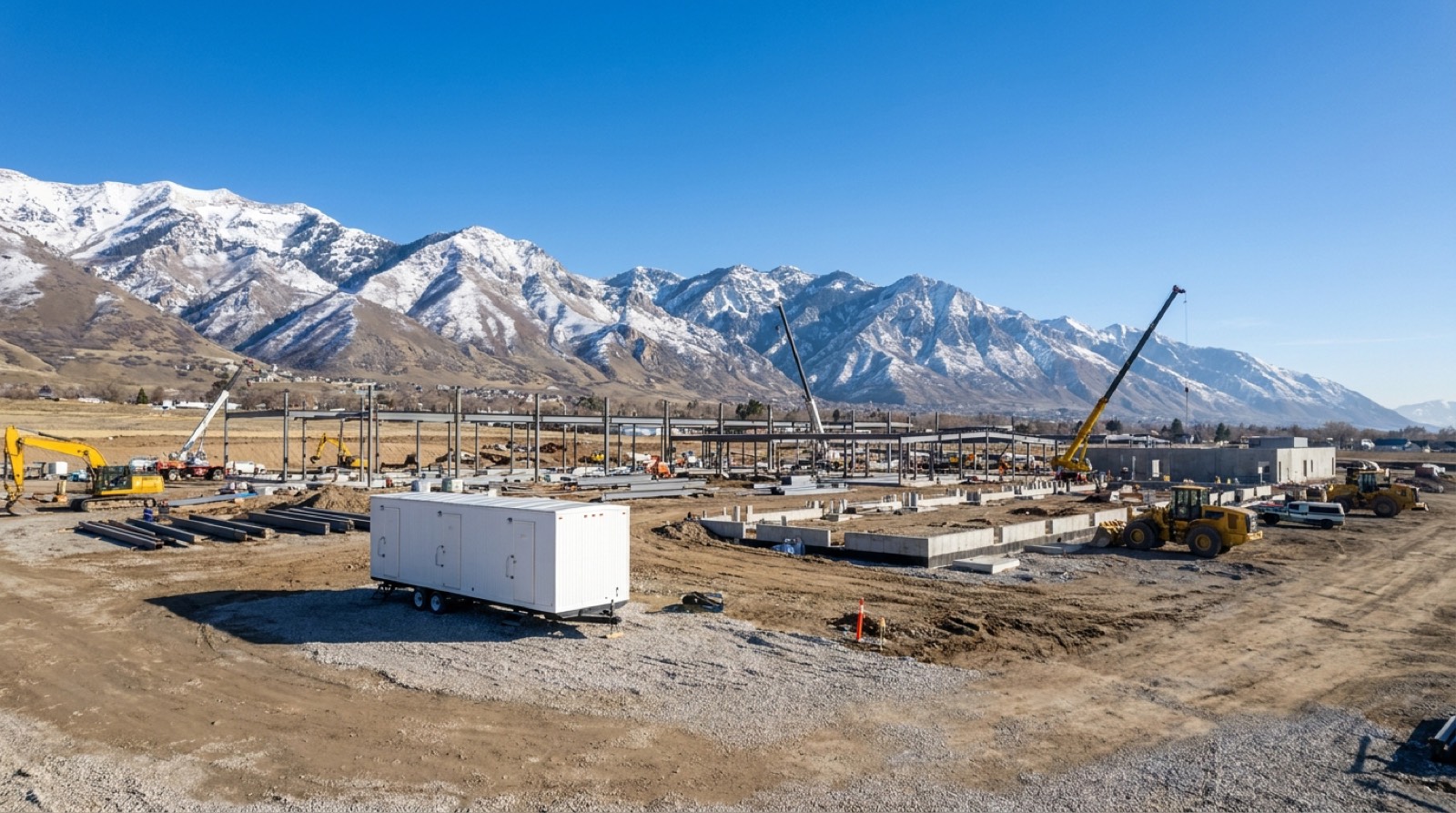
The Wasatch Front corridor runs through hard winters at elevation. Units are winterized and service intervals hold through snow.
View Utah →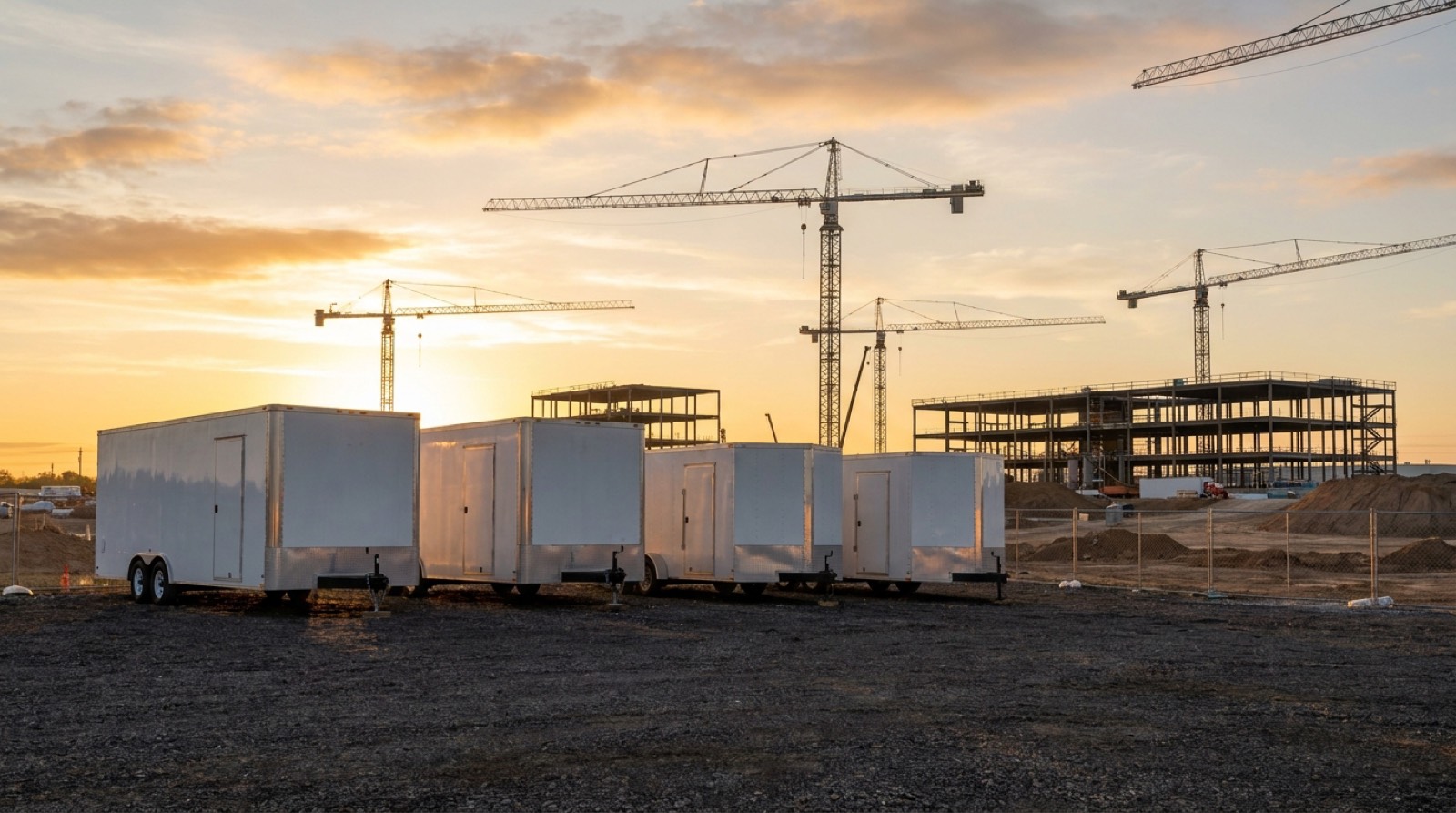
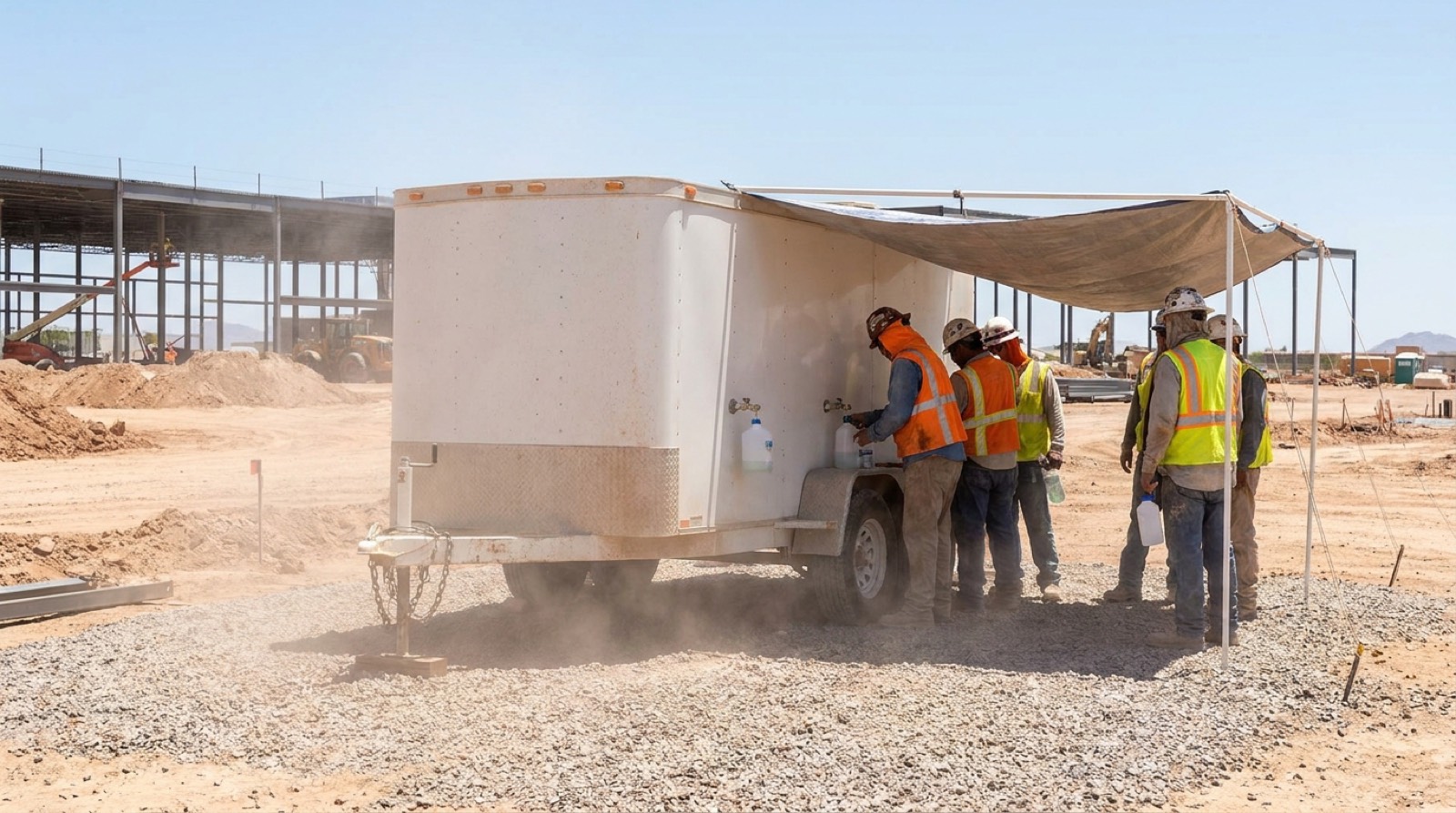
Most Texas deployments bundle several units under one route. One contracted vendor, one dispatch, one escalation path, and a site plan that arrives already coordinated.
Extended-stay crews generate wash loads every week of the schedule. Laundry trailer rentals in Texas keep that cycle on site instead of in a hotel sink.
Restroom capacity anchors the plan. Restroom trailer rentals in Texas sit closest to the workface and set the service route that every other unit rides on.
Water is the first thing safety plans ask about. Hydration station rentals in Texas run on the same supply logistics as the rest of the package, so adding them costs one stop, not a second vendor.
Where crews rotate in from out of the area, the end of shift is its own rush hour. Shower trailer rentals in Texas carry that peak so the workforce goes home clean.
The paperwork side of the job needs a roof too. Office trailer rentals in Texas give supervision and inspections a place to meet without leaving the gate.
The full reach of our refrigeration trailer rentals program runs beyond Texas, covering every corridor we serve.
Questions we get
Units are specified for high ambient duty and hold setpoint at Texas summer temperatures, which is the whole point of the spec.
Enough that store runs cannot keep up. Freezer capacity holds the daily program on site, restocked on the supply route.
Yes. Camp refrigeration runs as the community's cold storage, stocked on the same contracted route as the rest of the camp supply.
Go deeper
Longer reads for teams writing the site plan. Open what applies to your build.
A refrigeration unit does not make cold. It moves heat from inside the box to the air outside, and the hotter that outside air, the harder every part of the cycle works. At 75 degrees ambient, a trailer loafs. At 105, which is a normal August afternoon across much of Texas, the same unit works near the top of its design range. Add radiant load from the sun beating on the roof and the box is fighting on two fronts. Sites from San Antonio up through Dallas see weeks of this at a stretch, not days.
Door discipline first. Every door swing in 105 degree air dumps heat and humidity into the box, and recovery takes real time when the unit is already near capacity. Consolidate trips. Pull the lunch stock in one or two organized runs instead of twenty visits. Second, shade if the site can provide it. A trailer on the shaded side of a building sheds a meaningful part of its radiant load. Third, keep the condenser clear. Texas laydown yards fill up fast, and material stacked around the condenser end makes the unit breathe its own hot exhaust. Last, precool everything. Run the trailer down to setpoint the day before loading, and never use it to chill warm product. A refrigeration trailer is built to hold cold food cold. Asking it to pull a pallet of warm drinks down forty degrees during a heat wave is how boxes lose the afternoon.
A thermometer that reads 38 tells you where the box is now. What tells you whether you are winning is how fast it returns to 38 after a loading run. When recovery stretches from minutes to an hour, something has changed. The condenser coil may be dusty, which is common on dirt heavy Texas sites, or door traffic may have crept up without anyone noticing. Catch the trend early and the fix is a phone call. Catch it after a weekend and it is a disposal event in front of the whole crew. We spec units rated for high ambient duty on Texas placements, because the difference between a unit that holds at 105 and one that holds at 95 is invisible in spring and decisive in August. Ask the question before summer answers it for you.
On a Texas jobsite in July, ice is not a nicety for drinks. It is part of the heat illness program. Crews go through pounds of it per worker per day between the water coolers and their personal jugs. Run the numbers on a 500 person site and daily ice demand lands in the thousands of pounds. That volume does not survive in bagged coolers, and daily ice deliveries hauled across a big site burn labor while the product melts the whole way.
A working planning number for hot weather sites is several pounds of ice per worker per day, and more during triple digit stretches. Multiply by headcount and add the kitchen's own needs for food service. Then decide how many days of reserve you want on hand. Ice stored at 0 degrees in a freezer trailer keeps indefinitely and stays loose enough to scoop. Ice stored in coolers becomes a solid block by morning. The freezer trailer turns ice from a daily delivery problem into a bulk commodity you buy on your own schedule. Sites often take one large delivery early in the week and draw it down, the same way they handle any other consumable on the job.
Central ice storage with satellite distribution is the pattern that works. The freezer trailer sits near the main break area or catering point. Each morning, before the heat builds, laborers run ice out to the water stations across the site. Early staging matters because moving ice at 6 a.m. costs a fraction of the melt you eat at noon. Keep a dedicated scoop and clean containers for anything going into drinking water, and treat that ice with the same food safety handling as anything served at lunch. Ice packed around cans in a cooler and ice going into a cup are different products under health rules, even when they came out of the same bag.
One more Texas note. When the grid strains during a heat emergency, site power interruptions get more likely at exactly the moment the ice program matters most. A freezer trailer holding thousands of pounds of ice is its own thermal battery and will ride out a short outage with the doors kept shut. That standing reserve is the difference between a rough afternoon and a safety stand down.
Some of the fastest growing data center capacity in Texas is going up in places that were ranch land two years ago. The site sits an hour from the nearest real grocery distribution, and the catering tent feeding the crews has no walk in cooler behind it. In that setting, a refrigerated trailer is not a supplement to a kitchen. It is the kitchen's entire cold chain. Everything perishable the crews will eat lives in that box from the delivery truck to the serving line. Drinks, produce, proteins, and next week's reserve all share the same few hundred cubic feet.
That changes the standards. On an urban site, a trailer problem means a rough day and a supplier run. An hour from town, a trailer problem means the food program stops.
Remote sites should hold more days of product than the standard math suggests. If a distributor truck reaches you twice a week over county roads, plan for the week one of those trucks does not make it. A full week of stock for the whole headcount is not overkill when the alternative is sending vans on two hour round trips for milk. Some remote programs run two smaller trailers instead of one large one for the same reason. If a unit faults, the second box carries the critical product while service is on the way, and service is never five minutes away out there.
Remote sites usually run on generator power long before utility service arrives. A refrigeration trailer on a generator needs fuel discipline, because a generator that runs dry on Saturday takes the cold chain down with it. Put the trailer's generator on the same fueling rounds as the critical site equipment. Then ask your rental provider two questions before signing. How fast can a service tech reach this site, and what spares ride on the truck. Honest answers to those questions matter more at a remote camp than any line on a spec sheet. We plan remote placements around worst case response, with deeper stock and standby options scaled to the distance. The crews building in the middle of nowhere work as hard as anyone in the state. Feeding them well is a logistics problem, and it is solvable with a box that gets planned like infrastructure instead of dropped like an afterthought.