Texas
Laundry trailer rentals for Texas data center sites
Man-camp laundry at West Texas scale, where a rotation workforce generates a small commercial laundry's worth of loads every week.
Man-camp laundry at West Texas scale, where a rotation workforce generates a small commercial laundry's worth of loads every week.
A West Texas camp housing three hundred rotation workers generates several hundred wash loads a week, every week. That is a small commercial laundry, and it needs to be planned like one: machine counts from the roster math, water supply from the same hauled logistics as the showers, and dryer capacity that keeps up in humid stretches when line-drying quits working.
Texas summer work soaks gear daily, and crews cannot rotate three shirts through a week of hundred-degree shifts. Daily wash access keeps the camp livable and the workforce in clean gear for every shift.
Where camp footprints run tight, combination shower and laundry units stack the whole end-of-day routine on one pad connection.
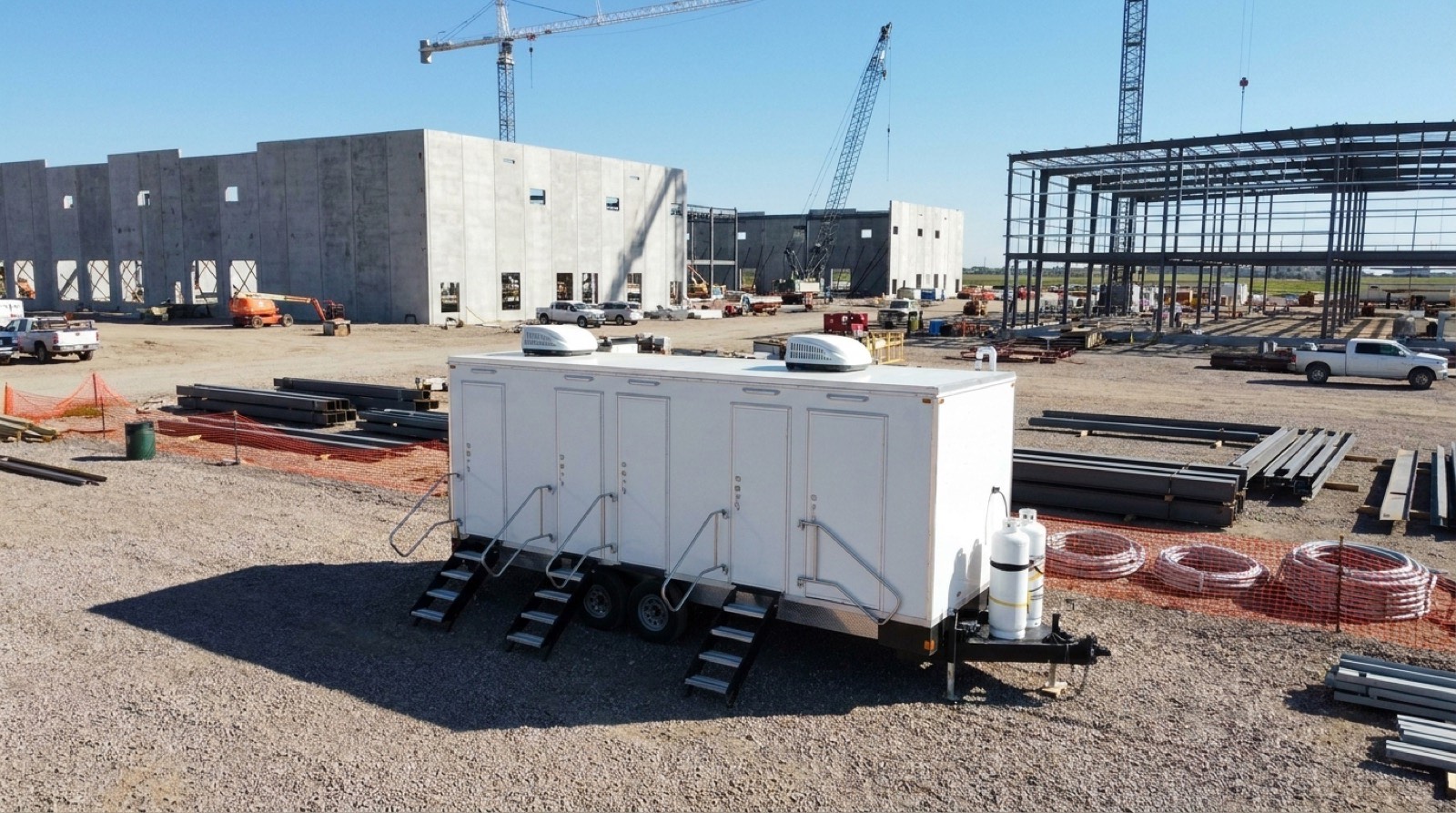
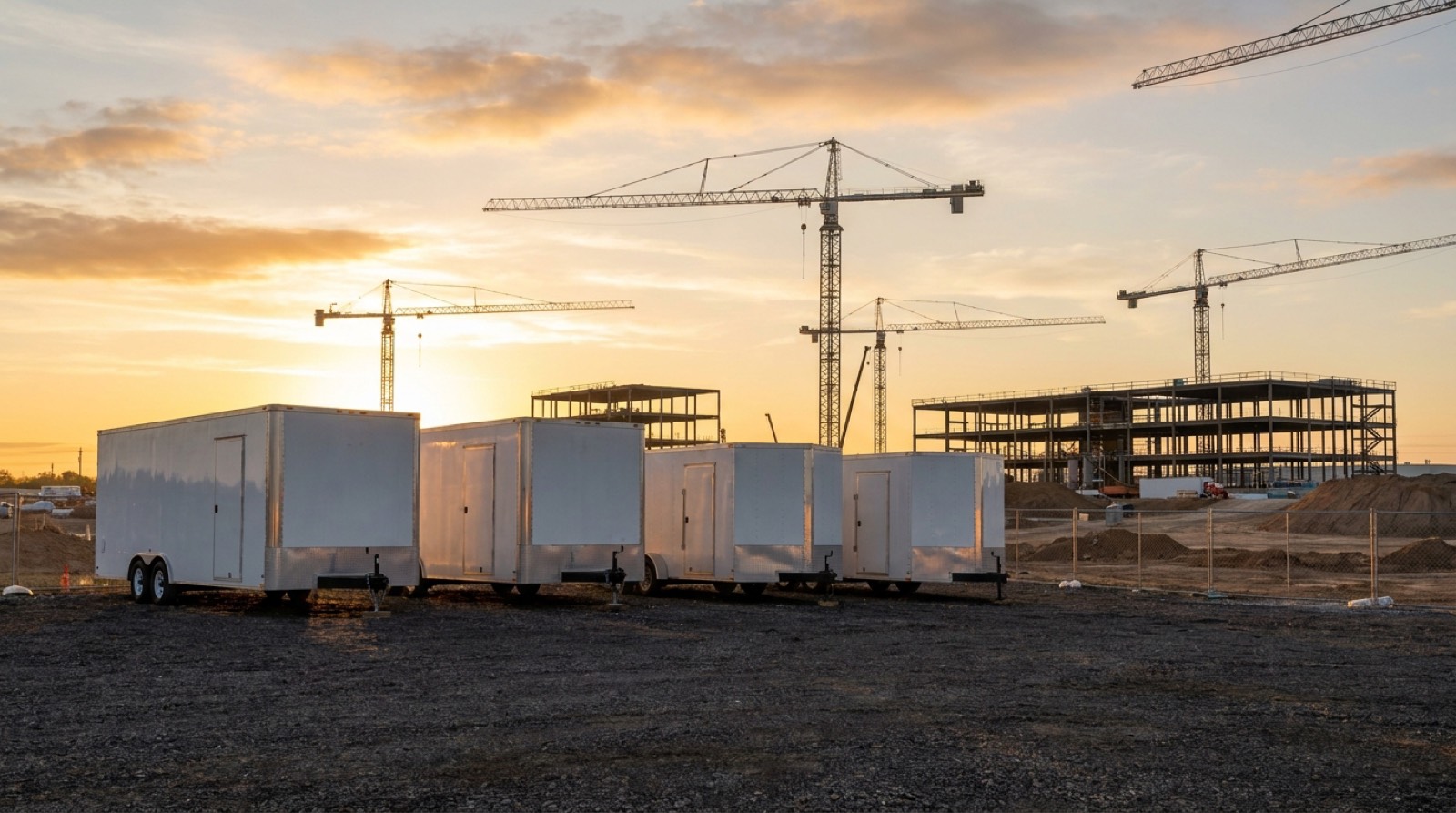
Most Texas deployments bundle several units under one route. One contracted vendor, one dispatch, one escalation path, and a site plan that arrives already coordinated.
The paperwork side of the job needs a roof too. Office trailer rentals in Texas give supervision and inspections a place to meet without leaving the gate.
Food service and ice programs live or die on cold storage at the pad. Refrigeration trailer rentals in Texas hold setpoint through the local season.
Restroom capacity anchors the plan. Restroom trailer rentals in Texas sit closest to the workface and set the service route that every other unit rides on.
Water is the first thing safety plans ask about. Hydration station rentals in Texas run on the same supply logistics as the rest of the package, so adding them costs one stop, not a second vendor.
Where crews rotate in from out of the area, the end of shift is its own rush hour. Shower trailer rentals in Texas carry that peak so the workforce goes home clean.
The full reach of our laundry trailer rentals program runs beyond Texas, covering every corridor we serve.
Where we deploy
Heaviest concentration in the corridors carrying the most active data center construction, with nationwide mobilization beyond them.
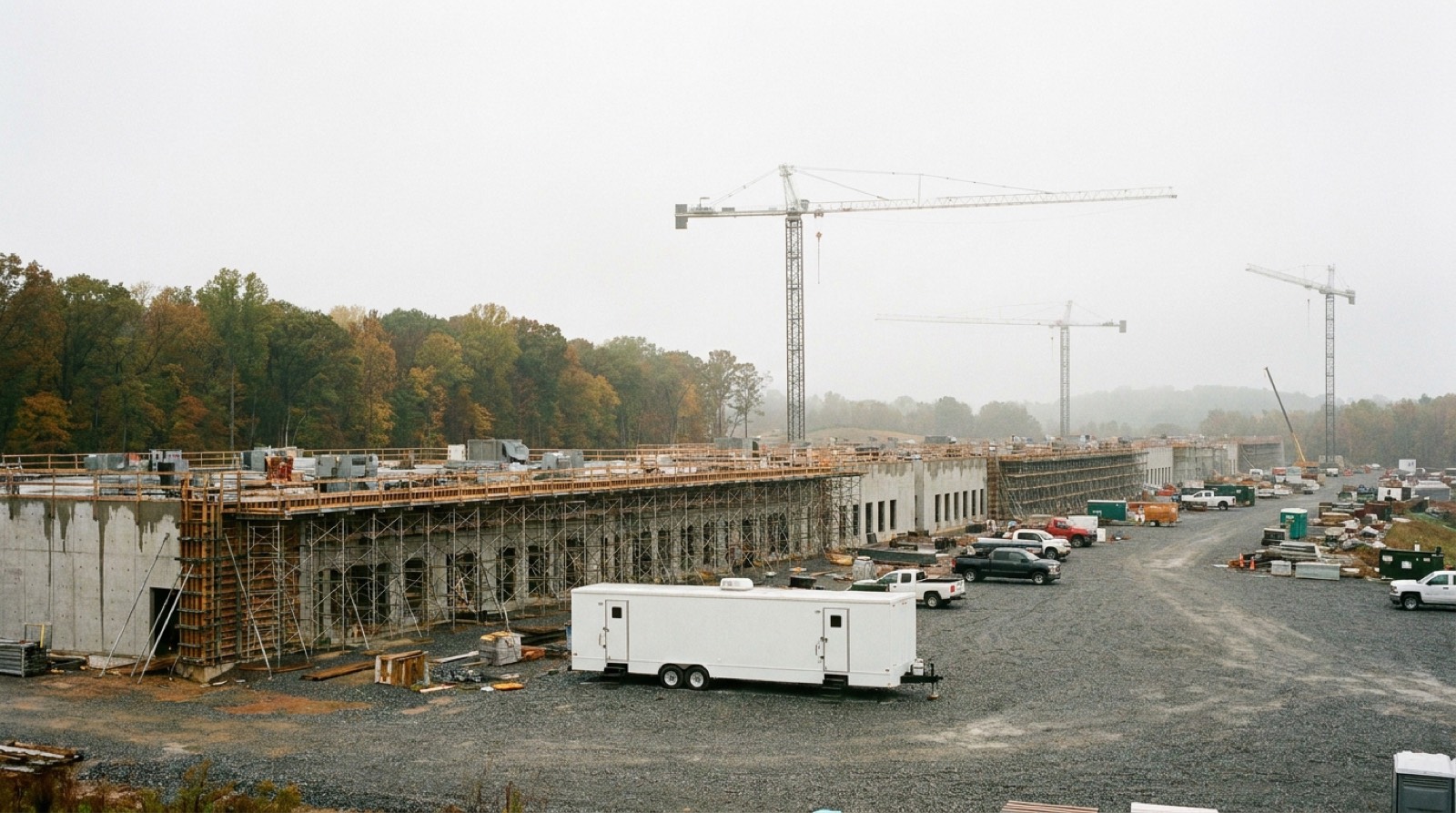
Loudoun County and Prince William run the densest data center concentration on earth. Multi-year campuses, badge-controlled access, crews in the hundreds, and facility requirements written into the subcontract.
View Northern Virginia →Dallas, Fort Worth, San Antonio and Abilene are carrying some of the largest campuses in the country. Summer heat makes hydration and shower capacity a safety line item, not an amenity.
View Texas →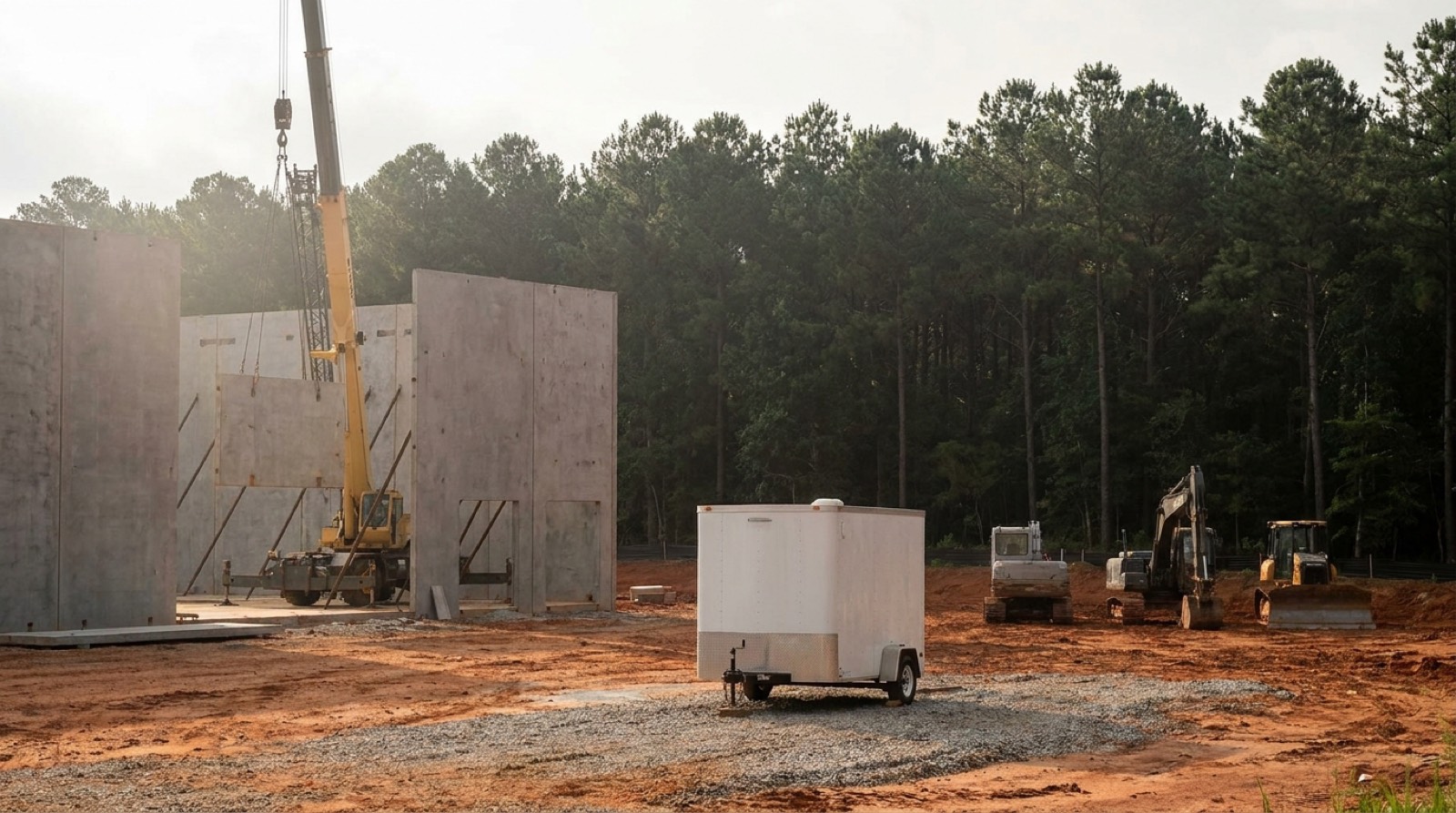
Atlanta metro and Douglas County, extending along I-20. Humid summers, long hauls between laydown and pad, and multi-phase schedules that keep facilities on site for years.
View Georgia →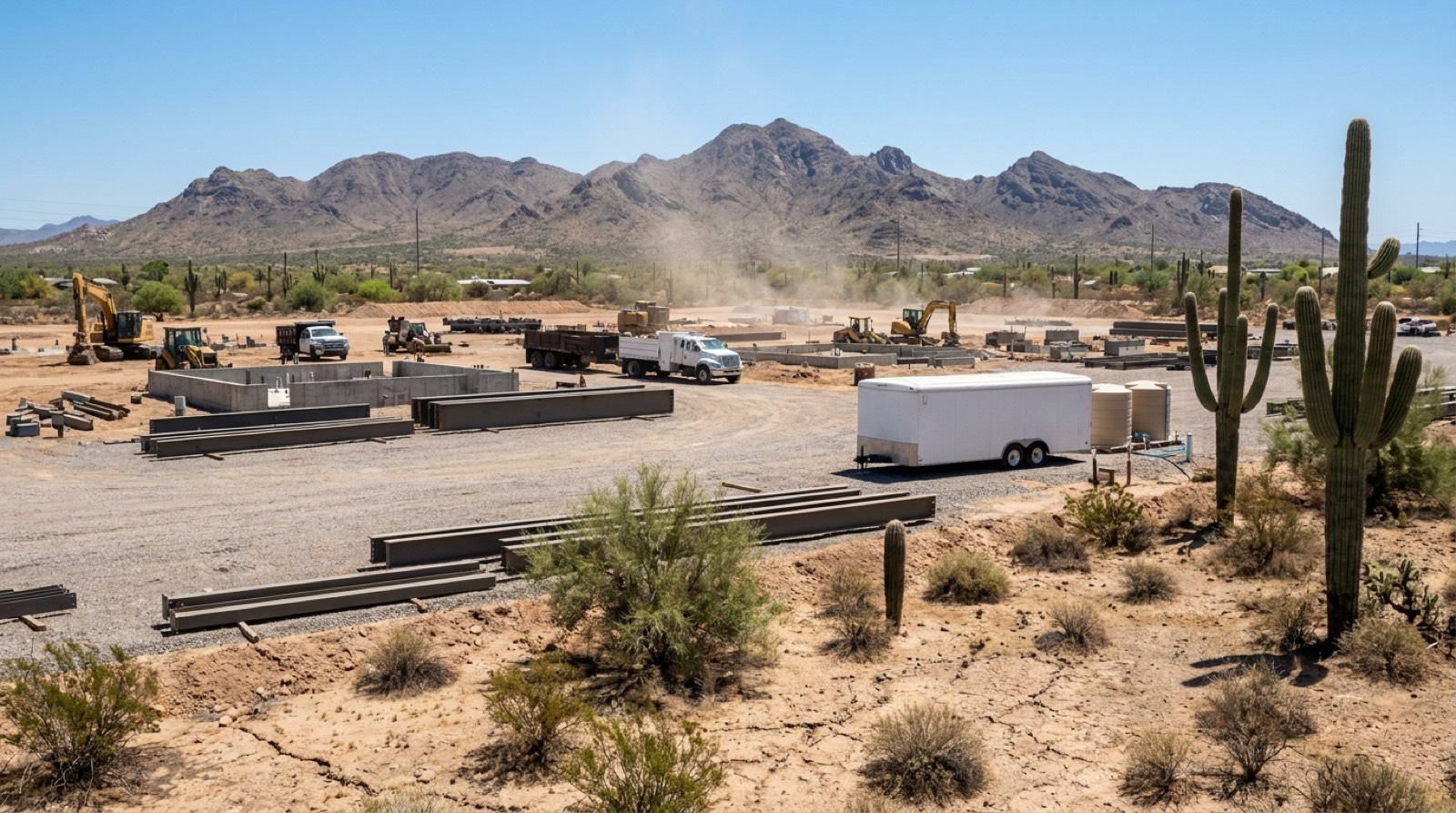
Phoenix and Mesa build through heat that regularly exceeds 110 degrees. OSHA heat-illness prevention drives water and shade requirements that our units satisfy directly.
View Arizona →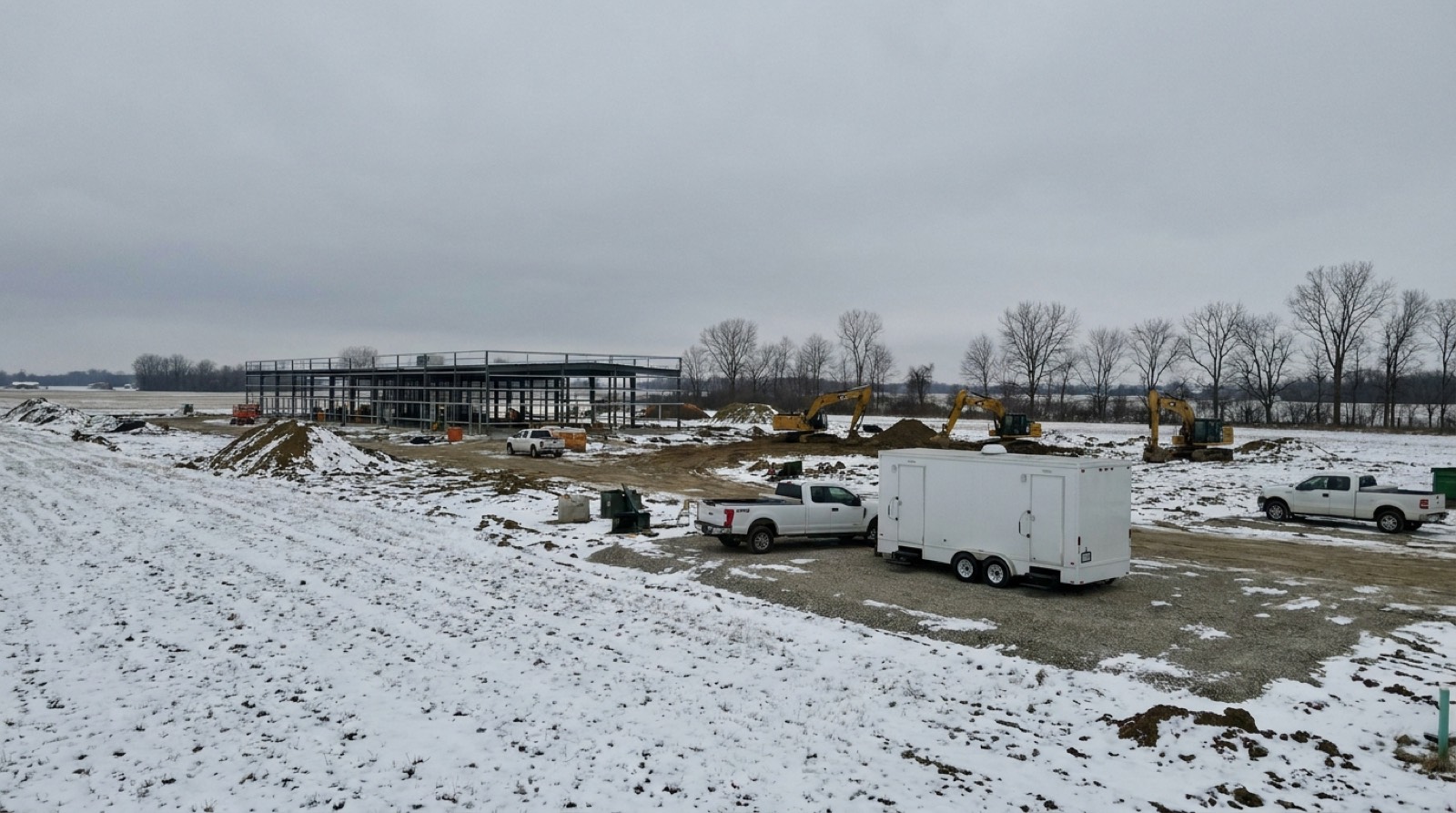
Columbus and New Albany. Freeze protection and winter service access matter here in a way Sun Belt corridors never see.
View Ohio →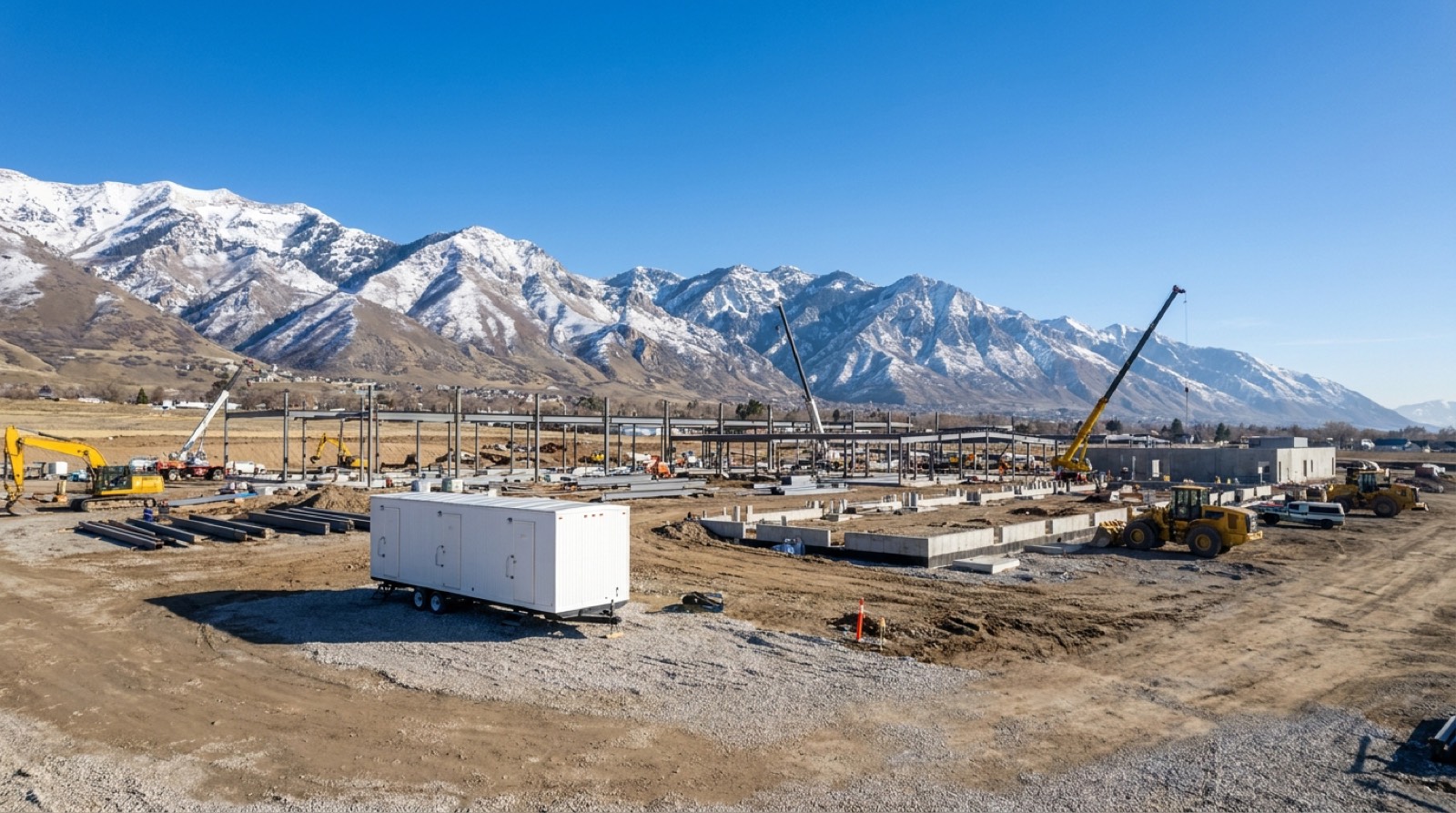
The Wasatch Front corridor runs through hard winters at elevation. Units are winterized and service intervals hold through snow.
View Utah →Questions we get
Roster times rotation length times about two loads per worker per week. A three hundred person camp runs several hundred loads weekly, and machines are sized to that number.
Hauled in on the same contracted route as shower and hydration supply, with gray water pumped out on schedule.
Often yes. Shower plus laundry combinations put the end-of-day routine on one placement when the footprint is tight.
Go deeper
Longer reads for teams writing the site plan. Open what applies to your build.
Run the numbers on a Texas man camp and the scale becomes obvious. A hotel-housed worker generates a load or two of clothes each week. A camp resident generates that plus sheets, pillowcases, blankets, and towels. Per person, weekly volume roughly doubles. Put 500 residents in a camp supporting a data center build and you are operating at the volume of a small commercial laundry plant, every single week.
Texas data center projects lean on camps more than most regions because the sites sit outside metro labor pools. West Texas and rural Central Texas builds cannot fill out a workforce from local commuters, so the camp becomes the town, and the town needs a real laundry. It has to be engineered like any other camp utility.
Clothes are forgiving. Bedding is not. A comforter or a bundle of blankets is a large, heavy, slow-drying load that overwhelms small-drum machines. Camps that installed apartment-grade stacks learn this within a month. The machines run constantly and dry times stretch, and the equipment wears out at a pace nobody budgeted for.
The fix is commercial drum volume and a dryer-heavy floor plan. Large-capacity machines turn a blanket load from a two-cycle ordeal into a routine pass. High-extraction washers pull more water out before the dryer ever sees the load. On camp bedding that single spec change is worth as much as an extra dryer.
At camp scale, open access alone can produce chaos on the schedule everyone has free. The camps that run smoothest pair enough machine capacity with a light rhythm. Crews on different rotations get natural windows because their days off differ. Some operators add a simple linen exchange for bedding so personal machine time stays for personal gear.
Our job is to make the hardware side disappear. Machines sized for camp duty and supply stocking handled on a scheduled service route, with enough headroom that a growth wave does not break the system. When a camp laundry works, nobody talks about it. When it fails, it is the loudest complaint in every safety meeting. Plan it as commercial volume from day one and it stays quiet. That quiet is the outcome a camp operator is actually buying, a utility that runs at plant scale without demanding plant staff.
A Texas jobsite in July rewrites laundry frequency. A worker sweats through a shirt by the first break, and by end of shift everything he is wearing is soaked through and salt-stained. Nothing gets worn twice. Multiply that across a crew working six-day weeks through a five-month cooking season and laundry volume runs far above what the same crew generates up north.
This is a health matter as much as a comfort one. Gear that stays damp in a duffel or a truck cab sours within a day in Texas heat. Skin problems follow, and so does the smell that makes shared housing miserable. Daily washing is the only real answer, which means the laundry capacity has to be there every day, not just on weekends.
Salt and body oil behave differently than dirt. They bond to synthetic fibers and build up over weeks, which is why a shirt can come out of the wash clean-looking and still smell wrong an hour into wear. Beating that takes hot water and proper detergent dosing, with full cycles rather than quick washes. Cool short cycles just redistribute the problem.
We stock the trailers accordingly on the service route. That means detergents that actually cut body oil and hot water capacity that holds up under back-to-back cycles. The machines themselves carry a soak or heavy option for the worst gear. High-visibility vests and moisture-wicking shirts stay serviceable months longer when the wash chemistry is right, which quietly saves crews real replacement money.
Size a Texas summer site at close to double the load frequency you would assume elsewhere. A crew of 300 washing near-daily generates well over a thousand clothing loads a week in peak heat. Spread across evenings, that is a busy but manageable schedule for a properly equipped trailer. Compressed into two weekend days, it is impossible.
The winning pattern is daily washing in the after-shift window, which flattens the peak and keeps gear from ever sitting soured. That only happens if the trailer is close to parking, open late, well lit, and reliably stocked. We build the route schedule around that reality through the hot months. Make daily washing the easy choice and a Texas summer becomes a laundry schedule instead of a laundry crisis.
Rural Texas data center sites often run on well water or trucked water long before permanent utilities land. Both come with a chemistry question that laundry planning cannot skip. Much of Texas sits on hard groundwater, loaded with calcium and magnesium. Hard water fights detergent and grays out fabric, and over time it scales up machine heaters. A cheap water test before delivery tells us exactly what we are dealing with, and we run one as standard practice.
The symptom pattern is familiar to anyone who has run laundry in the region. Clothes come out stiff and dingy even with full detergent doses. Machines lose heating efficiency as scale builds. Left alone, hard water quietly shortens equipment life and convinces the crew the machines are junk when the water was the problem all along. The test costs almost nothing compared to a season of bad washes.
The straightforward fix is treatment at the trailer. An inline softener sized for laundry flow handles most Texas wells. Where softening is not practical, detergent formulation carries the load. Modern commercial detergents with water conditioners are built for exactly this, and dosing goes up with hardness. We set the dosing guidance per site based on the test rather than the label default.
Scale management is the maintenance half. Heater elements and valves on a hard-water site need descaling on a schedule, not on failure. That is a service-route item for us, invisible to the site. The difference shows up a year in, when machines still hit temperature and cycle times have not drifted.
Sites running on hauled water have to budget laundry into the delivery schedule. A busy trailer can draw thousands of gallons a week, which is a real line on the water contract. The planning move is to put laundry on its own storage so a heavy wash day never competes with dust control or batch plants for the same tank.
Graywater goes the other direction, into holding tanks on a pump-out schedule sized for the same volume. None of this is complicated. It is just arithmetic that has to happen before the first load runs. Once the tanks and the schedule are set, the trailer runs the same way it would on city water. On rural Texas ground, water math is laundry math, and we do both up front.