Georgia
Laundry trailer rentals for Georgia data center sites
Red clay comes home in the laundry unless the laundry lives at the site. Wash capacity for I-20 corridor camps and long-rotation crews.
Red clay comes home in the laundry unless the laundry lives at the site. Wash capacity for I-20 corridor camps and long-rotation crews.
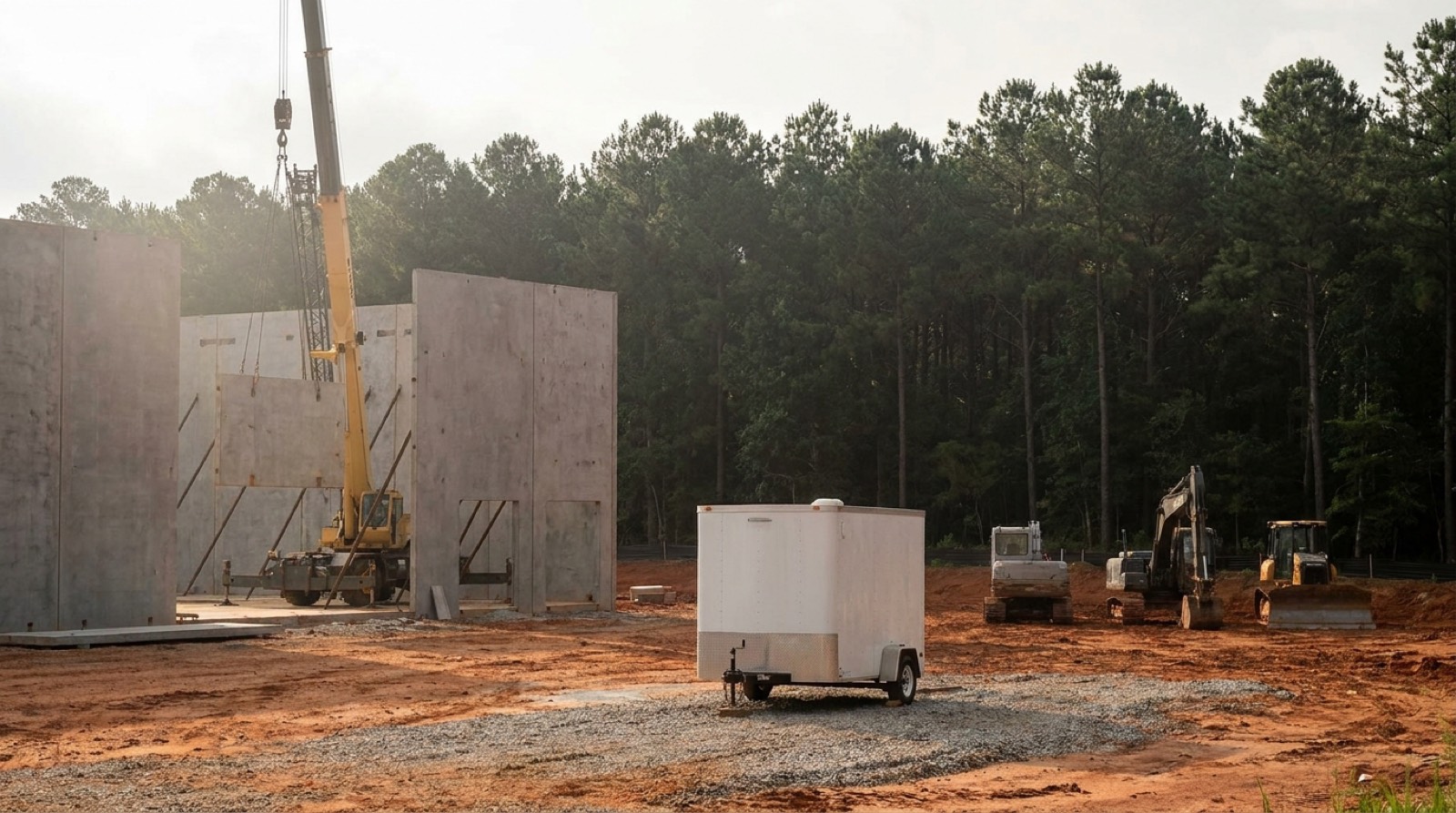
Georgia's red clay stains everything it touches, and a wet season site sends crews home caked in it daily. On-site laundry keeps the clay at the site instead of migrating through hotel rooms and truck seats, and heavy-soil cycles handle what an ordinary machine cannot.
Like the Gulf-adjacent states, Georgia soaks work gear from the inside out all summer. Wash demand tracks the heat index, and dryers matter more here because outdoor drying fails in the humidity.
Newer campus sites along I-20 and south of the metro sit far from any laundromat worth the drive. Site machines close that gap for rotation crews.
Where we deploy
Heaviest concentration in the corridors carrying the most active data center construction, with nationwide mobilization beyond them.
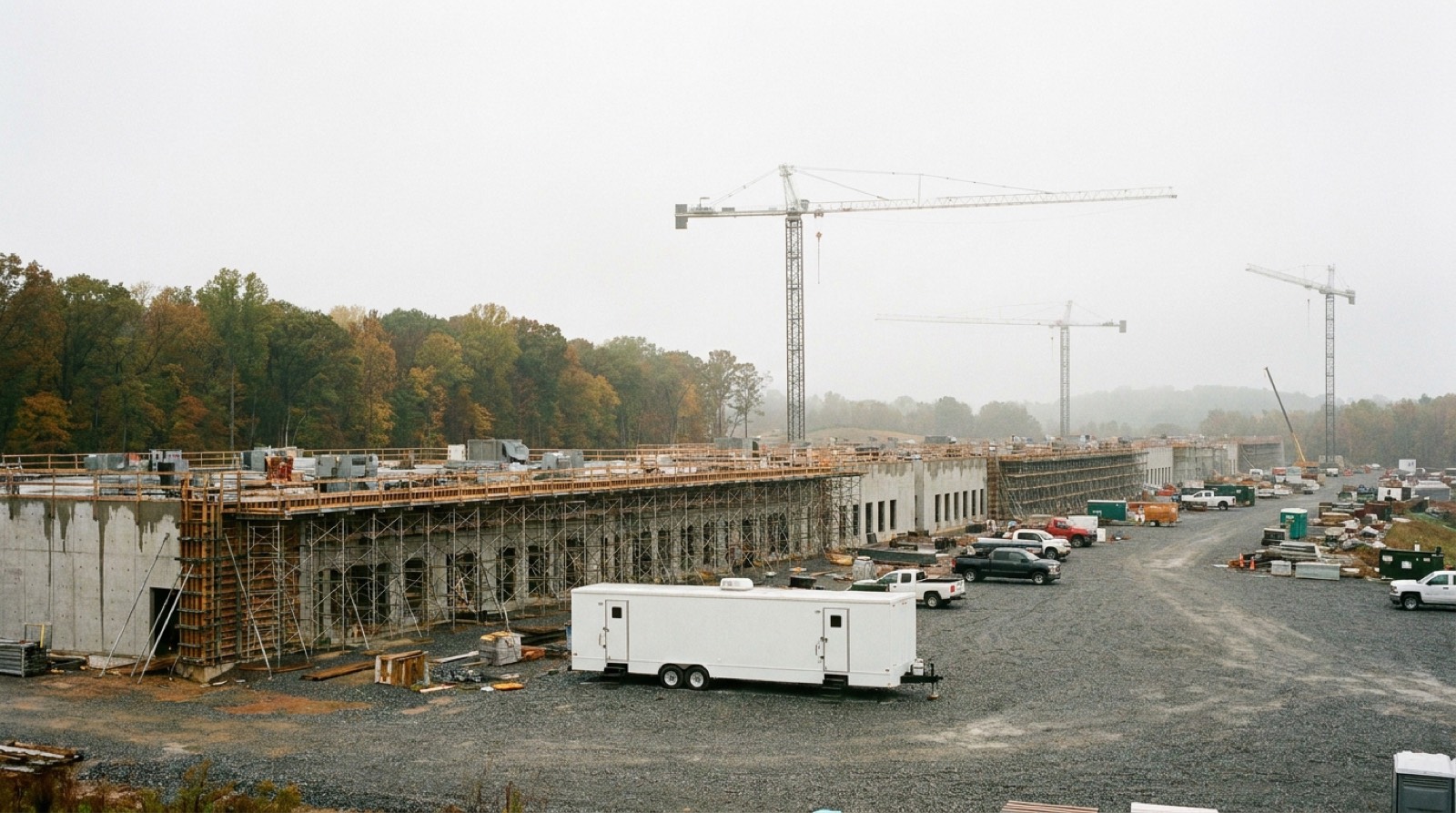
Loudoun County and Prince William run the densest data center concentration on earth. Multi-year campuses, badge-controlled access, crews in the hundreds, and facility requirements written into the subcontract.
View Northern Virginia →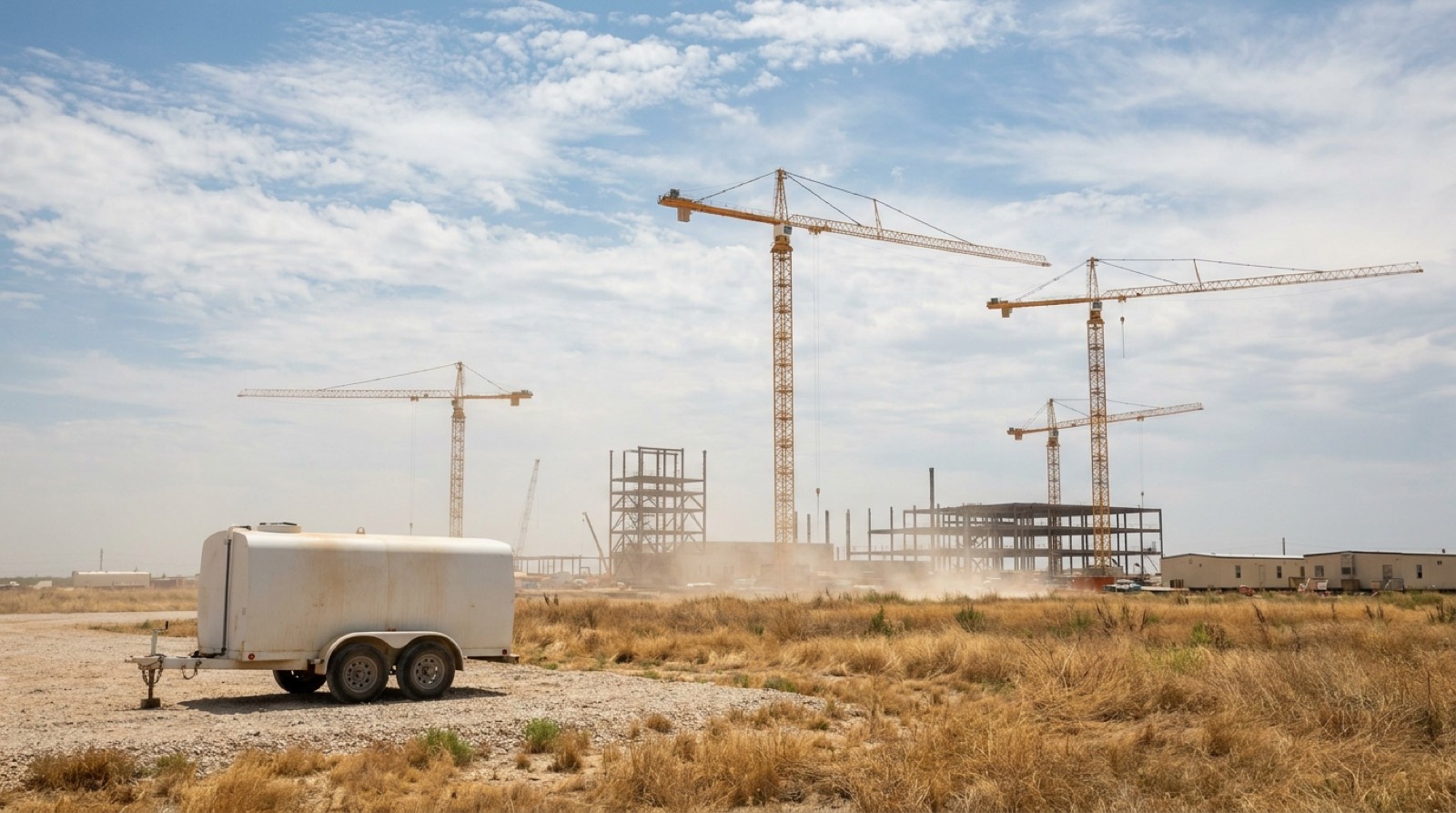
Dallas, Fort Worth, San Antonio and Abilene are carrying some of the largest campuses in the country. Summer heat makes hydration and shower capacity a safety line item, not an amenity.
View Texas →Atlanta metro and Douglas County, extending along I-20. Humid summers, long hauls between laydown and pad, and multi-phase schedules that keep facilities on site for years.
View Georgia →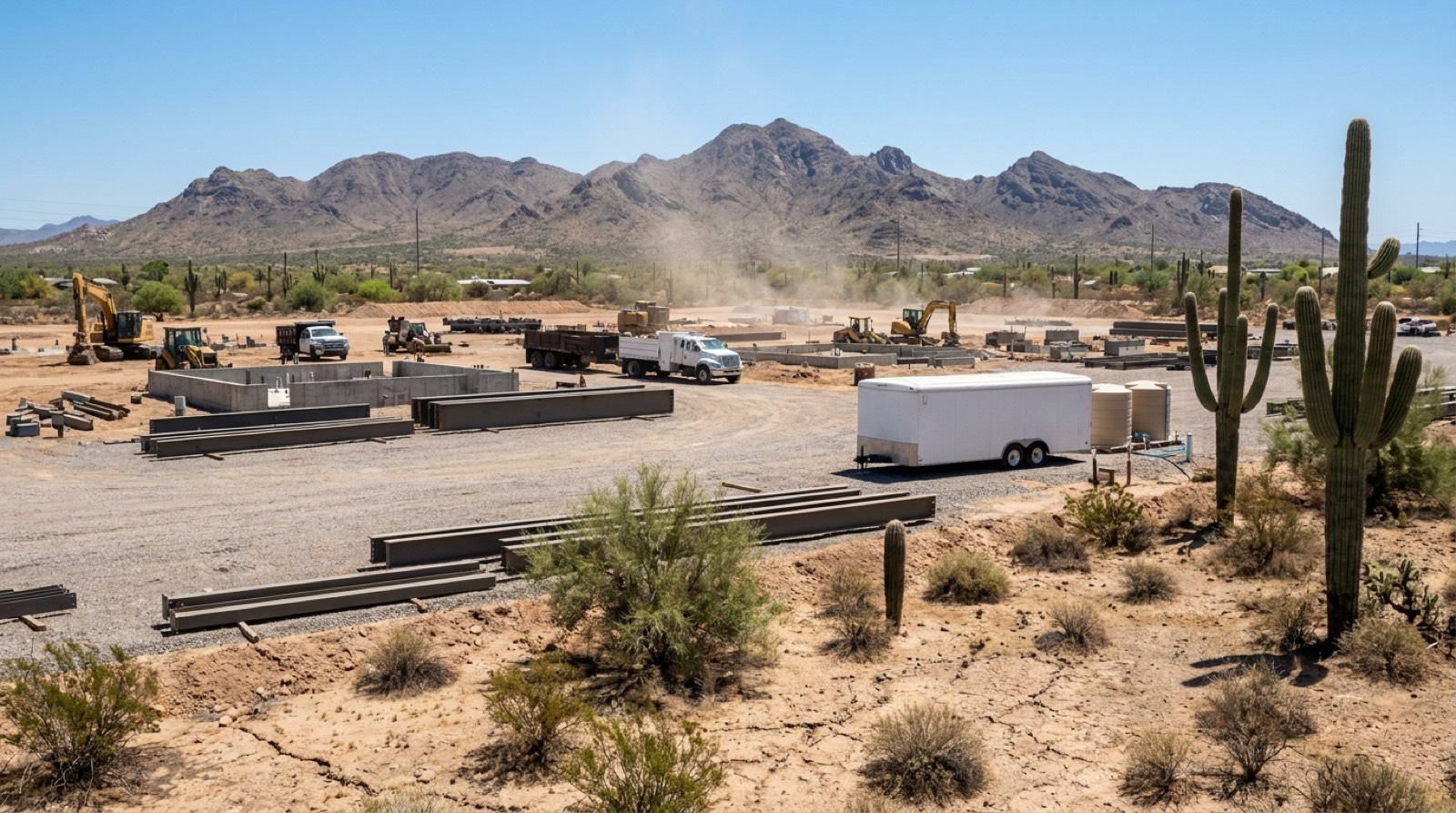
Phoenix and Mesa build through heat that regularly exceeds 110 degrees. OSHA heat-illness prevention drives water and shade requirements that our units satisfy directly.
View Arizona →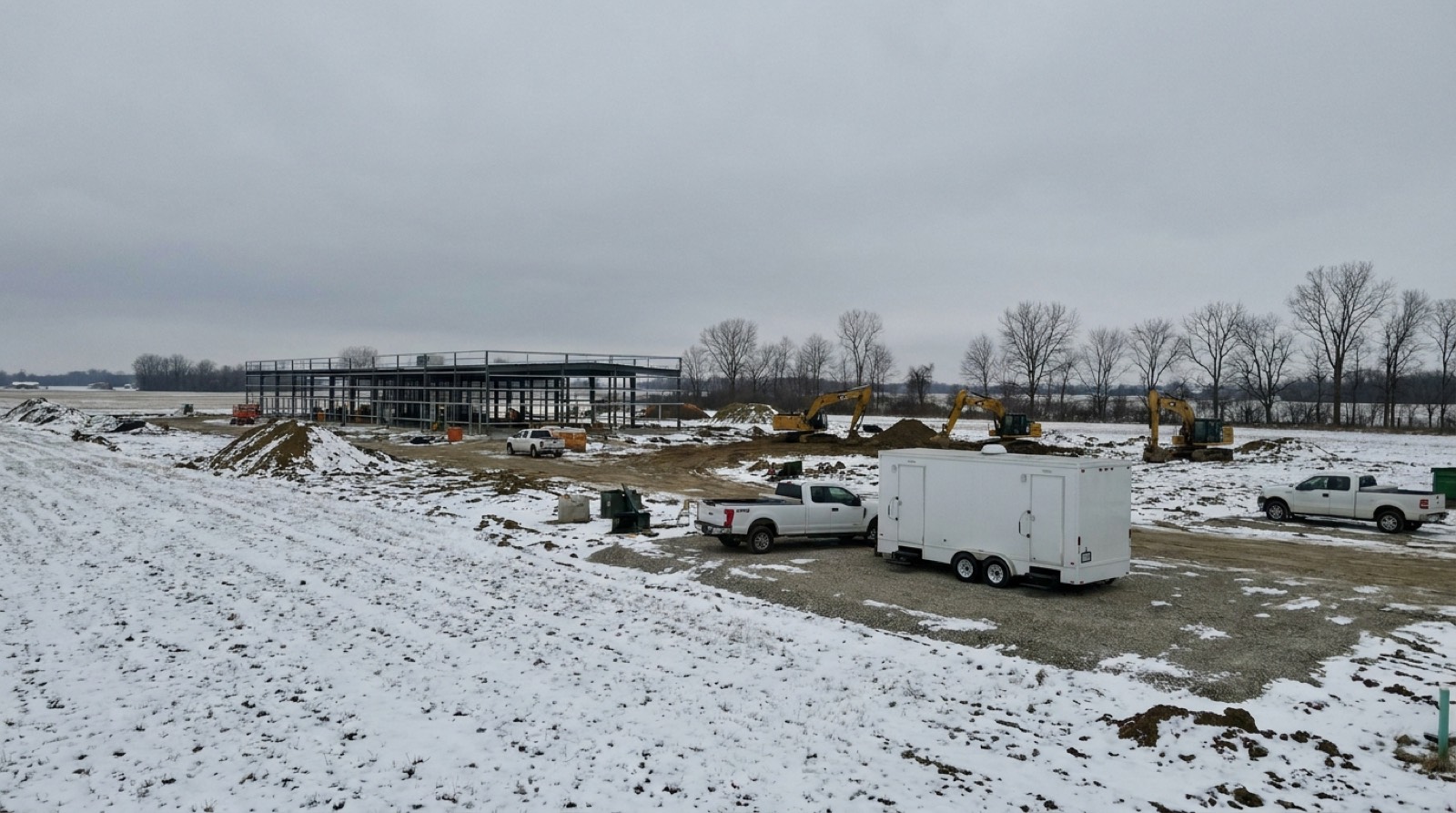
Columbus and New Albany. Freeze protection and winter service access matter here in a way Sun Belt corridors never see.
View Ohio →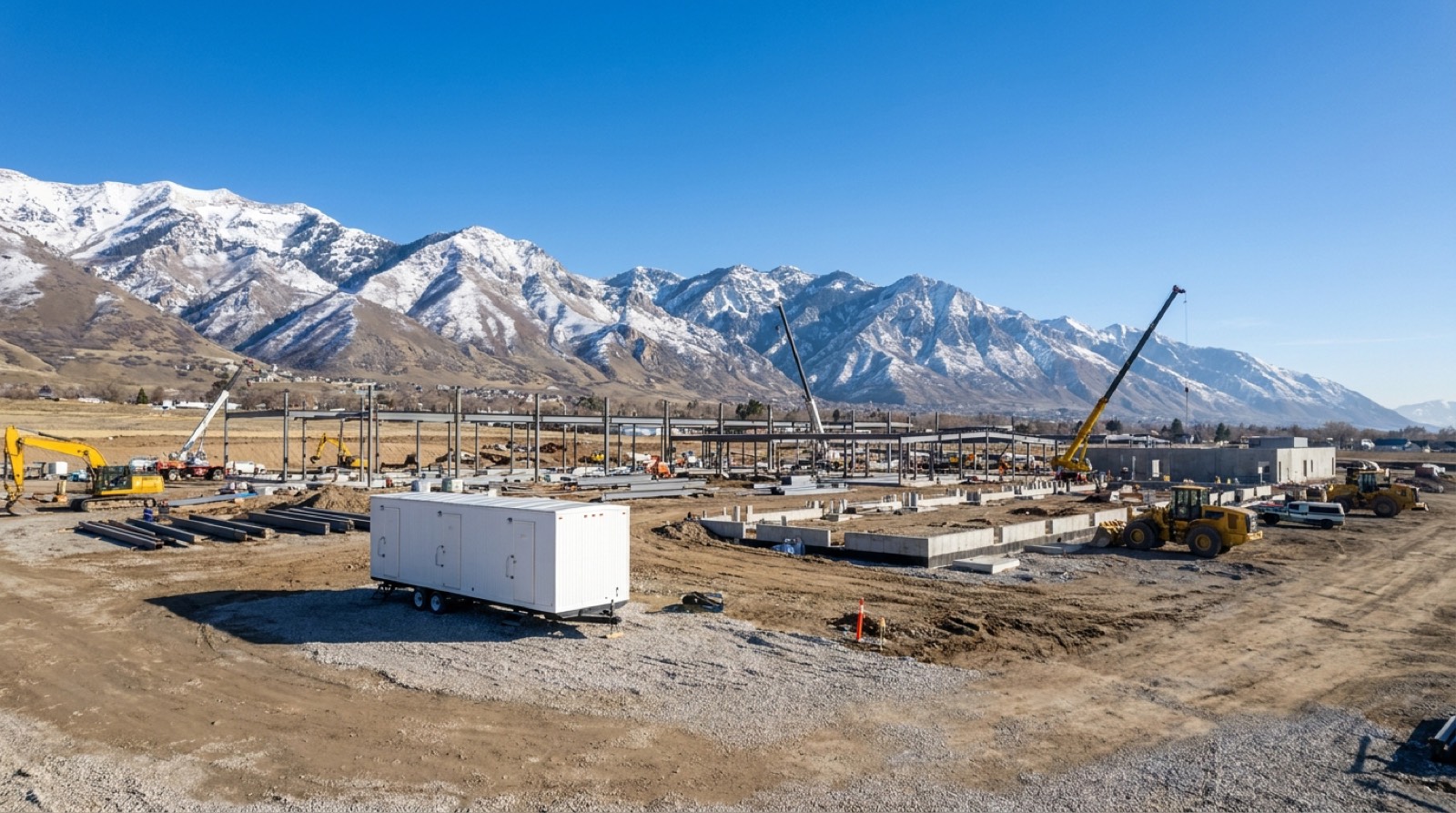
The Wasatch Front corridor runs through hard winters at elevation. Units are winterized and service intervals hold through snow.
View Utah →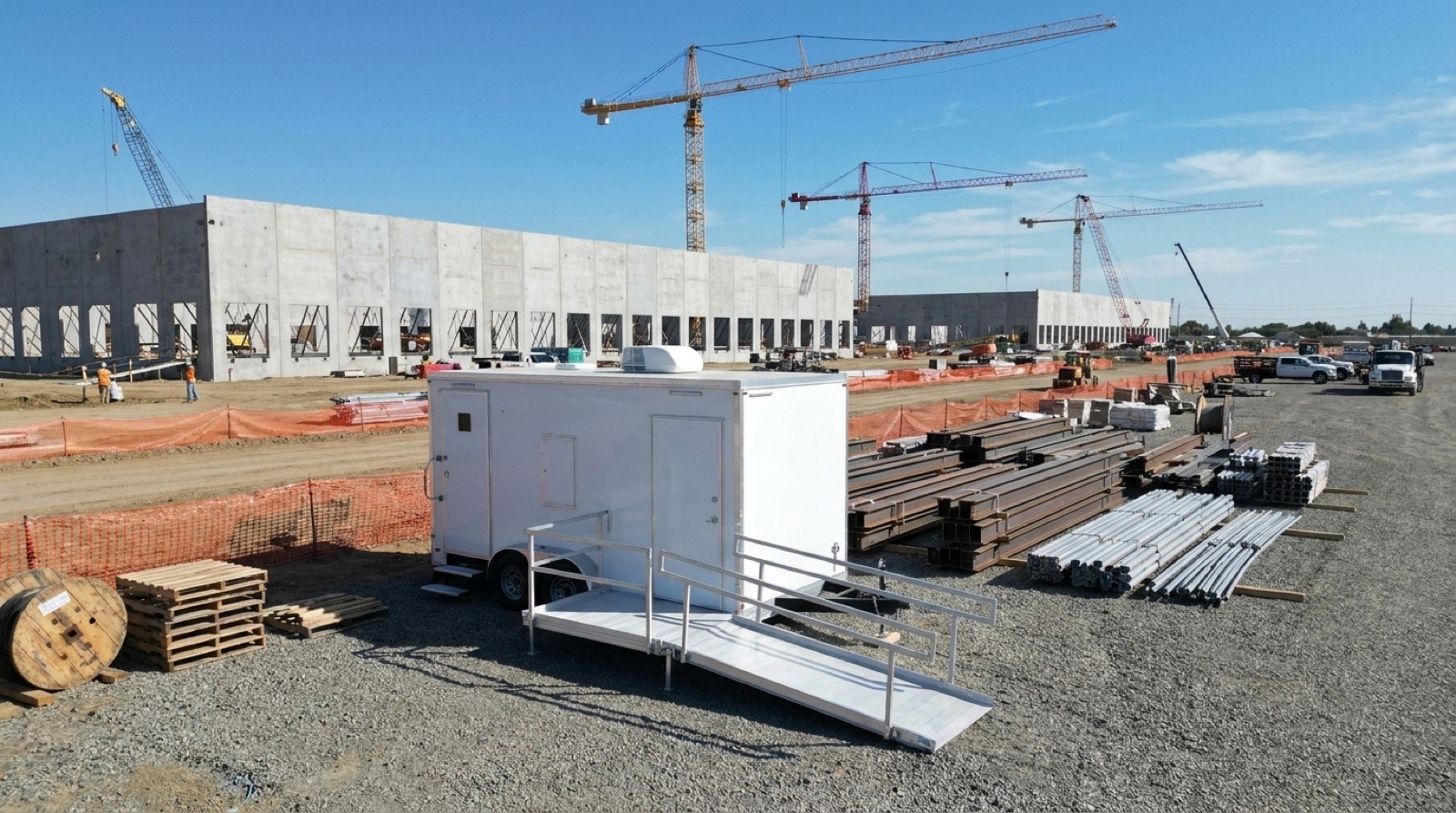
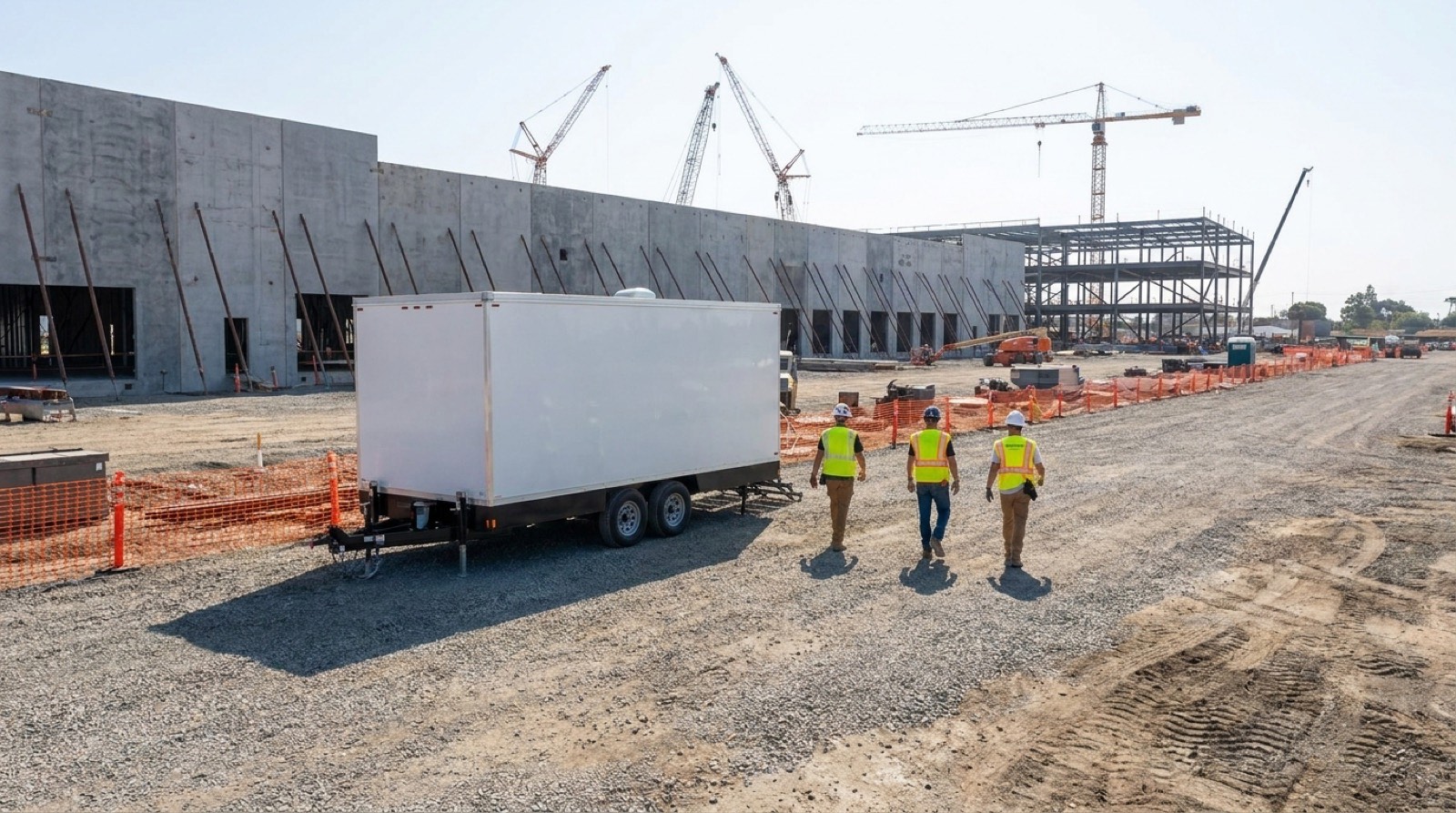
Most Georgia deployments bundle several units under one route. One contracted vendor, one dispatch, one escalation path, and a site plan that arrives already coordinated.
The paperwork side of the job needs a roof too. Office trailer rentals in Georgia give supervision and inspections a place to meet without leaving the gate.
Food service and ice programs live or die on cold storage at the pad. Refrigeration trailer rentals in Georgia hold setpoint through the local season.
Restroom capacity anchors the plan. Restroom trailer rentals in Georgia sit closest to the workface and set the service route that every other unit rides on.
Water is the first thing safety plans ask about. Hydration station rentals in Georgia run on the same supply logistics as the rest of the package, so adding them costs one stop, not a second vendor.
Where crews rotate in from out of the area, the end of shift is its own rush hour. Shower trailer rentals in Georgia carry that peak so the workforce goes home clean.
The full reach of our laundry trailer rentals program runs beyond Georgia, covering every corridor we serve.
Questions we get
Heavy-soil cycles and machine specs suited to construction laundry are the point. Ordinary light-duty machines fail fast on clay loads.
Humidity defeats line drying most of the year, so dryer capacity is sized to carry the full load.
Atlanta metro, Douglas County and the I-20 corridor, plus the newer campus areas south and east of the metro.
Go deeper
Longer reads for teams writing the site plan. Open what applies to your build.
Anyone who has worked dirt in Georgia knows the color. The red clay of the Piedmont stains everything it touches, and a data center site during mass grading is an ocean of it. The iron oxides that make the clay red bond to fabric the way rust bonds to steel. An ordinary warm-wash cycle leaves work pants looking dyed. Crews on Atlanta-area builds learn quickly that home laundry habits do not survive contact with this soil.
The clay is also physically abrasive. Fine particles work into fabric weave and, worse, into machines. Grit settles in door seals, drain pumps, valves, and bearings. Laundry equipment on a red clay site lives a harder life than the same equipment anywhere else in the country, and the setup has to respect that.
Red clay comes out with a sequence, not a single cycle. A cold rinse or soak first, because hot water can set iron stains the way it sets blood. Then a true heavy-soil wash with enough detergent and mechanical action to lift the particles out of the weave. Machines with a programmable prewash do this automatically, which is exactly what we spec for Georgia sites.
Crews help their own cause with one habit. Knocking dried clay off boots and pants before the load goes in keeps pounds of grit out of the drum. A boot brush and a shake-out area outside the trailer door pay for themselves in machine life. Small thing, big difference.
The service side is where clay sites really differ. Drain filters and pump traps need cleaning far more often, because that is where the grit lands. Door gaskets get wiped and inspected so trapped particles do not chew the seal. We shorten the maintenance interval on Georgia sites for exactly these reasons, and the machines stay in spec through the whole earthwork phase.
The payoff runs both directions. Workers get clothes that actually come clean, which on red clay ground is a genuine morale item. The equipment survives to serve the full build. Clay is relentless, but it is predictable. Plan the wash program and the service cadence around it and it becomes routine. We have run that playbook on enough red dirt ground to trust it completely.
Here is a number that explains a lot of frustrated crews. Georgia summer humidity runs above 70 percent for weeks at a stretch, and overnight it often sits near 90. Fabric cannot give up moisture to air that is already carrying that much water. A shirt hung in a camp room or over a tailgate in Cartersville in July is still damp the next morning. Now it is damp and it smells, because mildew starts fast in warm wet fabric.
Crews from drier states walk into this and keep habits that used to work. Hang the gear, wear it tomorrow. In Georgia that habit produces sour clothes and mildewed duffels. In camp housing it also feeds moisture into rooms already fighting the same humidity. Line drying is not a backup plan here. It is a failure mode.
A heated dryer does what Georgia air cannot. It surrounds fabric with hot dry air and carries the moisture out the vent. That is the entire game in a humid climate. It also means dryer capacity is worth even more here than the usual construction ratio suggests, because there is no free outdoor drying to absorb overflow the way there is in Arizona or West Texas.
Humid intake air stretches dry times too. A dryer pulling muggy August air needs longer to do the same work it does in October. We plan Georgia sites with extra dryer headroom for exactly this reason, so the evening rush does not stall when the machines are working their hardest.
The trailer itself has to handle the climate. Good dryer venting that throws moist exhaust well away from the intake side keeps the room from turning into a steam box. Air conditioning in the machine room is not a luxury in a Georgia summer. It keeps the space usable and helps every dryer cycle finish faster.
The last piece is timing. Gear that comes out of the washer needs to go straight to a dryer, not sit wet in a basket for an hour, because mildew does not wait. Enough open dryers make that automatic. In this climate, the dryer bank is the whole laundry program. Size it that way.
A rule of thumb from our Georgia routes. Whatever maintenance interval a machine manual suggests, a red dirt data center site consumes it early. Clay grit and heavy fabric lint pile on top of near-continuous duty. Filters load up faster and drains slow sooner, and seals wear quicker than any spec sheet assumes. Sites that service on the book schedule end up with sick machines by mid-project.
This is not a reason to avoid on-site laundry. It is a reason to run it with a real maintenance rhythm instead of waiting for complaints. Machines fail loud on a jobsite, and they always seem to fail at the worst hour. By the time a washer is walking across the floor or a dryer is tripping on overtemp, the cheap fix window already closed.
Our service route covers the wear points that construction laundry actually attacks. Drain filters and pump traps come out and get cleared of grit and fiber. Lint screens and the duct path behind them get pulled and cleaned, because lint buildup is both a capacity thief and a fire risk. Door gaskets get wiped and inspected for embedded grit. Detergent systems get checked for dosing drift.
Water-side checks matter in Georgia too. Inlet screens catch sediment, especially on sites running temporary water lines that shed scale and debris. A clogged inlet screen shows up as long fill times and half-strength washes, which crews read as a broken machine. Two minutes with a screen restores it, and the machine keeps its good reputation.
Through earthwork and foundation phases, when clay soil load peaks, we run tightened service intervals with quick machine checks on every restock visit. Once a site moves to interior fit-out and the soil profile lightens, the cadence can relax. Matching the schedule to the phase is the whole trick, and it is why a rental with route service beats owned machines that nobody on the project is assigned to care for.
The measurable result is uptime. A crew that has never seen an out-of-order sign on the trailer treats it as infrastructure and plans around it. Uptime is not luck. It is a calendar. That trust is built on the least glamorous work in the program, done on time, every time.