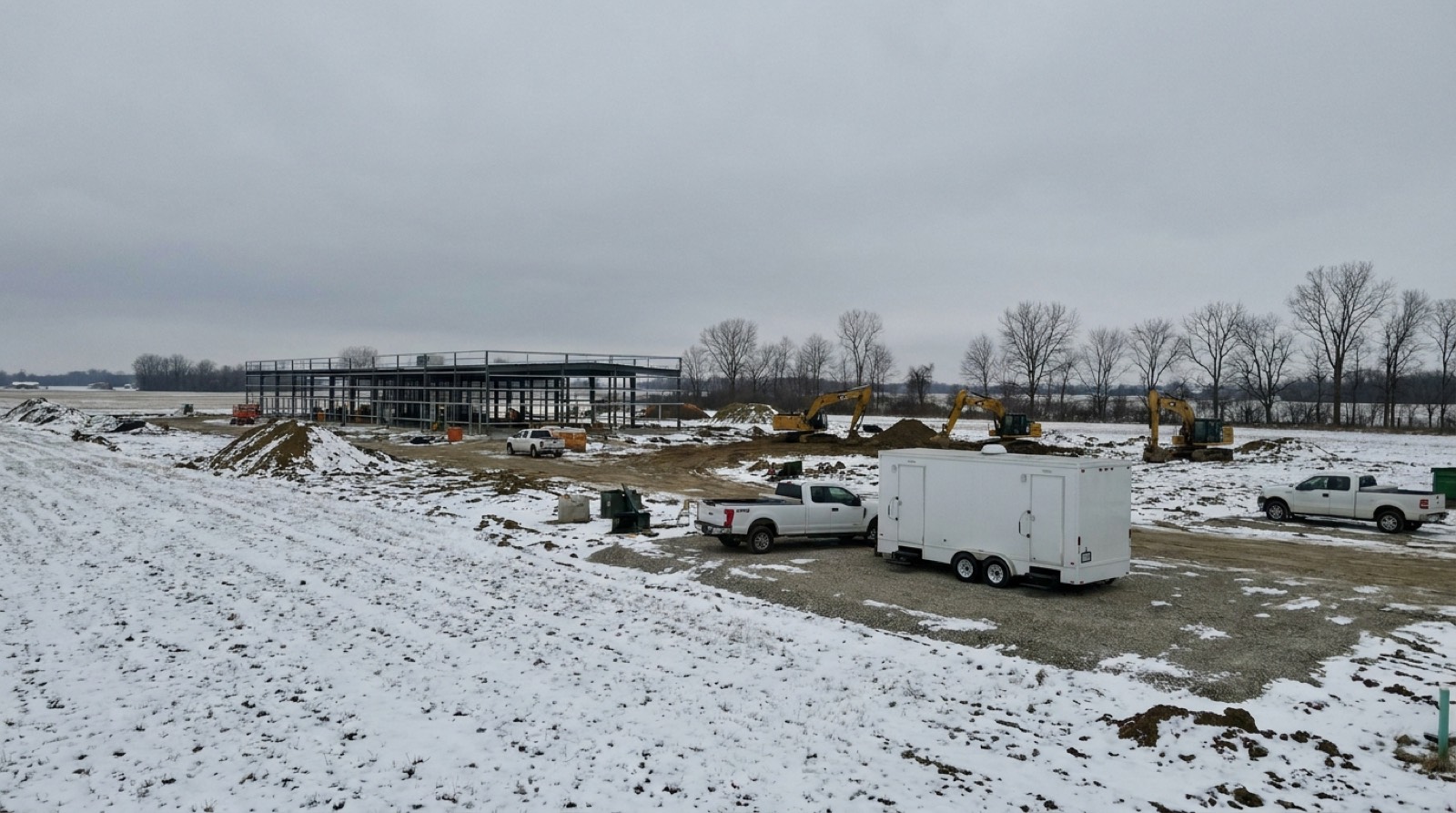
Ohio
Laundry trailer rentals for Ohio data center sites
Winter-layer wash capacity for central Ohio campuses, where insulated gear meets mud season and the machines have to live through both.
Winter-layer wash capacity for central Ohio campuses, where insulated gear meets mud season and the machines have to live through both.
Ohio winter work means insulated layers, and insulated layers mean bigger, heavier, slower loads. Machine specs here handle bulk: fewer garments per load, longer dry times, and counts sized so a crew's cold-weather kit turns around overnight.
Between freeze and summer sits the thaw, when farmland-turned-campus sites turn to mud. Soil loads spike, and heavy-cycle capacity earns its place in the spec.
Laundry trailers freeze like shower trailers do, so Ohio units run protected plumbing, heat trace and heated interiors as the default. A frozen supply line in January stops the whole wash program.
Where we deploy
Heaviest concentration in the corridors carrying the most active data center construction, with nationwide mobilization beyond them.
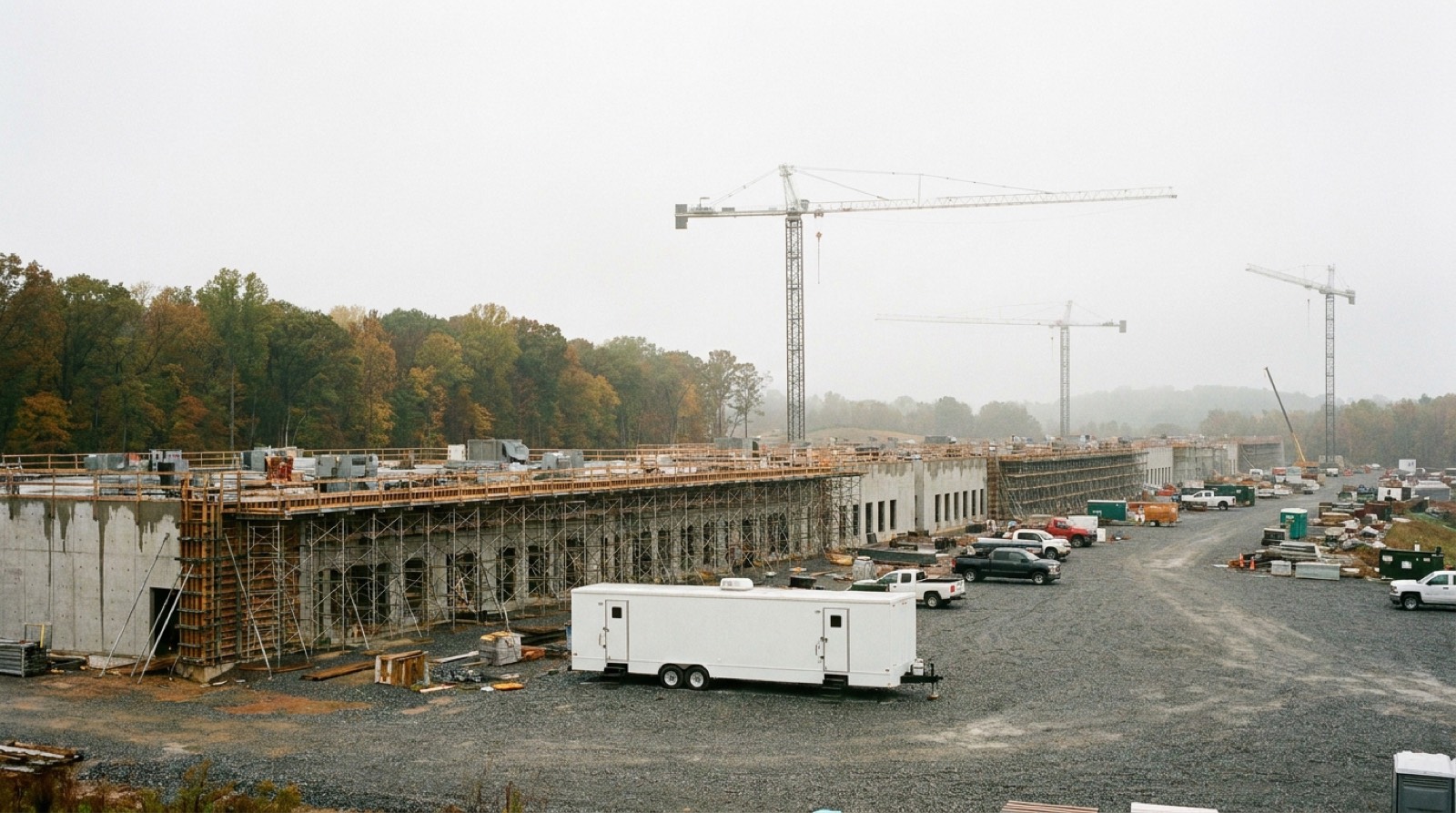
Loudoun County and Prince William run the densest data center concentration on earth. Multi-year campuses, badge-controlled access, crews in the hundreds, and facility requirements written into the subcontract.
View Northern Virginia →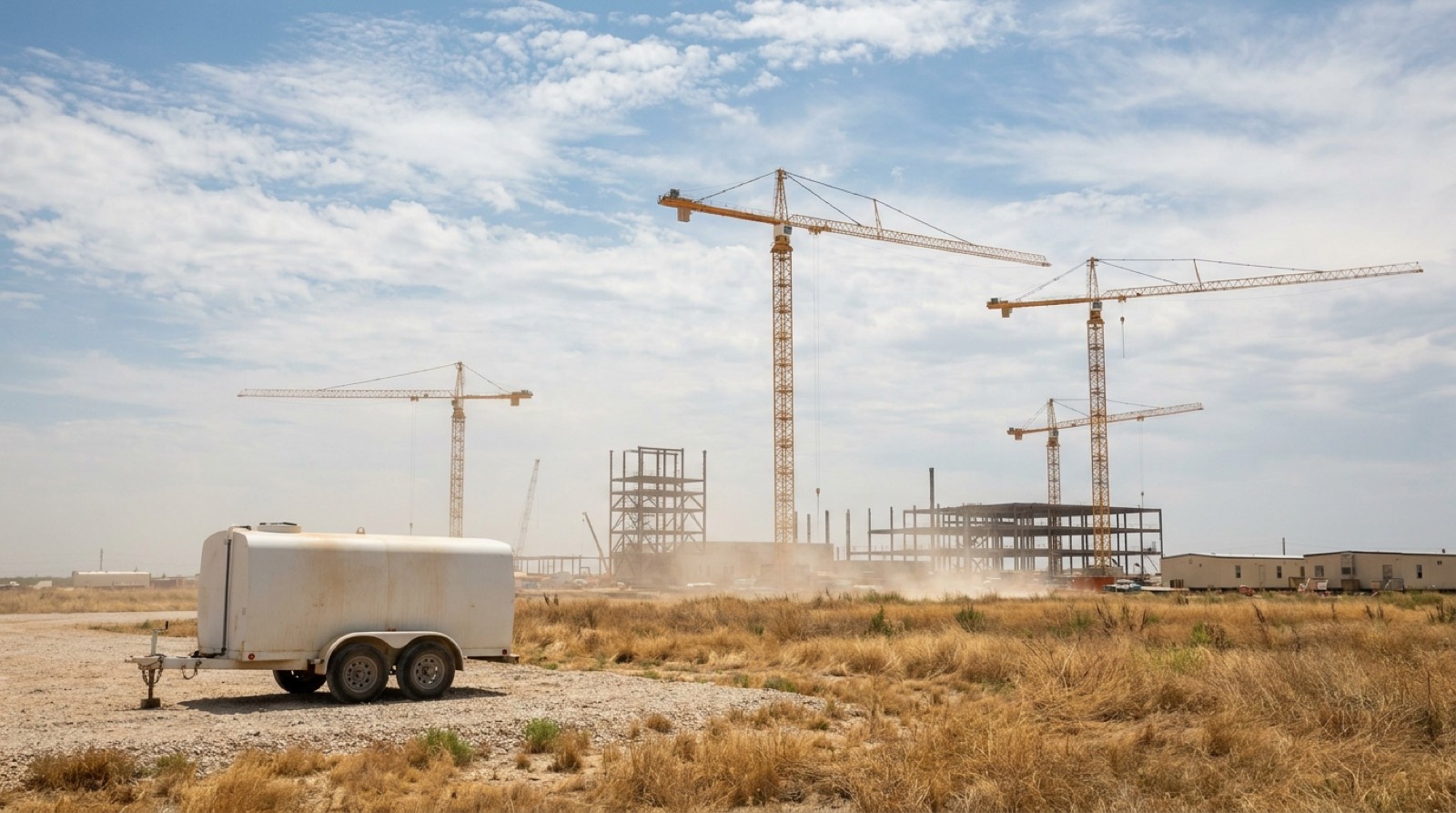
Dallas, Fort Worth, San Antonio and Abilene are carrying some of the largest campuses in the country. Summer heat makes hydration and shower capacity a safety line item, not an amenity.
View Texas →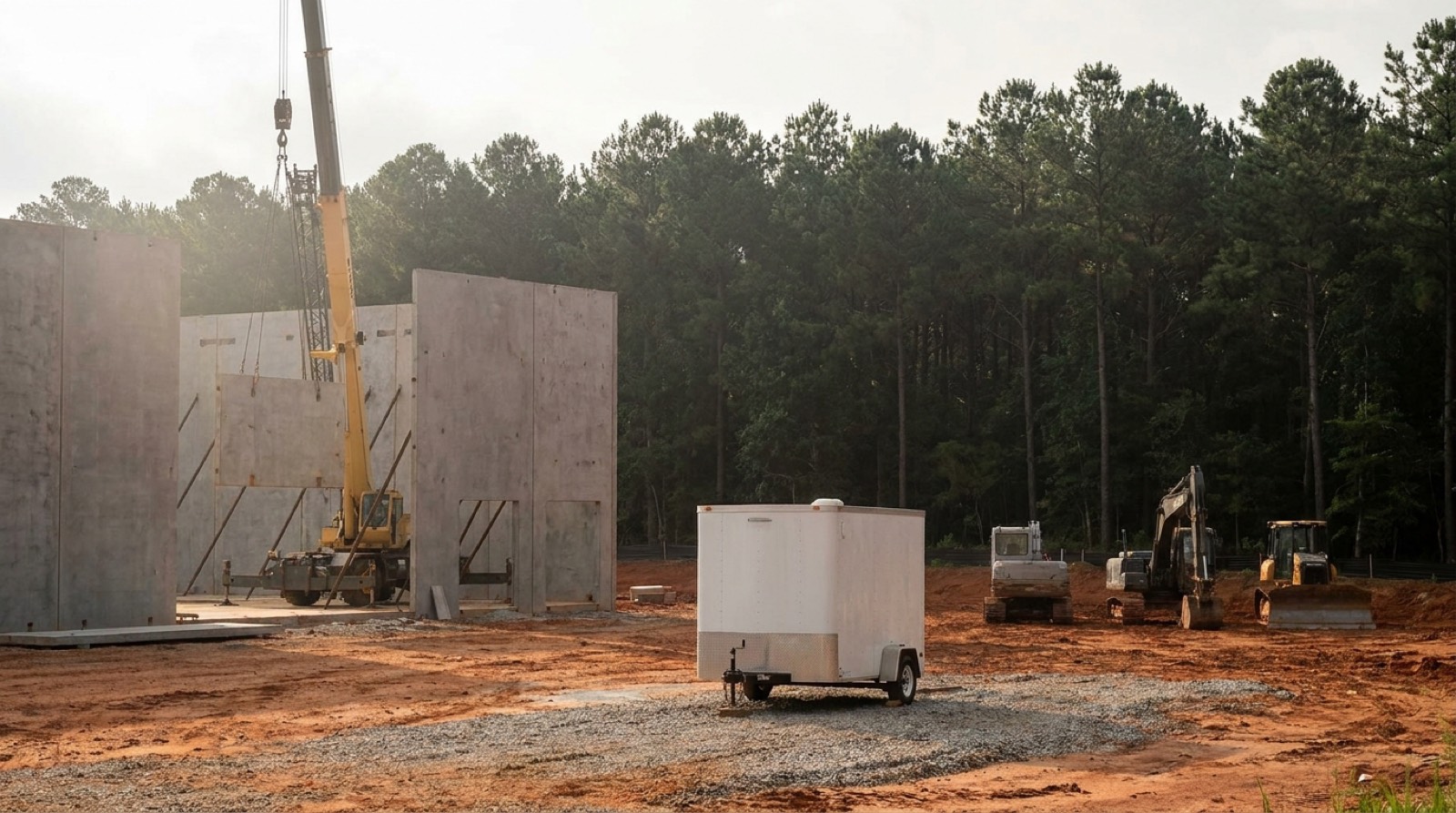
Atlanta metro and Douglas County, extending along I-20. Humid summers, long hauls between laydown and pad, and multi-phase schedules that keep facilities on site for years.
View Georgia →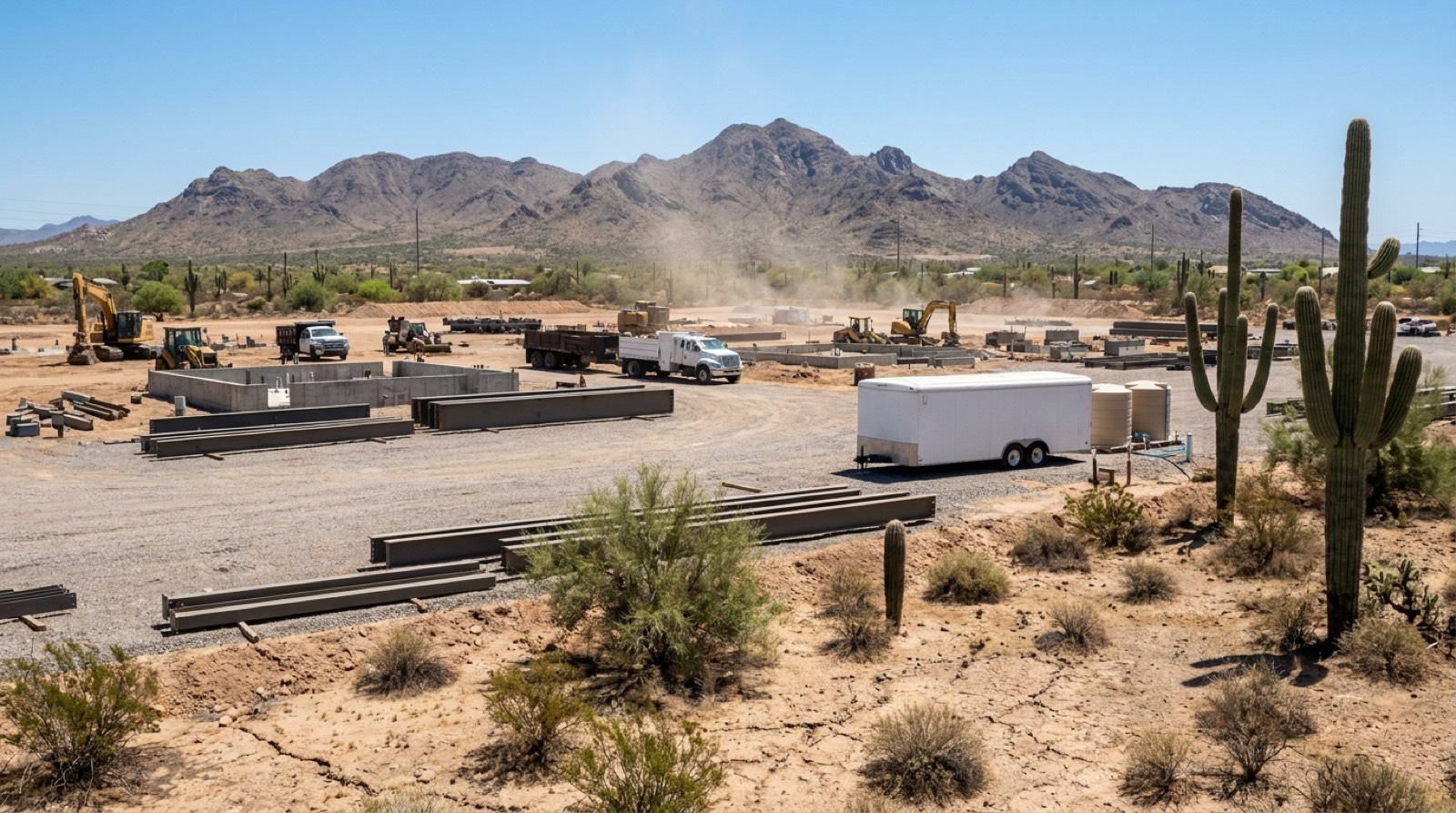
Phoenix and Mesa build through heat that regularly exceeds 110 degrees. OSHA heat-illness prevention drives water and shade requirements that our units satisfy directly.
View Arizona →Columbus and New Albany. Freeze protection and winter service access matter here in a way Sun Belt corridors never see.
View Ohio →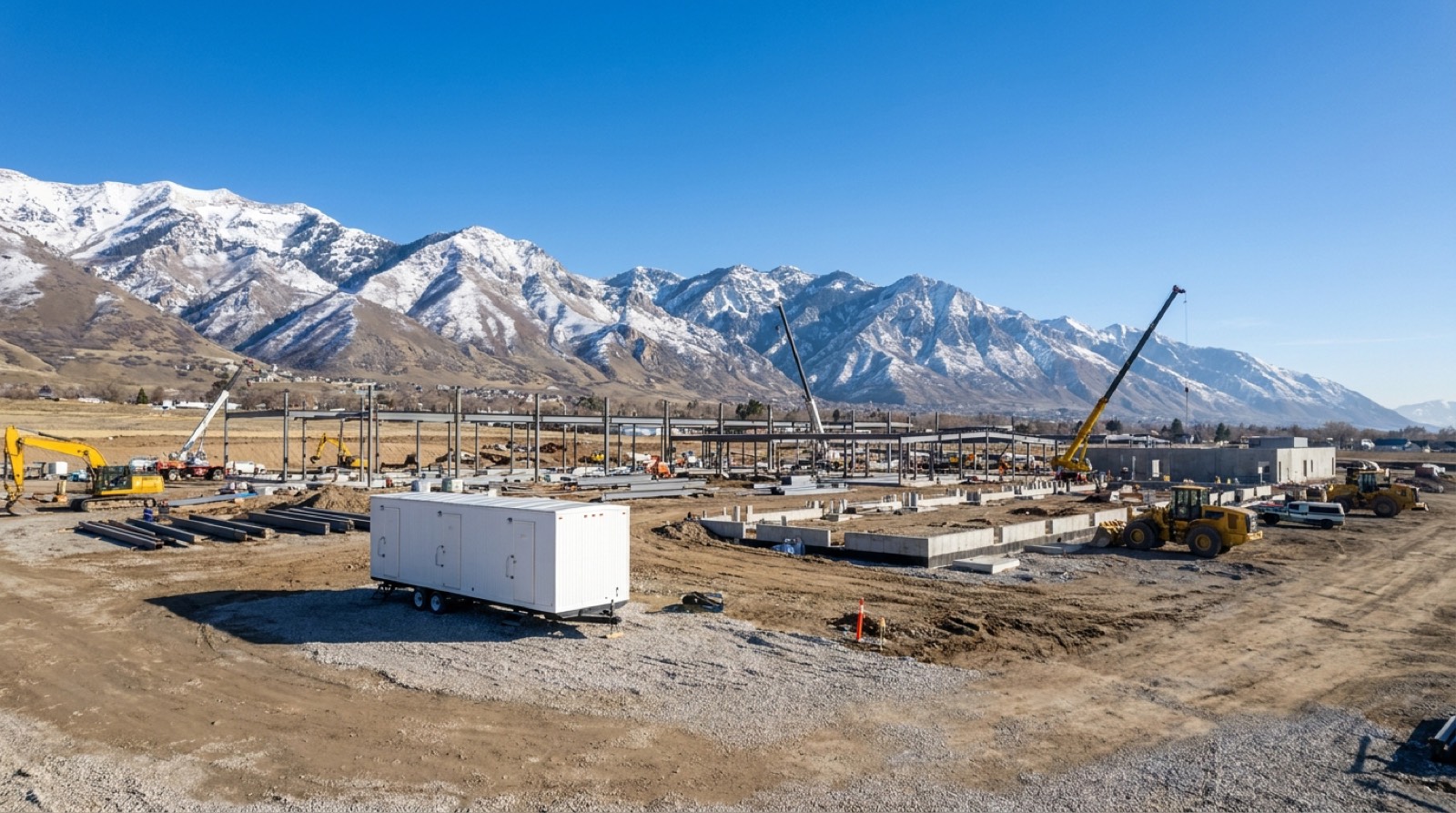
The Wasatch Front corridor runs through hard winters at elevation. Units are winterized and service intervals hold through snow.
View Utah →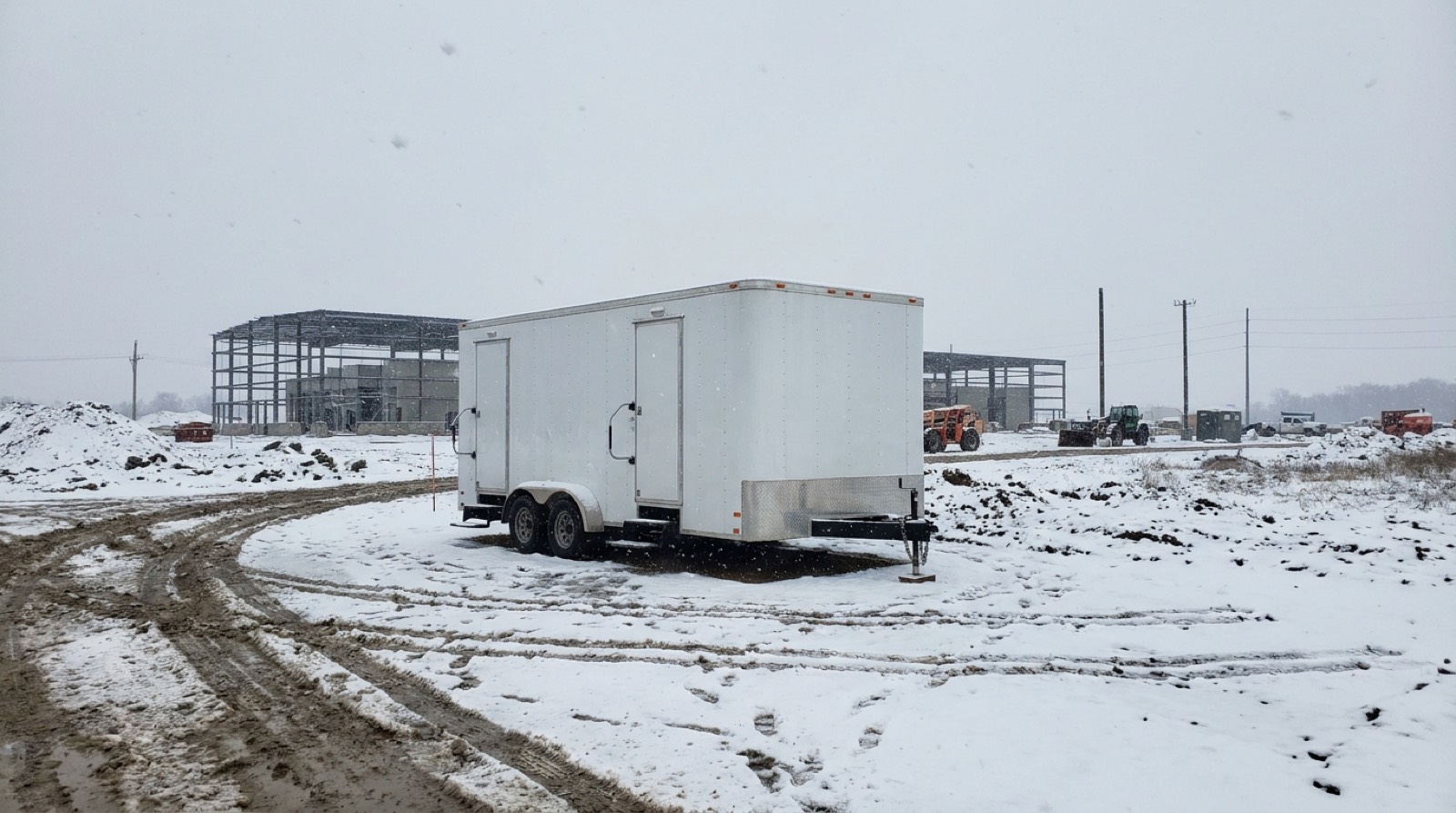
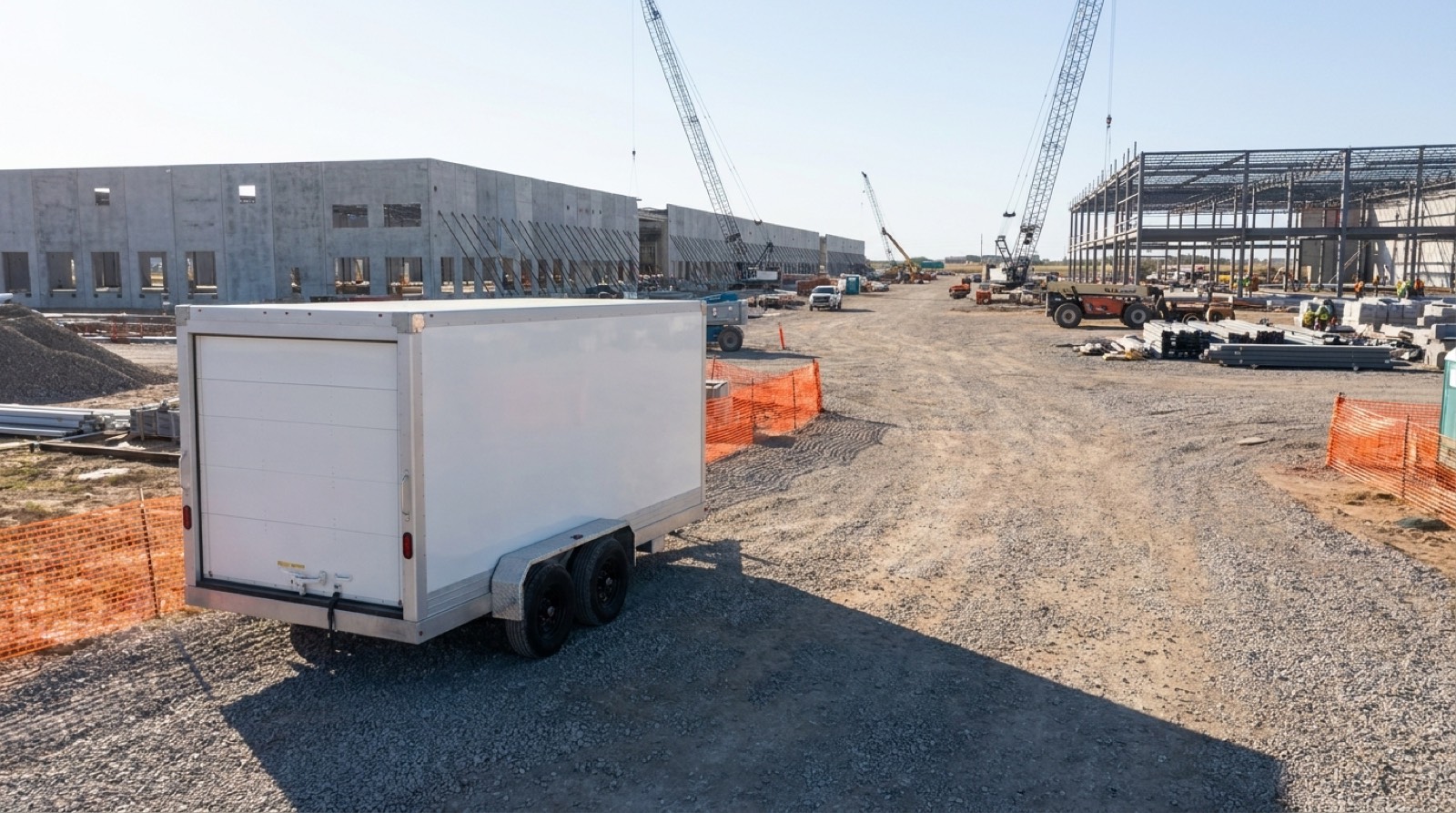
Most Ohio deployments bundle several units under one route. One contracted vendor, one dispatch, one escalation path, and a site plan that arrives already coordinated.
Restroom capacity anchors the plan. Restroom trailer rentals in Ohio sit closest to the workface and set the service route that every other unit rides on.
Water is the first thing safety plans ask about. Hydration station rentals in Ohio run on the same supply logistics as the rest of the package, so adding them costs one stop, not a second vendor.
Where crews rotate in from out of the area, the end of shift is its own rush hour. Shower trailer rentals in Ohio carry that peak so the workforce goes home clean.
The paperwork side of the job needs a roof too. Office trailer rentals in Ohio give supervision and inspections a place to meet without leaving the gate.
Food service and ice programs live or die on cold storage at the pad. Refrigeration trailer rentals in Ohio hold setpoint through the local season.
The full reach of our laundry trailer rentals program runs beyond Ohio, covering every corridor we serve.
Questions we get
Insulated gear makes loads bulkier and dry times longer, so machine counts rise for the same roster in the cold months.
Mud season spikes soil loads, and heavy-duty cycles carry the program through it.
Yes. Protected plumbing, heat trace and heated interiors are the default central Ohio spec.
Go deeper
Longer reads for teams writing the site plan. Open what applies to your build.
An Ohio crew in January dresses in bulk. Insulated bibs, hooded sweatshirts, heavy socks, liner gloves, thermal base layers under everything. Each of those items holds more water and dries slower than the summer version of itself. A load of winter gear can need 70 to 90 minutes of dry time where summer clothes need 45. That single shift in dry time is the biggest capacity fact in cold-season laundry planning.
Central Ohio's data center corridor keeps building straight through winter, so this is not a corner case. From November to March, the same crew generating the same number of washer loads consumes nearly twice the dryer hours. A trailer that ran comfortably in September develops evening backups by December unless the dryer bank was sized for the winter number in the first place.
Big drums earn their money in an Ohio winter. Insulated gear needs room to tumble open or it dries in clumps, damp in the folds after a full cycle. Commercial dryers with large drum volume and strong airflow handle bibs and liners in a single pass. Moisture-sensing cycles help too, running until the load is actually dry instead of guessing at a timer.
Extraction on the wash side is the quiet assist. High-spin commercial washers throw far more water out of heavy fabric before it ever reaches the dryer. On winter gear that difference can cut fifteen minutes off a dry cycle, which across a full evening of crew laundry is another machine's worth of capacity for free.
There is a reason winter crews care about this more than comfort. Insulation only works dry. A worker who starts a January shift in gear that came out of the dryer damp is colder all day and at real risk in single-digit wind. Reliable overnight drying is part of the cold-weather program on a site, the same way warm-up shelters are.
That is the standard we plan Ohio trailers around. Enough dryer capacity that the last after-shift load finishes dry before the room empties, even in the heavy months. Crews notice. Nothing builds loyalty to a site amenity like pulling on warm, fully dry bibs at 6 a.m. in the dark.
Ask any Ohio superintendent which months are hardest on clothes and the answer is the thaw. From late February into May, freeze-thaw cycles and spring rain turn open ground into deep, clinging mud. Data center sites are huge patches of exactly that open ground, worked by heavy equipment that churns it daily. Crews come off shift caked to the knee, and a single day's laundry carries more actual soil weight than a week of summer washing.
The soil itself is a clay-silt mix that behaves badly in machines. It dissolves into heavy sediment in wash water and settles in drains and traps. In fabric it dries into stubborn residue. Mud season is short, but it is the peak stress test of the year for a laundry program.
Heavy mud wants a two-stage approach. Let it dry and knock it off first, because a pound of mud scraped off outside is a pound that never enters the drum. Then a prewash or soak floats the remaining sediment out before the main heavy-soil cycle does the real cleaning. Machines with programmable prewash handle this without asking anything of the user.
Water temperature matters less than mechanical action for mud, but full-length cycles matter a great deal. The short cycles people default to leave sediment in seams and pockets, and the residue shows up as stiff, gray fabric within weeks. We set machine defaults for the season so the right cycle is the easy button.
All that sediment goes somewhere, and the somewhere is the drain path. Mud season is when pump traps, drain filters, standpipes, and graywater tanks load up fastest. Our Ohio routes tighten the service interval through the thaw for exactly this reason, clearing traps before they slow the machines rather than after complaints start.
Entry matters too. Mats and a boot-scrape area at the trailer door help, and gravel or timber walkways keep the room itself from becoming a mud floor. It is all unglamorous work, and it is the difference between a laundry trailer that shrugs off an Ohio spring and one that spends the season half-broken. The mud is coming either way. The plan decides what it costs.
A data center campus in central Ohio takes years to build out, and the laundry program lives through every season several times. Summer humidity that rules out line drying. A thaw that doubles soil loads. A winter that doubles dryer hours. A mild fall that tempts everyone to forget the rest. The same trailer serves all of it, which means the capacity plan cannot be tuned to the month the contract was signed. It has to be tuned to the worst season the site will see.
This is the planning mistake we see most on multi-year builds. A trailer sized in June against June conditions performs beautifully until the first cold snap, then falls behind for a season while everyone relearns the winter math. Sizing against January from the start costs little and removes the problem permanently.
Winter is a dryer-hours problem, with bulky insulated gear stretching every cycle. Spring is a soil and drain problem, with mud sediment loading the service side. Summer is a humidity problem, where mechanical drying carries everything and conditioned space keeps the room usable. Fall is the mild season and the right window for catch-up maintenance before the heavy months return.
The common thread is that dryer capacity and service cadence flex more than washer count. Washer demand stays fairly stable per worker year-round. What swings is how long each load takes to dry and how much grit the machines swallow. A plan built around a strong dryer bank and a seasonal service schedule rides the whole cycle without drama.
Multi-year campus builds add the staffing curve on top of the calendar. Fit-out peaks can land in any season, and a peak that lands in January stacks the two hardest conditions together. We map the project schedule against the calendar during planning, and when a winter peak is coming, capacity gets added ahead of it rather than after the backlog forms.
The payoff of planning this way is a laundry program nobody has to think about for years at a stretch. Machines keep pace in February and August alike. Service happens before failures instead of after. On a build measured in years, that kind of quiet is worth a great deal. It is also the cheapest thing on the logistics plan to get right early.