Ohio
Hydration station rentals for Ohio data center sites
Central Ohio asks one hydration fleet to do two jobs: beat humid Midwest summers, then survive freezing winters without splitting a tank.
Central Ohio asks one hydration fleet to do two jobs: beat humid Midwest summers, then survive freezing winters without splitting a tank.
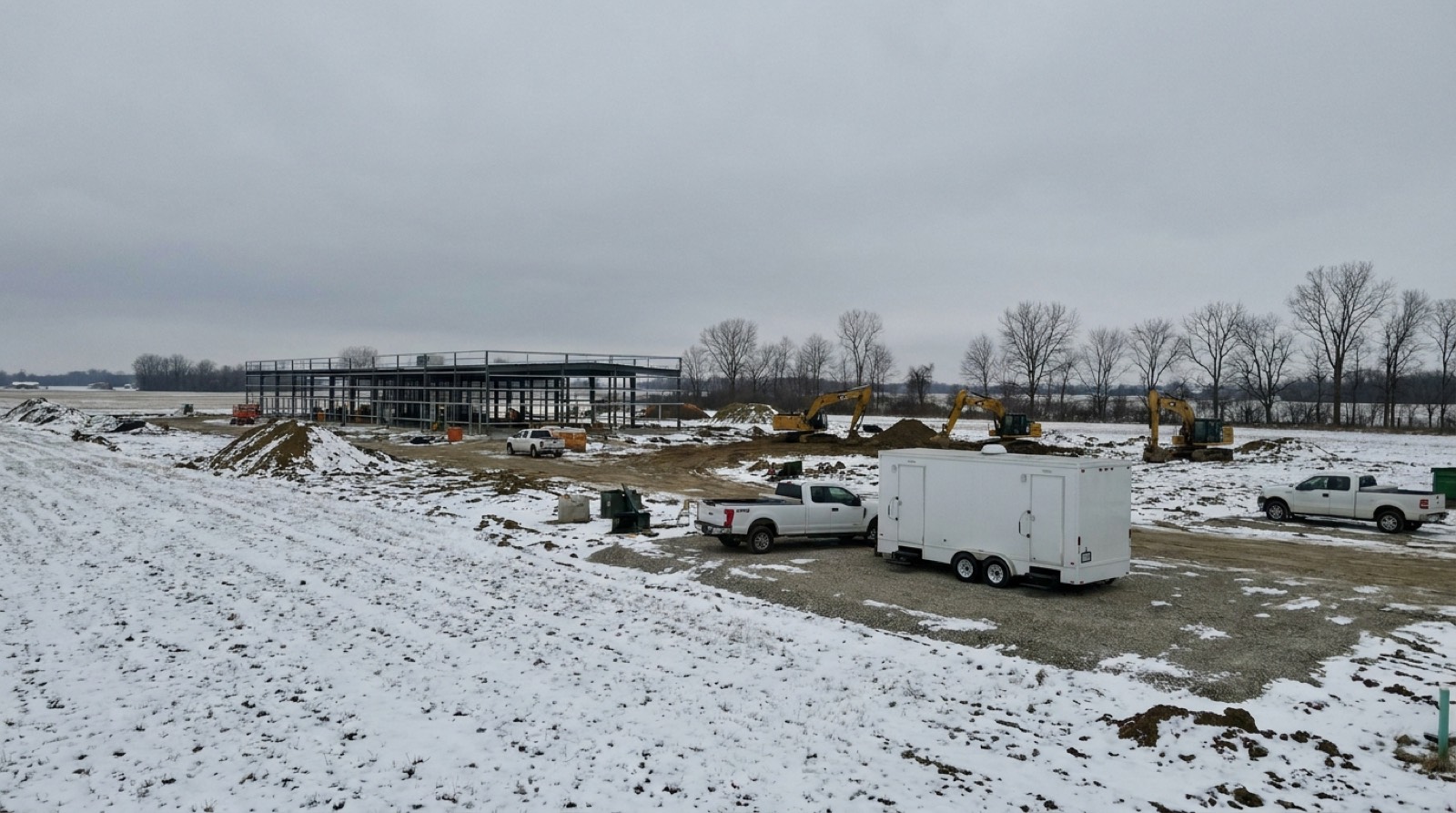
Columbus and New Albany schedules pass through humid summers and freezing winters, and the water equipment has to survive both. Summer looks like any hot-climate deployment. Chilled tanks, shaded fill points, intervals matched to what crews drink. Winter is where unprepared equipment dies: a tank that freezes splits, and a split tank in January is dead until spring.
Cold-season stations run heated enclosures and freeze-protected lines, and service visits verify heat trace along with volume. Where winter work slows demand, we right-size the deployed count rather than leaving idle tanks exposed to freeze risk, then scale back up ahead of the spring ramp.
Licking County campus sites sit on former farmland where municipal water may be years from the pad. Potable supply arrives on our route, on schedule, with fill documentation for the safety file, the same discipline as any utility the site does not yet have.
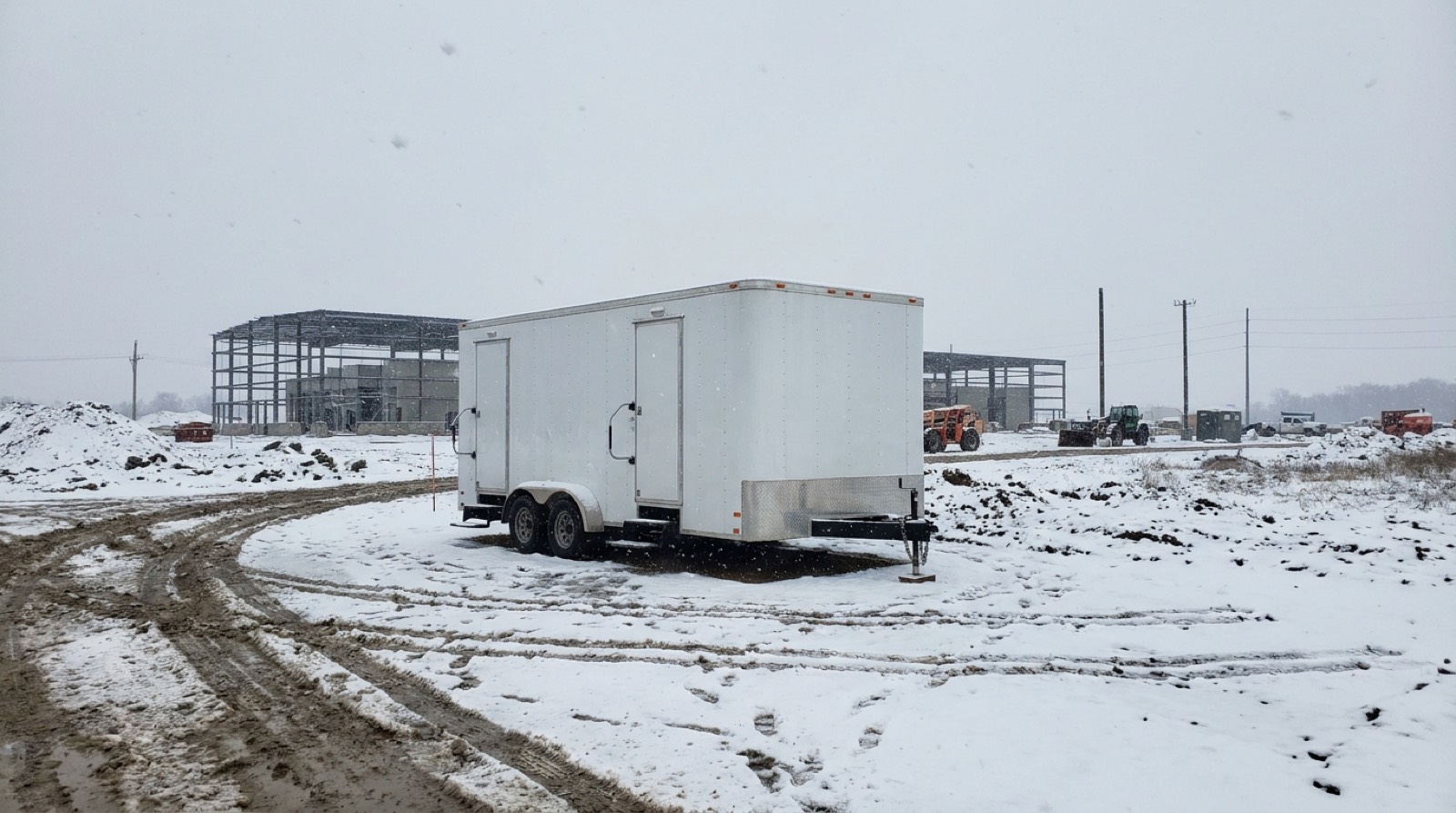
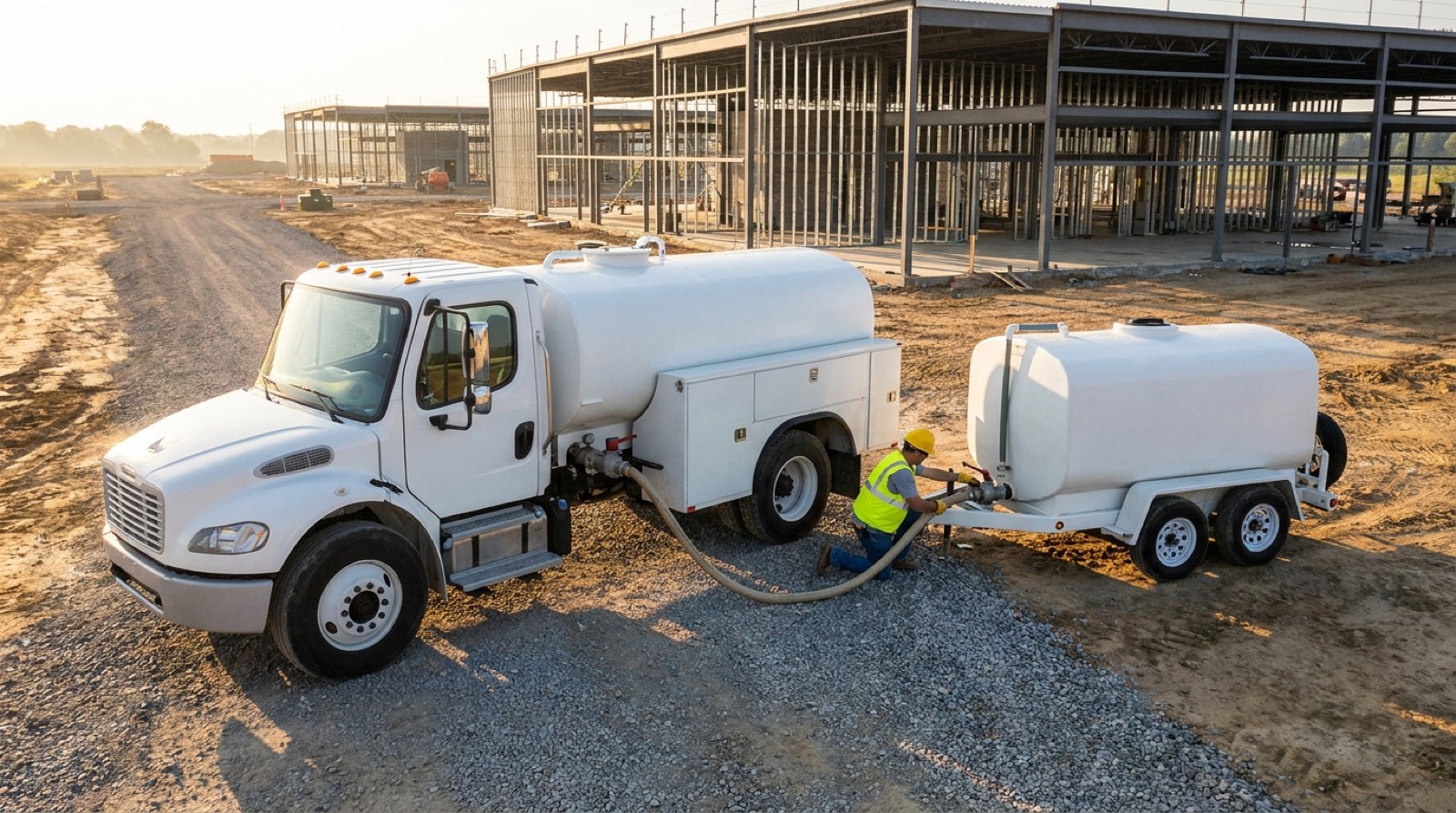
Most Ohio deployments bundle several units under one route. One contracted vendor, one dispatch, one escalation path, and a site plan that arrives already coordinated.
Where crews rotate in from out of the area, the end of shift is its own rush hour. Shower trailer rentals in Ohio carry that peak so the workforce goes home clean.
The paperwork side of the job needs a roof too. Office trailer rentals in Ohio give supervision and inspections a place to meet without leaving the gate.
Extended-stay crews generate wash loads every week of the schedule. Laundry trailer rentals in Ohio keep that cycle on site instead of in a hotel sink.
Food service and ice programs live or die on cold storage at the pad. Refrigeration trailer rentals in Ohio hold setpoint through the local season.
Restroom capacity anchors the plan. Restroom trailer rentals in Ohio sit closest to the workface and set the service route that every other unit rides on.
The full reach of our hydration station rentals program runs beyond Ohio, covering every corridor we serve.
Where we deploy
Heaviest concentration in the corridors carrying the most active data center construction, with nationwide mobilization beyond them.
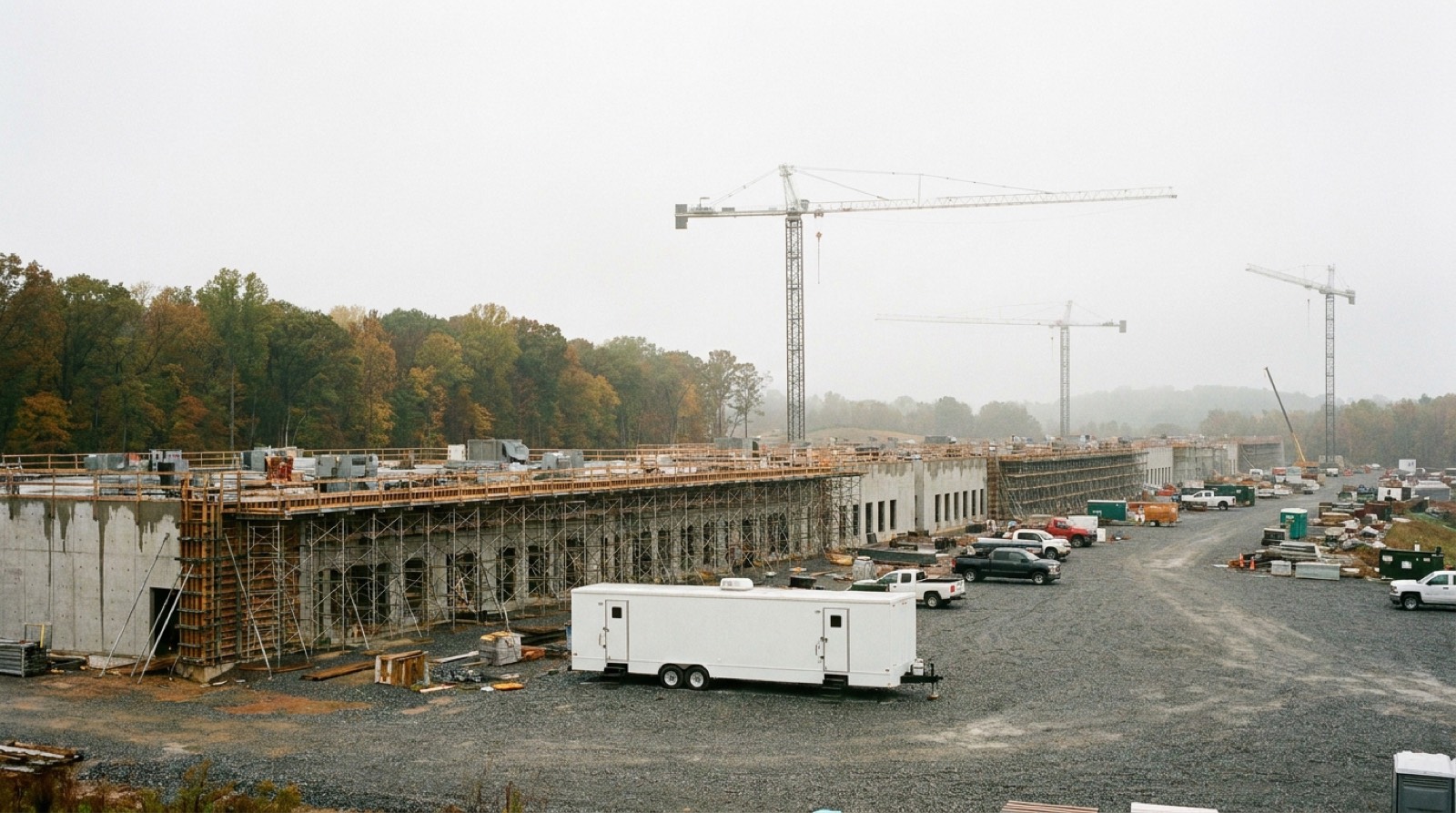
Loudoun County and Prince William run the densest data center concentration on earth. Multi-year campuses, badge-controlled access, crews in the hundreds, and facility requirements written into the subcontract.
View Northern Virginia →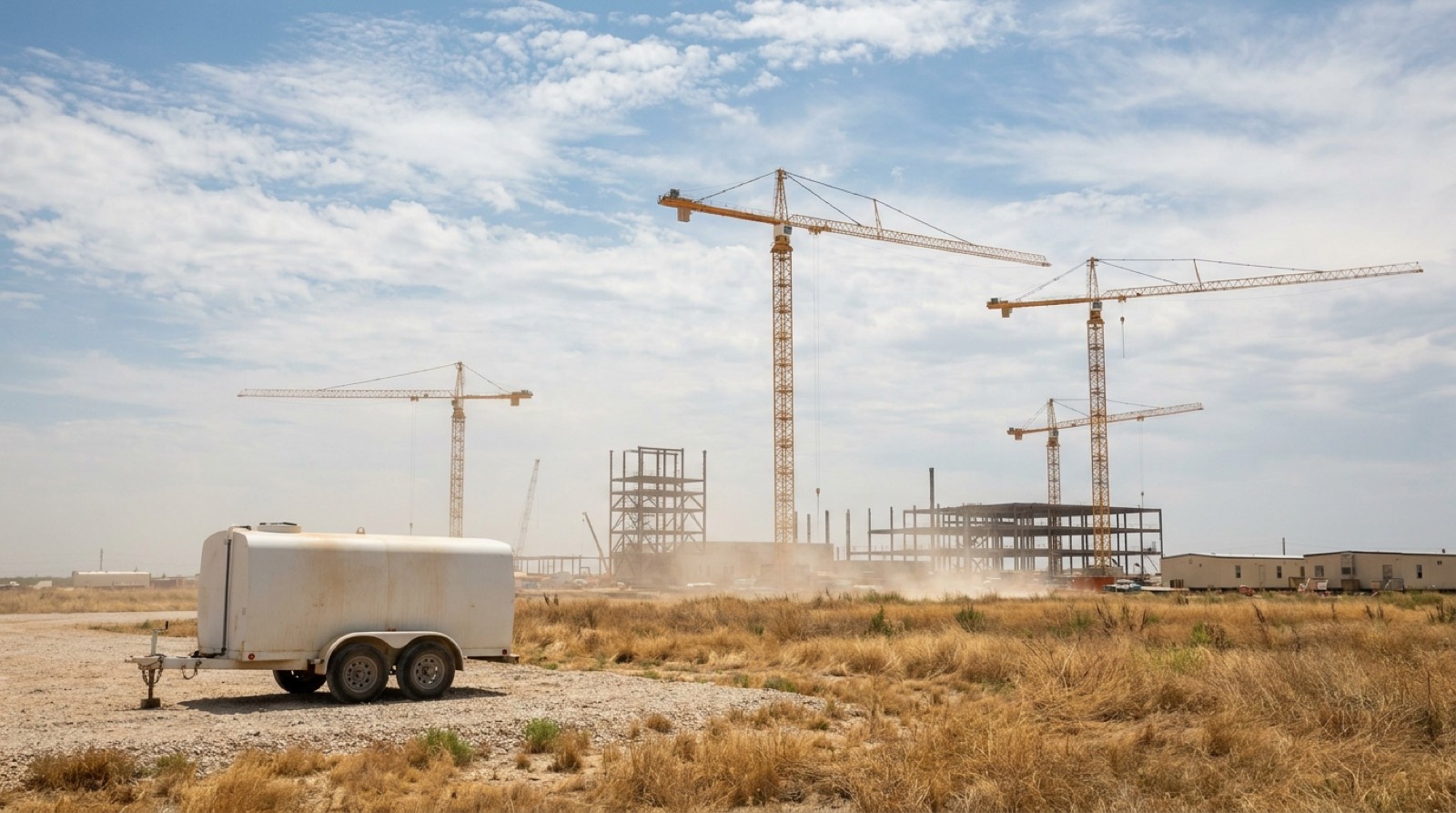
Dallas, Fort Worth, San Antonio and Abilene are carrying some of the largest campuses in the country. Summer heat makes hydration and shower capacity a safety line item, not an amenity.
View Texas →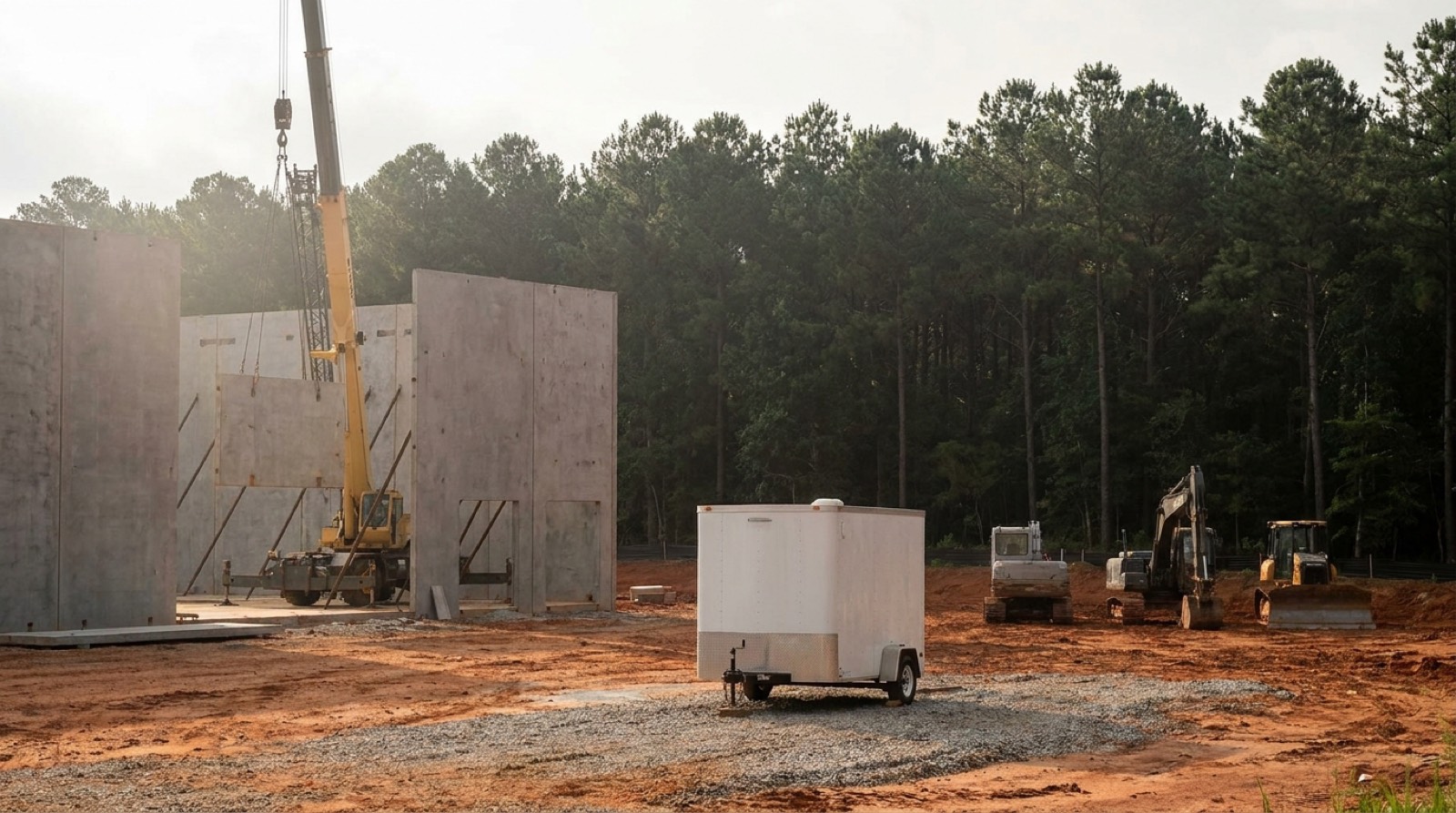
Atlanta metro and Douglas County, extending along I-20. Humid summers, long hauls between laydown and pad, and multi-phase schedules that keep facilities on site for years.
View Georgia →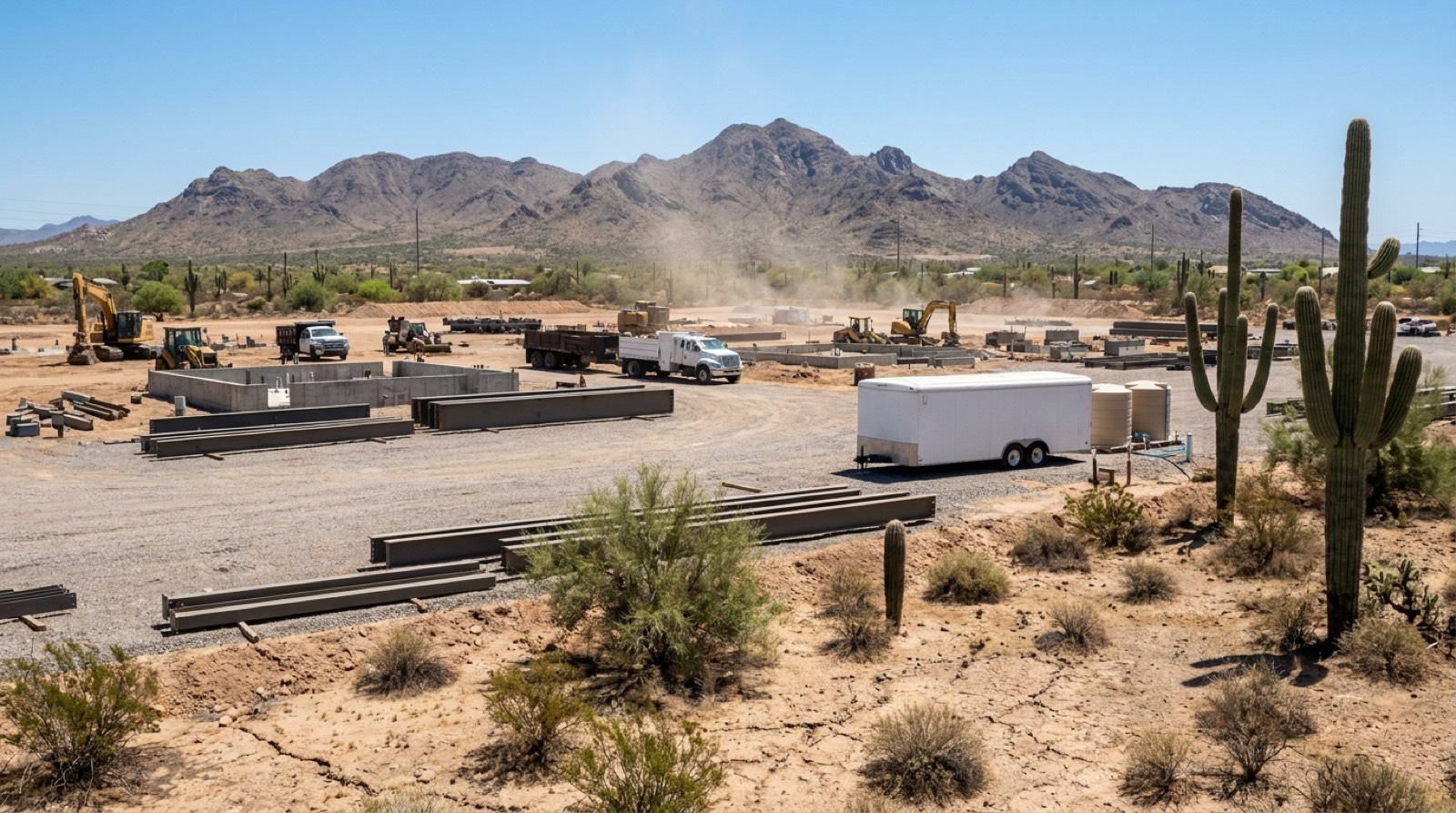
Phoenix and Mesa build through heat that regularly exceeds 110 degrees. OSHA heat-illness prevention drives water and shade requirements that our units satisfy directly.
View Arizona →Columbus and New Albany. Freeze protection and winter service access matter here in a way Sun Belt corridors never see.
View Ohio →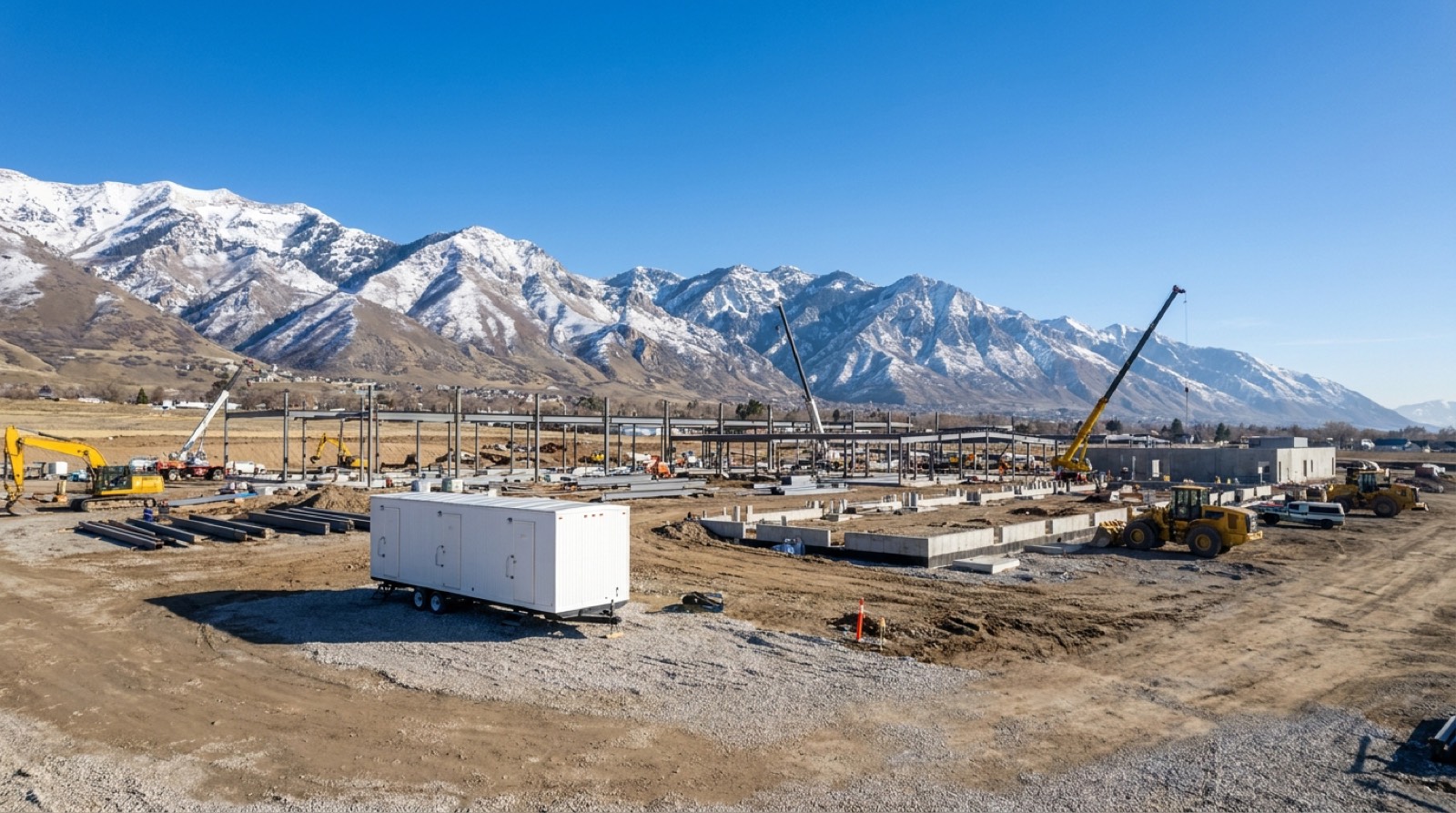
The Wasatch Front corridor runs through hard winters at elevation. Units are winterized and service intervals hold through snow.
View Utah →Questions we get
Winterized units do: heated enclosures, freeze-protected lines and heat trace verified at each service visit. Unwinterized water equipment splits tanks in the first hard freeze.
Counts flex with the season. Summer runs full capacity on tight intervals, winter right-sizes to actual demand, and the plan scales back up ahead of the spring manpower ramp.
Yes. Greenfield Licking County deployments run entirely on scheduled potable delivery with documented fills.
Go deeper
Longer reads for teams writing the site plan. Open what applies to your build.
Here is a rule of thumb that surprises people. A crew working a January day in New Albany can end the shift meaningfully dehydrated without one worker feeling thirsty. Cold blunts the thirst signal. The body constricts blood flow to the skin to conserve heat. The brain reads that as adequate fluid, so the urge to drink largely shuts off even while fluid keeps leaving. In cold weather the losses just take quieter routes. Every visible breath cloud is exhaled moisture. Cold air is dry air, and lungs humidify all of it on the way in and lose it on the way out.
Then add the gear. Ohio winter construction means heavy layers, and a worker humping cable tray or setting forms in insulated coveralls sweats hard inside that clothing. The sweat wicks away unseen. The worker never feels drenched, so the loss never registers. Dehydrated crews in winter show the same problems as summer. Fatigue, foggy decision-making, and slower reactions, which land on top of ice, short daylight, and numb hands.
The instinct on Midwest jobs is to pull the water stations in November and bring them back in April. Central Ohio's data center corridor keeps building straight through winter, and the crews still need water, just delivered against different physics. Freeze protection becomes the engineering problem. Water in an unprotected dispenser is a block of ice by morning, so winter service means insulated or heated equipment, placement inside heated enclosures or break areas where the site has them, and a service cadence that checks for freezing rather than for ice melt.
Temperature preference flips too. Nobody wants ice water at 20 degrees, and cool-to-moderate water gets consumed far better in winter. Sites that stock warm break-area options alongside the stations see better overall fluid intake across the shift.
Winter hydration runs on schedule instead of sensation. Since thirst will not prompt anyone, drinking gets attached to the rhythms the site already has. Water at the morning huddle, at warm-up breaks, at lunch. Supervisors who fold that into the winter safety routine, the same talks that cover ice and frostbite, keep their crews sharper through the dark months. The thermometer changes the plan. It never cancels it.
A data center build in central Ohio that breaks ground in fall will see crews working in single digits by January and in 90-degree humidity by July. Same site, same contract, a temperature swing of 100 degrees or more across the project calendar. Columbus and New Albany sit in one of the most seasonally extreme corners of the data center map, and a hydration plan built for either end of that swing fails at the other end. This is the core planning mistake we see in Ohio. Water service gets scoped once, off whatever season the estimator happened to be sitting in.
Summer-scoped plans carry winter costs for freeze-vulnerable equipment nobody adjusted. Winter-scoped plans hit June undersized, and the site scrambles for capacity in the exact weeks when heat illness risk arrives. Both failures trace back to treating water as a fixed line item instead of a seasonal curve.
Peak demand runs June through August, when consumption planning should assume hot-weather rates and maximum station counts. The shoulder months of April, May, September, and October are moderate but volatile. Central Ohio can produce an 88-degree week in early May while crews are still mentally in spring, and those ambush-heat days punish sites that scaled down early. Winter cuts volume demand roughly in half but replaces it with freeze protection as the operating challenge. The service question flips from keeping water cold to keeping it liquid and accessible.
Our practice on long Ohio contracts is to build the seasonal curve in from the start. Station counts, refill frequency, ice service, and freeze protection each carry planned adjustment points across the year, so scaling up for July or winterizing for January is a scheduled transition rather than a change order fight. The transitions key off forecast and site conditions, not fixed calendar dates, because Ohio weather does not read contracts. For planners comparing vendors on a multi-season build, this is the question that separates them. Ask how the service changes between January and July. A vendor with a real answer has operated through an Ohio year. A vendor with a blank look is quoting you a summer plan with winter pricing, or the reverse.
The data center campuses rising around New Albany and the Columbus beltway share a trait. Speed. Multiple buildings move in overlapping waves, sitework for the next shell starts while the last one fits out, and the population map of the project redraws itself every few weeks. A crew of 60 doing foundations on the north pad in April becomes 250 electricians and fitters inside Building 2 by August, while the foundation crew has migrated south to the next pad over.
Static infrastructure loses touch with a site like that. Fencing, parking, and laydown all get adjusted continuously, and drinking water belongs on the same list. But water has a way of getting placed at mobilization and forgotten, until someone notices that three stations sit in a zone that turned over to commissioning last month while the busiest building on the campus has one dispenser at the far door.
The fix is structural. Treat station placement as a rolling decision with a review rhythm behind it. On fast-moving campus builds, our service model pairs each refill cycle with a simple question. Does the station map still match the crew map. When the answer is no, units move as part of normal service, at no drama, rather than waiting for a formal request that usually arrives only after workers have been walking too far for weeks. The general contractor's look-ahead schedule feeds this well. If the schedule shows drywall crews loading into Building 3 in three weeks, water capacity should arrive in Building 3 slightly ahead of them.
The spot that gets missed most on multi-building campuses is the transition zone, a building moving from construction into commissioning. Construction headcount drops, so stations get pulled, but commissioning agents, punch-list crews, and vendor technicians keep working in there for months. They are fewer, quieter, and easy to leave without any water at all. A right-sized single station carries these teams through handover without cluttering the commissioning floor. On a campus that never stops moving, the water plan holds up only if it moves too. That is a service cadence question, not an equipment question, and it is the first thing to press any vendor on for a Columbus-corridor project.