Arizona
Hydration station rentals for Arizona data center sites
In the Phoenix valley, hydration is not an amenity line item. It is the control that keeps a 115 degree schedule legal, safe and moving.
In the Phoenix valley, hydration is not an amenity line item. It is the control that keeps a 115 degree schedule legal, safe and moving.
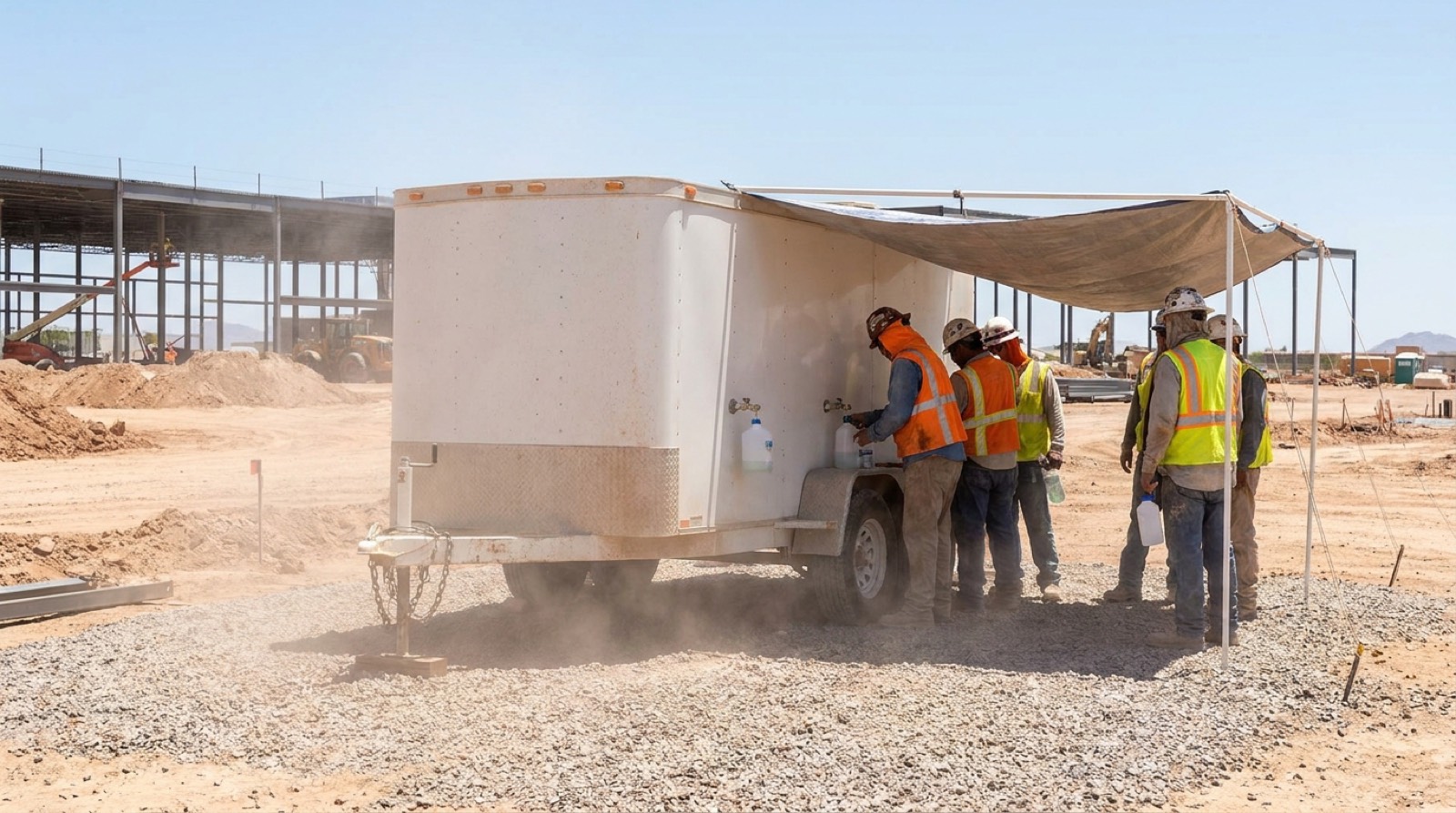
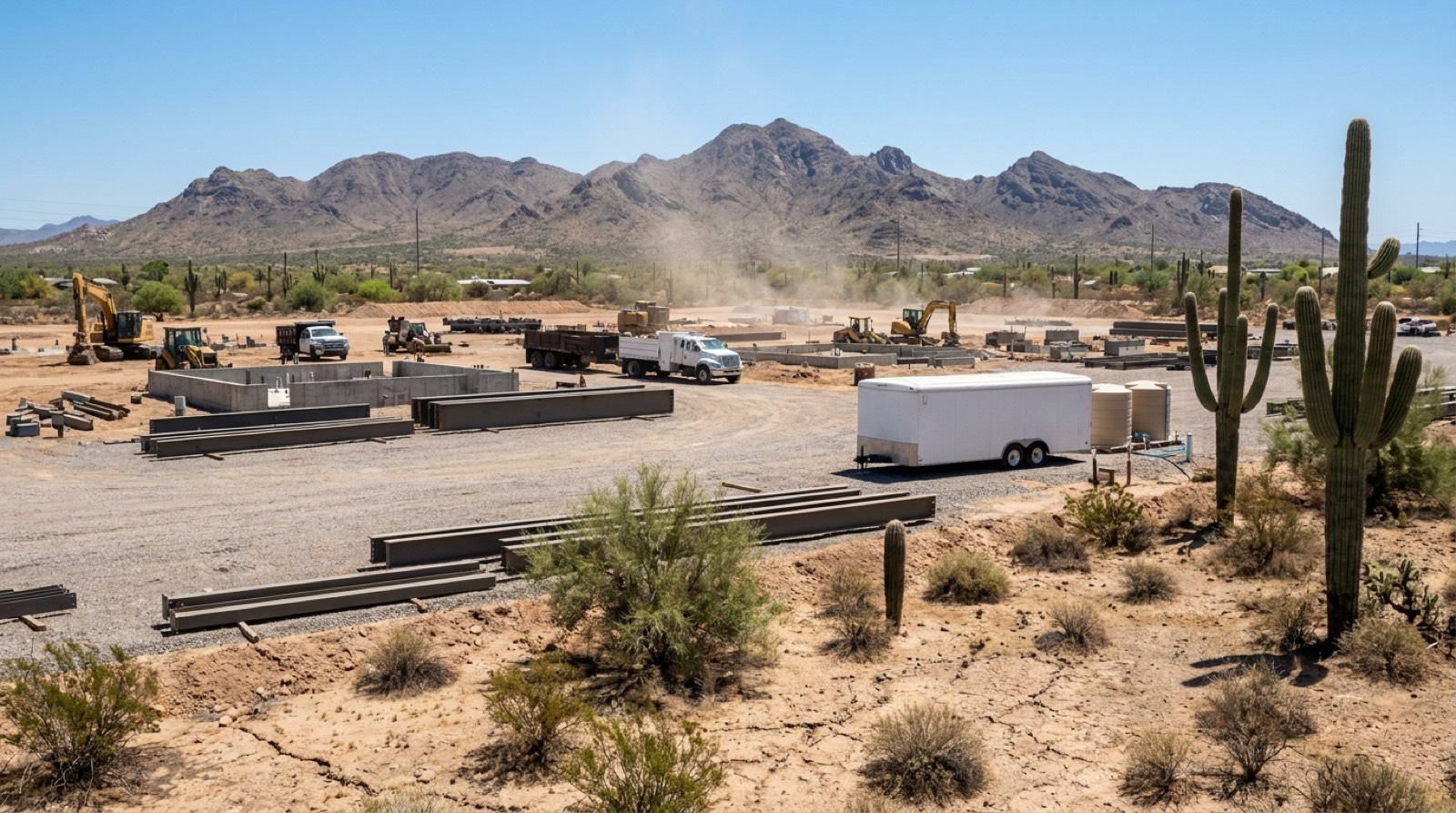
Phoenix valley sites build through summers where 110 is routine and 115 is not news. At those temperatures OSHA heat illness prevention stops being guidance and becomes the operating system of the site: shaded rest, acclimatization schedules, and water in quantities that would look absurd anywhere else. A hydration station here is safety equipment in the same category as fall protection, and it gets specified with the same seriousness.
Tank water sitting in the Arizona sun reaches temperatures no one will drink. Our stations run actively chilled tanks with insulated lines, positioned in engineered shade, and summer service visits verify chilling performance the way they verify volume. Warm water at a desert site counts as no water.
Desert crews start at four or five in the morning and push hardest before noon. Stations are filled and cold before the first arrival, and the refill route runs mid-morning so capacity never dips through the peak-draw window.
Most Arizona deployments bundle several units under one route. One contracted vendor, one dispatch, one escalation path, and a site plan that arrives already coordinated.
Where crews rotate in from out of the area, the end of shift is its own rush hour. Shower trailer rentals in Arizona carry that peak so the workforce goes home clean.
The paperwork side of the job needs a roof too. Office trailer rentals in Arizona give supervision and inspections a place to meet without leaving the gate.
Extended-stay crews generate wash loads every week of the schedule. Laundry trailer rentals in Arizona keep that cycle on site instead of in a hotel sink.
Food service and ice programs live or die on cold storage at the pad. Refrigeration trailer rentals in Arizona hold setpoint through the local season.
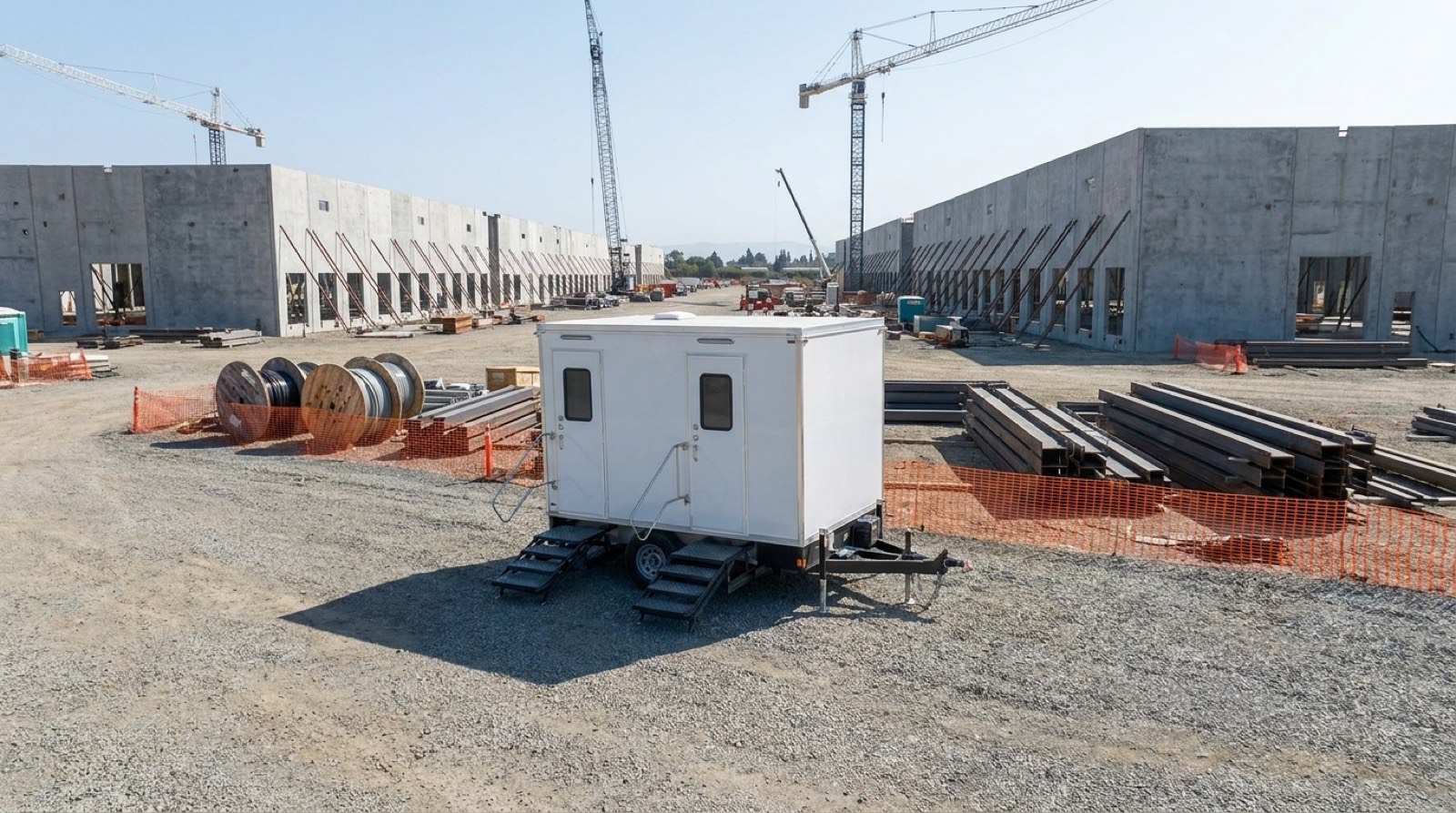
Restroom capacity anchors the plan. Restroom trailer rentals in Arizona sit closest to the workface and set the service route that every other unit rides on.
The full reach of our hydration station rentals program runs beyond Arizona, covering every corridor we serve.
Questions we get
The absolute temperatures. At 115 degrees, chilling is mandatory rather than nice, consumption approaches the OSHA maximum planning figures, and stations are treated as life safety equipment in the site's heat program.
Actively chilled tanks, insulated lines and engineered shade placement, with chilling performance checked on every summer service visit.
Yes. Stations are cold and full before dawn arrivals, and refill routes run mid-morning ahead of the peak-draw window.
Where we deploy
Heaviest concentration in the corridors carrying the most active data center construction, with nationwide mobilization beyond them.
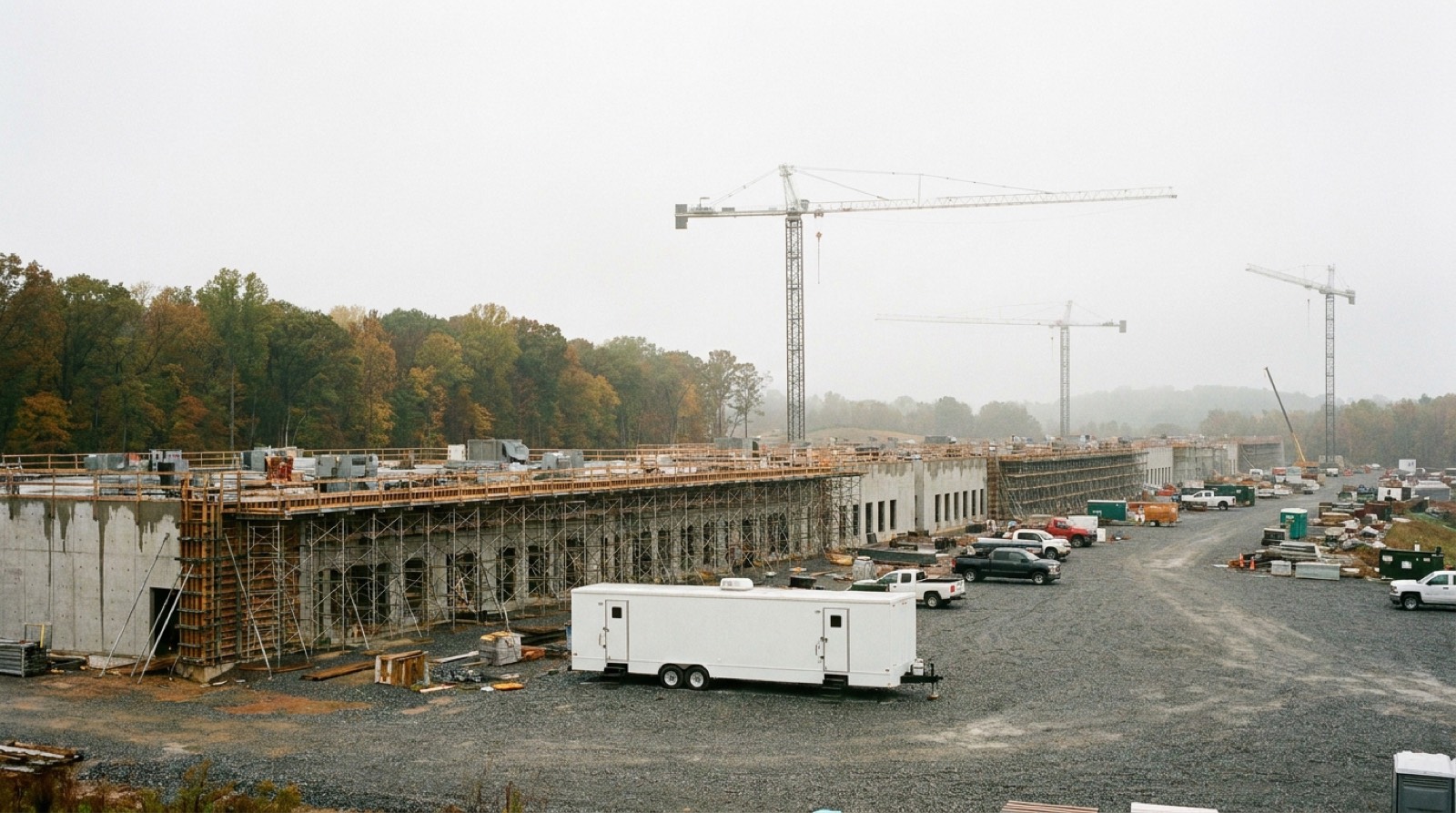
Loudoun County and Prince William run the densest data center concentration on earth. Multi-year campuses, badge-controlled access, crews in the hundreds, and facility requirements written into the subcontract.
View Northern Virginia →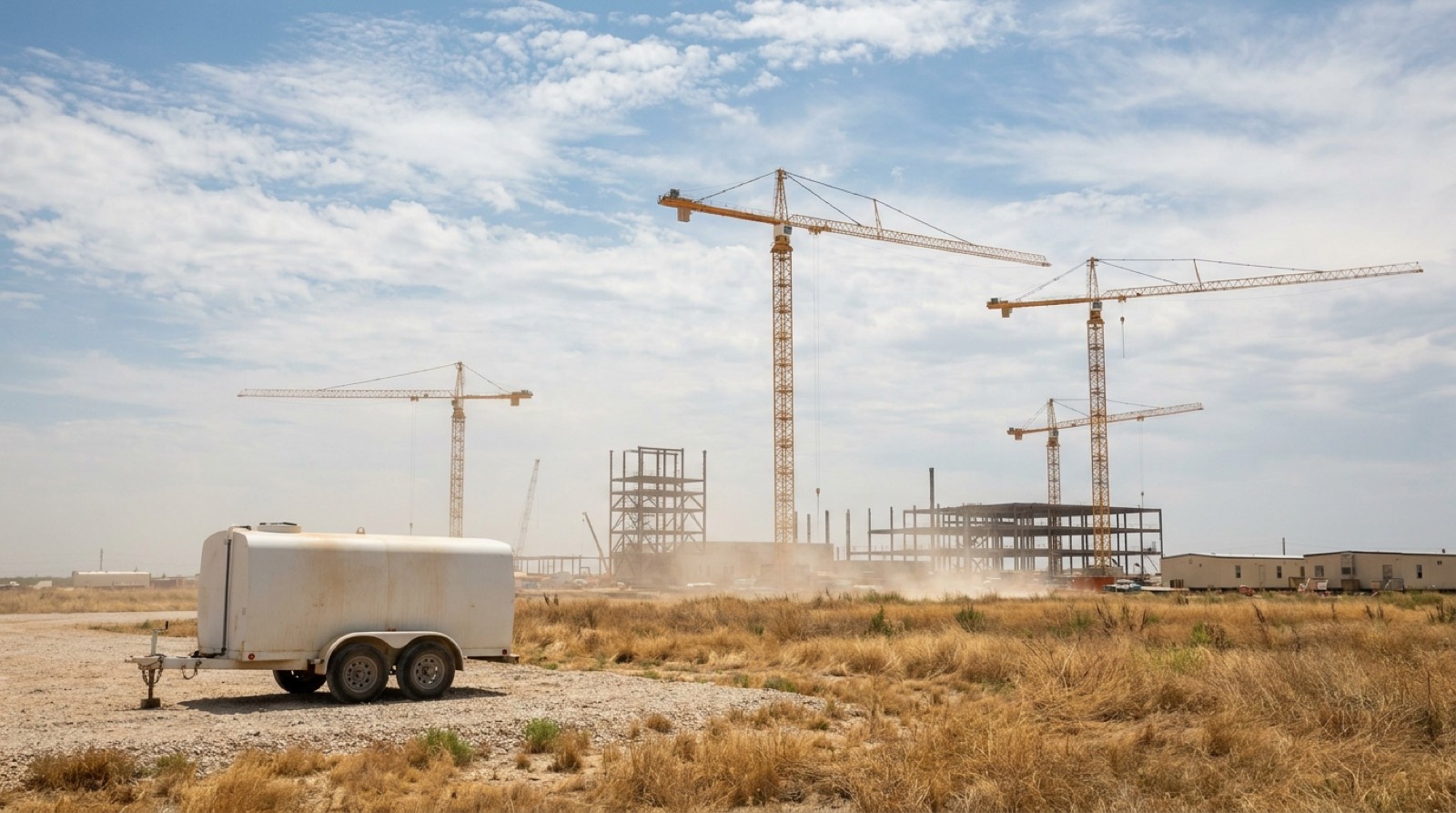
Dallas, Fort Worth, San Antonio and Abilene are carrying some of the largest campuses in the country. Summer heat makes hydration and shower capacity a safety line item, not an amenity.
View Texas →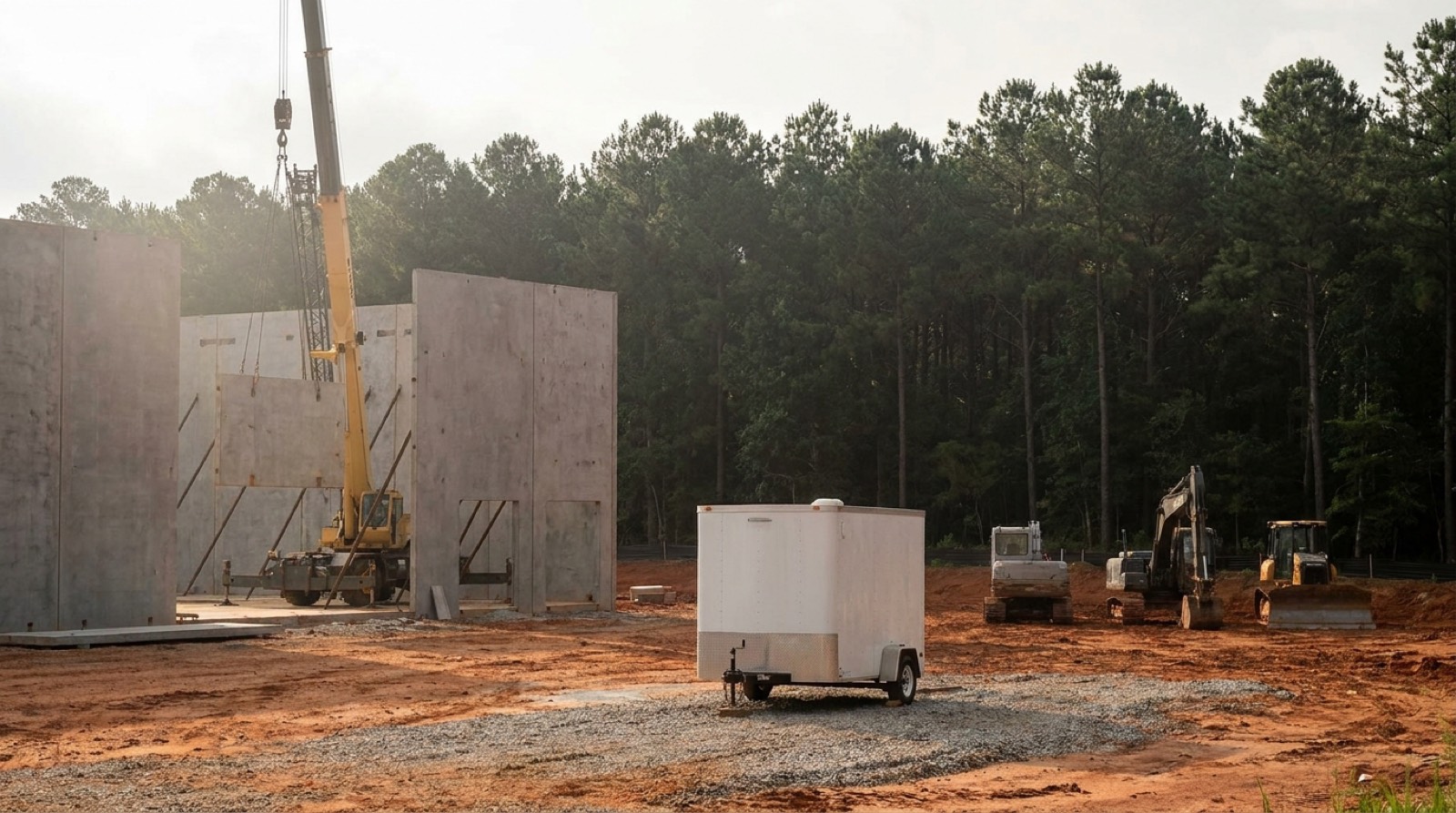
Atlanta metro and Douglas County, extending along I-20. Humid summers, long hauls between laydown and pad, and multi-phase schedules that keep facilities on site for years.
View Georgia →Phoenix and Mesa build through heat that regularly exceeds 110 degrees. OSHA heat-illness prevention drives water and shade requirements that our units satisfy directly.
View Arizona →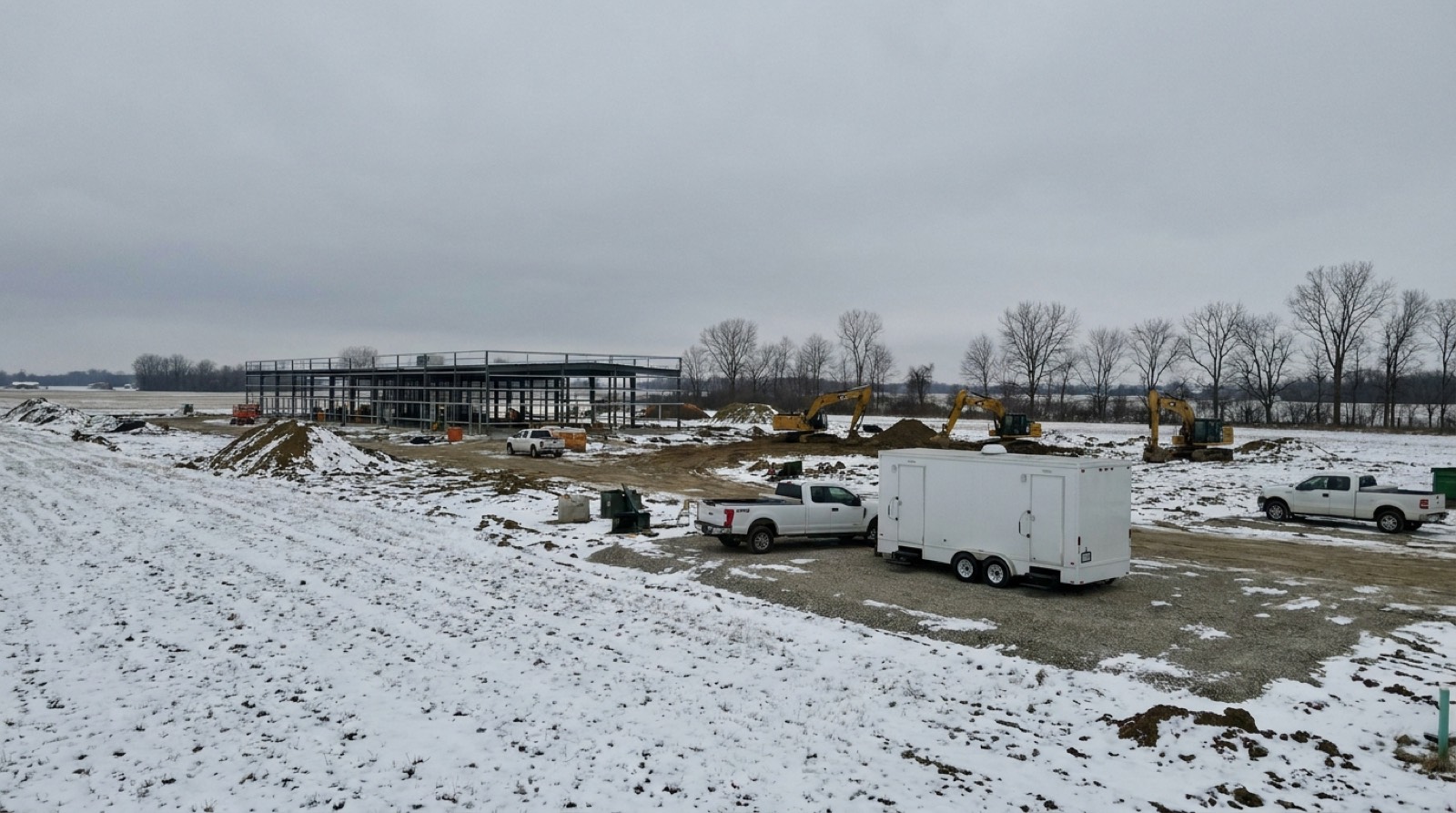
Columbus and New Albany. Freeze protection and winter service access matter here in a way Sun Belt corridors never see.
View Ohio →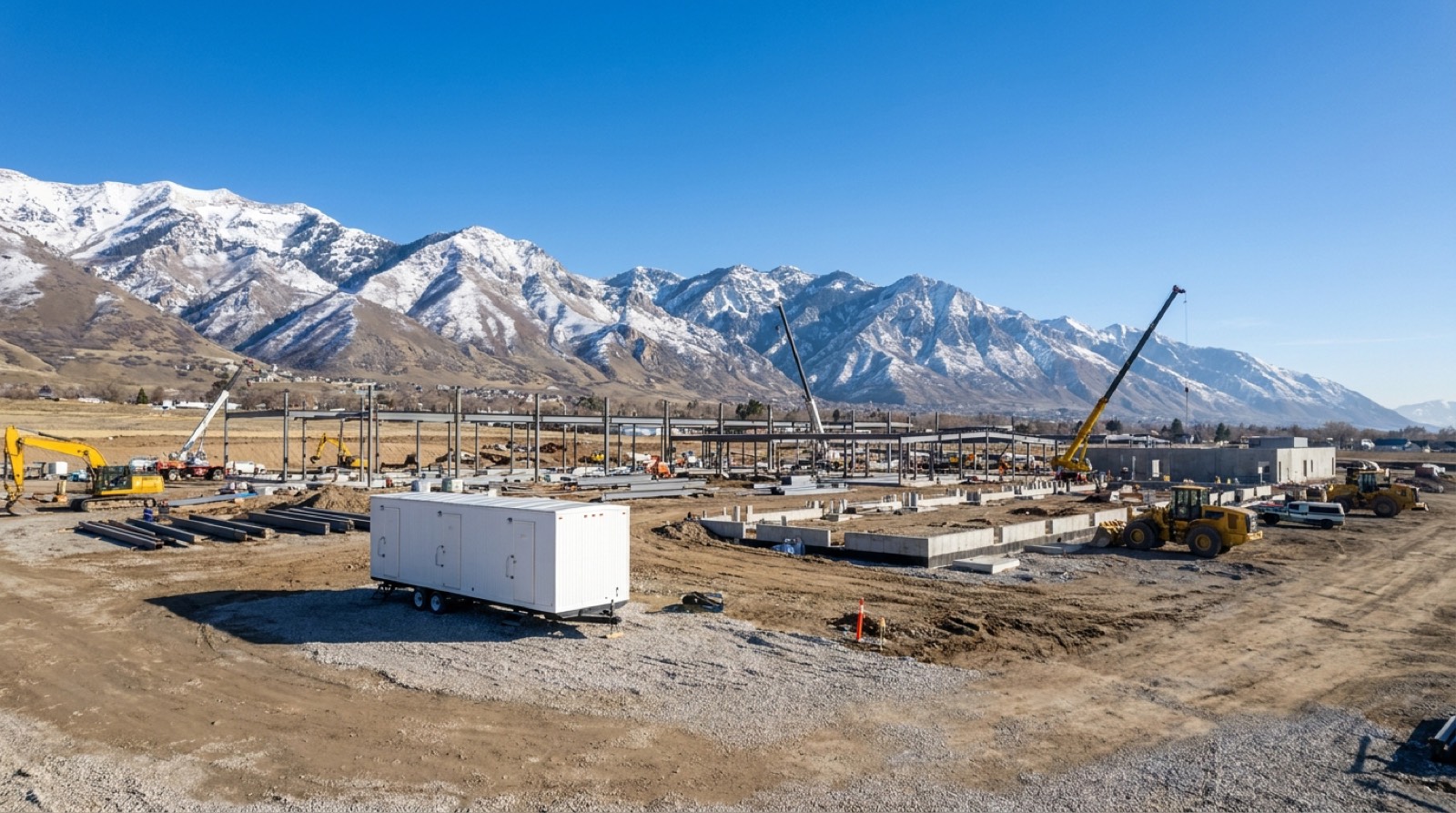
The Wasatch Front corridor runs through hard winters at elevation. Units are winterized and service intervals hold through snow.
View Utah →Go deeper
Longer reads for teams writing the site plan. Open what applies to your build.
In Phoenix and Mesa summer, the workday starts in the dark. Crews badge in at 4 or 5 am so the heaviest work lands before the afternoon becomes unworkable, and some scopes wrap by early afternoon entirely. It is a smart schedule. It also quietly rearranges the hydration problem, because most water plans assume a daytime rhythm that these crews do not follow.
Start with what the night did not do. Phoenix summer overnight lows often stay near 90, so workers spend the night sweating, sleep in dried-out air conditioning, and arrive at the gate already down on fluids. The first hours of a pre-dawn shift feel deceptively cool compared to what is coming, so nobody feels urgency to drink. By the time the sun clears the horizon and the temperature starts its climb toward 110, a worker who skipped water since arriving is starting the brutal part of the day in a hole.
The operational implication is simple and often missed. Water service has to run on the crew's clock, not the vendor's. Stations must be full, iced, and cold at 4 am, which means servicing happens the prior evening or overnight, never as a morning task. A refill truck arriving at 8 am on a pre-dawn site is arriving halfway through the shift. Station locations also need light. A dispenser in a dark corner of a laydown yard effectively does not exist at 4:30 am, so we position units where site lighting reaches or near lit access points.
The habit that saves pre-dawn crews is front-loading. Drinking steadily through the cool early hours builds a reserve before the heat arrives, and it is far more effective than trying to catch up at 11 am when the pad is a frying pan. Supervisors can push this with nothing more than a consistent message at the morning huddle and water positioned along the walk from the gate. One more note for these schedules. Coffee is universal at 4 am and fine in normal amounts, but it should ride alongside water, not stand in for it. A cup on the drive in does not count toward the reserve. The crew that beats the sun still has to outlast it.
Here is a pattern every desert superintendent has seen. A water supply sits in the sun, heats to bathwater temperature by 10 am, and the crew stops drinking from it. The water is safe. It is potable. It is also 95 degrees, and workers will ration sips or quietly switch to whatever cold soda is in someone's cooler. Research and field experience agree on this point. People drink substantially more when water is cool, and in a Mesa or Phoenix summer, the gap between cold and warm water is the gap between a hydrated crew and a depleted one.
At 110 degrees, cold is not a comfort feature. It is the delivery mechanism. Water that does not get consumed does not count, no matter how many gallons the plan shows on paper.
The desert attacks water temperature from every direction. Direct sun turns dark tanks into heaters. Ambient air above 105 warms everything it touches. Ground heat radiates up from a slab that may hit 140 at the surface. Ice loaded at 5 am is fighting all three fronts all day, and it loses fast without help. Our approach in Arizona stacks defenses. Insulated dispensers rather than bare containers. Placement in shade, and where the pad has none, which is most of a fresh data center site, shade gets created at the station with canopies rather than hoping for it. Ice service is scheduled as its own line item, sized to the forecast, with midday replenishment on the worst days instead of a single morning load that is gone by noon.
The practical takeaway for Arizona planners is to give ice the same seriousness as water volume. A 110-degree day consumes ice at a rate that shocks people from milder markets, and a hydration plan that specifies gallons but leaves ice to a supply run in somebody's pickup will fail by August. When we build a summer contract for a Phoenix-area site, temperature management is written into the service, with iced stations at shift start and re-icing tied to the forecast. Crews notice within a day when the water goes warm, and their intake drops just as fast. Keep it cold and keep it close. In the desert, cold comes first.
From roughly late June through September, the Phoenix area adds a second hazard to its brutal heat. Monsoon season brings outflow winds and haboobs, walls of dust that can run miles wide and drop visibility to nothing in minutes. A data center site in Mesa or the West Valley is essentially a groomed dirt platform, which means it produces and receives dust enthusiastically. Whatever is sitting exposed on the pad when a dust wall arrives gets coated, and that includes anything a crew drinks from.
An open cooler with a flip lid, a sleeve of cups sitting loose on a table, a spigot crusted from the last blow. None of it is dangerous in an obvious way, which is the problem. Crews will drink from a dusty setup for weeks without complaint, and a water source that workers start avoiding, or that gets grimy enough to matter, fails its one job during the hottest, most dangerous stretch of the Arizona calendar.
Monsoon country calls for closed systems. Sealed tanks with protected dispensing points rather than open containers, covered spigots, and cup storage in dispensers that shield the drinking surfaces instead of open sleeves that collect grit. Placement helps too. Stations tucked against windbreaks like conex boxes or building walls take dramatically less dust than units standing proud in the open.
Then there is the service rhythm. Our Arizona practice adds sanitation passes to the refill schedule through monsoon season, with wipe-downs of dispensing surfaces on every visit and a full station check after any significant dust event. A haboob on Tuesday night means stations get inspected and cleaned before Wednesday's shift drinks, not whenever the next refill happens to land.
One final monsoon note. After a storm passes, cleanup work spikes. Crews are sweeping, shoveling, and re-securing material in heavy air that is still hot, often while wearing dust masks that make drinking less convenient. Hydration demand jumps at the exact moment the water infrastructure just got sandblasted. Building the post-storm check into standard service closes that gap before the morning huddle even mentions it. In the Valley, the monsoon is not an interruption to the water plan. It is part of the water plan.