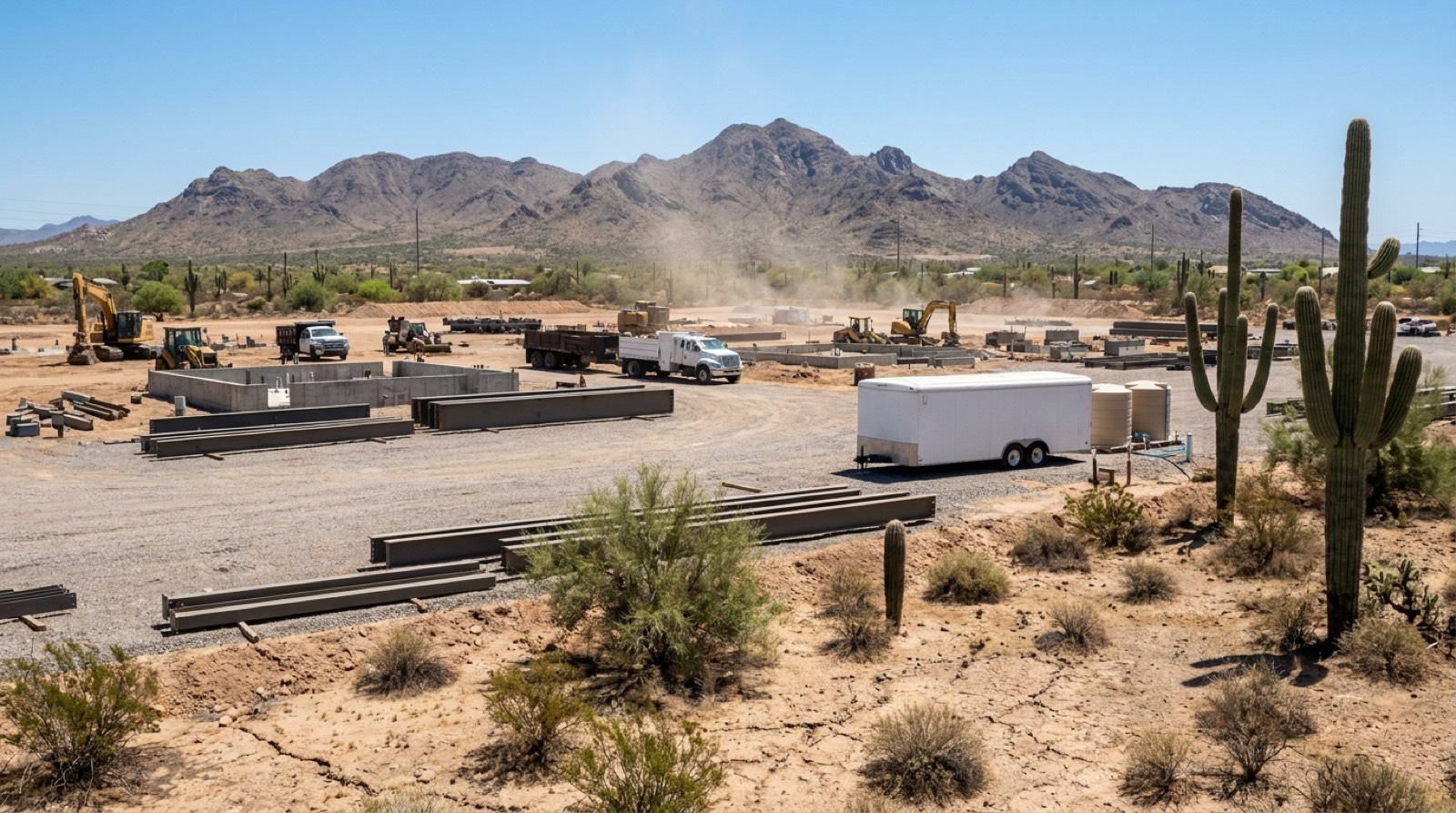
Arizona
Office and break room trailers for Arizona data center sites
Cooled rest space that functions as medical-grade heat protection on 115 degree schedules, plus offices that keep valley campuses coordinated from dawn.
Cooled rest space that functions as medical-grade heat protection on 115 degree schedules, plus offices that keep valley campuses coordinated from dawn.
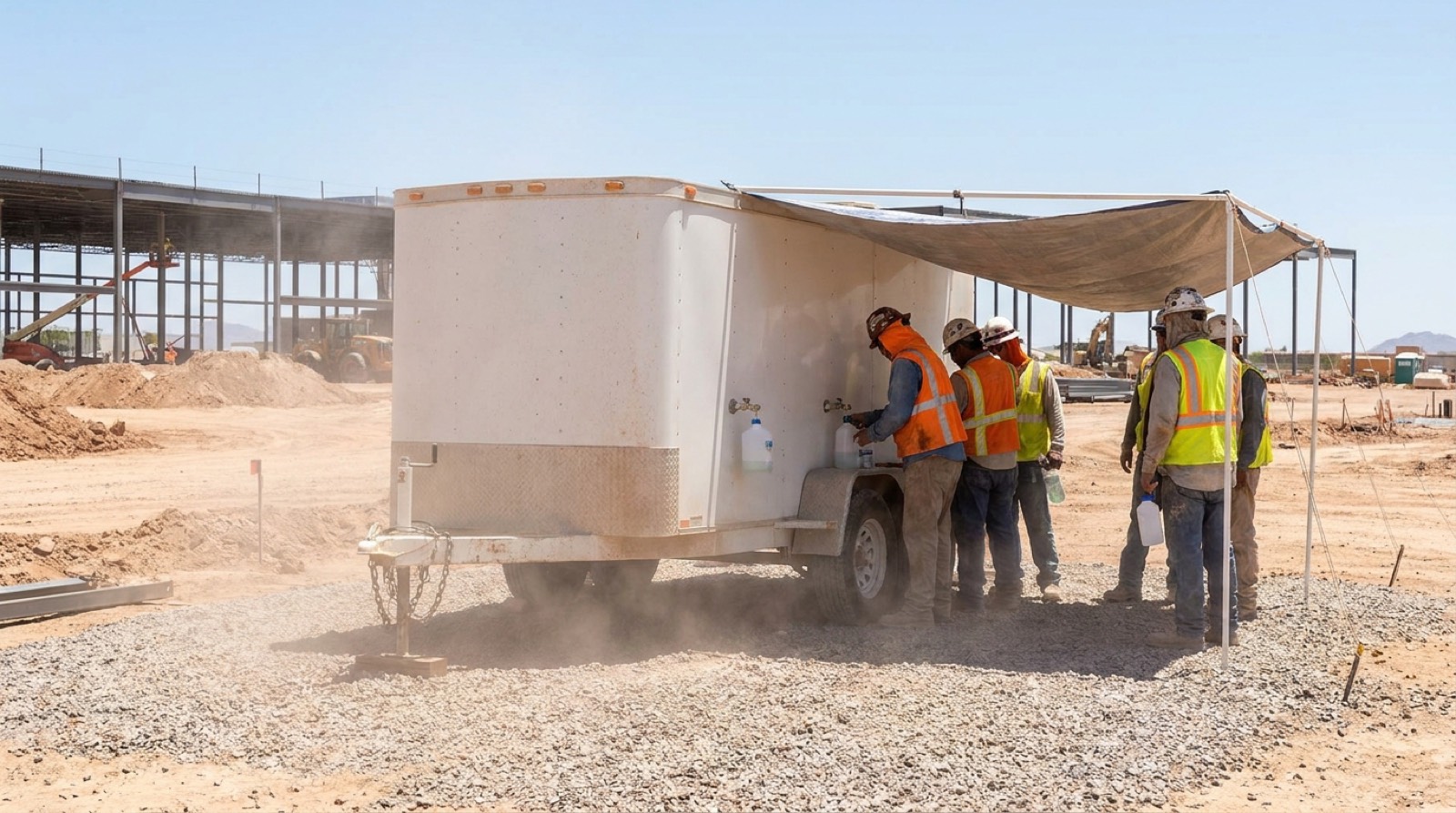
Arizona heat programs schedule mandatory rest cycles, and those cycles only work if the rest space is genuinely cool. Break trailers here are specified like safety equipment: cooling sized for desert load, capacity for a whole rotation at once, and placement close enough that walking there does not defeat the purpose.
Valley schedules start before sunrise, and the office trailer is lit and cool when the first pickups roll in. Superintendents run the day from the pad, not from a truck cab with a laptop.
Summer storms bring wind and dust walls. Units anchor and seal for it, and placement keeps doors out of the prevailing blast so the interior stays clean enough to work in.
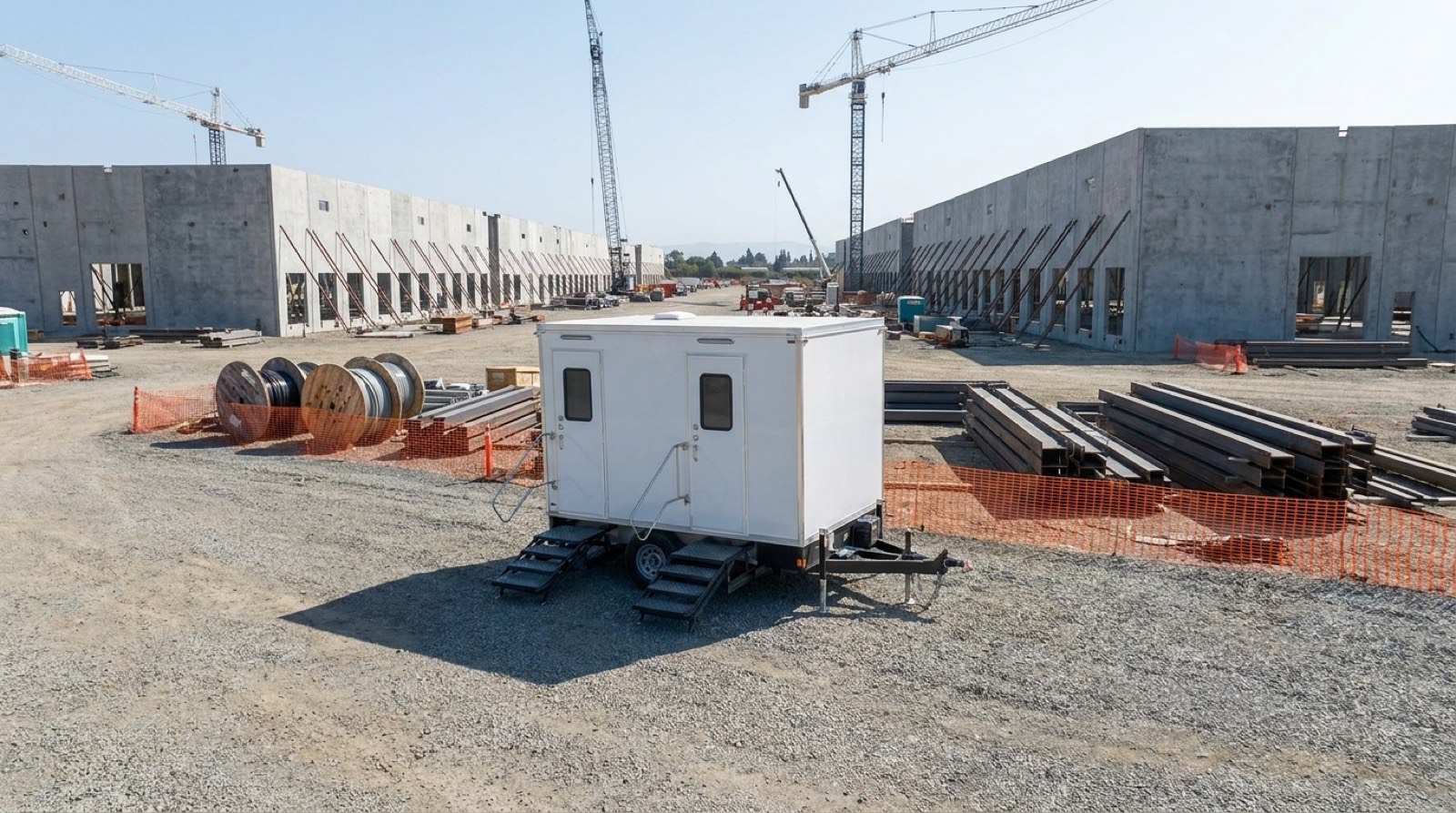
Most Arizona deployments bundle several units under one route. One contracted vendor, one dispatch, one escalation path, and a site plan that arrives already coordinated.
Extended-stay crews generate wash loads every week of the schedule. Laundry trailer rentals in Arizona keep that cycle on site instead of in a hotel sink.
Food service and ice programs live or die on cold storage at the pad. Refrigeration trailer rentals in Arizona hold setpoint through the local season.
Restroom capacity anchors the plan. Restroom trailer rentals in Arizona sit closest to the workface and set the service route that every other unit rides on.
Water is the first thing safety plans ask about. Hydration station rentals in Arizona run on the same supply logistics as the rest of the package, so adding them costs one stop, not a second vendor.
Where crews rotate in from out of the area, the end of shift is its own rush hour. Shower trailer rentals in Arizona carry that peak so the workforce goes home clean.
The full reach of our office trailer rentals program runs beyond Arizona, covering every corridor we serve.
Where we deploy
Heaviest concentration in the corridors carrying the most active data center construction, with nationwide mobilization beyond them.
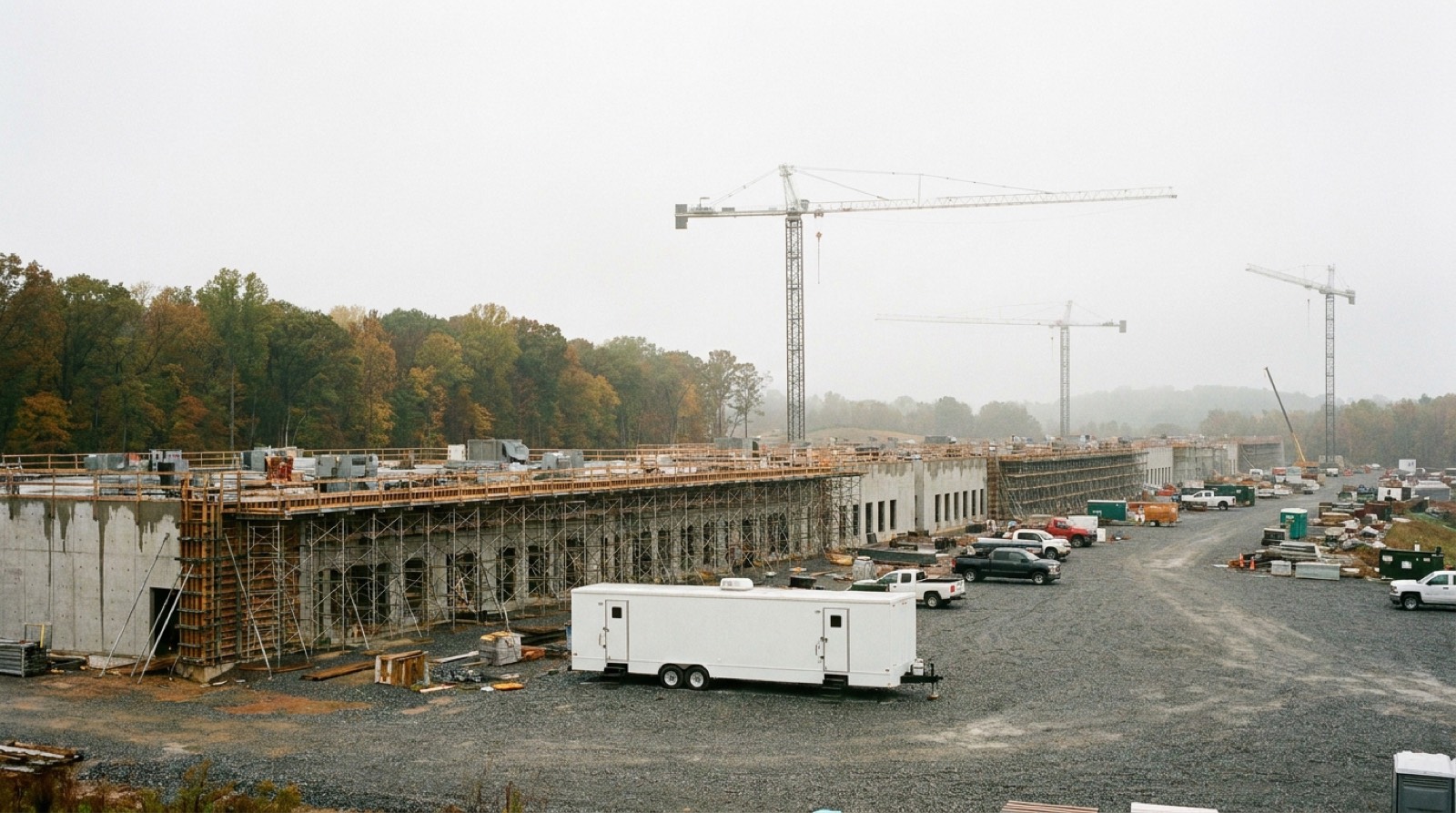
Loudoun County and Prince William run the densest data center concentration on earth. Multi-year campuses, badge-controlled access, crews in the hundreds, and facility requirements written into the subcontract.
View Northern Virginia →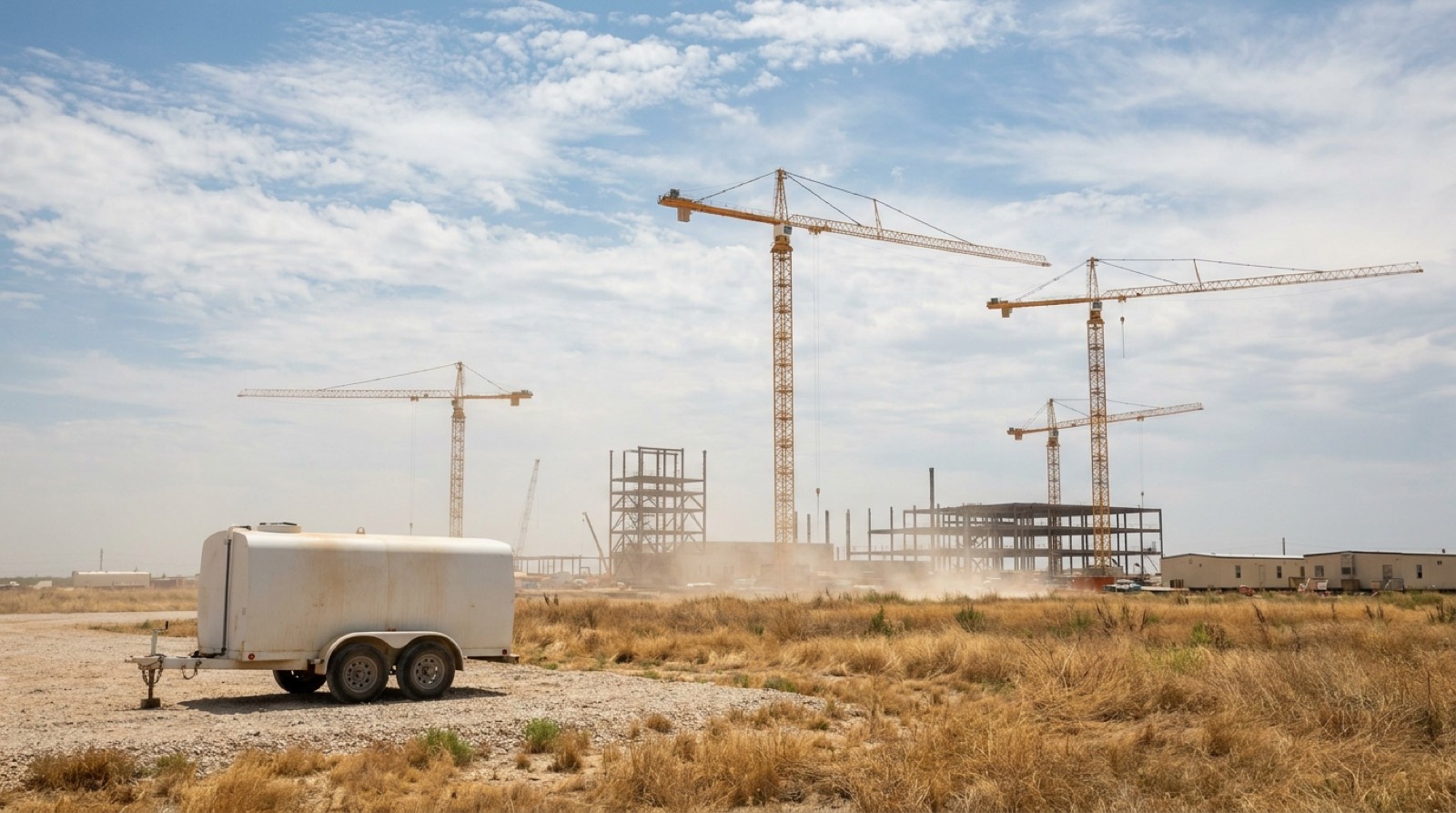
Dallas, Fort Worth, San Antonio and Abilene are carrying some of the largest campuses in the country. Summer heat makes hydration and shower capacity a safety line item, not an amenity.
View Texas →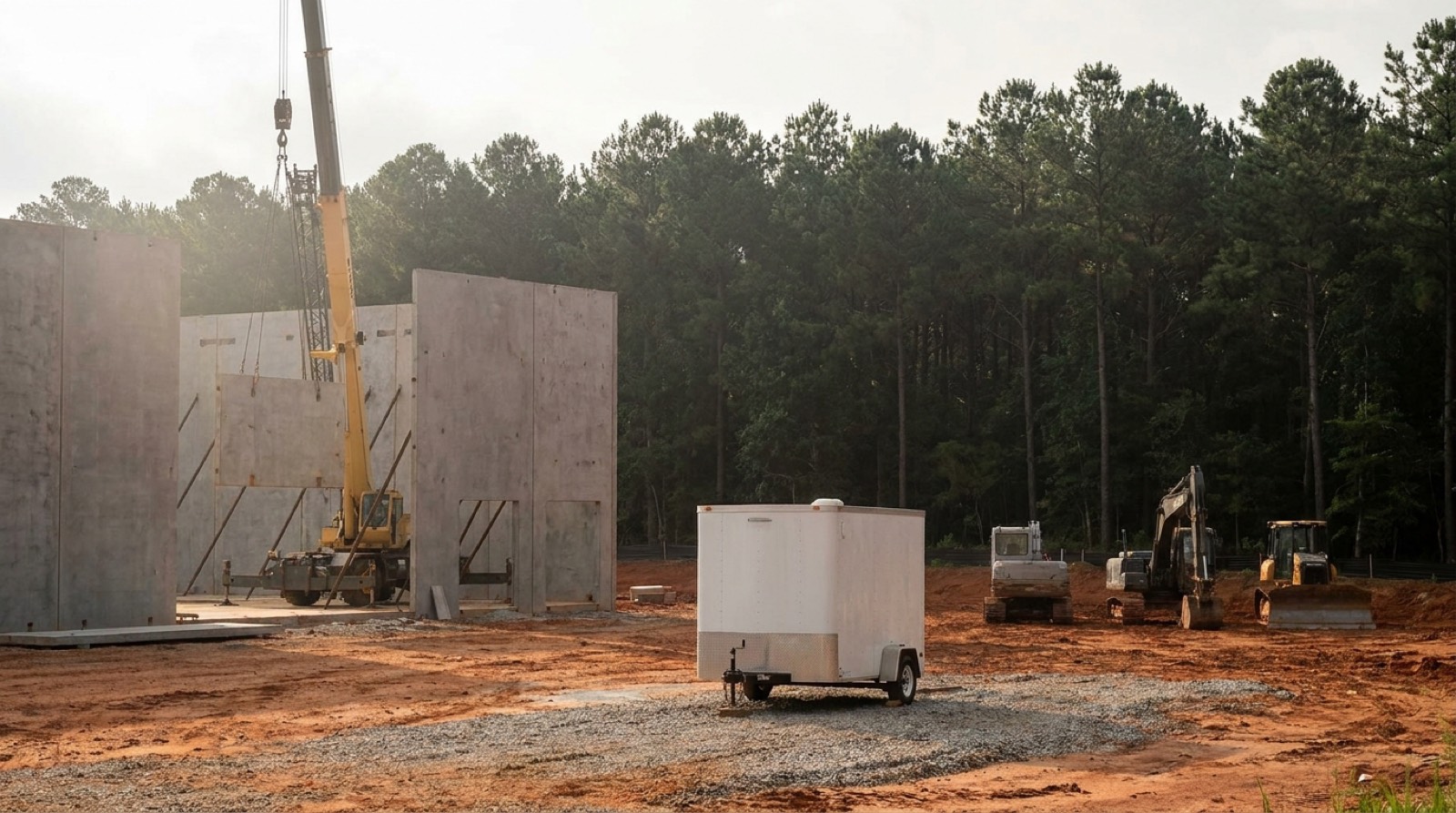
Atlanta metro and Douglas County, extending along I-20. Humid summers, long hauls between laydown and pad, and multi-phase schedules that keep facilities on site for years.
View Georgia →Phoenix and Mesa build through heat that regularly exceeds 110 degrees. OSHA heat-illness prevention drives water and shade requirements that our units satisfy directly.
View Arizona →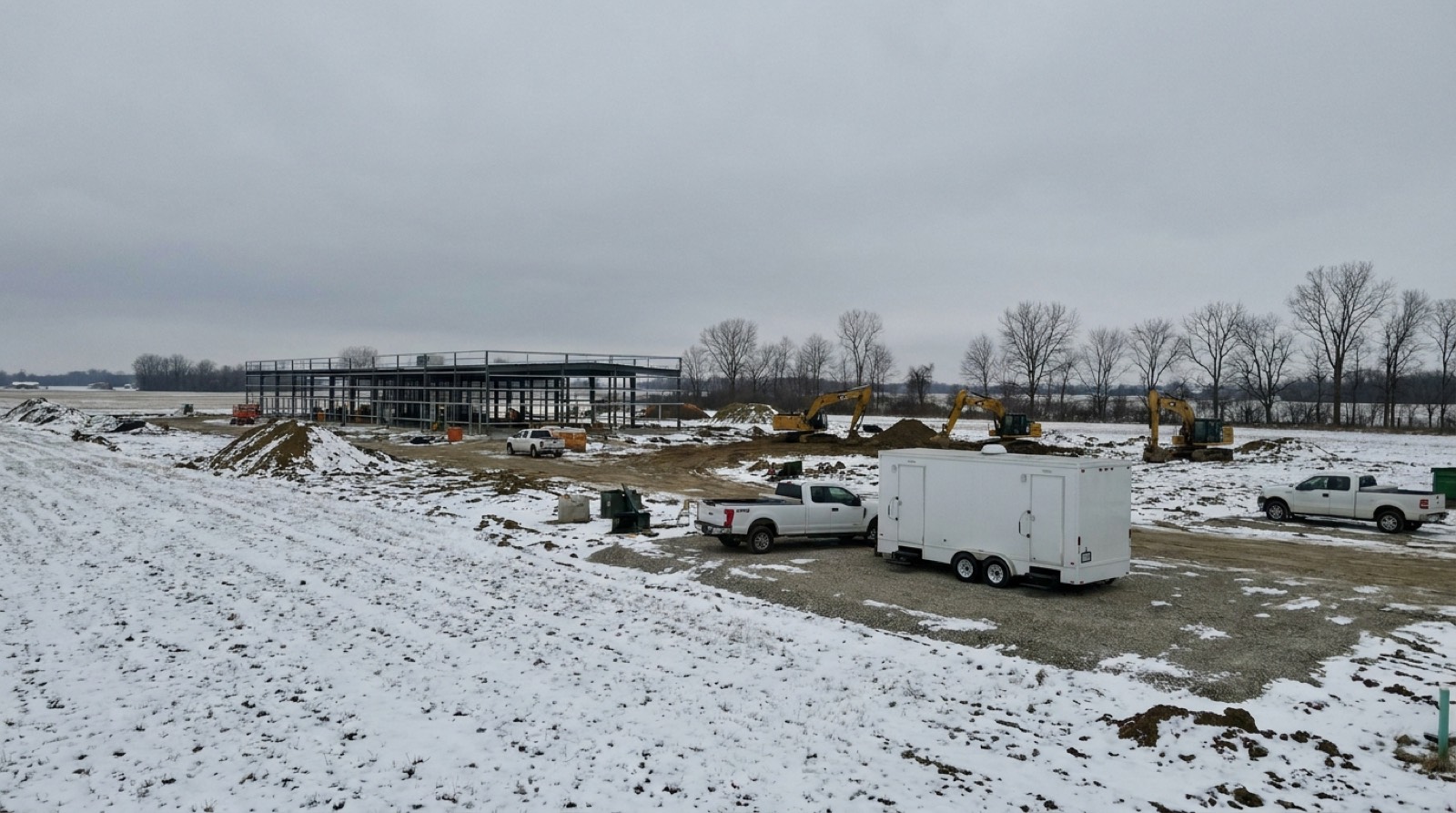
Columbus and New Albany. Freeze protection and winter service access matter here in a way Sun Belt corridors never see.
View Ohio →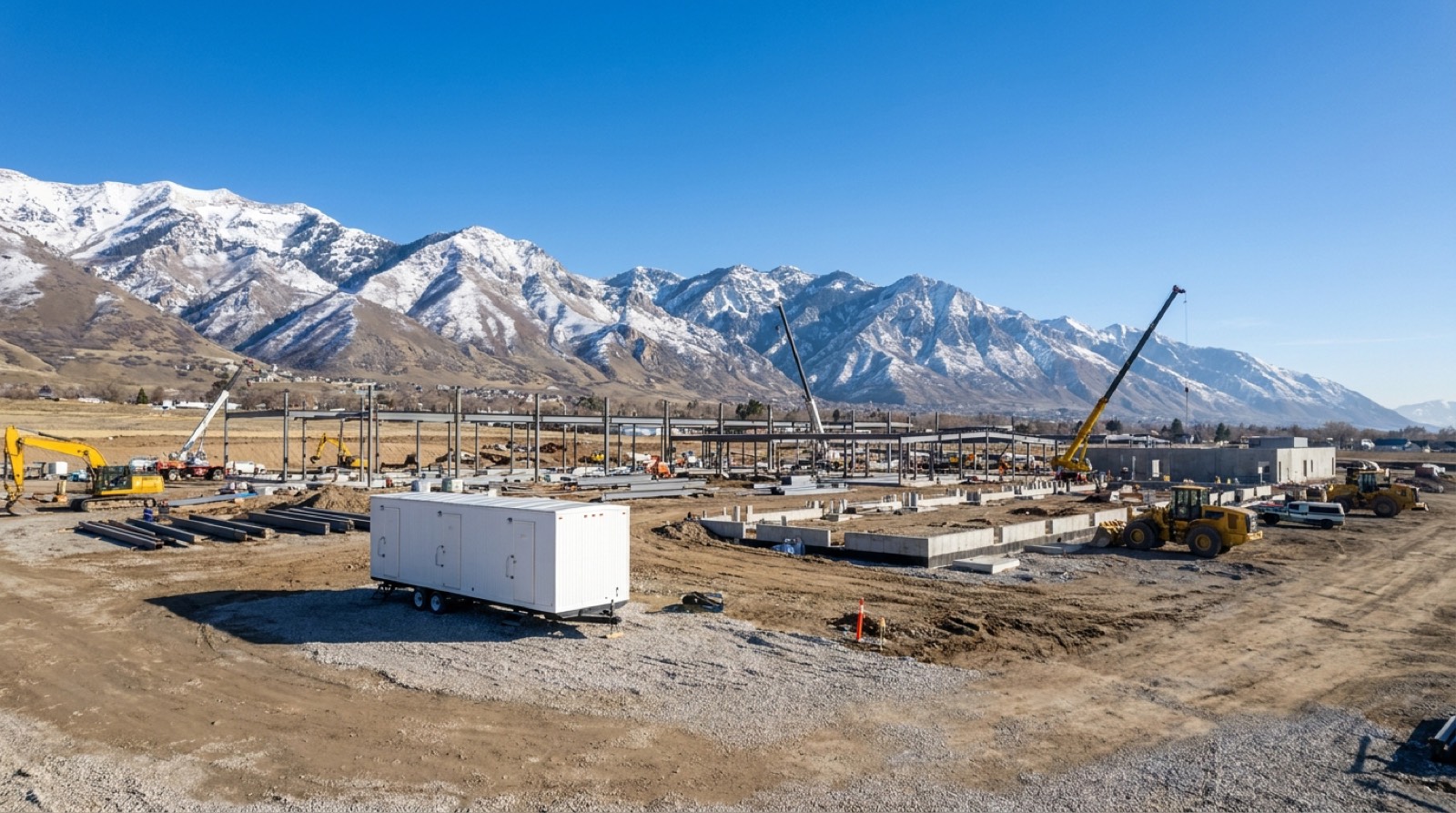
The Wasatch Front corridor runs through hard winters at elevation. Units are winterized and service intervals hold through snow.
View Utah →Questions we get
For the whole rest rotation at once, with cooling specified for desert load. A queue outside a full break trailer defeats the heat program.
Yes. Units are powered and cooled around the clock, ready when the first crews arrive before sunrise.
Placements anchor for wind and orient against the prevailing dust so interiors stay workable.
Go deeper
Longer reads for teams writing the site plan. Open what applies to your build.
Phoenix and Mesa build data centers through a summer that regularly reaches 110 to 115 degrees. At those temperatures, rest is not a courtesy extended to the crew. It is a control measure, sitting in the safety plan alongside hydration and work-rest scheduling. OSHA's heat guidance and Arizona practice both treat acclimatization, shade, and cooled recovery space as core defenses. Cooled recovery space is a physical asset someone has to put on the site plan.
The distinction between shade and cooling matters more in the desert than anywhere else. Shade in Phoenix in July is 112-degree air out of the sun. It helps, but it does not reverse heat strain. An air-conditioned break trailer holding 78 degrees gives a worker's body an actual recovery window. Safety managers on Valley megasites plan cooled seats the way they plan water stations, by zone and by headcount.
On the hottest weeks, Arizona sites run structured work-rest cycles. Crews rotate into cooled space on a schedule rather than waiting for symptoms. That structure changes break trailer math. Instead of two daily surges at break and lunch, units see steady rotation all shift. Seating for 25 to 30 percent of the zone's crew, continuously occupied, is a realistic planning figure during peak heat.
Place units tight to the work. A five minute walk in 113 degrees partly undoes the recovery the trailer provides. Distributed smaller units beat one distant large one every time in this climate.
Cooling equipment that works in Ohio does not automatically work in a Phoenix July. Air conditioners lose capacity as outdoor temperatures climb. A unit sized for a 95-degree design day will run flat out and still lose ground at 115. Desert placements need HVAC specified for desert conditions, shaded condensers where possible, and filters serviced on an accelerated schedule because of the dust.
Failures need a fast answer too. A break trailer that loses cooling on a 114-degree afternoon has stopped being a safety control. The site's heat plan is out of compliance until it is fixed. Ask any provider serving Phoenix how quickly they respond in summer and what they stock locally. We treat summer cooling calls in the Valley as emergency work, because on these sites that is exactly what they are.
Summer construction in Phoenix and Mesa runs on a shifted clock. Crews badge in at 4 or 5 am to put hours in before the worst heat, and by early afternoon the site is winding down. That schedule changes what the site office does. Critical coordination, stretch-and-flex, pre-task planning, and foreman huddles all happen in the dark or at first light. They happen indoors, because 5 am is the coolest and most comfortable hour of the day.
An office and break cluster serving a dawn shift needs to be genuinely ready at 4 am. Exterior lighting on the trailers and the paths between them. Coffee and cold water stocked the night before. Conference space warm-lit and cooled early, because even Phoenix mornings in July start in the 90s.
With the productive window compressed, dawn meetings carry more weight than the same meetings on a normal schedule. A 30-minute coordination meeting that starts late burns irreplaceable cool hours. The best-run Valley sites treat the office cluster as the launch pad. Plans get posted the prior afternoon and drawings staged in the conference room. Every foreman is out of the trailer and at the work face by full sunrise.
That argues for enough meeting space to run huddles in parallel. Three trades sharing one conference room in sequence at dawn wastes exactly the hours the shifted schedule was designed to save. Size the cluster so the electrical, mechanical, and concrete leads can brief simultaneously.
The shifted day has a second half people forget. Project engineers and commissioning staff often work standard hours even when craft labor starts at dawn. The office cluster runs a long combined day, roughly 4 am to 5 pm. HVAC, power, and janitorial planning should assume 13-hour occupancy, not 8.
Afternoon is also when the office becomes refuge. Field walks in a 113-degree afternoon are short by design, and the staff doing takeoffs, RFIs, and schedule updates does that work in cooled space. An underpowered air conditioner that lets the office creep to 85 by 3 pm quietly taxes every one of those hours. On Arizona placements we size office HVAC for the long occupied day and the real design temperature. The alternative is a management team as heat-stressed as the field.
From roughly mid-June through September, central Arizona trades steady heat for something more dramatic. Monsoon season brings sudden thunderstorms with 60 mile per hour outflow winds and walls of dust. Flash flooding can drop an inch of rain on a Mesa site in under an hour. For data center projects around Phoenix, the monsoon is a known annual event. The trailer compound needs to be built for it from the first set.
Wind is the headline risk for temporary structures. Monsoon outflows arrive fast, sometimes ahead of any rain, and an unanchored or lightly anchored trailer is exactly the kind of structure those gusts punish. Every unit we place in the Valley gets tie-downs engineered for the wind exposure, checked after the first season's storms, not just at installation.
Desert soil sheds water badly, and a summer storm cell can flood a flat compound in minutes. Trailer pads in the Valley should sit high, on compacted material, with drainage paths that carry water away from doors, steps, and the power pedestal. Walk the compound during the first storm of the season if you can do it safely. That is when the grading plan tells you the truth.
Dust is the quieter monsoon problem. A haboob rolling over a site pushes fine dust into every gap, and HVAC systems ingest it by the pound. Change filters after major dust events and check door seals at season start. That keeps the office air clean and the cooling equipment alive through its hardest months.
When a monsoon cell hits an active site, work stops immediately. Lightning, wind, and blowing dust all demand shelter. The break trailer network becomes the refuge, the same way it does in Georgia lightning season. The difference is speed. Monsoon storms can go from first gust to full force in minutes. Crews need shelter close enough to reach fast, and everyone needs to know which unit is theirs.
Fold the trailers into the site's monsoon action plan explicitly. Designate shelter units by zone, keep doorways clear, and brief the plan in July toolbox talks. The storm that stops work for 45 minutes costs little on a site that shelters cleanly and restarts fast. The one that catches a scattered crew costs the rest of the day. In the Valley, the compound that is ready for the monsoon earns its keep every single summer.