Arizona
Restroom trailer rentals for Arizona data center sites
Desert-rated restroom capacity for the Phoenix valley's data center corridors, where cooling performance and water logistics decide whether facilities actually work.
Desert-rated restroom capacity for the Phoenix valley's data center corridors, where cooling performance and water logistics decide whether facilities actually work.
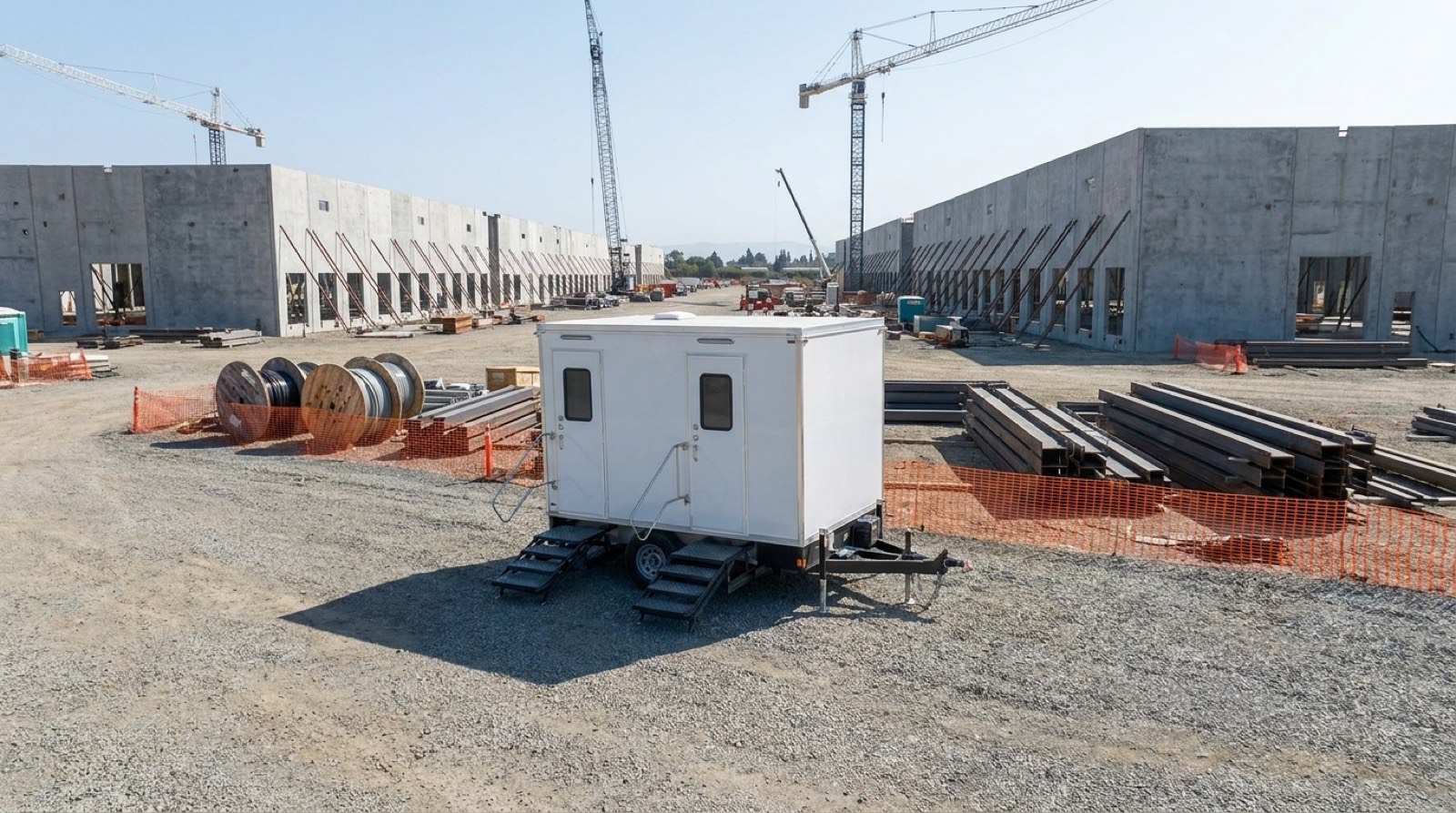
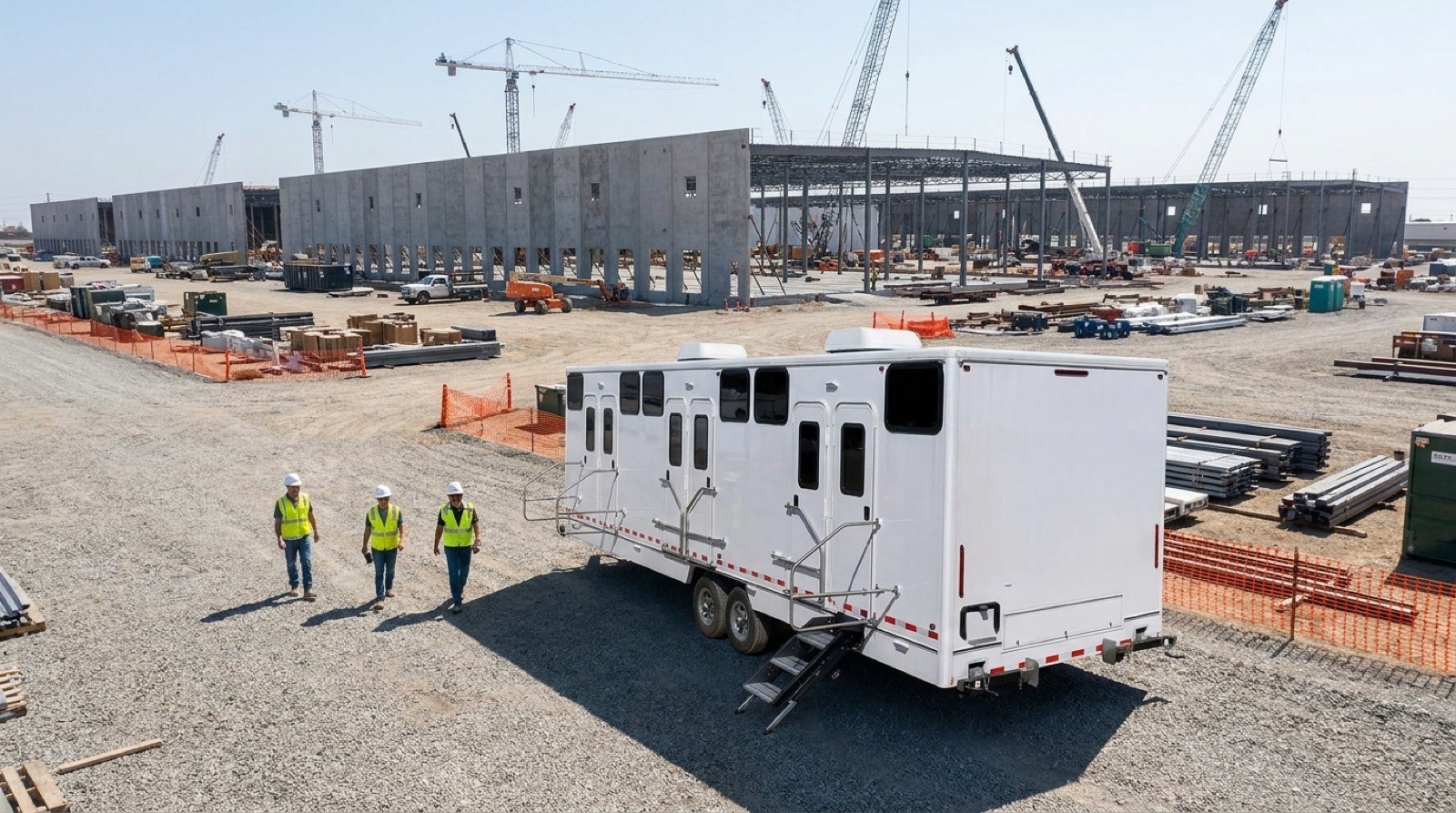
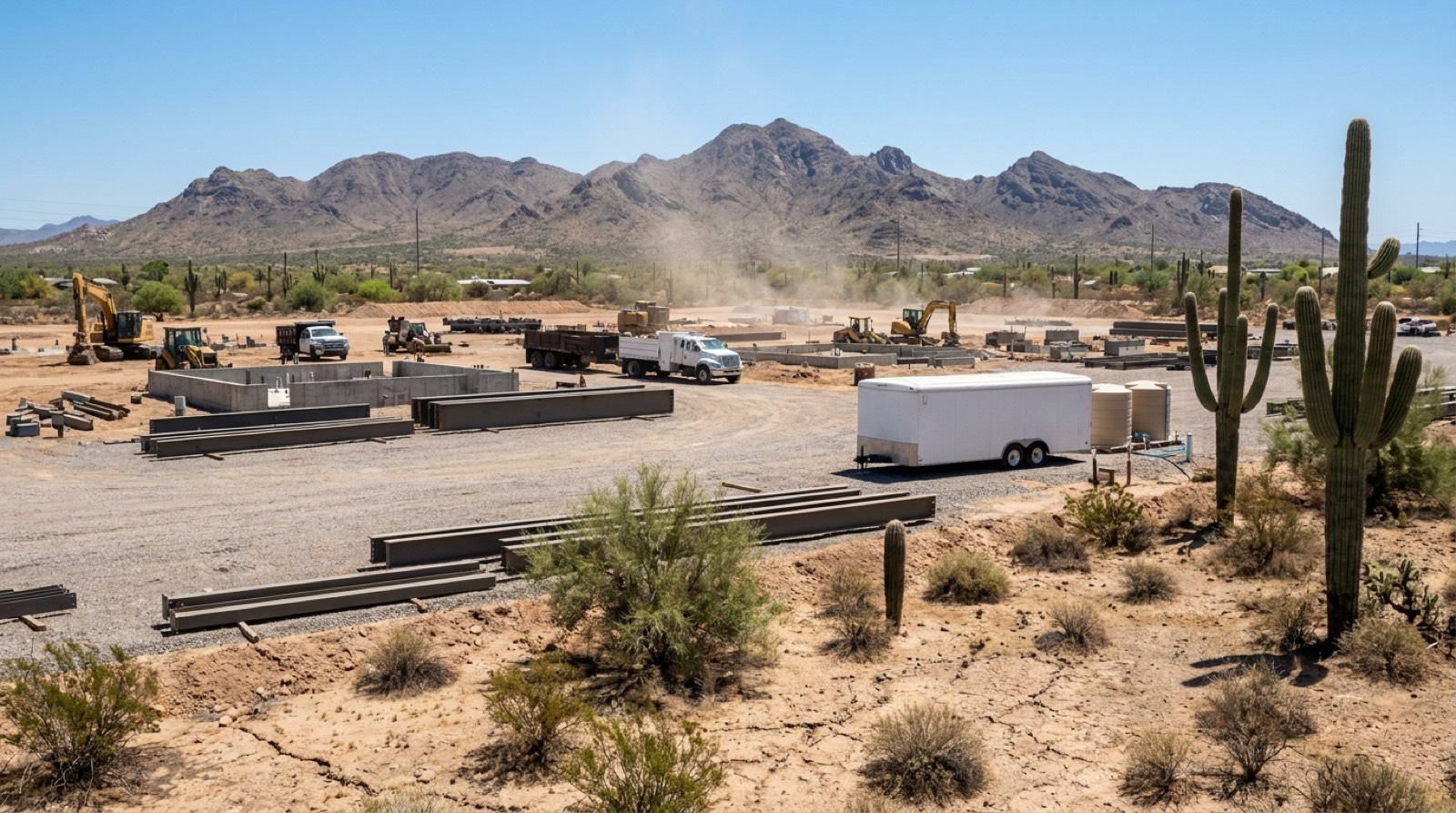
Metro Phoenix has become one of the country's largest data center markets, with campuses in Mesa's Elliot Road corridor, Goodyear, Buckeye and Chandler. Construction does not pause for summer. Schedules shift early, shade becomes infrastructure, and OSHA heat illness prevention stops being a poster in the trailer and becomes the way the site runs. Facilities have to perform at 115 degrees, full stop.
Interior climate control is specified for desert duty, because a restroom trailer that reads 95 degrees inside is a unit the crew stops using by ten in the morning. Units are positioned with sun exposure in mind, cooling capacity is matched to the season, and summer service visits check mechanical performance along with sanitation.
Dust, heat and consumption rates all run higher here. Fresh water fills happen more often, interiors take more abuse from grit, and service intervals are engineered for July rather than averaged across the year. Monsoon season adds wind and dust events that the placement plan accounts for in advance.
Mesa and the East Valley corridors, Chandler and Queen Creek, Goodyear, Buckeye and the West Valley campus country, plus Tucson and statewide mobilization beyond the metro.
Most Arizona deployments bundle several units under one route. One contracted vendor, one dispatch, one escalation path, and a site plan that arrives already coordinated.
Food service and ice programs live or die on cold storage at the pad. Refrigeration trailer rentals in Arizona hold setpoint through the local season.
Water is the first thing safety plans ask about. Hydration station rentals in Arizona run on the same supply logistics as the rest of the package, so adding them costs one stop, not a second vendor.
Where crews rotate in from out of the area, the end of shift is its own rush hour. Shower trailer rentals in Arizona carry that peak so the workforce goes home clean.
The paperwork side of the job needs a roof too. Office trailer rentals in Arizona give supervision and inspections a place to meet without leaving the gate.
Extended-stay crews generate wash loads every week of the schedule. Laundry trailer rentals in Arizona keep that cycle on site instead of in a hotel sink.
The full reach of our restroom trailer rentals program runs beyond Arizona, covering every corridor we serve.
Questions we get
Units deployed here run cooling specified for desert conditions, are positioned against sun load, and get mechanical checks on summer service visits. Cooling performance is treated as a compliance issue because an unusable unit fails the fixture count.
Placement plans account for wind exposure and dust events, and service continuity is maintained through the season. Units are secured and positioned so storms do not take facilities offline.
The East Valley around Mesa and Chandler, the West Valley around Goodyear and Buckeye, and statewide mobilization beyond metro Phoenix.
Where we deploy
Heaviest concentration in the corridors carrying the most active data center construction, with nationwide mobilization beyond them.
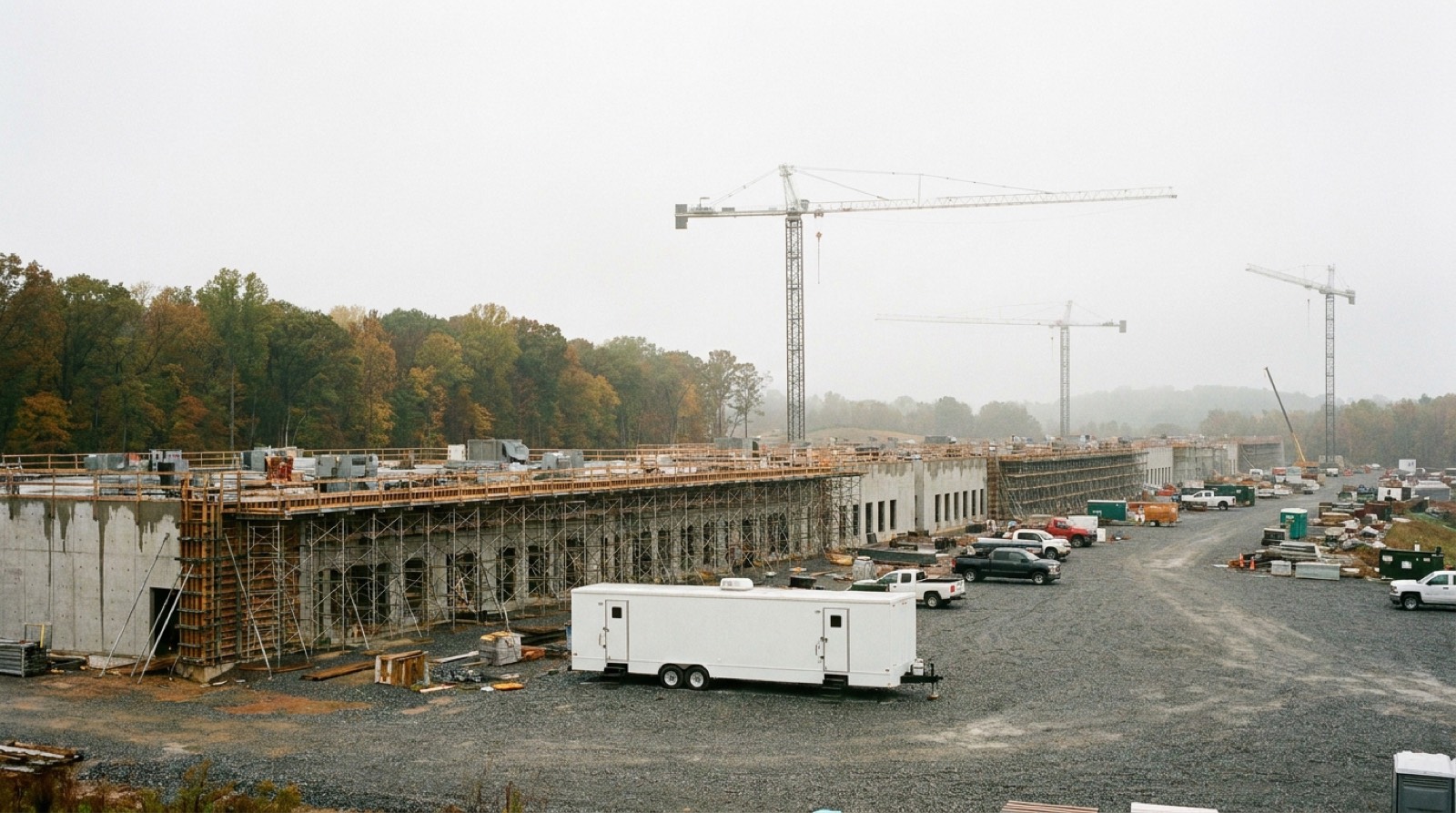
Loudoun County and Prince William run the densest data center concentration on earth. Multi-year campuses, badge-controlled access, crews in the hundreds, and facility requirements written into the subcontract.
View Northern Virginia →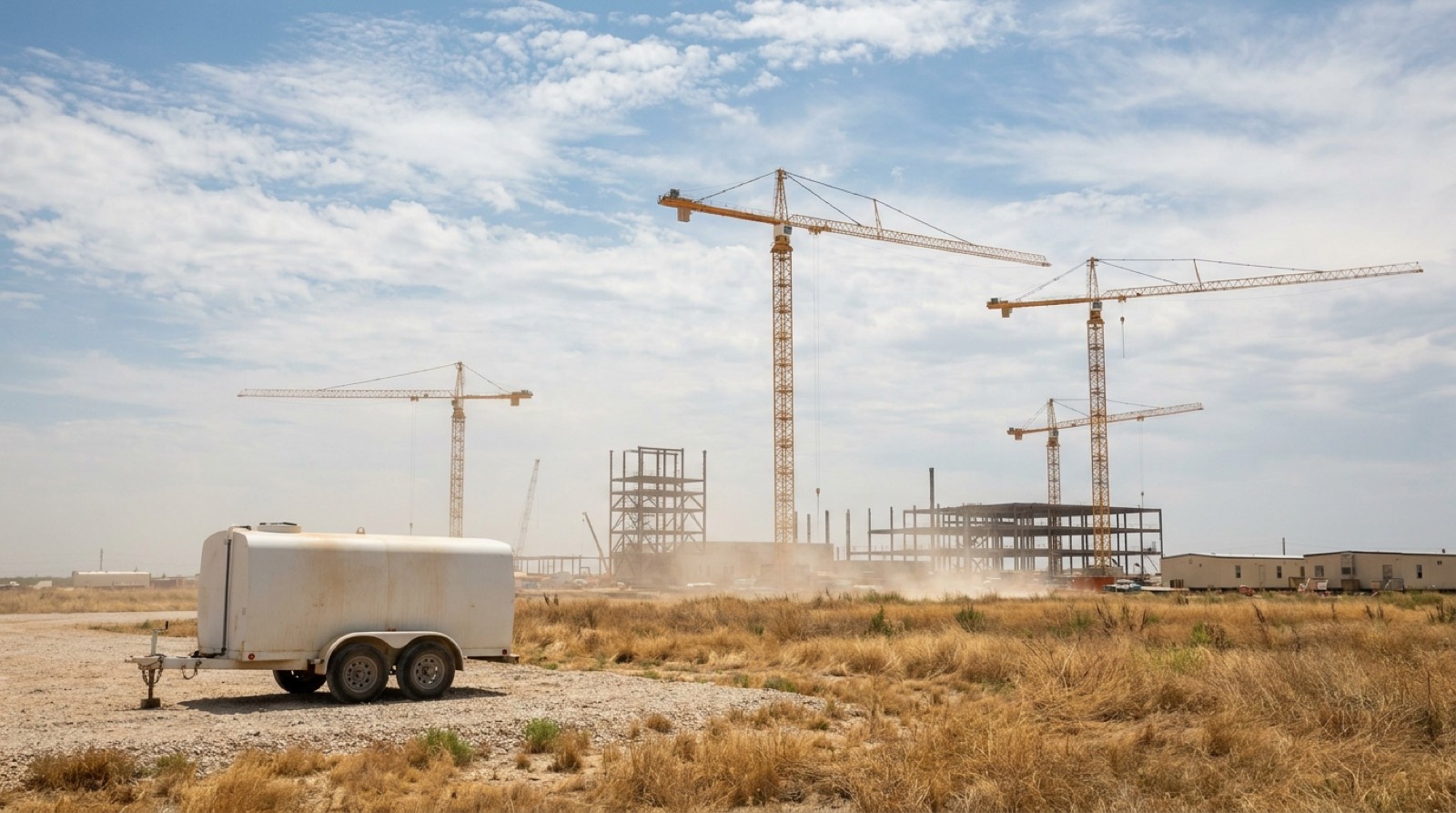
Dallas, Fort Worth, San Antonio and Abilene are carrying some of the largest campuses in the country. Summer heat makes hydration and shower capacity a safety line item, not an amenity.
View Texas →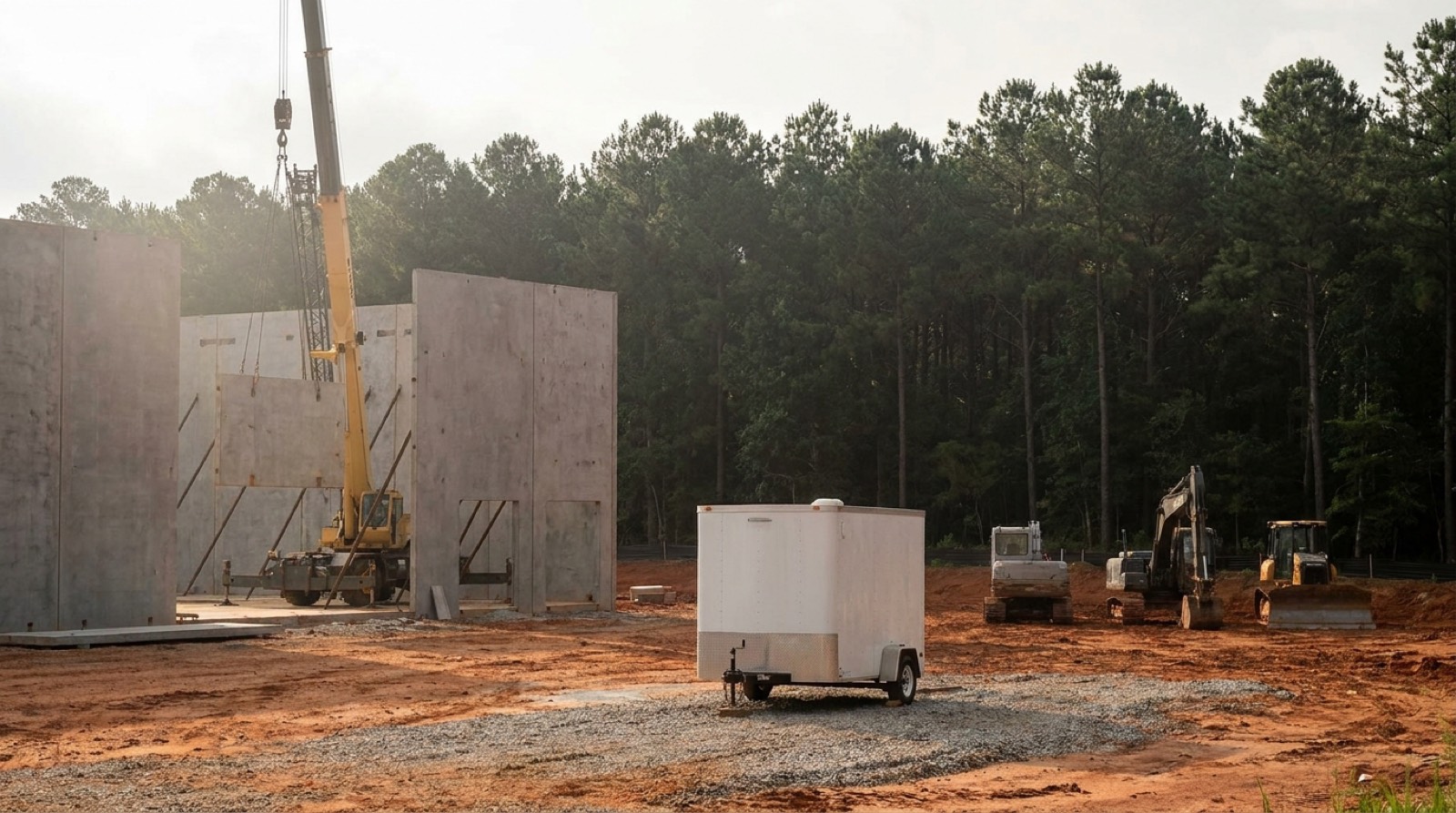
Atlanta metro and Douglas County, extending along I-20. Humid summers, long hauls between laydown and pad, and multi-phase schedules that keep facilities on site for years.
View Georgia →Phoenix and Mesa build through heat that regularly exceeds 110 degrees. OSHA heat-illness prevention drives water and shade requirements that our units satisfy directly.
View Arizona →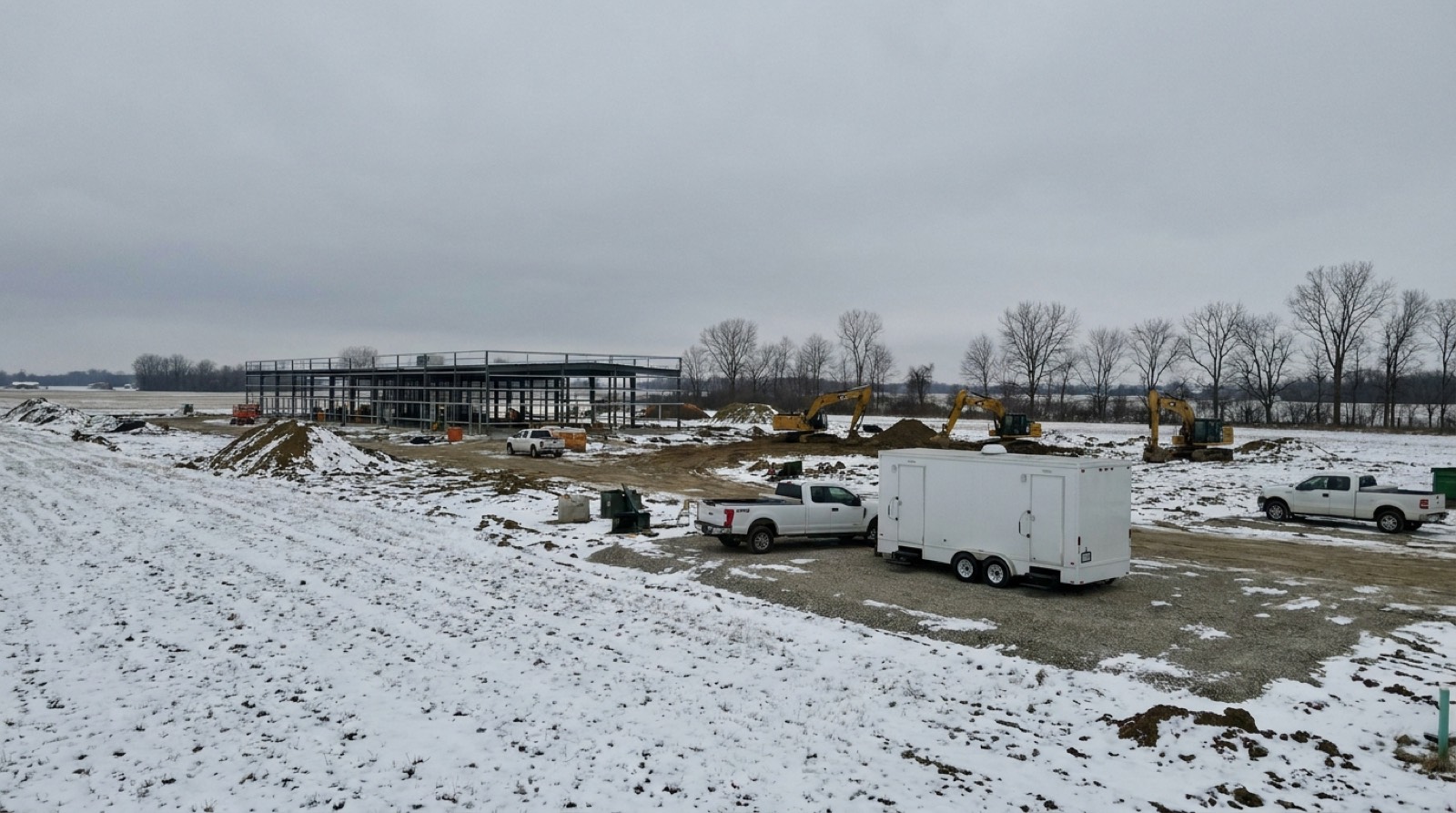
Columbus and New Albany. Freeze protection and winter service access matter here in a way Sun Belt corridors never see.
View Ohio →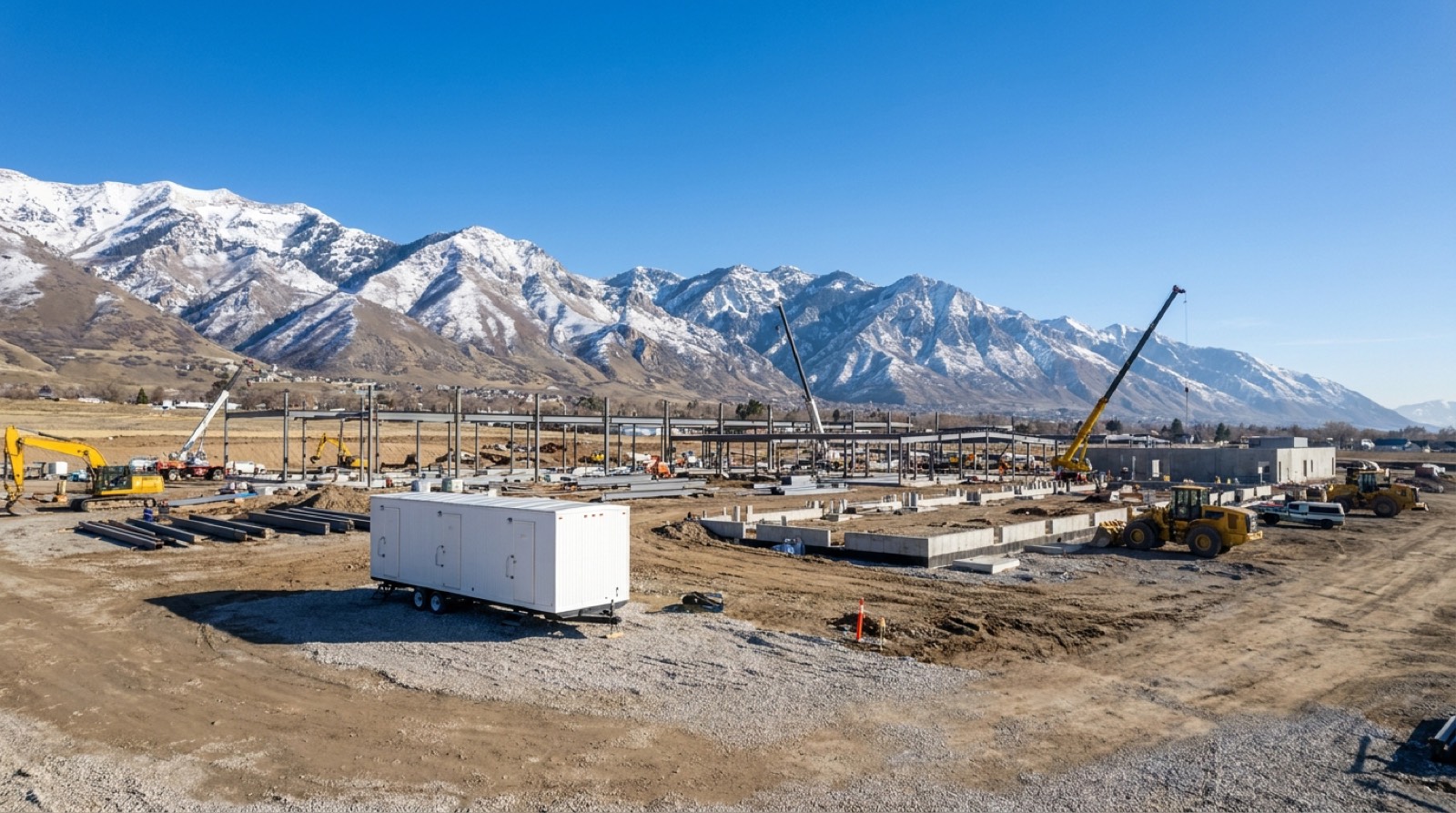
The Wasatch Front corridor runs through hard winters at elevation. Units are winterized and service intervals hold through snow.
View Utah →Go deeper
Longer reads for teams writing the site plan. Open what applies to your build.
Summer construction in the Phoenix and Mesa corridor runs on an inverted clock. Crews badge in at 4 or 5 a.m., put in their heaviest work before the heat peaks, and many sites wind down the outdoor work by early afternoon. Every support system on site has to match that clock, and restroom trailers are no exception. A trailer that gets serviced at 10 a.m. on a normal site needs a different plan when 10 a.m. is the sixth hour of the shift.
The worst version of this is a pump truck blocking the trailer during the morning's only break window. So we flip the route. On summer schedules in the Valley, service runs in the early afternoon as sites empty, or in pre shift windows for sites that run later. Restocking matters more than usual too. A shift that starts in the dark and ends at 1 p.m. compresses all of its restroom use into fewer hours, so paper, soap, and fresh water draw down in a sharp curve rather than a flat one. We stock for the curve.
At 4:30 a.m. in June, the site is fully dark and already 85 degrees. Trailers on early shift sites get exterior lighting checked at every service, interior lights verified, and clear, lit paths from the muster area. A dark trailer does not get used, and in the predawn scramble before a concrete pour, workers will not hunt for it. Climate control runs on its own logic here. The interior needs to be cool by the time the first crews arrive, which on the hottest weeks means air conditioning cycling overnight rather than starting cold at dawn. Power planning follows from that. It is a small list of adjustments, but Phoenix summer schedules punish vendors who run the same playbook they use in October.
Flexibility matters most at the edges of the season. Phoenix sites shift their start times through the year, moving earlier as June approaches and drifting back toward normal in October. The service plan has to move with them, which is why we set schedules with the site rather than for it. A standing monthly check on shift times takes five minutes and keeps the route aligned. The alternative is a service plan tuned for a schedule the site abandoned three weeks ago, which is how a vendor ends up pumping a trailer in the middle of first break.
From roughly late June through September, Arizona's monsoon season sends walls of dust across the Valley that can drop visibility to nothing in minutes. A big haboob deposits fine dust into every gap, vent, and track on a construction site. Restroom trailers take it like everything else does. Dust works into door tracks, coats interior surfaces, loads up HVAC filters, and settles into exhaust vents. One storm's worth is a cleaning problem. A season's worth, unmanaged, is a maintenance problem that shortens equipment life.
The passive defenses are set at delivery. We orient trailers so door faces point away from the prevailing southeast to northwest storm track where site layout allows, which keeps the entry from acting as a dust scoop. Door sweeps and gaskets get inspected before monsoon season starts, because a quarter inch gap under a door is all a haboob needs. Windows stay latched as policy. On sites with long open desert fetch to the south and east, we favor placements in the wind shadow of structures or material laydown. None of this stops dust entirely. It moves the needle from shoveling to wiping.
The active defense is maintenance cadence. Air conditioning filters that last a season elsewhere clog in weeks during an Arizona monsoon, and a choked filter takes cooling capacity down with it, in the exact weather where cooling matters most. We swap filters on an accelerated summer schedule and check them after major dust events. After a storm, the reset routine is quick. Wipe down interiors, clear the door tracks, verify the exhaust fans spin free, and confirm the air conditioner is moving air like it should. Sites that fold this into the normal service rhythm get through monsoon season without drama. Sites that skip it find out in August why we do not.
Remember that the monsoon brings water as well as dust. The same season that delivers haboobs delivers sudden, violent downpours that flood low ground in minutes. Trailer placements in the Valley need to respect drainage the way they respect wind, staying out of retention areas and off the low corner of the pad. A unit that takes a dust storm and then sits in three inches of runoff has had a bad afternoon twice. We site for both hazards at delivery, because in an Arizona summer they tend to arrive on the same radar.
Most heat planning on Phoenix area sites focuses on people, as it should. But 110 degree weeks are also hard on the equipment, and a restroom trailer is full of systems that were not designed with the Sonoran Desert as the default. Water in an exposed fresh tank climbs toward uncomfortable temperatures by afternoon. Hoses and seals age fast under direct UV. Plastic fittings get brittle. Tank level sensors drift. The trailer keeps working, but only if somebody is paying attention to the parts.
Nobody wants to wash their hands in hot water from a black tank that has cooked in the sun all day. Our practice starts with placement. Shade from a structure, even for part of the afternoon, meaningfully lowers tank temperatures. Where no shade exists, light colored and insulated tank compartments help, and we shorten the fresh water exchange cycle in summer so water is replaced more often rather than sitting for a week. Supply hoses get routed off hot ground and out of direct sun where possible, because a hose lying on 140 degree gravel delivers water at temperatures that surprise people. These are small moves. Together they keep the sinks pleasant instead of punishing.
The rest is a checklist we run through the hot months on Valley sites. UV exposed hoses and gaskets get inspected and replaced ahead of failure, not after. Door closers and hinges get lubricated, since fine dust plus heat wears them quickly. Deodorizer chemistry gets dosed for extreme temperature, because standard dosing loses effectiveness in a 110 degree waste tank. And air conditioning condensate drains get checked, since a unit running flat out all day produces a steady drip that should be going somewhere deliberate. Arizona does not forgive deferred maintenance in summer. So we do not defer it.
Why does warm sink water matter enough to plan around. Because handwashing is hygiene infrastructure, and anything that discourages it degrades the whole program. On a site fighting through a heat wave, crews already have reasons to shortcut the small routines. Water that comes out of the tap at a reasonable temperature, in a trailer that smells managed and feels cool, keeps the routines intact. Sanitation on a jobsite is mostly the accumulation of small conditions that make the right behavior easy. In an Arizona summer, every one of those conditions has to be maintained on purpose.