Utah
Restroom trailer rentals for Utah data center sites
High-elevation restroom capacity for the Wasatch Front's data center corridor, winterized for mountain winters and dry summers at altitude.
High-elevation restroom capacity for the Wasatch Front's data center corridor, winterized for mountain winters and dry summers at altitude.
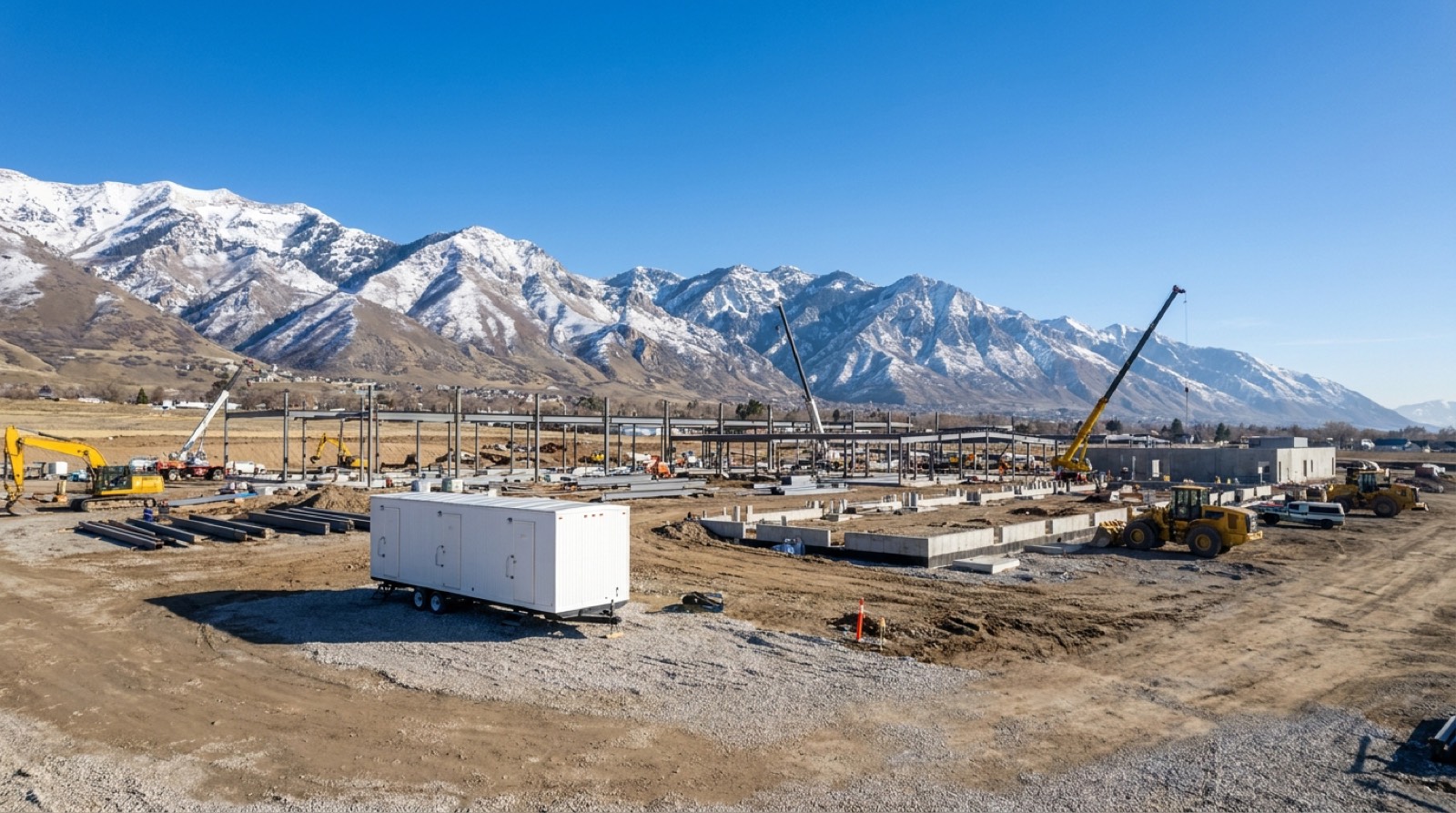
Utah's data center growth runs along the Wasatch Front. Salt Lake and West Jordan south through Eagle Mountain, where campus construction has turned the west side of Utah Lake into a technology corridor. Sites sit at elevation, and elevation sharpens both seasons. Winters bring weeks of freeze and snow. Summers bring dry heat and dust off the valley floor.
Units here run winterized as standard. Protected plumbing, heat trace, interior heating rated for weeks of cold, not an occasional frost. Snow changes service access too. Routes and placement account for plowing and where a pump truck can actually operate in February. The interval holds through winter because it was planned for winter.
Summer on the valley floor is dry heat and dust that works into everything. Sanitation cycles run tighter. Water fills track the heat. Units position to keep crews and service trucks out of the worst of it.
Salt Lake City and county, West Jordan and the southwest valley, Eagle Mountain and the Utah Lake corridor, Lehi and Silicon Slopes, and statewide mobilization beyond the Front.
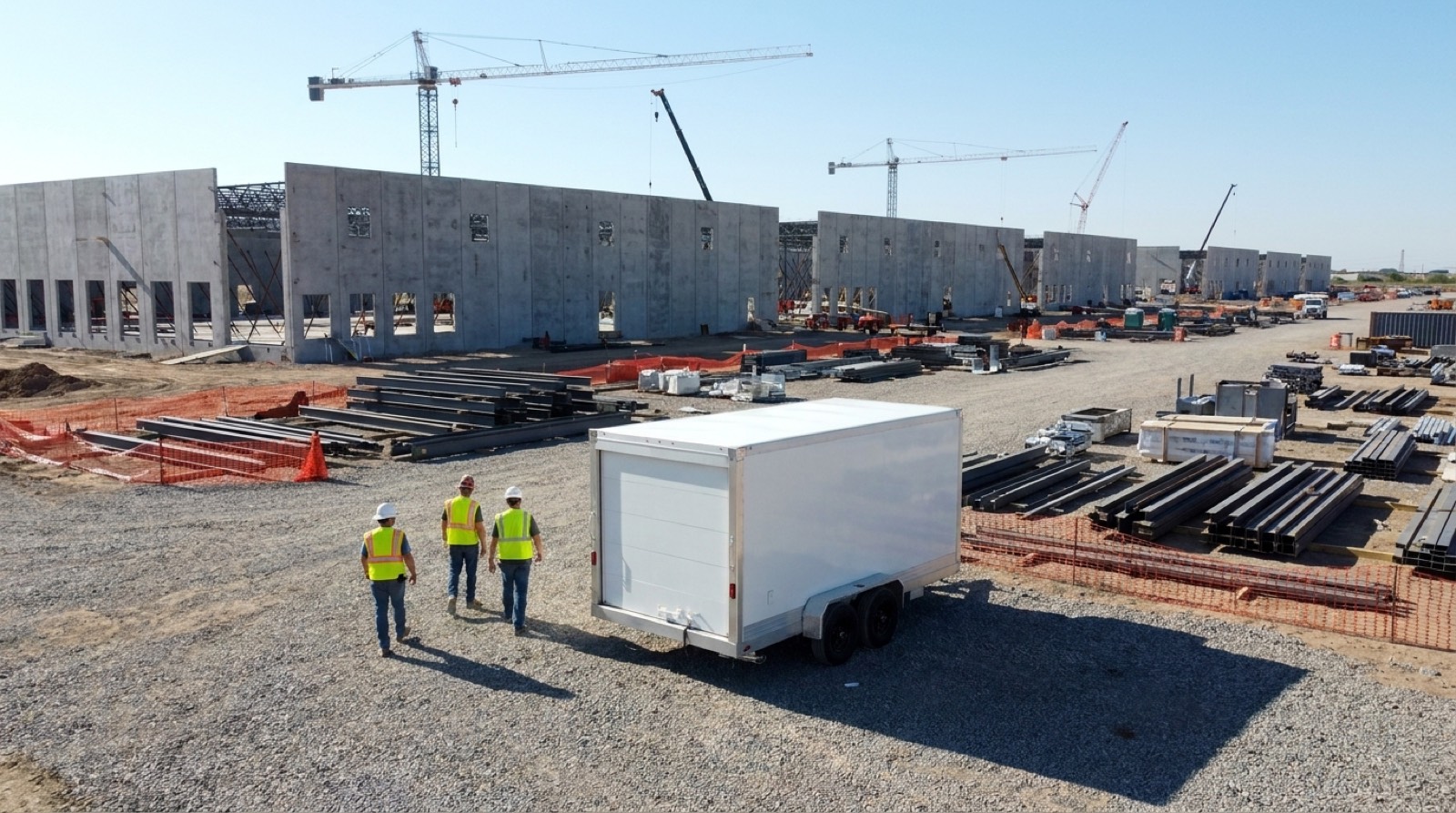
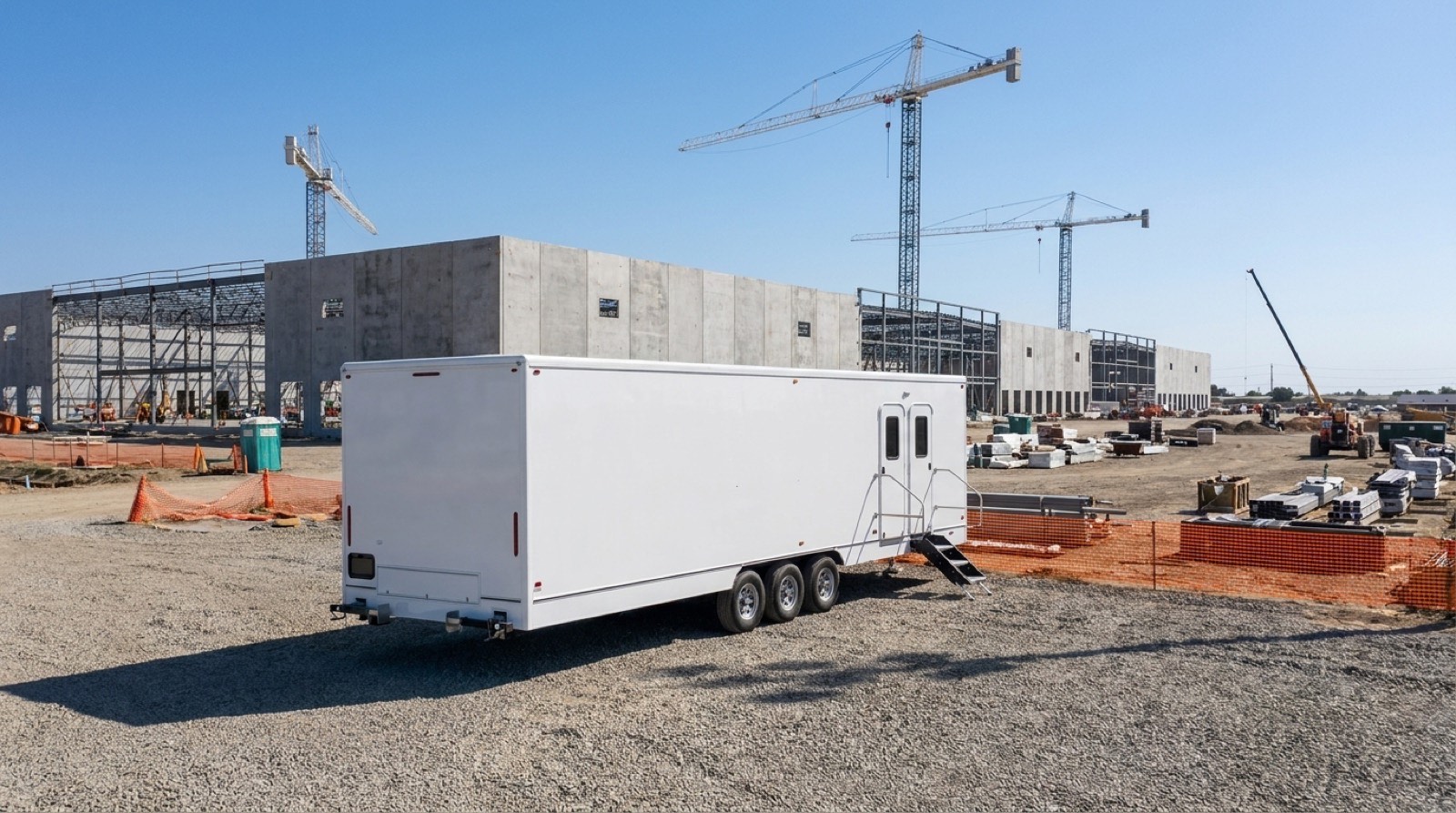
Most Utah deployments bundle several units under one route. One contracted vendor, one dispatch, one escalation path, and a site plan that arrives already coordinated.
The paperwork side of the job needs a roof too. Office trailer rentals in Utah give supervision and inspections a place to meet without leaving the gate.
Extended-stay crews generate wash loads every week of the schedule. Laundry trailer rentals in Utah keep that cycle on site instead of in a hotel sink.
Food service and ice programs live or die on cold storage at the pad. Refrigeration trailer rentals in Utah hold setpoint through the local season.
Water is the first thing safety plans ask about. Hydration station rentals in Utah run on the same supply logistics as the rest of the package, so adding them costs one stop, not a second vendor.
Where crews rotate in from out of the area, the end of shift is its own rush hour. Shower trailer rentals in Utah carry that peak so the workforce goes home clean.
The full reach of our restroom trailer rentals program runs beyond Utah, covering every corridor we serve.
Where we deploy
Heaviest concentration in the corridors carrying the most active data center construction, with nationwide mobilization beyond them.
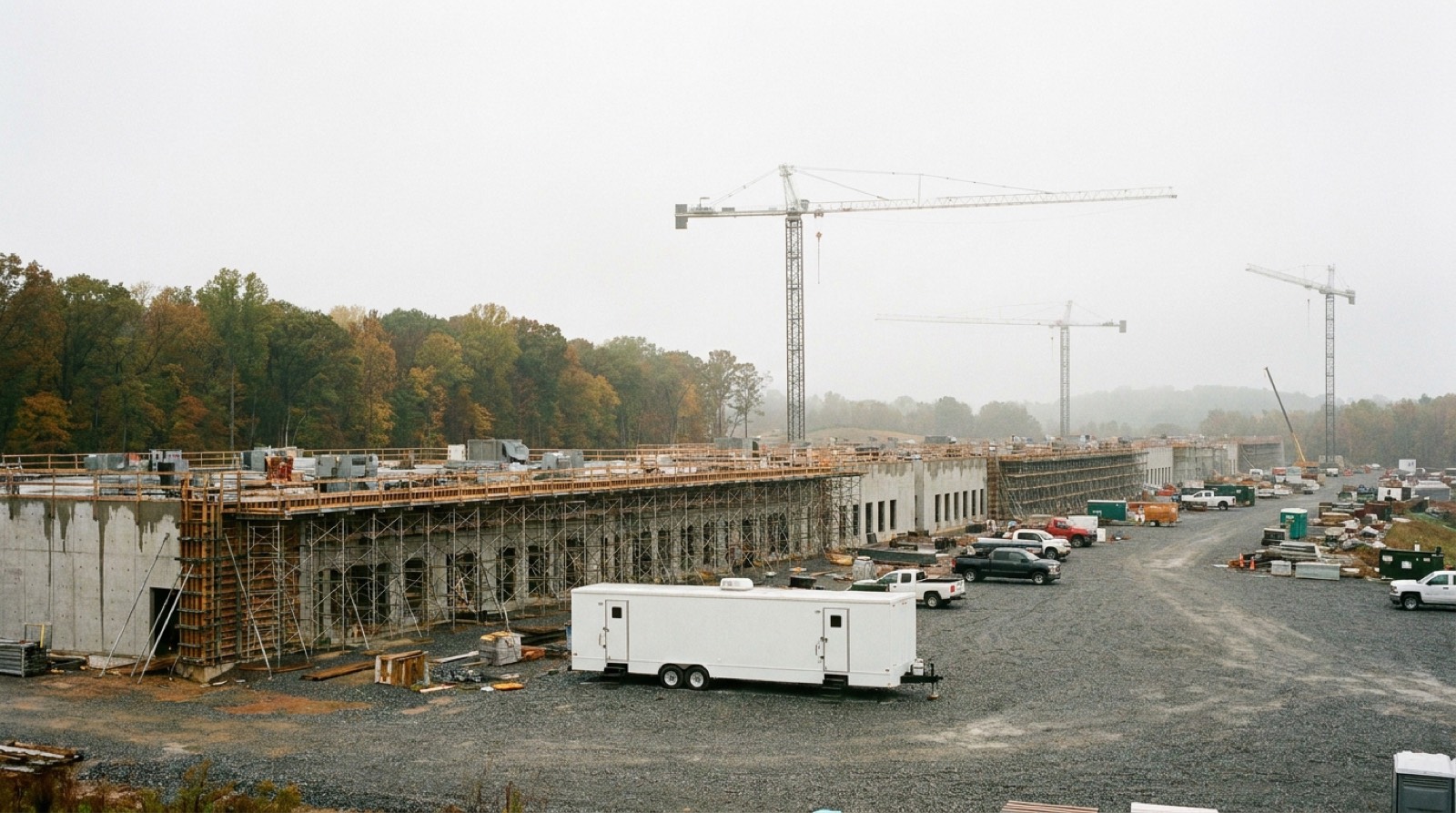
Loudoun County and Prince William run the densest data center concentration on earth. Multi-year campuses, badge-controlled access, crews in the hundreds, and facility requirements written into the subcontract.
View Northern Virginia →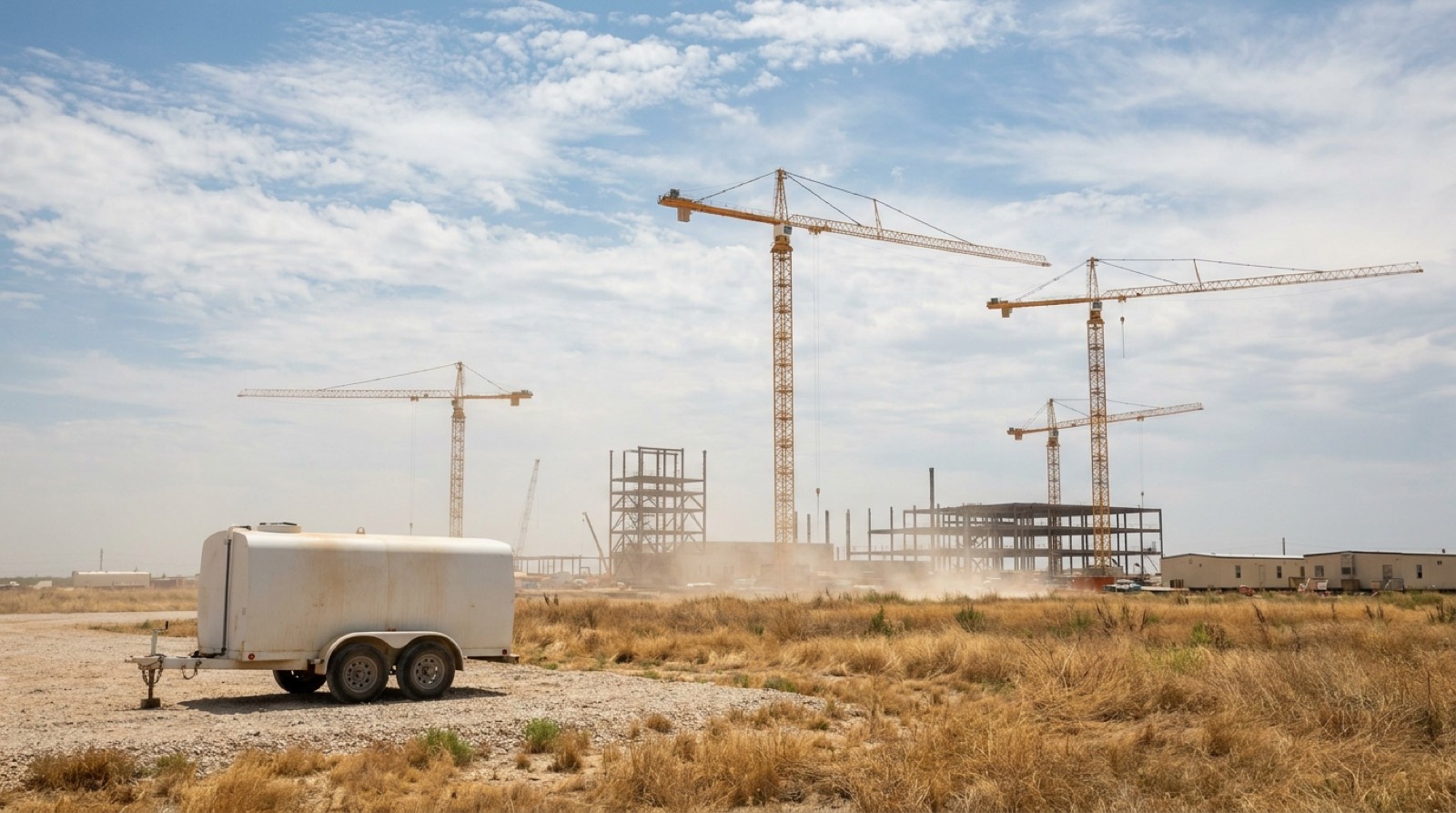
Dallas, Fort Worth, San Antonio and Abilene are carrying some of the largest campuses in the country. Summer heat makes hydration and shower capacity a safety line item, not an amenity.
View Texas →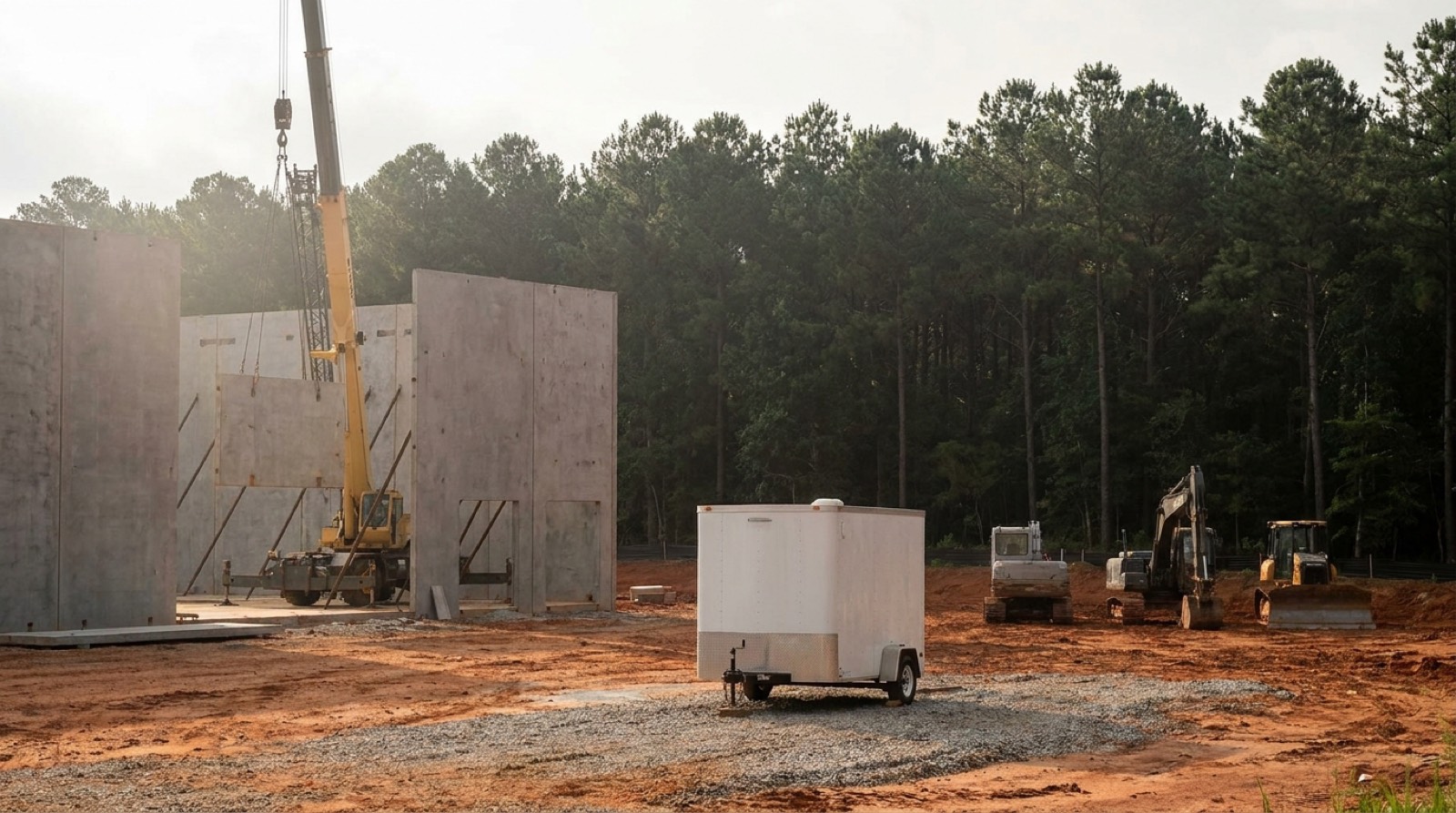
Atlanta metro and Douglas County, extending along I-20. Humid summers, long hauls between laydown and pad, and multi-phase schedules that keep facilities on site for years.
View Georgia →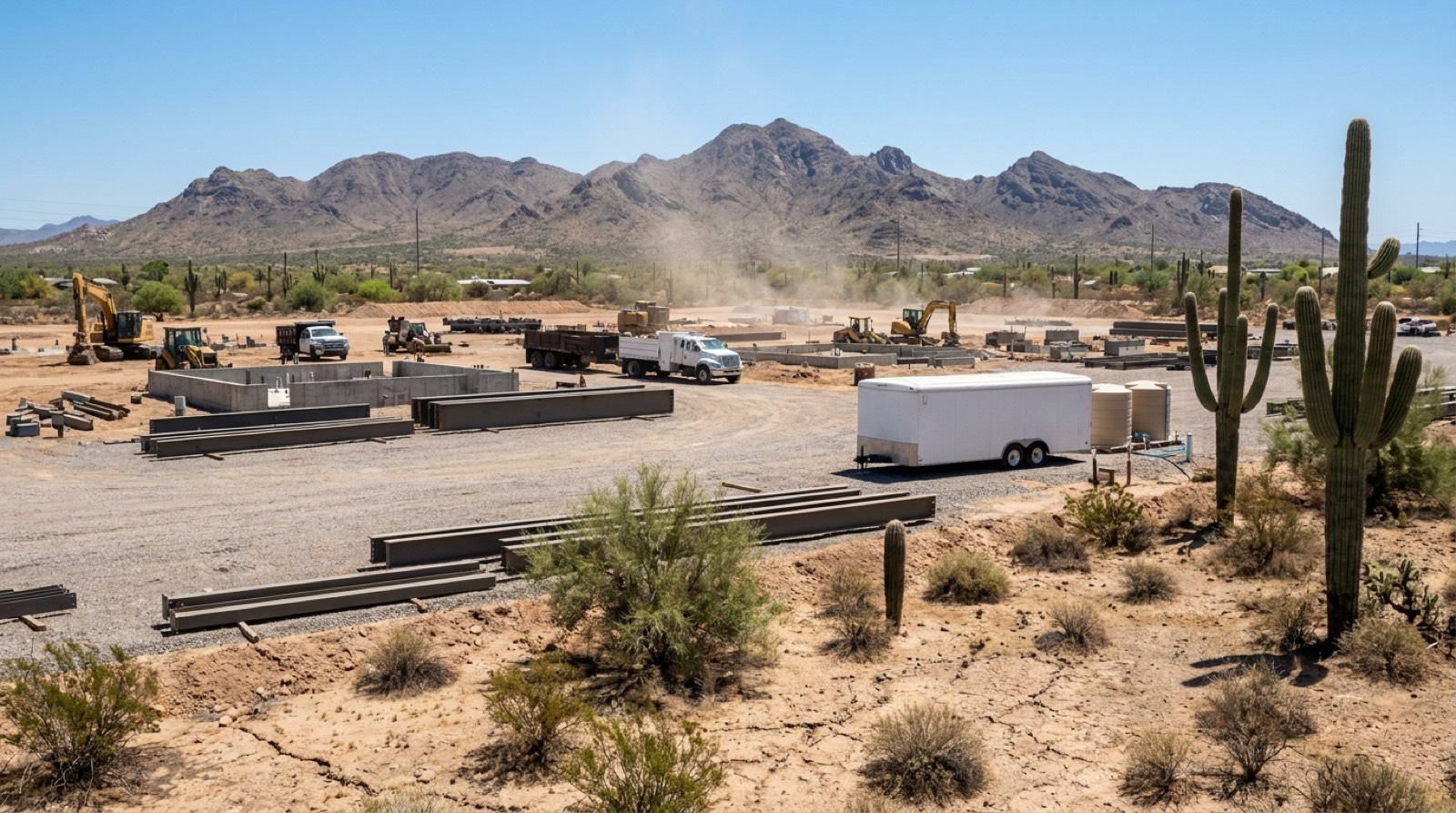
Phoenix and Mesa build through heat that regularly exceeds 110 degrees. OSHA heat-illness prevention drives water and shade requirements that our units satisfy directly.
View Arizona →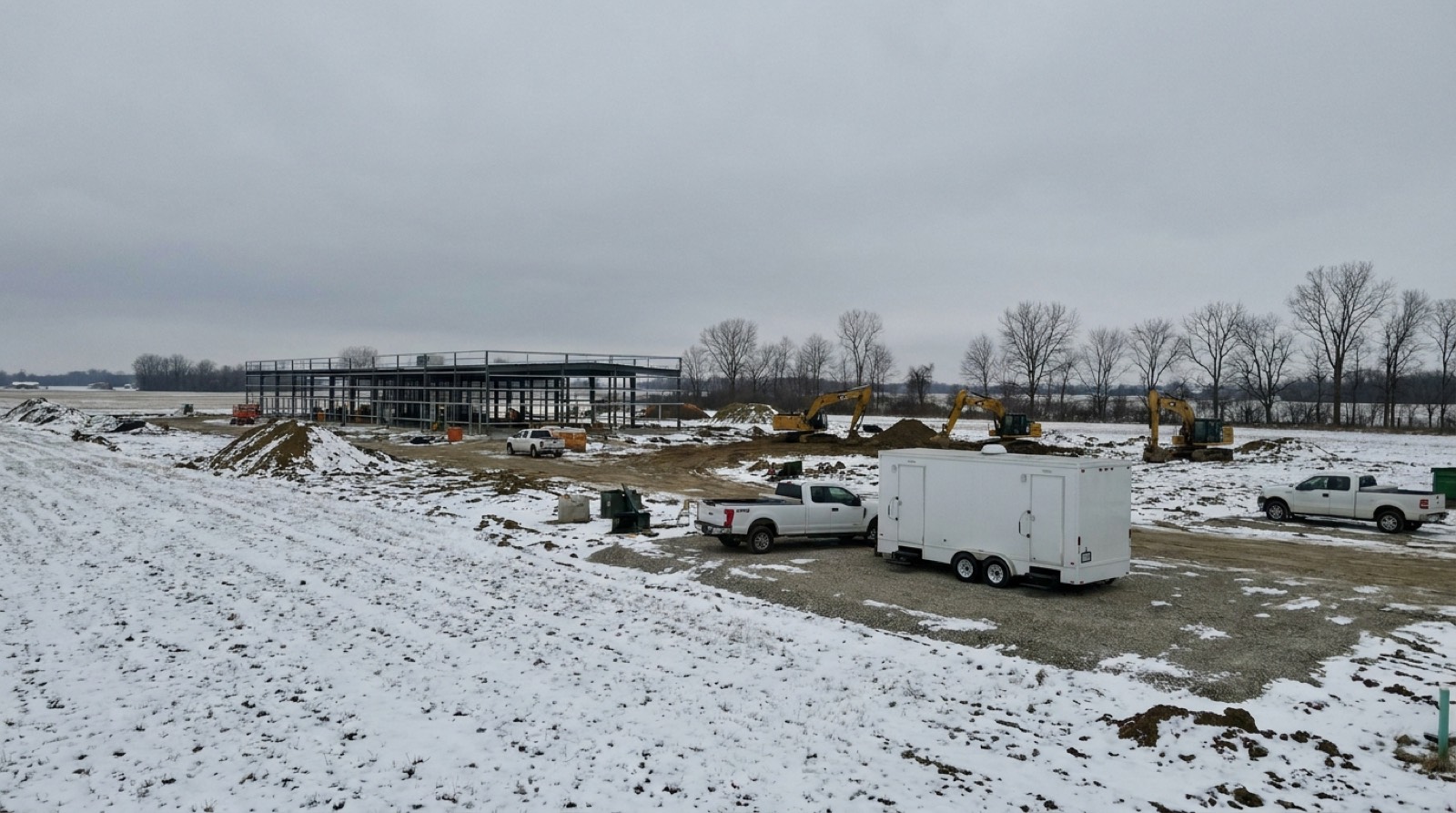
Columbus and New Albany. Freeze protection and winter service access matter here in a way Sun Belt corridors never see.
View Ohio →The Wasatch Front corridor runs through hard winters at elevation. Units are winterized and service intervals hold through snow.
View Utah →Questions we get
Winterization is the default specification here: protected plumbing, heat trace and interior heat rated for sustained sub-freezing weeks, with service routes planned around snow and plowing.
Yes. The Utah Lake corridor is a primary deployment area, including large greenfield campuses that run self-contained units with generator power.
It sharpens the seasons the equipment must survive. Cooling for dry summer heat, freeze protection for altitude winters, and service intervals set to the corridor's actual conditions.
Go deeper
Longer reads for teams writing the site plan. Open what applies to your build.
Our company is headquartered on the Wasatch Front, in the middle of the corridor where Utah's data center construction actually happens. That is not a marketing line, it is an operational fact with consequences a site can measure. Spare trailers, parts, pumps, and route trucks sit within a short drive of the projects we serve from Salt Lake County down through Utah County. When something breaks, the distance between the problem and the fix is measured in minutes on Interstate 15, not in days of freight.
Restroom service fails at the margins. A heater quits during a cold snap. A door gets damaged by a skid steer. A tank sensor lies and a unit hits capacity two days early. None of these are catastrophes if a truck can be there the same day. All of them become site problems if the vendor is dispatching from three hundred miles away or waiting on parts. Because our yard is local, a failed unit gets repaired on site or swapped outright, usually within the same working day. We keep ready spares specifically so a swap is always on the table. A crew of 400 should never spend two days down a trailer because of one bad component.
The other advantage is quieter. Our people drive the same corridor the projects sit in. We know which weeks the inversion sits in the valley, when the canyon wind events hit the exposed benches, and what a January cold snap does to equipment at this elevation, because our own equipment lives in it. Service schedules, winter prep, and placement advice all come from operating here year round rather than from a national playbook. Utah's data center corridor is growing fast, and it deserves site services that are actually from here. That is the company we built.
Being local also changes accountability. Our owners and our route drivers live along the same corridor as the projects, shop in the same towns, and run into the people they serve. When a site has a problem, it is not calling a national dispatch queue, it is calling someone who will drive past that jobsite tomorrow either way. That proximity keeps standards honest in a way service level language never quite does. Utah's construction community is still small enough that reputation is the real contract, and we operate like a company that knows it.
Here is a number that catches out of state planners. Valley floors along the Wasatch Front sit above 4,200 feet, and at that elevation the freeze season is long. First hard freezes can arrive in October, and freezing nights persist into April. That is roughly half the year with freeze risk on the calendar. The trap is not deep winter, which everyone plans for. It is the shoulder seasons, when 60 degree afternoons convince people the danger is past while clear nights drop below 28.
Utah's dry air produces dramatic day to night temperature swings, often 30 to 40 degrees. A restroom trailer sitting in pleasant afternoon sun in late October can hold water lines at 25 degrees by 5 a.m. One hard night is enough to split an unprotected fitting. So our freeze protection calendar runs on nights, not on months or vibes. Overnight lows near freezing trigger the first tier, meaning cabin heat stays on and exposed lines are verified. Sustained lows below the mid 20s trigger full winter configuration, with heat trace and skirting. The configuration follows the forecast, and it goes on earlier and comes off later than lower elevation experience suggests.
Two practical points for planners on Wasatch Front builds. First, budget power for heat earlier in the fall than you expect. Cabin heaters and heat trace draw real load in October, when the temporary power plan often still assumes summer conditions. Second, do not decommission winter measures on the first warm week of spring. We have seen hard freezes in the valley well into April, and one impatient week can undo a winter of careful protection. We manage this calendar for our sites as standard practice, because we live at this elevation too. The freeze season here is not worse than the Midwest. It is just longer and sneakier, and it rewards operators who respect the shoulder months.
The last habit is verification. Freeze protection that was turned on in October has to still be working in January, and the failure modes are quiet. A breaker trips, a thermostat drifts, a skirting panel comes loose in a canyon wind event and nobody notices from ten feet away. Our winter service visits include a physical check of heat, trace, and skirting on every stop, and cold snap forecasts trigger extra passes. At this elevation the margin between protected and frozen is one hard night. Verification is how you make sure the margin holds.
Utah is one of the driest states in the country, and the Wasatch Front's growth keeps water on every project owner's mind. Data center projects already face public questions about water, so the construction phase should be run like water matters, because it does. Restroom trailers are a modest slice of a site's water story, but they are a visible one, and running them efficiently is straightforward when the plan is built on actual numbers.
The useful comparison is per use. Modern restroom trailers run low flow fixtures, with toilets drawing around a gallon per flush or less and sinks running well under two gallons per minute with aerators. Our planning figure is a few gallons per worker per shift, covering flushes and handwashing. For a 300 person site, that is a daily draw in the range of a single residential swimming pool topped off over a summer month, spread across a workforce building a billion dollar facility. Efficient is not the same as free, though. Multiply any figure across a year of construction and it justifies attention.
In our experience the avoidable losses are never the fixtures. They are operational. A supply hose weeping at a fitting for a month. A flush valve that sticks and runs. A fill left unattended that overflows a tank. A freeze split in a line that drips until someone notices in spring. Our service routine checks fittings, valves, and lines at every visit, and metered fills mean we know what each trailer takes and can spot a number that drifts. A trailer drawing more water than its headcount justifies has a leak or a stuck valve, and the meter finds it before the mud puddle does. That is the whole program. Tight equipment, measured fills, fast fixes. In a state this dry, that is just how site services should run.
For owners fielding questions about project water use, the construction phase numbers are worth having on hand. Because our fills are metered, we can report actual restroom water consumption for a site by month, in real gallons rather than estimates. Several owners fold that into their broader water accounting, and the figure usually surprises people by being smaller than assumed. Good numbers beat good intentions in a public conversation about water. In Utah that conversation is not going away, and projects that can answer it with data start from a better place.