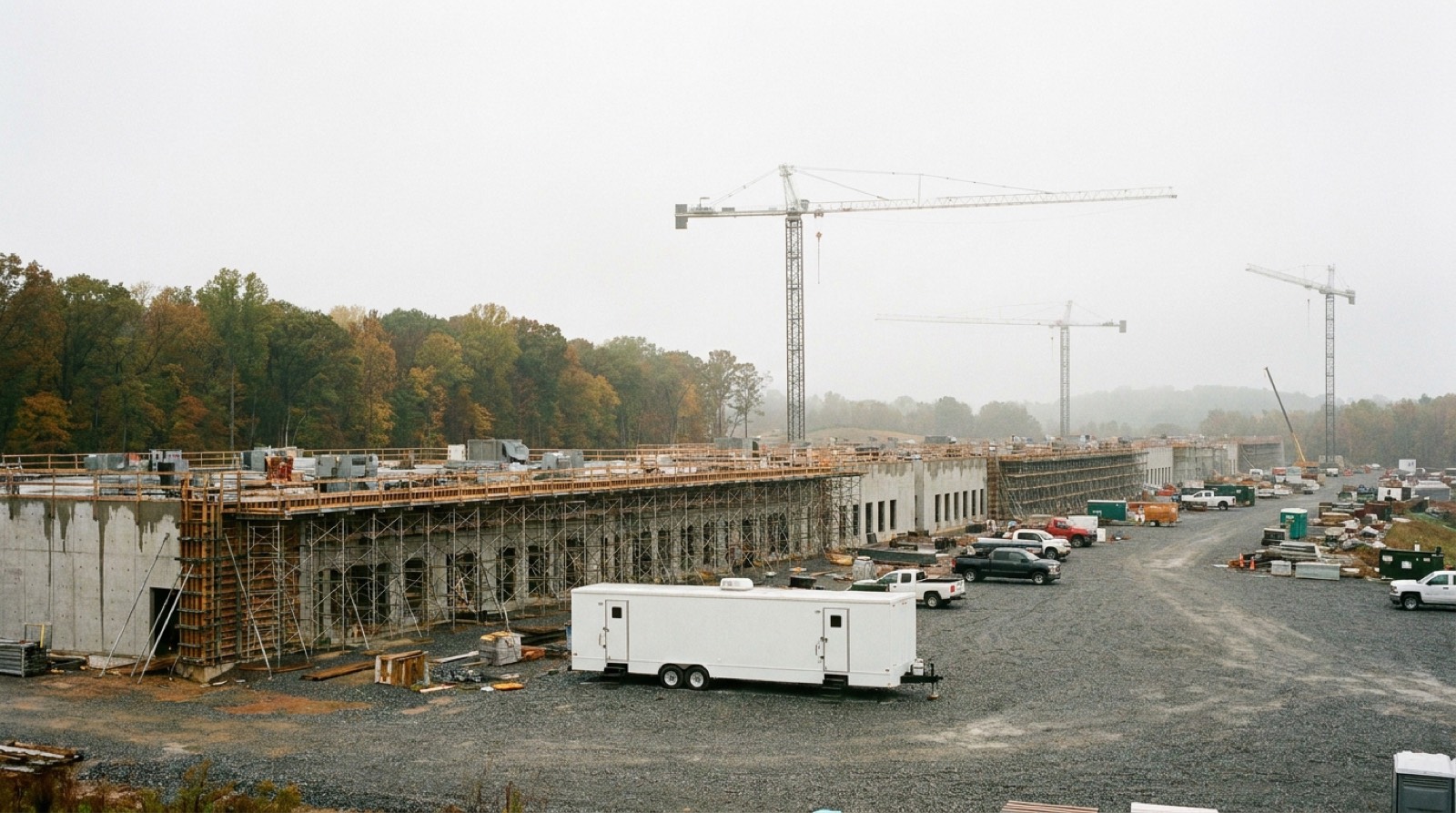
Virginia
Restroom trailer rentals for Virginia data center sites
Fleet-scale restroom trailers for the densest data center corridor on earth, deployed to Loudoun and Prince William campuses with documentation ready for controlled-site access.
Fleet-scale restroom trailers for the densest data center corridor on earth, deployed to Loudoun and Prince William campuses with documentation ready for controlled-site access.
Northern Virginia carries more data center capacity than any market in the world. It is concentrated in Loudoun County around Ashburn and pushing hard into Prince William. The building stock runs to tens of millions of square feet, and the pipeline runs years deep. For us that means multi-year placements that move with the phases. Unit counts track your manpower curve through humid summers and winters that freeze often enough to matter.
Virginia data center work runs behind fences and badges from the first day of grading. Our crews show up with insurance, orientation records and vehicle paperwork already filed. A pump truck refused at the gate is a missed service visit, no matter whose fault the paperwork was. So the paperwork goes in first, and service runs inside your access windows and delivery curfews.
Multi-station climate-controlled trailers with flushing fixtures, running water and heat for the cold months. ADA units place to path-of-travel rules. Fixture counts follow OSHA 1926.51 against peak headcount. Where phases overlap, counts step up before each mobilization, not after crowding shows up in the complaint log.
Ashburn, Sterling, Leesburg and the Loudoun corridor, Manassas, Gainesville and the Prince William Digital Gateway area, plus Fauquier, Culpeper and the corridors following power south and west. Nationwide mobilization covers Virginia projects outside these areas.
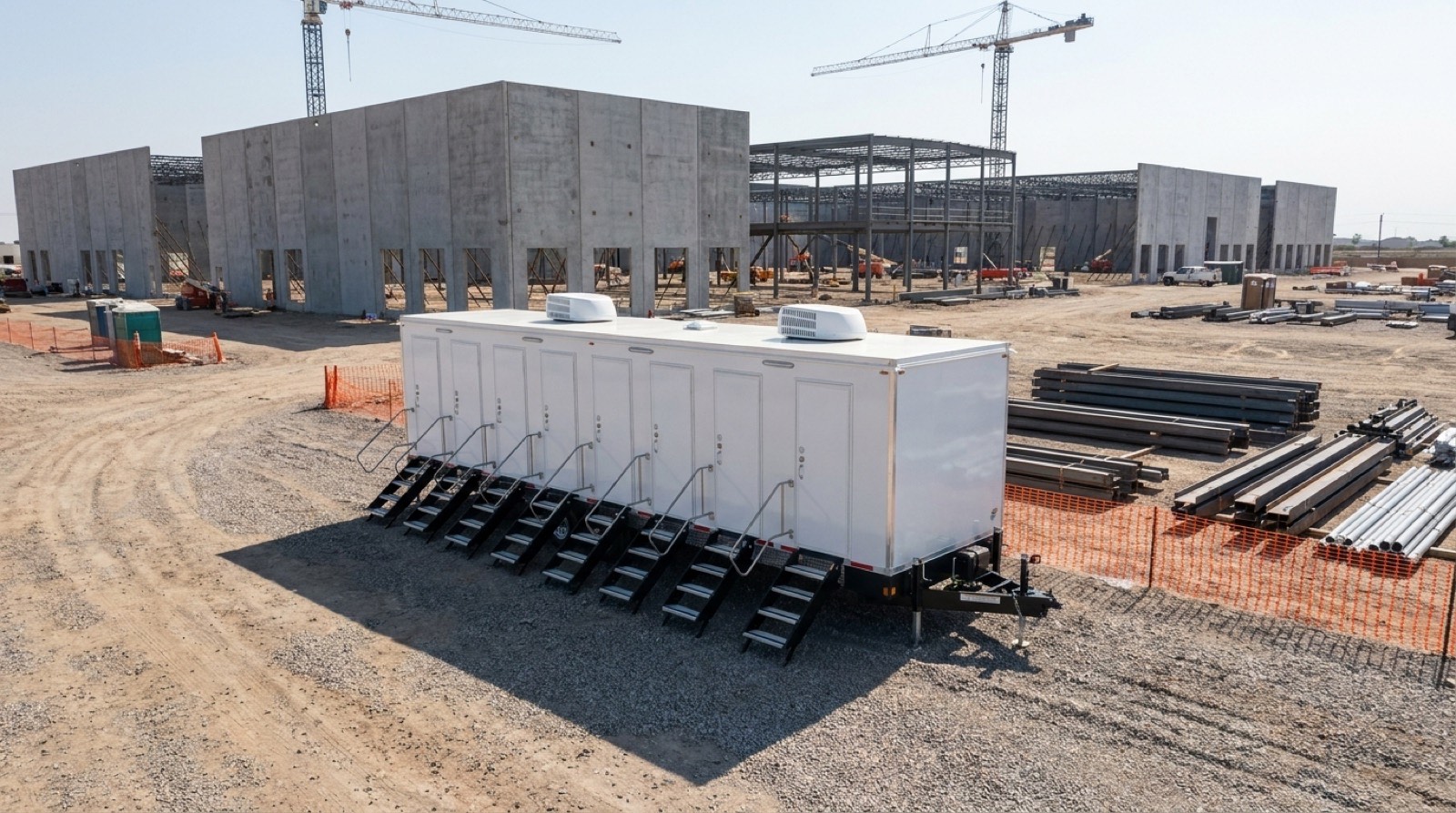
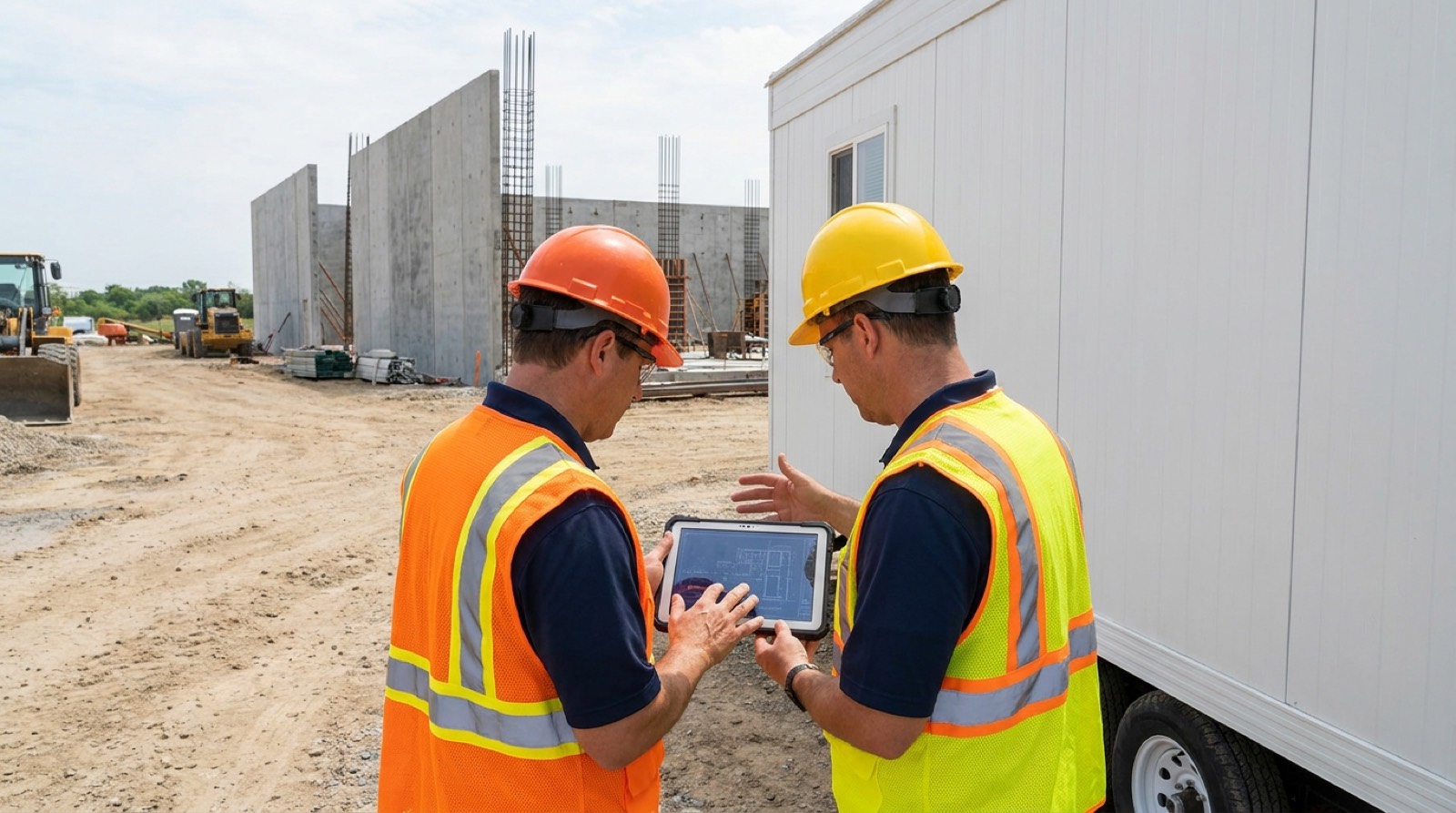
Most Virginia deployments bundle several units under one route. One contracted vendor, one dispatch, one escalation path, and a site plan that arrives already coordinated.
Water is the first thing safety plans ask about. Hydration station rentals in Virginia run on the same supply logistics as the rest of the package, so adding them costs one stop, not a second vendor.
Where crews rotate in from out of the area, the end of shift is its own rush hour. Shower trailer rentals in Virginia carry that peak so the workforce goes home clean.
The paperwork side of the job needs a roof too. Office trailer rentals in Virginia give supervision and inspections a place to meet without leaving the gate.
Extended-stay crews generate wash loads every week of the schedule. Laundry trailer rentals in Virginia keep that cycle on site instead of in a hotel sink.
Food service and ice programs live or die on cold storage at the pad. Refrigeration trailer rentals in Virginia hold setpoint through the local season.
The full reach of our restroom trailer rentals program runs beyond Virginia, covering every corridor we serve.
Where we deploy
Heaviest concentration in the corridors carrying the most active data center construction, with nationwide mobilization beyond them.
Loudoun County and Prince William run the densest data center concentration on earth. Multi-year campuses, badge-controlled access, crews in the hundreds, and facility requirements written into the subcontract.
View Northern Virginia →
Dallas, Fort Worth, San Antonio and Abilene are carrying some of the largest campuses in the country. Summer heat makes hydration and shower capacity a safety line item, not an amenity.
View Texas →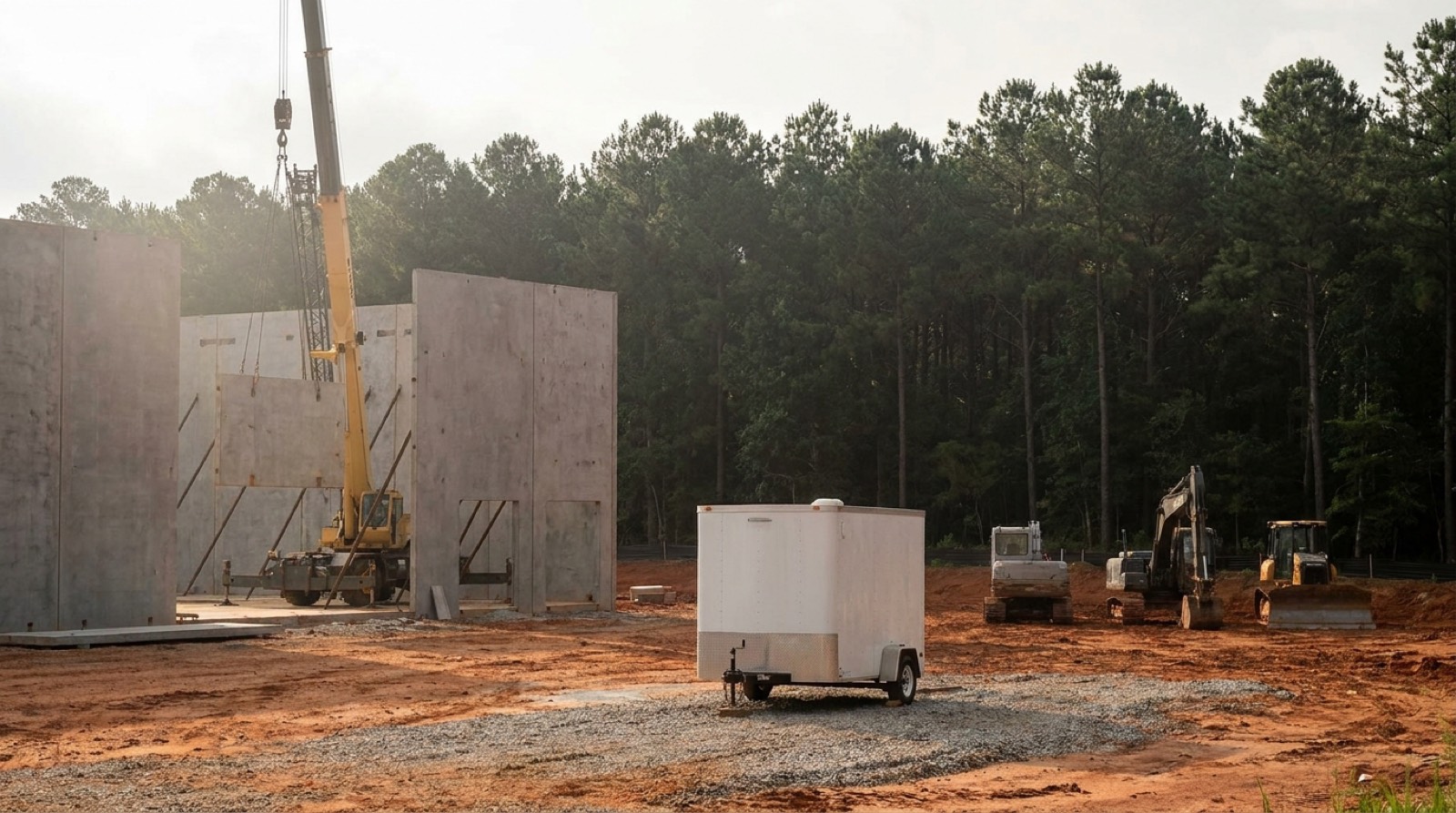
Atlanta metro and Douglas County, extending along I-20. Humid summers, long hauls between laydown and pad, and multi-phase schedules that keep facilities on site for years.
View Georgia →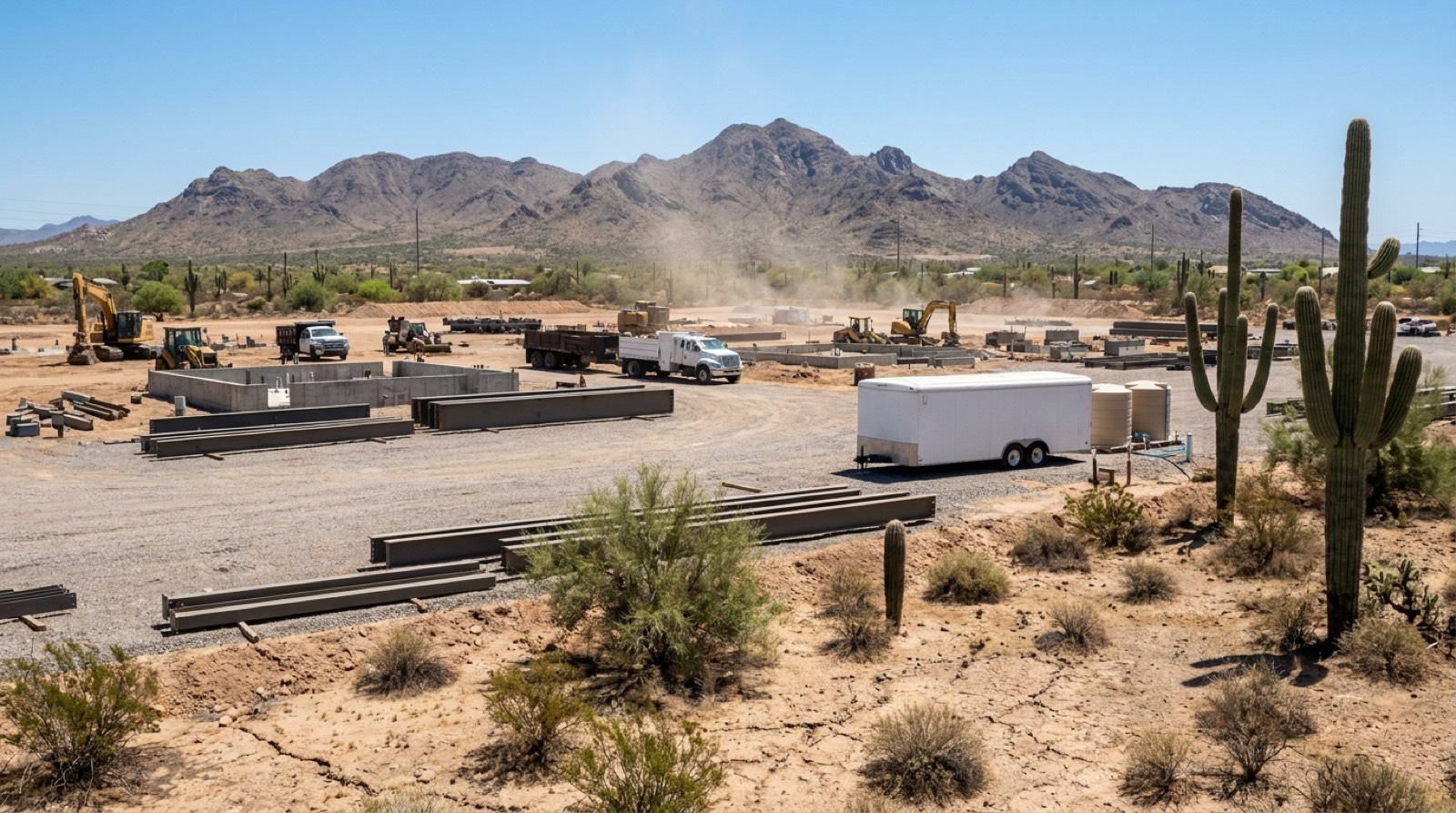
Phoenix and Mesa build through heat that regularly exceeds 110 degrees. OSHA heat-illness prevention drives water and shade requirements that our units satisfy directly.
View Arizona →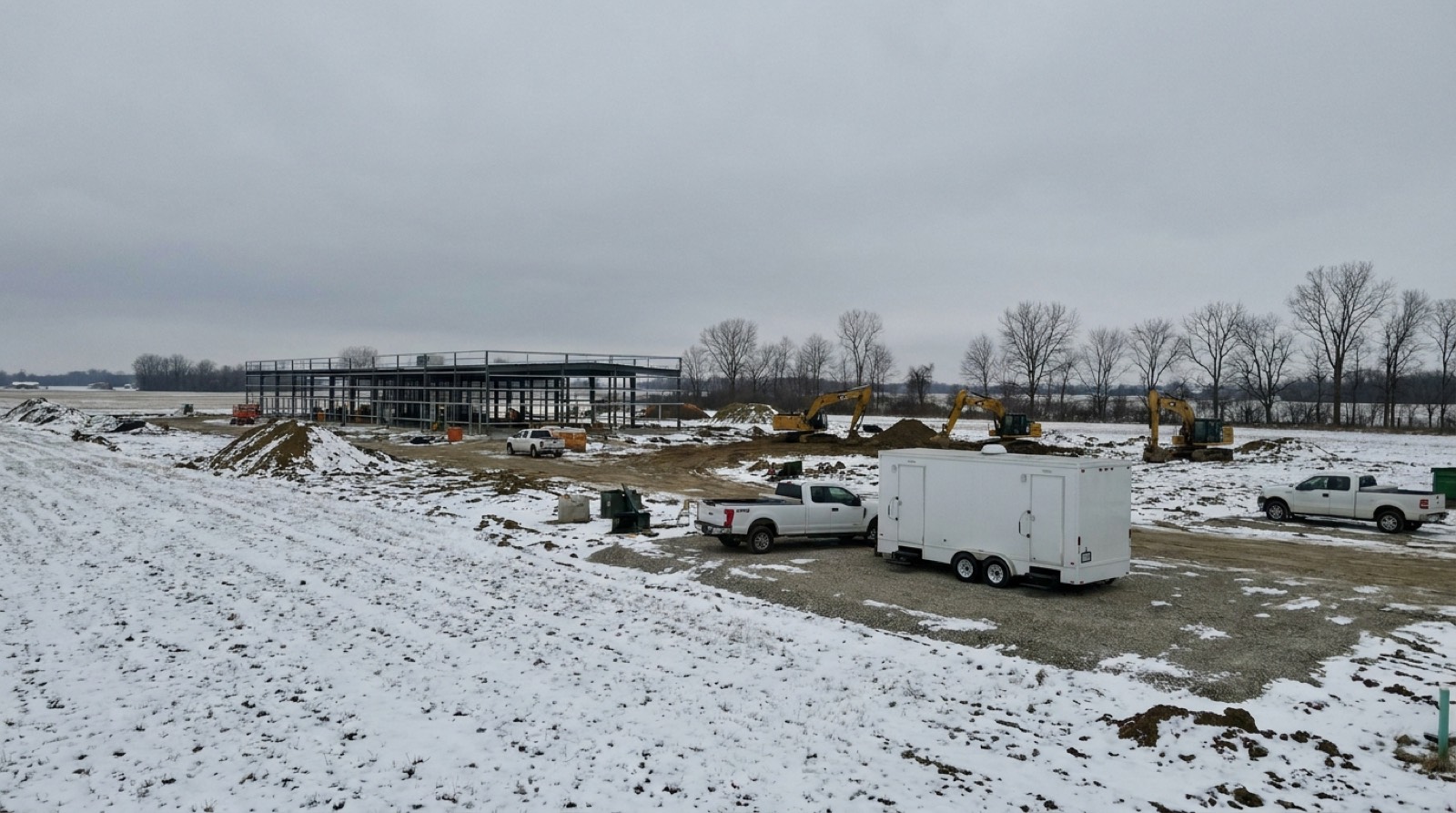
Columbus and New Albany. Freeze protection and winter service access matter here in a way Sun Belt corridors never see.
View Ohio →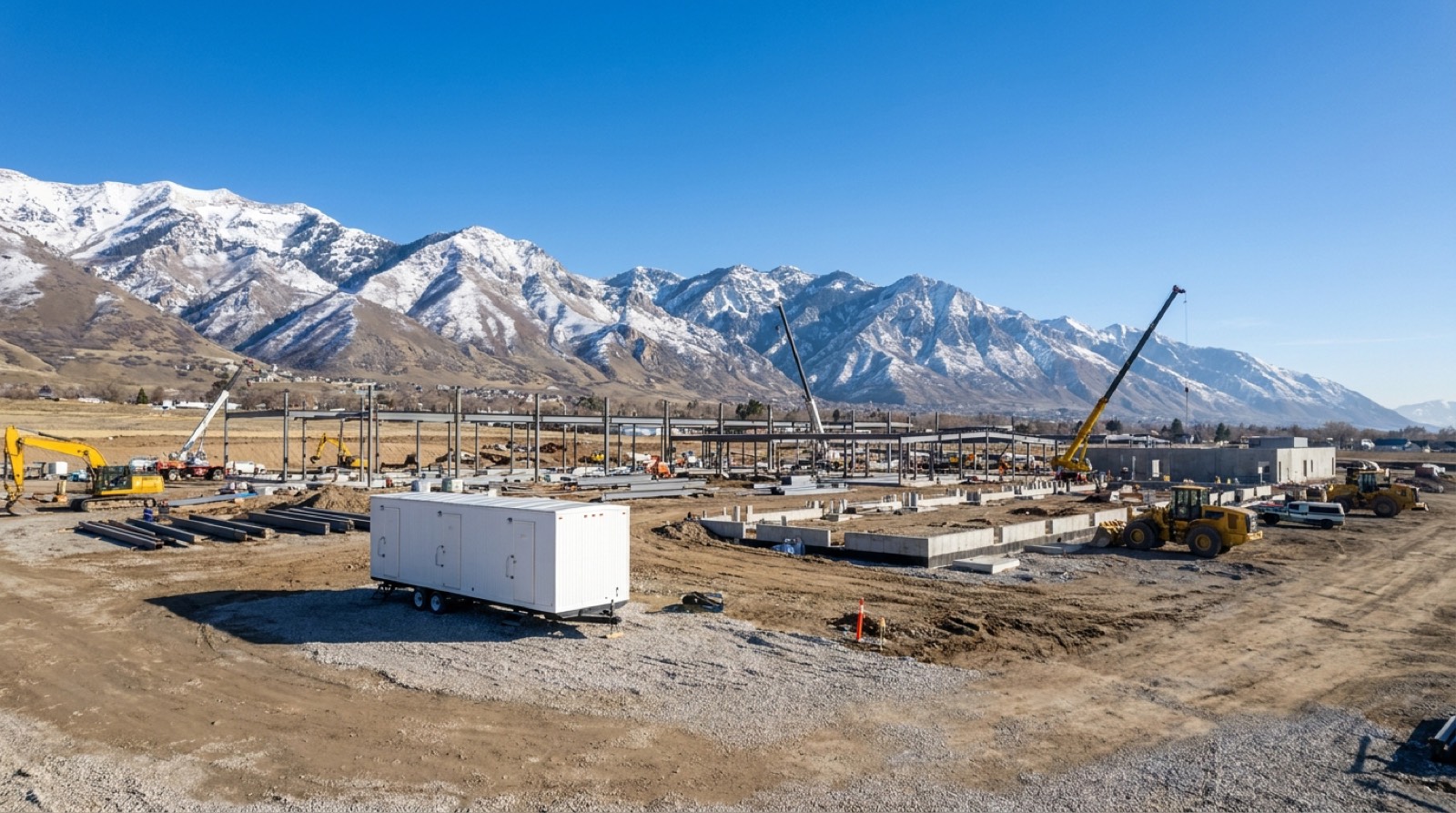
The Wasatch Front corridor runs through hard winters at elevation. Units are winterized and service intervals hold through snow.
View Utah →Questions we get
Yes. That is the standard condition in Loudoun and Prince William. Insurance certificates, orientation records and driver documentation are submitted before mobilization, and service visits are scheduled inside your access windows.
Units run interior heat and protected plumbing for freeze events. Winterization is specified in the deployment plan rather than improvised in December.
That is the normal pattern in this corridor. Relocations are scheduled work coordinated with your superintendent, and fixture counts step up or down with the manpower curve.
Go deeper
Longer reads for teams writing the site plan. Open what applies to your build.
A pump truck arrives at a Loudoun County data center gate at 6 a.m. The driver is not on the vendor list. Security turns the truck around and the service visit slips a day. A trailer serving 60 electricians hits capacity by Thursday. Nobody did anything wrong except skip the access planning. On the badge controlled campuses of Data Center Alley, sanitation logistics are access logistics first.
Every operator and general contractor in Northern Virginia runs a version of the same system. Vendors register in advance. Drivers submit for background screening, which can take days or weeks depending on the program. Some campuses issue standing badges to approved drivers. Others require an escort for every visit, which means your service window depends on when an escort is available. A few restrict deliveries to set hours. None of this is negotiable at the gate, so it has to be solved before the trailer ever ships. We keep drivers screened and registered with the major access programs in the Loudoun and Prince William corridor so a truck at the gate is an expected truck.
Even with clean paperwork, badged campuses have bad days. A security incident locks down the gate. An escort calls out. A visit that should take an hour takes four. The answer is buffer capacity. On badged sites we size waste tanks so a missed service day does not shut a trailer down, and we schedule visits a day earlier than the math strictly requires. We also keep the site contact informed when a truck is inbound, because a phone call from inside the fence moves a stuck truck faster than anything a driver can say. Plan access like it will fail occasionally, and the failures stop mattering.
The practical takeaway for planners is lead time. Start vendor registration when the trailer order is placed, not when the unit ships. Ask the general contractor for the campus access packet early, confirm which screening program applies, and get at least two drivers approved per route so a sick day does not become a missed service. On campuses that require escorts, book recurring escort windows for the season instead of requesting them visit by visit. Every one of these steps is boring. That is the point. Gate drama is what happens when the boring steps get skipped.
A typical Northern Virginia data center build might start sitework with 150 people and peak above 1,200 during fit out. That ramp is the planning problem. Order trailers for the start and the site drowns at peak. Order for the peak on day one and you pay for empty stations for a year. The right approach treats restroom capacity as a curve, not a number.
The phases are predictable. Sitework and foundations run lean crews spread across dirt. Structure and shell grow the count steadily. Then fit out arrives, and the electrical, mechanical, and controls trades stack on top of each other. That last stretch is where headcount doubles in a single quarter, and it is where sites get caught. We build a trailer schedule against the project labor curve. Start with a couple of units near the entrance. Add capacity when the shell tops out. Front load the biggest additions two or three weeks before the fit out surge, because trades arrive faster than trailers get permitted, placed, and connected. Removing a unit later is a phone call. Adding one late is a compliance gap with a line in front of it.
The rental agreement should match the curve too. Data Center Alley schedules move. Steel slips, then the owner compresses fit out to hold the energization date. A rigid twelve month contract on a fixed trailer count fits none of that. We write agreements that let a site step capacity up or down with notice, because that is how these projects actually run. The measure of success is simple. At every point in the build, the trailer count on site should look like somebody planned it. On a ramp this steep, that only happens on purpose.
The mechanism that makes this work is a simple monthly conversation. We ask the site for its three month labor projection, compare it against current station counts, and flag the gap while there is still time to close it calmly. Loudoun and Prince William schedules are among the most compressed in the country, and the projects that stay ahead of them treat every support system this way. Restrooms are no different from cranes or parking in that respect. Capacity planned against the curve is cheap. Capacity ordered during the crunch is late.
July in Loudoun County brings 90 degree days with humidity to match. Heat alone is manageable. Heat plus humidity is what wrecks an unmanaged restroom trailer. Moisture hangs in the air, odors carry further, surfaces stay damp, and a unit that was fine in April becomes a unit workers avoid by August. Avoidance is the failure mode that matters, because workers who skip the restroom also skip drinking water, and dehydrated crews in summer heat become a safety problem.
Every trailer we place for summer service in Northern Virginia runs air conditioning, and we treat it as required equipment rather than an upgrade. Cooling does two jobs at once. It keeps the interior comfortable, and it pulls moisture out of the air. A dry interior stays cleaner between services and holds odor down. The load matters, though. An air conditioned trailer draws real power, so the temporary power drop or generator has to be sized for compressors starting on a 95 degree afternoon. We check that math before delivery, because a tripped breaker at 2 p.m. in July means a hot, sealed box by 3 p.m.
We shorten service intervals from June through September. Crews drink more, wash more, and use facilities more in the heat, so fresh water draws down faster and waste tanks fill sooner. Deodorizer chemistry also works harder in high heat, so restocking cannot slip. Placement helps too. A trailer with afternoon shade from a building or tree line runs cooler and cheaper than one baking on open gravel. None of this is complicated. It is just the difference between a trailer spec written for a catalog and one written for a Virginia summer.
There is a labor angle here too. Northern Virginia data center trades have their pick of projects, and site conditions travel by word of mouth. Clean, cooled facilities in August are one of the cheapest signals a project can send about how it treats its people. Superintendents tell us it shows up in morale first and in retention eventually. We cannot prove the second part with a spreadsheet. We can say that the sites that invest in summer comfort do not seem to struggle for crews, and in this market that is worth something.