Texas
Restroom trailer rentals for Texas data center sites
Climate-controlled restroom capacity for the fastest-growing data center market in the country, from DFW metro campuses to gigawatt-scale builds in West Texas.
Climate-controlled restroom capacity for the fastest-growing data center market in the country, from DFW metro campuses to gigawatt-scale builds in West Texas.
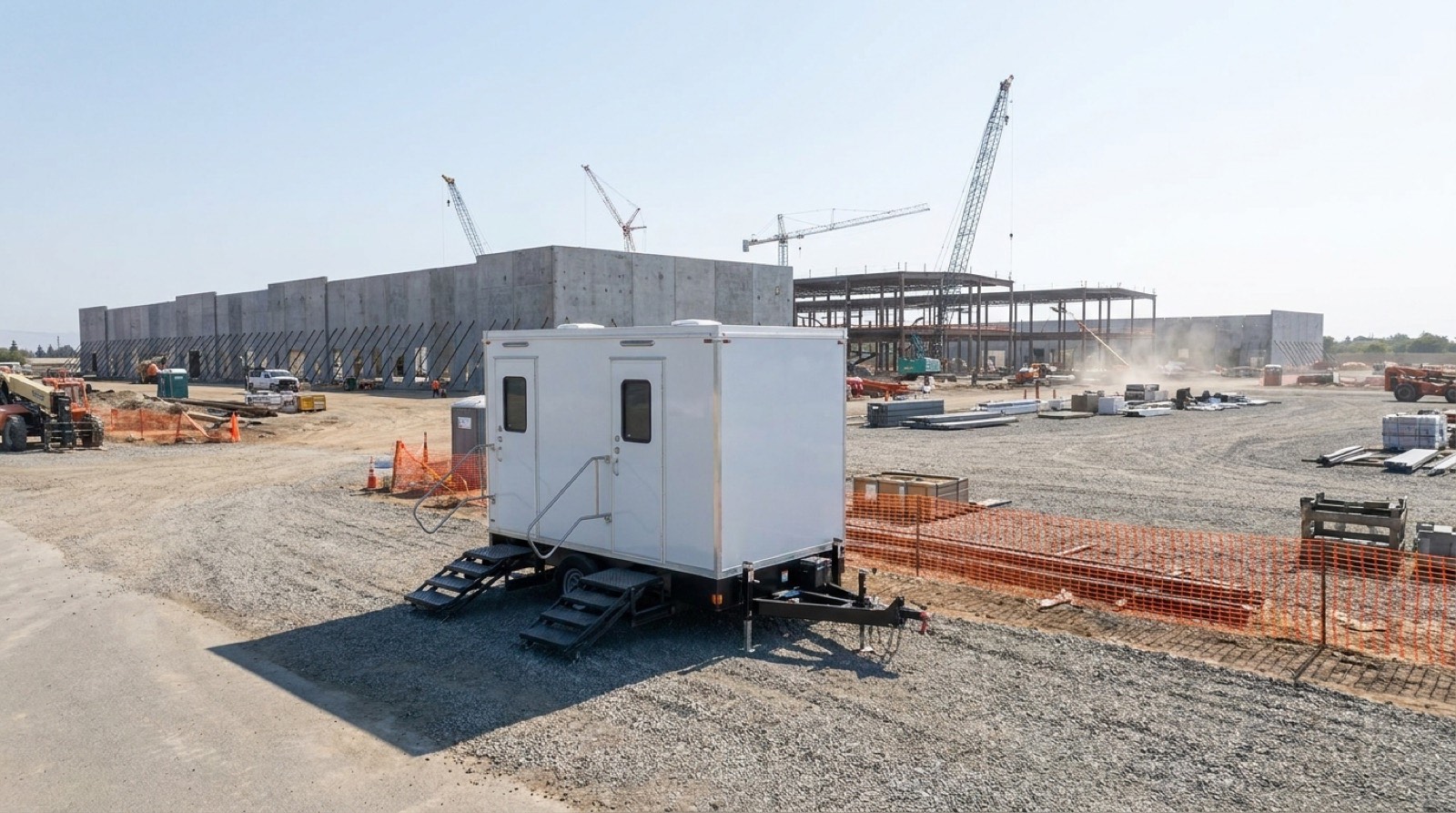
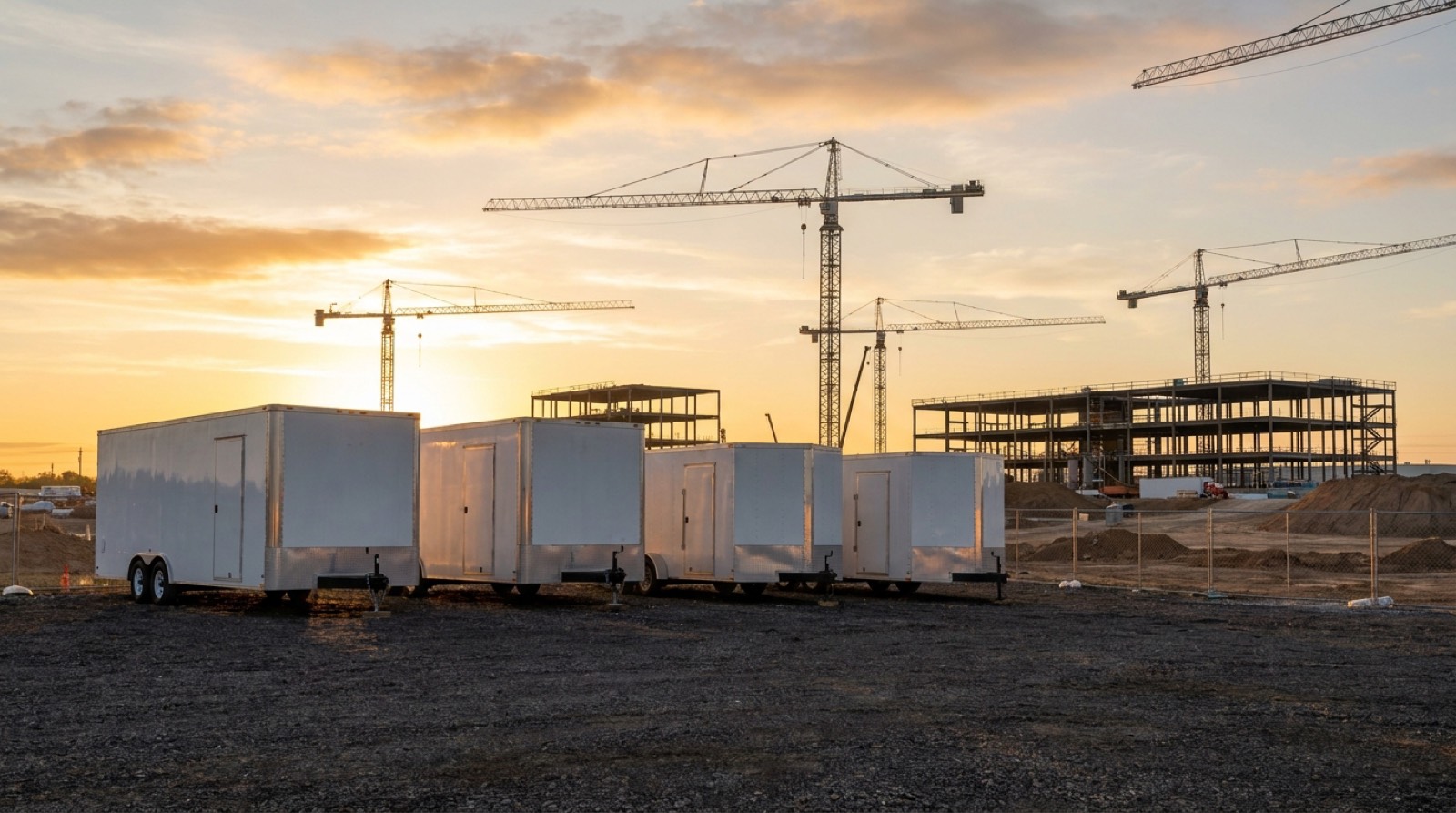
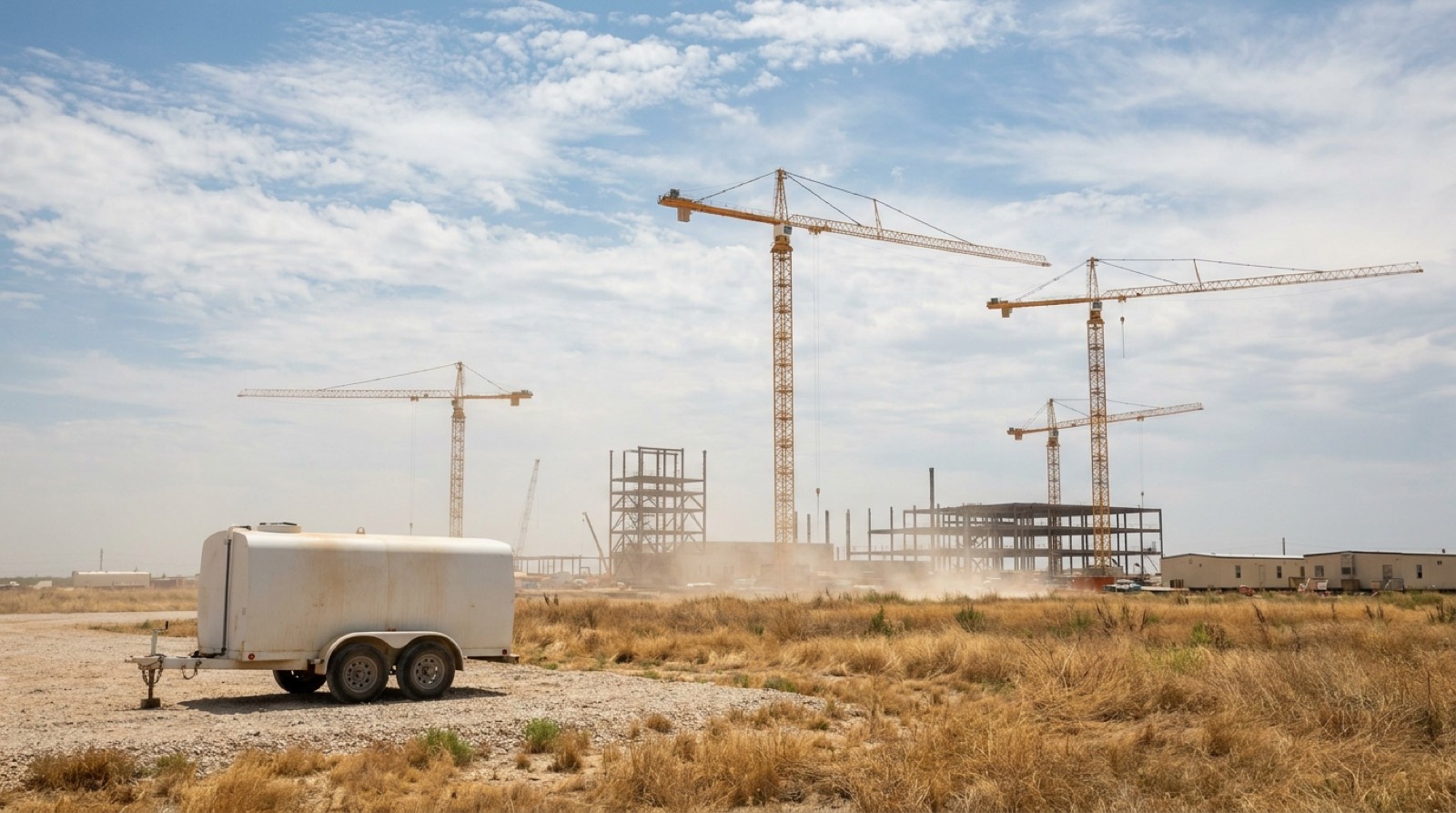
Texas data center construction runs from dense metro corridors in Dallas, Fort Worth and San Antonio to remote gigawatt campuses rising out of ranch land near Abilene and across West Texas. The metro sites bring traffic, curfews and tight laydown. The greenfield sites bring nothing at all: no water, no improved access, and summer afternoons that hold above 100 degrees for weeks. Both are normal deployments for us.
A restroom trailer without working climate control in a Texas August is a unit crews will not use. Our units run interior air conditioning sized for the heat, and service intervals account for the consumption rates that heat drives. Water use climbs, consumables run faster, and a fixture count that held in March queues in July. Deployment plans anticipate the summer curve instead of reacting to it.
On greenfield campuses with no utilities, units run from onboard tanks with generator power specified in the plan, and the service route brings water in and waste out on a contracted interval. Distance is engineered into the schedule: a site three hours from the nearest yard gets a service plan built around that reality, not a promise that ignores it.
Dallas, Fort Worth and the metroplex corridor, San Antonio and the I-35 spine, Abilene and West Texas campus country, Temple, Taylor and the central corridor, and Houston. Statewide mobilization beyond these areas is standard.
Most Texas deployments bundle several units under one route. One contracted vendor, one dispatch, one escalation path, and a site plan that arrives already coordinated.
The paperwork side of the job needs a roof too. Office trailer rentals in Texas give supervision and inspections a place to meet without leaving the gate.
Extended-stay crews generate wash loads every week of the schedule. Laundry trailer rentals in Texas keep that cycle on site instead of in a hotel sink.
Food service and ice programs live or die on cold storage at the pad. Refrigeration trailer rentals in Texas hold setpoint through the local season.
Water is the first thing safety plans ask about. Hydration station rentals in Texas run on the same supply logistics as the rest of the package, so adding them costs one stop, not a second vendor.
Where crews rotate in from out of the area, the end of shift is its own rush hour. Shower trailer rentals in Texas carry that peak so the workforce goes home clean.
The full reach of our restroom trailer rentals program runs beyond Texas, covering every corridor we serve.
Questions we get
Yes. Units run interior air conditioning sized for the climate, and summer service intervals are shortened to match higher water and consumable use. A unit crews avoid is a compliance problem, so cooling is treated as core equipment.
Yes. Units run self-contained with onboard water and generator power, and the service route is engineered around the actual distance to the site.
Metro corridors are our heaviest Texas concentration. Most requirements are quoted the same day and scheduled within the week, with emergency placement moving faster.
Where we deploy
Heaviest concentration in the corridors carrying the most active data center construction, with nationwide mobilization beyond them.
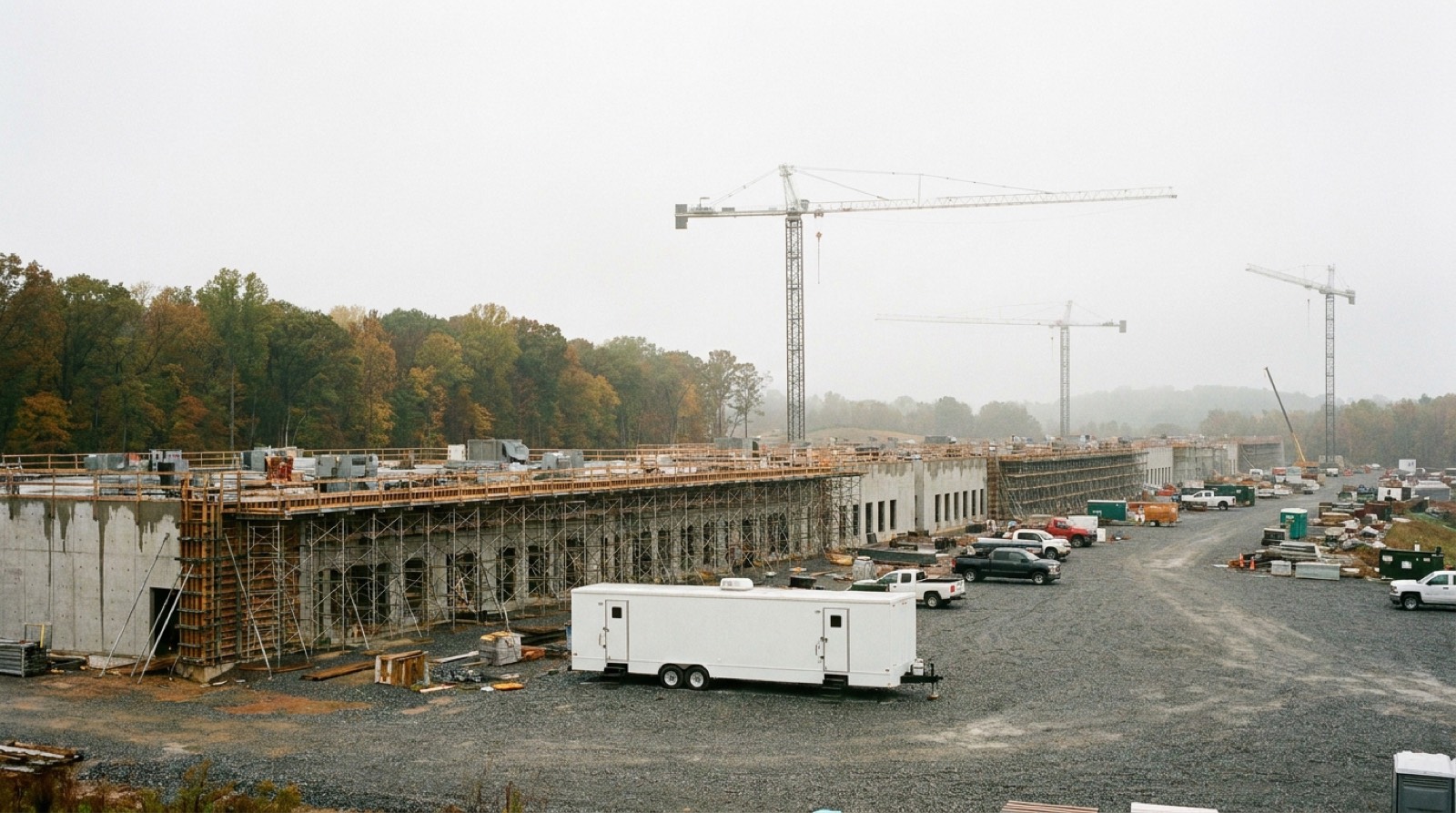
Loudoun County and Prince William run the densest data center concentration on earth. Multi-year campuses, badge-controlled access, crews in the hundreds, and facility requirements written into the subcontract.
View Northern Virginia →Dallas, Fort Worth, San Antonio and Abilene are carrying some of the largest campuses in the country. Summer heat makes hydration and shower capacity a safety line item, not an amenity.
View Texas →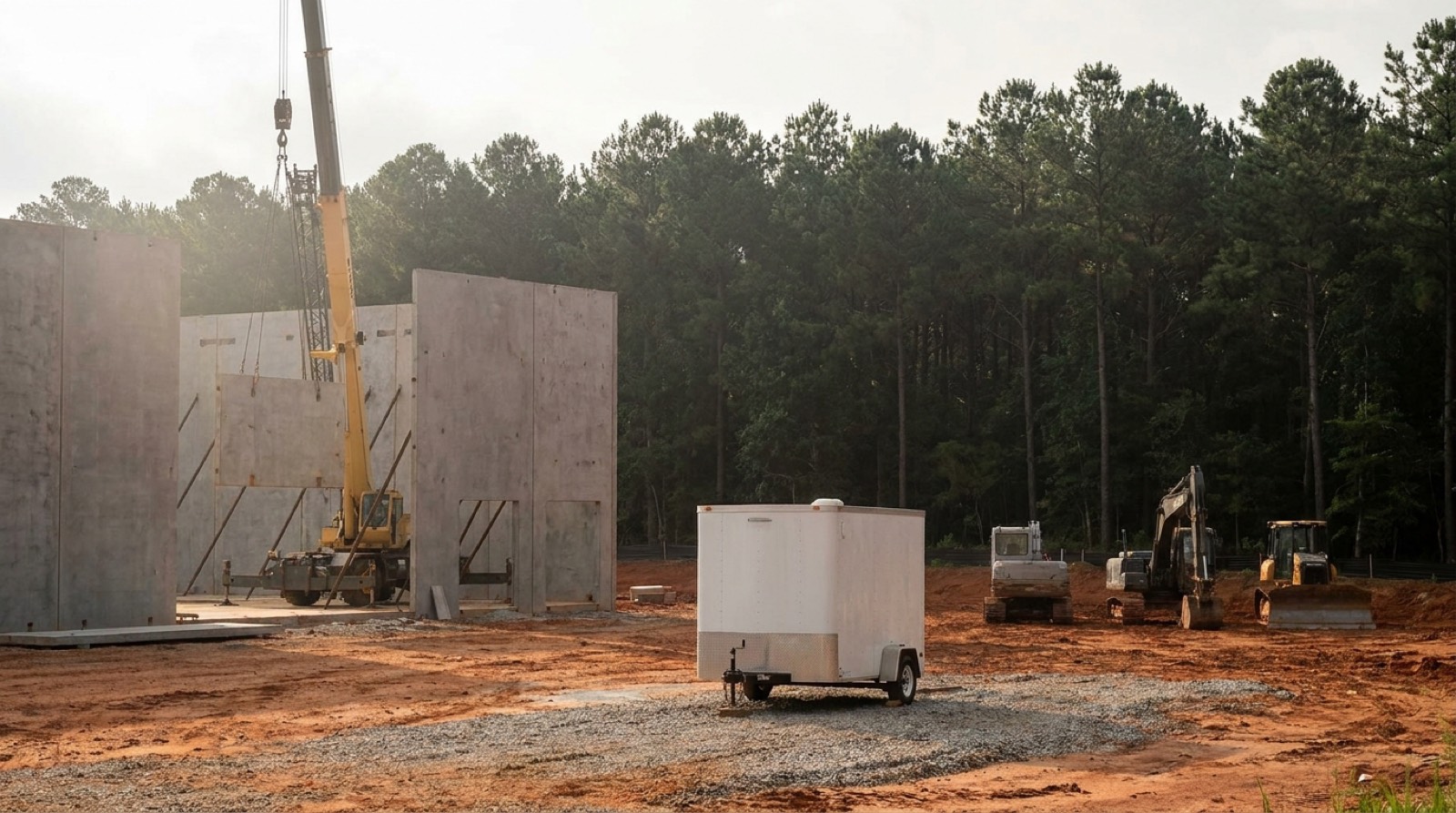
Atlanta metro and Douglas County, extending along I-20. Humid summers, long hauls between laydown and pad, and multi-phase schedules that keep facilities on site for years.
View Georgia →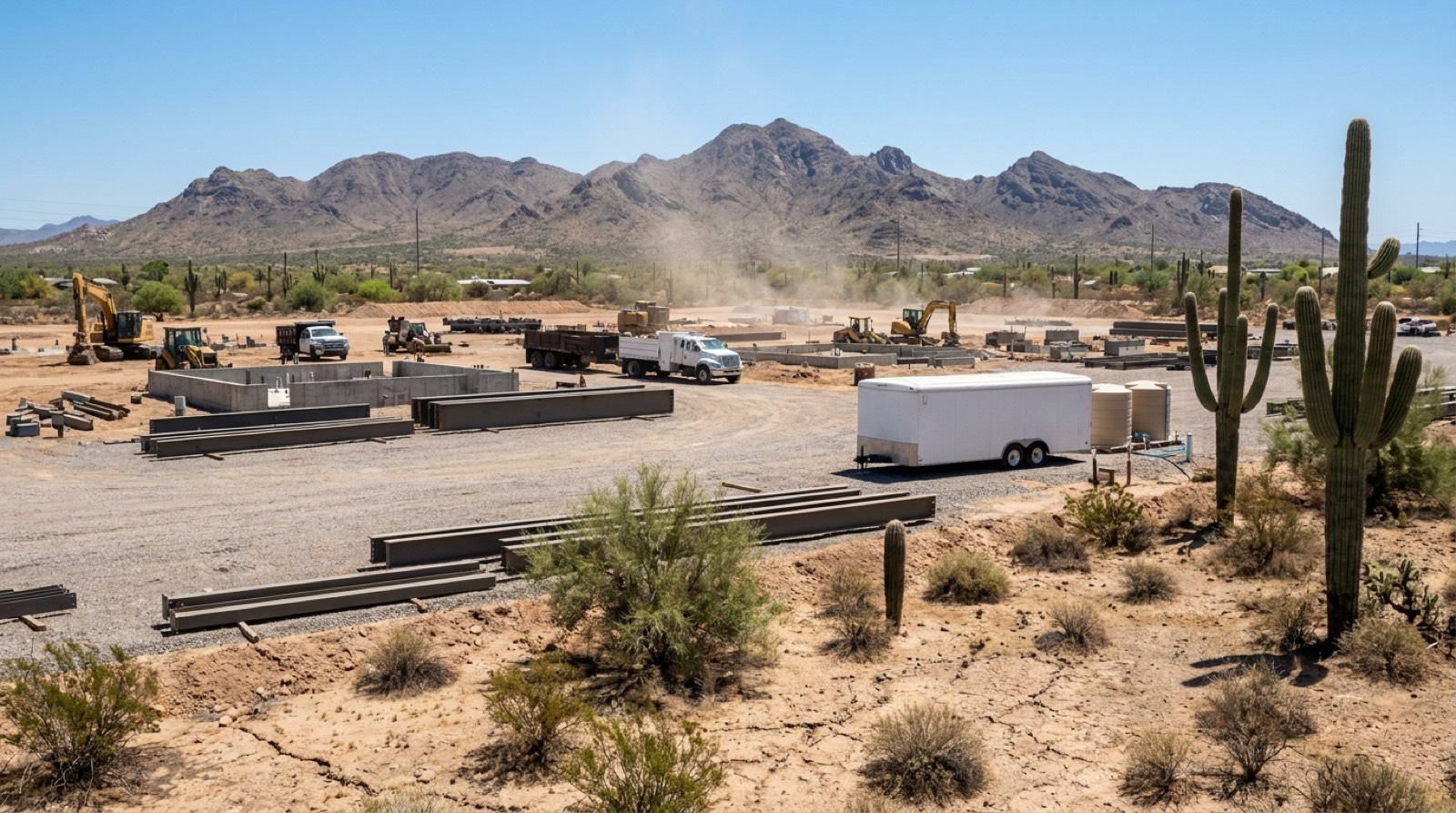
Phoenix and Mesa build through heat that regularly exceeds 110 degrees. OSHA heat-illness prevention drives water and shade requirements that our units satisfy directly.
View Arizona →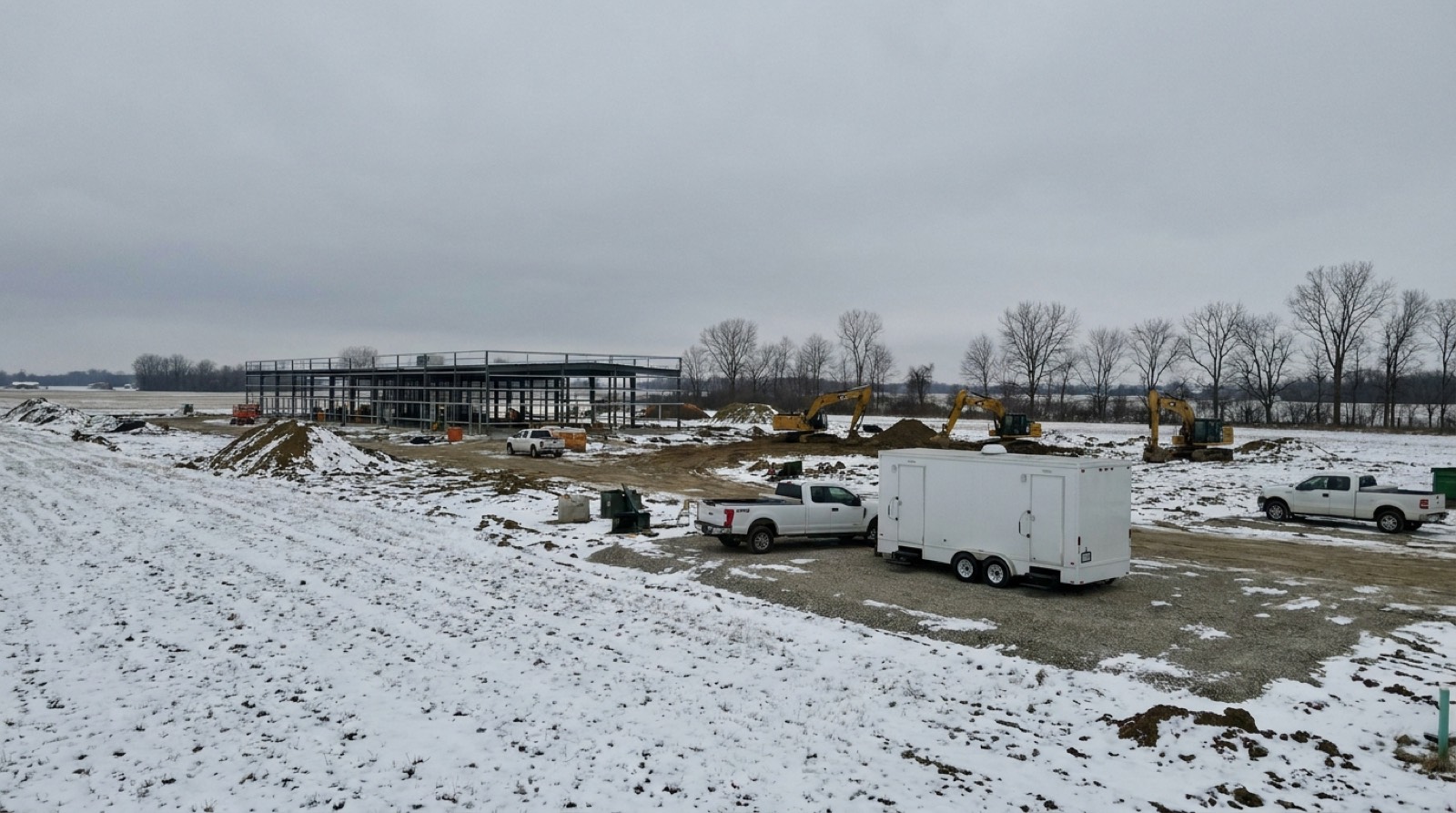
Columbus and New Albany. Freeze protection and winter service access matter here in a way Sun Belt corridors never see.
View Ohio →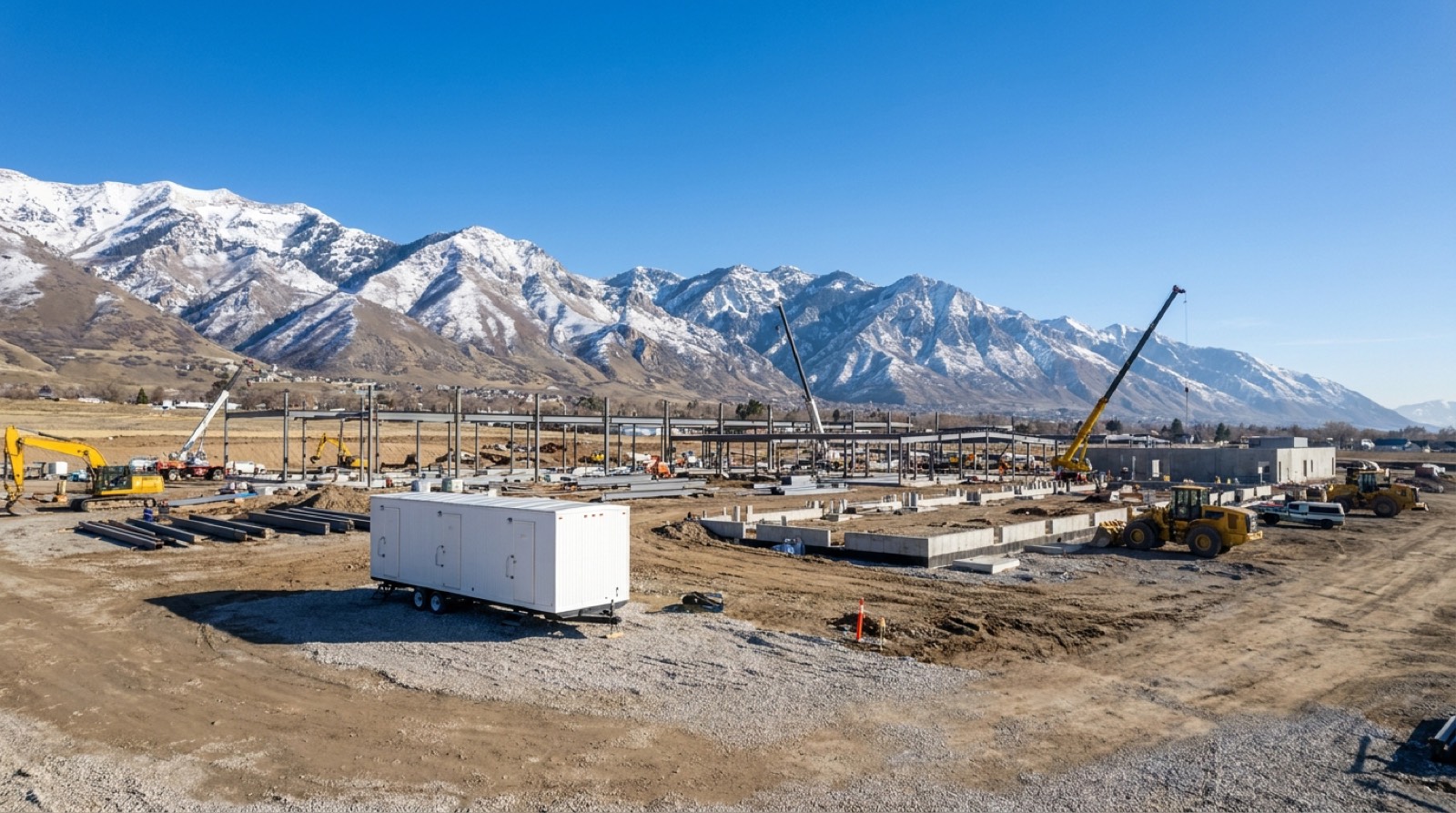
The Wasatch Front corridor runs through hard winters at elevation. Units are winterized and service intervals hold through snow.
View Utah →Go deeper
Longer reads for teams writing the site plan. Open what applies to your build.
The new wave of Texas data center sites is not in a business park. It is on ranch land outside Abilene, on greenfield acreage west of Fort Worth, on ground picked for power and fiber rather than plumbing. There is no municipal water line. There is no sewer. Every gallon that arrives on site is trucked in, and every gallon of waste is trucked out. Restroom planning on these sites is a hauling problem before it is anything else.
The trailers themselves handle this fine. Units run on onboard fresh water tanks and hold waste in onboard tanks, with no site connections beyond power. The planning work is in the cadence. We calculate fresh water consumption from headcount and Texas heat, which pushes usage well above national averages, then schedule water deliveries and pump outs to stay ahead of both tanks. Distance changes the math. When the nearest licensed disposal facility is an hour away, a service truck completes fewer stops per day, so routes are planned tighter and tanks are sized larger. On remote sites we favor high capacity units specifically to widen the service window.
A few lessons from doing this on real ranchland. Caliche and dirt access roads wash out, so we confirm the route after every major rain, not just at delivery. Generators carry the full power load, and the air conditioning draw in 100 degree heat decides the generator size, so spec it for August even if you deliver in March. Cell coverage can be thin, which means service schedules run on standing appointments rather than call ins. And dust finds everything, so door closers and seals get checked at every visit. None of this is exotic. It is just logistics done in advance, which is the only version of logistics that works 40 miles from town.
One more coordination point for remote builds. Restroom water shares the same hauling economics as dust control water and drinking water, and on some greenfield sites the same trucks or the same vendor supply all of them. It pays to look at site water as one system. Combined deliveries cut truck traffic on fragile access roads, and a single schedule is easier to protect than three separate ones. We coordinate with the site's water plan wherever one exists, and where one does not exist yet, we usually end up helping to write it.
Run the numbers on a 24 hour site and the difference jumps out. A day shift site with 300 workers generates restroom demand for maybe ten hours a day. A Texas build running two or three shifts, with a man camp housing traveling trades next door, generates demand around the clock. Same 300 badges, nearly double the daily use. Sites that size trailers off headcount alone, using assumptions built for a day shift, run out of capacity in the first month.
Our practice on continuous schedules is to size against station hours, not just workers. We estimate uses per worker per shift, multiply across every shift, and add the man camp factor when workers live adjacent to the site. Camp residents use site facilities on their way in, on their way out, and often on days off. Weekend use does not drop to zero the way it does on a commuter site. The result is usually a trailer count 40 to 70 percent higher than a day shift site with the same badge count, plus a service schedule with two or three visits per week instead of one.
Around the clock use also changes the equipment list. Exterior lighting on every unit, because a dark trailer at 2 a.m. does not get used, it gets avoided. Interior climate control running continuously, since Texas nights in summer barely cool down. And a service window carved into the schedule, because there is no empty site to service. We typically run pump outs during shift change, when the trailers see a short lull. Man camp projects in West Texas taught us most of this. The sites are remote and the schedules never stop. The sanitation plan either accounts for that on paper or fails in the field.
There is also a standard of living question on these projects. Workers at a remote camp cannot go home at night to decent facilities, so the facilities on site are the facilities in their life. Sites that treat sanitation as a cost line get the turnover that comes with that. Sites that run clean, working, well lit units around the clock hold their crews longer, which on a remote Texas build is worth more than any line item captures. Traveling trades talk to each other. What they say about your camp matters.
A standard portable toilet in direct Texas sun can run 20 degrees hotter inside than the air outside. On a 105 degree afternoon in the Dallas Fort Worth corridor or San Antonio, that puts the interior above 120. Workers know it, so they hold off, drink less to avoid the trip, and stretch the interval between breaks. Every one of those behaviors raises heat illness risk. OSHA's heat guidance centers on water, rest, and shade, and a restroom situation that discourages drinking water works directly against it.
An air conditioned restroom trailer inverts the whole dynamic. The interior holds in the 70s while the site bakes. Workers hydrate freely because the restroom is no longer a penalty. Foremen get a few minutes of recovery space for a worker showing early heat stress symptoms while the medic is en route. We are careful about the claim here. A restroom trailer is not a cooling station and should not replace dedicated shade and rest areas. But on the real jobsite, a clean, cold interior a short walk from the work face measurably changes how crews manage themselves in the heat.
Cooling a trailer through a Texas summer takes planning. Air conditioning is the dominant electrical load, so the generator or temporary power circuit gets sized for compressor start on the hottest day, not the average one. We spec units with insulated walls and shaded or light colored roofs where possible, and we place them to catch afternoon shade off structures when the site layout allows. Fresh water demand also climbs, since crews wash more in the heat, so summer service intervals tighten. The spec costs more attention up front. It pays it back every afternoon from May to September.
The last piece is keeping the cooling alive. An air conditioner running twelve hours a day through a Texas summer is working harder than it would anywhere else in its service life. Filters load up with site dust, condensers cake over, and a unit that loses a quarter of its capacity in June will lose the rest by August. Our summer service visits include the air conditioning itself, with filter swaps and condenser checks on a fixed cadence. A cooled trailer is only a benefit while it is actually cool, so we treat the compressor like the safety equipment it quietly is.