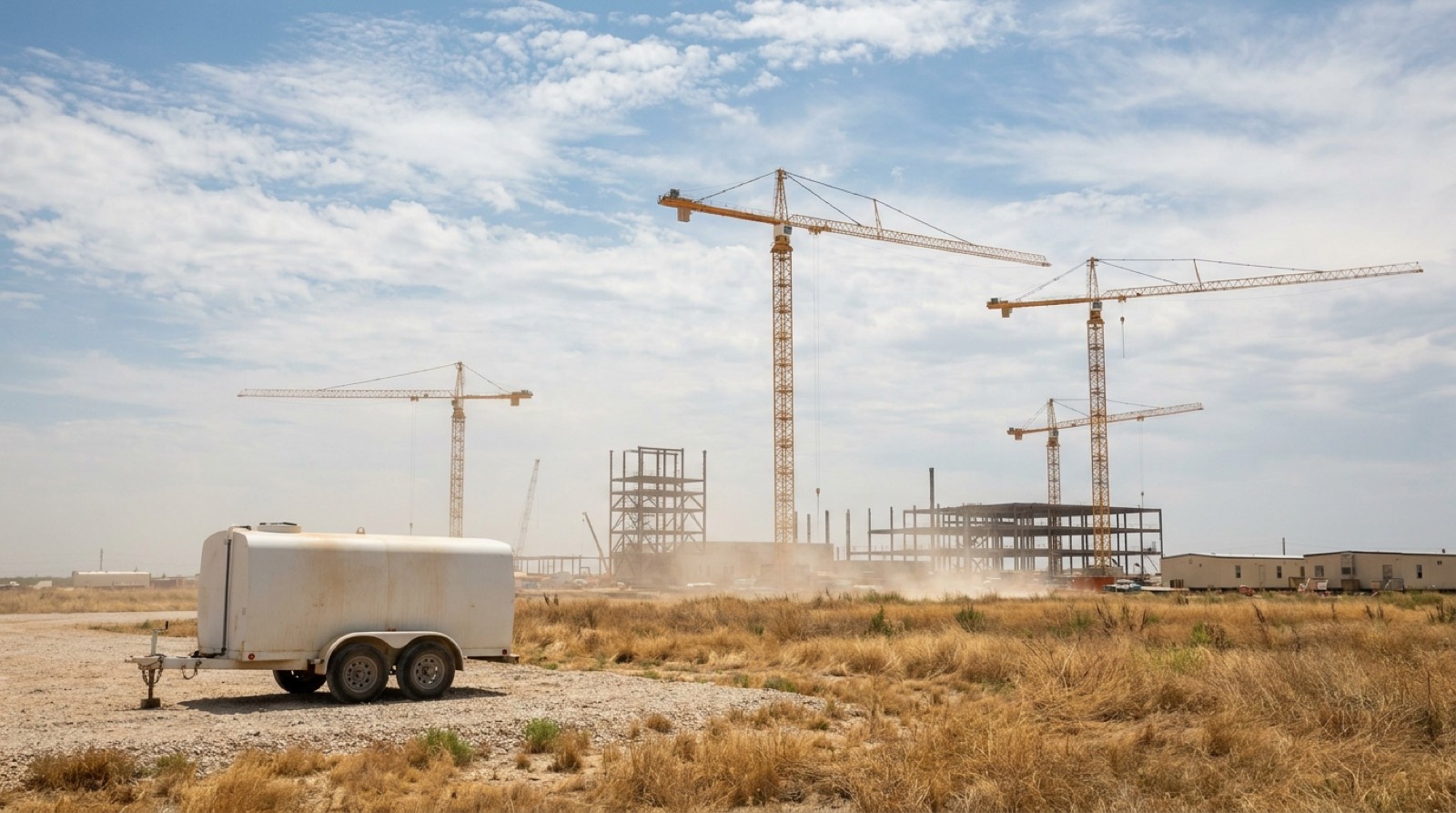
Texas
Shower trailer rentals for Texas data center sites
Shower capacity for Texas builds where the nearest hotel is an hour away and the workforce lives on rotation, plus the washdown that silica scopes demand.
Shower capacity for Texas builds where the nearest hotel is an hour away and the workforce lives on rotation, plus the washdown that silica scopes demand.
The gigawatt campuses outside Abilene and across West Texas pull labor that lives in man camps, not commutes. On those sites the shower trailer decides whether a camp holds skilled trades or churns them. Eight-station units with consecutive-use hot water are the standard spec. The water itself gets hauled in, on the same logistics discipline as everything else on a greenfield site.
Concrete finishing, grinding and cutting scopes carry silica exposure plans, and those plans work better when washing up happens at the site instead of in a truck cab. Shower capacity puts the exposure control where the exposure is, with stall counts documented for the safety file.
After ten hours in Texas summer heat, a shower is part of how crews recover for tomorrow. Sites that run brutal summer schedules keep them, because the alternative shows up as attrition in August when replacement labor is hardest to find.
Where we deploy
Heaviest concentration in the corridors carrying the most active data center construction, with nationwide mobilization beyond them.
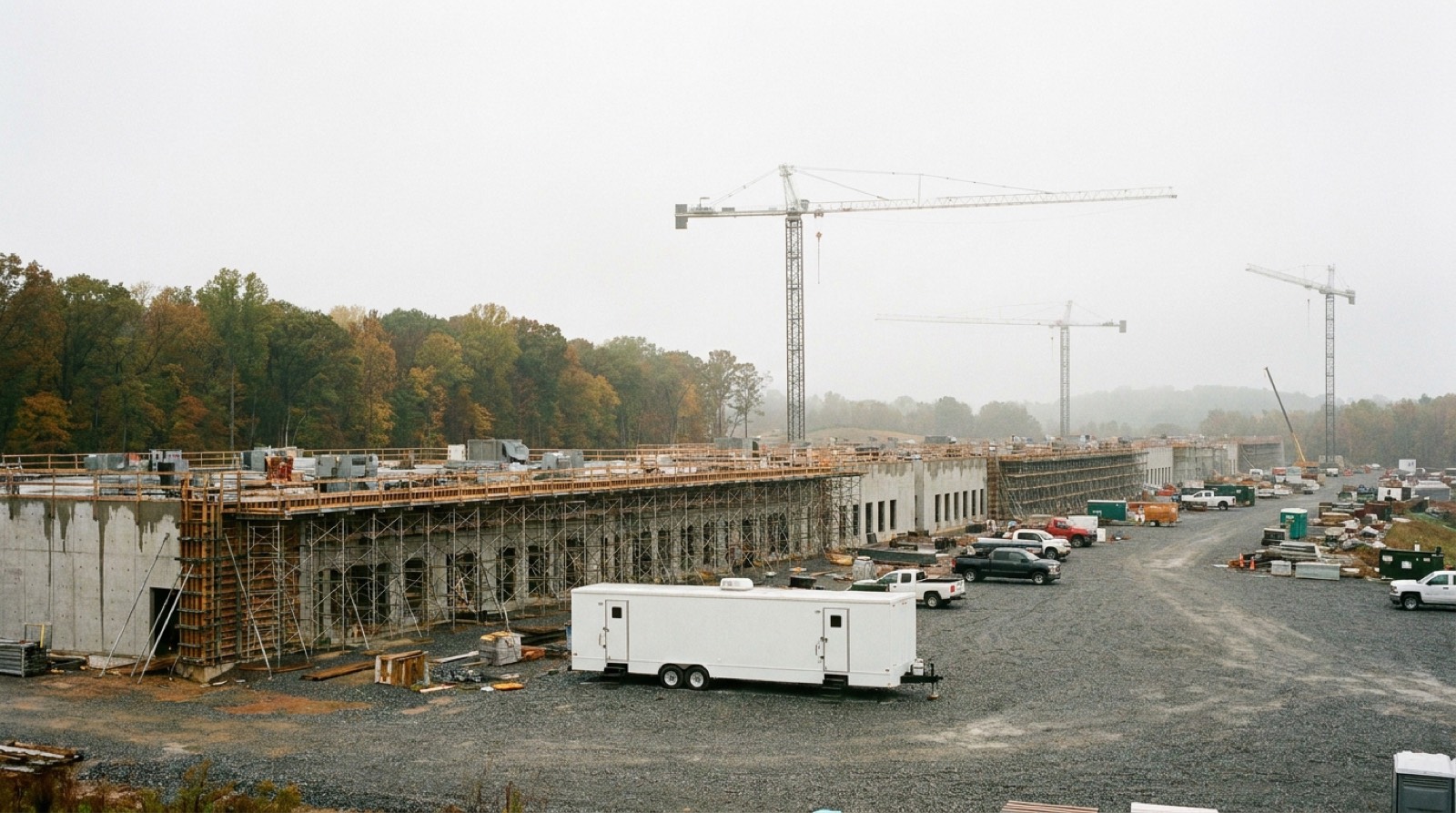
Loudoun County and Prince William run the densest data center concentration on earth. Multi-year campuses, badge-controlled access, crews in the hundreds, and facility requirements written into the subcontract.
View Northern Virginia →Dallas, Fort Worth, San Antonio and Abilene are carrying some of the largest campuses in the country. Summer heat makes hydration and shower capacity a safety line item, not an amenity.
View Texas →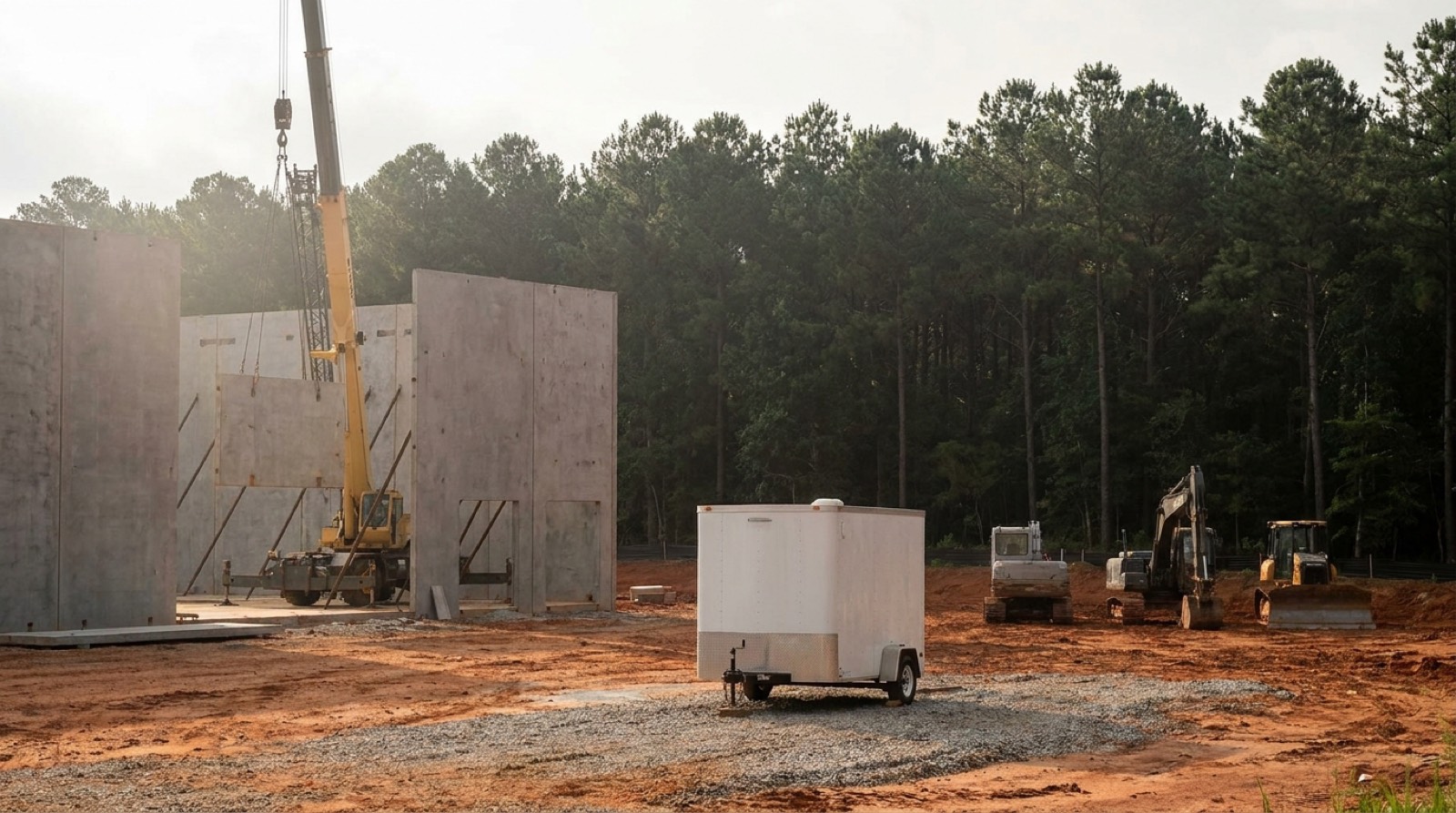
Atlanta metro and Douglas County, extending along I-20. Humid summers, long hauls between laydown and pad, and multi-phase schedules that keep facilities on site for years.
View Georgia →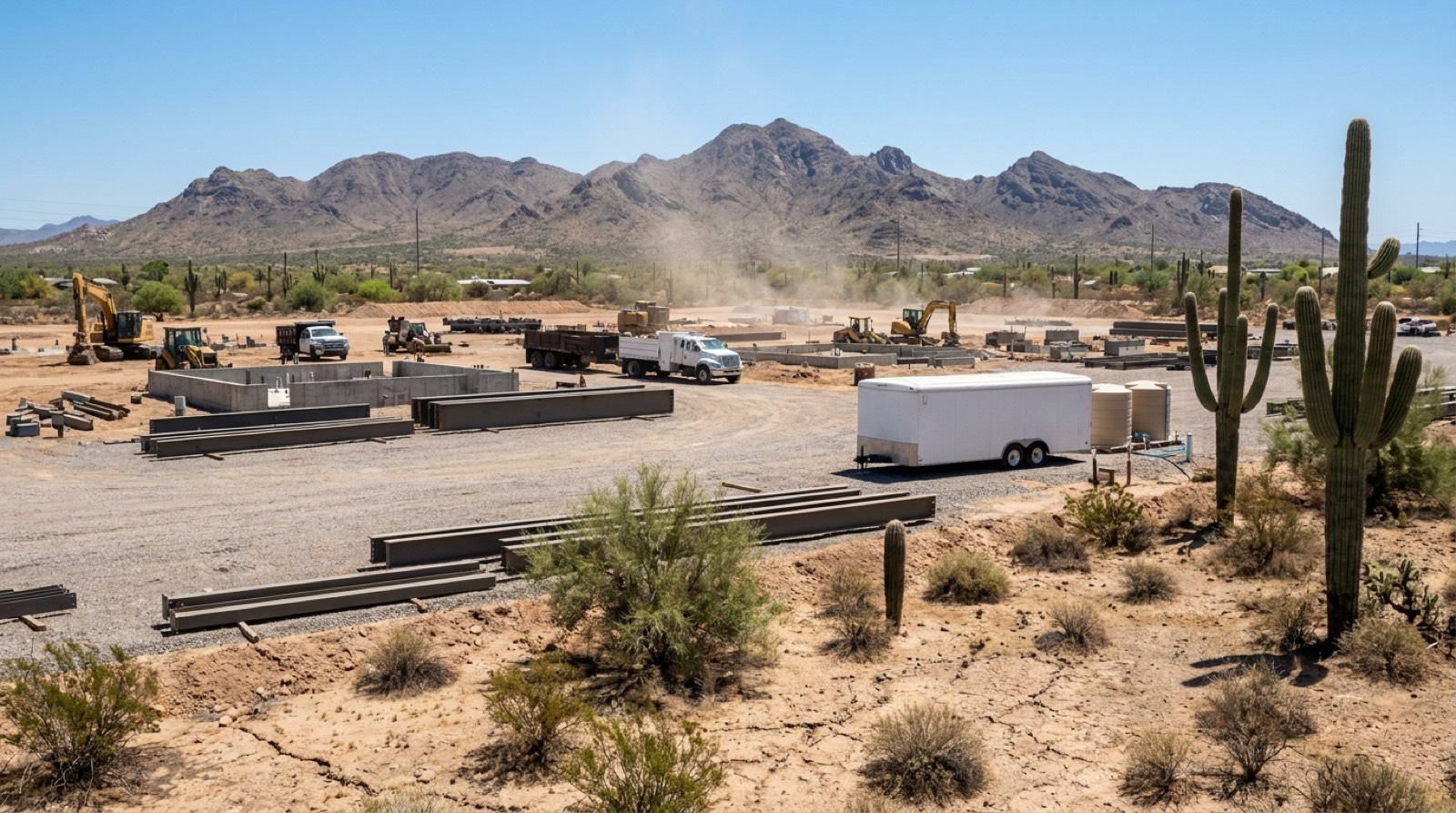
Phoenix and Mesa build through heat that regularly exceeds 110 degrees. OSHA heat-illness prevention drives water and shade requirements that our units satisfy directly.
View Arizona →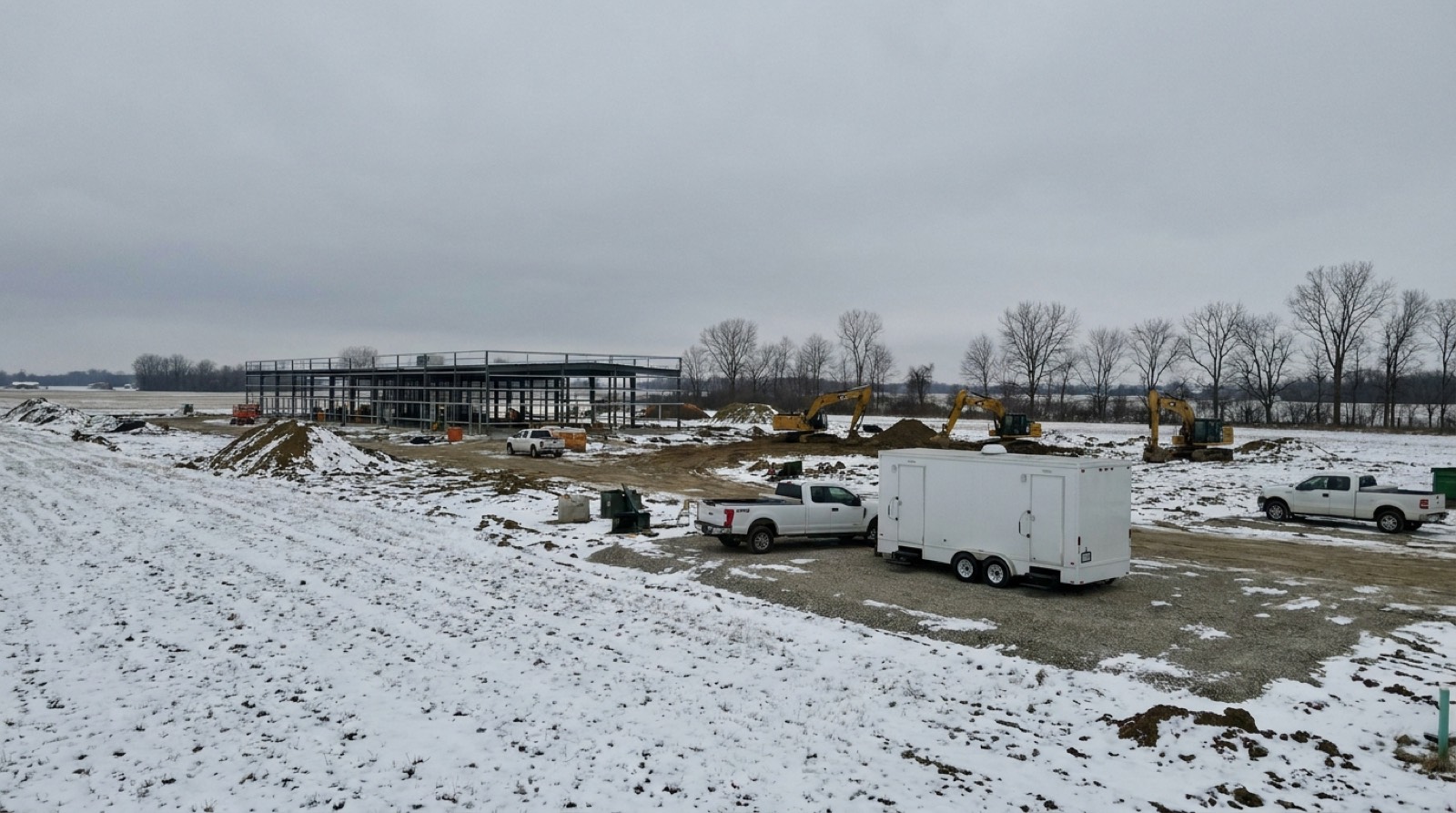
Columbus and New Albany. Freeze protection and winter service access matter here in a way Sun Belt corridors never see.
View Ohio →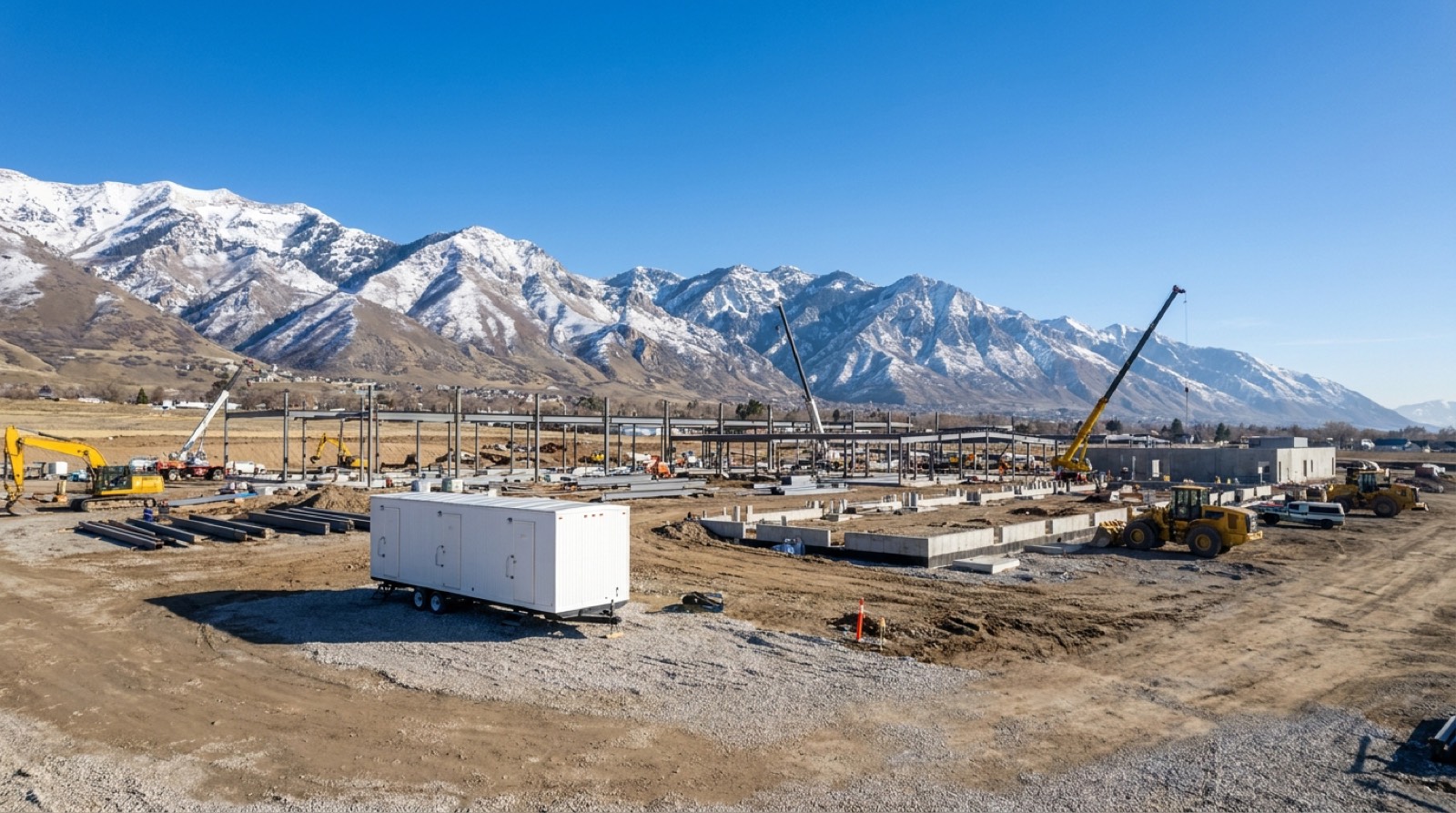
The Wasatch Front corridor runs through hard winters at elevation. Units are winterized and service intervals hold through snow.
View Utah →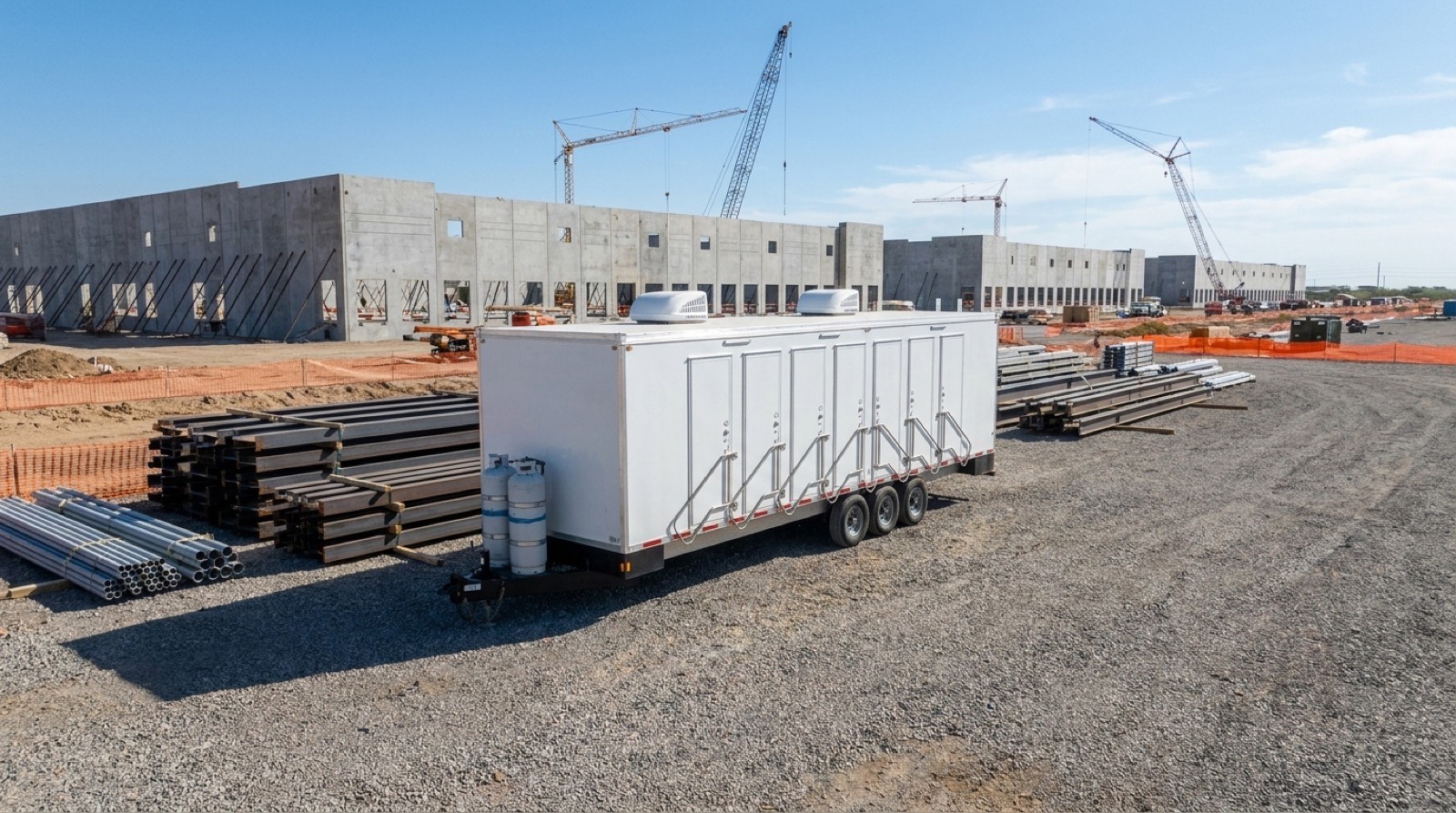
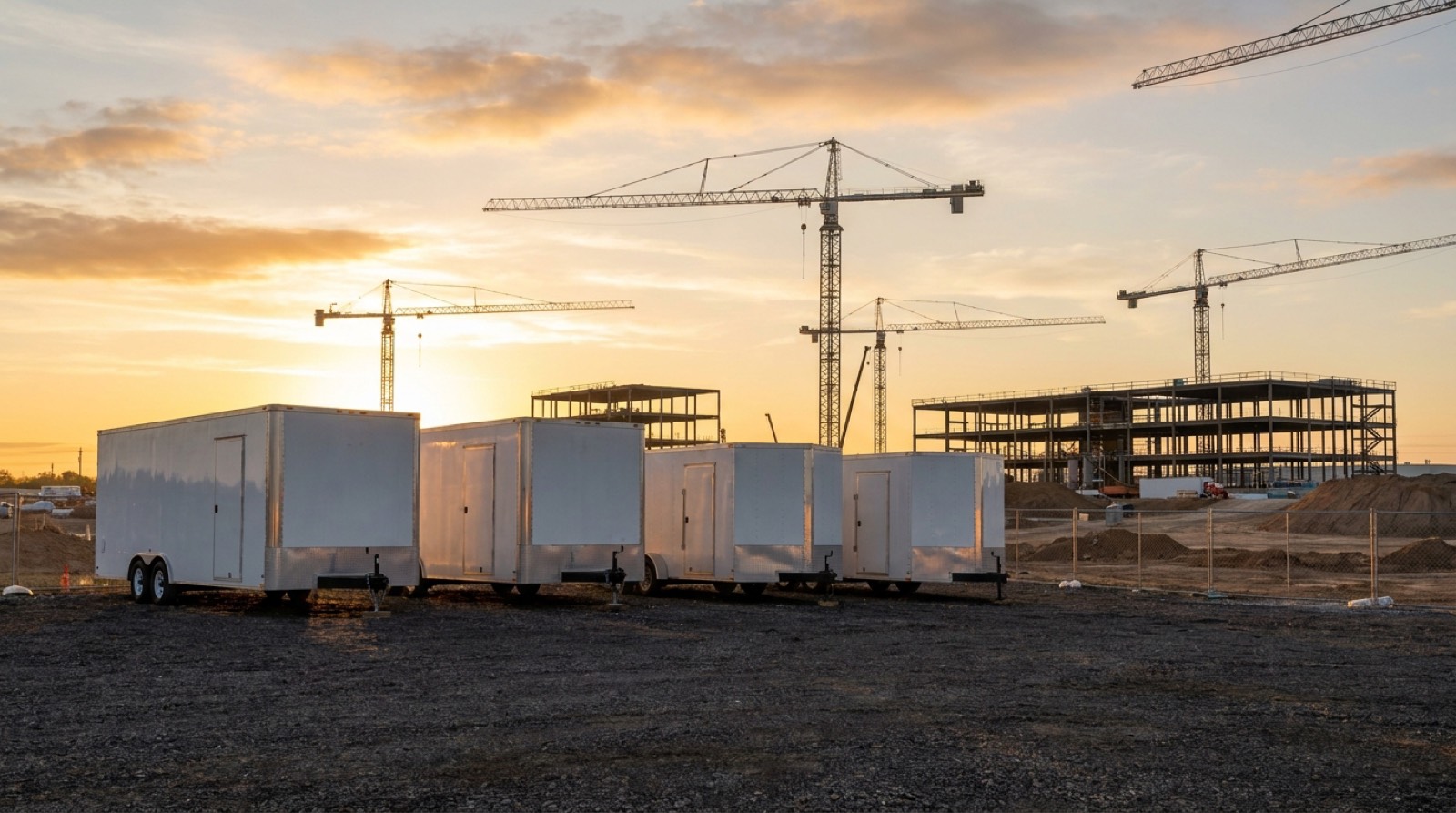
Most Texas deployments bundle several units under one route. One contracted vendor, one dispatch, one escalation path, and a site plan that arrives already coordinated.
Restroom capacity anchors the plan. Restroom trailer rentals in Texas sit closest to the workface and set the service route that every other unit rides on.
Water is the first thing safety plans ask about. Hydration station rentals in Texas run on the same supply logistics as the rest of the package, so adding them costs one stop, not a second vendor.
The paperwork side of the job needs a roof too. Office trailer rentals in Texas give supervision and inspections a place to meet without leaving the gate.
Extended-stay crews generate wash loads every week of the schedule. Laundry trailer rentals in Texas keep that cycle on site instead of in a hotel sink.
Food service and ice programs live or die on cold storage at the pad. Refrigeration trailer rentals in Texas hold setpoint through the local season.
The full reach of our shower trailer rentals program runs beyond Texas, covering every corridor we serve.
Questions we get
Usually yes. Greenfield campuses run showers on hauled water with gray-water pump-out on a contracted route, engineered around the real distance to supply.
Yes. On-site washdown puts the control where the exposure happens, and stall counts and service records are documented for the industrial hygiene file.
Eight-station private-stall trailers with consecutive-use hot water are the standard for rotation workforces, scaled up in count as the camp grows.
Go deeper
Longer reads for teams writing the site plan. Open what applies to your build.
The new wave of Texas data center construction is landing in places the labor force cannot commute to. Abilene is the famous example, and more gigawatt-scale campuses are following into small markets across West and Central Texas. When a town of 120,000 absorbs thousands of construction workers, hotels fill in the first month. What follows is camp housing on or near the site, and camp housing runs on shower capacity.
A camp changes the math completely. On a commuter job, part of the crew showers at home. In a camp, essentially everyone showers on site every day, and many trades want a rinse before dinner even on their days off. Plan for 90 to 100 percent daily usage and size stalls accordingly.
Start with one stall per eight to ten residents rather than the commuter ratio of one per ten to twelve. A 200-person camp wants 20 to 25 stalls, split across multiple trailers so a single mechanical problem never takes all capacity down at once. Spread the trailers through the camp so no one walks more than a couple hundred feet in work boots after a twelve-hour shift.
Hot water is the other constraint. Camp demand comes in two waves, one at shift end and a smaller one before night shift goes out. Recovery capacity has to carry the first wave without leaving the second one cold. We spec high-recovery propane systems for camps because temporary power is usually spoken for by the job itself.
Remote Texas sites rarely have municipal water at the fence. Figure 18 to 20 gallons per shower and the volumes get serious fast. A 200-person camp pushes 3,500 gallons or more of daily shower water, which means real storage on site and a standing hauling contract in both directions. Gray water pump-out has to run on schedule, because a full waste tank shuts down showers for the entire camp at once.
Build redundancy into the plan. Two days of fresh water storage minimum, level alarms on every waste tank, and a backup hauler contact for the week your primary truck breaks down. Camps fail on logistics, not on equipment. We have supported remote sites where the nearest vacuum truck was an hour away, and the difference between a smooth camp and an ugly one was always the service calendar. Bring us the bed count and the shift structure and we will build the shower plan around them.
North Texas and the San Antonio corridor are two of the fastest-growing data center markets in the country, and both build straight through summers that hold above 100 degrees for weeks at a stretch. Crews pour concrete at 4 a.m. to beat the heat, and by afternoon the pad radiates like a griddle. In that environment a shower trailer stops being a comfort item. It becomes part of the site's heat management, next to shade structures and rest cycles.
OSHA's heat illness guidance centers on rest, water, shade, and letting the body cool down. A cool shower at the end of a Texas summer shift drops core temperature faster than sitting in a truck with the AC running. Workers who cool down properly recover overnight and show up sharp. Workers who stay overheated stack fatigue day after day, and that is when mistakes and heat illness show up.
Expect near-universal shower usage from June through September on any site where the drive home is more than a few minutes. Sweat-soaked clothes in a 105-degree parking lot are their own argument. Size for the summer peak, and pay attention to schedule shifts. Many Texas GCs move to early starts in summer, which moves the shower rush from 5 p.m. to 2 or 3 in the afternoon. Tell your facilities vendor, because service schedules and hot water recovery windows should move with it.
Inside the trailer, air conditioning is non-negotiable in this state. A unit without working climate control in a Dallas August is unusable by noon. Our Texas fleet runs oversized HVAC for exactly this reason, and we maintain it like the critical system it is.
Here is a Texas-specific detail that surprises out-of-state contractors. In high summer, the cold line is not cold. Water sitting in an above-ground tank or a surface-run hose arrives at 85 or 90 degrees. That is miserable for a cool-down shower and it also reduces how much mixing the system needs, which changes heater behavior. We shade tanks, bury or insulate supply runs where we can, and site trailers to keep hoses out of direct sun. Small placement decisions make a real difference in delivered water temperature.
If you are building in DFW, San Antonio, or anywhere on the I-35 corridor, treat shower capacity as part of your heat plan, not an afterthought. We will size it against your summer manpower peak and your shifted schedule, and have it running before the first heat advisory of the season.
Plenty of Texas data center sites break ground years before municipal utilities reach the property line. Water for the batch plant comes by truck. Water for dust control comes by truck. Shower water is no different, but it has two requirements the others do not. It must be potable, and it must keep flowing on a fixed daily rhythm, because demand arrives every evening whether the truck did or not.
The arithmetic is straightforward. At 15 to 20 gallons per shower, 80 daily showers is roughly 1,200 to 1,600 gallons a day. A standard potable tanker delivers 2,000 to 6,000 gallons per trip. So a mid-size crew needs deliveries every couple of days, and a camp needs them daily. The plan lives or dies on storage margin and hauler reliability.
Hold at least two full days of demand in fresh water storage on site. West Texas distances make same-day recovery from a missed delivery unlikely, and summer demand spikes eat margin fast. Tanks should be food-grade, dedicated to potable service, and shaded or light-colored to keep stored water from cooking in the sun. Chlorine residual should be checked on delivery. None of this is exotic, but skipping any of it eventually puts a crew in line at a dry trailer.
Pressure matters as much as volume. Shower trailers want steady supply pressure, so tank-fed setups need a properly sized pump and a small bladder tank to smooth flow. A trailer plumbed straight off a gravity tank gives weak, fluctuating showers that crews learn to hate.
Everything that comes in goes out. Waste tank capacity should match or exceed fresh storage, and the pump-out schedule should be standing, not on-call. In remote counties the licensed vacuum trucks may be based an hour or more away, serving oilfield and municipal customers first. Lock in a service agreement before mobilization, get a backup hauler on file, and put level alarms on every waste tank so a busy week never becomes a shutdown.
We build hauled-water shower packages as a single system. Trailer, fresh storage, pumps, waste capacity, and the delivery and pump-out cadence all sized together against your headcount curve. When the utilities finally reach the site, we re-plumb to the permanent connections and the trucks stop rolling. Until that day, the showers run like the pipeline was already there. That is the standard for remote Texas work, and it is entirely achievable with honest math and a good service calendar.