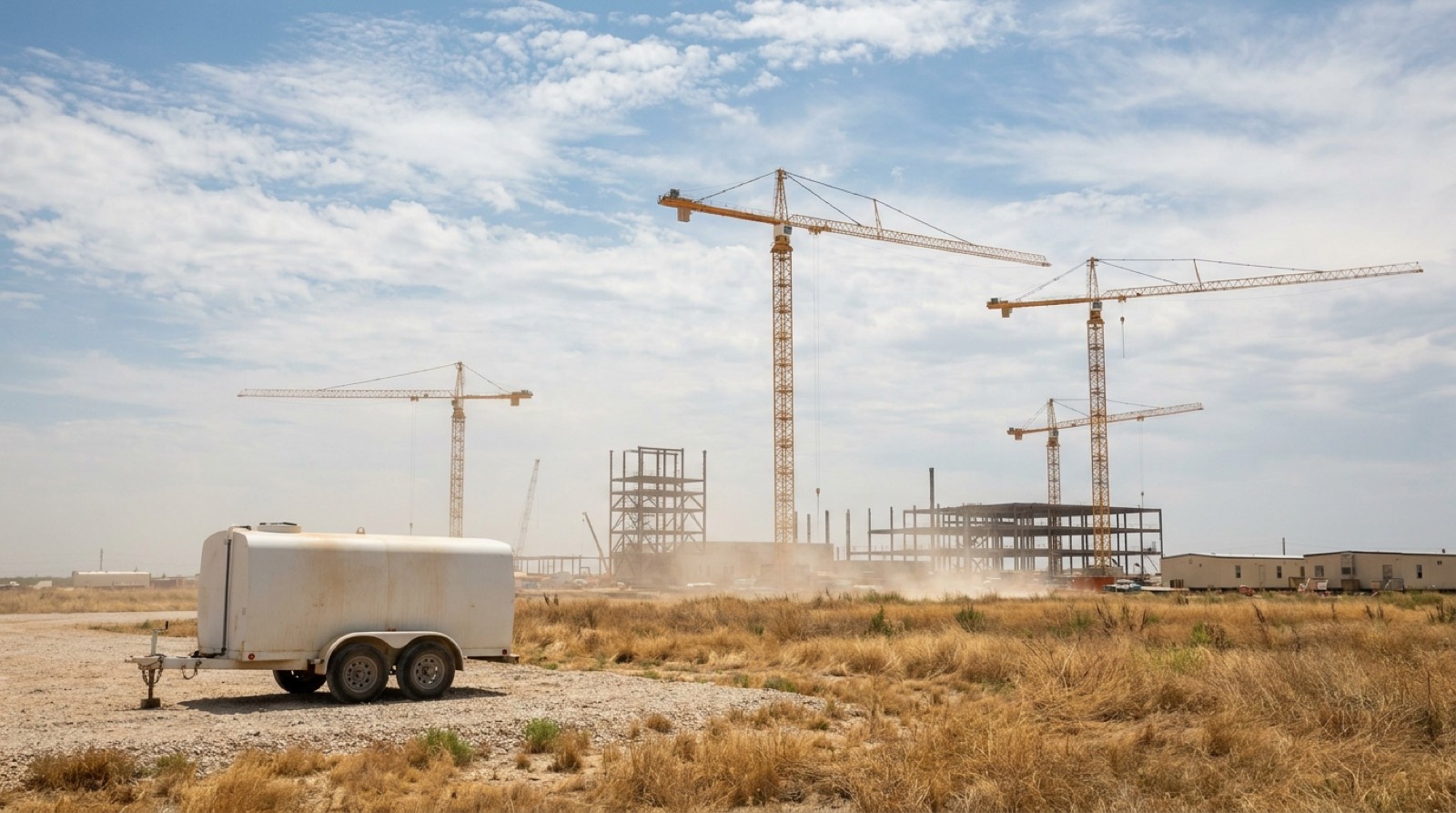
Texas
Office and break room trailers for Texas data center sites
Cooled break space that counts as heat-illness infrastructure, and offices that keep a gigawatt campus organized from grading through commissioning.
Cooled break space that counts as heat-illness infrastructure, and offices that keep a gigawatt campus organized from grading through commissioning.
Texas summers make shaded, cooled rest space a requirement, not a perk. OSHA heat guidance expects it, and a break trailer holding seventy two degrees when the pad reads a hundred and five is what keeps rest breaks real. On the biggest campuses we place several, spread so no crew walks ten minutes to cool down.
West Texas gigawatt sites carry management teams that rival small companies. Office trailer clusters give scheduling, safety, quality and the GC each a door of their own, with meeting space shared in the middle. As phases add trades, the cluster grows with them.
Remote sites put offices on generator power with their own climate control, sealed against the dust that West Texas wind carries. Cleaning runs on the same contracted route as the rest of the site package.
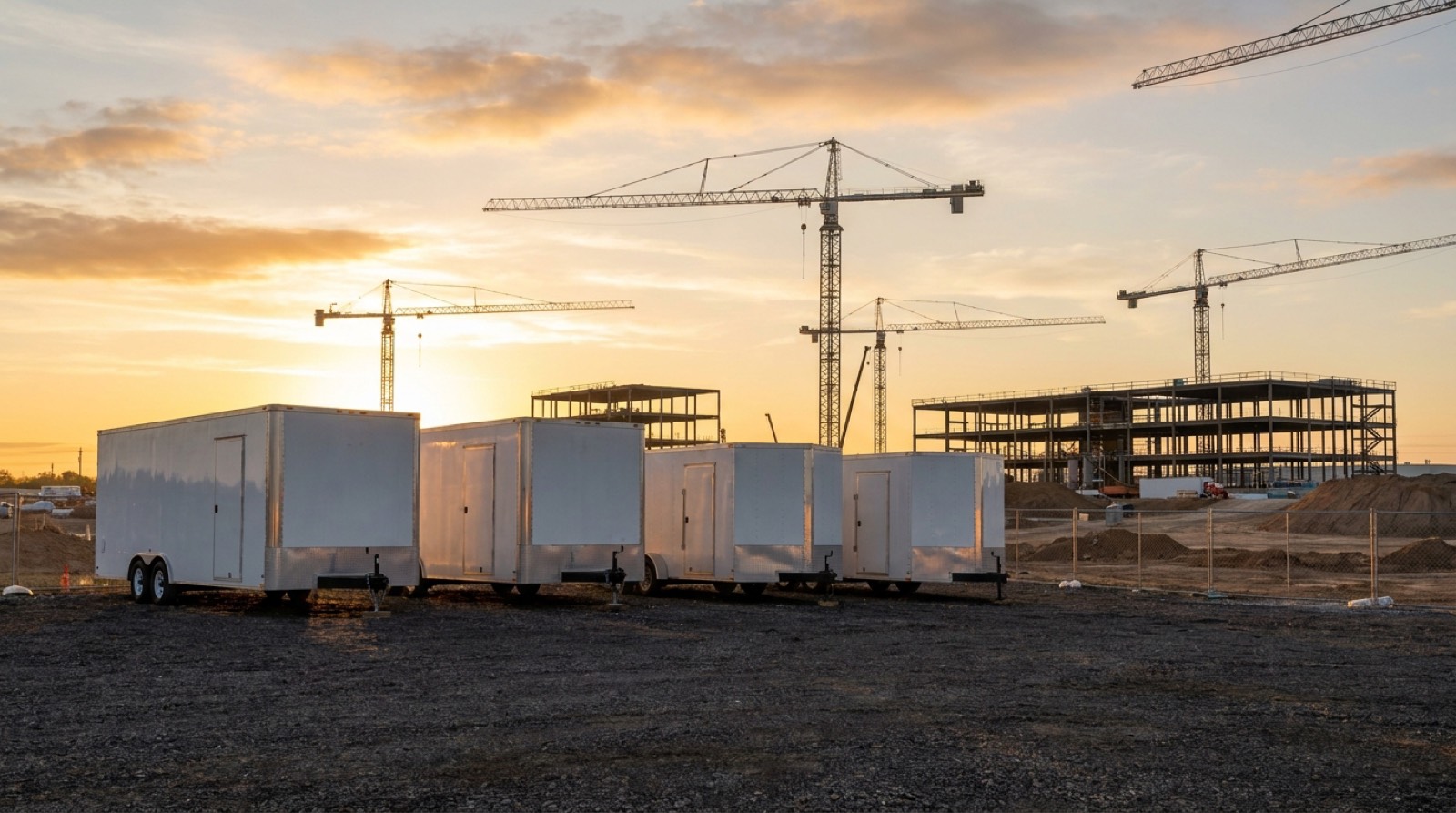
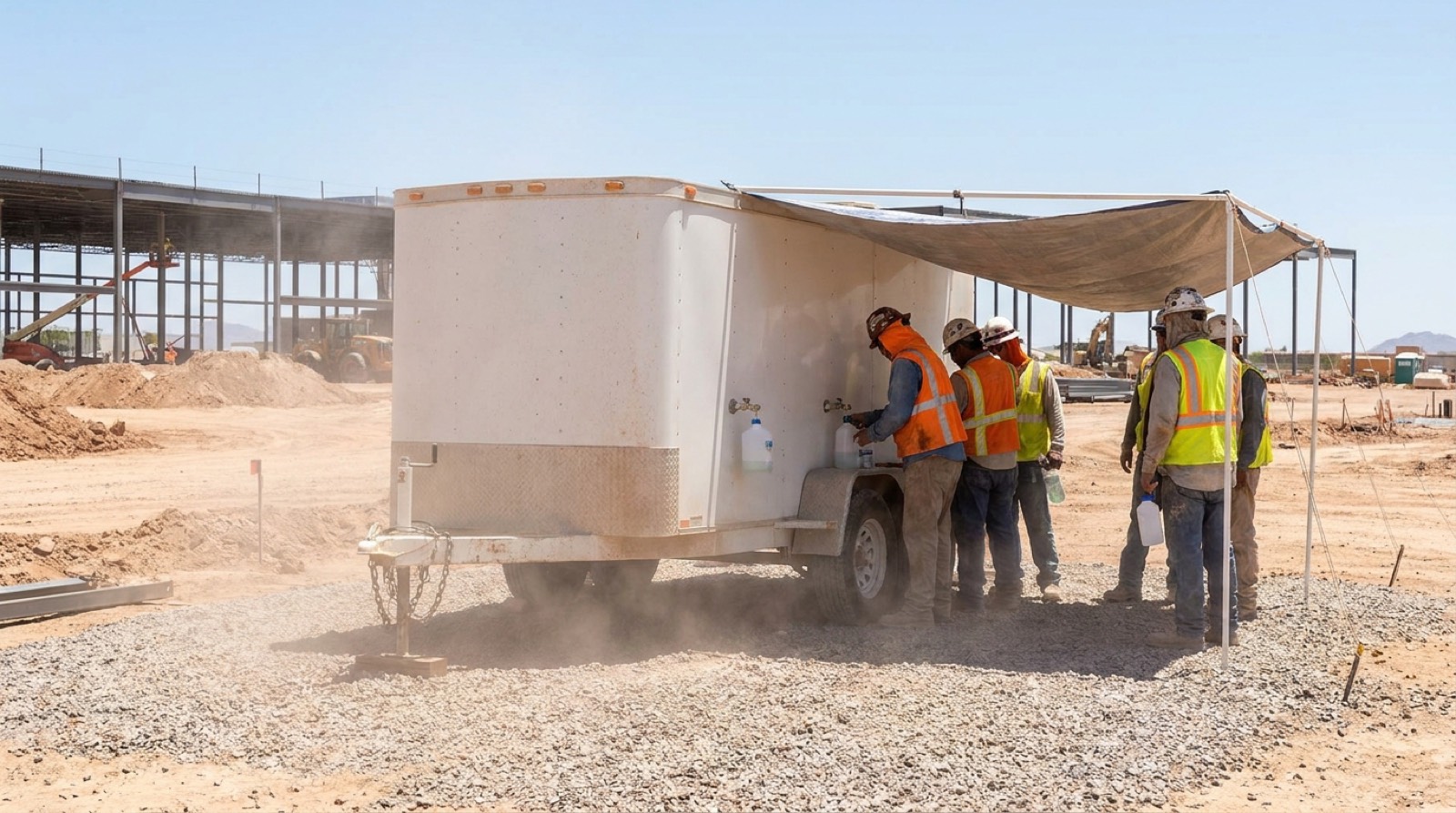
Most Texas deployments bundle several units under one route. One contracted vendor, one dispatch, one escalation path, and a site plan that arrives already coordinated.
Water is the first thing safety plans ask about. Hydration station rentals in Texas run on the same supply logistics as the rest of the package, so adding them costs one stop, not a second vendor.
Where crews rotate in from out of the area, the end of shift is its own rush hour. Shower trailer rentals in Texas carry that peak so the workforce goes home clean.
Extended-stay crews generate wash loads every week of the schedule. Laundry trailer rentals in Texas keep that cycle on site instead of in a hotel sink.
Food service and ice programs live or die on cold storage at the pad. Refrigeration trailer rentals in Texas hold setpoint through the local season.
Restroom capacity anchors the plan. Restroom trailer rentals in Texas sit closest to the workface and set the service route that every other unit rides on.
The full reach of our office trailer rentals program runs beyond Texas, covering every corridor we serve.
Where we deploy
Heaviest concentration in the corridors carrying the most active data center construction, with nationwide mobilization beyond them.
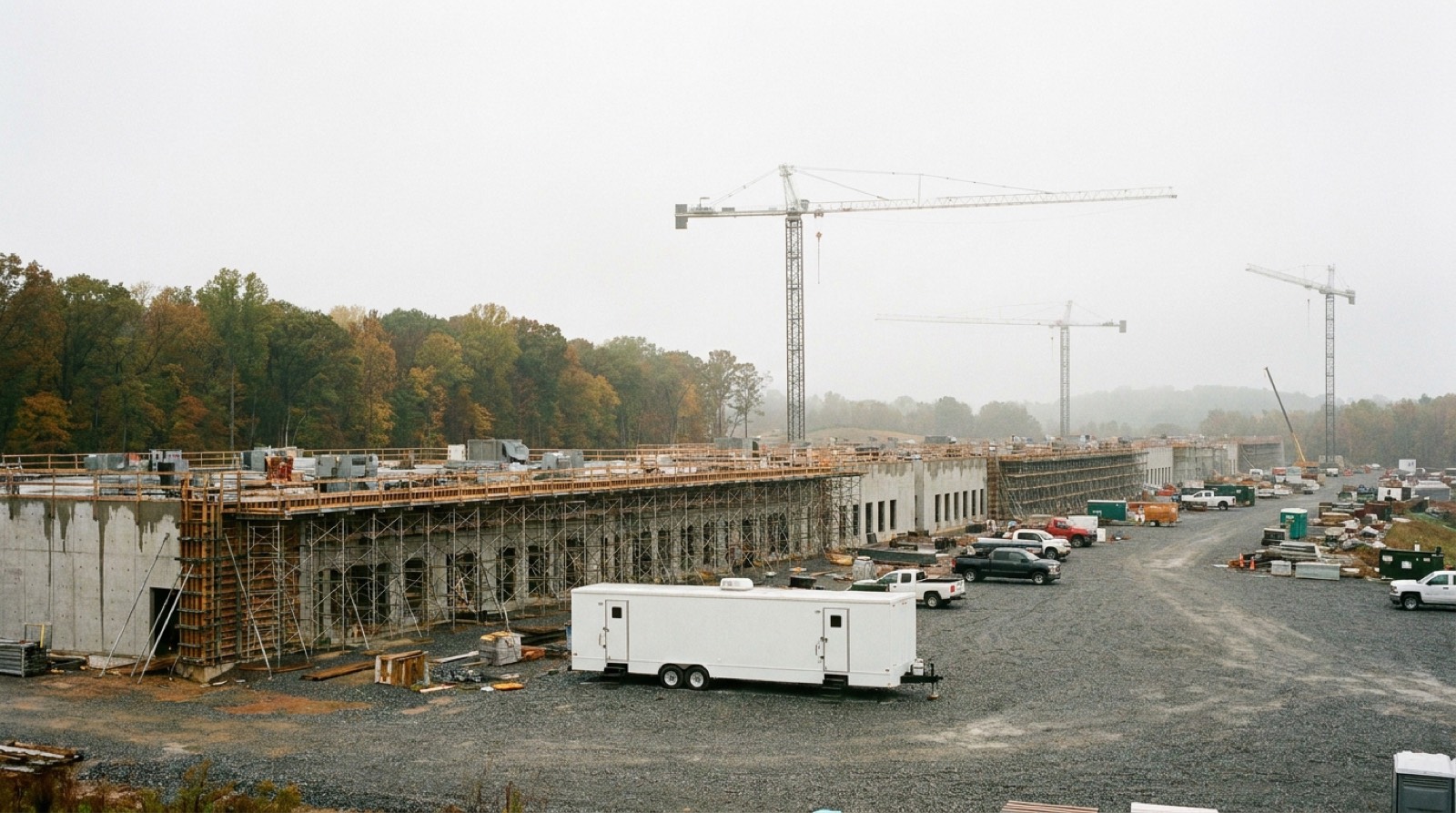
Loudoun County and Prince William run the densest data center concentration on earth. Multi-year campuses, badge-controlled access, crews in the hundreds, and facility requirements written into the subcontract.
View Northern Virginia →Dallas, Fort Worth, San Antonio and Abilene are carrying some of the largest campuses in the country. Summer heat makes hydration and shower capacity a safety line item, not an amenity.
View Texas →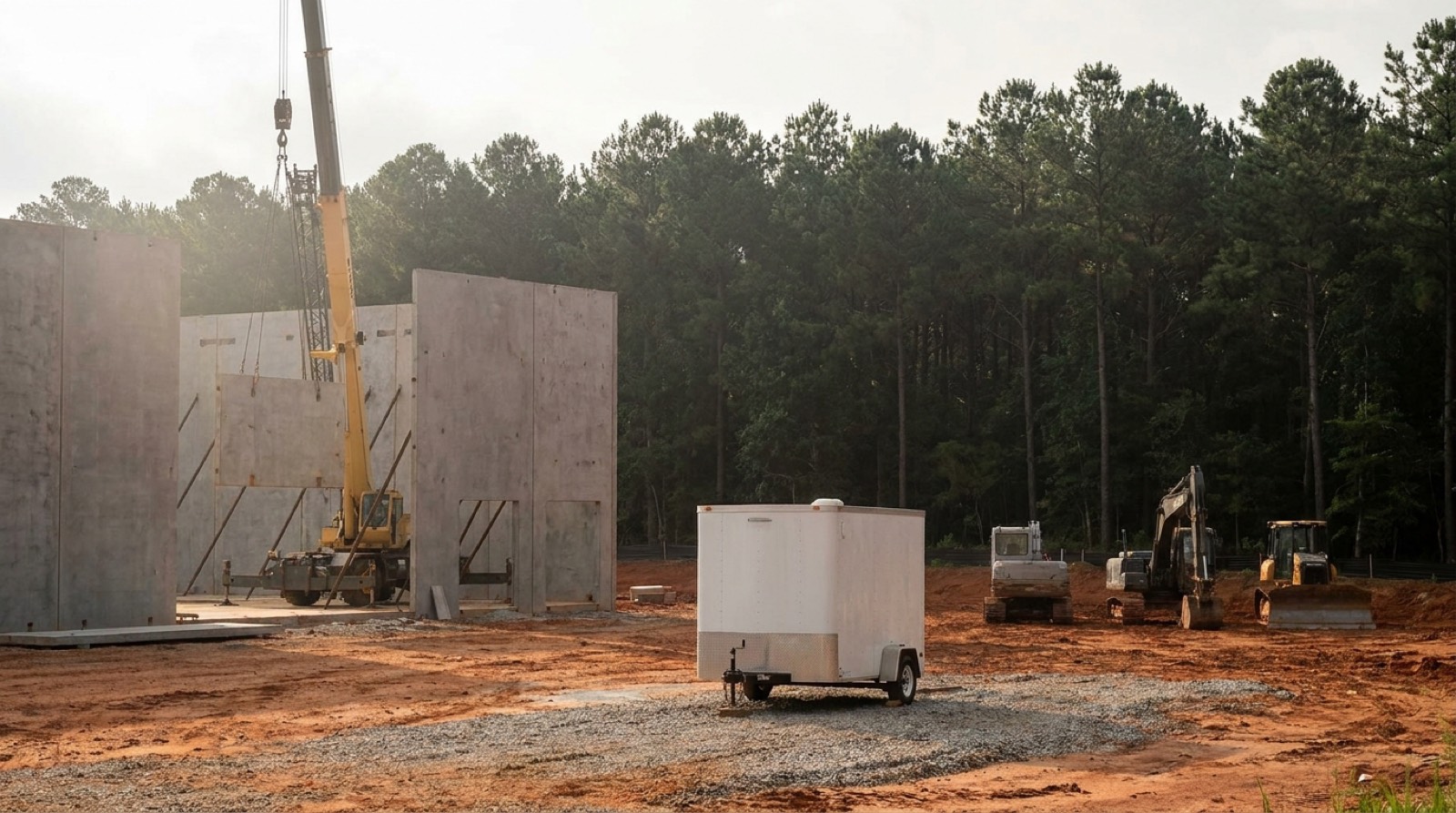
Atlanta metro and Douglas County, extending along I-20. Humid summers, long hauls between laydown and pad, and multi-phase schedules that keep facilities on site for years.
View Georgia →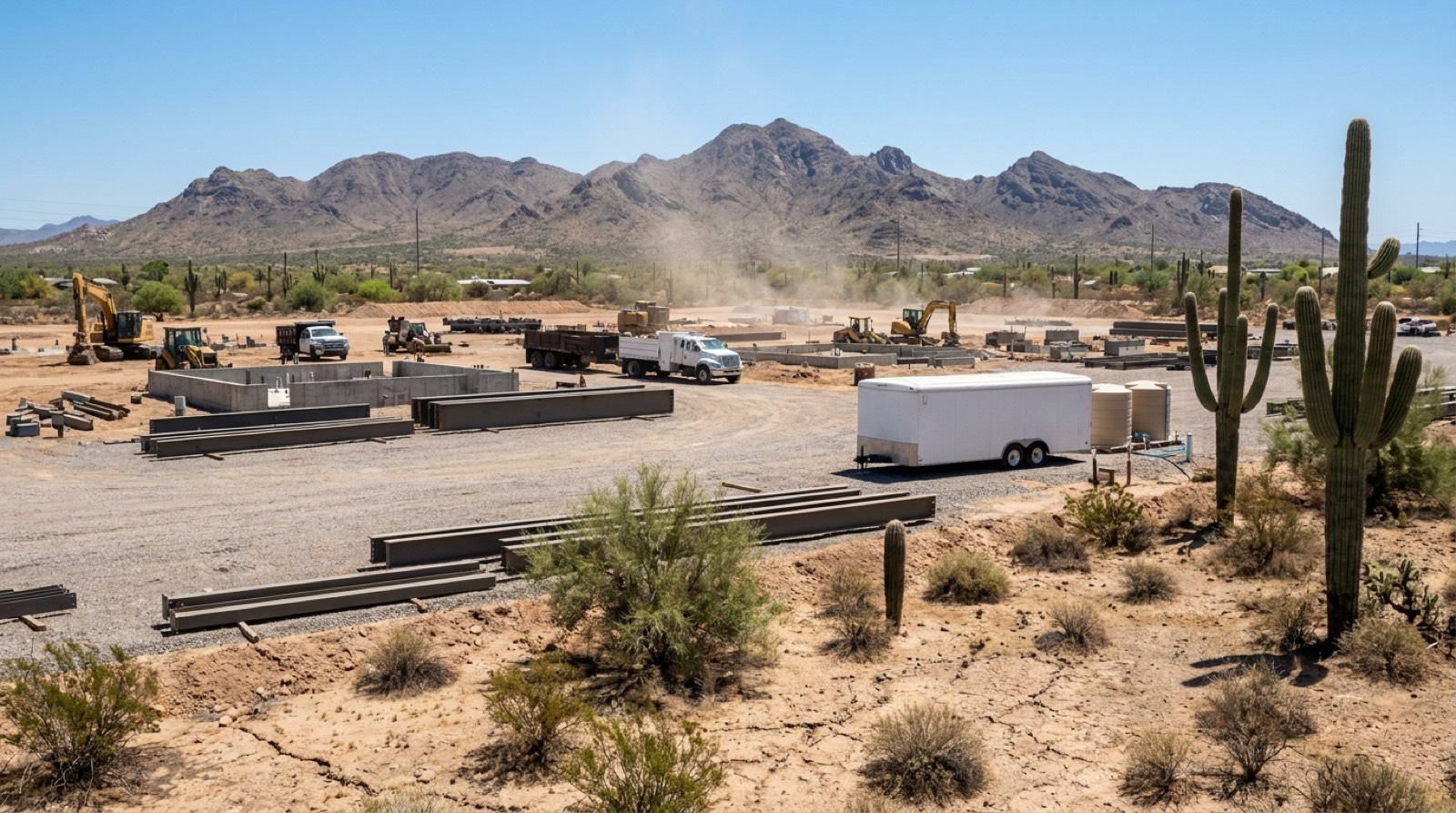
Phoenix and Mesa build through heat that regularly exceeds 110 degrees. OSHA heat-illness prevention drives water and shade requirements that our units satisfy directly.
View Arizona →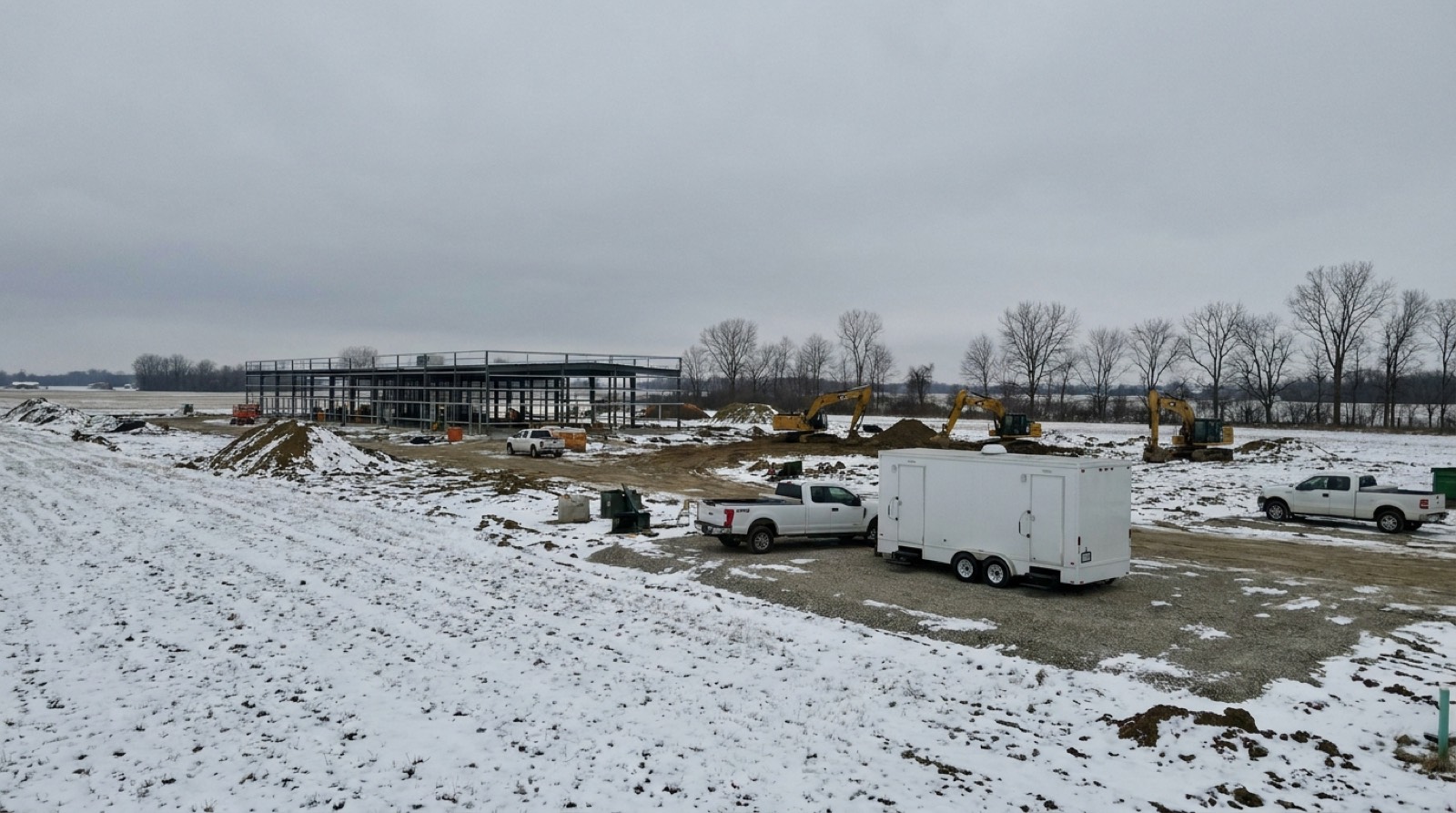
Columbus and New Albany. Freeze protection and winter service access matter here in a way Sun Belt corridors never see.
View Ohio →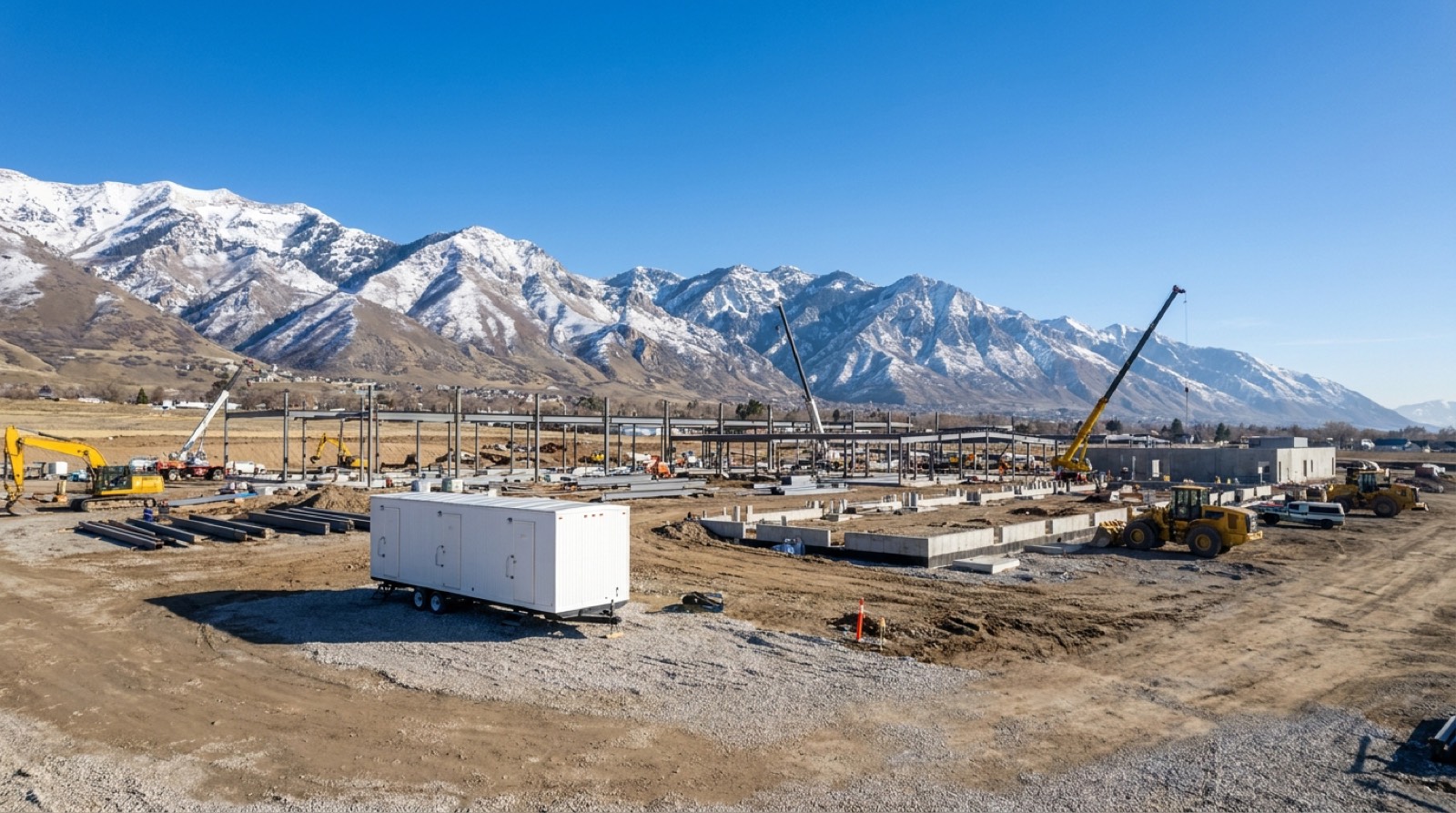
The Wasatch Front corridor runs through hard winters at elevation. Units are winterized and service intervals hold through snow.
View Utah →Questions we get
Yes. Cooled rest space is what OSHA heat programs expect, and on Texas summer schedules the break trailer is the rest area.
Yes. Multi-unit office clusters with shared meeting space are the normal spec on gigawatt campuses, grown as the phase list grows.
Yes. Remote West Texas placements run self-contained with generator power and their own climate control.
Go deeper
Longer reads for teams writing the site plan. Open what applies to your build.
A Texas data center site in August is a hard place to work. DFW and San Antonio routinely run past 100 degrees for weeks, and slab and steel work happens in full sun. OSHA's heat illness prevention framework comes down to water, rest, and shade. Every serious heat program on a Texas megasite writes those words into a formal plan. An air-conditioned break trailer is how the rest and shade portions become physical equipment instead of a paragraph.
Shade tents help, but they only remove direct sun. On a 104-degree afternoon, the air under a tent is still 104 degrees. A cooled trailer drops a worker's core load in a way shade alone cannot. Safety managers increasingly specify mechanical cooling for rest areas during the hottest months. When the heat plan is audited, a trailer with a working thermostat is easy evidence.
Texas data center campuses are big. Sites in the Abilene area and on the DFW perimeter run to hundreds of acres. A single cooled break area in the compound might sit a fifteen minute walk from the work face. In heat season that walk defeats the purpose. The better pattern distributes break trailers around the active work zones so no crew is more than a few minutes from cooled air.
Match capacity to the trade stack. Concrete crews peak early in the project, electricians later, and the break trailer map should move with them. Relocating a unit across the site mid-project is routine work when it is planned, so build a mid-project review into the logistics plan.
The Texas heat season is not a July problem. Triple-digit stretches start in June and can hold into late September, and 90-degree days run from May through October. That is five months or more where the heat program is active and the cooled rest space is in daily use. HVAC on break units gets sized and serviced accordingly. A failed air conditioner in August is a safety incident waiting to happen, not a comfort complaint.
We treat summer service in Texas as a priority queue. Filters, condensers, and thermostats get checked before the season, and repair calls during heat season move first. If your project runs through a Texas summer, ask how your trailer provider handles cooling failures before you sign. The answer matters more here than almost anywhere.
Texas is building some of the largest data center campuses in the country. Multi-building programs around DFW, San Antonio, and Abilene put thousands of workers and dozens of management teams on a single piece of ground. At that scale the site office is not a trailer, it is a campus of its own. General contractor space, owner and developer space, subcontractor offices, and shared meeting facilities can add up to tens of thousands of square feet of temporary building.
The number 40 is a useful anchor. On a Texas megasite, a single building's supervision often reaches 40 people between the GC and key trades, and a multi-building program multiplies that. Nobody should be planning that footprint one trailer at a time.
The best megasite compounds are laid out in one pass, before the first unit ships. Rows of units with real spacing, gravel roads wide enough for trucks, marked parking, and covered walkways where the sun is brutal. Power distribution designed once, with a properly sized service feeding the whole compound instead of a tangle of separate drops. Data conduit run down the rows so every unit lands on the same network backbone.
Put the shared assets at the center. A large conference and training building, break capacity, and sanitation serve everyone better in the middle of the cluster than at one end. Then assign rows by organization, so the electrical contractor's office sits next to its own field supervision instead of across the compound.
These programs run long. A multi-building Texas campus can keep a management compound in place for five years or more, which argues for setup quality closer to permanent construction. Anchoring matters especially. North and Central Texas sit in serious wind and hail country. A compound built to ride out spring storm season protects both the people and the schedule. Tie-downs engineered for the wind zone, skirting, and roof condition checks after hail events are the routine.
Long duration also changes the economics. Multi-year placements deserve multi-year pricing and a service plan, not a rolling short-term arrangement. We build megasite clusters with the full timeline on the table. The compound that houses building one's team should still work comfortably when the last building commissions.
The Dallas-Fort Worth metro is now one of the country's largest data center construction markets. Projects spread from the airport corridor to the outer counties. A typical single-building job here carries a GC staff of fifteen to thirty, with owner representation on site most days. A commissioning presence grows through the back half of the schedule. Run the standard math of 80 to 100 square feet per desk. A DFW build lands somewhere between one large office unit and a small three-unit cluster.
Resist sizing from the org chart alone. DFW owners tend to co-locate their construction managers on site rather than visiting weekly. That quietly adds four to eight desks that never appear on the GC's own staffing plan. Ask the owner how many seats they expect before the trailer order goes in.
North Texas weather swings hard. Summer brings months of 95-plus heat. A February norther can drop the site below freezing for a week, as anyone who worked a Texas ice storm remembers. Office units here need HVAC sized for both extremes and worth maintaining. The office is the warm refuge in an ice event and the cool refuge in August. Insulated skirting helps hold conditioned air and protects plumbing on units with restrooms.
Spring storm season adds its own requirement. DFW sits in hail and high-wind country, so anchoring to the wind zone is not optional paperwork. It is the difference between a compound that shrugs off a storm and one that makes the evening news.
DFW data center schedules compress toward the end. Electrical completion, controls, and commissioning stack on top of each other. The site population of managers and agents peaks in the final third of the job. The office plan should hold a reserve, either empty desks in the main unit or a committed pad and power stub for one more trailer.
That reserve costs little at mobilization and solves an otherwise painful problem. Teams that skip it end up renting whatever unit is available on short notice. It gets placed wherever a forklift can reach, usually far from the people it serves. Planning the second-half space on day one is the cheapest schedule insurance a DFW project can buy. We can walk the site plan with you and mark those reserves before the first unit ships.