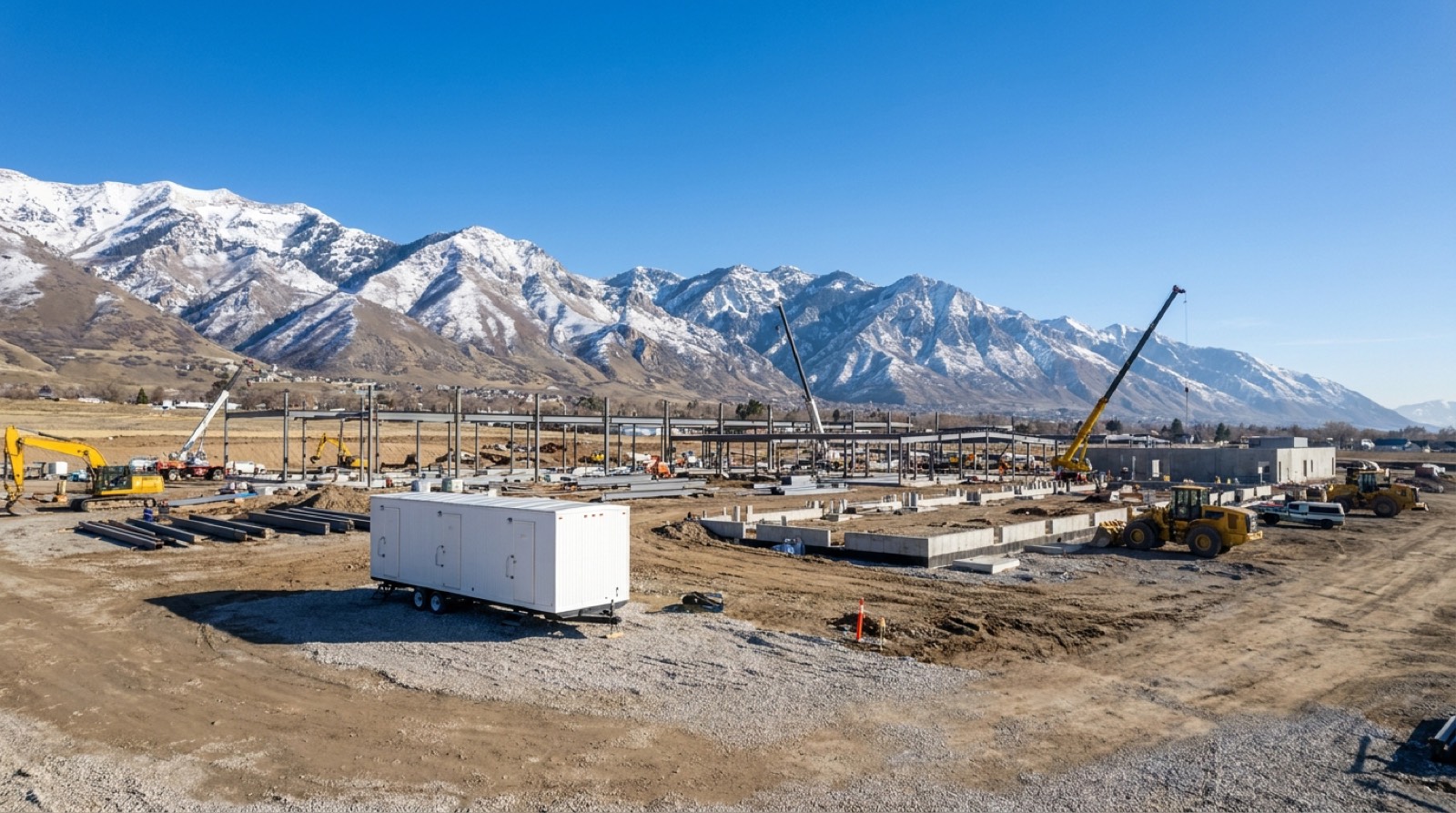
Utah
Office and break room trailers for Utah data center sites
Day rooms for rotation crews and coordination space for Utah Lake corridor campuses, run from our home yard on the Wasatch Front.
Day rooms for rotation crews and coordination space for Utah Lake corridor campuses, run from our home yard on the Wasatch Front.
Eagle Mountain campuses pull trades on long rotations, and for those crews the site is home base for weeks at a time. Break trailers become day rooms: meals, breaks between shifts, somewhere warm in January and cool in July that is not a truck or a bunk.
Wasatch Front winters demand heated, winterized space, and dry summers demand cooling and dust control. The same unit handles both when specified for the corridor, which is how we specify here.
Our Wasatch Front headquarters means Utah office and break deployments run on the shortest supply lines we have. Swaps, additions and service issues resolve from the home yard, often same day.
Where we deploy
Heaviest concentration in the corridors carrying the most active data center construction, with nationwide mobilization beyond them.
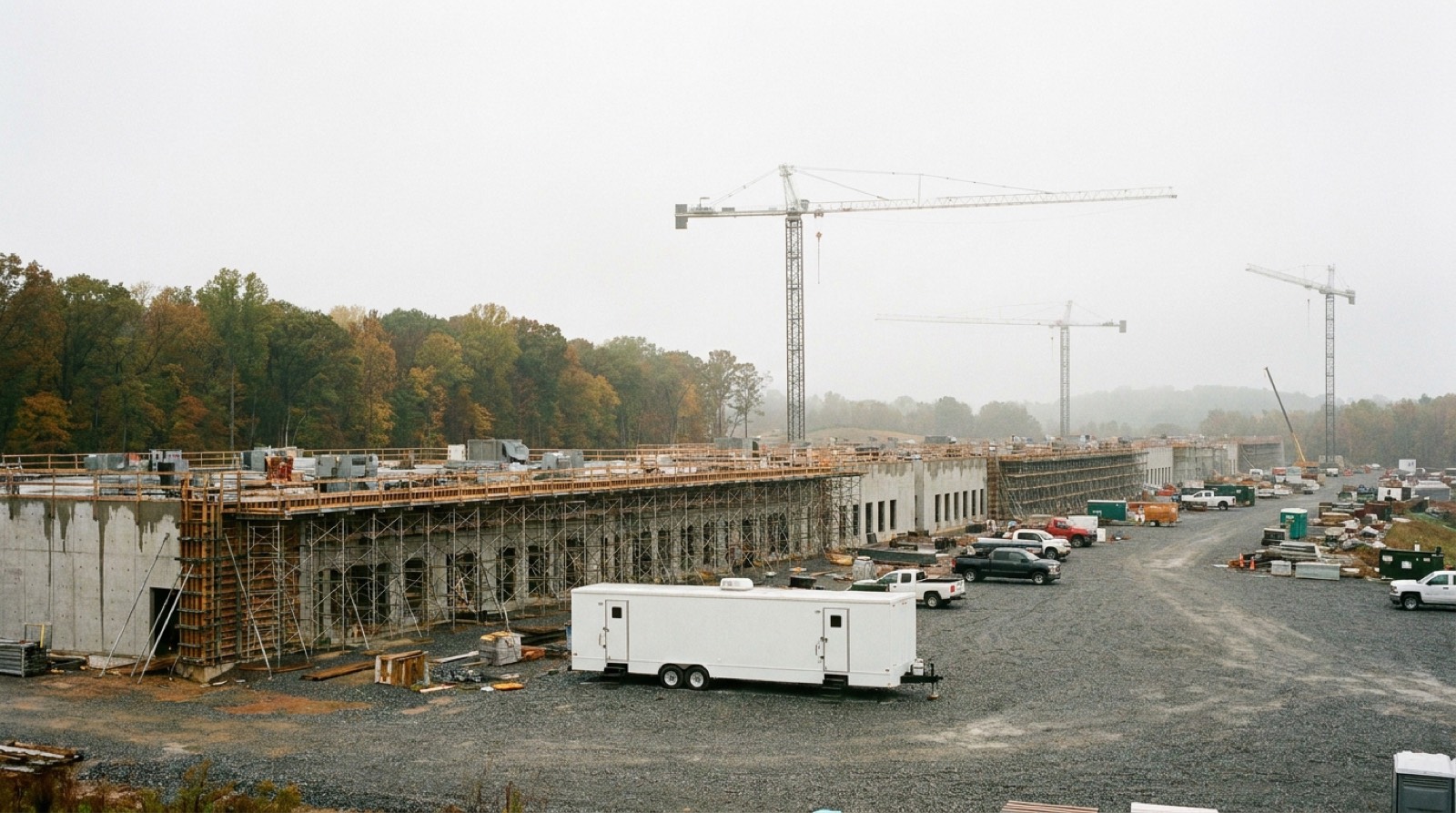
Loudoun County and Prince William run the densest data center concentration on earth. Multi-year campuses, badge-controlled access, crews in the hundreds, and facility requirements written into the subcontract.
View Northern Virginia →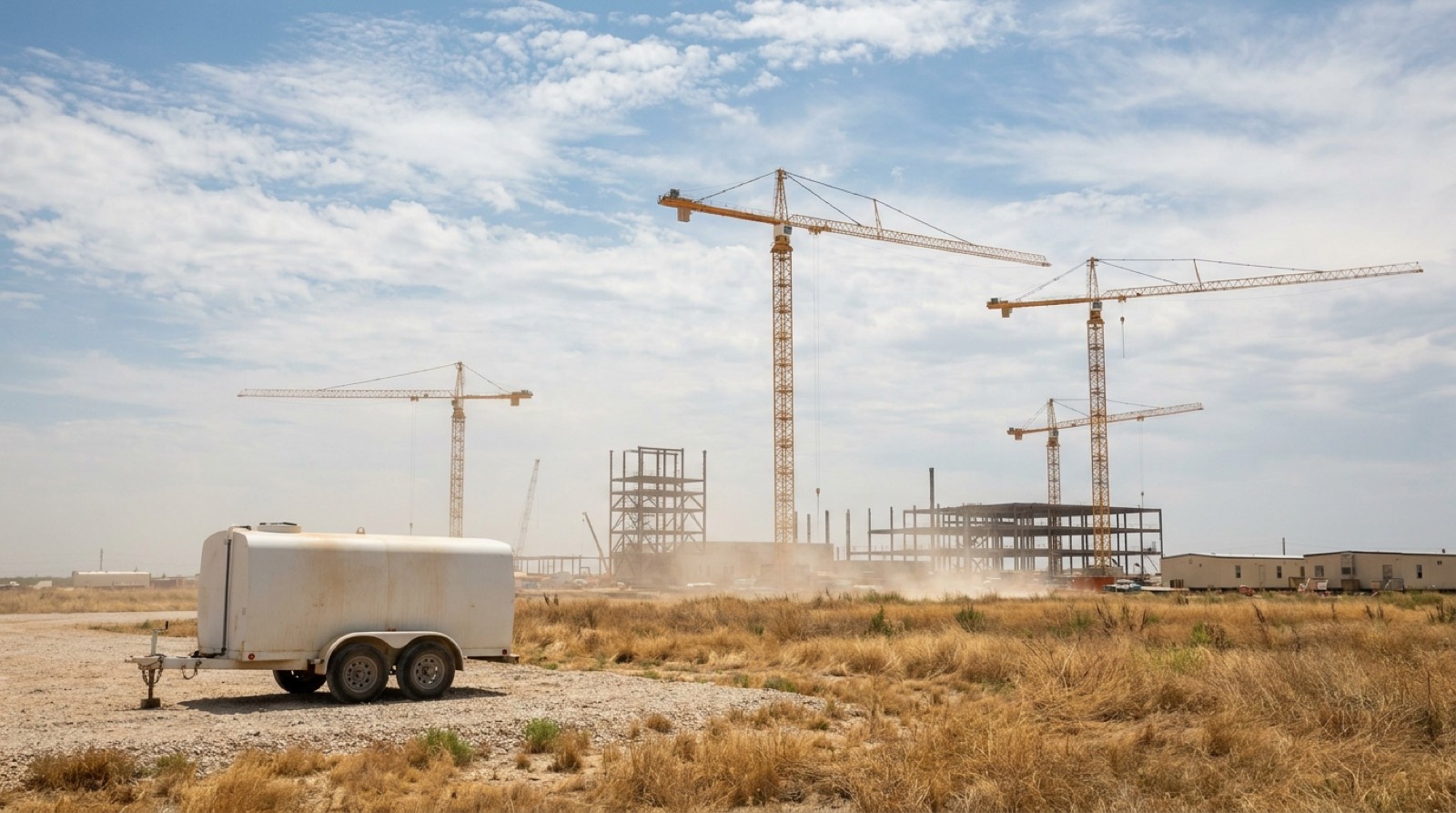
Dallas, Fort Worth, San Antonio and Abilene are carrying some of the largest campuses in the country. Summer heat makes hydration and shower capacity a safety line item, not an amenity.
View Texas →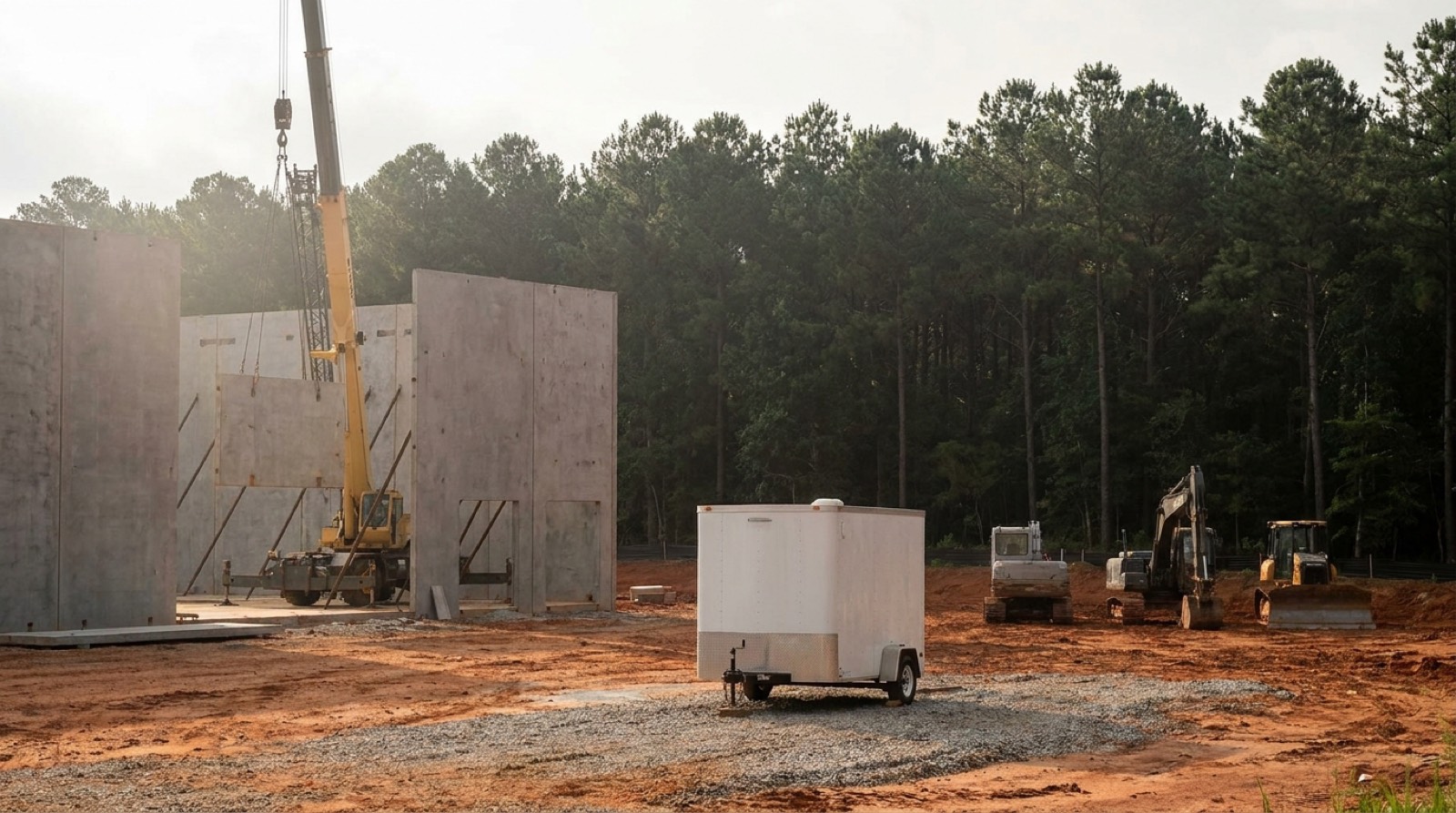
Atlanta metro and Douglas County, extending along I-20. Humid summers, long hauls between laydown and pad, and multi-phase schedules that keep facilities on site for years.
View Georgia →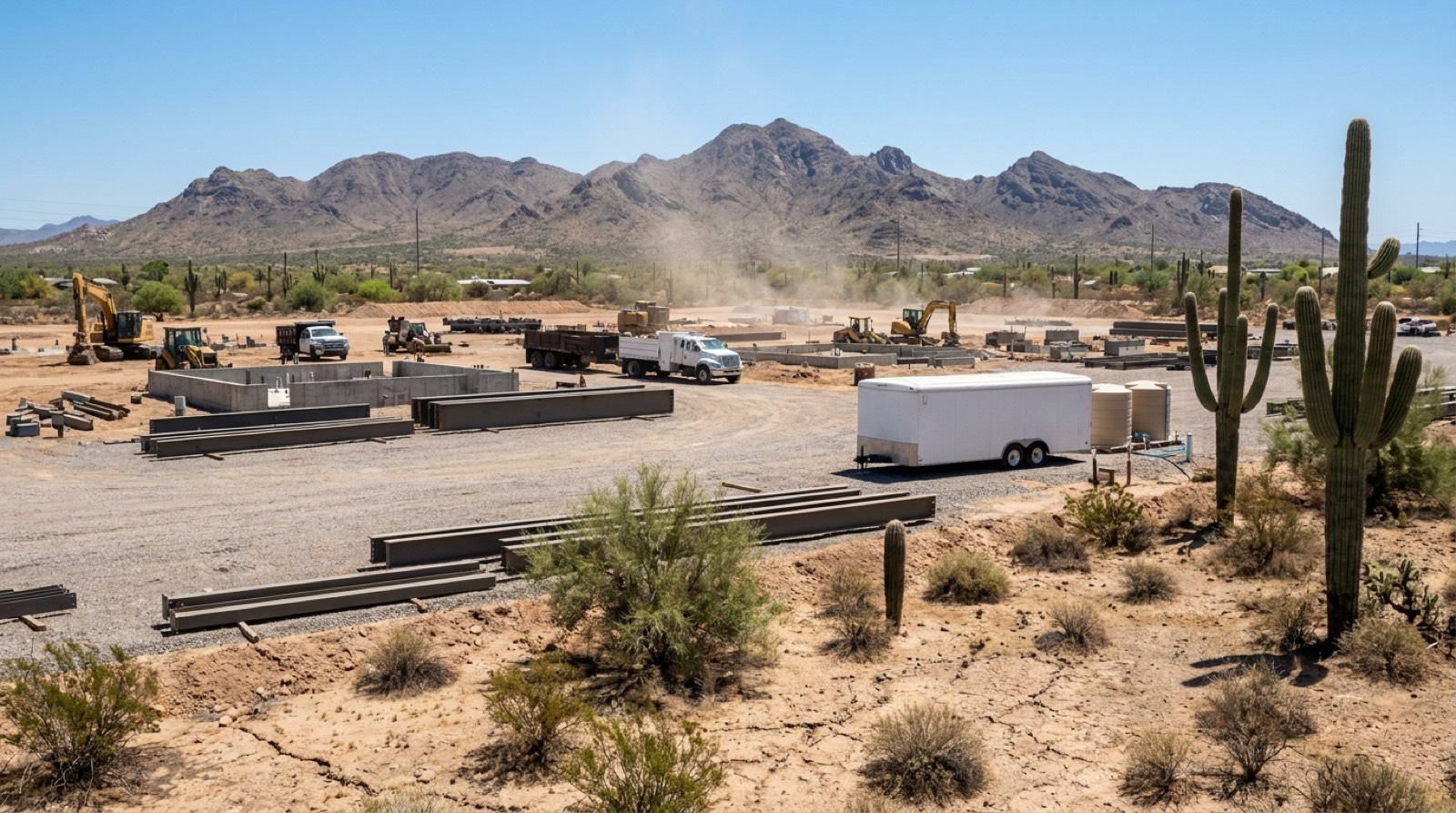
Phoenix and Mesa build through heat that regularly exceeds 110 degrees. OSHA heat-illness prevention drives water and shade requirements that our units satisfy directly.
View Arizona →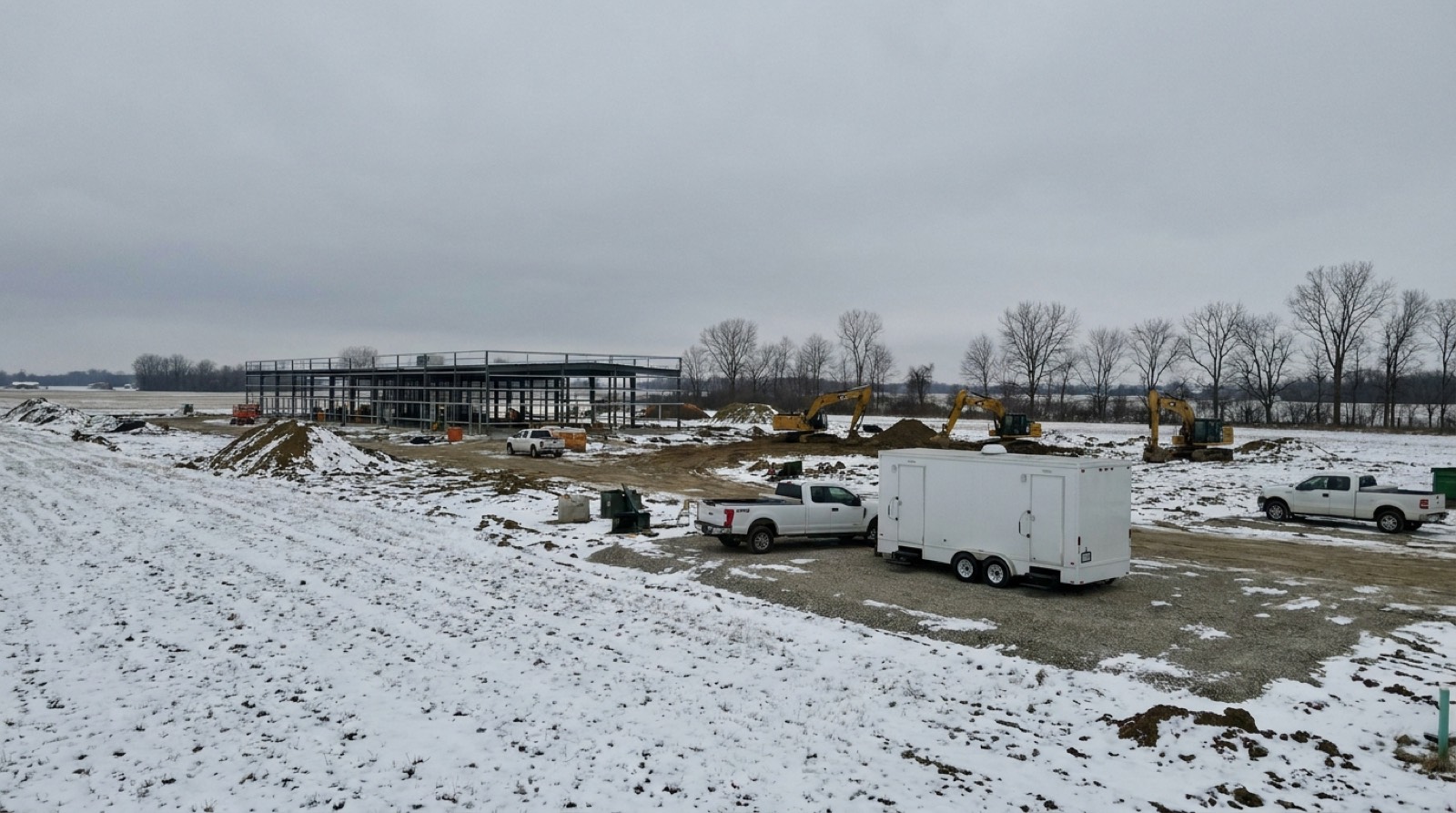
Columbus and New Albany. Freeze protection and winter service access matter here in a way Sun Belt corridors never see.
View Ohio →The Wasatch Front corridor runs through hard winters at elevation. Units are winterized and service intervals hold through snow.
View Utah →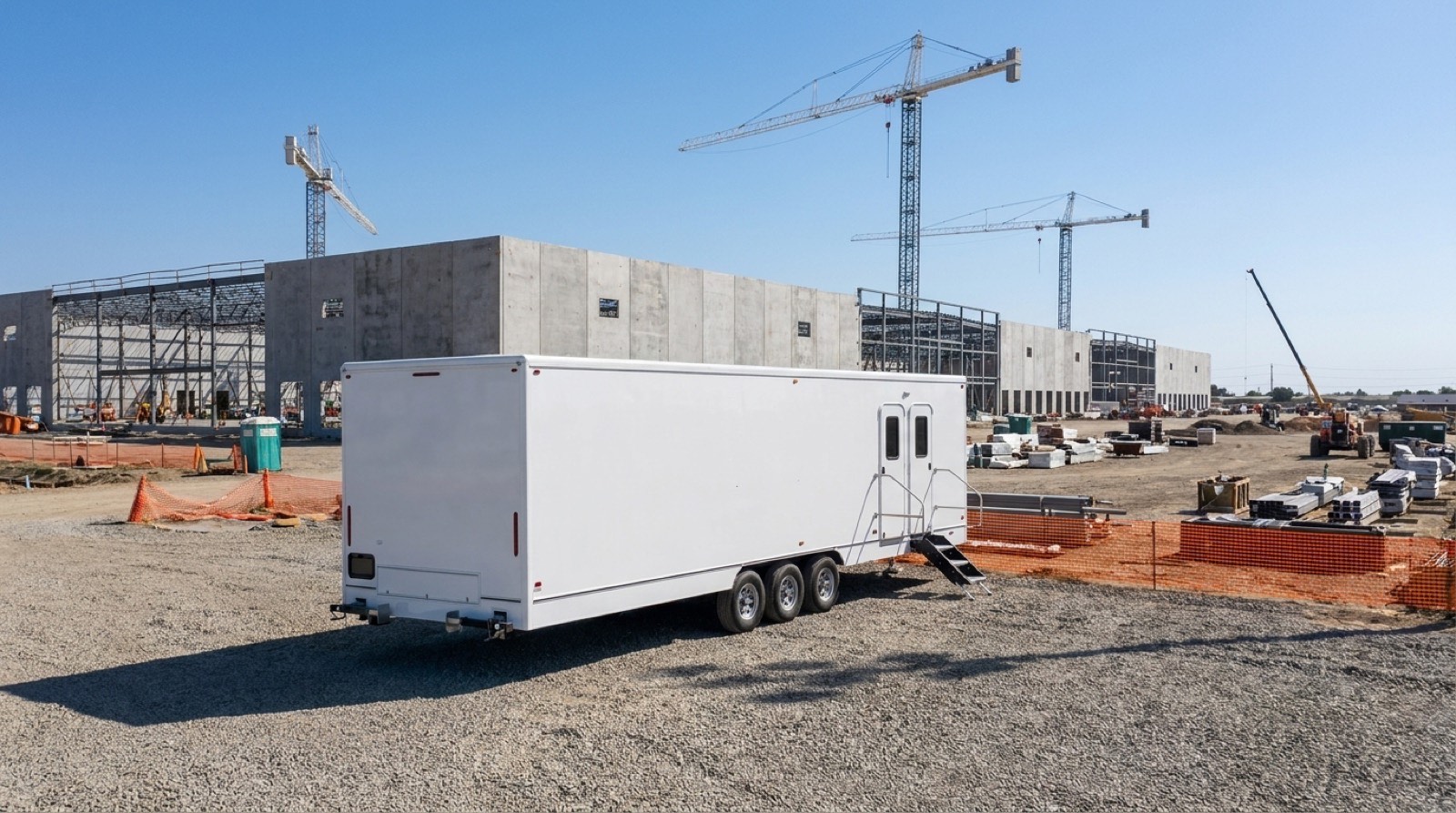
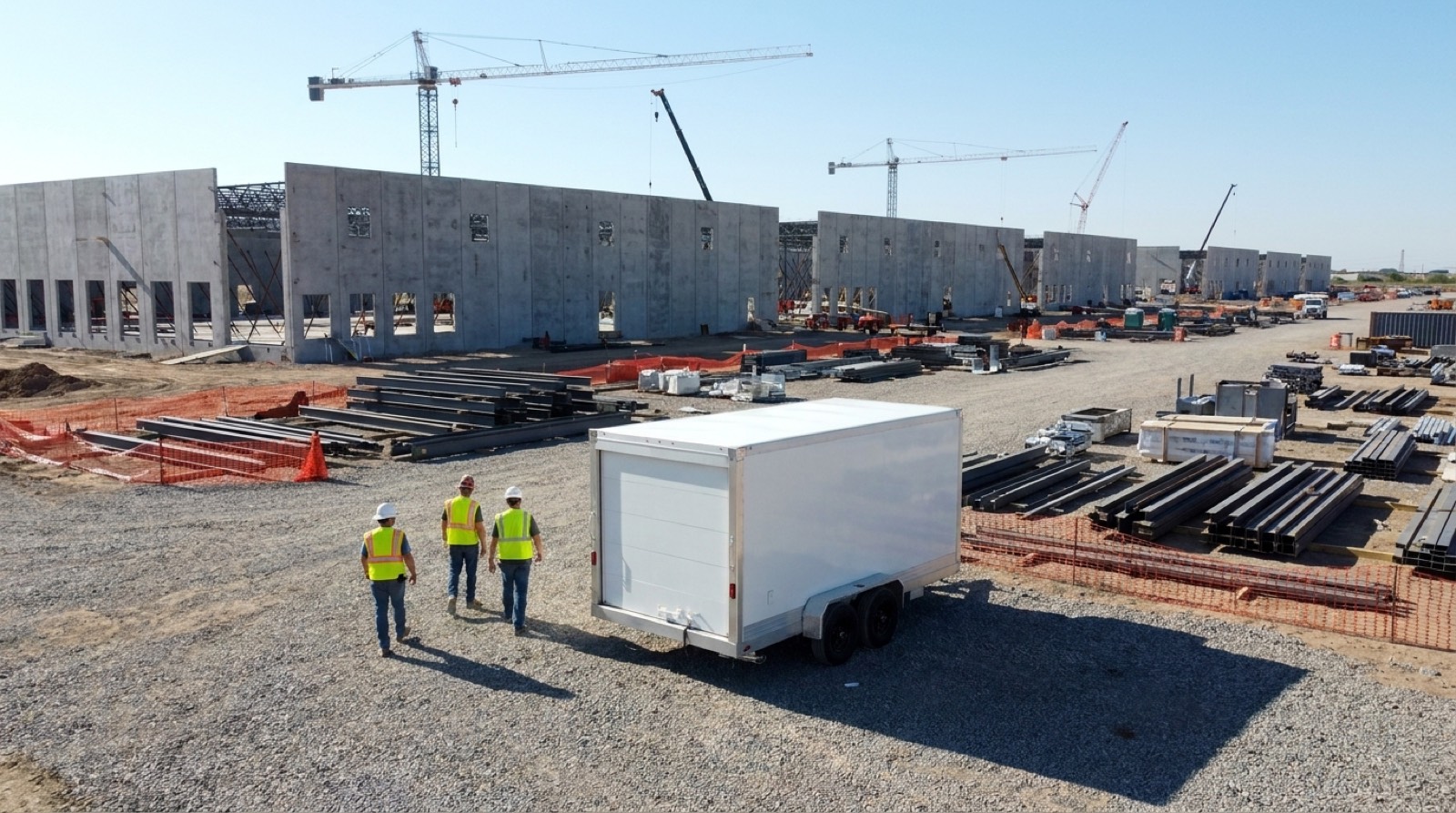
Most Utah deployments bundle several units under one route. One contracted vendor, one dispatch, one escalation path, and a site plan that arrives already coordinated.
Water is the first thing safety plans ask about. Hydration station rentals in Utah run on the same supply logistics as the rest of the package, so adding them costs one stop, not a second vendor.
Where crews rotate in from out of the area, the end of shift is its own rush hour. Shower trailer rentals in Utah carry that peak so the workforce goes home clean.
Extended-stay crews generate wash loads every week of the schedule. Laundry trailer rentals in Utah keep that cycle on site instead of in a hotel sink.
Food service and ice programs live or die on cold storage at the pad. Refrigeration trailer rentals in Utah hold setpoint through the local season.
Restroom capacity anchors the plan. Restroom trailer rentals in Utah sit closest to the workface and set the service route that every other unit rides on.
The full reach of our office trailer rentals program runs beyond Utah, covering every corridor we serve.
Questions we get
Rotation crews spend their whole day cycle at the site, so break trailers work as day rooms rather than lunch stops.
Yes, specified for the corridor: winterized heating for elevation cold and cooling with dust control for the dry summer.
Yes. Home-yard supply lines make Utah our fastest corridor for swaps, additions and same-day fixes.
Go deeper
Longer reads for teams writing the site plan. Open what applies to your build.
Utah's data center buildout along the Wasatch Front draws labor from well beyond the local market. Specialty electrical crews and commissioning technicians rotate in from other states and work compressed schedules. They live in hotels and short-term rentals for weeks at a time. For those workers, the jobsite is not a place they leave at lunch. There is no nearby home, and the drive back to a hotel room in the middle of a shift makes no sense. The site itself has to carry more of their day.
That is the case for day rooms. A day room is break space planned for extended occupancy rather than a quick meal. That means comfortable seating and reliable climate control. It means strong connectivity, so a crew member can call home or handle personal business. It also means enough room that a long day with breaks in it does not feel like sitting in a hallway.
Rotation crews often run schedules like ten days on and four off, with long daily hours while they are on. Break usage under that pattern is heavier and more spread out than a local workforce produces. Mid-morning, lunch, mid-afternoon, and often an early-evening meal for crews pushing overtime. Seating capacity should reflect the long day, and so should stocking and cleaning schedules. A day room used four times daily gets dirty at twice the usual rate.
Connectivity deserves specific attention. A crew living away from home for weeks treats the break period as their window to reach family. A day room with strong wireless coverage costs little extra and does more for morale than almost any other single amenity on site.
The Wasatch Front hands a site all four seasons with mountain sharpness. Summer days push past 100 with intense high-elevation sun, and winter brings hard freezes and snow that can sit for weeks. Day rooms here need heating and cooling sized for both ends, tight door seals against winter wind, and pads graded for snowmelt in spring. Crews coming off a February shift on an exposed site lean on the warm-up function just as hard as an Ohio crew does.
We are headquartered on the Wasatch Front, in the middle of the state's data center corridor. Rotation crews are a fixture of the projects around us. Ask us about day room layouts, because we set them up close to home and we see daily what works.
Data Center Site Facilities is headquartered on the Wasatch Front, in one of Utah's core data center infrastructure areas. That is not a marketing line. It is a logistics fact that changes how fast a project here gets served. When a Utah site needs a furnace repaired in January, the response comes from nearby. It does not come from a depot two states away. On a compressed data center schedule, the difference between same-week and same-month service is not small.
Local grounding also means the units are specified for the place. High-elevation sun, hard freezes, canyon wind, and spring snowmelt are the conditions we plan around by default. They are the conditions outside our own windows.
The Wasatch Front's data center corridor has grown quickly, and the projects share a profile. Large sites on former agricultural land, exposed to wind, with utilities arriving on the project's own schedule rather than waiting at the property line. Office compounds here do well to plan early power carefully and anchor for real wind exposure. Pads should sit high enough that spring melt drains away instead of pooling under the units.
Supervision teams on Utah builds also skew toward travelers, with owner and commissioning staff flying in on rotation. That raises the value of a well-set compound with good visitor wayfinding, comfortable conference space, and day rooms that make long site visits productive. A compound that works for a traveler works for everyone.
Utah's buildout is a multi-year story, with campuses expanding in phases and new projects breaking ground along the corridor each year. We plan placements with that horizon. A trailer set for one building is set so it can serve the next, with pad and utility reserves marked on the first site plan. Long-term placements get long-term structure, in pricing, in service scheduling, and in seasonal checks that keep units tight through winters and summers alike.
Being based in the corridor means we drive past our own installations regularly, and it means our reputation lives where our equipment does. For teams mobilizing into Utah from other markets, that is the practical pitch. A local partner who knows the ground, keeps stock nearby, and answers the phone from the same valley your project sits in. Tell us the schedule and the headcount, and we will bring the site plan to the first meeting.
Data center sites along the Wasatch Front work through a real winter. Valley inversions hold freezing air for weeks, and storms roll off the mountains with heavy snow. Open sites catch wind that makes 20 degrees feel far colder. Construction does not stop for any of it. Concrete gets blanketed, steel goes up in gloves, and the office compound becomes the warm core the whole operation leans on from November through March.
A compound that breezes through a Utah summer can fail its first winter if it was set casually. The failures are predictable. Heat that cannot keep up with door traffic, steps glazed in ice, pads that pond snowmelt against the skirting, and frozen lines on units with plumbing. Every one of them is preventable at setup for a fraction of what mid-winter repairs cost.
Winter-ready in Utah starts with the ground. Pads built high on compacted gravel, crowned to shed melt, keep units dry through the spring thaw. Skirting closes off the cold cavity under the floor, protects plumbing, and cuts heating load noticeably. Anchoring handles the storm winds that funnel out of the canyons. Entry details finish the job. Treated stairs, handrails, exterior lighting, and a mat plan keep slush and falls at the door.
Inside, heating should be sized for the exposure, not the square footage alone. An office holding twenty people with the door cycling all day needs margin beyond the catalog number. Ask for the heat calculation, not just the unit model.
Snow removal around the compound deserves a named owner before the first storm. Paths between units, the parking rows, the steps, and the route to the gate need clearing early on storm mornings. The office staff arrives before the field does. Decide who plows, where the pile goes, and who salts the steps. A compound where these questions have answers runs normally on a snow day. One where they do not loses the morning.
The reward for winter discipline is a compound that carries the project's coordination load in the season when coordination matters most. Weather delays, resequencing, and recovery planning all happen indoors, around the plan table, in January. We are based on the Wasatch Front and winter our own equipment here. Winter readiness is the default spec on every Utah placement, not an upgrade.