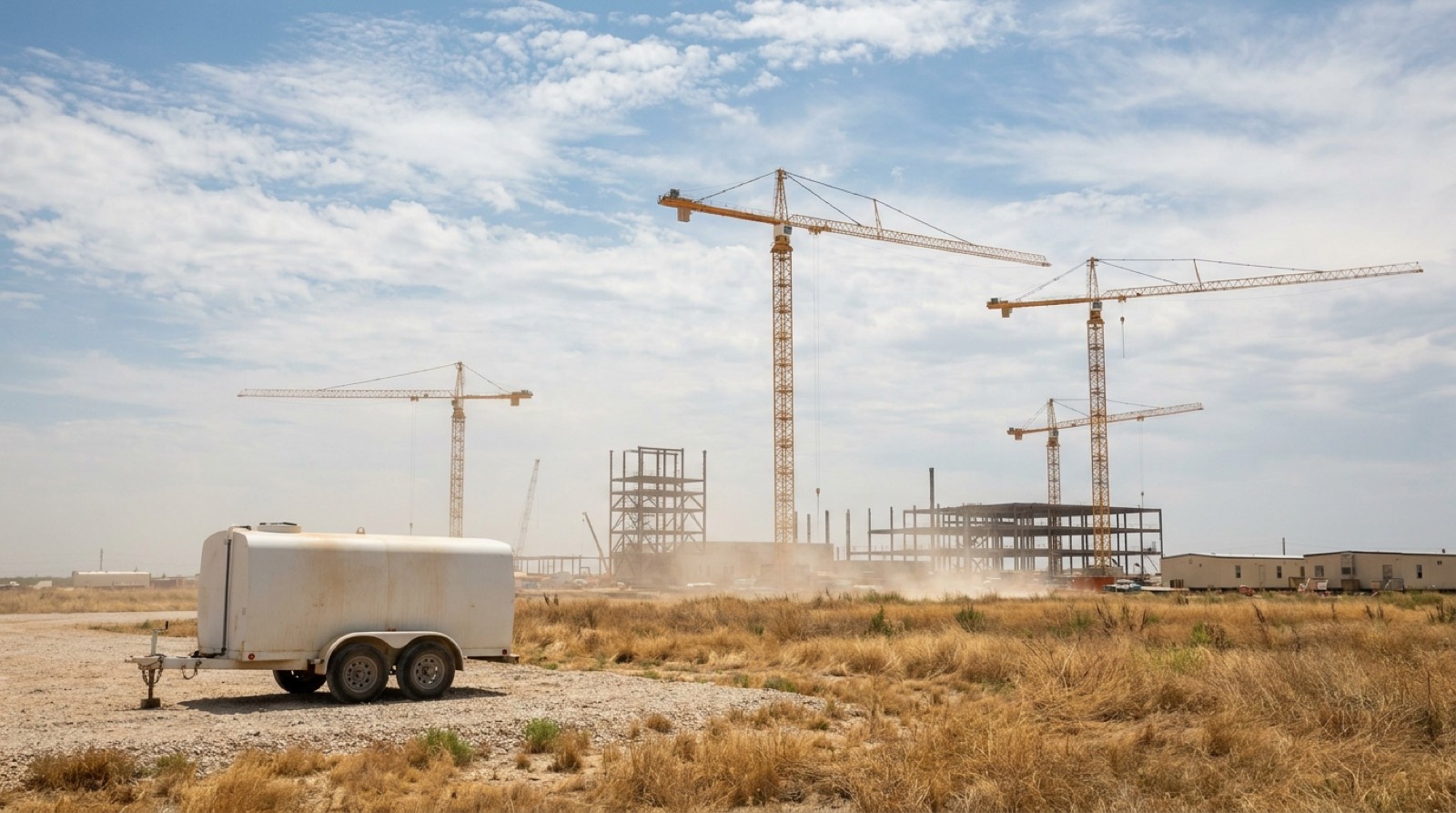
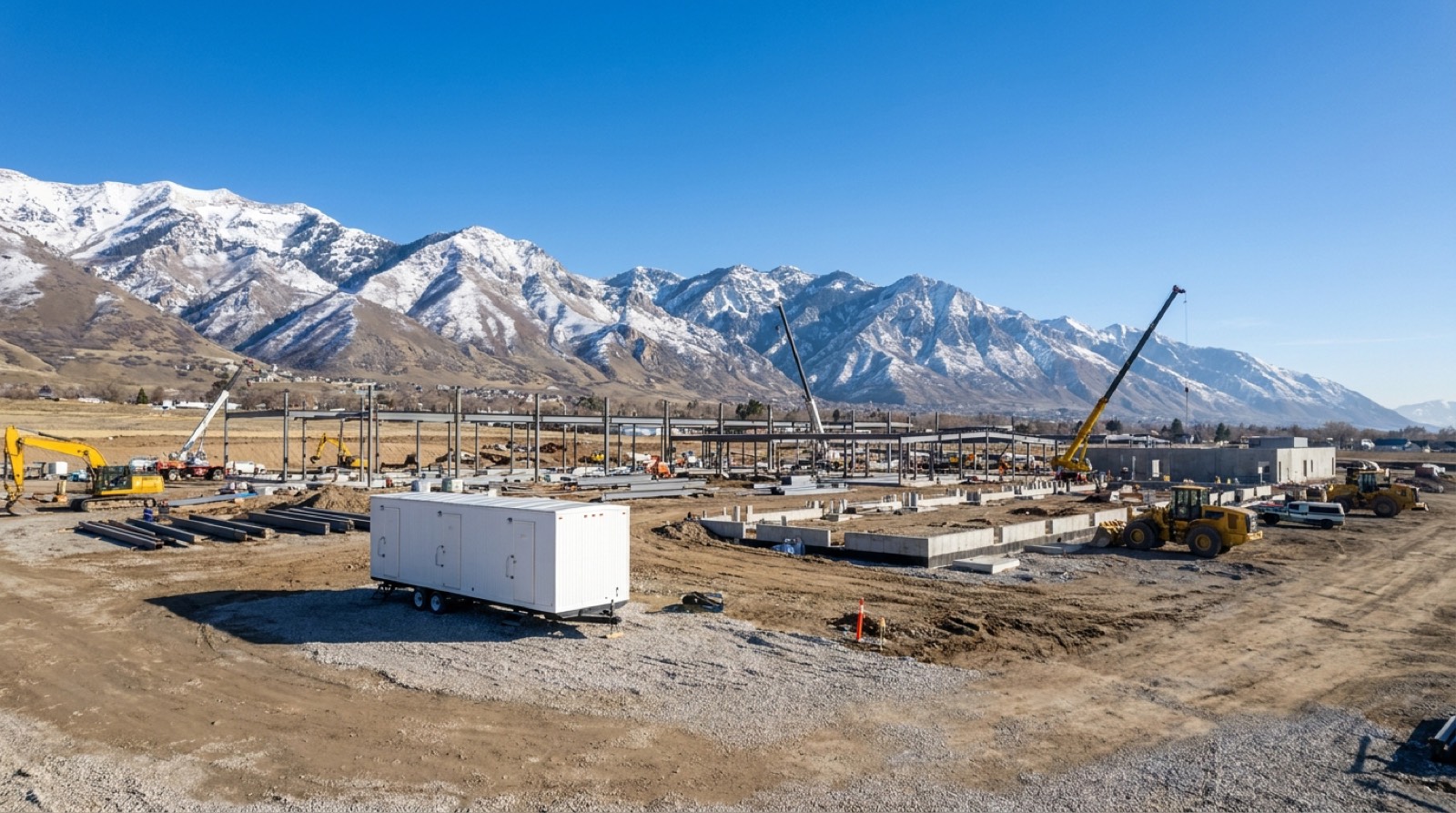
Chilled potable water delivered at crew scale, refilled on a contracted interval, and positioned where the work actually is. On a summer slab pour, water capacity is a production constraint and a compliance requirement at the same time.
A hyperscale site at peak carries several hundred trades spread across a campus measured in millions of square feet. Federal OSHA guidance on heat illness prevention calls for approximately one quart of drinking water per worker per hour in hot conditions. At 500 workers on a Texas or Arizona summer schedule, that is over 4,000 gallons of drinking water a week, positioned close enough to the work that crews actually drink it. Coolers on a tailgate do not meet that requirement. Our hydration stations do.
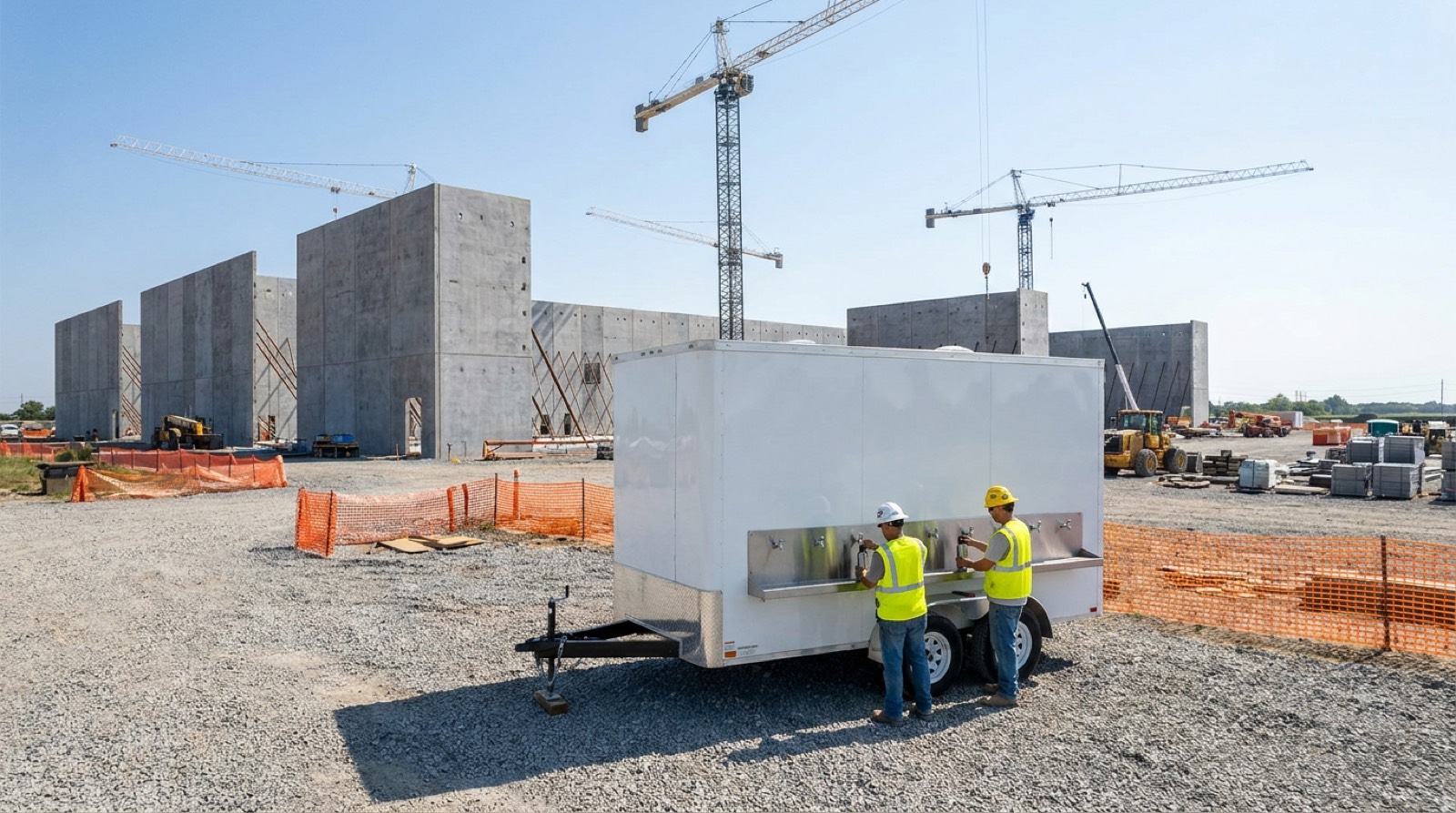
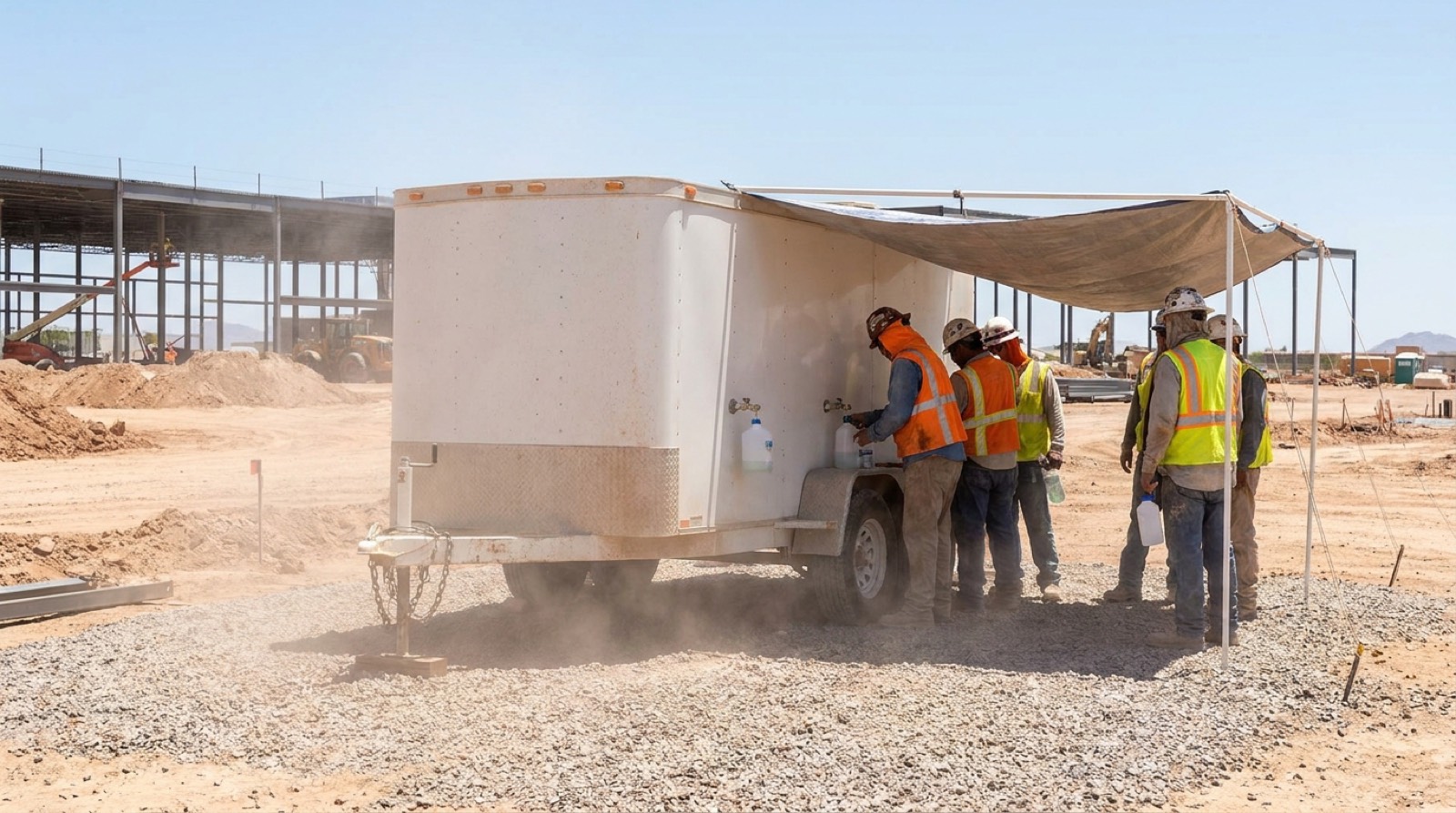
Multiple stainless bottle-fill spigots served from chilled onboard tanks, shaded fill points, and a footprint that positions near the work without blocking equipment paths. Stations are towable, so as the pour sequence moves across the campus, the water moves with it. Refill frequency is set by your headcount and the season, then adjusted as either one changes.
Heat casualties stop work, trigger reporting, and pull crews off task. General contractors on desert and Sun Belt corridors treat water access the way they treat fall protection: a system, planned before mobilization, with named capacity and a service record. Our deployment plans document station count, placement, refill interval and per-visit volumes, so your safety team has evidence rather than assurances.
Commissioning teams, retrofit crews and security staff at operating data centers draw on the same capacity problem from the other side: the building is finished, but the permanent fixtures were never sized for a surge population. Hydration stations bridge that gap without touching facility plumbing or requiring hot work permits.


Why contractors keep us
Any vendor can place units at mobilization. Performance shows up in month nine. Do pump-outs hold their interval under load? Does water get topped off before it runs out? Does an after-hours failure get fixed inside the same shift?
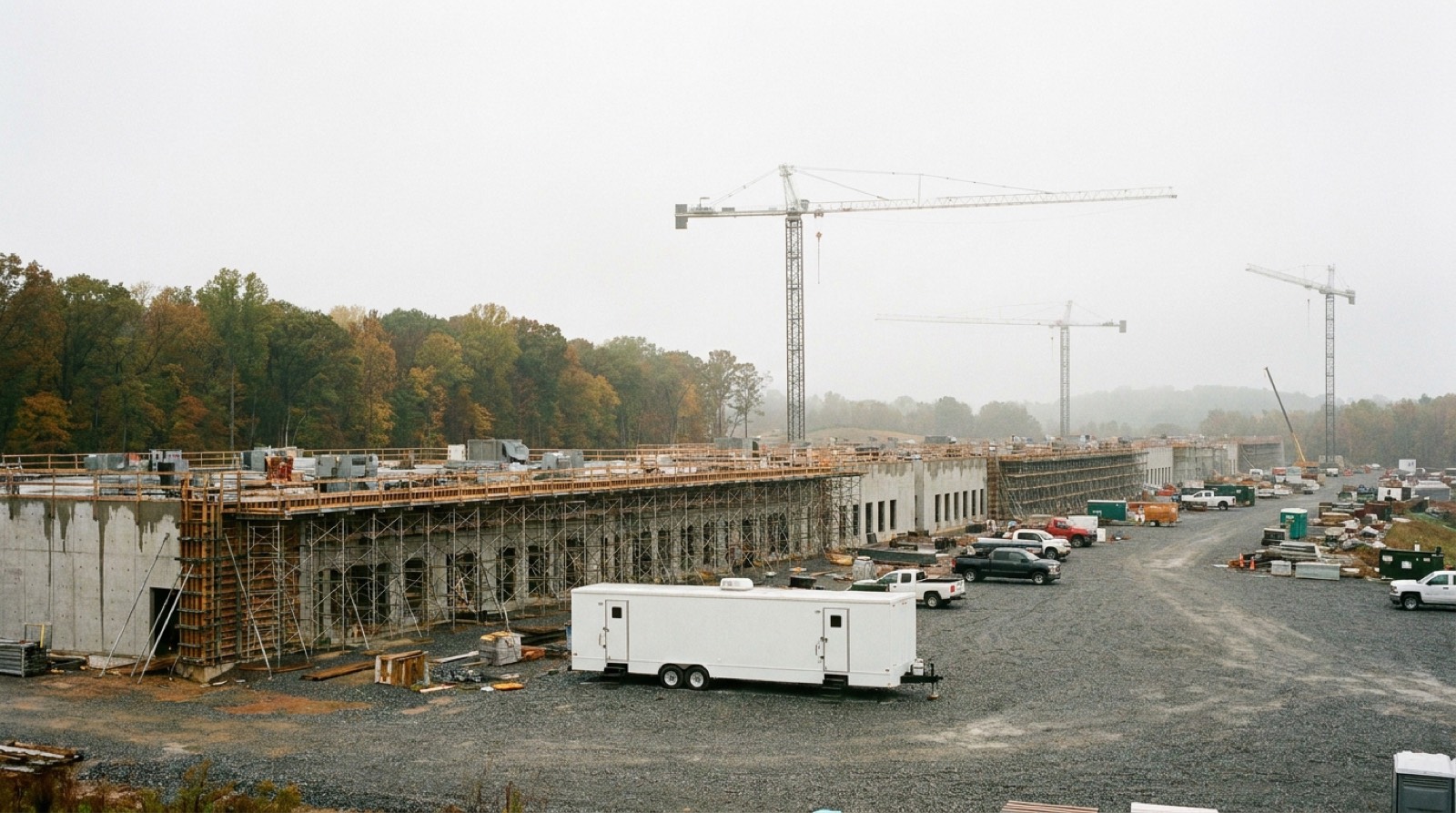
Sites that rent one unit type usually need three. Alongside this program we deploy restroom trailer rentals, shower trailer rentals, office trailer rentals and laundry trailer rentals on the same contracted service routes, one dispatch, one escalation path.
Where we deploy
Heaviest concentration in the corridors carrying the most active data center construction, with nationwide mobilization beyond them.

Loudoun County and Prince William run the densest data center concentration on earth. Multi-year campuses, badge-controlled access, crews in the hundreds, and facility requirements written into the subcontract.
View Northern Virginia →
Dallas, Fort Worth, San Antonio and Abilene are carrying some of the largest campuses in the country. Summer heat makes hydration and shower capacity a safety line item, not an amenity.
View Texas →
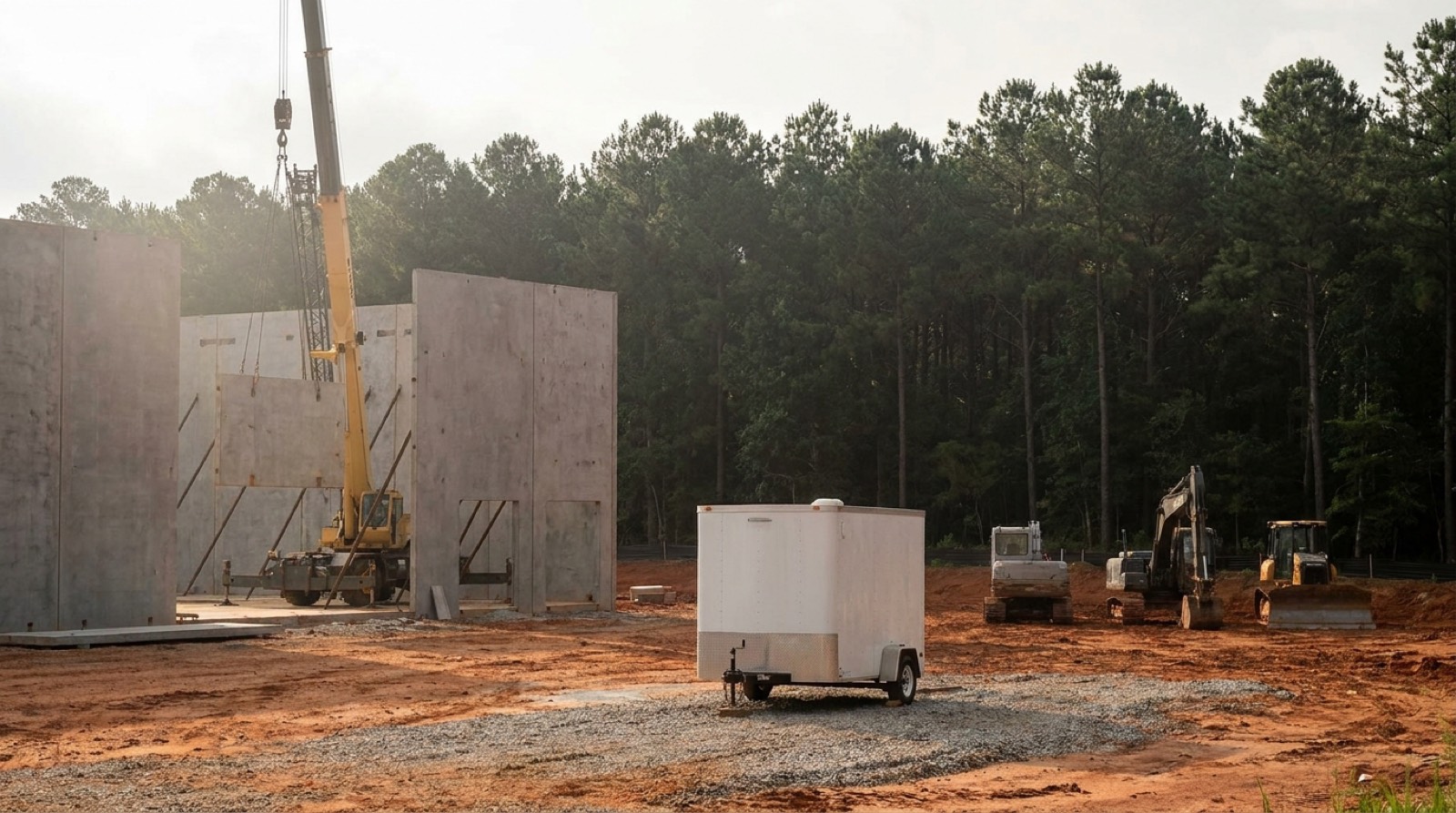
Atlanta metro and Douglas County, extending along I-20. Humid summers, long hauls between laydown and pad, and multi-phase schedules that keep facilities on site for years.
View Georgia →
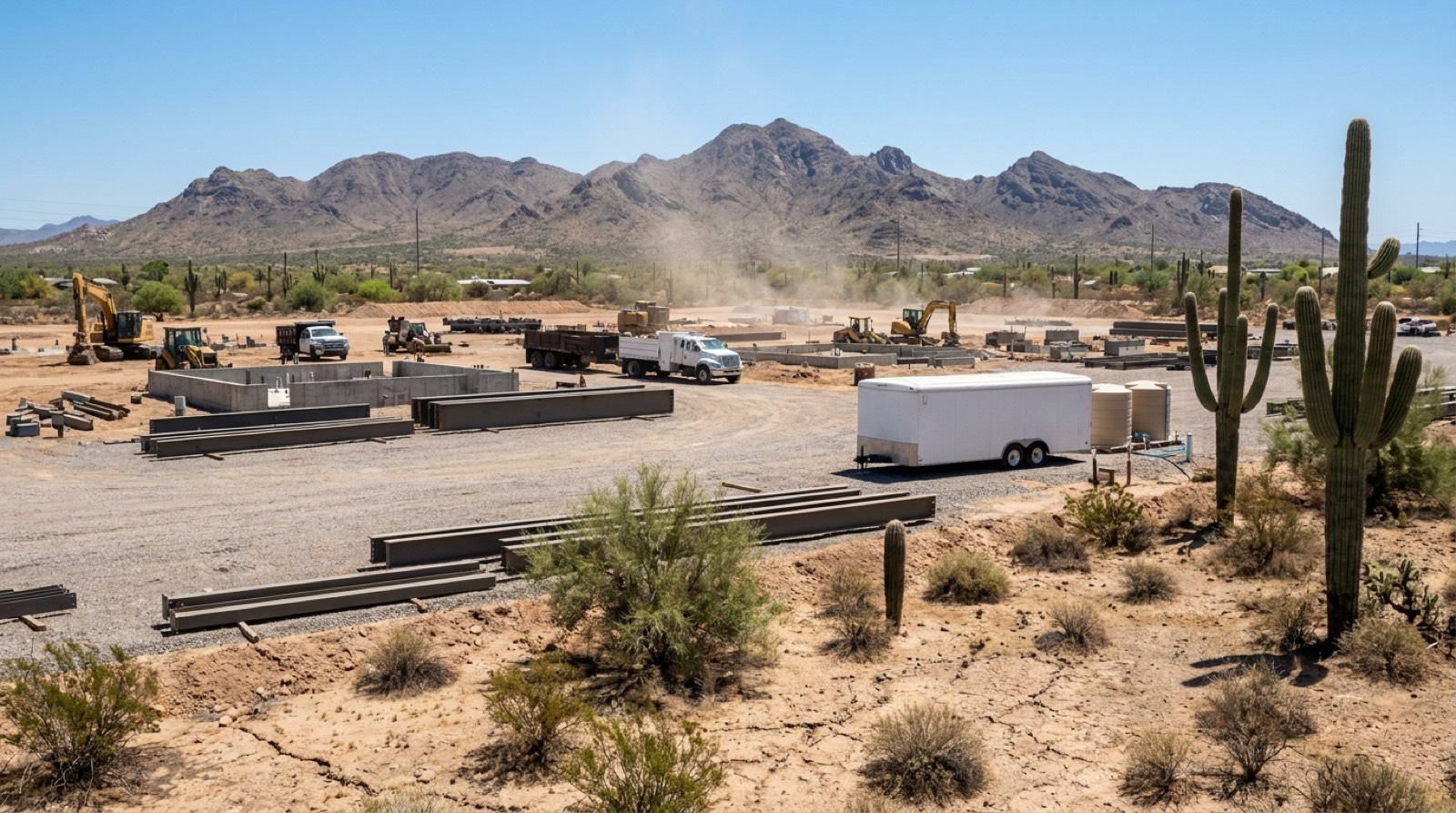
Phoenix and Mesa build through heat that regularly exceeds 110 degrees. OSHA heat-illness prevention drives water and shade requirements that our units satisfy directly.
View Arizona →
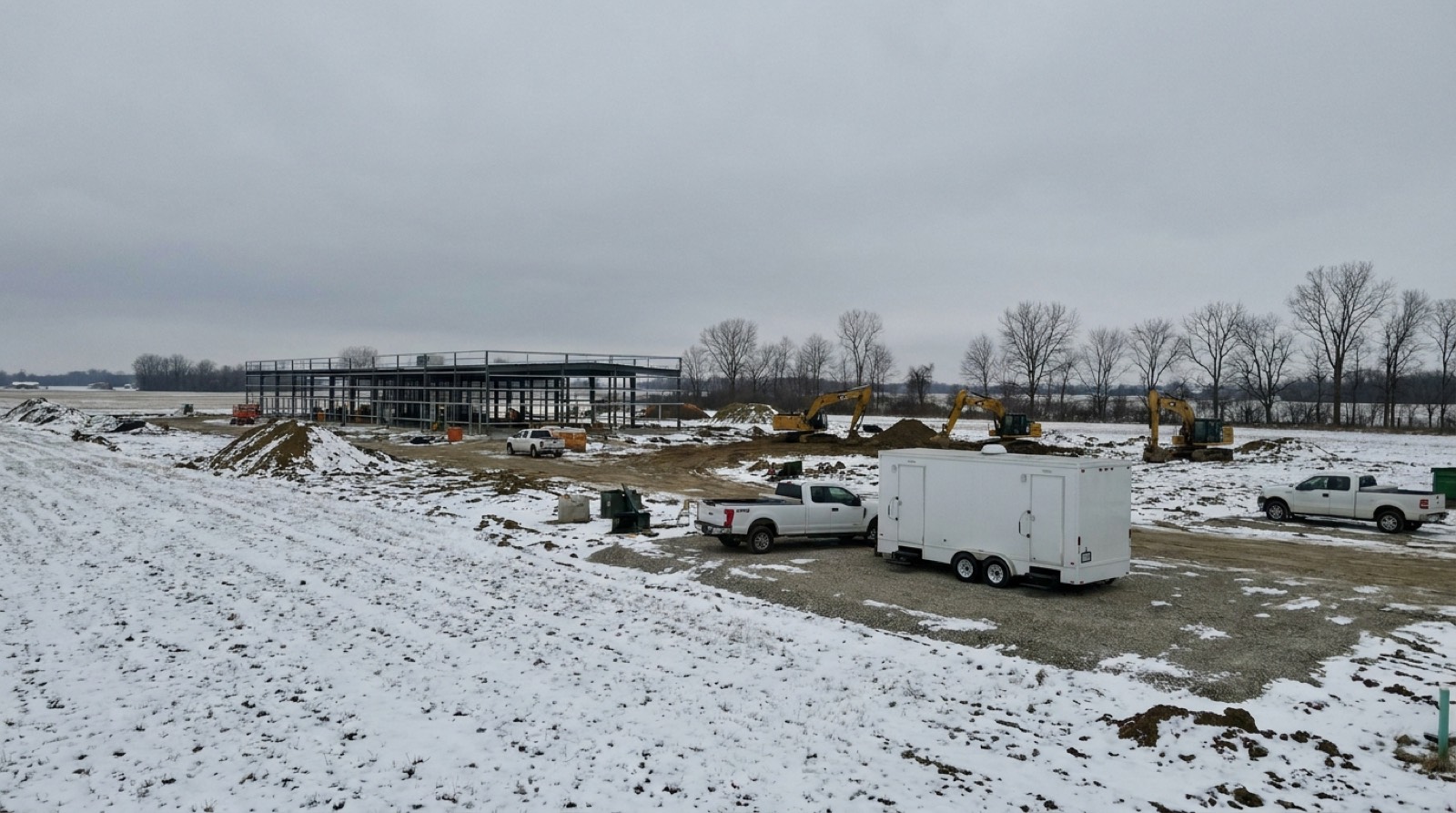
Columbus and New Albany. Freeze protection and winter service access matter here in a way Sun Belt corridors never see.
View Ohio →
The Wasatch Front corridor runs through hard winters at elevation. Units are winterized and service intervals hold through snow.
View Utah →Questions we get
Sizing starts from peak headcount, the season and the walk distance rule: crews should reach water without leaving their work area for more than a few minutes. As a working figure, one multi-spigot station serves roughly 75 to 100 workers in moderate conditions, with the count rising for summer schedules in Texas, Arizona and Georgia. We size the deployment from your manpower curve and adjust as it moves.
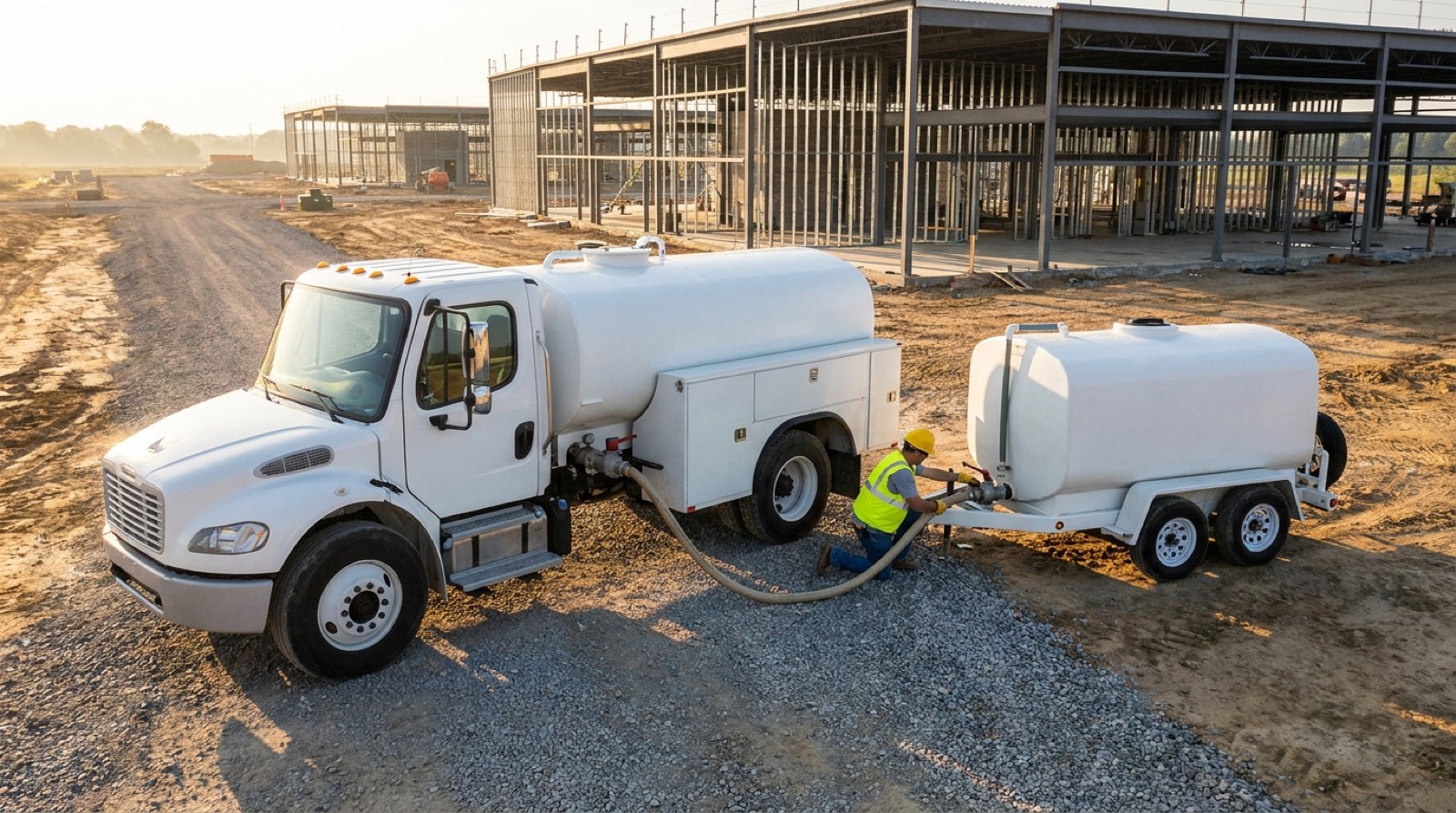
On a contracted interval set by consumption, not a fixed calendar. High-heat sites commonly run daily refills at peak manpower. Every visit is documented with volumes delivered.
Yes. Stations dispense potable water from sanitized tanks, and we provide fill source documentation on request for sites that require water quality records.
Units run self-contained. Where chilling loads are high and the deployment is long, we specify a power connection or pair the station with a generator in the site plan.
Yes. They are towable units. Repositioning is part of the service contract, scheduled with your superintendent so water is staged ahead of the next phase rather than trailing it.