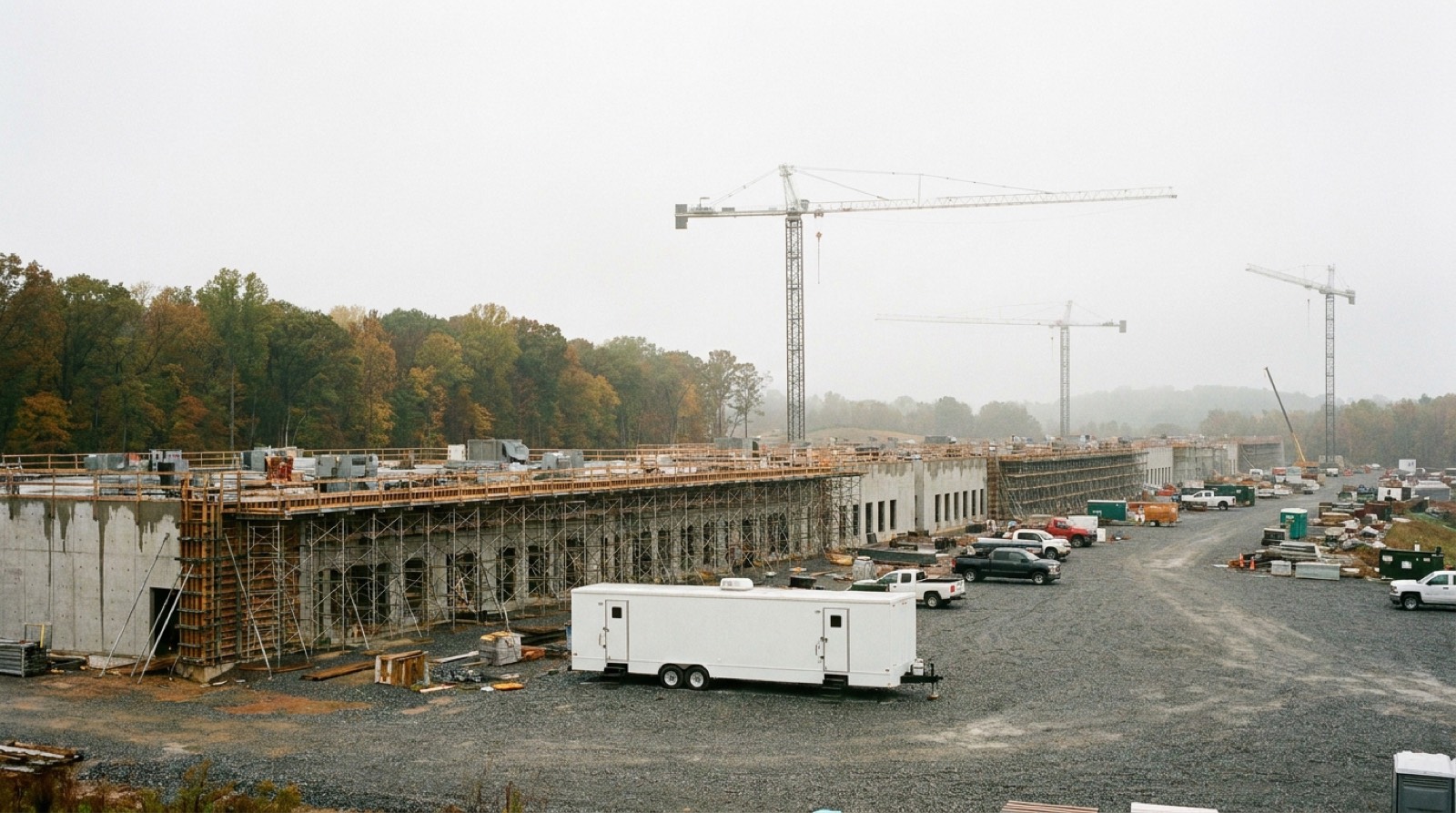
Virginia
Hydration station rentals for Virginia data center sites
Chilled water capacity for Loudoun and Prince William campuses, where humid summers push heat index past what the thermometer admits and badged sites demand documented supply.
Chilled water capacity for Loudoun and Prince William campuses, where humid summers push heat index past what the thermometer admits and badged sites demand documented supply.
Northern Virginia summers rarely post Texas numbers, and that is the trap. Humidity keeps the heat index far above the reading. The body sheds heat slower, so crews dehydrate faster than the forecast suggests. We plan water from the heat index, not the thermometer, and a Loudoun campus in July gets sized accordingly.
Data Center Alley packs many buildings and trades into tight campus footprints. One water point at the trailer compound serves nobody three buildings away. We spread smaller stations along the paths crews walk, then move them as pours and phases move.
Badged Virginia sites want the paper behind the water. Fill sources, sanitization logs, delivered volumes. Ours come standard with every visit, so the safety file holds up and nobody chases records at audit time.
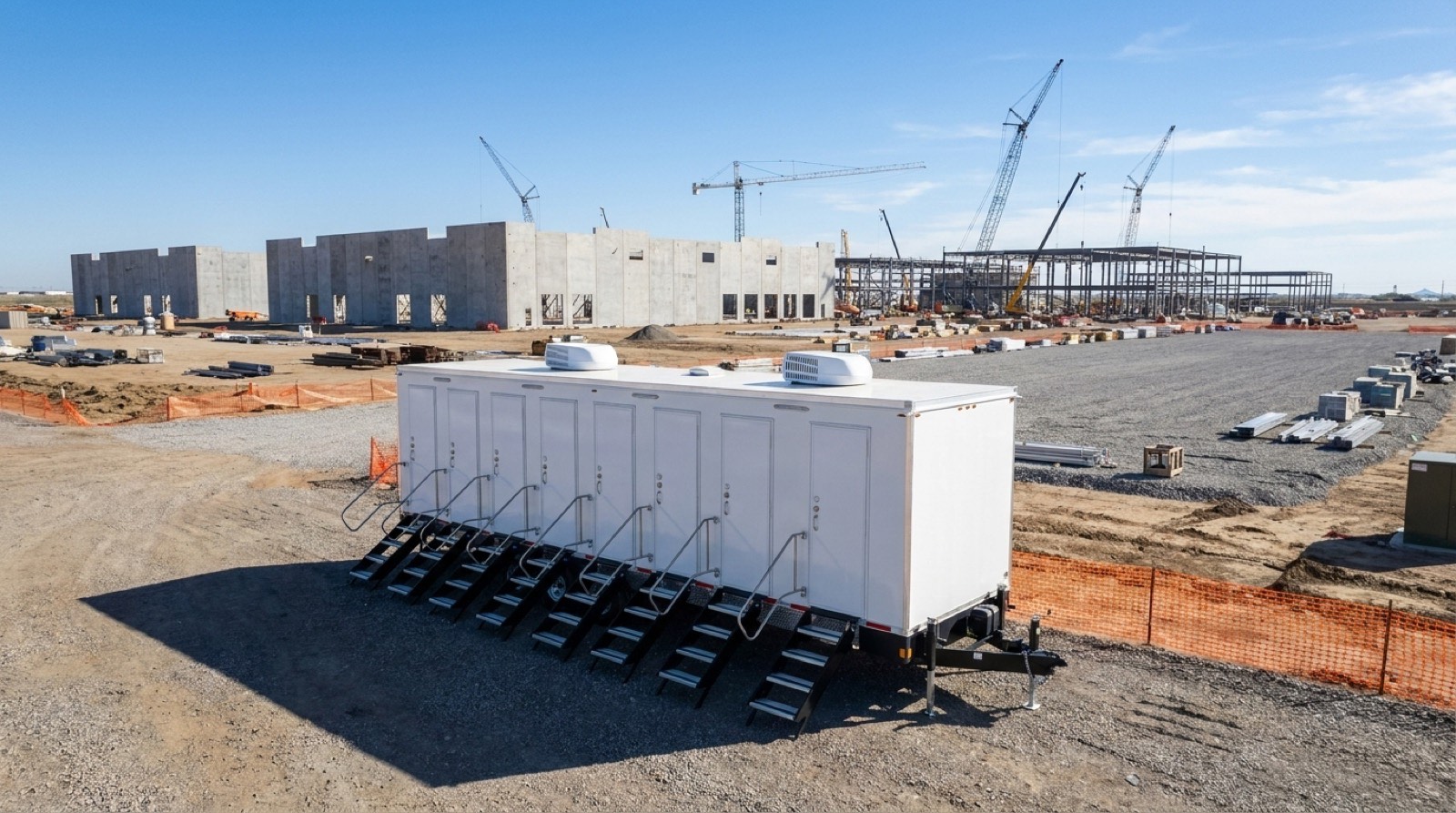
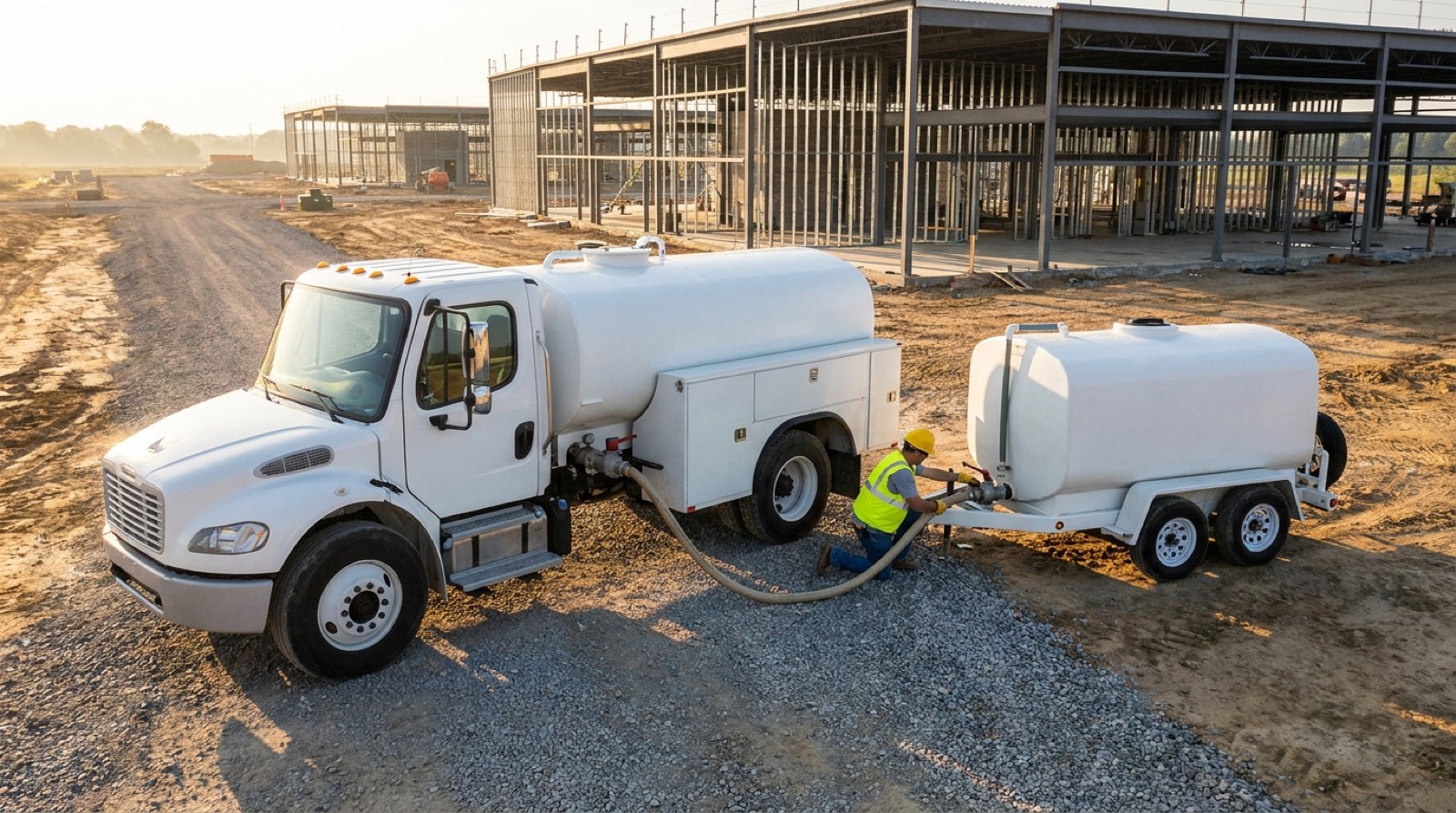
Most Virginia deployments bundle several units under one route. One contracted vendor, one dispatch, one escalation path, and a site plan that arrives already coordinated.
The paperwork side of the job needs a roof too. Office trailer rentals in Virginia give supervision and inspections a place to meet without leaving the gate.
Extended-stay crews generate wash loads every week of the schedule. Laundry trailer rentals in Virginia keep that cycle on site instead of in a hotel sink.
Food service and ice programs live or die on cold storage at the pad. Refrigeration trailer rentals in Virginia hold setpoint through the local season.
Restroom capacity anchors the plan. Restroom trailer rentals in Virginia sit closest to the workface and set the service route that every other unit rides on.
Where crews rotate in from out of the area, the end of shift is its own rush hour. Shower trailer rentals in Virginia carry that peak so the workforce goes home clean.
The full reach of our hydration station rentals program runs beyond Virginia, covering every corridor we serve.
Where we deploy
Heaviest concentration in the corridors carrying the most active data center construction, with nationwide mobilization beyond them.
Loudoun County and Prince William run the densest data center concentration on earth. Multi-year campuses, badge-controlled access, crews in the hundreds, and facility requirements written into the subcontract.
View Northern Virginia →
Dallas, Fort Worth, San Antonio and Abilene are carrying some of the largest campuses in the country. Summer heat makes hydration and shower capacity a safety line item, not an amenity.
View Texas →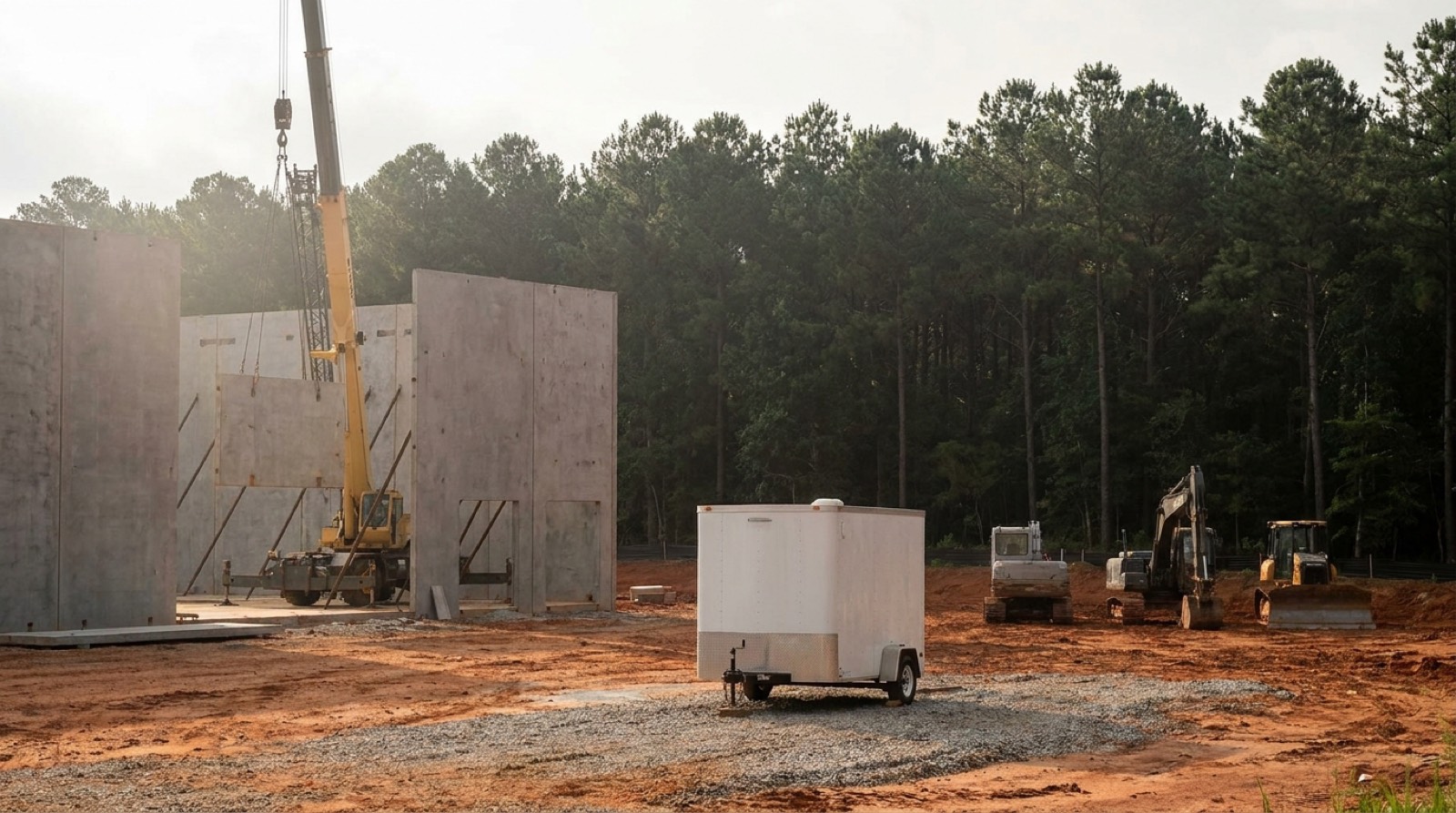
Atlanta metro and Douglas County, extending along I-20. Humid summers, long hauls between laydown and pad, and multi-phase schedules that keep facilities on site for years.
View Georgia →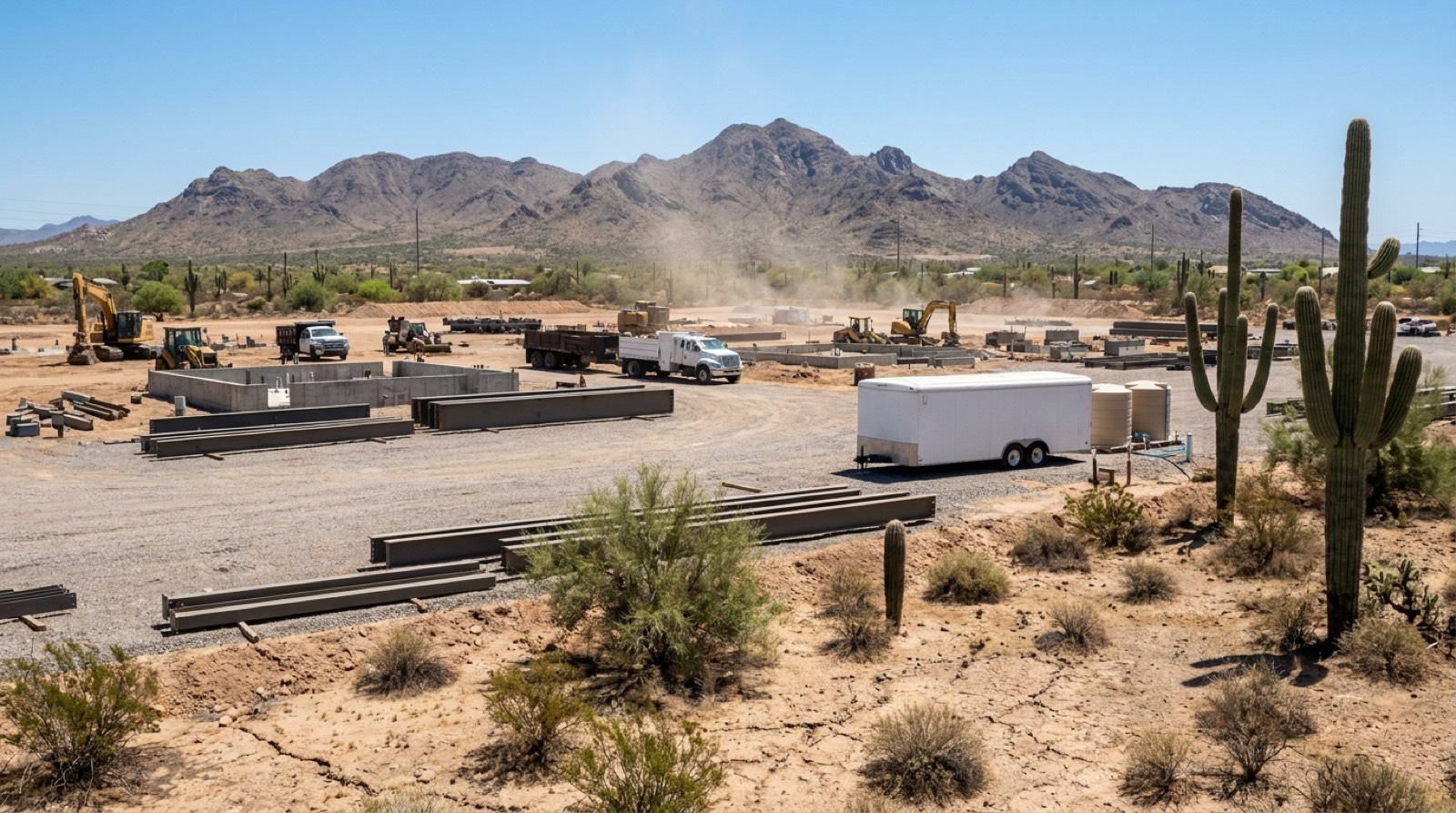
Phoenix and Mesa build through heat that regularly exceeds 110 degrees. OSHA heat-illness prevention drives water and shade requirements that our units satisfy directly.
View Arizona →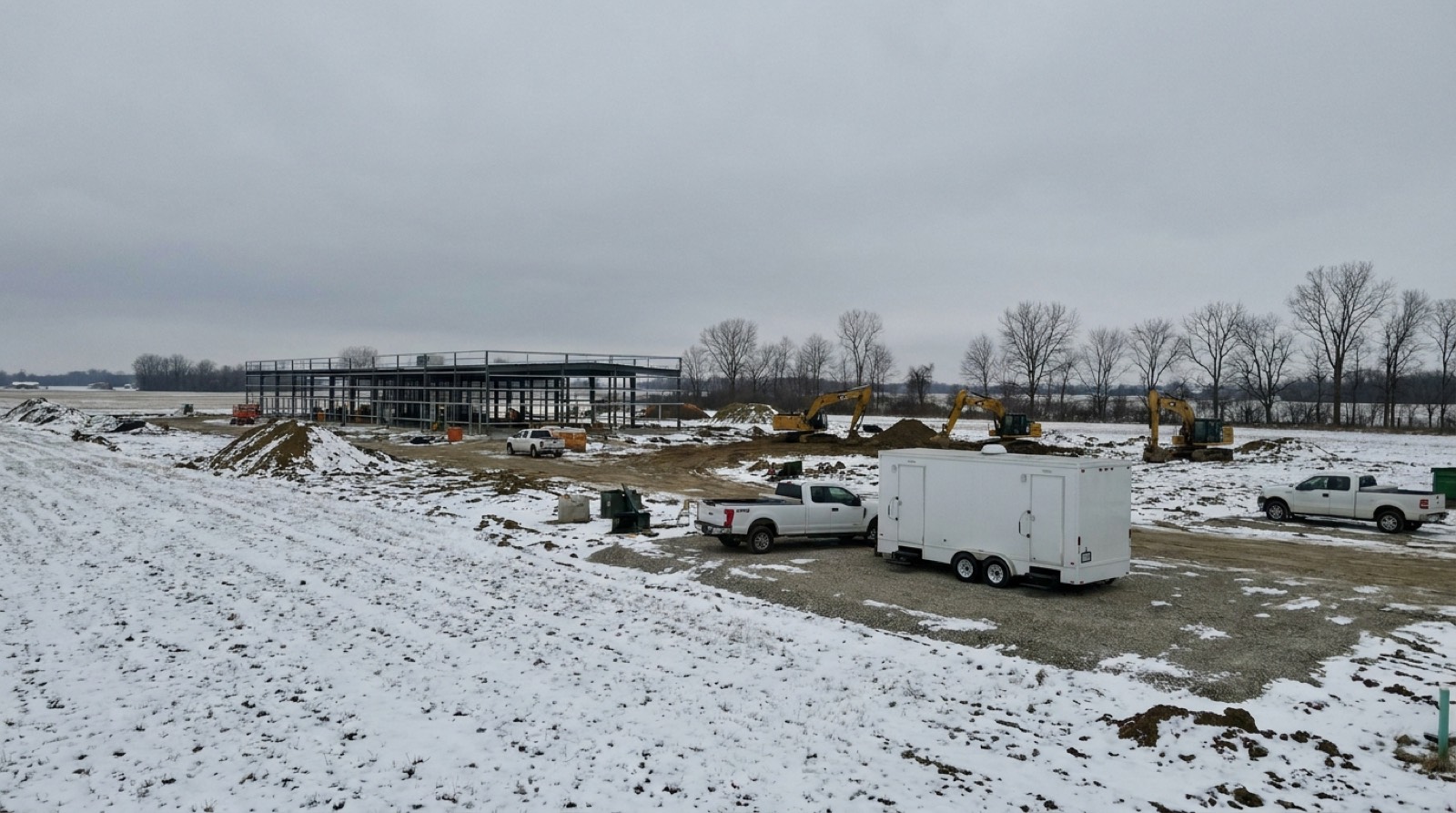
Columbus and New Albany. Freeze protection and winter service access matter here in a way Sun Belt corridors never see.
View Ohio →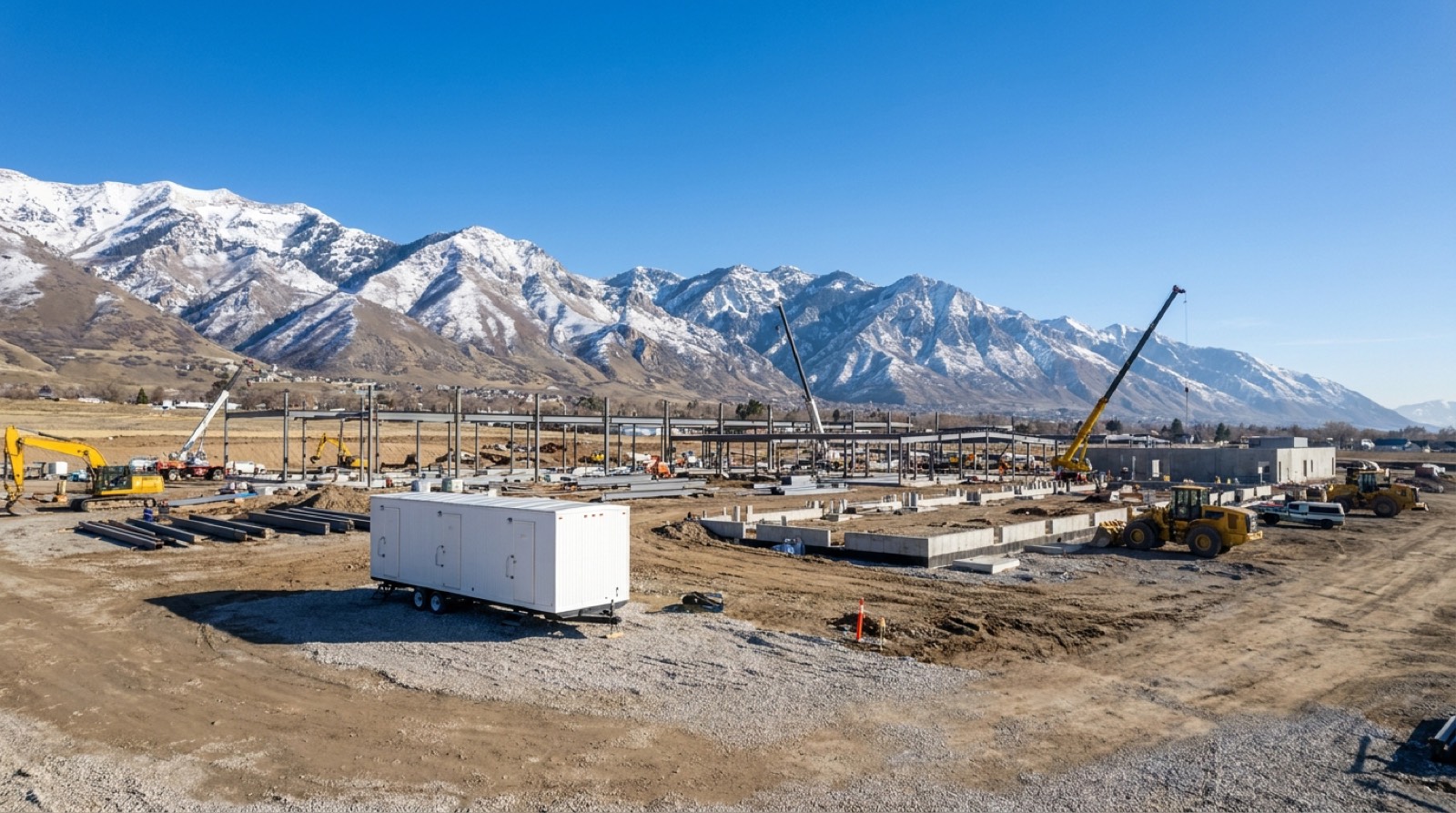
The Wasatch Front corridor runs through hard winters at elevation. Units are winterized and service intervals hold through snow.
View Utah →Questions we get
By heat index rather than temperature. Humid heat drives consumption close to desert rates while feeling milder, so station counts and refill intervals are set to the July curve, not the spring one.
That is the standard Virginia placement: several smaller stations distributed along working paths rather than one large point at the gate, repositioned as phases move.
Yes. Fill source, sanitization and delivered volumes are recorded with each visit and available for the site's safety file.
Go deeper
Longer reads for teams writing the site plan. Open what applies to your build.
On most construction sites, a refill truck pulls up, tops off the stations, and leaves. In Loudoun and Prince William counties, that truck first has to get through a guarded gate onto a campus where every person and vehicle is logged. Data Center Alley operators run construction security at nearly the same posture as operational security. Driver names submitted in advance, photo ID checks, vehicle inspections, and sometimes an escort requirement from gate to pad. A vendor who shows up unannounced does not get in, and the crew inside drinks warm dregs until the paperwork clears.
So in Northern Virginia, we treat access as a planning input just like gallons. Before the first station is placed, we work through the general contractor's security process. Driver rosters get submitted and kept current. Vehicle information goes on file. If badging is required, our service personnel complete it before the contract starts, not during week one.
Even with clean credentials, badge-controlled gates add time. A gate check that takes fifteen minutes per entry changes what a realistic service route looks like, and a security hold can push a refill by hours. Our answer is capacity margin. On controlled campuses we size station storage so the site comfortably rides out a delayed service window in summer heat. The crews never feel a gate problem, because the buffer absorbs it.
Delivery windows matter too. Many Loudoun campuses restrict deliveries to certain hours or route all vendors through a single logistics gate shared with concrete, steel, and equipment traffic. We schedule refills against those windows and against the site's own delivery calendar, so the water truck is not competing with a rebar delivery at the one gate everyone shares.
If you are planning a build in Data Center Alley, ask any hydration vendor three practical questions. Can they meet the campus security submission requirements, and how fast can they add a substitute driver when someone is out. Have they serviced controlled-access sites before. How much buffer capacity do they build in for gate delays. The vendors who answer quickly have done this. The ones who pause are about to learn on your project, in July, with your crew waiting.
Crews arriving in Loudoun County from drier regions get caught off guard by the same thing every summer. The thermometer says 90, which they have worked in plenty of times, but by 10 am they are wrung out. The difference is moisture in the air. Northern Virginia summers run humid, with July and August dew points regularly in the 70s. At those levels, sweat stops doing its job. It sits on the skin instead of evaporating, and evaporation is the mechanism that actually cools the body.
The result is a double penalty. The body cools less efficiently, so it sweats harder trying to keep up, so fluid losses climb even while cooling stays poor. A worker on a slab in Ashburn in August can lose more fluid than the same worker doing the same task on a dry 100-degree day elsewhere. Heat index, which folds humidity into the number, is the honest measure here. A 90-degree day with high humidity can carry a heat index over 100.
The standard planning figure of one quart per worker per hour is the floor in this climate, not the ceiling. On high-humidity days we expect consumption to run past it, especially for crews in the open before the shell goes up. Data center sites amplify the problem. The pads are huge, cleared, and treeless, so there is no natural shade, and the slab bounces heat back up at the crew all afternoon.
Cold water matters more in humid heat as well. Workers already feel clammy and saturated, and warm water goes down poorly. Cool water gets consumed. Our refill schedules in Northern Virginia run heavier from June through September than the same crew size would need in a dry market, and we adjust by forecast when a humid stretch settles in.
Do not put the summer plan away in September. Northern Virginia regularly produces humid 85-degree days deep into fall, and crews who have mentally moved on from summer stop drinking deliberately. Keep stations at summer counts through September and taper on actual conditions rather than the calendar. It costs little and covers the sneaky heat days that catch sites napping.
The typical Northern Virginia data center project is not one building. It is a campus delivered in phases. Building A is in commissioning while Building B tops out and Building C is still dirt work. Each phase carries its own crew mix, its own density, and its own water demand, all shifting month to month. A hydration plan drawn once at mobilization and never touched again will fit exactly one moment of a project that lasts two years.
The failure pattern is predictable. Stations cluster where the crews were, not where they are. The sitework crew that had four stations is down to a dozen workers, while 300 electricians and fitters have flooded into a shell with two stations at one entrance. Total gallons on site might still look fine on paper. Distribution is what broke.
Every general contractor on a Loudoun or Prince William campus maintains a manpower projection. That curve is the best hydration planning document on the project. When the projection shows interior trades tripling in Building B over eight weeks, station count and refill frequency for that building should be climbing on the same slope. When a phase hands over to commissioning, its stations should be shrinking and moving, not sitting in a corridor serving nobody.
Our practice on phased campuses is a standing review against the manpower curve, plus a walk of actual conditions, because projections drift. Stations get added, pulled, or relocated as part of routine service. The contract is structured to flex, so scaling from twelve stations to twenty for peak fit-out does not require a renegotiation in the middle of the busiest stretch of the job.
One more phased-build trap. Once a building encloses and conditioning starts, planners assume the heat problem is over. Interior data center work stays hot longer than people expect. Temporary power, incomplete air handling, and physically heavy work like pulling feeder cable keep heat stress alive indoors. Workers also drink less indoors because the environment feels safer than a slab in the sun. Keep stations inside the shells, near vertical access points, through fit-out. Scale them to the interior headcount, which on a Loudoun campus often peaks after enclosure. The building being out of the weather does not mean the crew is out of the heat.