Texas
Hydration station rentals for Texas data center sites
Water at crew scale for Texas builds, from DFW slab pours in August to greenfield campuses where every gallon is hauled in.
Water at crew scale for Texas builds, from DFW slab pours in August to greenfield campuses where every gallon is hauled in.
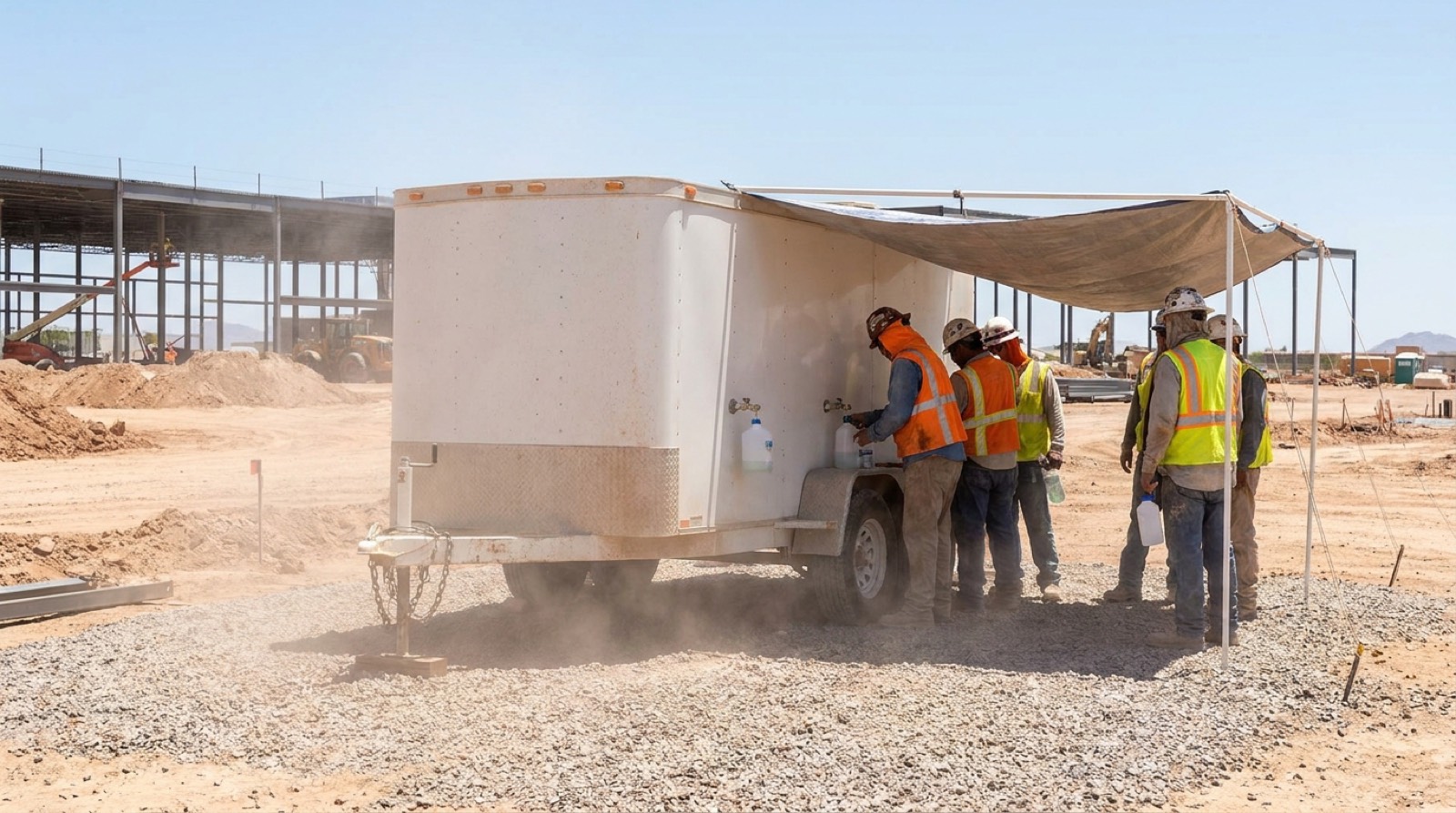
OSHA's working figure for hot conditions is a quart of water per worker per hour. A 400-person pour crew on a North Texas slab in August runs through roughly 100 gallons an hour, and afternoon temperatures hold above 100 for weeks at a stretch. That volume does not come off a cooler in a truck bed. It takes stations with chilled tanks, placed in shade at the pour, refilled on a schedule that anticipates the draw.
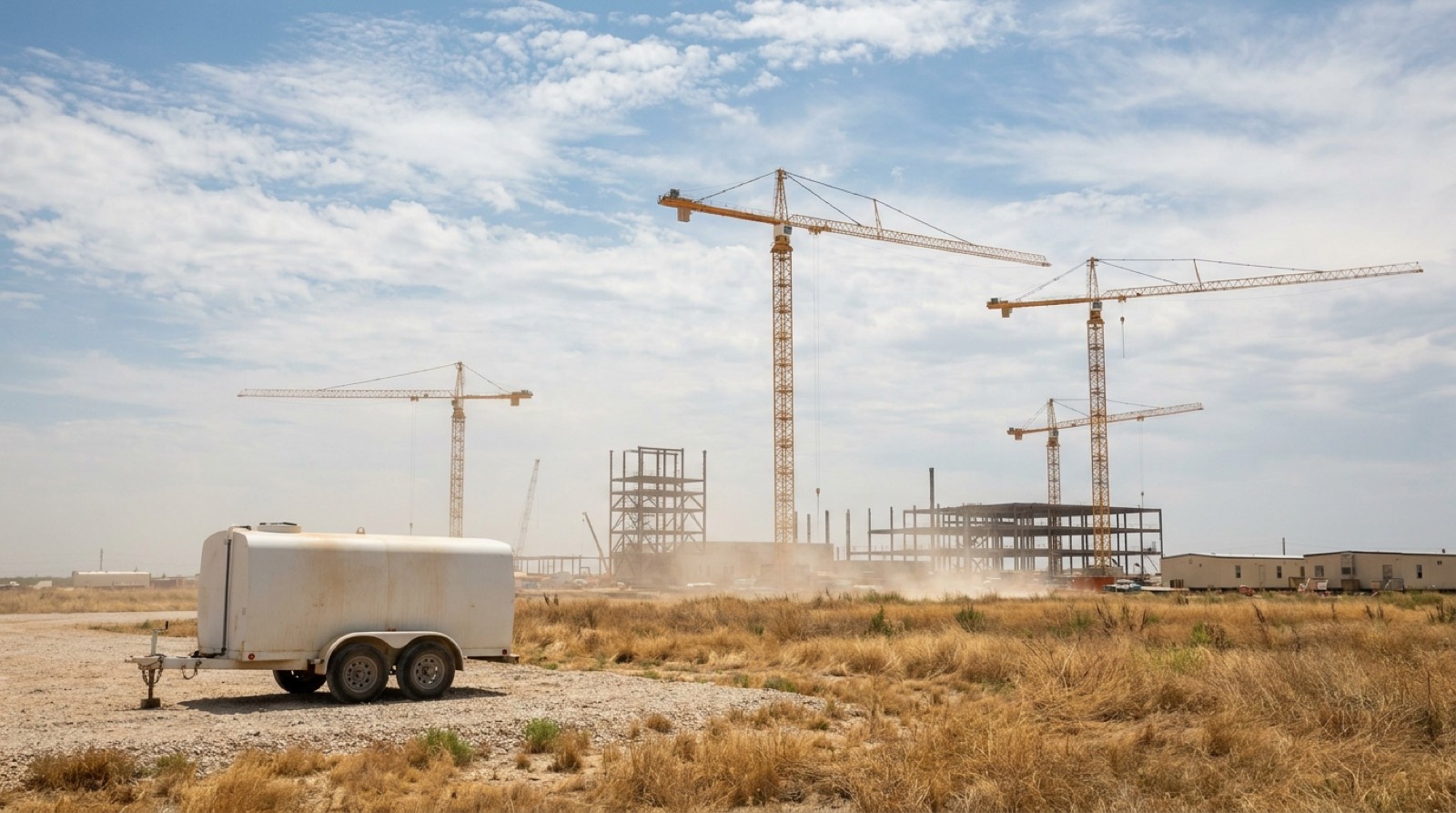
Gigawatt campuses rising near Abilene and across West Texas sit on land with no municipal water for miles. Hydration there is a logistics operation: potable water hauled in, tanks topped before the day's heat, and a service route engineered around real distances. We plan the route with the same rigor as the placement.
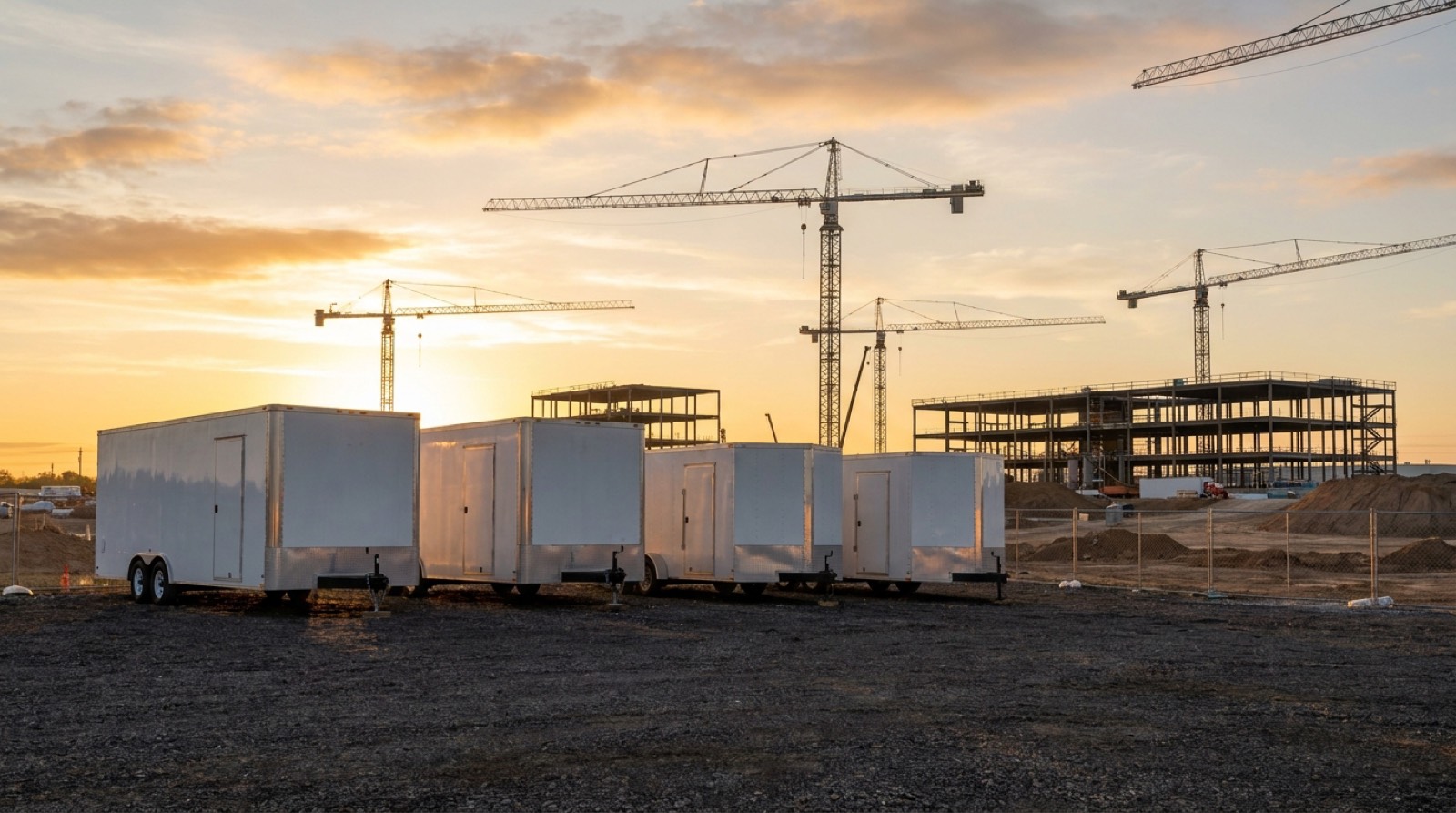
Concrete does not wait, and neither do the crews placing it. On scheduled pour days we stage additional capacity the evening before, so the water is cold and positioned before the first truck rolls at four in the morning.
Most Texas deployments bundle several units under one route. One contracted vendor, one dispatch, one escalation path, and a site plan that arrives already coordinated.
Food service and ice programs live or die on cold storage at the pad. Refrigeration trailer rentals in Texas hold setpoint through the local season.
Restroom capacity anchors the plan. Restroom trailer rentals in Texas sit closest to the workface and set the service route that every other unit rides on.
Where crews rotate in from out of the area, the end of shift is its own rush hour. Shower trailer rentals in Texas carry that peak so the workforce goes home clean.
The paperwork side of the job needs a roof too. Office trailer rentals in Texas give supervision and inspections a place to meet without leaving the gate.
Extended-stay crews generate wash loads every week of the schedule. Laundry trailer rentals in Texas keep that cycle on site instead of in a hotel sink.
The full reach of our hydration station rentals program runs beyond Texas, covering every corridor we serve.
Questions we get
Plan on a quart per worker per hour in the heat, which puts a 400-person crew near 100 gallons hourly. We size station count and refill frequency from your manpower curve and the season.
Yes. West Texas campus deployments run entirely on hauled potable water with routes engineered around the actual distance, not an assumption of nearby supply.
Yes. Extra capacity stages the evening before a scheduled pour so chilled water is in place before crews arrive.
Where we deploy
Heaviest concentration in the corridors carrying the most active data center construction, with nationwide mobilization beyond them.
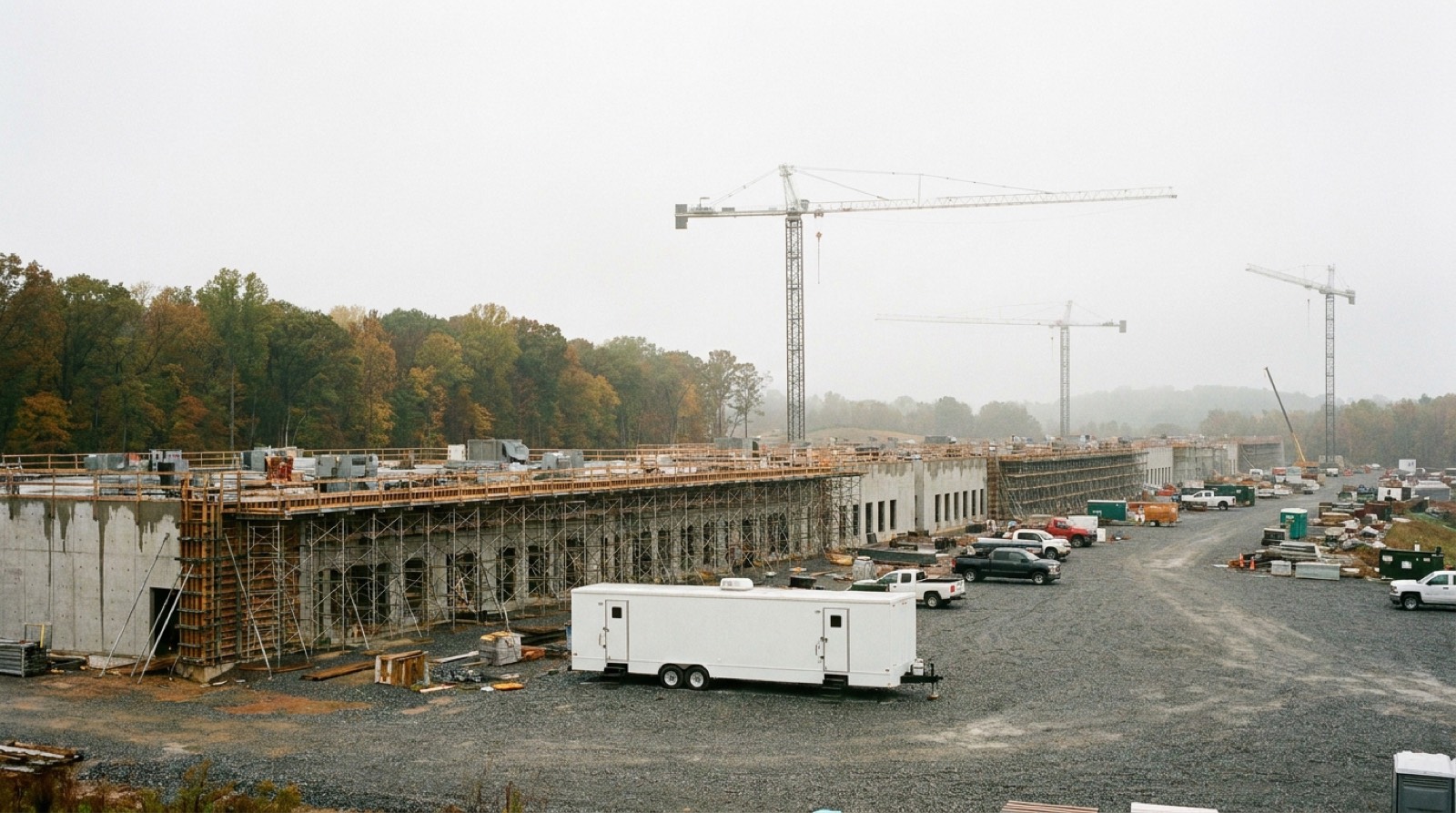
Loudoun County and Prince William run the densest data center concentration on earth. Multi-year campuses, badge-controlled access, crews in the hundreds, and facility requirements written into the subcontract.
View Northern Virginia →Dallas, Fort Worth, San Antonio and Abilene are carrying some of the largest campuses in the country. Summer heat makes hydration and shower capacity a safety line item, not an amenity.
View Texas →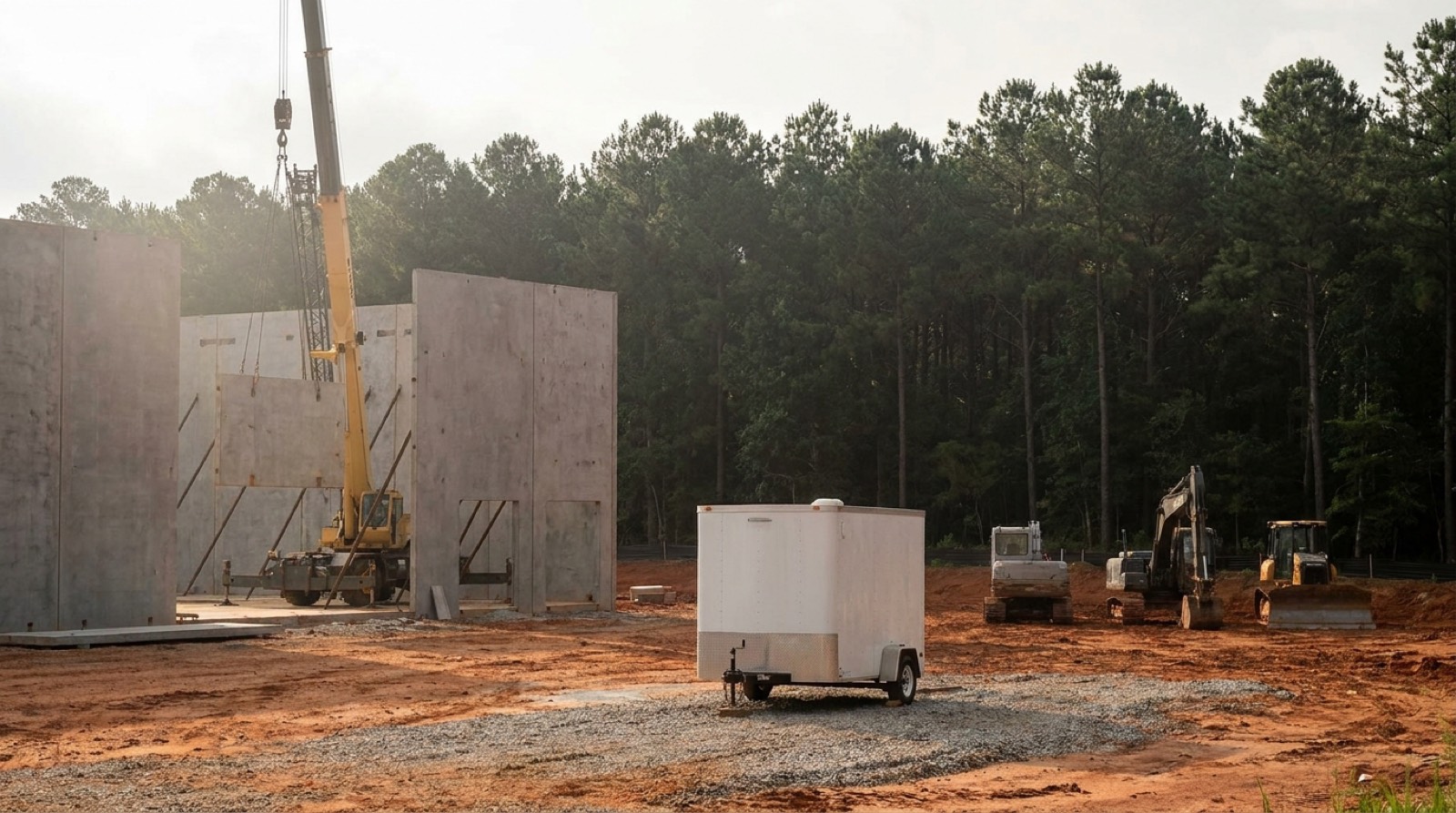
Atlanta metro and Douglas County, extending along I-20. Humid summers, long hauls between laydown and pad, and multi-phase schedules that keep facilities on site for years.
View Georgia →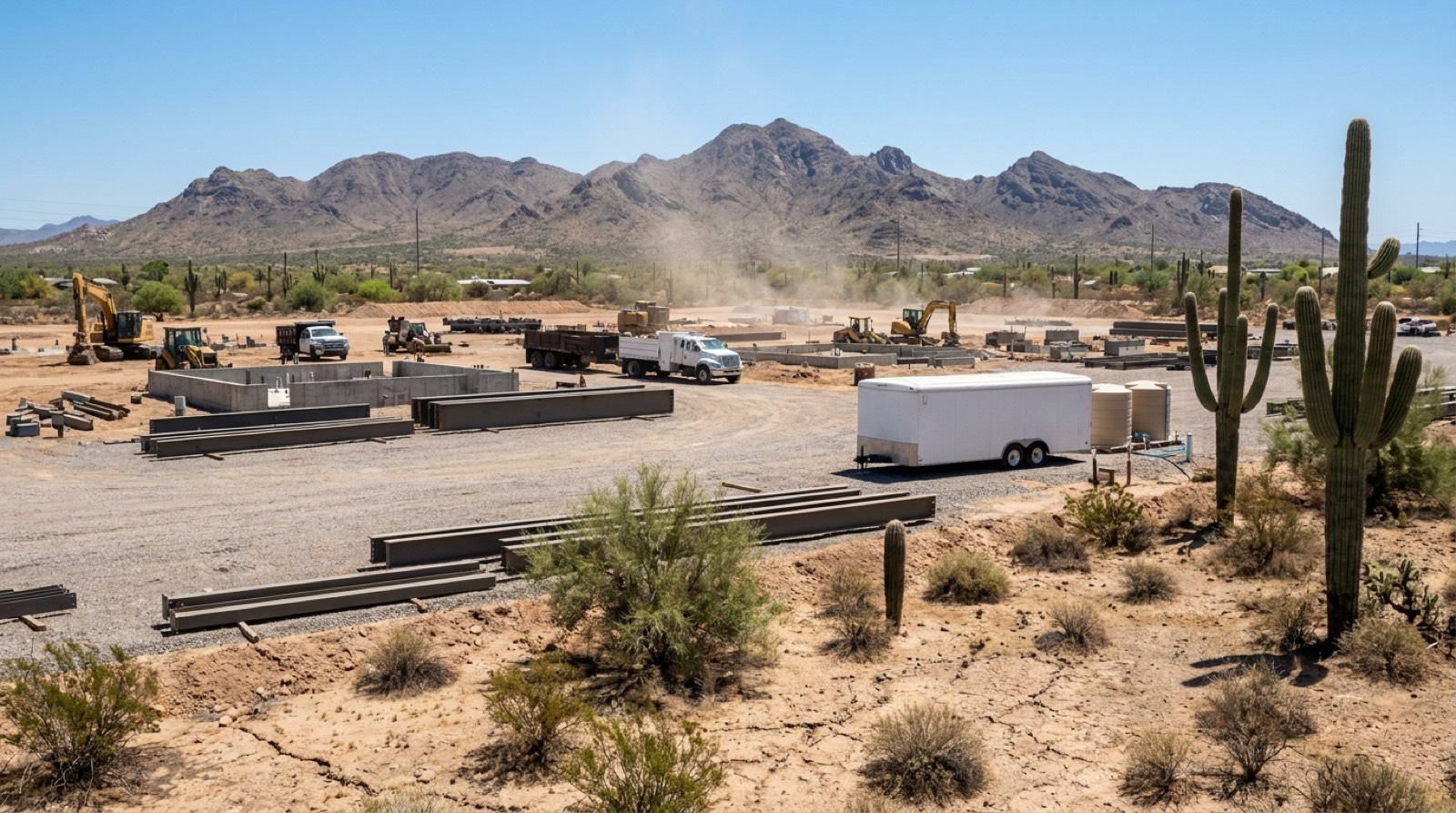
Phoenix and Mesa build through heat that regularly exceeds 110 degrees. OSHA heat-illness prevention drives water and shade requirements that our units satisfy directly.
View Arizona →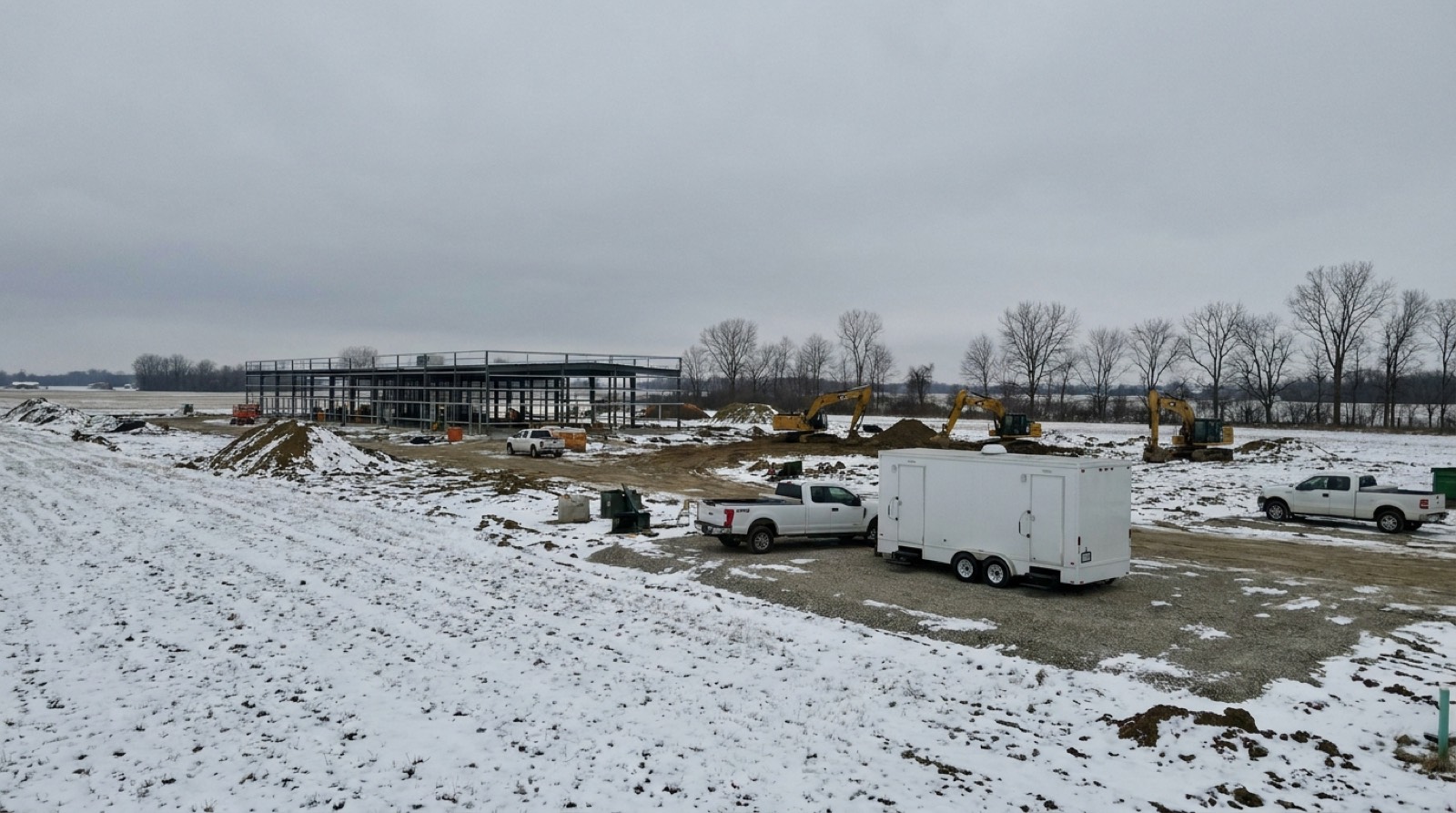
Columbus and New Albany. Freeze protection and winter service access matter here in a way Sun Belt corridors never see.
View Ohio →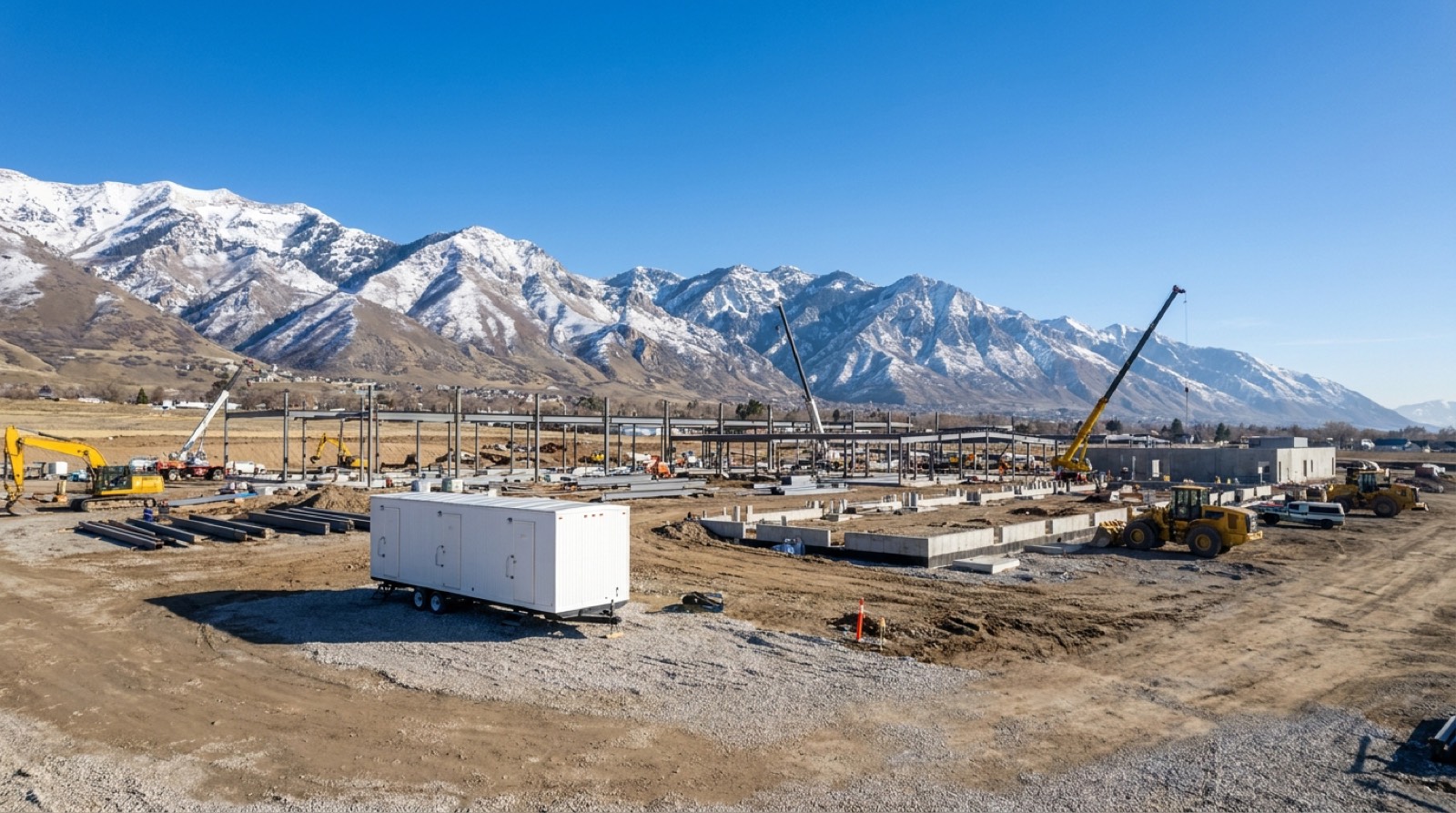
The Wasatch Front corridor runs through hard winters at elevation. Units are winterized and service intervals hold through snow.
View Utah →Go deeper
Longer reads for teams writing the site plan. Open what applies to your build.
The new wave of Texas data center construction is not happening in office parks. Sites outside Abilene, across West Texas, and on raw land between San Antonio and the Hill Country often break ground before any utility reaches the property. There is no municipal tap to tie into. Every gallon a crew drinks arrives on a truck, and in Texas summer heat, that supply chain has no slack in it. A 200-person crew drinking at hot-weather rates goes through around 500 gallons a day, every day, for months.
That volume changes the shape of the solution. Coolers and pallets of bottled water turn into a full-time labor problem and a trash problem at that scale. What a remote greenfield site needs is bulk potable storage on the pad, refilled on a scheduled route, dispensed through stations placed where the crews actually work.
Hauling drinking water is its own discipline. The water has to come from an approved potable source, carried in tanks used for potable water only, because a tank that ever held anything else is done for drinking service. Texas heat adds a second problem. Stored water sitting in the sun loses its chlorine residual faster, and warm storage is friendlier to bacteria. Our practice on remote Texas sites is potable-only equipment, sanitized on a set cycle, with storage managed for temperature and residuals checked as part of routine service. Nobody on the crew should ever wonder whether the water is safe. That is our job, handled before the truck leaves the yard.
On a remote site, reliability is a trucking question. A site 90 minutes from the nearest approved fill point cannot be serviced casually, and a single missed run in August is a safety incident waiting to happen. We build routes with margin. Delivery frequency is set so on-site storage always holds reserve days, not reserve hours. Backup fill points are identified before the contract starts, in case the primary source goes down. When a heat wave parks over West Texas and consumption jumps, the route flexes ahead of demand because the forecast told us before the tanks did. Remote sites do not forgive vendors who learn by running dry. Out there, the water plan is the safety plan.
On remote Texas data center jobs, the crew does not go home at night. They walk or shuttle to a man camp a few minutes from the pad and do it all again tomorrow, often on rotations that run weeks at a stretch. That changes the hydration problem in a way most site plans miss. A worker can drink reasonably well during the shift and still lose ground overall, because recovery happens in the hours after work, and the camp is where those hours happen.
The math is unforgiving. A worker who ends a Texas summer shift a few pounds light in fluid needs the evening to restore it. If the camp makes rehydration inconvenient, he starts the next shift already behind. Stack that pattern across a two-week rotation and by day ten you have a crew that is chronically depleted, dragging in the afternoons, and carrying heat illness risk that no amount of on-shift water fully fixes. The deficit compounds quietly, one short night at a time.
Our approach on man camp projects is to treat the camp as part of the site. Stations go at the dining area, near the housing rows, and at the shuttle staging point, so cold water is in arm's reach during the entire recovery window. Evening is also the right time for electrolyte replacement after a heavy sweat day, and camp stations are the natural place to stock it. The gap we see on many projects is contractual, not physical. The jobsite vendor stops at the fence, and the camp operator assumes drinking water means the kitchen faucet. Nobody owns the recovery window, so nobody serves it.
Superintendents sometimes ask why they should spend water budget on housing. The answer shows up on the pad the next afternoon. Crews that rehydrate properly overnight hold their pace through the hottest part of the following day, make fewer heat-stress mistakes, and lose fewer man-hours to early knock-offs. On a remote build in a hard climate, where every worker was expensive to recruit and house in the first place, overnight recovery is one of the cheapest performance investments on the project. Cover the camp. The pad will feel it.
Every Texas summer delivers stretches where DFW and San Antonio sit above 100 degrees for days or weeks at a time. These are not surprise events. They show up in forecasts a week out, ride high pressure that parks and stays, and behave predictably once established. That predictability is the planning opportunity. A hydration plan sized for an average summer day fails in a triple-digit week, but the failure is avoidable, because the week announces itself in advance.
Consumption during these stretches does not creep up. It jumps. Crews that drank at the standard quart-per-hour rate start pushing well past it, ice demand climbs even faster than water demand, and afternoon consumption concentrates into sharp peaks. A station plan with no headroom starts running dry in the exact hours when running dry is most dangerous. The pattern repeats every summer, and the sites that struggle are almost always the ones that waited for the first empty tank to react.
Our practice in Texas metros is to treat the forecast as a trigger. When a triple-digit stretch shows in the outlook, refill frequency increases before the first 100-degree day, not after the first empty tank. Standing capacity gets a hard look. If a site has been comfortable at eight stations, a forecast week above 105 is the moment to add units, because heat waves also compress everything else on site and a thin margin disappears fast. Cold matters as much as volume. Water that has been sitting warm suppresses drinking exactly when drinking matters most, so ice service and shading get stepped up alongside gallons.
Triple-digit weeks change the workday itself. Texas contractors respond by sliding starts earlier, sometimes to 5 am, and by moving concrete pours into the night when the mix can be placed cooler. Water demand moves with the work. A site that shifts to night pours needs stations serviced and full before the evening crew arrives, with lighting at the station locations, and a refill cadence matched to the new hours rather than the old ones. The heat wave playbook is simple to state and easy to fumble. Scale early, keep it cold, and follow the schedule wherever it moves. Do those things a week ahead of the heat and a triple-digit stretch becomes routine instead of a scramble.