The number on the brochure is the wrong number
Most people shopping shower trailers ask how big the water heater tank is. The better question is how fast the heater recovers. A big tank with slow recovery serves the first wave of workers and then goes cold. A modest tank with strong burners, or a tankless bank, keeps delivering hot water through the whole end-of-shift rush. On a construction site, the rush is the only hour that matters.
Run the demand math. Ten showers an hour at 15 gallons each is 150 gallons of hot water per hour, sustained. A heater that recovers 60 gallons an hour cannot keep up no matter how large its tank is. It will borrow from storage until storage runs out, usually about twenty minutes into the peak.
What cold showers actually cost
A crew that gets burned twice stops using the trailer. Then the amenity you are paying for delivers nothing, and workers drive to hotels and homes carrying the day's dust with them. On recruiting-constrained data center projects, traveling trades compare site conditions between jobs. Reliable hot water is one of the small things that keeps skilled people from jumping to the project two exits down the highway.
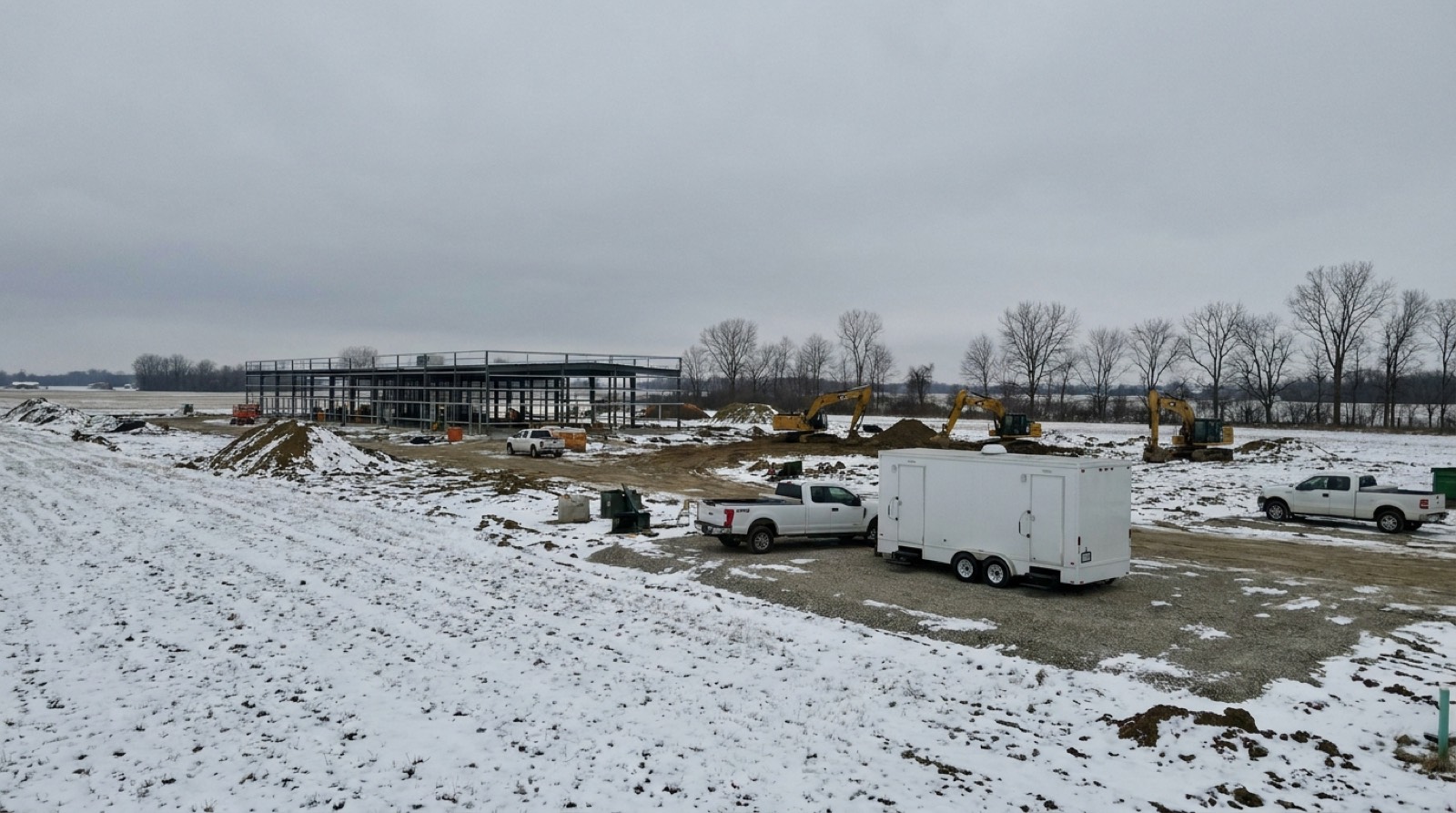
Winter makes everything harder. Incoming water in a cold climate can arrive twenty degrees colder than in summer, which cuts effective recovery. A trailer that performed fine in September can fall behind in January with no change in headcount. Spec for your coldest month.
How we size heat
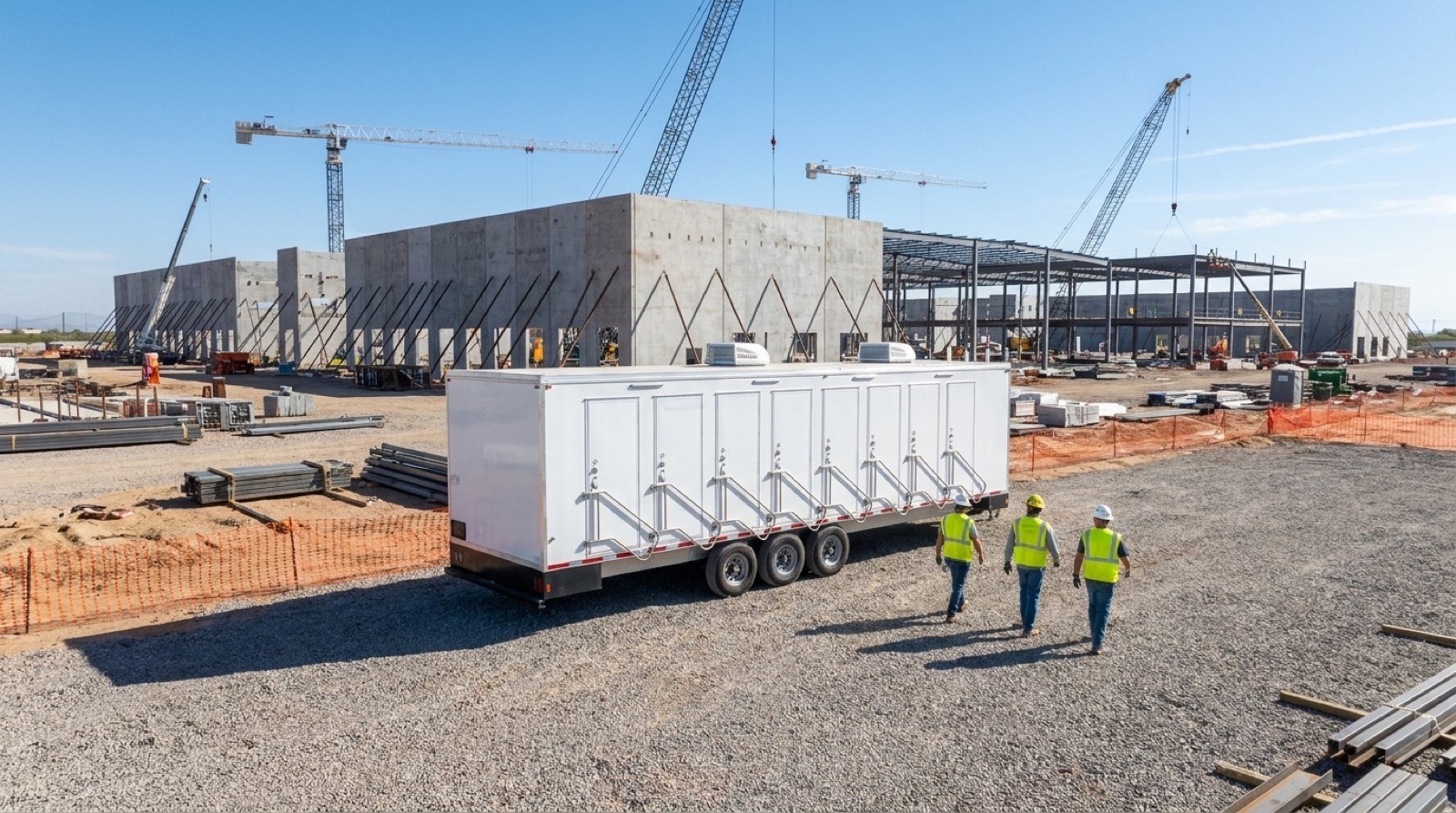
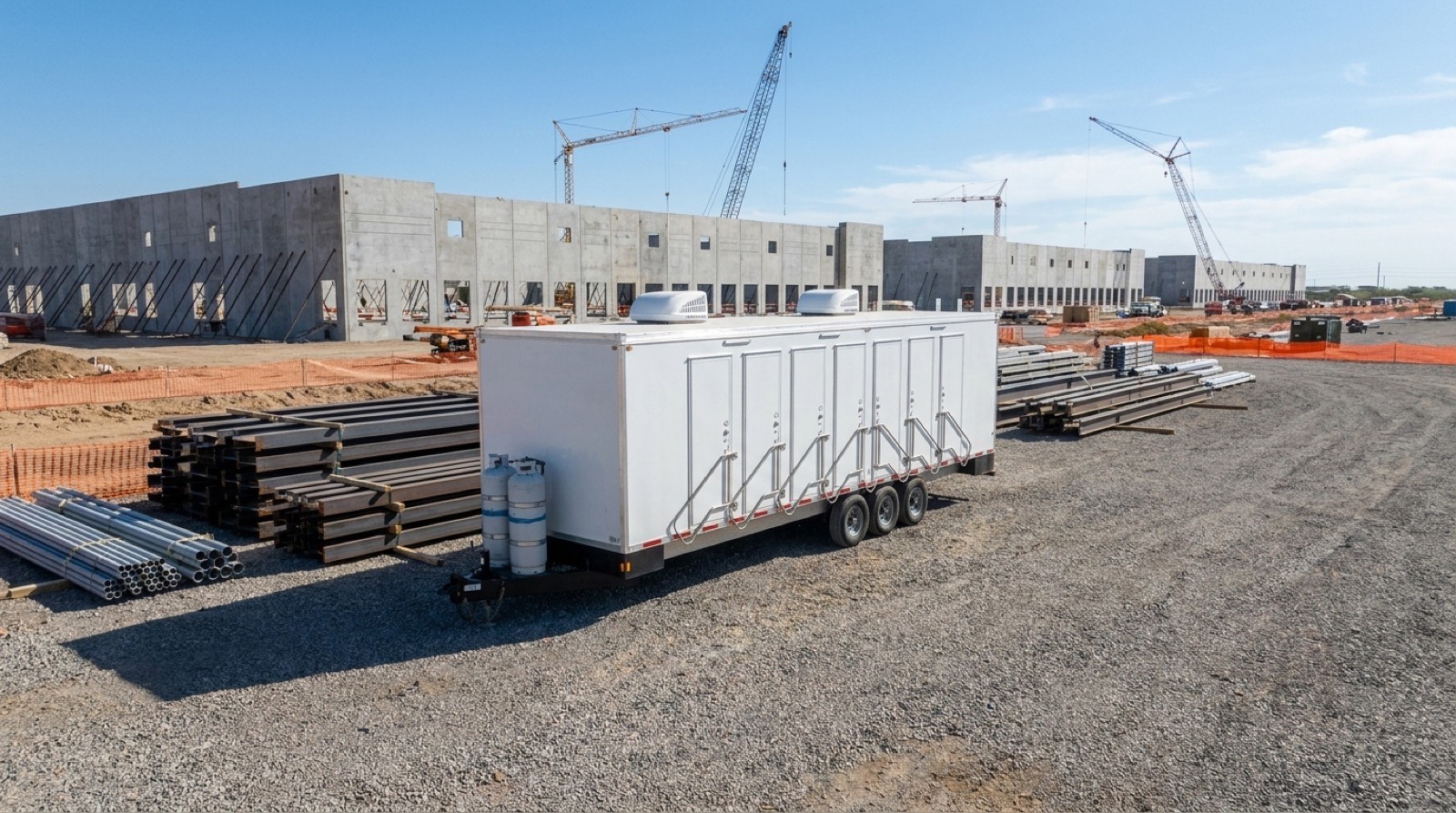
We start with peak showers per hour, multiply by gallons per shower, and match that to sustained recovery capacity with margin. Propane-fired systems give strong recovery without big electrical loads, which matters early in a build when temporary power is thin. Where site power is available, electric or hybrid setups reduce fuel deliveries. Either way, the target is the same. The last worker in line gets the same water temperature as the first.
Two details worth asking any vendor about. First, mixing valves that hold outlet temperature steady when multiple stalls run at once. Nobody should get scalded because a neighbor shut a tap. Second, freeze protection on the heater and supply lines, because a burst line in week one of a cold snap takes the whole trailer offline. Get these details right and hot water becomes something your crew never has to think about. That is the standard we hold our fleet to.