Refrigeration
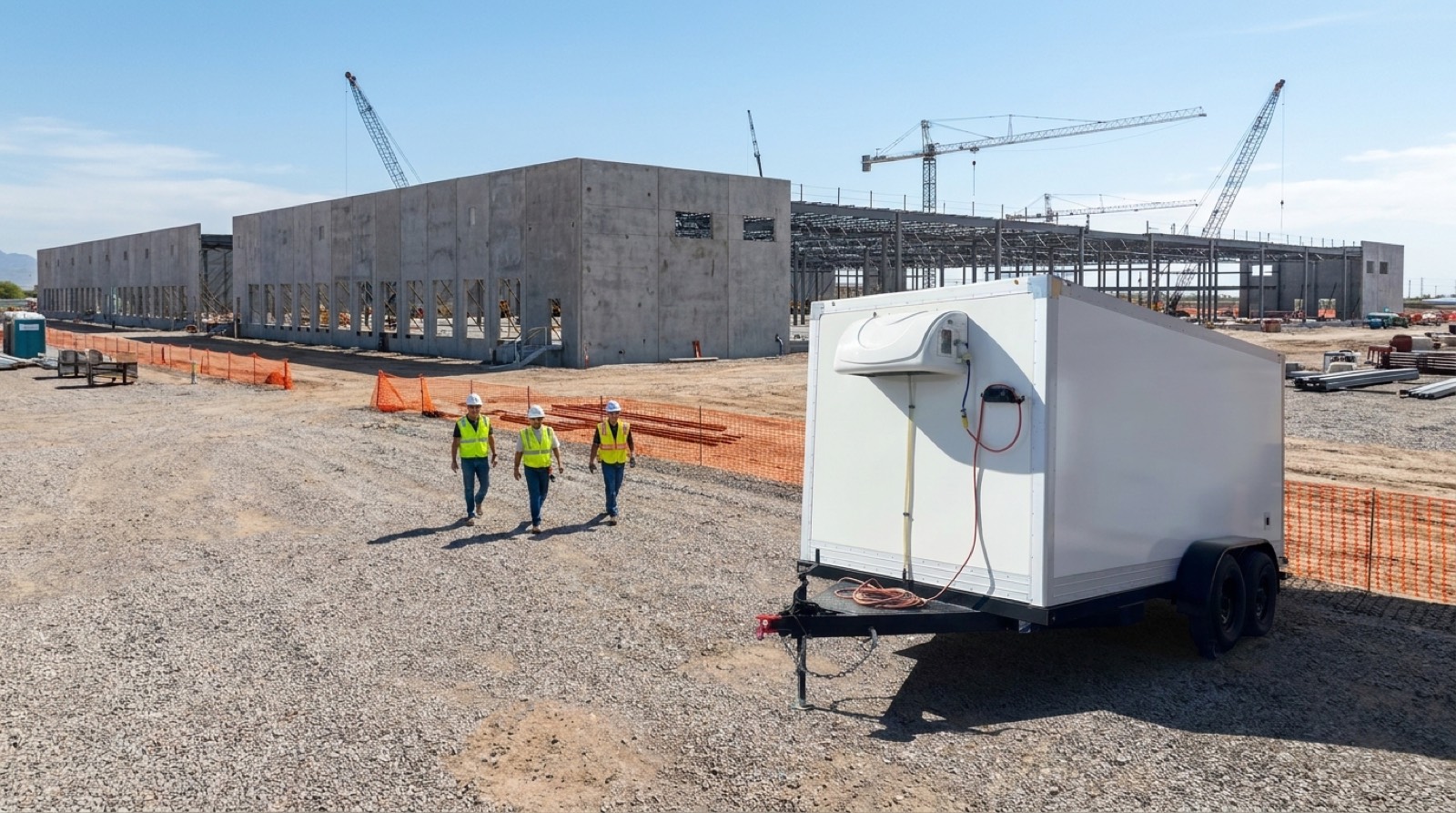
Refrigeration trailer rentals for data center sites
Cold storage at crew scale: catering for hundreds, ice programs for hot corridors, and temperature-sensitive materials that cannot sit in a conex in July.
Cold storage at crew scale: catering for hundreds, ice programs for hot corridors, and temperature-sensitive materials that cannot sit in a conex in July.
Large campus sites run catering programs that feed hundreds of workers a day, and food safety at that scale needs walk-in refrigeration on site. A refrigerated trailer at the food service area keeps the catering program legal and the food good, with freezer capacity where menus and volumes demand it.
Desert and Gulf-heat sites run ice programs alongside water: coolers refilled through the day, ice vests on some scopes, and volumes that a store run cannot sustain. Freezer trailers hold the ice supply on site so the heat program never waits on a delivery.
Certain adhesives, sealants, coatings and lab supplies carry storage temperature ranges that a steel conex in summer violates by breakfast. Refrigerated storage protects the material budget and the warranty paperwork at the same time.
Why contractors keep us
Any vendor can place units at mobilization. Performance shows up in month nine. Do pump-outs hold their interval under load? Does water get topped off before it runs out? Does an after-hours failure get fixed inside the same shift?
Sites that rent one unit type usually need three before the schedule is out of sitework. Bundling them under one contract means one route truck, one invoice and one number to call.
The paperwork side of the job needs a roof too. Office trailer rentals give supervision and inspections a place to meet without leaving the gate.
Extended-stay crews generate wash loads every week of the schedule. Laundry trailer rentals keep that cycle on site instead of in a hotel sink.
Restroom capacity anchors the plan. Restroom trailer rentals sit closest to the workface and set the service route that every other unit rides on.
Water is the first thing safety plans ask about. Hydration station rentals run on the same supply logistics as the rest of the package, so adding them costs one stop, not a second vendor.
Where we deploy
Heaviest concentration in the corridors carrying the most active data center construction, with nationwide mobilization beyond them.
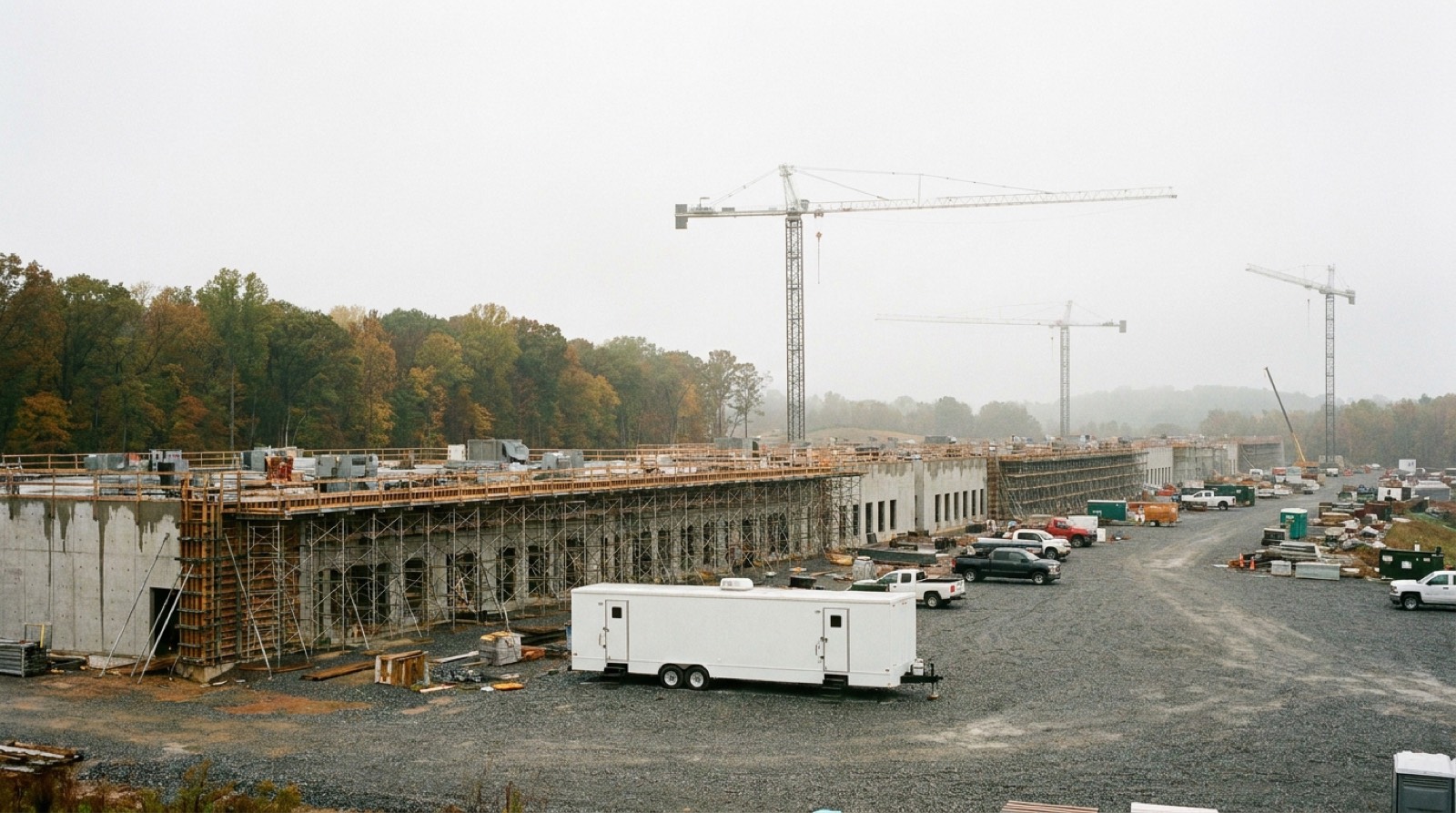
Loudoun County and Prince William run the densest data center concentration on earth. Multi-year campuses, badge-controlled access, crews in the hundreds, and facility requirements written into the subcontract.
View Northern Virginia →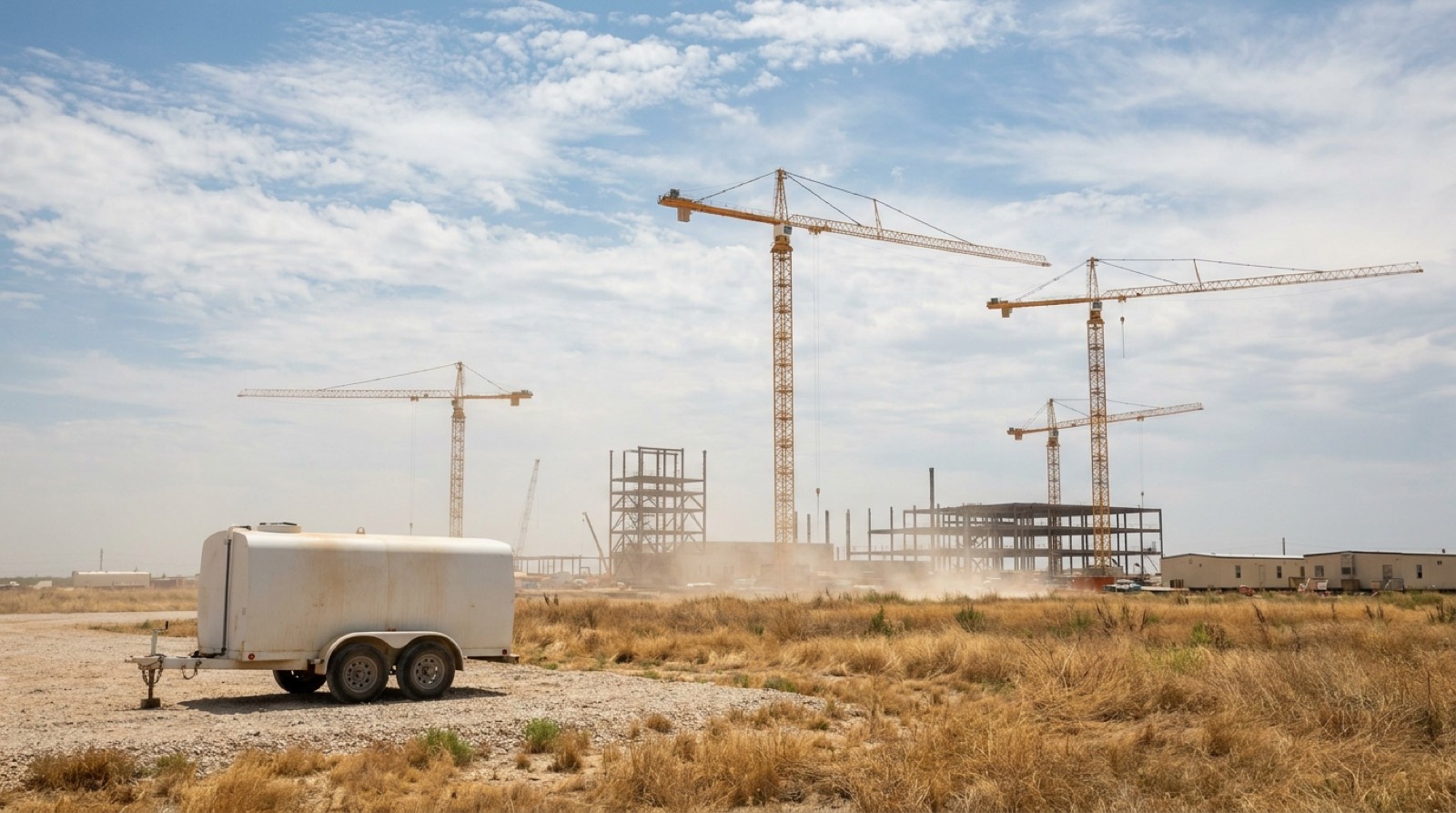
Dallas, Fort Worth, San Antonio and Abilene are carrying some of the largest campuses in the country. Summer heat makes hydration and shower capacity a safety line item, not an amenity.
View Texas →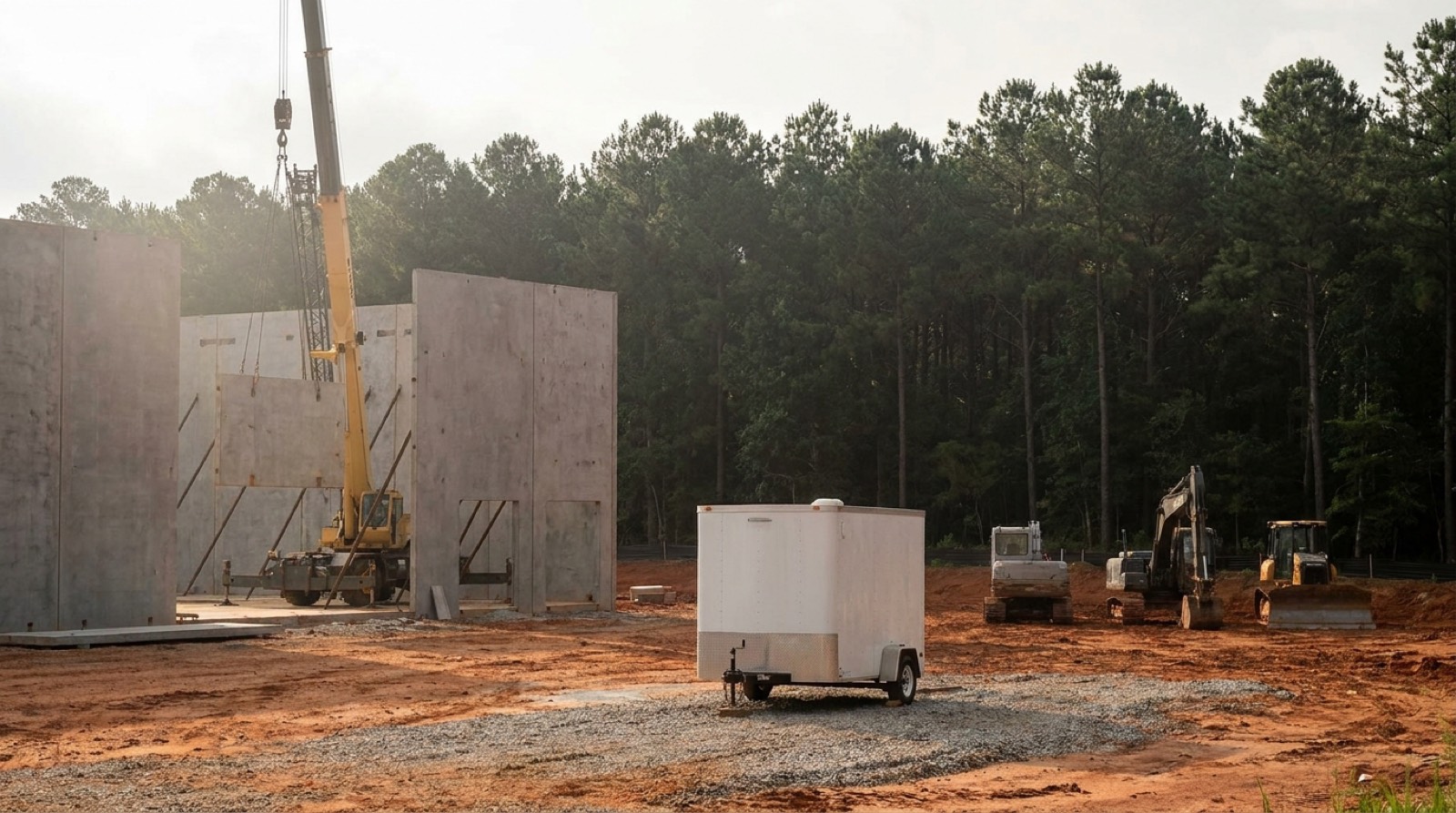
Atlanta metro and Douglas County, extending along I-20. Humid summers, long hauls between laydown and pad, and multi-phase schedules that keep facilities on site for years.
View Georgia →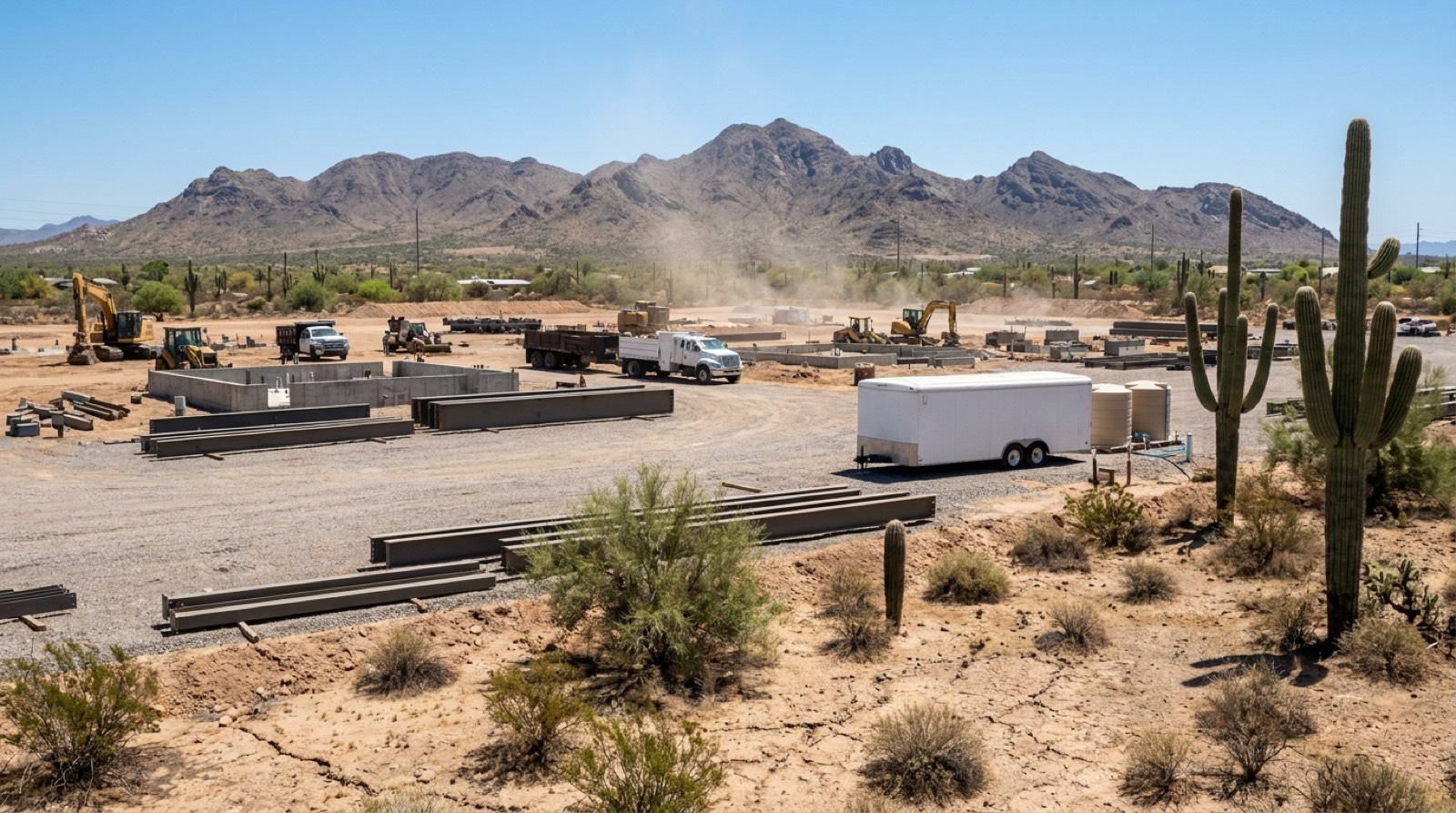
Phoenix and Mesa build through heat that regularly exceeds 110 degrees. OSHA heat-illness prevention drives water and shade requirements that our units satisfy directly.
View Arizona →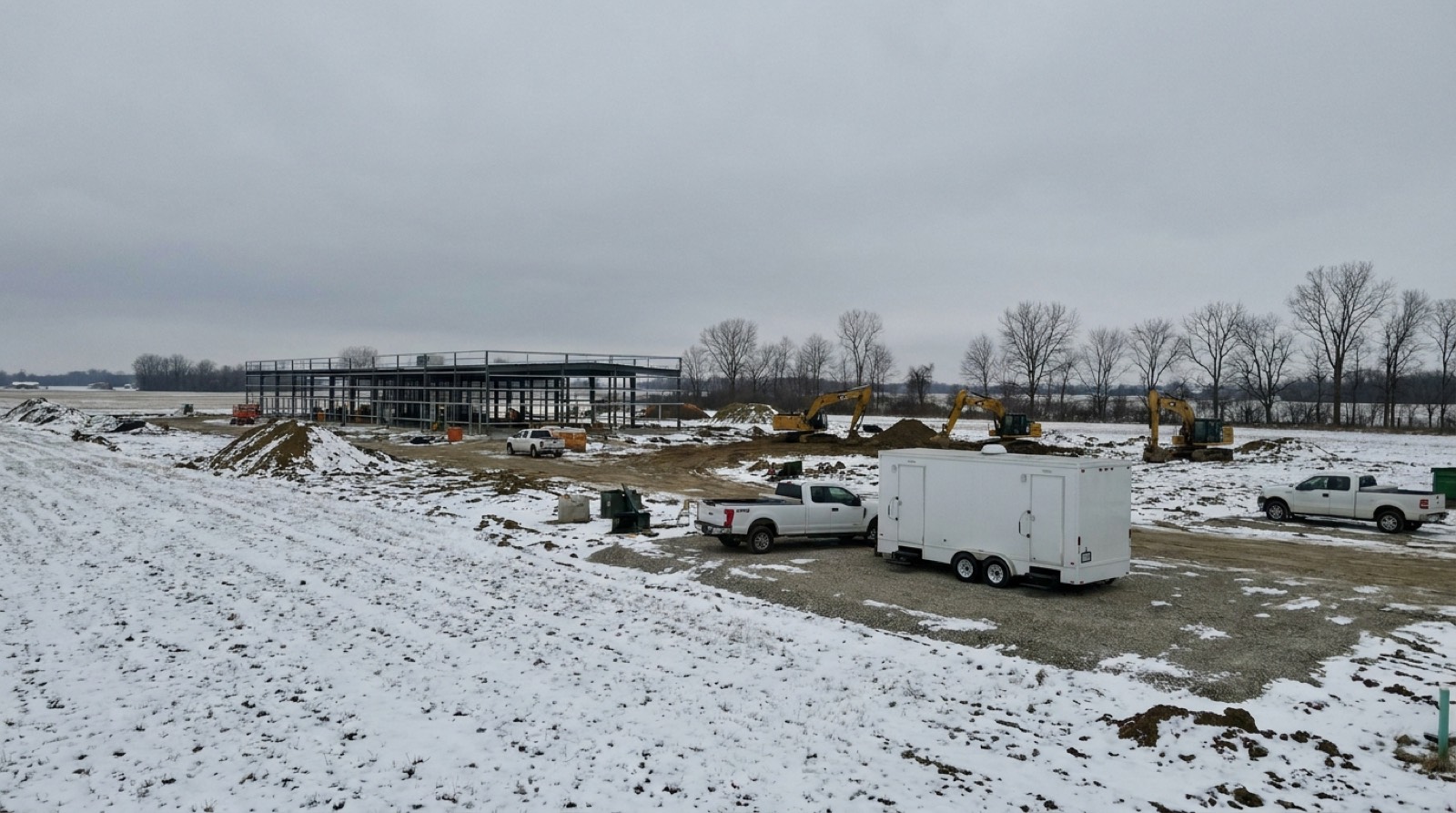
Columbus and New Albany. Freeze protection and winter service access matter here in a way Sun Belt corridors never see.
View Ohio →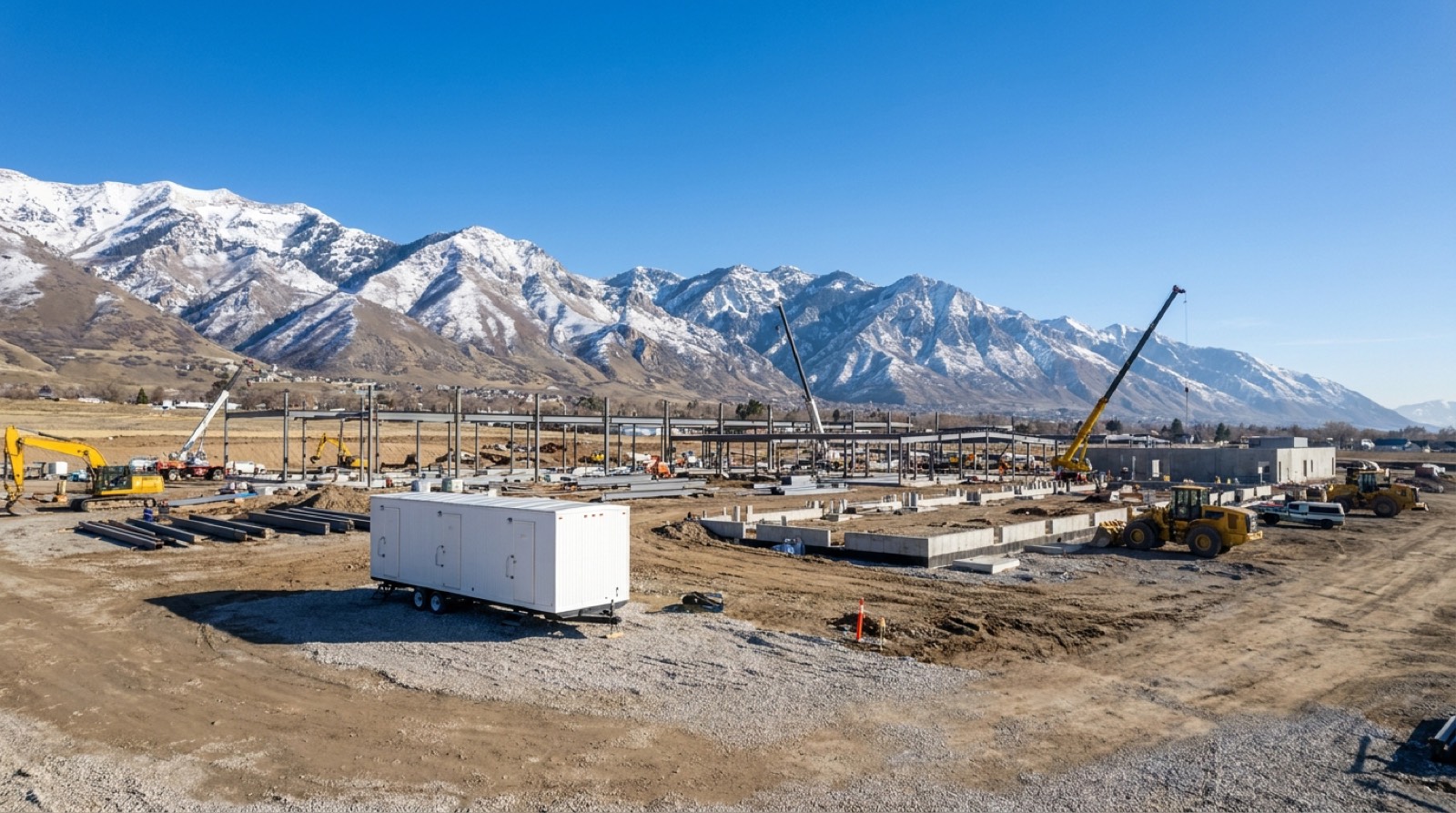
The Wasatch Front corridor runs through hard winters at elevation. Units are winterized and service intervals hold through snow.
View Utah →Questions we get
Refrigerated and freezer configurations cover standard cold-chain ranges, and units hold their setpoint in high ambient heat when specified for the corridor.
They run on site power where available or generator packages where it is not, specified in the deployment plan.
Configurations vary. Where the program needs both, we deploy the right mix of units rather than compromising either range.
Go deeper
Longer reads for teams writing the site plan. Open what applies to your build.
A data center site running 800 workers through lunch does not need the same cold storage as a site feeding 150. That sounds obvious. Yet most catering programs start by renting whatever trailer is available and then squeezing the food program into it. Work the problem in the other direction. Count the people you feed each day. Count the meals per person. Then figure out how many days of stock you want on hand between deliveries. Those numbers tell you the trailer size, not the other way around.
Meal counts on data center builds also move fast. A site at 300 workers in March can be at 900 by August when the trades stack up. If the caterer signed on to feed everyone, the cold storage has to grow with the badge count. Ask the general contractor for the manpower curve before you size anything.
We plan around one to one and a half cubic feet of usable refrigerated space per person fed, per day of stock held. Feed 400 people and hold two days of product, and you are looking at roughly 800 to 1,200 cubic feet of shelf space. That lands in the range of a mid size refrigerated trailer once you subtract airflow gaps and walkways. Usable space matters here. A trailer's rated volume includes air you cannot fill. Product stacked tight against walls and ceilings blocks circulation and creates warm pockets.
Delivery frequency is the biggest lever in the math. A site with daily food deliveries can run a smaller box. A site that gets one truck a week needs to hold seven days of product and should size up accordingly. Rural sites and fast growing markets often fall into the second bucket because distributors have not built routes out there yet.
Every catering program hits days that blow past the average. A big concrete pour brings extra crews to feed. A schedule crunch adds a second shift and a second meal service. If your cold storage runs at 95 percent full on a normal Tuesday, those days force food into coolers with bagged ice, and that is exactly where temperature control starts to slip. We tell customers to size for their busiest realistic week, then treat normal weeks as breathing room. The cost difference between trailer sizes is small compared to the cost of a food safety problem in front of 600 workers. Size once, size honestly, and the catering crew stops improvising with product that should never leave refrigeration.
Food safety rules were written with restaurants in mind, but bacteria read no signage. The band between 40 and 140 degrees is called the temperature danger zone. Perishable food left in that band grows bacteria fast, and the count climbs faster the longer the food sits. On a jobsite the exposure is real. Food gets staged in the sun, carried across a laydown yard, and served outdoors. Every one of those steps can push product into the zone.
The standing rule is simple. Cold food holds at 40 degrees or below. Frozen food holds at 0. Hot food holds at 140 or above. Anything perishable sitting between those marks is on a clock.
Health codes give perishable food about two hours in the danger zone before it should be tossed. When the ambient temperature is above 90 degrees, that window drops to one hour. Most data center construction happens in exactly those conditions. A Dallas or Phoenix lunch service in July runs on the one hour clock. That means the serving line needs to pull from cold storage in small batches instead of staging the whole meal at once. A refrigerated trailer parked near the serving point makes that possible. One parked at the far end of the site does not.
Deliveries need the same attention. Check product temperature at the truck before anything goes into your trailer. A pallet that rode warm for the last hour of the route will drag the whole box up while it cools. Reject perishable product that arrives above 40 degrees. Your trailer can hold temperature. It cannot undo hours of abuse that happened before the food reached the gate.
A rented refrigeration trailer holds a verified setpoint and gives the catering crew a cold anchor for the whole program. It solves storage. It does not solve handling. Doors propped open during a rush will lift the box temperature. Hot food loaded straight into a cold box will do the same while dumping condensation on everything nearby. Assign one person on the catering crew to own the trailer. That person checks the thermometer at set times, logs the readings, and keeps the door discipline honest. A cheap log sheet taped inside the door has saved more food programs than any piece of equipment we rent. Pair the trailer with calibrated probe thermometers at the serving line and the site is running restaurant grade temperature control in a dirt lot.
A refrigerated trailer holds product in the mid 30s, typically around 36 to 38 degrees. A freezer trailer holds at 0 or below. They look identical from the outside, and that causes problems. One box cannot do both jobs at once. Set a single trailer at 38 and your frozen proteins soften and your ice melts into the bags. Set it at 0 and your produce and dairy freeze solid, then turn to mush on thaw. When a catering program carries both fresh and frozen product, the honest answer is usually two boxes. A trailer built with separate zones does the same job on one pad.
Refrigerated space carries the daily working stock. That means proteins thawing for tomorrow, cut produce, dairy, condiments, and prepped trays. Beverages can ride in the fridge too, though on big sites they often deserve their own program. Freezer space carries the reserve. Cases of frozen protein and backup meals stay at 0 until the day before service, then move to the fridge to thaw under temperature control. That fridge thaw step matters. Thawing on a counter is the classic danger zone violation, and it gets worse outdoors in summer.
Ice deserves its own decision. Bagged ice stores in the freezer, but a heavy ice program can crowd out food. Sites running serious daily ice volume usually add a dedicated freezer trailer rather than making one box do both jobs badly.
Data center builds generate cold storage demand well beyond the lunch program. Certain sealants, adhesives, epoxies, and battery components arrive with storage temperature ranges printed by the manufacturer. The temptation is to slide a few cases of construction material into the food trailer because there is room. Do not do it. Food storage and materials storage should never share a box. A leaking container next to open food product is a contamination event, and most health authorities treat shared storage as a violation on its face. The fix is cheap. Rent a second trailer for materials and label both doors clearly. We set this up often on commissioning phase projects, where temperature sensitive materials show up by the pallet. Two clearly assigned boxes cost little more than one overstuffed one, and they keep the food program defensible when anyone asks how it is run. If the site is unsure which mix it needs, start with the food math first, then let the materials list drive the second box.
Numbers first. Most rental refrigeration trailers run on standard single phase power, commonly a 220 volt connection on a dedicated circuit. The compressor pulls its biggest load at startup, and that surge is what trips undersized circuits. Give the trailer its own breaker instead of sharing a spider box with tools and battery chargers. On a data center site there is usually plenty of temporary power capacity. The failures we see come from sharing, not from shortage. Confirm the receptacle type with your rental provider before delivery day so the electrician can have the drop ready. A trailer that sits unplugged for an afternoon while someone hunts an adapter is a trailer full of warming food.
Temporary power on a construction site goes down. Panels get reworked and feeders get moved. A refrigerated trailer with the doors kept shut will typically ride through a short outage on its own thermal mass. The box is insulated and the cold product inside acts like a battery. The real risk is the outage nobody notices, the one that starts Friday night and gets discovered Monday. Two defenses work. First, a temperature alarm or a simple daily log, so a warm box gets caught in hours instead of days. Second, a generator plan. Decide in advance which site generator picks up the trailer and who makes the connection. Write down where the cable runs. That takes ten minutes on a calm day. Improvising it during a weekend outage takes much longer, and the clock is running the whole time.
The trailer should sit close to the serving point, on level compacted ground, with the condenser end clear of walls and stored material. Level matters for drainage and door operation. Airflow matters because a condenser packed against a barrier recirculates its own hot exhaust and loses capacity on the hottest days, exactly when you need it most. Placement also has to respect the power source. Every extra hundred feet of cable adds voltage drop, and low voltage makes compressors run hot and fail early. The clean setup is a spot near the catering area with a dedicated drop from the nearest panel, agreed with the electrical contractor before the trailer ships. We walk this with the site team on delivery day, but the sites that plan it a week early always run the smoother program.