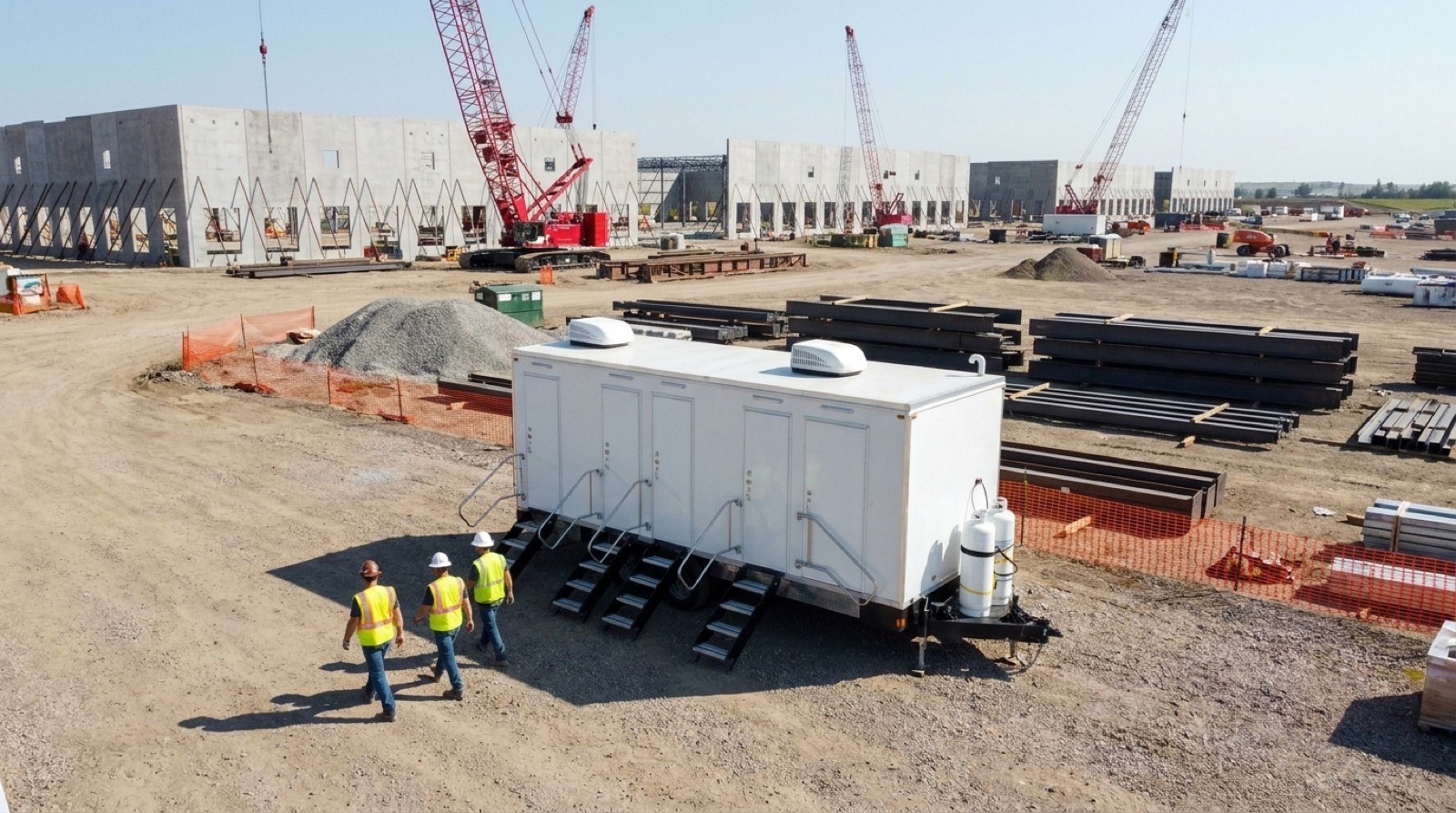
Laundry Trailers
Laundry trailer rentals for data center sites
Washer and dryer capacity for workforces that live on rotation, work in mud and dust, and do not have a laundromat within an hour of the site.
Washer and dryer capacity for workforces that live on rotation, work in mud and dust, and do not have a laundromat within an hour of the site.
Data center campuses in remote corridors run on traveling trades who live in man camps and extended stays for weeks at a stretch. Work clothes come off those sites soaked, muddy or dusted every single day. On-site washers and dryers keep a rotation workforce in clean gear without burning their one day off driving to a laundromat, and camps that offer it hold labor better than camps that do not.
We plan laundry from the actual math: crew size, rotation length and loads per worker per week. Machines, water supply and gray water handling all scale from that number, and service intervals keep detergent stocked and machines turning.
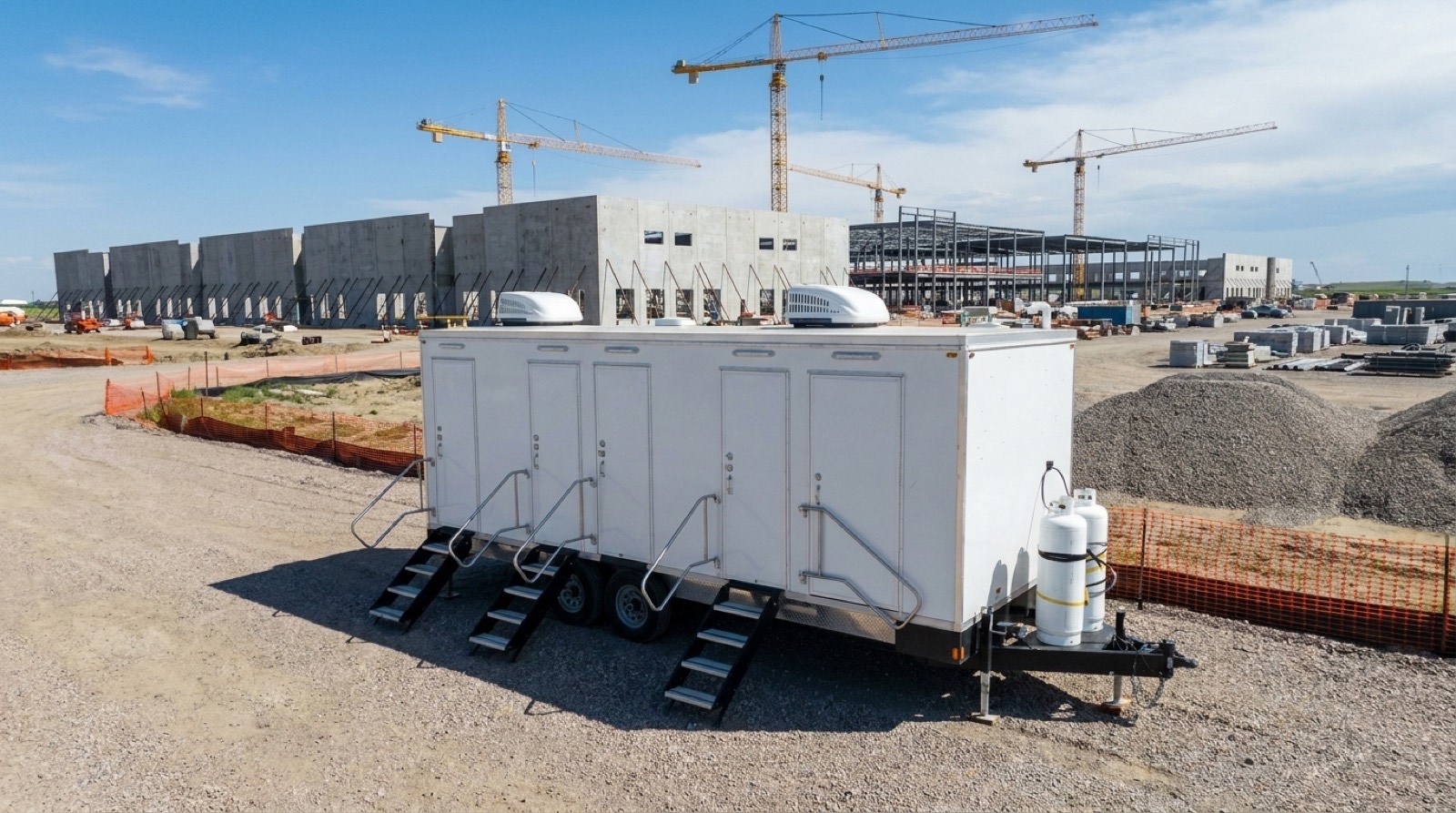
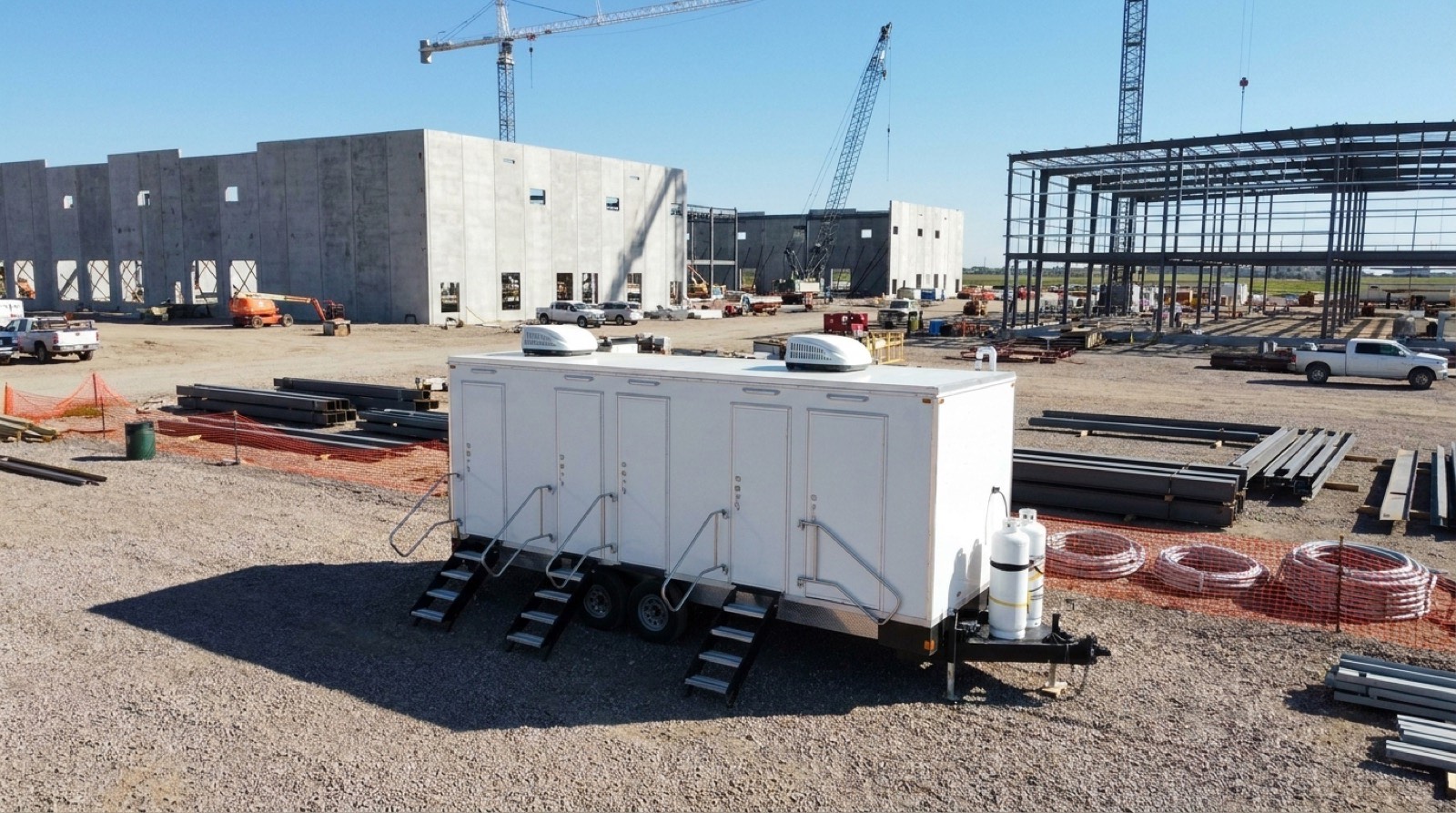
Combined shower, restroom and laundry trailers put the whole end-of-shift routine in one placement. On sites where laydown is precious, one pad connection does the work of three.
Why contractors keep us
Any vendor can place units at mobilization. Performance shows up in month nine. Do pump-outs hold their interval under load? Does water get topped off before it runs out? Does an after-hours failure get fixed inside the same shift?
Sites that rent one unit type usually need three before the schedule is out of sitework. Bundling them under one contract means one route truck, one invoice and one number to call.
Where crews rotate in from out of the area, the end of shift is its own rush hour. Shower trailer rentals carry that peak so the workforce goes home clean.
The paperwork side of the job needs a roof too. Office trailer rentals give supervision and inspections a place to meet without leaving the gate.
Food service and ice programs live or die on cold storage at the pad. Refrigeration trailer rentals hold setpoint through the local season.
Restroom capacity anchors the plan. Restroom trailer rentals sit closest to the workface and set the service route that every other unit rides on.
Where we deploy
Heaviest concentration in the corridors carrying the most active data center construction, with nationwide mobilization beyond them.
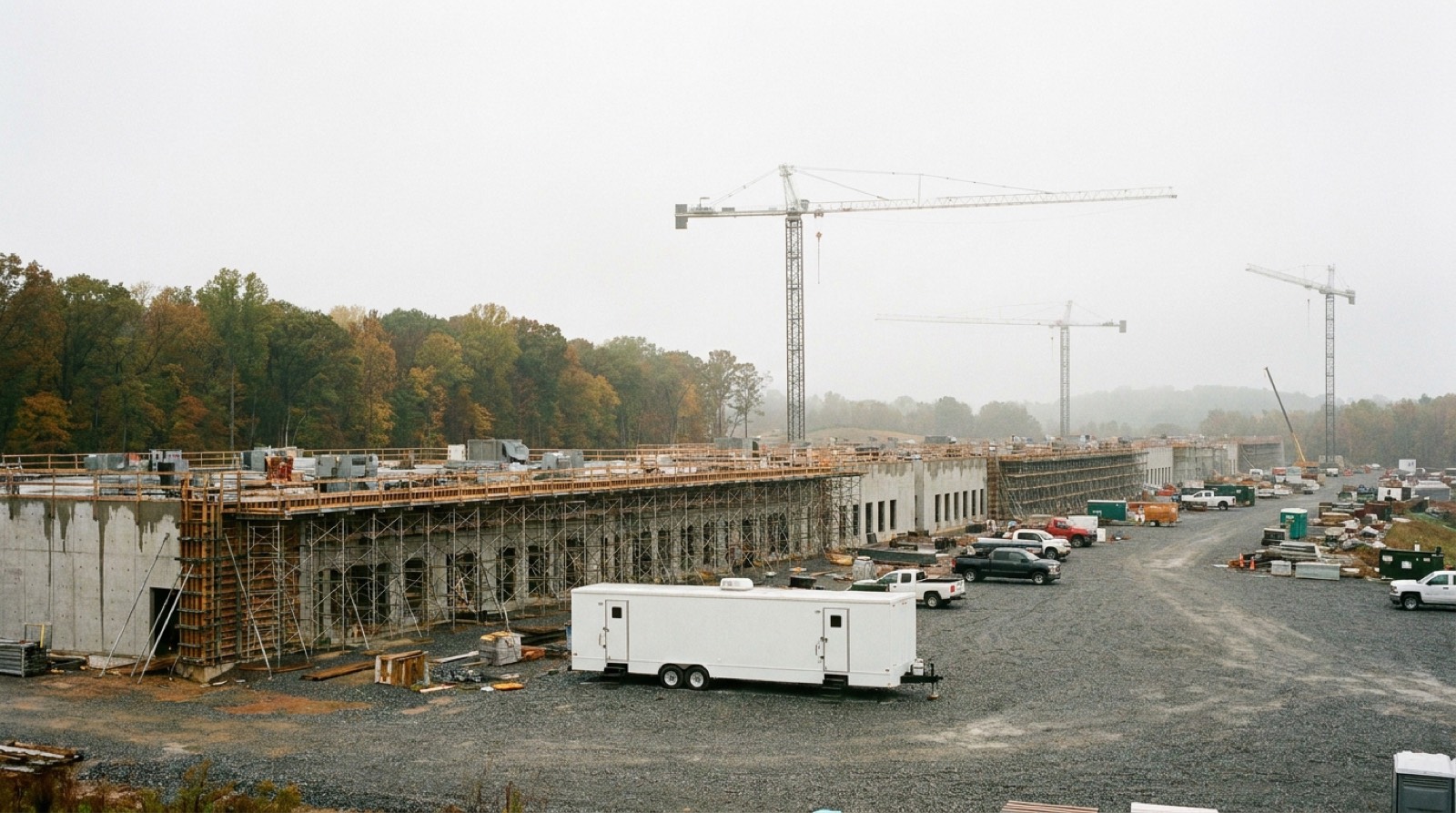
Loudoun County and Prince William run the densest data center concentration on earth. Multi-year campuses, badge-controlled access, crews in the hundreds, and facility requirements written into the subcontract.
View Northern Virginia →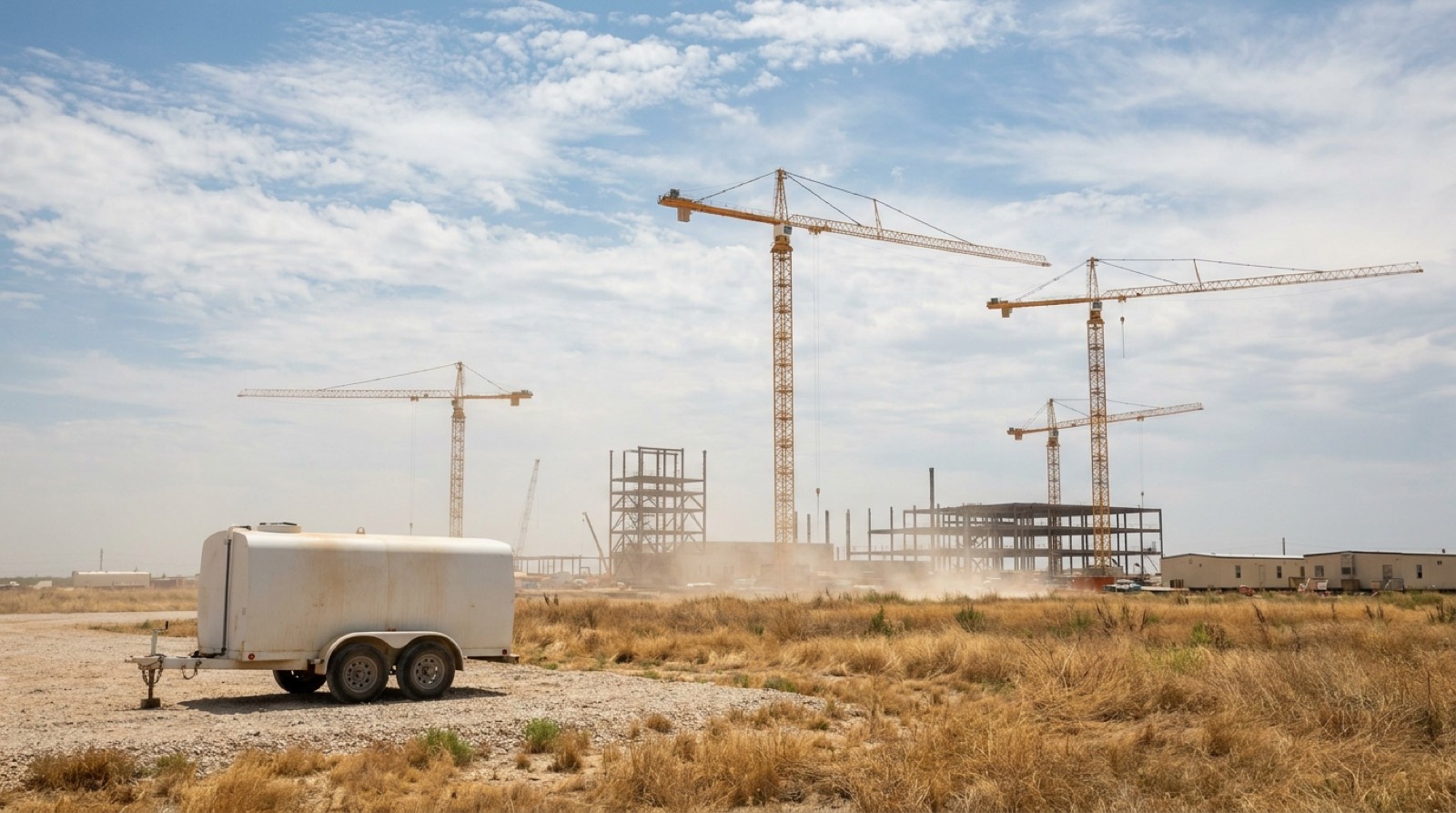
Dallas, Fort Worth, San Antonio and Abilene are carrying some of the largest campuses in the country. Summer heat makes hydration and shower capacity a safety line item, not an amenity.
View Texas →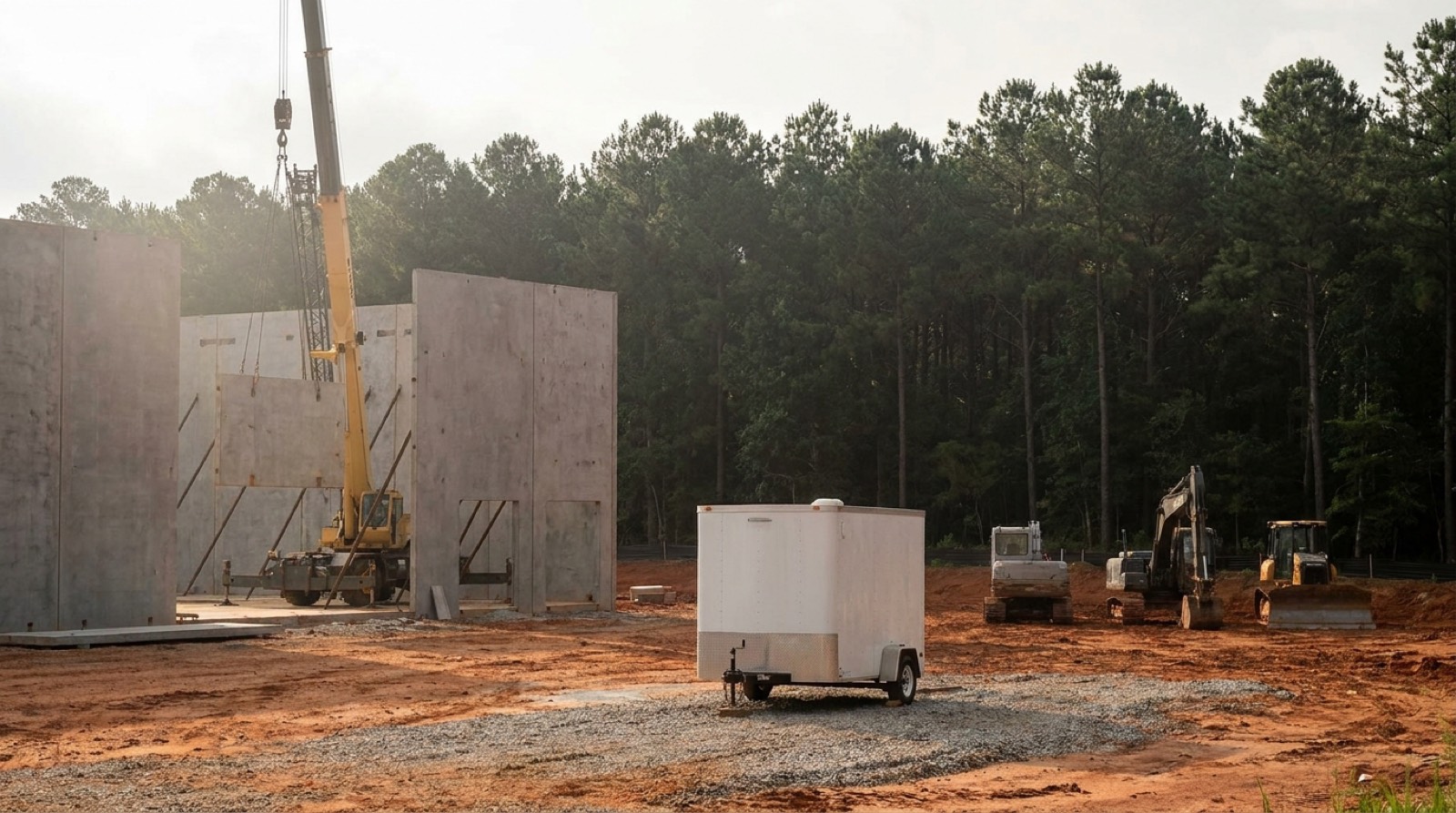
Atlanta metro and Douglas County, extending along I-20. Humid summers, long hauls between laydown and pad, and multi-phase schedules that keep facilities on site for years.
View Georgia →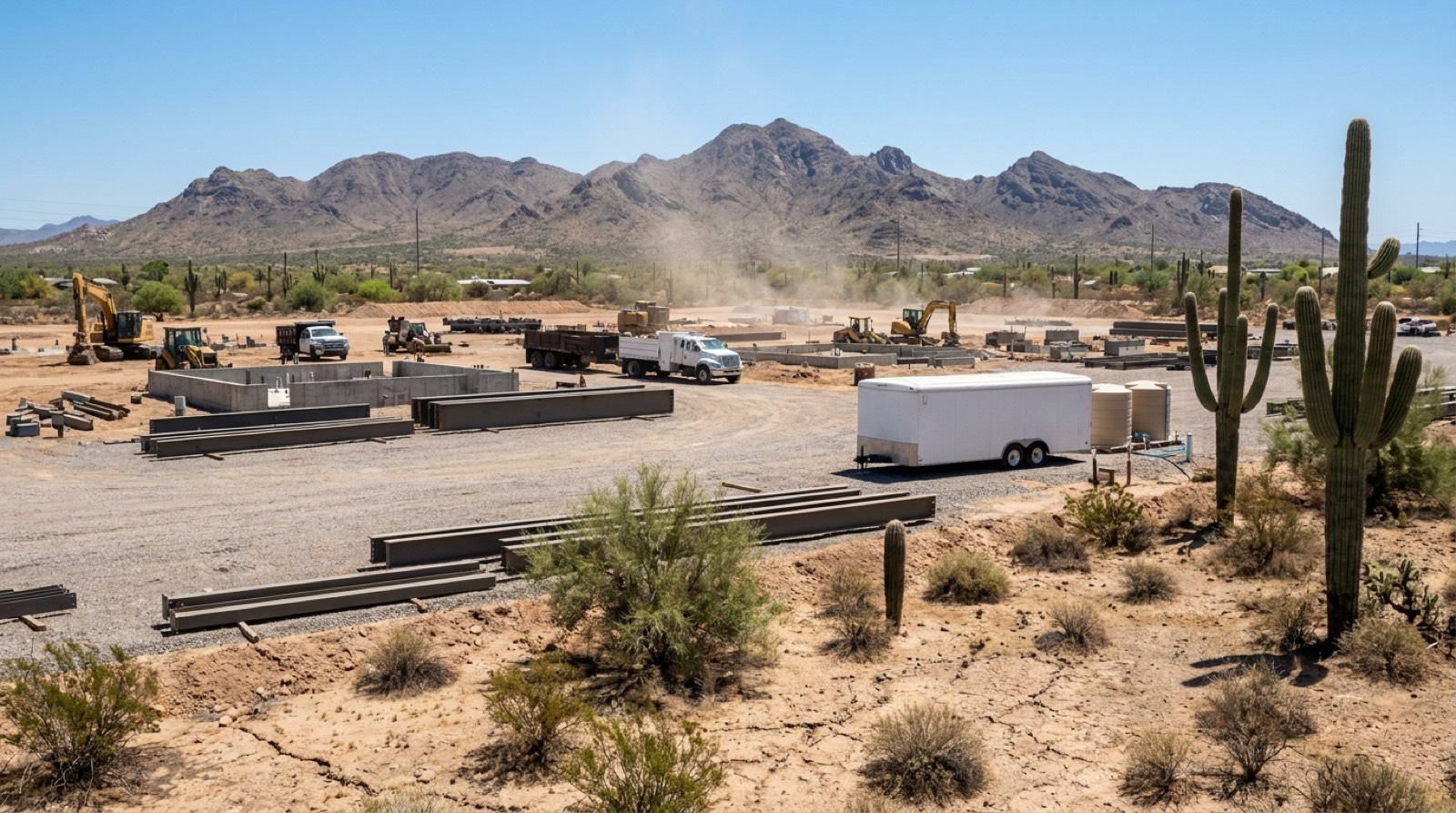
Phoenix and Mesa build through heat that regularly exceeds 110 degrees. OSHA heat-illness prevention drives water and shade requirements that our units satisfy directly.
View Arizona →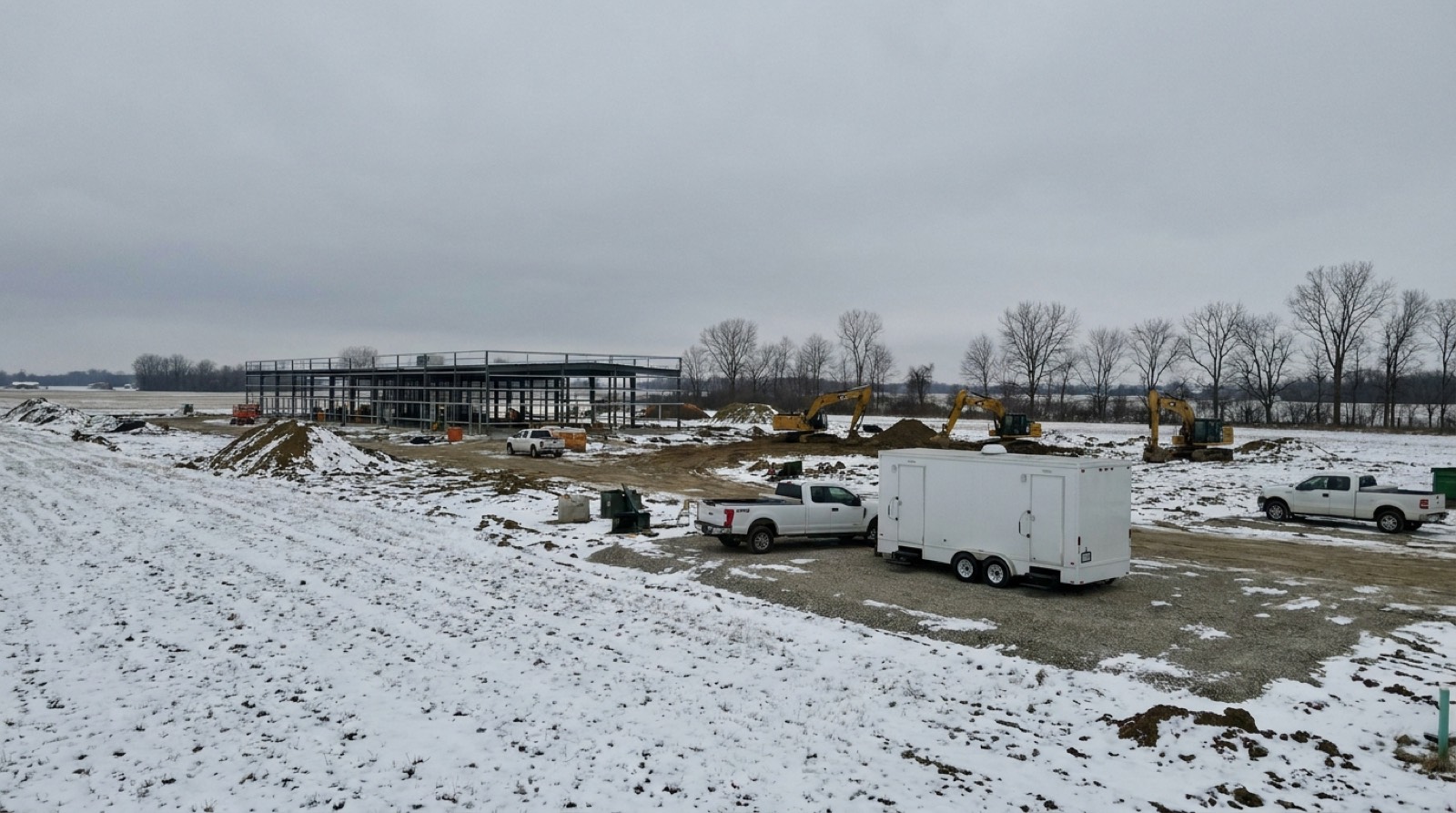
Columbus and New Albany. Freeze protection and winter service access matter here in a way Sun Belt corridors never see.
View Ohio →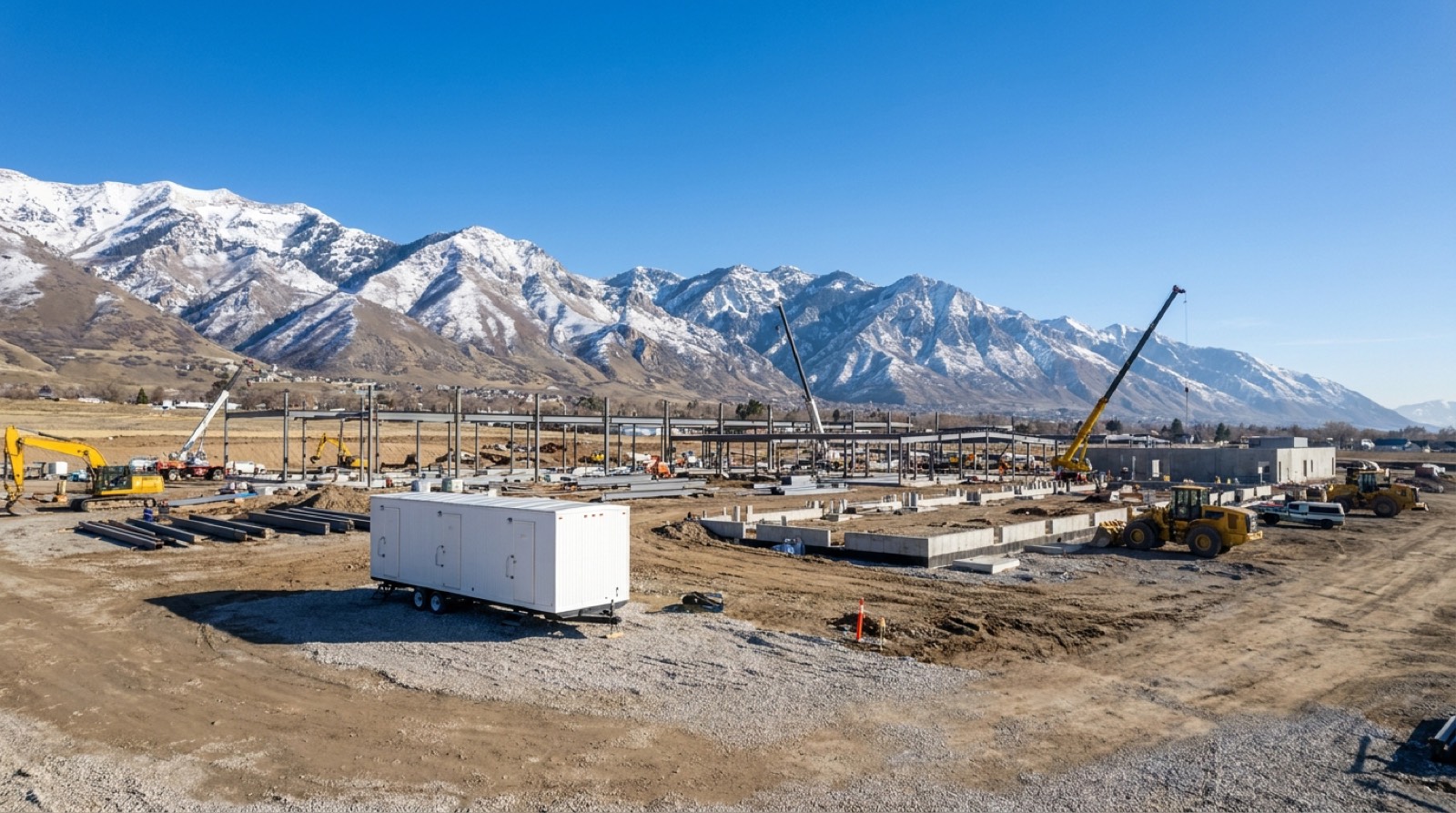
The Wasatch Front corridor runs through hard winters at elevation. Units are winterized and service intervals hold through snow.
View Utah →Questions we get
Plan from loads per week: crew size times rotation length times roughly two loads per worker. We run the math from your roster and size machine count to it.
Water supply and power, or self-contained operation with tanks and generator on greenfield sites, with gray water pumped on the contracted route.
Yes. Shower, restroom and laundry combinations put the full end-of-shift routine in one placement, which suits tight laydown plans.
Go deeper
Longer reads for teams writing the site plan. Open what applies to your build.
One worker on a data center build produces two to three washer loads a week. Work clothes make up most of it. Add towels and bedding for crews in camp housing and the number climbs fast. A 400-person site can push past a thousand loads a week. That volume does not fit in hotel guest laundry rooms. It does not fit in the laundromats near the site either. Somebody has to plan for that volume on purpose, and the plan starts with simple arithmetic.
The math sets everything else. Machine count, water supply, drain capacity, and service schedule all flow from one loads-per-week figure. We ask for headcount and housing type before we quote a trailer. Guessing leads to lines at the machines. Lines are how a laundry amenity fails.
A commercial washer clears a cycle in about 30 minutes. A dryer needs 45 to 60 minutes for heavy work clothes. Each washer can clear roughly 25 loads in a long day. Each dryer clears fewer. That gap is why laundry systems bottleneck at the dryer instead of the washer.
Take the weekly load count and divide it by the hours the trailer is actually busy. Crews wash after shift, so demand stacks into evenings and days off. Plan machine count for the peak window, not the weekly average. A trailer that keeps up on Tuesday afternoon and fails on Sunday morning still fails.
Data center builds staff up in waves. Sitework crews hand off to structure. Then the fit-out push arrives and headcount peaks. Electrical and mechanical trades can double the badge count in a single quarter. The laundry plan that fits month three will be undersized by month nine if nobody looked at the schedule.
We size against the staffing curve in the project plan, not against the parking lot on the day we visit. When the peak wave lands, adding a second trailer next to the first is a one-day job. The cheap mistake is sizing to today. The expensive mistake is a full crew that stops trusting the machines and starts burning evenings in town again. Run the math once with the peak in view, then revisit it whenever the schedule shifts. The trailer will earn its spot for the whole build.
Clothes coming off a data center site carry concrete dust, cutting fluid, red dirt, and diesel film. A residential washer is built for none of that. Its bearings, seals, motors, and drain paths expect lint and light soil. Feed it construction laundry seven days a week and it starts eating itself within months. We learned early that machine selection decides how a laundry trailer ages.
Commercial-duty machines are rated by cycles, not years. A home washer is designed for a few hundred cycles a year. A commercial unit is built for thousands. On a busy site a single machine can run ten cycles a day. Only equipment rated for that duty holds up, so that is what we install.
Heavy soil needs mechanical action and hot water. Look for machines with a true heavy-soil cycle that extends wash time instead of just adding water. Stainless drums shrug off grit that scars plastic tubs. High-speed extraction matters more than people expect. The more water spun out of a load, the less work the dryer has to do, and dryers are always the bottleneck.
Drain design matters just as much. Construction laundry sheds sand and fiber that settle in traps and pump housings. Machines with accessible drain filters can be cleaned on a service visit in minutes. Machines without them slowly choke and get blamed for bad wash results.
Work gear is heavy and layered. Much of it is flame-resistant fabric, and that material dries slowly. A dryer that handles bath towels fine can leave a duck jacket damp after a full cycle. Look for high airflow ratings and large drum volume so heavy loads tumble freely. A cramped drum turns a 50-minute dry into an 80-minute one, and every stalled dryer backs up the whole room.
Lint control is the other survival trait. Construction fabrics shed hard, and clogged lint paths cut airflow and raise fire risk. Wide, easy-access lint screens get cleaned between loads. Buried ones do not. We spec machines a crew can keep running with basic habits, then back them with scheduled service. That combination is what keeps a trailer working in month fourteen the way it worked in week one. Specs on paper only matter if they hold up in the field, and these are the ones that do.
A commercial washer uses 25 to 40 gallons per cycle. Multiply that by a few hundred loads a week and a laundry trailer becomes one of the larger water users on a construction site. That is not a problem. It is just a number that has to be planned for before the trailer shows up, not after.
The supply question comes down to source and pressure. Some sites tie into a temporary construction meter. Others run from storage tanks refilled by water truck. Both work. What does not work is a garden hose off a distant spigot with pressure that sags every time another trade opens a valve. We walk the site plan with the GC and confirm flow before we commit to a layout, because fixing pressure problems after delivery is twice the work.
Every gallon in becomes a gallon out, and wash water counts as graywater. Depending on the site it can go to a sewer tie-in or a holding tank on a pump-out schedule. Some sites use a permitted discharge point instead. The wrong answer is letting it find its own path across a laydown yard. That draws attention nobody wants.
Holding tanks are the common setup on greenfield data center sites where utilities lag the schedule. The sizing rule is simple. Tank capacity should cover the heaviest wash day plus a missed pump-out. Service that never gets tested by a holiday weekend was sized right.
The best trailer location balances three different pulls. Crews want it near parking or the camp. Water and drain want short runs. Site logistics want it out of crane paths and delivery routes. A spot thirty feet from a utility tie can save real money on hose runs and heat tape, and it trims pump-out costs over a long build.
We stake the location with the site team before delivery and put the utility runs on paper. Cold climates add one more line item, insulating and heat-tracing every exposed run so the first freeze does not shut the room down. Get the boring utility details right and the laundry trailer disappears into the background of the site, which is exactly where it belongs. The crews just see machines that fill fast and drain clean, and that is the whole point.
Here is the rule of thumb we plan around. A washer finishes in half an hour. A dryer full of work clothes needs closer to an hour. Pair machines one to one and wet laundry piles up on the folding table by mid-evening. The room looks broken even though every machine is running fine.
That is why our trailers carry more dryer capacity than washer capacity. The industry habit of matching washers and dryers one for one comes from home laundry, where loads are light and nobody is waiting in line. Construction laundry flips the ratio. Heavy denim, insulated layers, damp towels, and doubled loads all stretch dry times. The dryers set the pace of the whole room.
Watch a laundry trailer on a Sunday and the pattern is obvious. Workers start a wash, walk away, then come back on the buzzer. The washer-to-dryer handoff is where the system jams. If a dryer is not open when the wash ends, the load sits. The next person pulls it out and sets it somewhere. Now there are damp clothes on a table and an annoyed crew member, and the story spreads through camp by dinner.
Extra dryer capacity absorbs that friction. When there is almost always an open dryer, the room self-manages. Nobody polices it. Nobody posts rules. The hardware does the scheduling. That is worth more than any laminated sign about laundry etiquette.
For a standard crew washing work clothes, we plan around three dryers for every two washers as a floor. Sites with heavy gear push the ratio higher. Winter builds with insulated layers, humid regions where nothing line-dries, and camps washing bedding in bulk all lean harder on dryers.
The washer count still matters, but it is the easy half of the problem. Washers rarely queue for long because their cycles are short. When we audit a site with laundry complaints, the fix is almost never more washers. It is more dryer hours, from more machines or better lint discipline or both. Buy dry time. That is the capacity that keeps a crew loyal to the trailer. When we spec a site, the dryer bank is the first number we settle, and every other machine count follows from it.