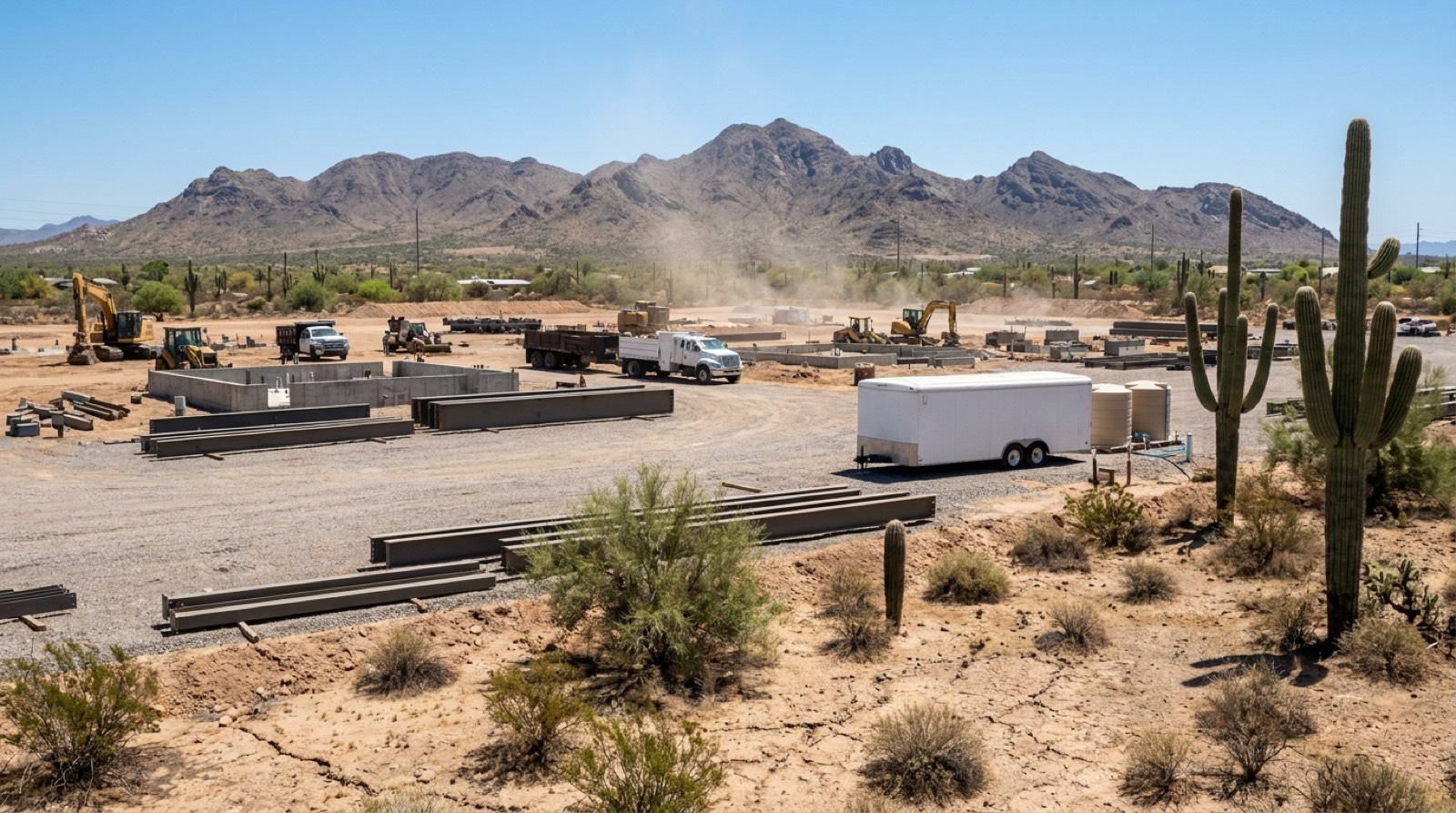
Arizona
Laundry trailer rentals for Arizona data center sites
Daily dust and sweat loads for desert rotation crews, with wash capacity that keeps up when every shift ruins every layer.
Daily dust and sweat loads for desert rotation crews, with wash capacity that keeps up when every shift ruins every layer.
Arizona sites coat gear in dust and soak it in sweat before lunch, every day, all summer. For rotation crews living near the site, daily wash access is the difference between a livable month and a miserable one. Machine counts here run higher per worker than mild-climate sites because nothing gets worn twice.
Laundry is a water program in a place that respects water. High-efficiency machines, supply planned alongside hydration and shower logistics, and gray water handled on the contracted route keep the program responsible and running.
Dryers in a 110 degree ambient need ventilation planned, not improvised. Placement and power specs account for desert heat so the equipment survives the season it serves.
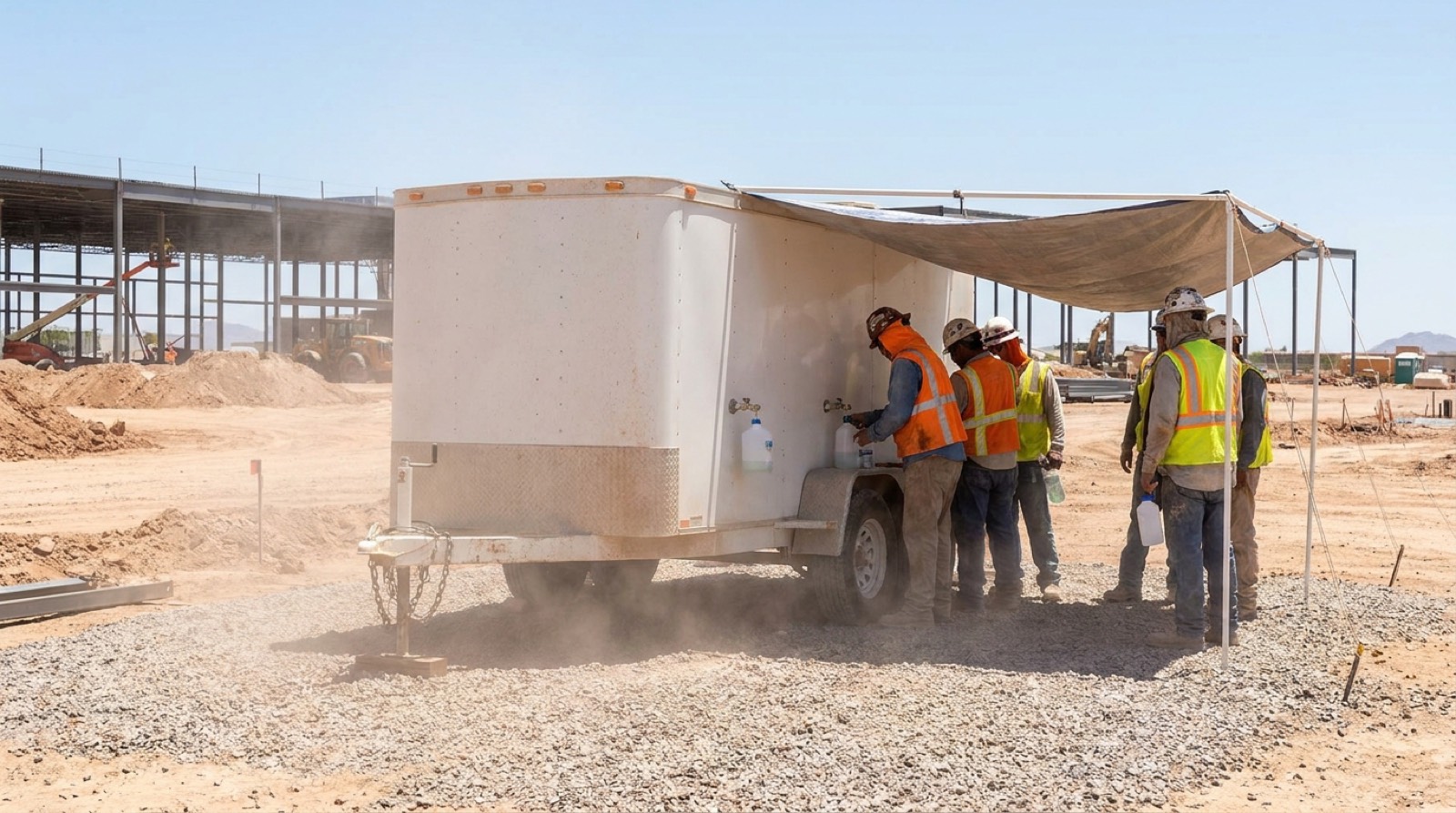
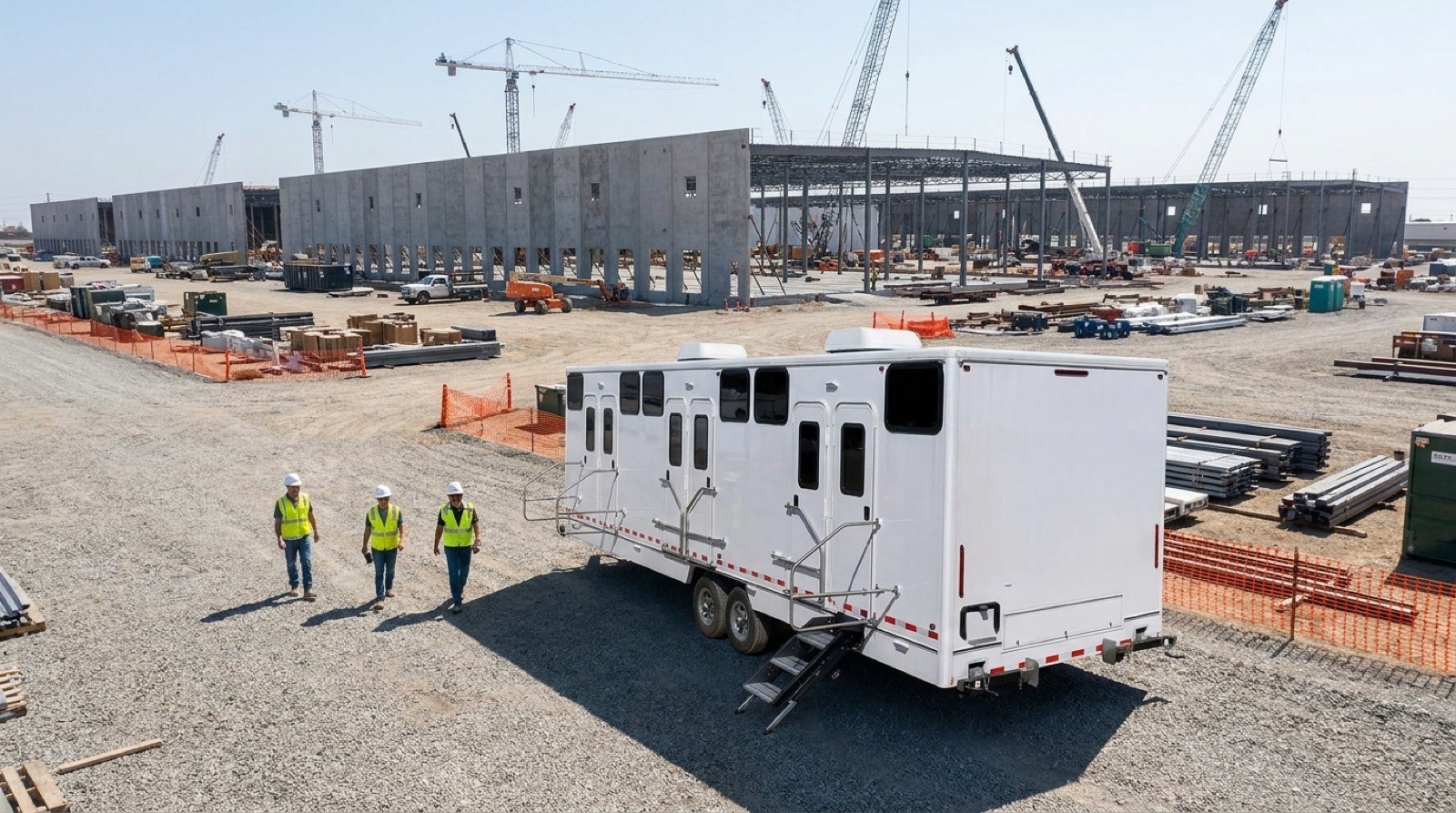
Most Arizona deployments bundle several units under one route. One contracted vendor, one dispatch, one escalation path, and a site plan that arrives already coordinated.
Restroom capacity anchors the plan. Restroom trailer rentals in Arizona sit closest to the workface and set the service route that every other unit rides on.
Water is the first thing safety plans ask about. Hydration station rentals in Arizona run on the same supply logistics as the rest of the package, so adding them costs one stop, not a second vendor.
Where crews rotate in from out of the area, the end of shift is its own rush hour. Shower trailer rentals in Arizona carry that peak so the workforce goes home clean.
The paperwork side of the job needs a roof too. Office trailer rentals in Arizona give supervision and inspections a place to meet without leaving the gate.
Food service and ice programs live or die on cold storage at the pad. Refrigeration trailer rentals in Arizona hold setpoint through the local season.
The full reach of our laundry trailer rentals program runs beyond Arizona, covering every corridor we serve.
Where we deploy
Heaviest concentration in the corridors carrying the most active data center construction, with nationwide mobilization beyond them.
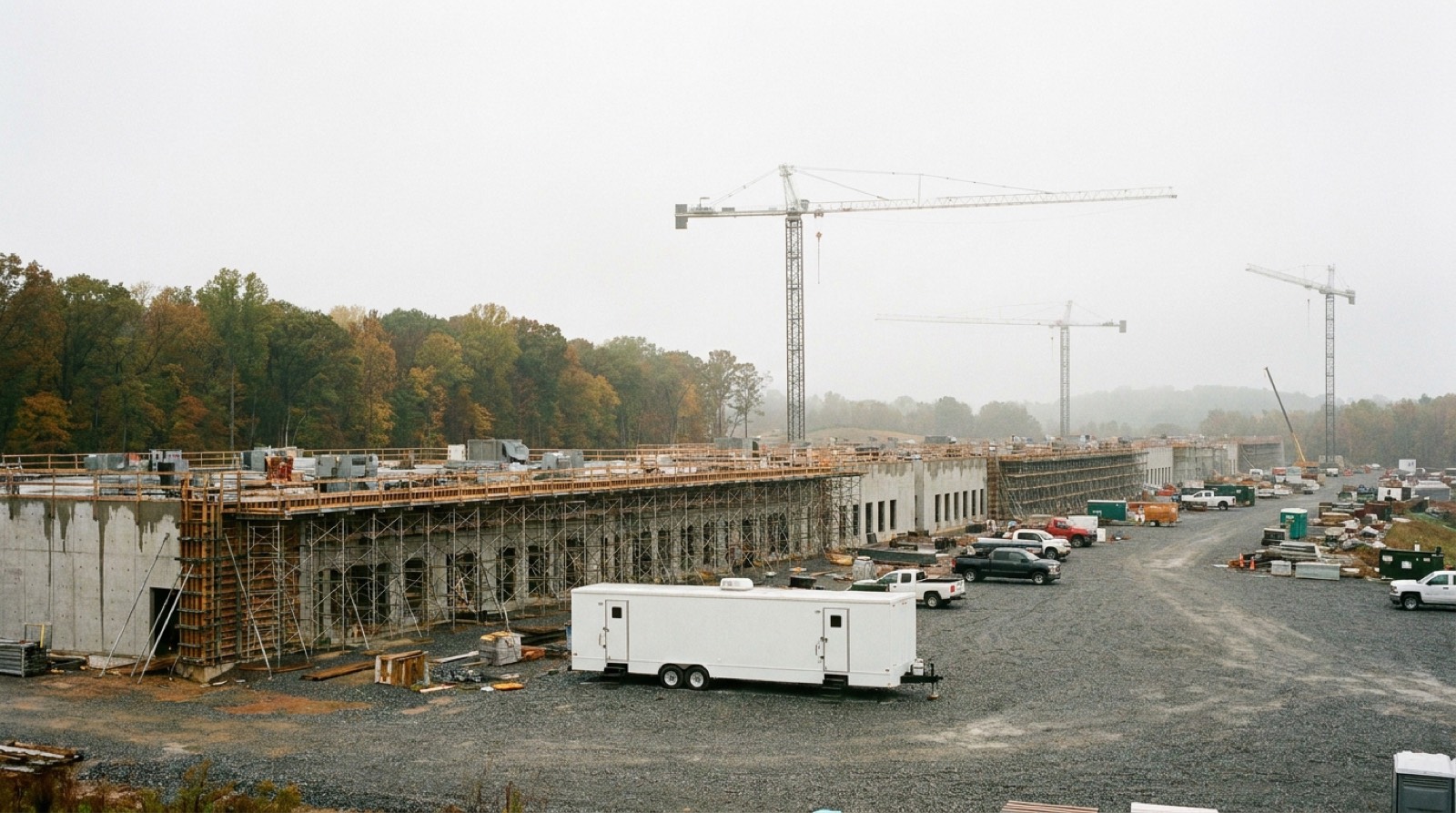
Loudoun County and Prince William run the densest data center concentration on earth. Multi-year campuses, badge-controlled access, crews in the hundreds, and facility requirements written into the subcontract.
View Northern Virginia →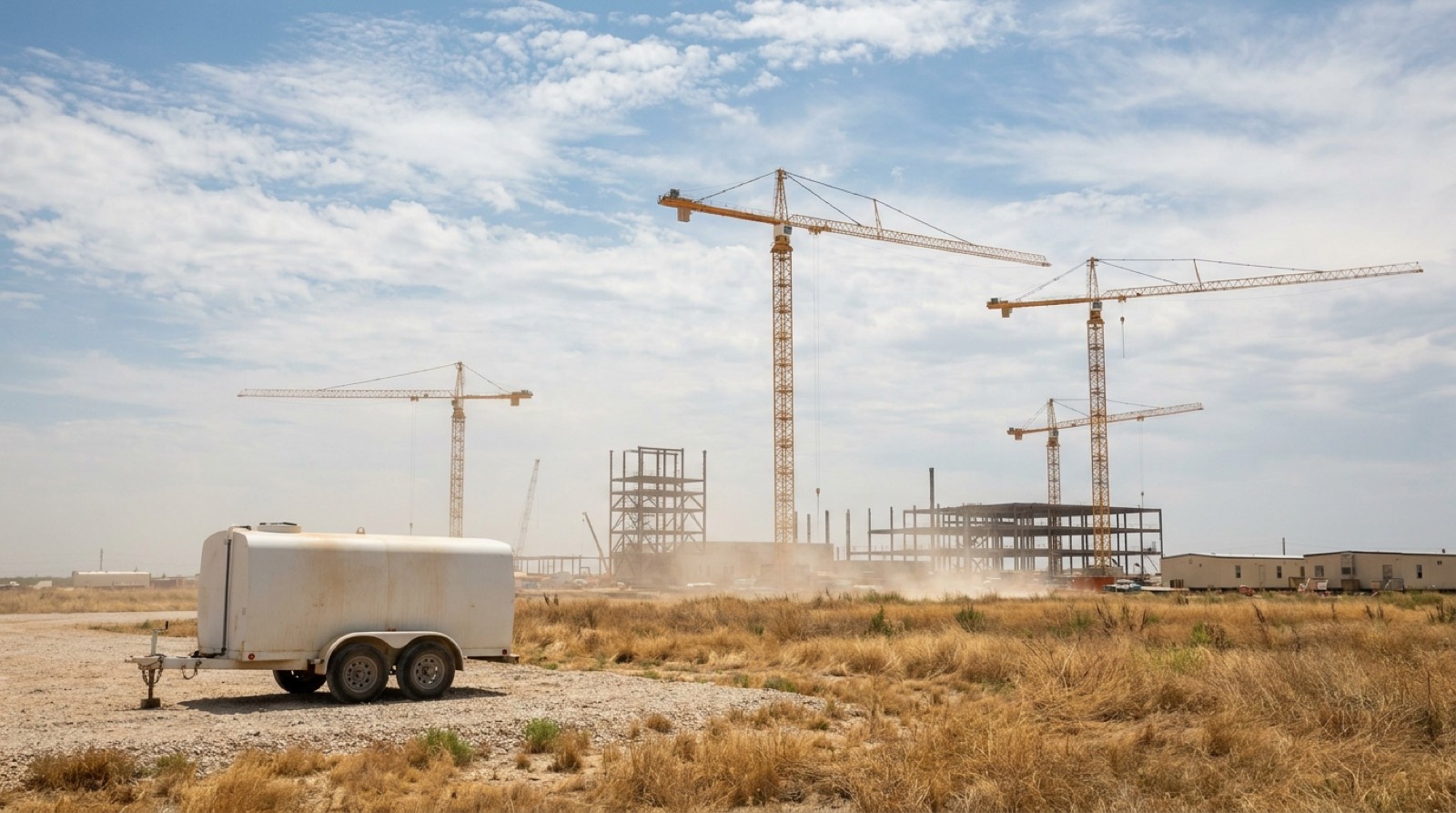
Dallas, Fort Worth, San Antonio and Abilene are carrying some of the largest campuses in the country. Summer heat makes hydration and shower capacity a safety line item, not an amenity.
View Texas →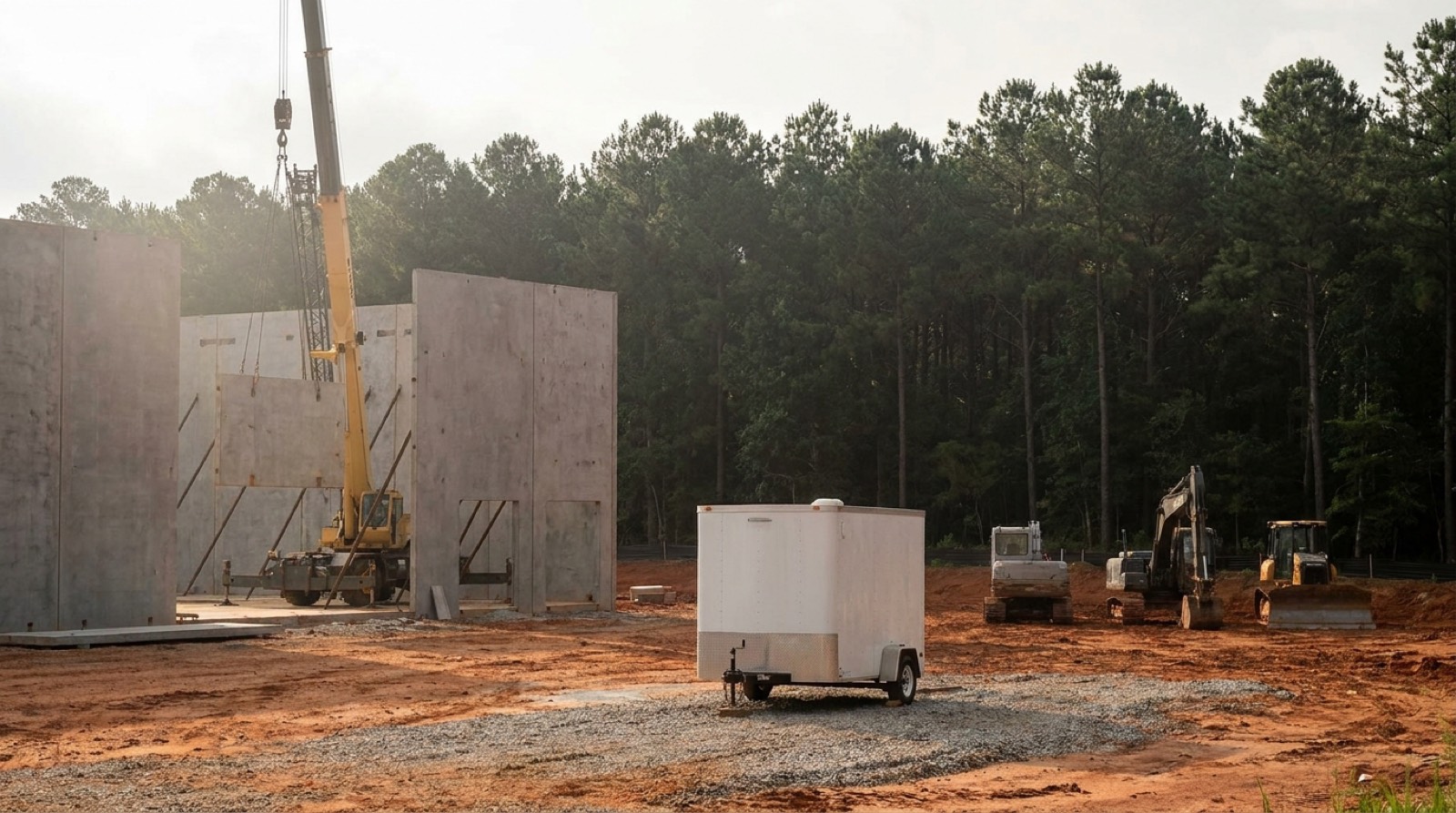
Atlanta metro and Douglas County, extending along I-20. Humid summers, long hauls between laydown and pad, and multi-phase schedules that keep facilities on site for years.
View Georgia →Phoenix and Mesa build through heat that regularly exceeds 110 degrees. OSHA heat-illness prevention drives water and shade requirements that our units satisfy directly.
View Arizona →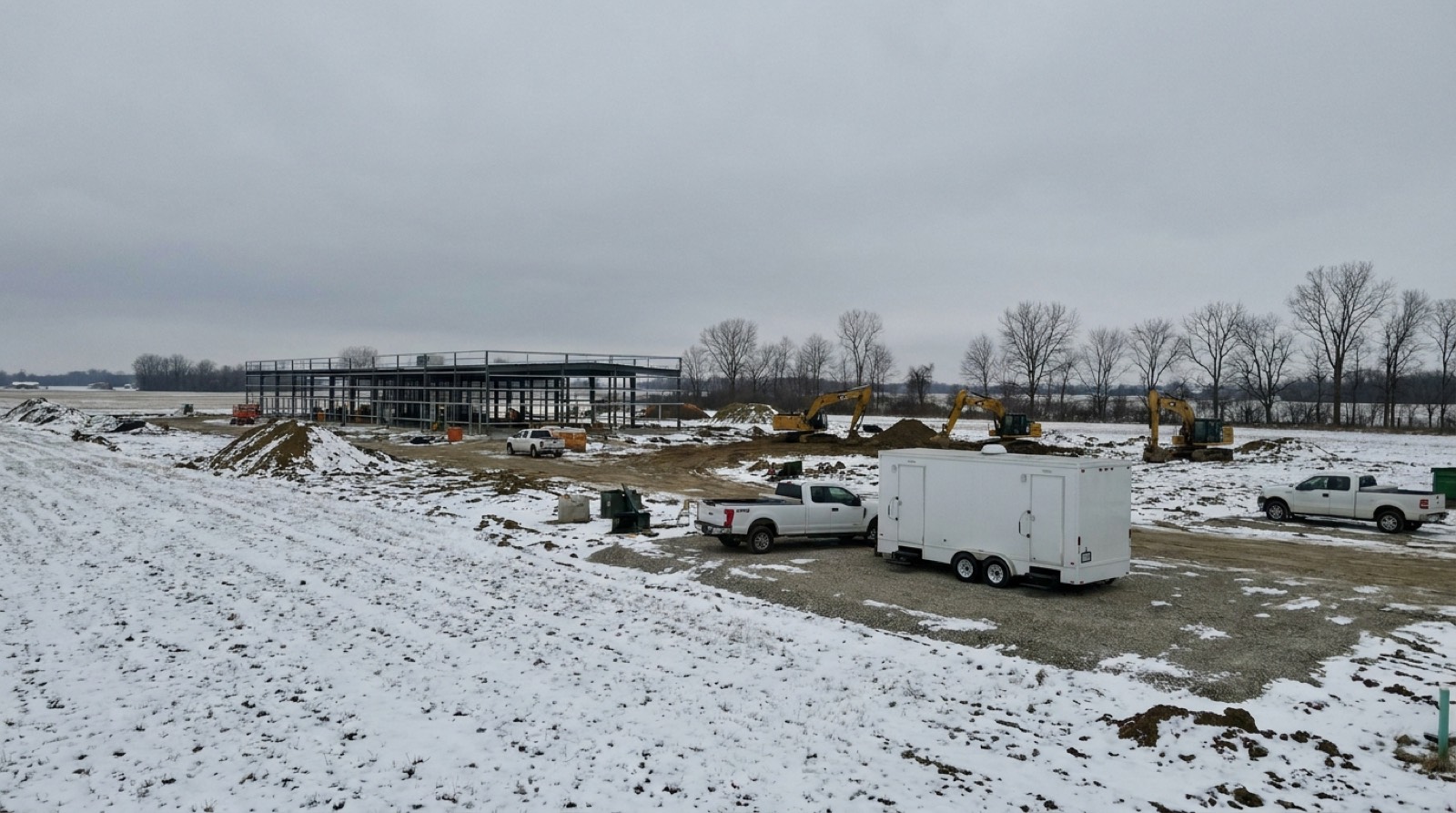
Columbus and New Albany. Freeze protection and winter service access matter here in a way Sun Belt corridors never see.
View Ohio →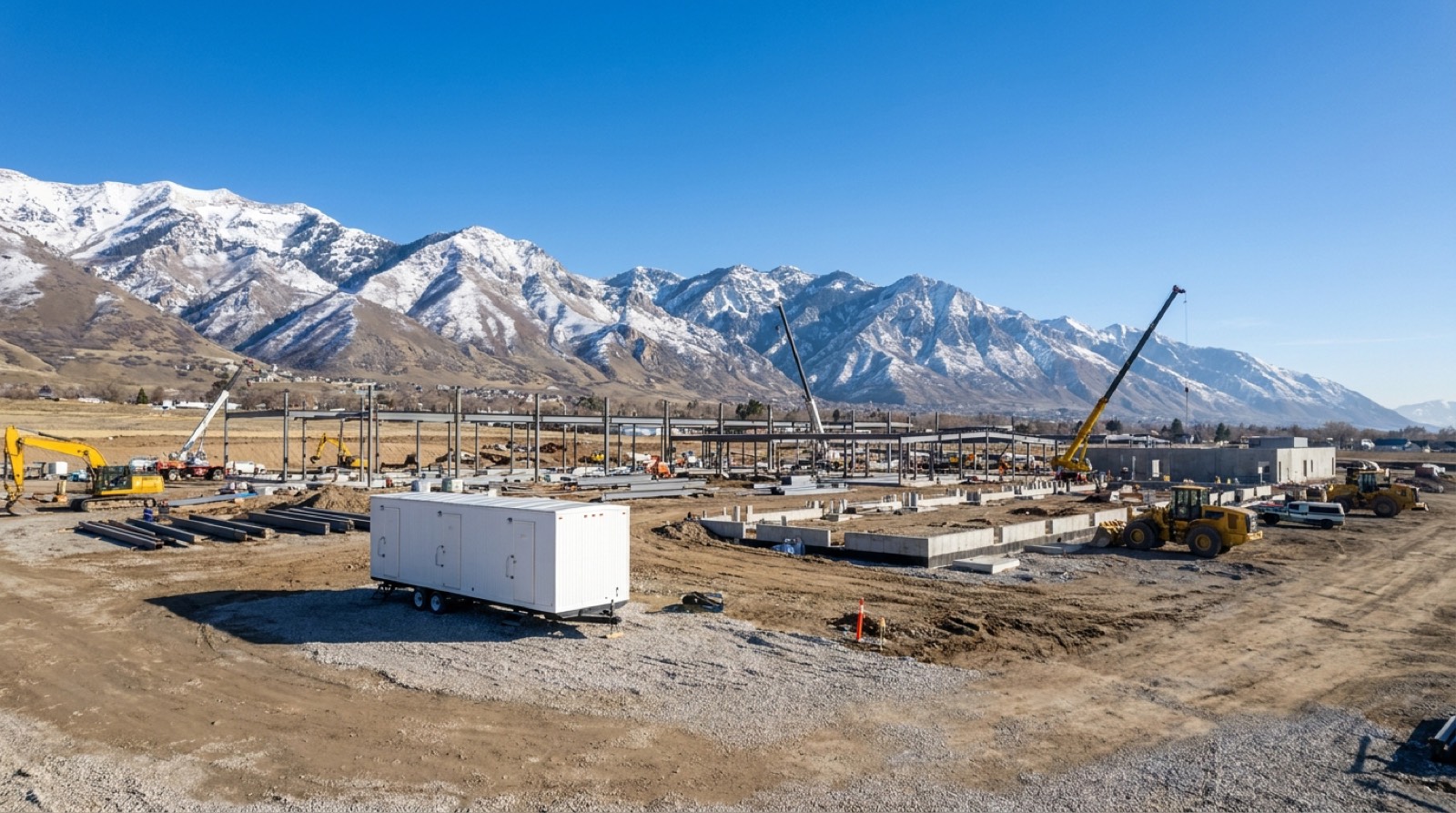
The Wasatch Front corridor runs through hard winters at elevation. Units are winterized and service intervals hold through snow.
View Utah →Questions we get
Because gear gets fully soiled every single shift. Nothing gets a second wear, so weekly loads per worker run above mild-climate norms.
High-efficiency machines and supply planned with the site's whole water program, hydration and showers included.
Yes. Dryer ventilation and power specs are planned for desert ambient so machines hold up through summer.
Go deeper
Longer reads for teams writing the site plan. Open what applies to your build.
An Arizona data center site in summer coats everything in two layers. Fine desert dust settles into fabric all day, and sweat soaks through from the inside at the same time. The two combine into a gritty paste worked deep into every seam by quitting time. A shirt from a Phoenix-area site is not slightly worn at end of shift. It is done. Nobody hangs it up for tomorrow.
That single fact drives Arizona laundry planning. Where a mild-climate crew might get two wears from a shirt and three from pants, an Arizona summer crew wears everything once. Weekly load volume runs close to double the national assumption for the same headcount. Sites that size laundry off a generic chart find lines at the machines by the first hot month.
Take a 350-person workforce on a build in the Phoenix metro's data center corridor. At one full change of clothes per shift, six shifts a week, the clothing volume alone approaches a thousand loads weekly through the hot season. Add towels for crews rinsing off before the drive home and the number climbs again.
The saving grace is that desert demand spreads well. Crews start early to beat the heat, so wash traffic begins earlier in the afternoon than on other sites and stretches through the evening. With enough machines that natural spread keeps the room moving. The mistake is capacity, not scheduling. Under-machine the trailer and no schedule can rescue it.
Washing everything after every wear is hard on gear, and desert dust is abrasive inside the wash drum too. High-extraction commercial machines with proper dosing get clothes clean without the extra-long agitation that chews fabric. Getting the grit fully rinsed out matters as much as the wash itself, since particles left in the weave grind fibers all the next day.
We also stock for reality on the service route, keeping detergent supplied at the consumption rate a one-wear site actually runs, which is roughly twice the default. A worker who reaches for supplies at 8 p.m. and finds them is a worker who keeps trusting the trailer. In a climate this demanding, the trailer has to earn that trust daily.
A dryer is a machine for throwing heat and moisture away. In most climates the outdoors accepts that job without complaint. In an Arizona summer the machine room starts the day warm. The intake air arrives already hot. Every running dryer adds more heat to a space that has nowhere cool to send it. Without deliberate ventilation design, a bank of dryers turns a laundry trailer into an oven by late afternoon.
The equipment suffers along with the people. Dryers pulling superheated room air run their safety thermostats hard and can cycle down on overtemp. Electronics age faster in constant heat. The paradox of the desert is that the dryer, a heating appliance, needs the most careful thermal planning of anything in the trailer.
The first rule is separation. Dryer exhaust must leave the trailer and discharge downwind of every intake, with short duct runs and no chance of recirculation. A trailer that eats its own exhaust loses capacity precisely on the days it is needed most. The second rule is makeup air. Dryers move serious airflow, and that air has to come from somewhere planned rather than being sucked backward through gaps and door seams.
Cooling the occupant side is the third piece. Air conditioning sized for the machine load, not just the room dimensions, keeps the folding area usable in July. Shade helps everything. A trailer oriented to shade its intake side, or parked with awning cover on the west face, runs measurably cooler through the brutal late afternoon.
Every restriction in a dryer's airflow path makes it run hotter and longer, and heat is exactly what an Arizona site cannot spare. Lint screens cleaned between loads and duct runs cleared on the service route keep exhaust moving freely. On our desert routes, vent inspection is a scheduled item through summer because the stakes are higher here.
The result of getting all this right is quiet in the best way. Dryers finish on time at 4 p.m. in a heat advisory. The room stays usable. Crews who just worked ten hours in the sun do not walk into a second furnace to wash their gear. That is the entire standard for desert laundry, and it is met in the design phase or not at all.
The dust on an Arizona data center site is not the honest dirt of a wet climate. It is powder fine enough to hang in the air and flow under doors, then settle into everything with a texture like flour. It finds every gap in a trailer the way water finds a low spot. Mass grading in the desert generates it by the ton, and monsoon season outflow winds can push a wall of it across a site in minutes. Laundry planning here starts with the assumption that dust is trying to get into everything, always.
In fabric, the fine particles work deep into the weave and resist casual washing. In machines, dust infiltrates control panels, motor housings, bearings, and any grease it can find, where it turns into abrasive paste. In the trailer itself, it films every surface within days if the room leaks air.
Dust-heavy clothes want a thorough rinse-first approach, because loading a dry dusty garment straight into a hot wash can drive particles deeper. A prewash or rinse cycle floats the loose material out, then the main heavy cycle cleans the fabric properly. Full rinses on the back end matter just as much, since grit left in clothing keeps grinding at fibers and skin through the next shift.
The shake-out habit is worth teaching here more than anywhere. Gear beaten out at the door, outside and downwind, keeps a surprising amount of material out of the drums. A stiff brush mounted by the entrance gets real use on a desert site.
The trailer envelope is the last line. Tight door seals, positive-closing windows, filtered makeup air, and routine wipe-downs keep the interior workable between cleanings. During monsoon dust events the room should be closed up like any conditioned space on site. Machine maintenance on our desert routes includes blowing out control areas and checking seals, because prevention is cheap and dust-caused board failures are not. A sealed, serviced trailer holds up through grading season without drama.
None of this is exotic. It is a set of habits and specs matched to a real climate condition that the whole Phoenix desert corridor deals with every year. Respect the dust and the laundry program runs clean. Ignore it and the desert wins by a thousand grams of grit.