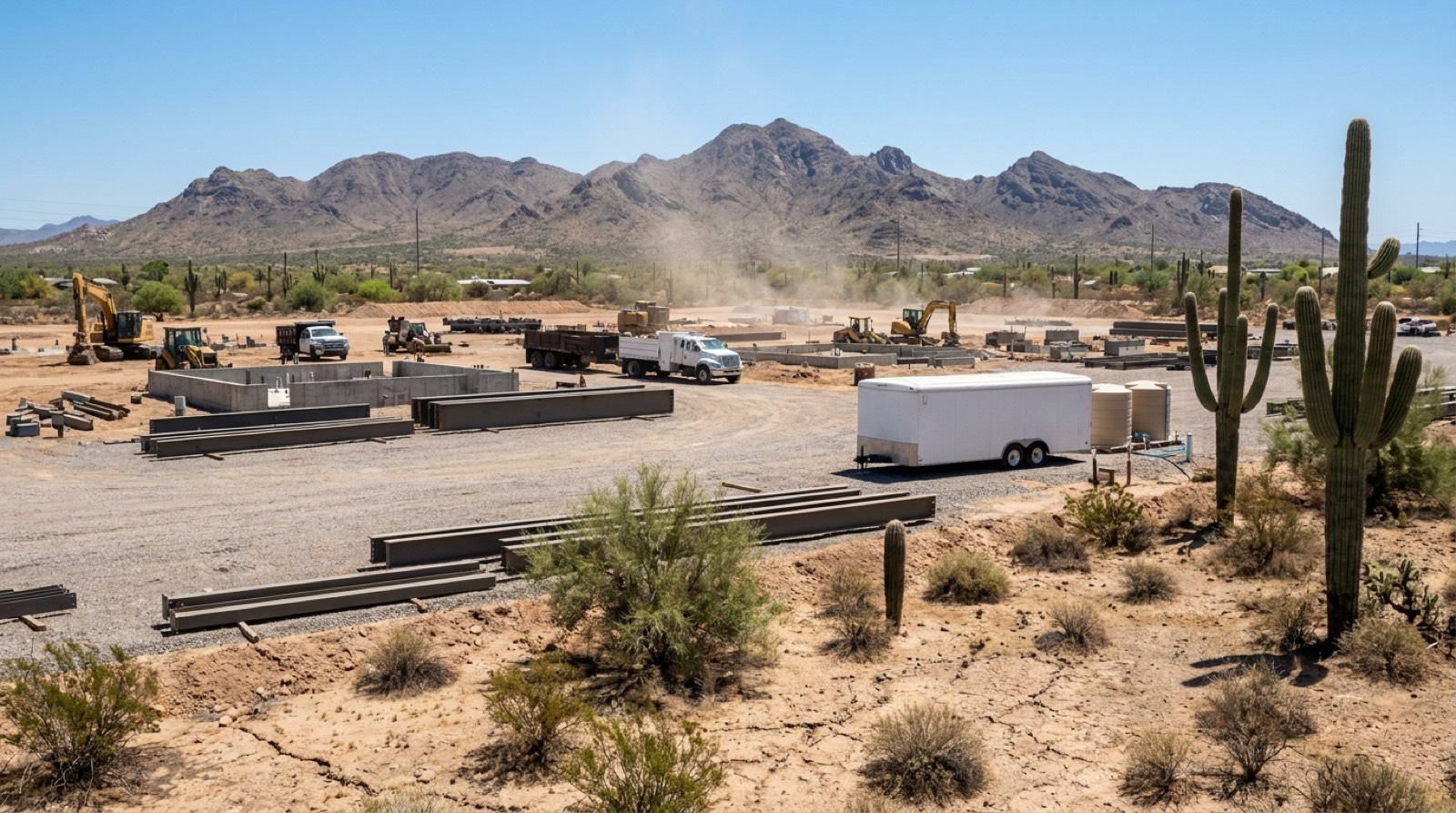
Arizona
Shower trailer rentals for Arizona data center sites
Desert sites coat crews in dust and sunscreen by ten in the morning. Shower capacity for Phoenix valley schedules that start at dawn and end in triple digits.
Desert sites coat crews in dust and sunscreen by ten in the morning. Shower capacity for Phoenix valley schedules that start at dawn and end in triple digits.
An Arizona site coats a crew twice over: graded desert dust on everything, and the sunscreen every heat program requires reapplied through the day. By shift end the combination is its own reason to wash before the drive. On top of comfort sits physiology, because showering after hours at 110 degrees is part of how bodies recover for the next dawn start.
Desert deployments carry a spec problem most markets never see: the cold water line runs hot. Supply tanks and lines are shaded and insulated so a summer shower is actually temperature-controlled rather than two kinds of hot. Cooling performance is verified on service visits alongside sanitation.
Phoenix valley crews start at four and clear by early afternoon in deep summer. Gray-water pump-outs and fresh fills route around that inverted day, servicing units in the afternoon quiet so stalls are ready before the next dawn shift.
Where we deploy
Heaviest concentration in the corridors carrying the most active data center construction, with nationwide mobilization beyond them.
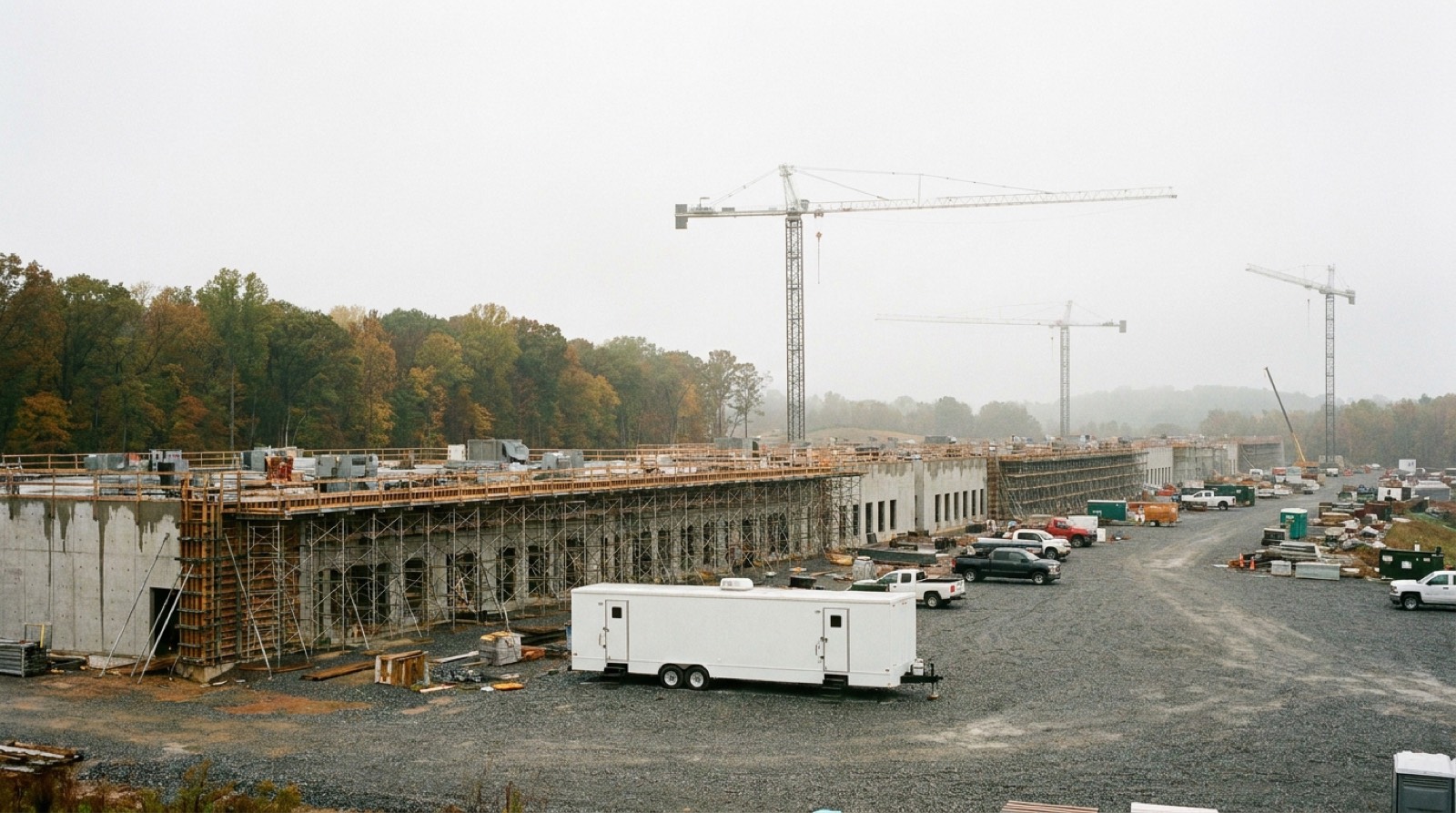
Loudoun County and Prince William run the densest data center concentration on earth. Multi-year campuses, badge-controlled access, crews in the hundreds, and facility requirements written into the subcontract.
View Northern Virginia →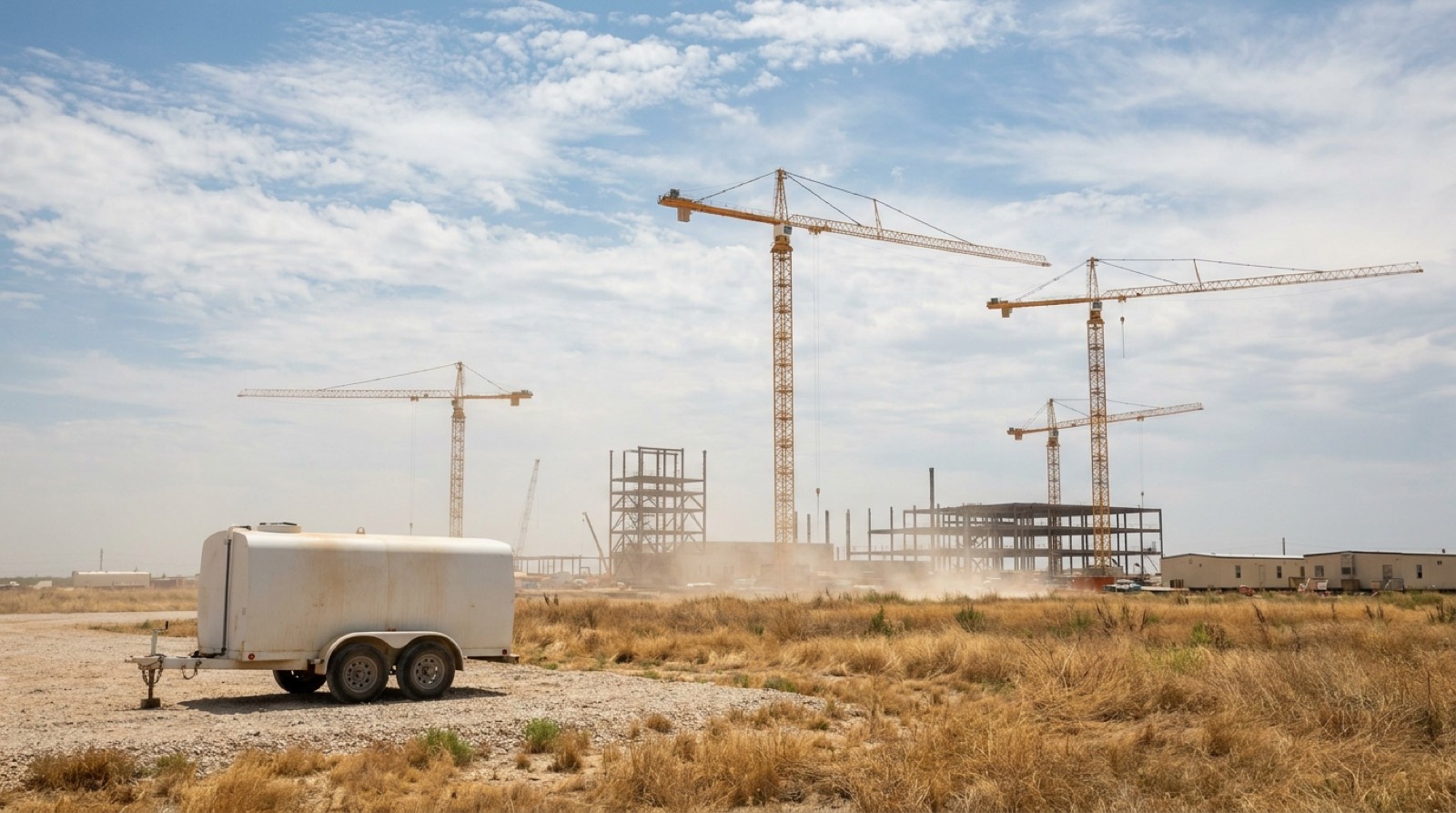
Dallas, Fort Worth, San Antonio and Abilene are carrying some of the largest campuses in the country. Summer heat makes hydration and shower capacity a safety line item, not an amenity.
View Texas →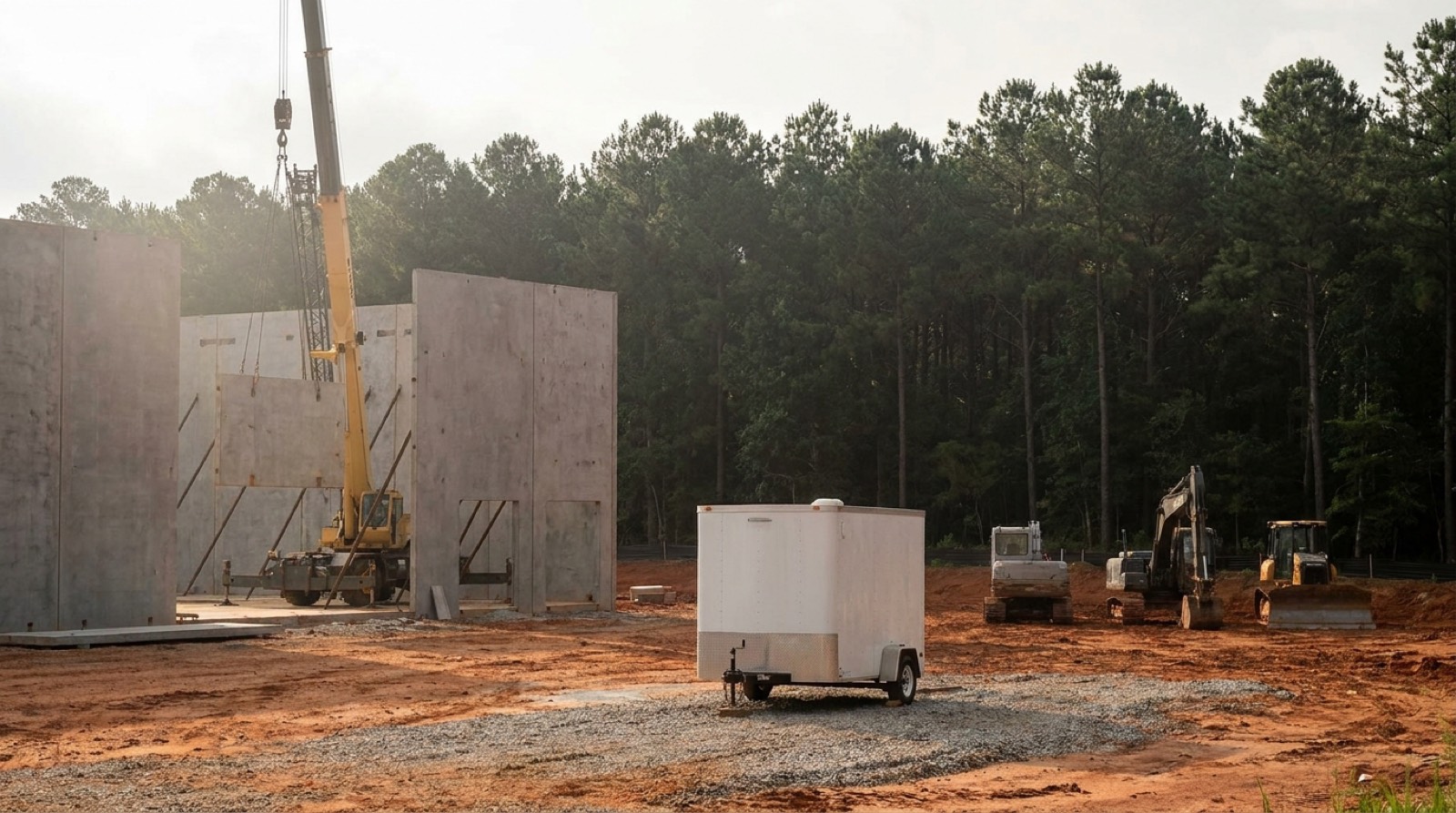
Atlanta metro and Douglas County, extending along I-20. Humid summers, long hauls between laydown and pad, and multi-phase schedules that keep facilities on site for years.
View Georgia →Phoenix and Mesa build through heat that regularly exceeds 110 degrees. OSHA heat-illness prevention drives water and shade requirements that our units satisfy directly.
View Arizona →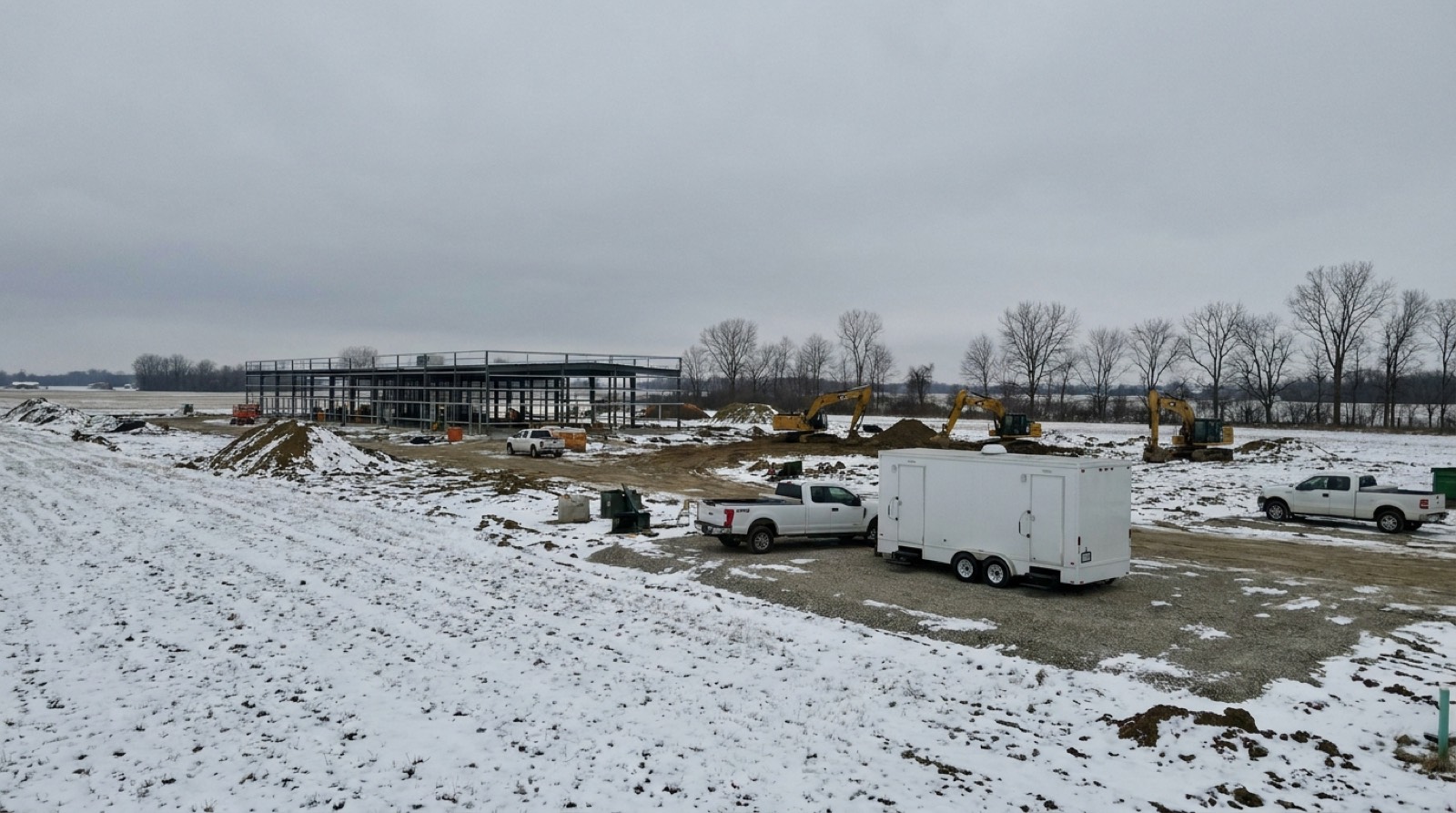
Columbus and New Albany. Freeze protection and winter service access matter here in a way Sun Belt corridors never see.
View Ohio →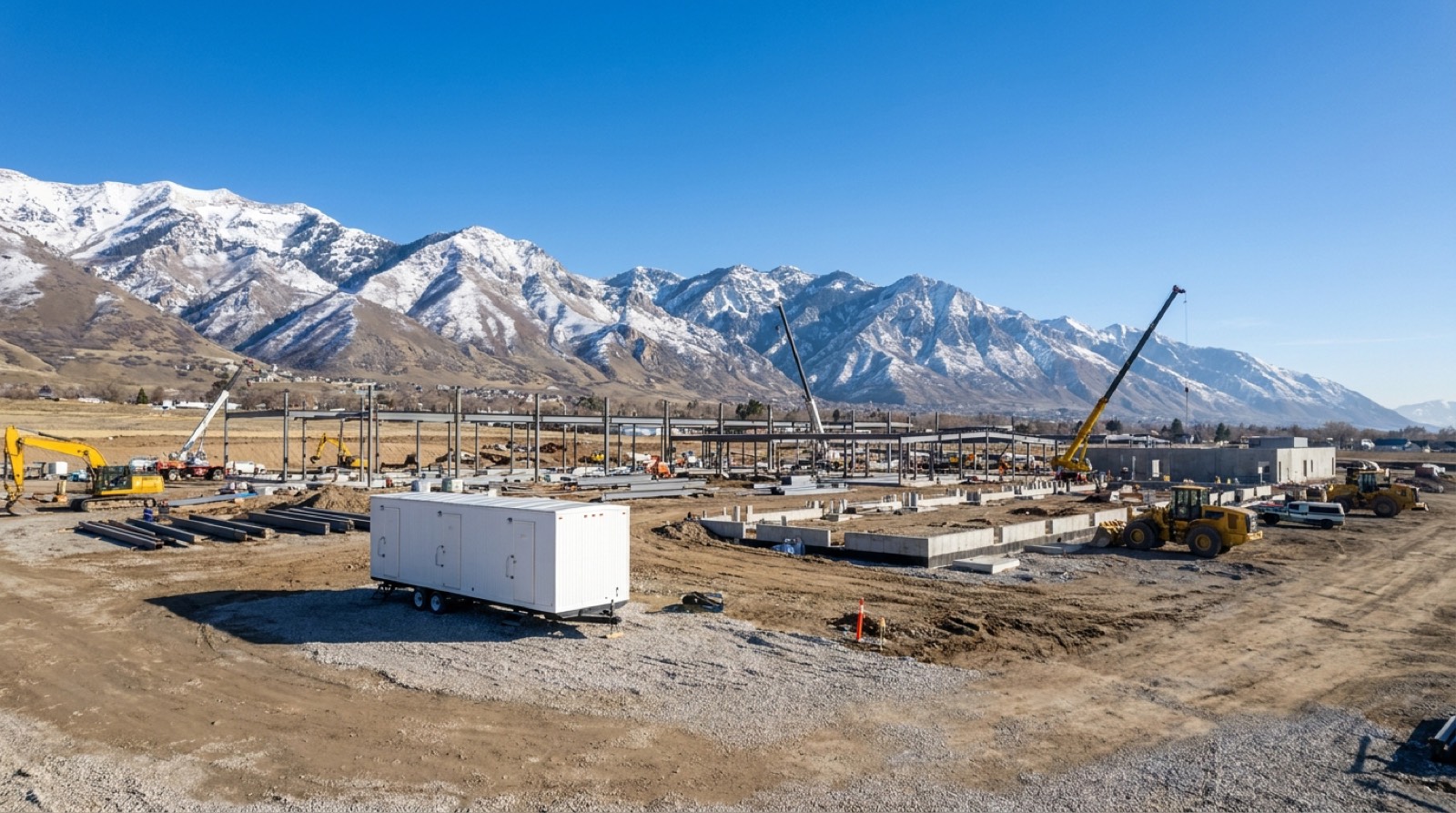
The Wasatch Front corridor runs through hard winters at elevation. Units are winterized and service intervals hold through snow.
View Utah →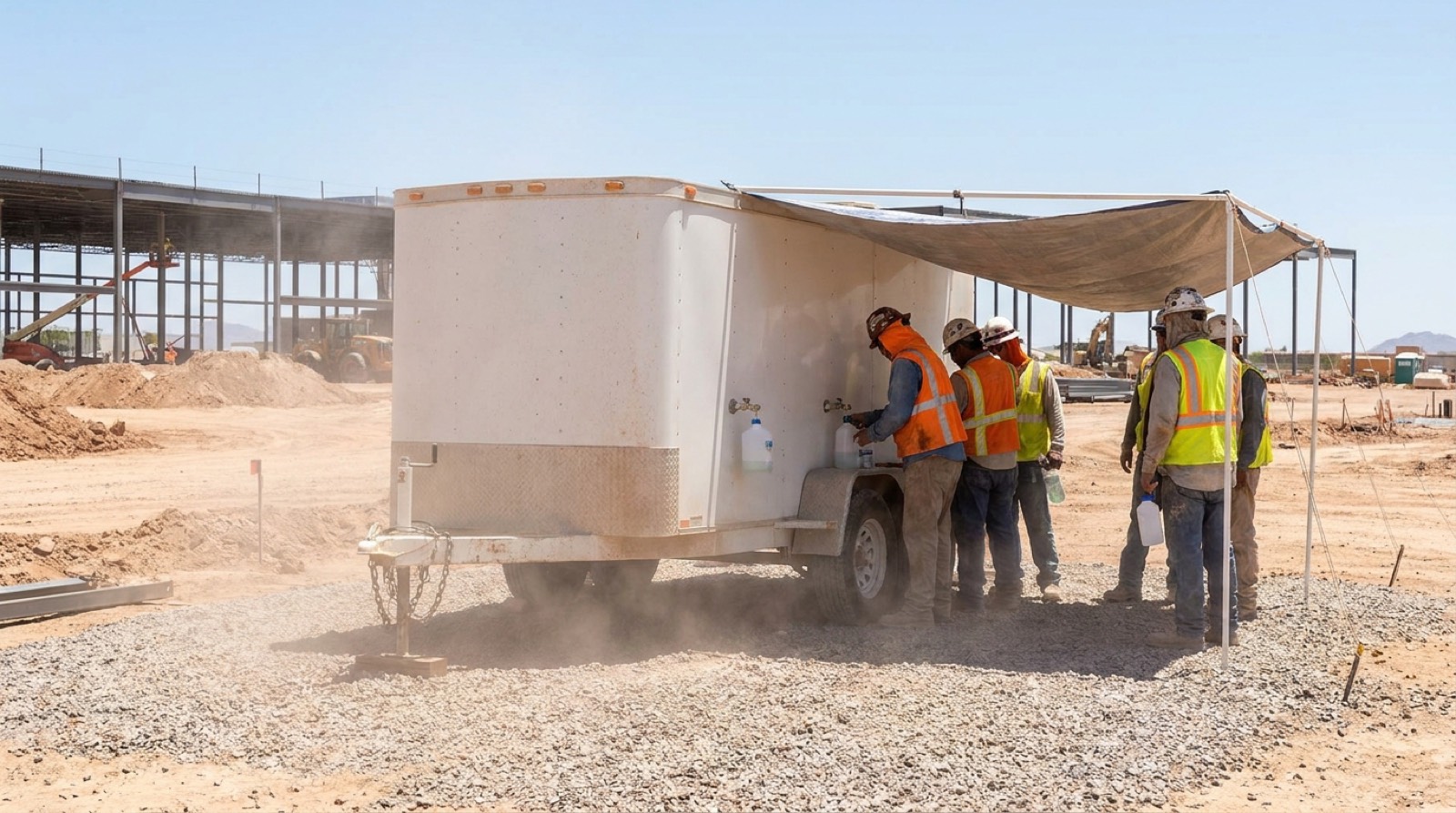
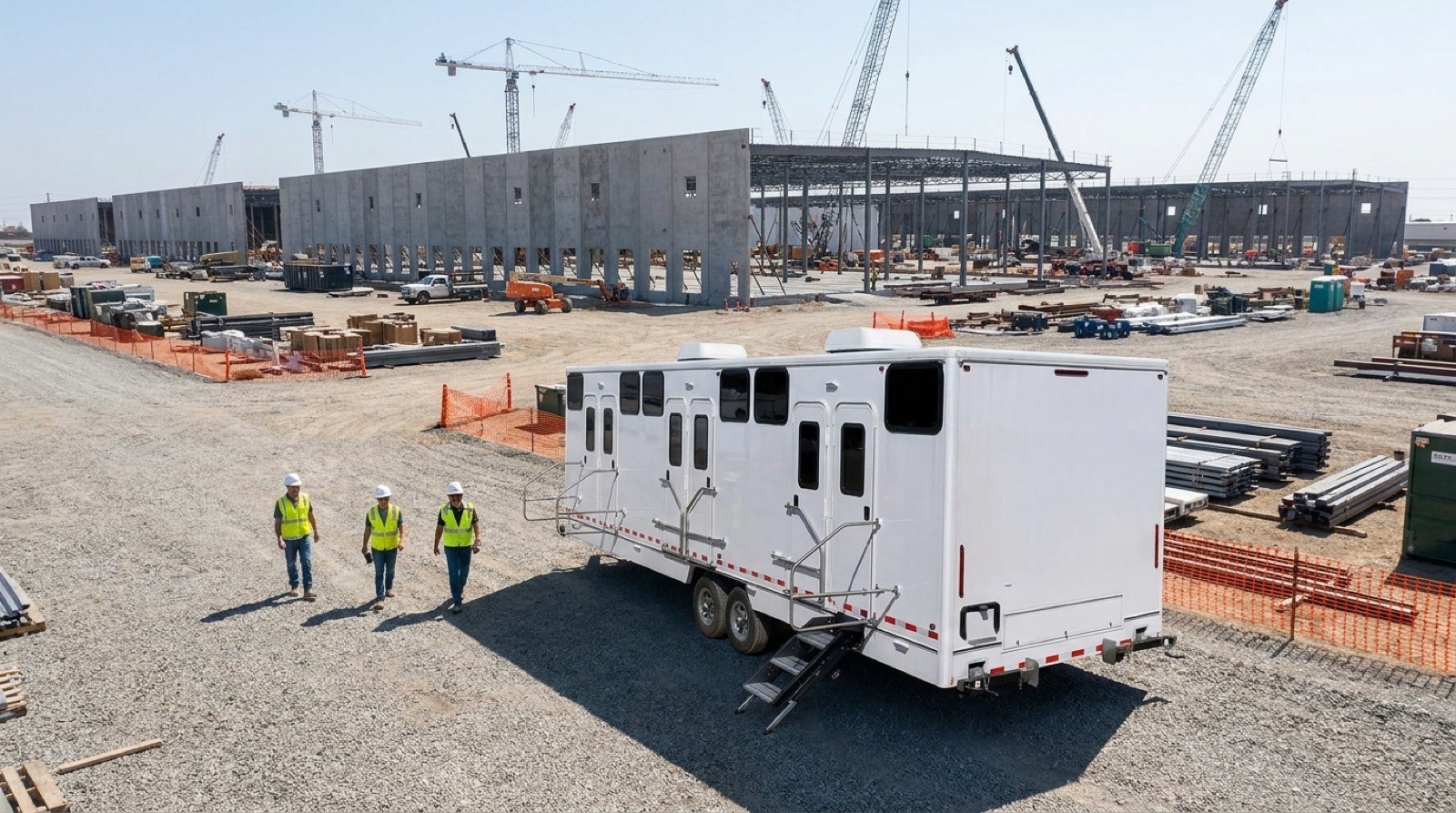
Most Arizona deployments bundle several units under one route. One contracted vendor, one dispatch, one escalation path, and a site plan that arrives already coordinated.
The paperwork side of the job needs a roof too. Office trailer rentals in Arizona give supervision and inspections a place to meet without leaving the gate.
Extended-stay crews generate wash loads every week of the schedule. Laundry trailer rentals in Arizona keep that cycle on site instead of in a hotel sink.
Food service and ice programs live or die on cold storage at the pad. Refrigeration trailer rentals in Arizona hold setpoint through the local season.
Restroom capacity anchors the plan. Restroom trailer rentals in Arizona sit closest to the workface and set the service route that every other unit rides on.
Water is the first thing safety plans ask about. Hydration station rentals in Arizona run on the same supply logistics as the rest of the package, so adding them costs one stop, not a second vendor.
The full reach of our shower trailer rentals program runs beyond Arizona, covering every corridor we serve.
Questions we get
Yes, when specified for it. Shaded, insulated supply keeps the cold line actually cold, interiors run air conditioning, and mechanical performance is checked on every summer visit.
Dust and sunscreen build up through every shift, and washing at shift end supports heat recovery for the next early start.
Pump-outs and fills run in the afternoon after crews clear, so stalls are clean, stocked and cool before the next four a.m. arrival.
Go deeper
Longer reads for teams writing the site plan. Open what applies to your build.
Phoenix and Mesa host some of the largest data center campuses under construction anywhere, and every one of them shares a jobsite condition the Southeast never sees. Desert dust. Fine caliche powder rises off every pad and haul road, and it sticks to sweat like paint. A worker in July is running sweat by 6 a.m., and by end of shift he is wearing a crust of mineral grit bonded to sunscreen. That combination does not brush off, and it is miserable to sit with on a drive home across the Valley.
Dust control water trucks knock down what is airborne, but nothing stops the crew itself from becoming the collection surface. This is the background condition that makes shower trailers standard equipment on serious Phoenix builds rather than an upgrade.
There is a health dimension beyond comfort. Desert construction dust can carry crystalline silica from cutting and earthwork, and good hygiene practice is to wash exposed skin at the end of exposure rather than carrying it home. Sweat plus dust also produces heat rash and clogged pores that get worse over a hundred consecutive dry, hot shifts. Crews that can wash on site simply hold up better across a Phoenix summer. Superintendents see it in attendance by August.
Usage math for the Valley: assume high participation from May through September on any site where the average commute crosses the metro. Sweat-soaked, dust-caked clothes in a 110-degree parking lot make the case without anyone saying a word. One stall per ten workers is the right starting ratio here, adjusted up for camps and long-haul commuters.
Two Arizona-specific specs deserve attention. First, the cold water problem. Supply lines and tanks left in the sun deliver water near 90 degrees, which defeats the point of a cool-down shower. We shade storage and insulate supply runs. Trailer placement keeps hoses out of the afternoon sun. Second, dust management at the trailer itself. Door placement downwind of prevailing dust, walk-off gravel at the entrance, and tighter filter service on HVAC keep the interior from becoming the thing everyone is trying to wash off.
Water supply in the Valley is usually simpler than people fear. Most campuses have construction water available, and where they do not, hauled potable service is a mature market here. The constraint worth watching is gray water, because pump-out schedules slip in summer when every service vendor in the metro is running flat out. A standing schedule with a backup hauler keeps the trailer running through the hottest weeks, which is exactly when the crew needs it most.
Rule one of Phoenix summer construction: chase the cool hours. From roughly May through September, crews on Valley data center sites start at 4 or 5 in the morning and wrap in the early afternoon, before the day peaks at 110 or worse. Concrete pours start in the dark. By 1 p.m. the pad is emptying out. That schedule shift is a heat safety practice, and it quietly rearranges every assumption about site facilities.
The shower rush that hits at 5 p.m. on a normal job lands at 1 or 2 p.m. here. Hot water recovery, cleaning windows, water deliveries, and pump-out schedules all need to move with it. A service plan copied from a spring schedule will have the vacuum truck arriving in the middle of the new rush and the cleaning crew working when the trailer is busiest.
Early-start schedules tend to compress quitting time. When the whole site is racing the heat, trades knock off together rather than trickling out. That tightens the peak window, which raises the stall count needed for the same headcount. Where a staggered 90-minute exit might need ten stalls for a hundred showers, a 60-minute exit needs more like twelve or thirteen. Ask your superintendent how tight the walk-off really is before you settle the trailer count.
The afternoon rush also happens during the hottest part of the day, which puts maximum load on trailer air conditioning at maximum ambient temperature. Cooling that keeps a changing area comfortable at 5 p.m. in April can fall behind at 2 p.m. in July. We spec Valley units with HVAC margin for exactly that hour, because a shower that ends in a hot room defeats the purpose.
Big Phoenix pours often move entirely to night in high summer, with crews starting at 7 or 8 p.m. and finishing at dawn. That creates a second shower peak in the early morning and a hot water recovery question between the two waves. If your project runs split shifts, tell your facilities vendor the actual hours. Heater recovery, tank refills, cleaning, and deliveries all get scheduled into the gaps, and the gaps are not where they would be anywhere else in the country.
None of this is complicated once the real schedule is on the table. It only goes wrong when facilities are planned off a standard calendar while the site runs a desert calendar. Bring us the summer shift plan and the winter one, and we will build service schedules for both, with the switchover dates already on the calendar. In this market, that is what local knowledge looks like.
Building in the Phoenix and Mesa market means building under some of the most water-conscious municipal rules in the country. Data center operators here already face scrutiny over consumption, and construction water draws attention too. A shower trailer program in the desert should be designed to use exactly what it needs and account for every gallon, in and out. That is good citizenship and good logistics in a region where hauling and disposal both cost real money.
The baseline numbers are modest compared to dust control and concrete. Eighty showers a day at 15 gallons with low-flow heads is 1,200 gallons, a rounding error against what a water truck sprays on haul roads by noon. But shower water must be potable going in and handled as gray water coming out, which makes it a separate planning lane with its own rules.
Most large campuses in Mesa and across the West Valley have construction water available early, because dust control demands it. Where a potable tap exists, we plumb directly and the supply side is solved. Where it does not, hauled potable water is a mature service in the metro. The desert-specific spec is heat protection. Stored water cooks. Tanks need shade or reflective wrap, lines need insulation or burial, and the trailer should sit where afternoon sun does not fall on the supply run. Delivered water at 90 degrees makes a mockery of the cold tap.
Low-flow fixtures matter more here than anywhere else we operate. Good heads deliver a strong shower on 1.5 gallons a minute, cutting both supply demand and gray water volume by a third against older fixtures. That is fewer truck trips in both directions, every week, for the life of the job.
Nothing from a shower trailer touches the ground in Arizona. Gray water goes to sealed tanks and leaves by licensed hauler to permitted disposal, full stop. Desert soils and dry washes make illegal discharge obvious and enforcement active, and no schedule saving is worth the exposure. Tank capacity should cover at least two peak days, with level alarms, because summer service demand across the metro can slip a pump-out by a day.
Plan the disposal contract at mobilization, not after the first full tank. We set up Valley projects with supply, storage, fixtures, and disposal designed as one system, sized against the manpower curve and the summer schedule. The result is a shower program that keeps a desert crew clean without wasting a gallon or cutting a corner. That is how it should run in this market.