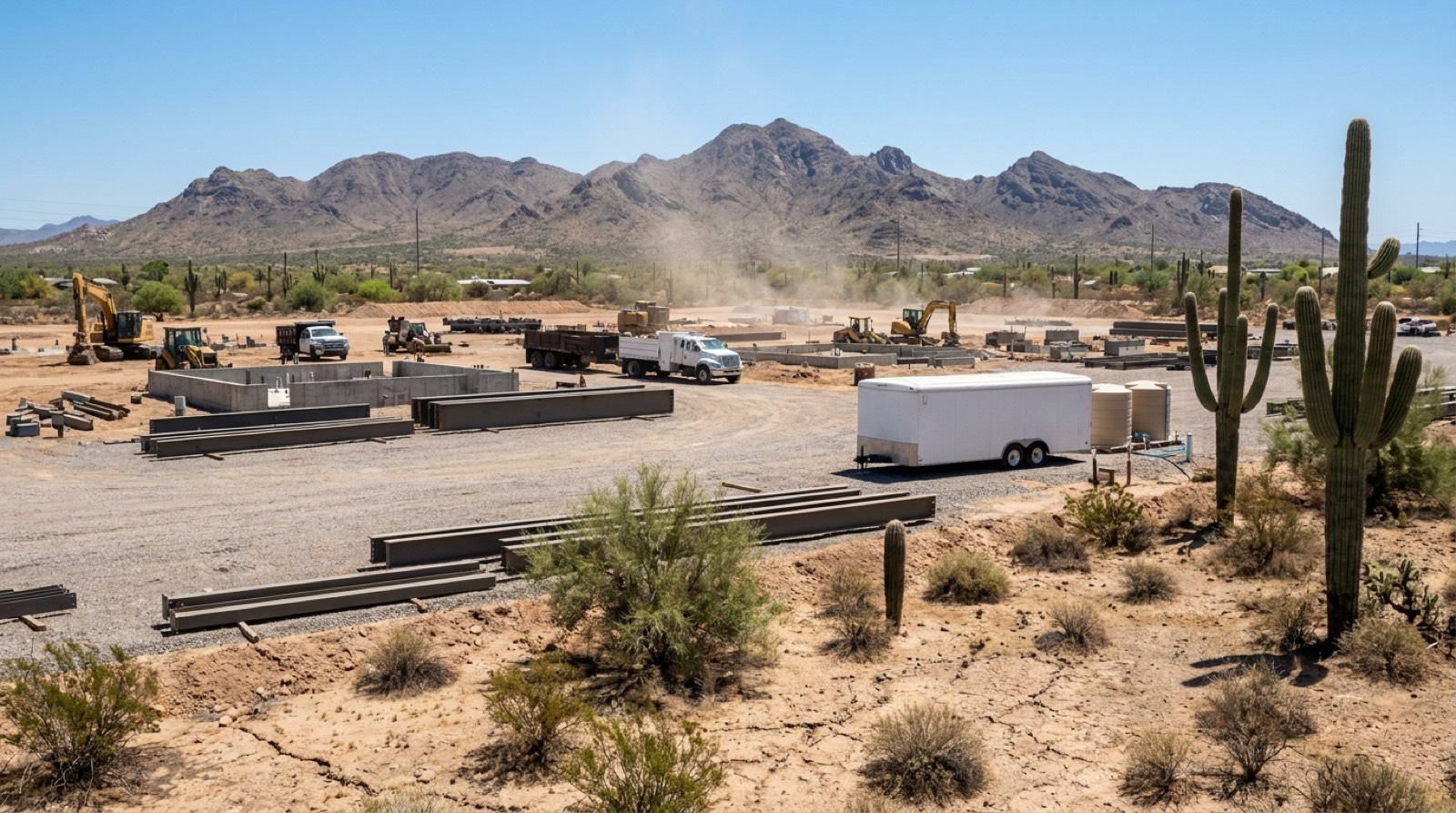
Arizona
Refrigeration trailer rentals for Arizona data center sites
Cold storage that performs at 115 degrees, feeding valley campuses and running the ice programs their heat plans depend on.
Cold storage that performs at 115 degrees, feeding valley campuses and running the ice programs their heat plans depend on.
A refrigeration unit that works anywhere else can fail in a Phoenix parking lot. Desert deployments run high-ambient specifications: condensers rated for 115 degree air, shaded placements, and setpoint verification on every summer service visit. Food safety at these temperatures leaves no margin for drift.
Valley heat plans consume ice at rates that would empty a grocery store: coolers, hydration stations, rest-area service. Freezer trailers bank the daily supply on site, restocked before the day's draw begins.
Desert schedules feed crews early, so cold storage is stocked and holding before the food service sets up in the dark. The cold chain runs on the site's inverted clock.
Where we deploy
Heaviest concentration in the corridors carrying the most active data center construction, with nationwide mobilization beyond them.
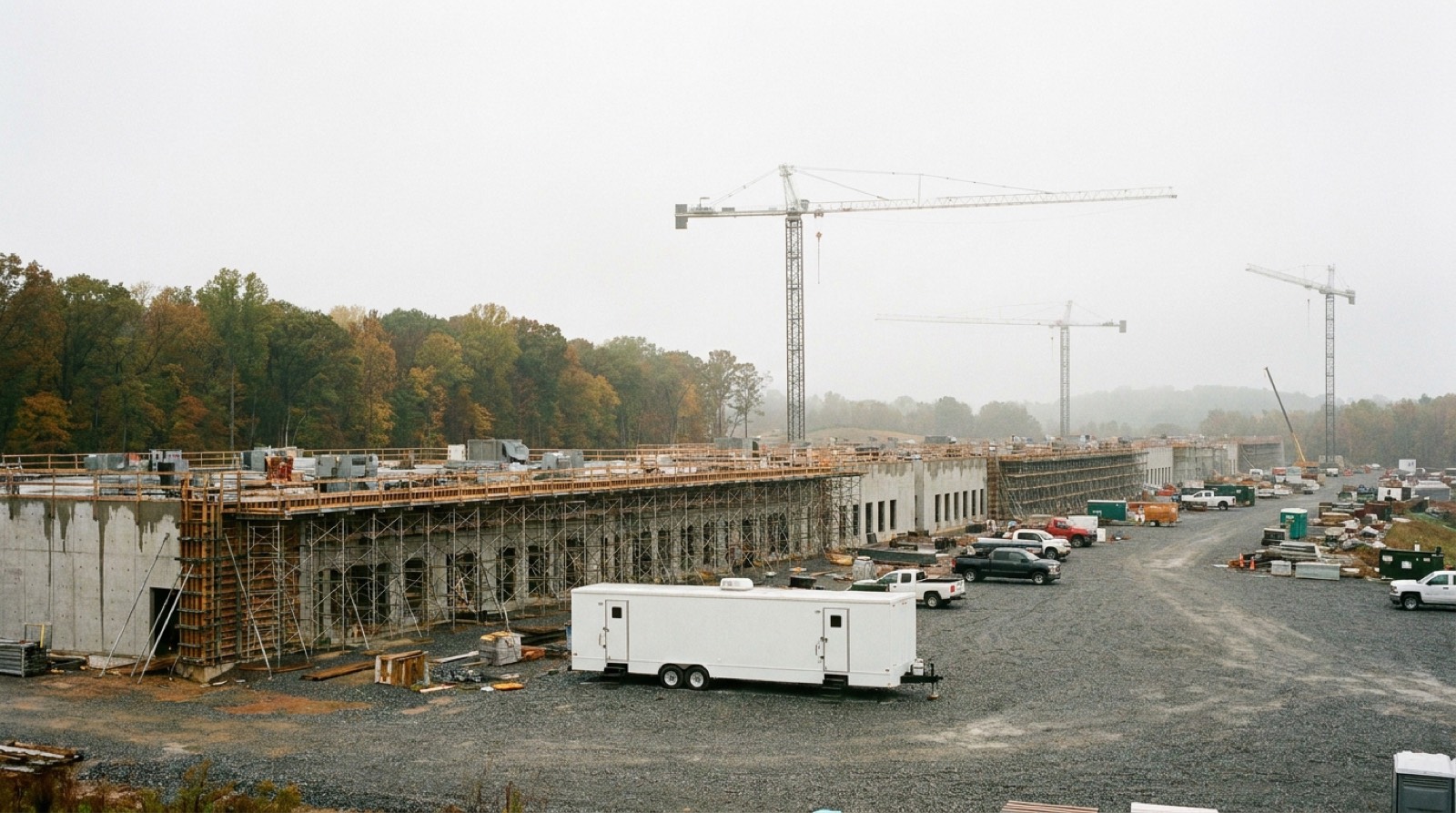
Loudoun County and Prince William run the densest data center concentration on earth. Multi-year campuses, badge-controlled access, crews in the hundreds, and facility requirements written into the subcontract.
View Northern Virginia →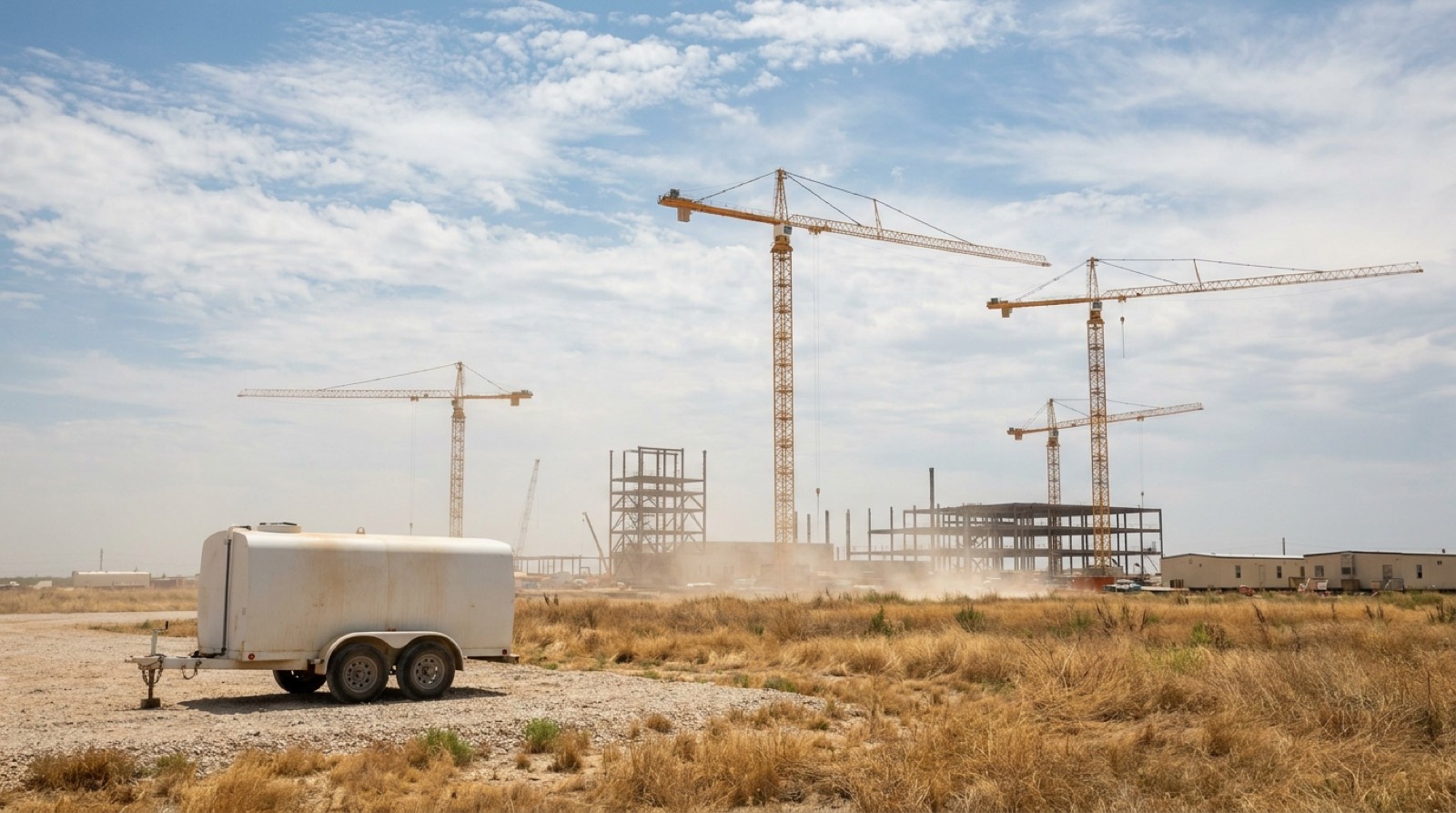
Dallas, Fort Worth, San Antonio and Abilene are carrying some of the largest campuses in the country. Summer heat makes hydration and shower capacity a safety line item, not an amenity.
View Texas →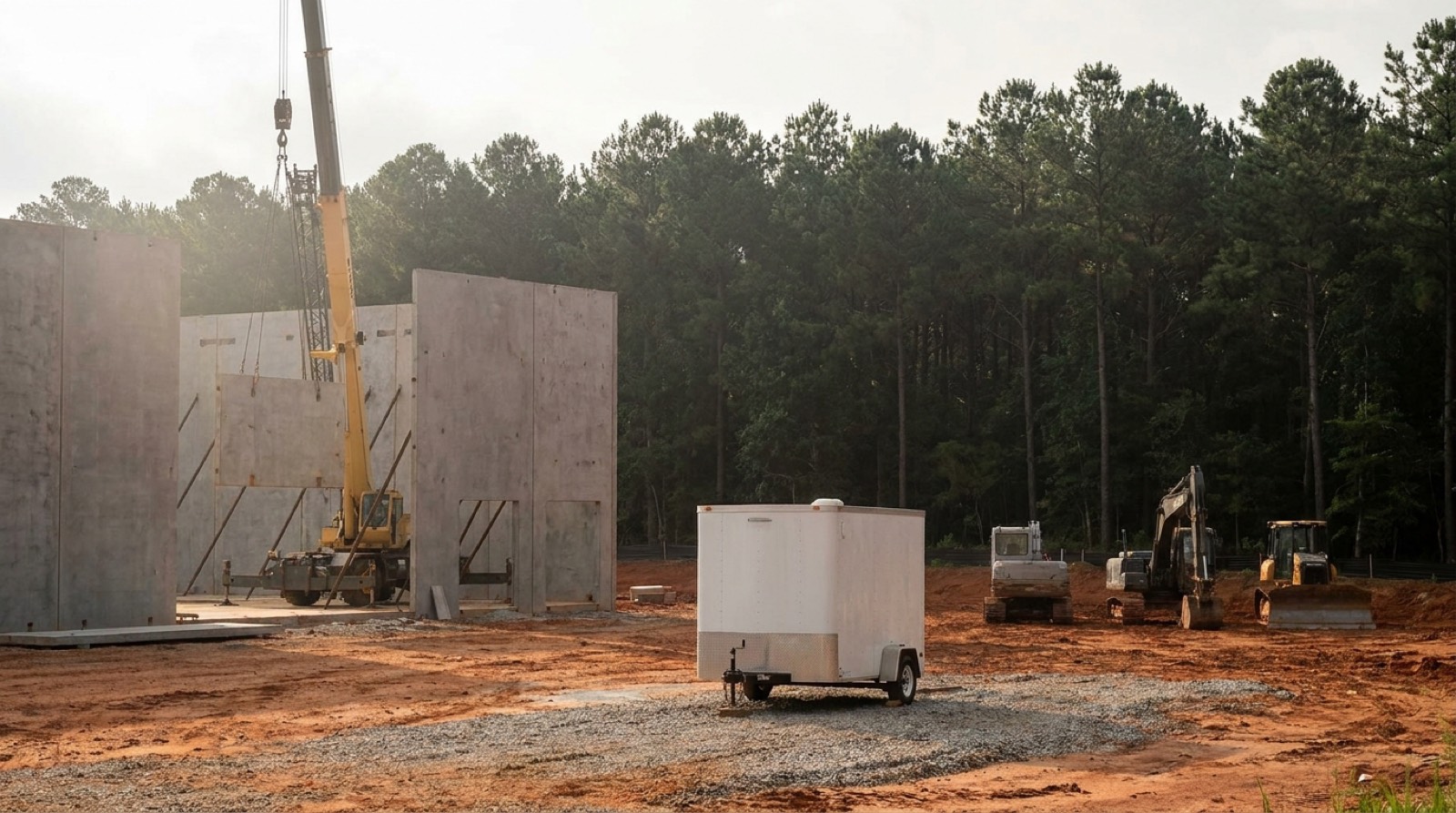
Atlanta metro and Douglas County, extending along I-20. Humid summers, long hauls between laydown and pad, and multi-phase schedules that keep facilities on site for years.
View Georgia →Phoenix and Mesa build through heat that regularly exceeds 110 degrees. OSHA heat-illness prevention drives water and shade requirements that our units satisfy directly.
View Arizona →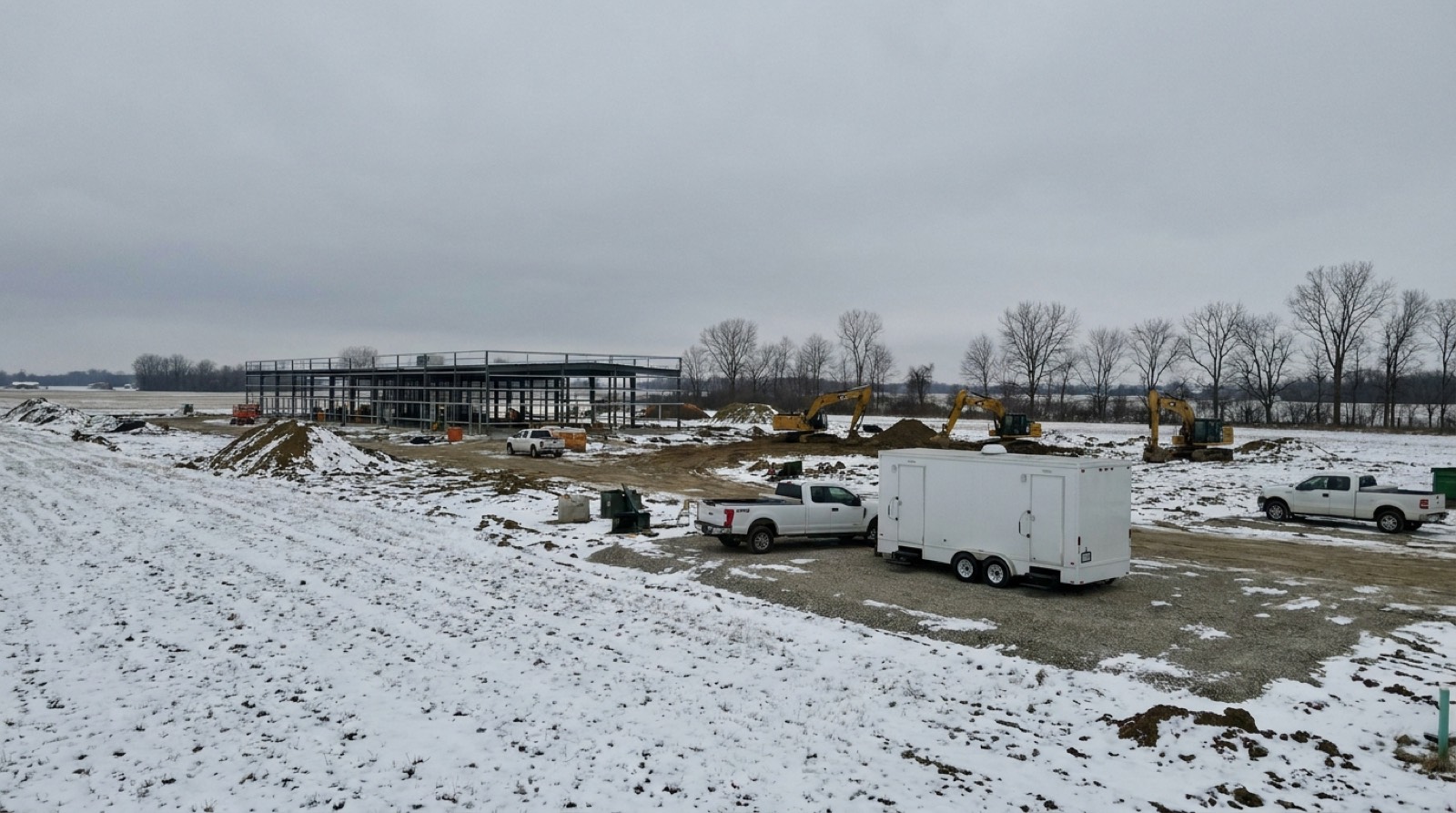
Columbus and New Albany. Freeze protection and winter service access matter here in a way Sun Belt corridors never see.
View Ohio →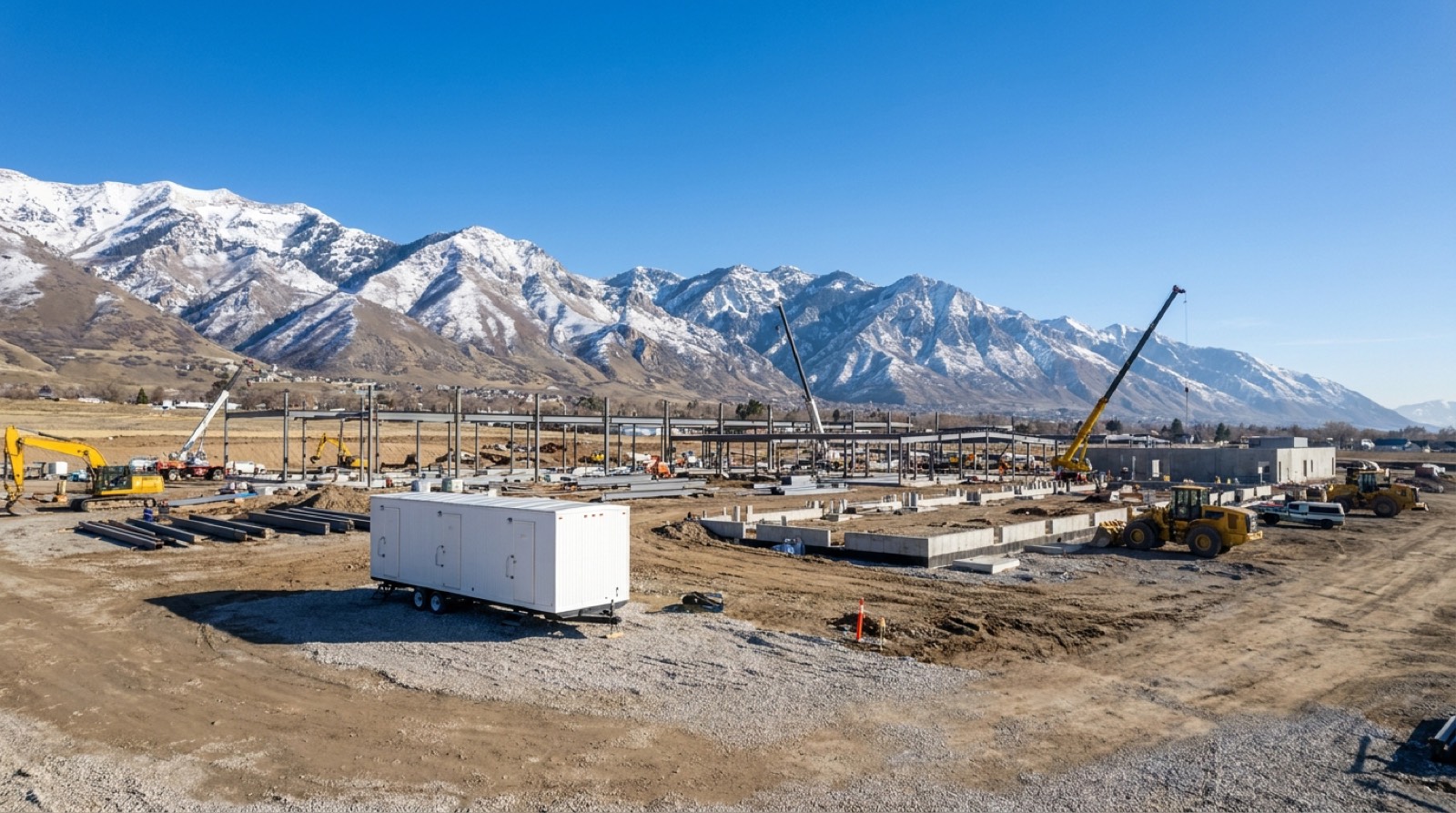
The Wasatch Front corridor runs through hard winters at elevation. Units are winterized and service intervals hold through snow.
View Utah →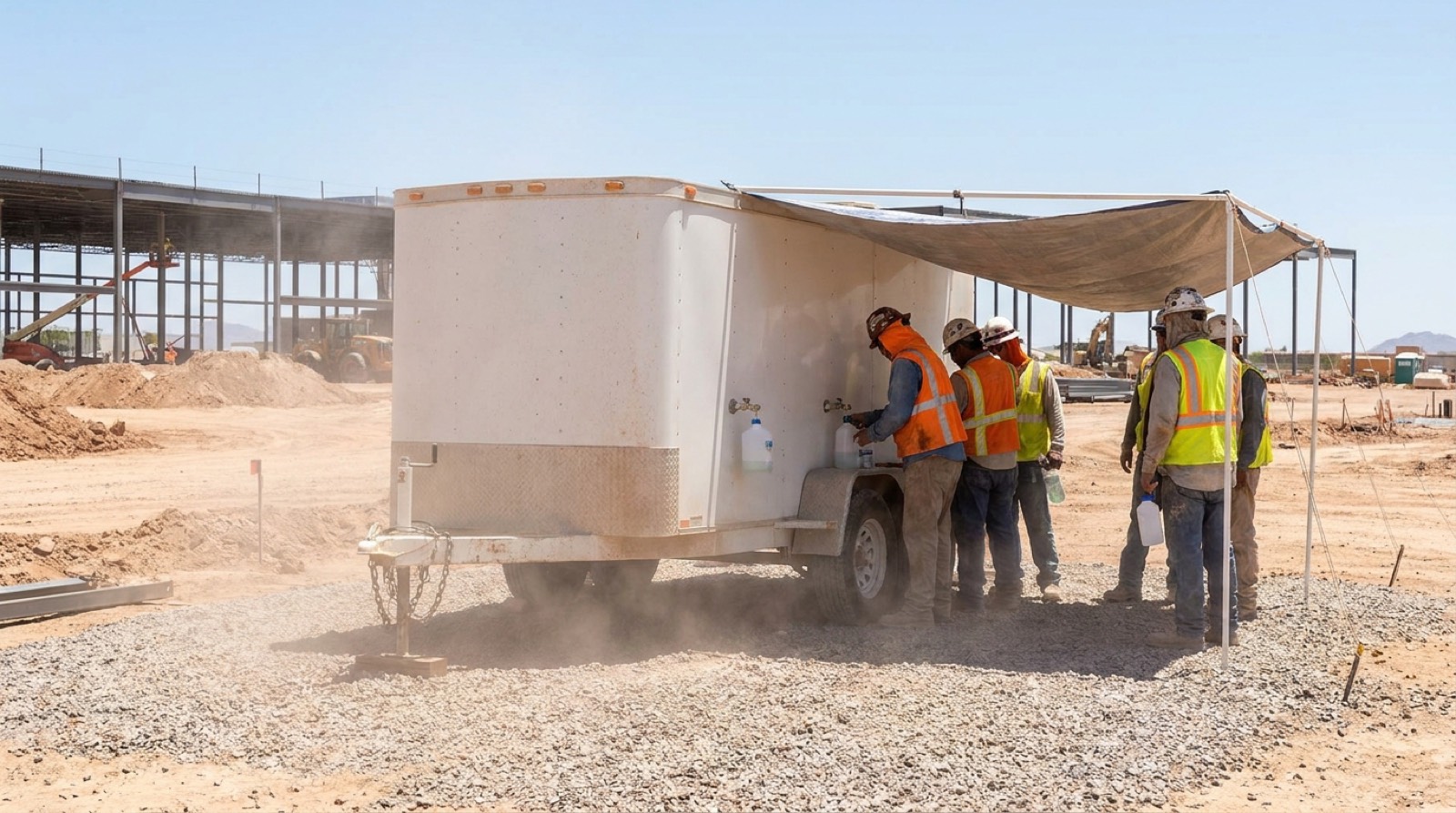
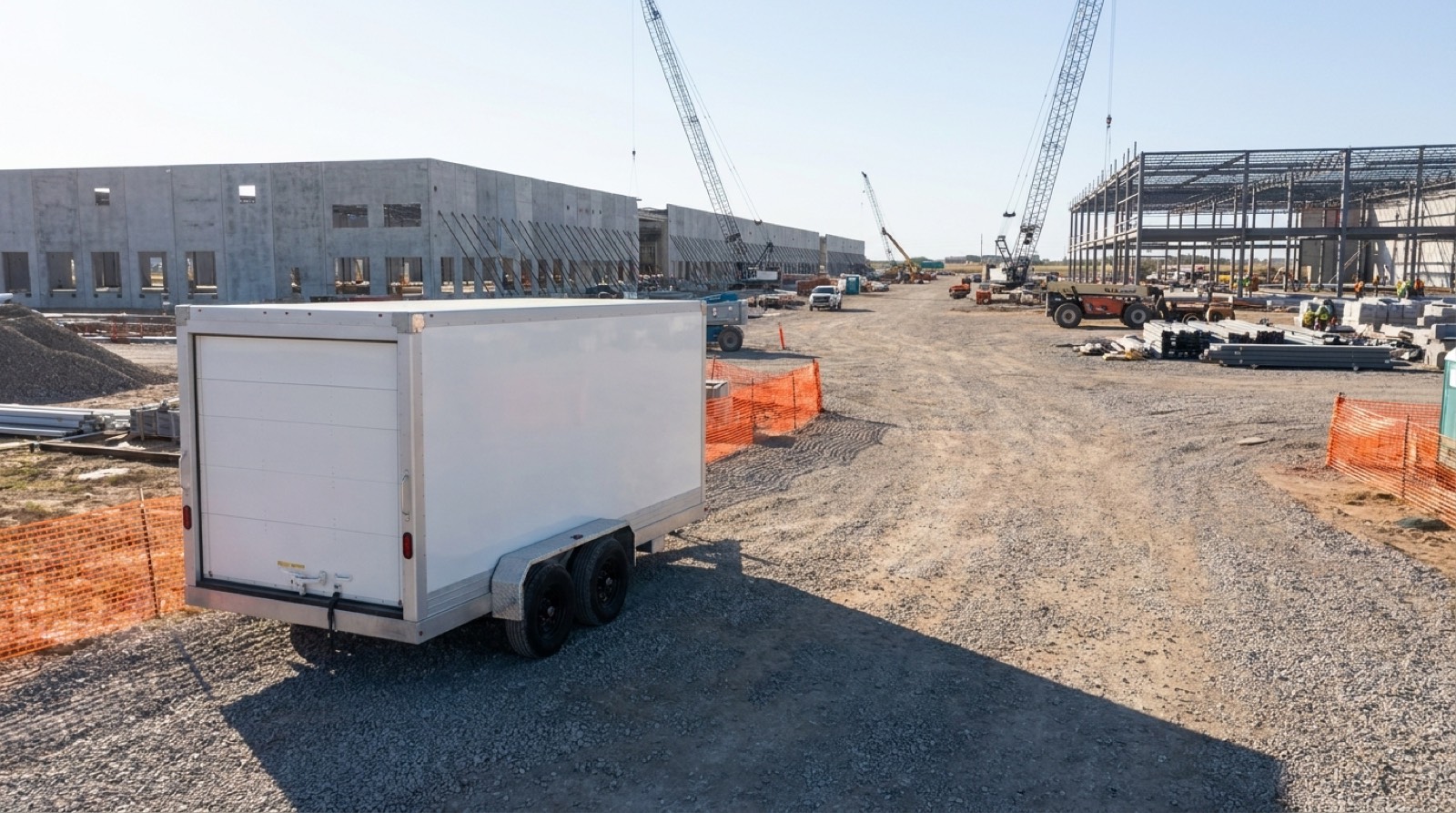
Most Arizona deployments bundle several units under one route. One contracted vendor, one dispatch, one escalation path, and a site plan that arrives already coordinated.
Water is the first thing safety plans ask about. Hydration station rentals in Arizona run on the same supply logistics as the rest of the package, so adding them costs one stop, not a second vendor.
Where crews rotate in from out of the area, the end of shift is its own rush hour. Shower trailer rentals in Arizona carry that peak so the workforce goes home clean.
The paperwork side of the job needs a roof too. Office trailer rentals in Arizona give supervision and inspections a place to meet without leaving the gate.
Extended-stay crews generate wash loads every week of the schedule. Laundry trailer rentals in Arizona keep that cycle on site instead of in a hotel sink.
Restroom capacity anchors the plan. Restroom trailer rentals in Arizona sit closest to the workface and set the service route that every other unit rides on.
The full reach of our refrigeration trailer rentals program runs beyond Arizona, covering every corridor we serve.
Questions we get
With high-ambient specification, yes: rated condensers, shaded placement and verified setpoints on every summer visit.
Big enough to need on-site freezer banking. Daily draws for coolers and hydration outpace anything a store run can sustain.
Stocking happens the evening before, so cold storage is holding before the pre-dawn food service begins.
Go deeper
Longer reads for teams writing the site plan. Open what applies to your build.
Refrigeration equipment carries a design ambient rating, the outdoor temperature at which it can still deliver full capacity. A lot of trailers on the rental market are built around ratings comfortably below what a Phoenix summer delivers. When afternoon air hits 115 degrees, a unit rated for 100 does not fail outright. It just loses ground. The compressor runs continuously, the box creeps upward through the afternoon, and product sits at the top of the safe range for hours every day. That slow daily creep is worse than a clean breakdown, because nobody notices it until something smells wrong.
For Arizona placements, ask specifically for a unit rated for high ambient operation, and ask what temperature that rating actually is. The honest number matters more than the brochure. High ambient packages typically pair larger condenser coils with fans sized to move more air across them, so the unit can still reject heat when the air doing the absorbing is already hotter than body temperature. Ask whether the unit has been serviced for desert duty as well. Dust is the second Arizona problem. A condenser coil packed with fine desert dust might as well be a smaller coil, and a monsoon season dust storm can coat a clean coil in one afternoon. Coil cleaning on a set schedule is part of the spec here, not an extra.
Even the right unit deserves help at 115. Orient the trailer so the condenser does not face west into the afternoon sun. Keep the condenser end well clear of block walls and stored material that trap and recirculate hot exhaust air. If the site can offer shade from a structure, take it. Load the box in the early morning and hold the door shut through the afternoon peak, because recovery capacity that would be instant in April simply is not there at 4 p.m. in July. None of this is exotic. It is matching equipment and habits to a climate that punishes anything undersized. We spec our Arizona fleet around the desert rather than adapting to it after the first failed afternoon. The difference shows up in the one metric that matters, a box that reads the same number at 5 p.m. as it did at 5 a.m., every day from June through September.
Pick the trailer spot during the hottest part of the day, because that is when the placement gets tested. A spot that looks fine at 7 a.m. can be a heat trap by afternoon, boxed in by sun soaked containers with the condenser breathing air well above the ambient reading. On Phoenix area data center sites, walk the candidate spots after lunch and feel them. Shade off a building's north side is worth real capacity. Distance from the serving point matters too, since every extra yard of exposed carry in 115 degree air is time the product spends sliding into the danger zone.
Desert trades have always started early, and the cold chain should follow the same logic. Stock the trailer at dawn, when the ambient can run 30 or 40 degrees cooler than the afternoon peak. A delivery accepted at 5 a.m. moves from truck to trailer with minimal heat gain, and the unit recovers in minutes. The same delivery at 2 p.m. hands the box a load of warmed product in the worst air of the day. The morning stocking run also sets up the day's meal service, with lunch product staged near the door so the midday pulls are fast. Ice distribution follows the same rule. Move it before the heat builds and the melt loss is a fraction of the noon number.
From noon to five, the trailer should stay close to sealed. That takes planning, not discipline alone. The morning crew stages the afternoon's needs, drinks for the coolers and ice for the stations, near the door or in pass through coolers outside it. Anyone opening the box after noon should be pulling a listed item, not browsing. Post the afternoon rule on the door in English and Spanish so everyone on a mixed crew reads it the same way. These sound like small habits. Stack them across a hundred day stretch of triple digit heat and they are the difference between a unit that cruises through an Arizona summer and one that fights it every single day, with your food program riding on the outcome. Placement gets decided once. The stocking rhythm gets decided every morning, and the good sites decide it before sunrise.
Arizona heat safety plans treat cooling the worker as seriously as any other hazard control, and ice is the working fluid of that plan. Cold drinking water at the stations, ice packed around electrolyte service, cooling towels, and immersion cooling for anyone showing heat illness signs all draw from the same supply. When a crew member goes down with heat stroke, rapid cooling is the treatment that matters most in the first minutes, and that means ice on hand, not ice on order. A site that treats ice as a lunch amenity has not thought this through. A site that treats it as safety infrastructure stores it accordingly.
Bagged ice deliveries fail in exactly the conditions that make ice critical. Demand across the metro spikes on extreme heat days, and the jobsite ends up competing with every convenience store in Phoenix for the same trucks. A freezer trailer at 0 degrees holds a multi day reserve that makes the site independent of that scramble. Size the reserve to your headcount and your heat plan, then add margin for the excessive heat warning weeks when usage can double. The trailer also keeps ice loose and usable. Bags stacked in coolers fuse into blocks overnight, and a safety measure you have to chip apart is slower exactly when seconds count.
Run ice out to the water stations and break areas before the day heats up, in insulated totes, on a route somebody owns. Check station levels at midday and top off from the reserve rather than waiting for empty. Keep a clearly marked emergency supply in the trailer that the safety team can grab without asking, staged by the door with the immersion tub gear if your plan uses one. And track consumption for a week. Real usage numbers by headcount and temperature let you size deliveries instead of guessing, and they give the safety manager hard data for the heat program review. The cost of running a freezer trailer through an Arizona summer is small and predictable. Set against what it protects, the people doing the hardest outdoor work in the hottest jobsite conditions in the country, it is some of the cheapest infrastructure on the site.