Ohio
Refrigeration trailer rentals for Ohio data center sites
Year-round cold chain for multi-year campus programs, where summer catering and winter logistics need the same reliable setpoint.
Year-round cold chain for multi-year campus programs, where summer catering and winter logistics need the same reliable setpoint.
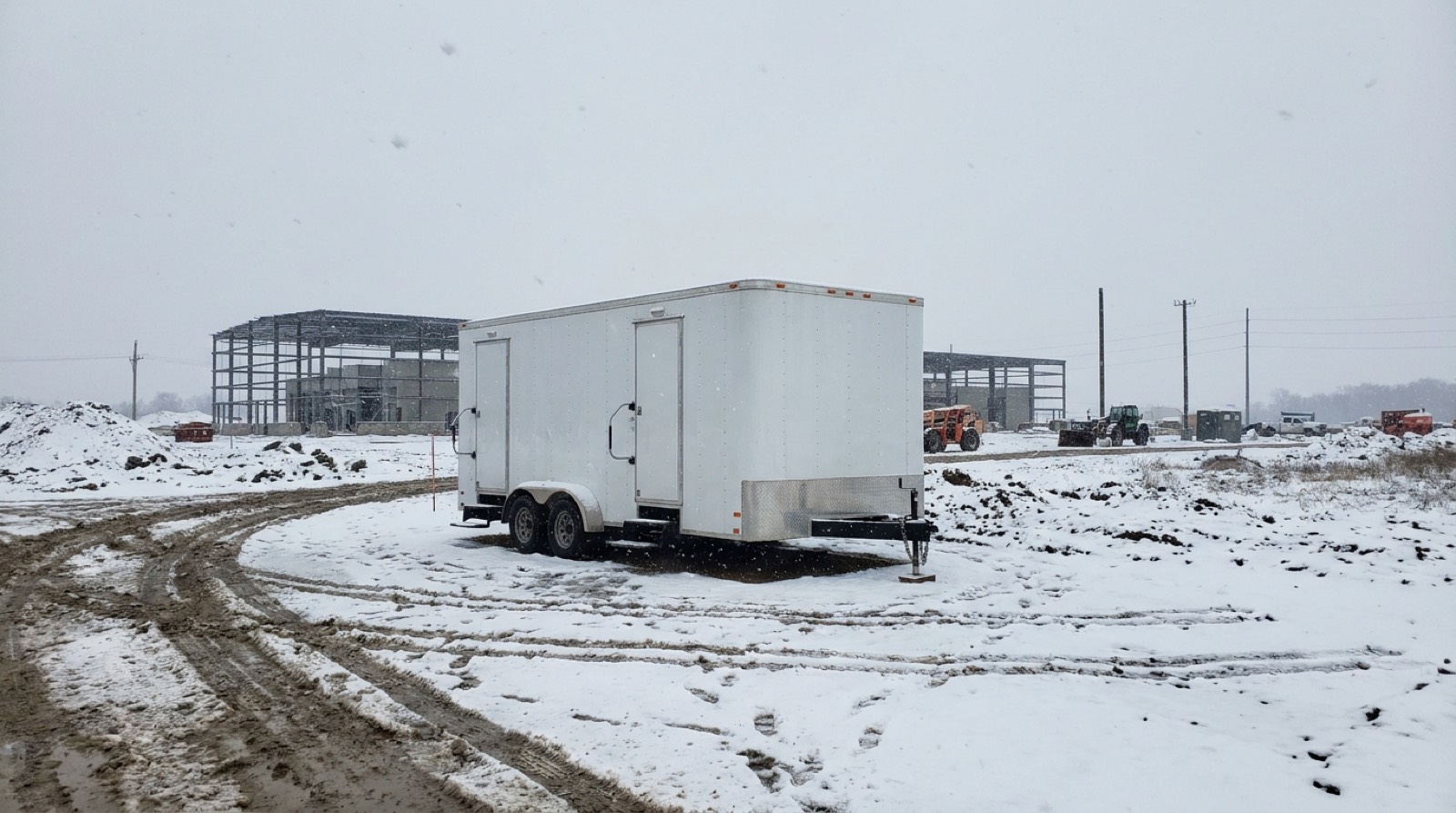
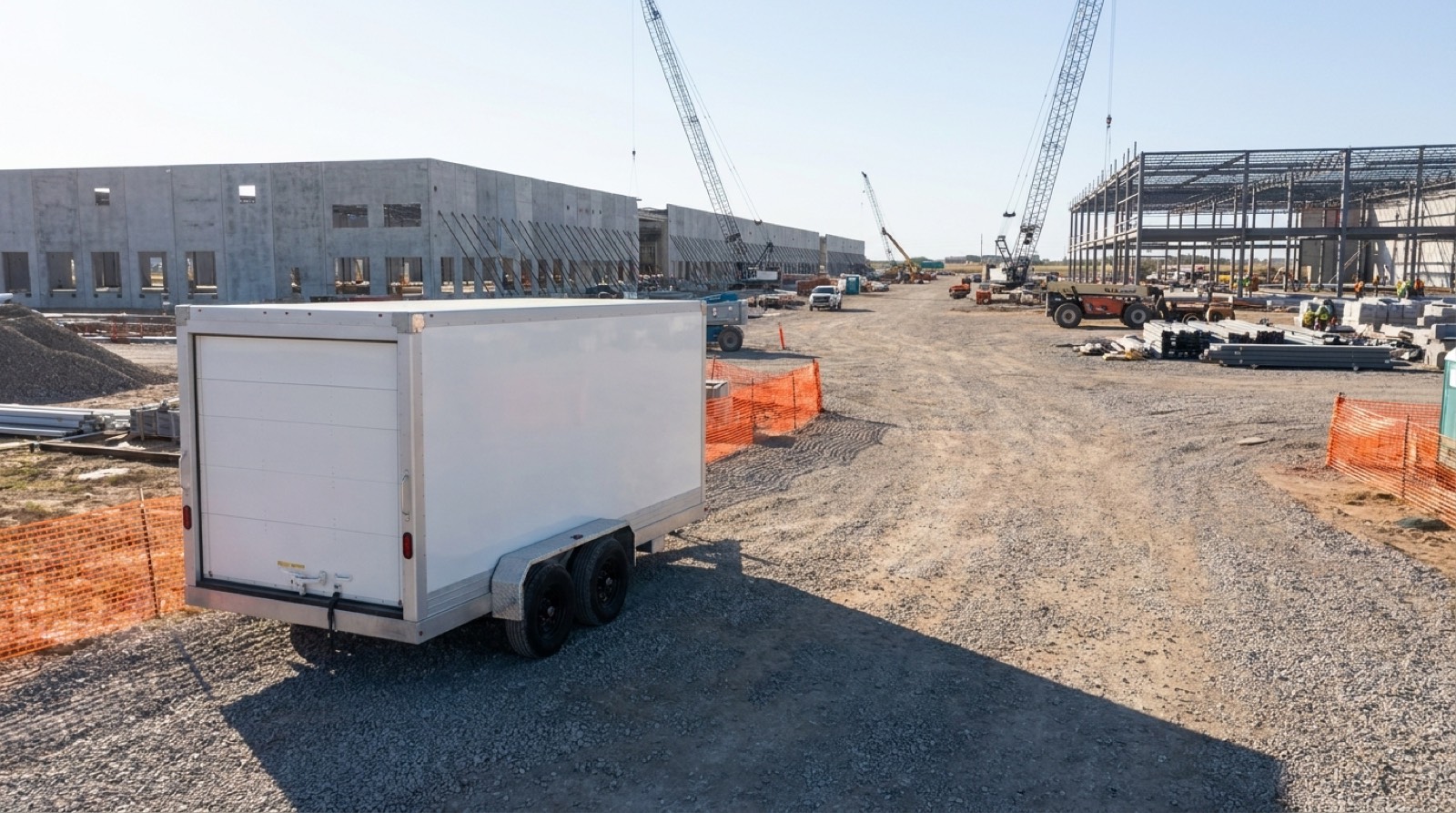
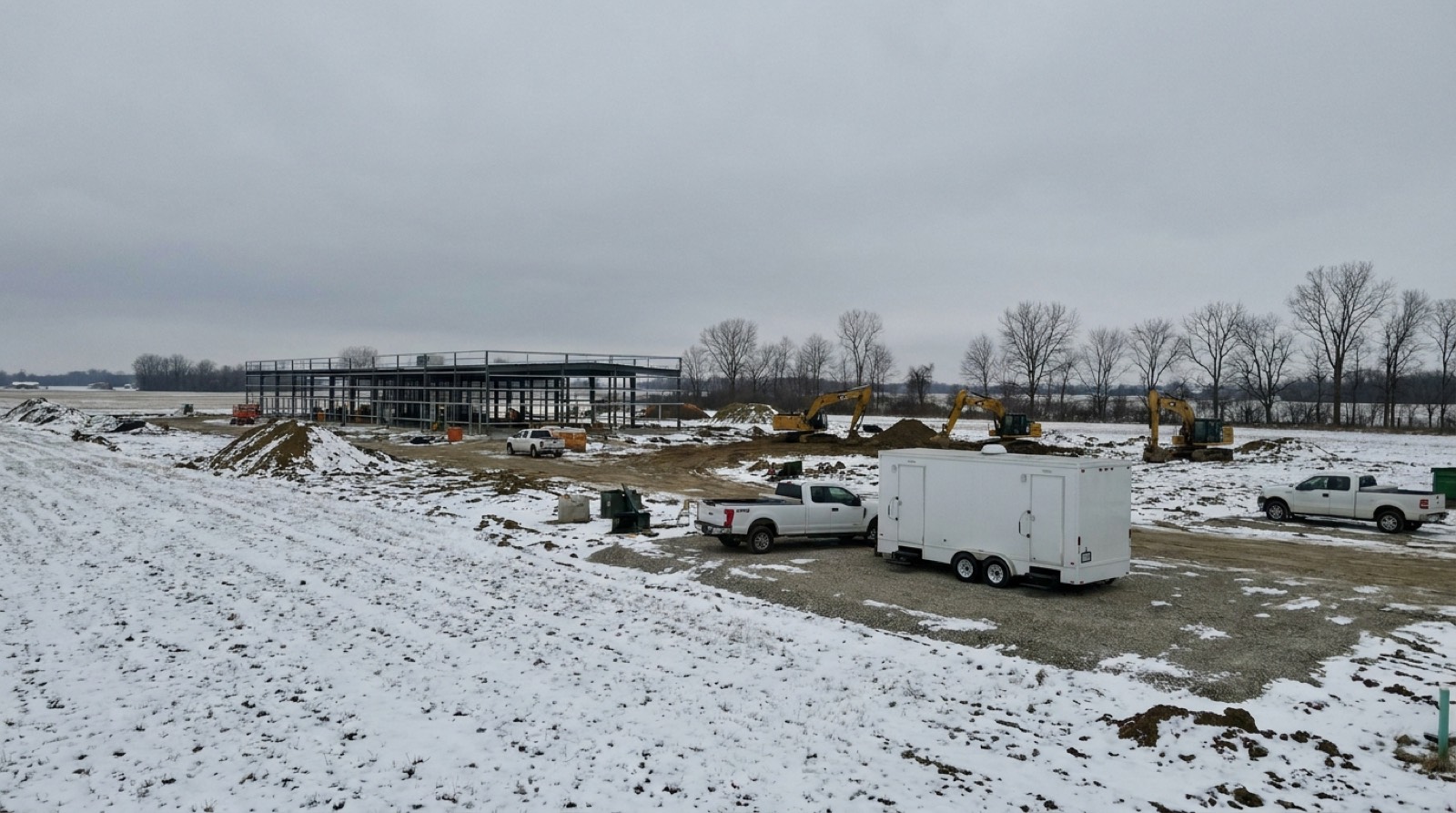
Central Ohio runs humid summers and freezing winters, and a campus food program spans both without pause. Refrigerated units hold setpoint against July humidity, and in winter the same units protect product from freezing, because a trailer full of produce at ten degrees ambient has the opposite problem of August.
New Albany's building-after-building schedules keep catering programs running for years. Refrigeration placements become standing infrastructure, serviced on interval and swapped without interrupting the food service.
Winter also threatens materials that must not freeze. Conditioned storage keeps adhesives, coatings and sensitive supplies inside their ranges through an Ohio January.
Most Ohio deployments bundle several units under one route. One contracted vendor, one dispatch, one escalation path, and a site plan that arrives already coordinated.
Water is the first thing safety plans ask about. Hydration station rentals in Ohio run on the same supply logistics as the rest of the package, so adding them costs one stop, not a second vendor.
Where crews rotate in from out of the area, the end of shift is its own rush hour. Shower trailer rentals in Ohio carry that peak so the workforce goes home clean.
The paperwork side of the job needs a roof too. Office trailer rentals in Ohio give supervision and inspections a place to meet without leaving the gate.
Extended-stay crews generate wash loads every week of the schedule. Laundry trailer rentals in Ohio keep that cycle on site instead of in a hotel sink.
Restroom capacity anchors the plan. Restroom trailer rentals in Ohio sit closest to the workface and set the service route that every other unit rides on.
The full reach of our refrigeration trailer rentals program runs beyond Ohio, covering every corridor we serve.
Questions we get
Freeze protection for the product. Units hold product above freezing in sub-zero ambient, the mirror image of the summer job.
Yes. Standing refrigeration is normal on New Albany campuses, serviced on interval and swapped without a gap in the food program.
Many need freeze protection, and conditioned storage keeps them inside their ranges through the cold months.
Where we deploy
Heaviest concentration in the corridors carrying the most active data center construction, with nationwide mobilization beyond them.
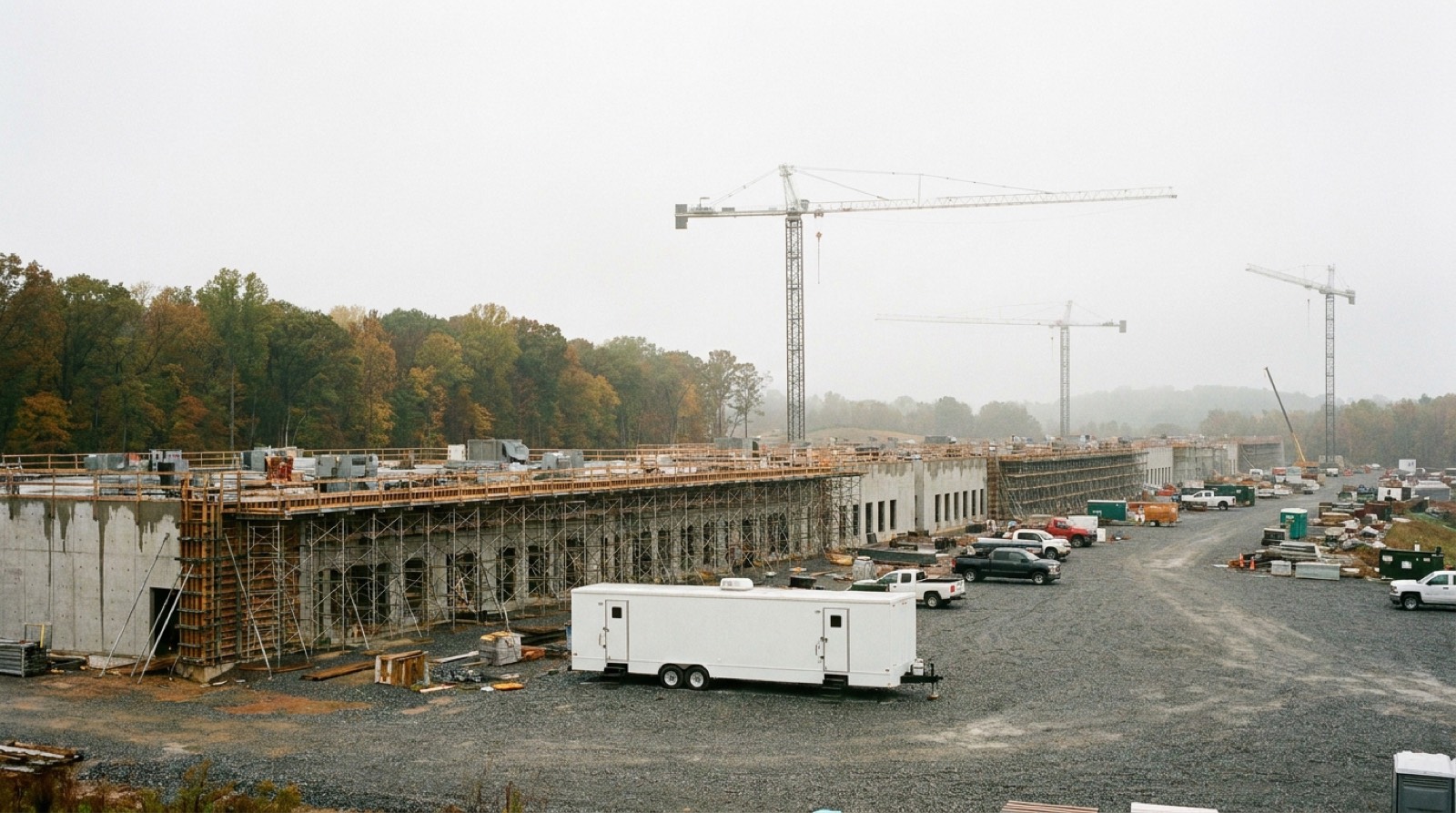
Loudoun County and Prince William run the densest data center concentration on earth. Multi-year campuses, badge-controlled access, crews in the hundreds, and facility requirements written into the subcontract.
View Northern Virginia →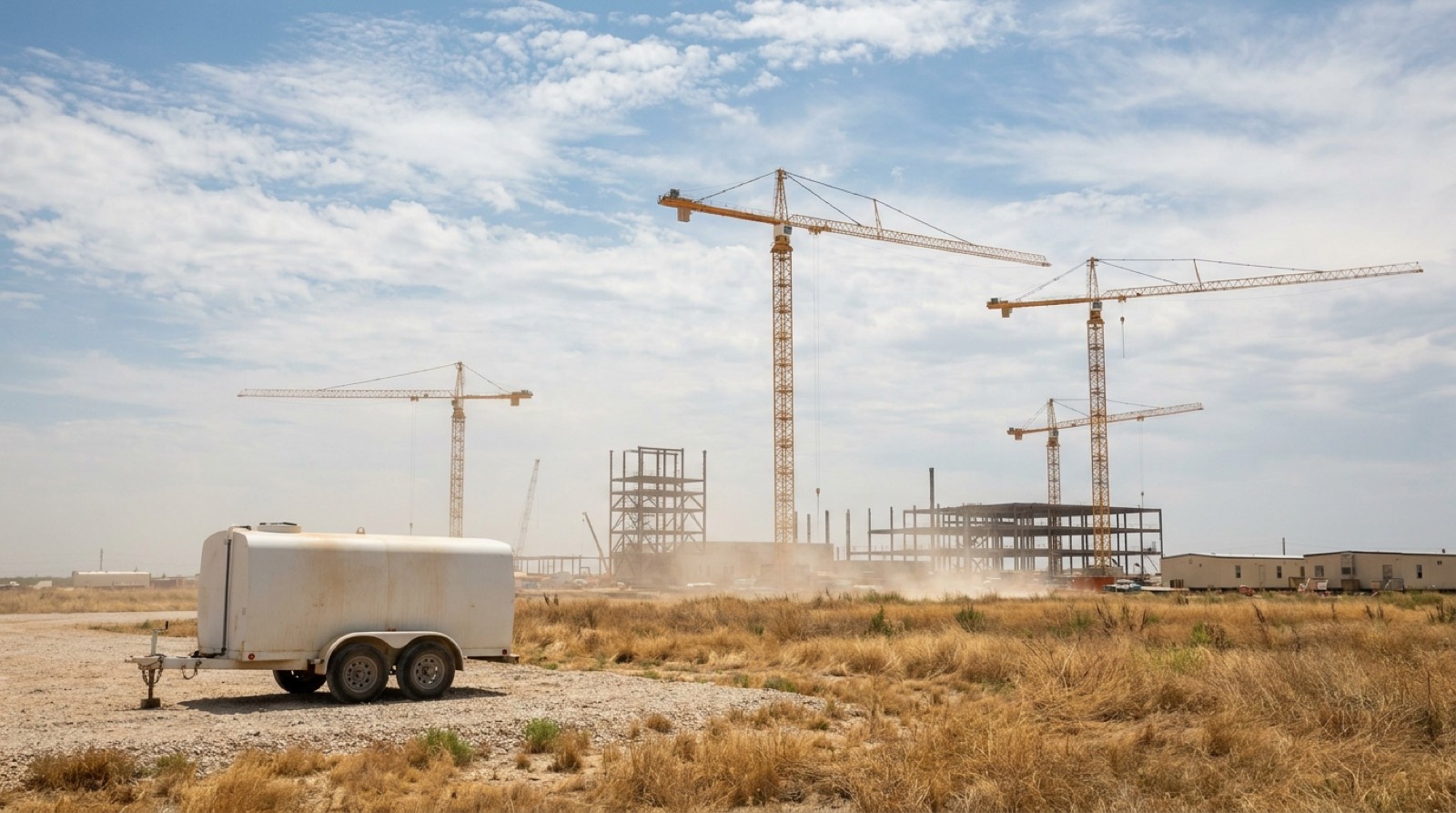
Dallas, Fort Worth, San Antonio and Abilene are carrying some of the largest campuses in the country. Summer heat makes hydration and shower capacity a safety line item, not an amenity.
View Texas →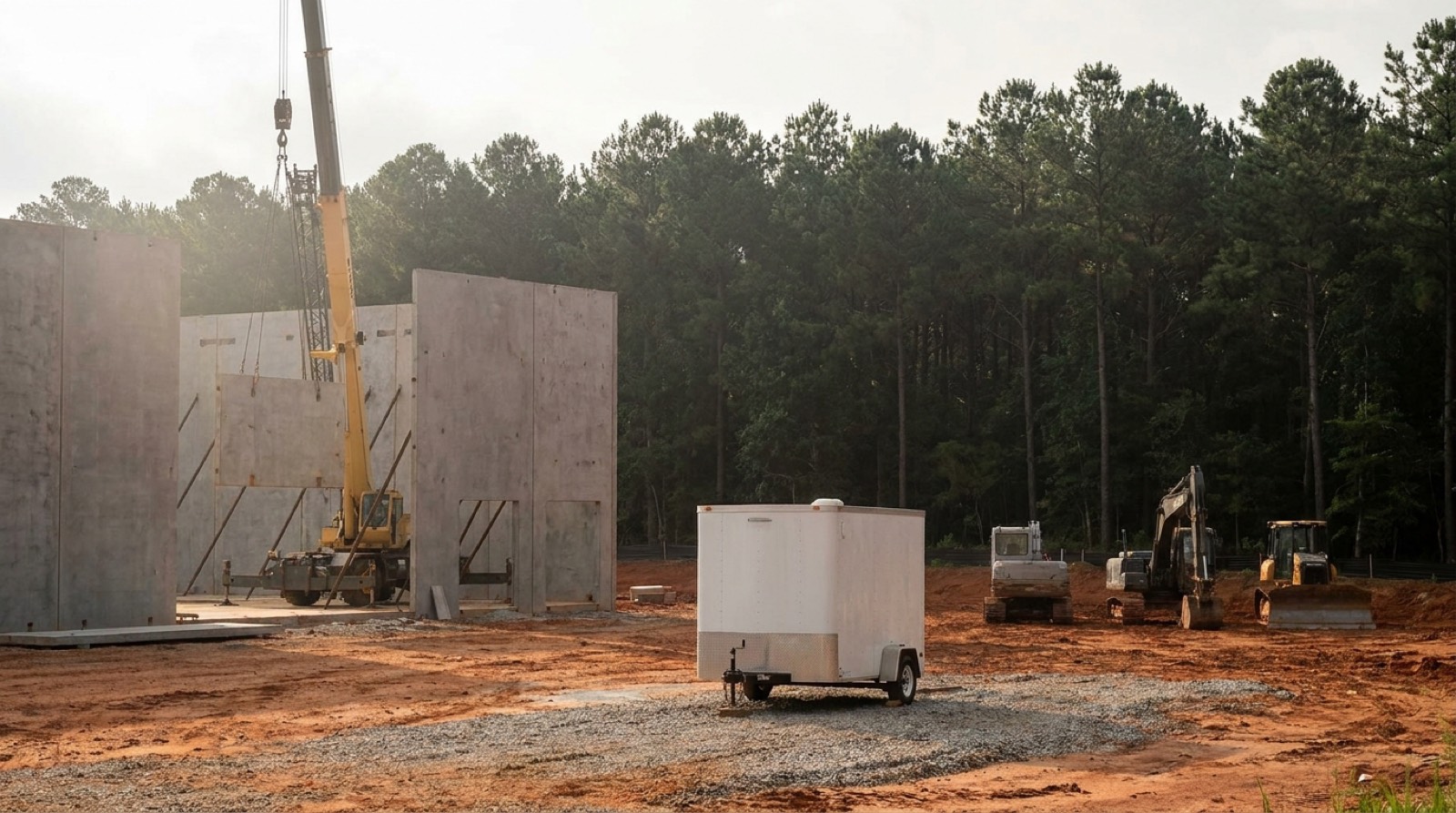
Atlanta metro and Douglas County, extending along I-20. Humid summers, long hauls between laydown and pad, and multi-phase schedules that keep facilities on site for years.
View Georgia →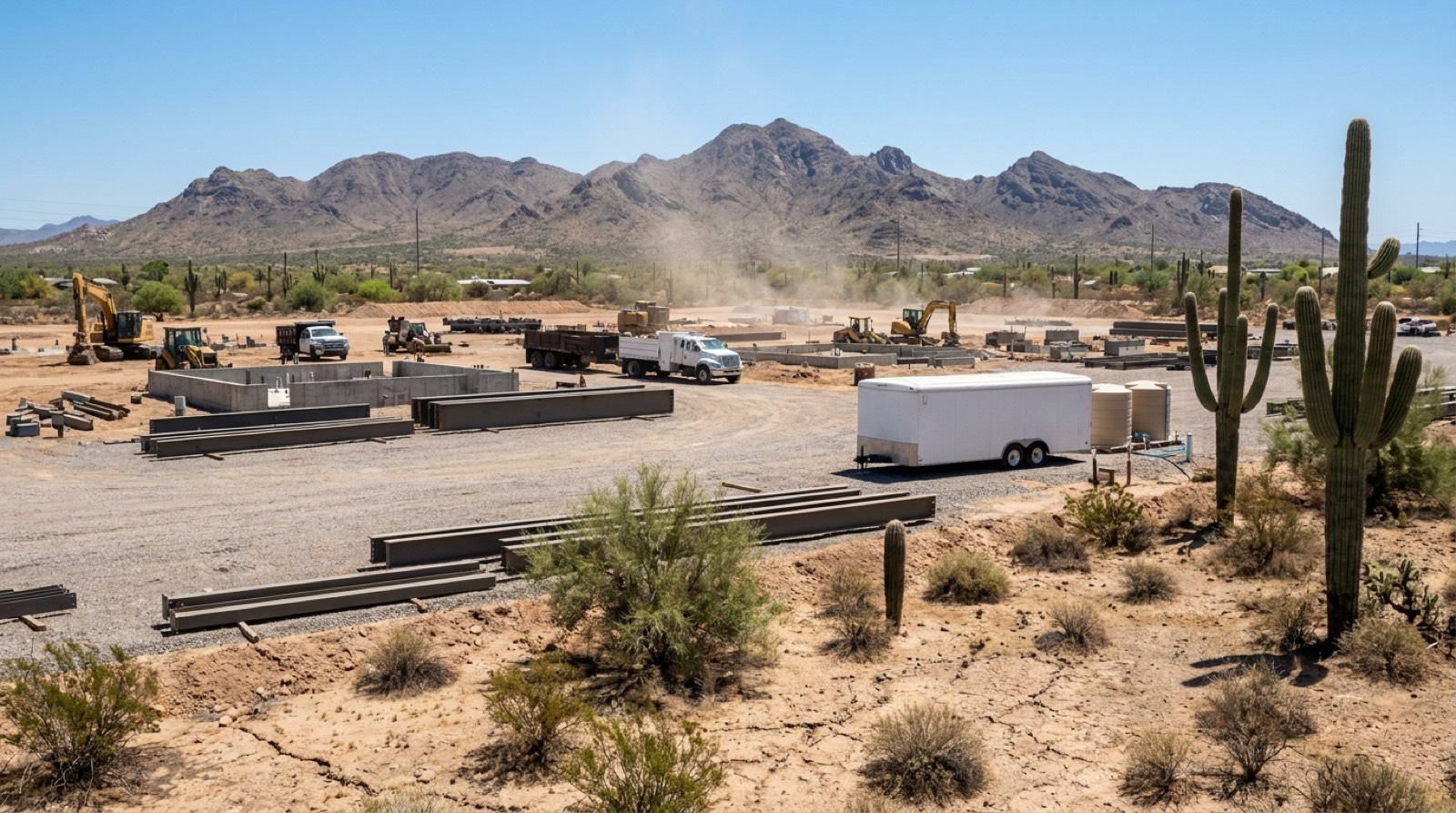
Phoenix and Mesa build through heat that regularly exceeds 110 degrees. OSHA heat-illness prevention drives water and shade requirements that our units satisfy directly.
View Arizona →Columbus and New Albany. Freeze protection and winter service access matter here in a way Sun Belt corridors never see.
View Ohio →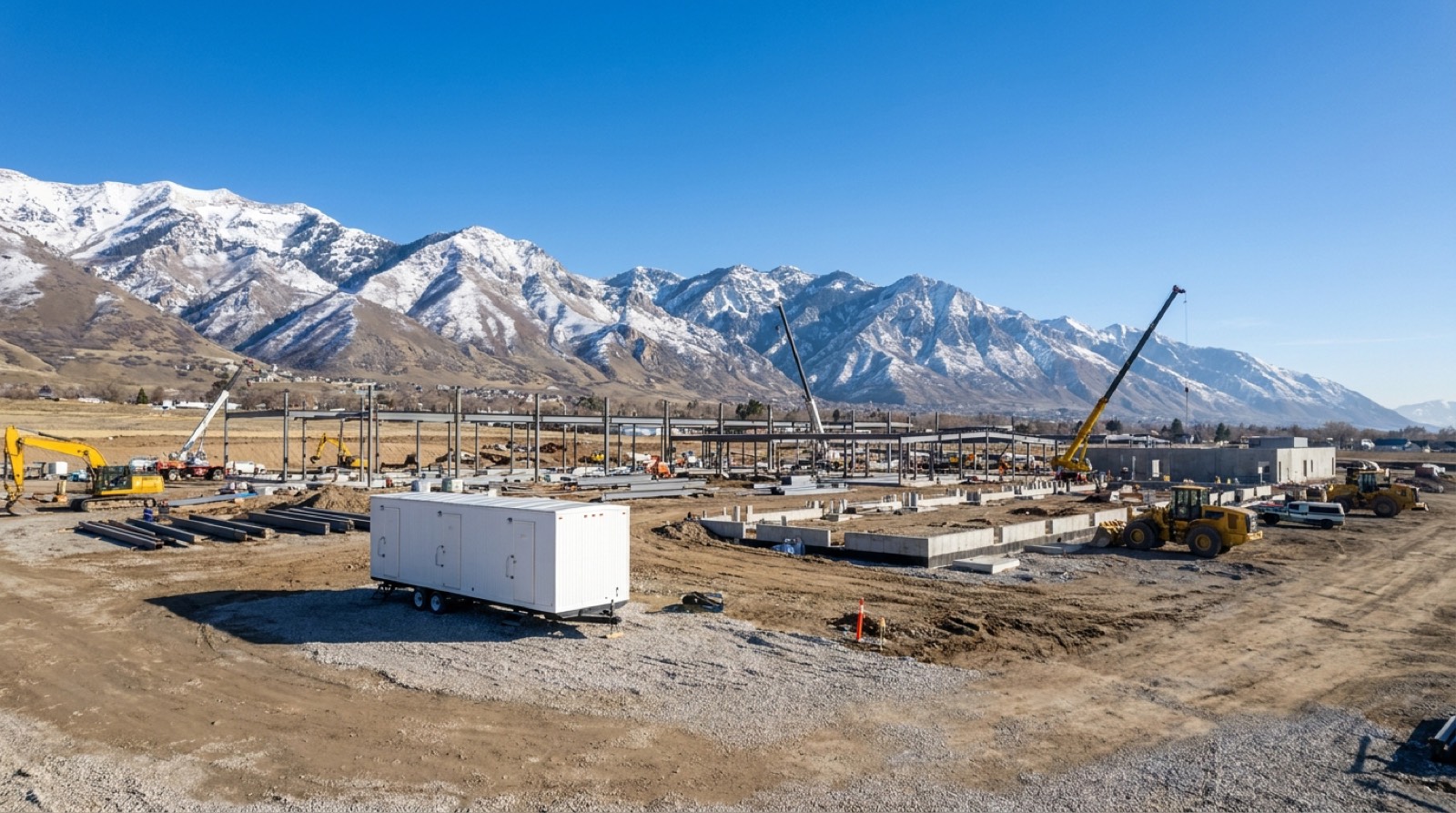
The Wasatch Front corridor runs through hard winters at elevation. Units are winterized and service intervals hold through snow.
View Utah →Go deeper
Longer reads for teams writing the site plan. Open what applies to your build.
Columbus averages winter stretches where daytime highs stay below freezing and nights drop into the teens. For a refrigerated trailer, that turns the job inside out. All summer the unit fights to keep heat out of the box. In an Ohio January, the fight is keeping the box from following the outside air below 32 and freezing everything in it. Lettuce, dairy, eggs, and canned beverages are all ruined by a hard freeze as surely as by heat. A fridge full of frozen, split cans is a real Monday morning on sites that did not plan for the flip.
The equipment answer is a refrigeration unit with an automatic heat cycle. These units hold setpoint from both directions, cooling when the box runs warm and heating when the outside cold pulls it down. Not every rental trailer on the market has this, so on a winter placement, ask the question directly. Confirm the unit heats, and confirm it will hold setpoint through the temperatures your site actually sees. Around the Columbus and New Albany data center corridor, that means single digit nights every winter without fail. The freezer side is simpler. Zero degrees sits below almost any Ohio air temperature, so freezer trailers mostly coast through winter and run cheap. It is the 36 to 38 degree fridge that needs the heat capable unit.
Snow management matters more than people expect. Keep the condenser end clear of plowed snow piles, which block airflow and then melt into ice sheets around the unit. Keep the door area shoveled and salted, because a catering worker on ice with an armload of product is an injury report waiting to be written. Watch the door gasket in a deep freeze, since gaskets stiffen in the cold and a door that does not fully latch lets the box drift with the weather. And keep logging temperatures daily even though the season feels safe. Winter failures are quiet ones. A heat cycle that quits on a 10 degree night does not announce itself the way a summer breakdown does, and the log is what catches it before the product goes. Ohio sites run clean cold chains all winter without drama. It just takes the right unit and about four habits the summer crew never needed.
The data center corridor around New Albany and the northeast Columbus suburbs is one of the largest concentrations of ongoing hyperscale construction in the Midwest, and the campuses there build in waves. One building tops out while the next starts sitework, and the workforce rolls forward for years at a stretch. A catering cold storage rental on that kind of program is not a season. It is standing infrastructure, and it should be set up like standing infrastructure from the first day.
Placement decisions get more careful. A spot that works for six months may sit in the path of phase three, so pick locations with the GC's long range site logistics plan on the table, and expect to relocate the box at least once over the program. Ask your provider how relocations work and how fast they happen, because a trailer full of product cannot sit on a lowboy overnight. Maintenance becomes scheduled rather than reactive. A unit running around the calendar needs coils cleaned, gaskets checked, drains cleared, and its heat cycle verified before each winter, on a schedule, the same way the site services its cranes and generators. The equipment itself should be specced for the full Ohio range from the start, cooling through humid 90 degree summers and heating through single digit winters, because a multi year unit will see all of it, twice.
Over a multi year program, the people running the food program will change. Superintendents rotate off and catering vendors rebid partway through. Write the trailer's basics down and keep them at the box. Setpoint, service contact, power circuit, and the outage plan on one laminated sheet survives every handoff. Keep the temperature log running as a continuous record, since a program that can show years of clean readings has an easy conversation with any health inspector or owner's rep who asks. Long placements also deserve a rate conversation. Multi year commitments are worth better terms than month to month drift, and a provider who knows the box is staying will invest in it accordingly. We treat New Albany scale placements as partnerships with the site rather than drop offs, because on a campus that builds for five years, the cold chain is simply part of the jobsite utilities.
Central Ohio hands a construction site all four seasons at full strength. Summer brings humid 90 degree heat and January brings single digit nights, with shoulder months that can swing 40 degrees between dawn and dusk. A refrigeration trailer placed on a long running data center build will face the whole range, sometimes inside the same month. Planning for the season you are in is how sites get surprised. Planning for the transition is how they stay ahead of it, and the transitions here arrive fast.
The dangerous months are not July and January. Crews respect obvious extremes. The traps are April and October, when a mild afternoon turns into a freezing night and nobody has thought about the trailer since lunch. A fridge unit without an active heat cycle can drift below freezing overnight in October and be back to normal by the time anyone checks it, leaving damaged product and no obvious cause. The fix is running heat capable equipment all year rather than treating it as winter gear, and keeping the daily log going through the mild months when attention naturally drops. Shoulder seasons are also when door discipline erodes, because the urgency of summer is gone. The bacteria did not get the memo. The danger zone rules between 40 and 140 degrees apply in a pleasant October exactly as they did in July.
A long Ohio placement runs better with a simple seasonal checklist. Before summer, confirm the condenser coil is clean and the unit has capacity headroom for humid heat. Before winter, verify the heat cycle works and settle who keeps snow away from the condenser and the door. Twice a year is enough, timed to the clock changes if you want a memory hook. Ask your rental provider to fold those checks into scheduled service visits so the site does not have to remember them at all. Sites in the Columbus corridor already plan power and site logistics around multi year construction calendars. The cold chain deserves a line on the same calendar. It is a small piece of the site plan, but it touches every worker on the program twice a day, and it is one of the few systems where a quiet overnight failure ruins something everyone notices at noon.