Ohio
Restroom trailer rentals for Ohio data center sites
Winterized restroom capacity for central Ohio's data center build-out, engineered for schedules that run through freeze and sites that used to be farmland.
Winterized restroom capacity for central Ohio's data center build-out, engineered for schedules that run through freeze and sites that used to be farmland.
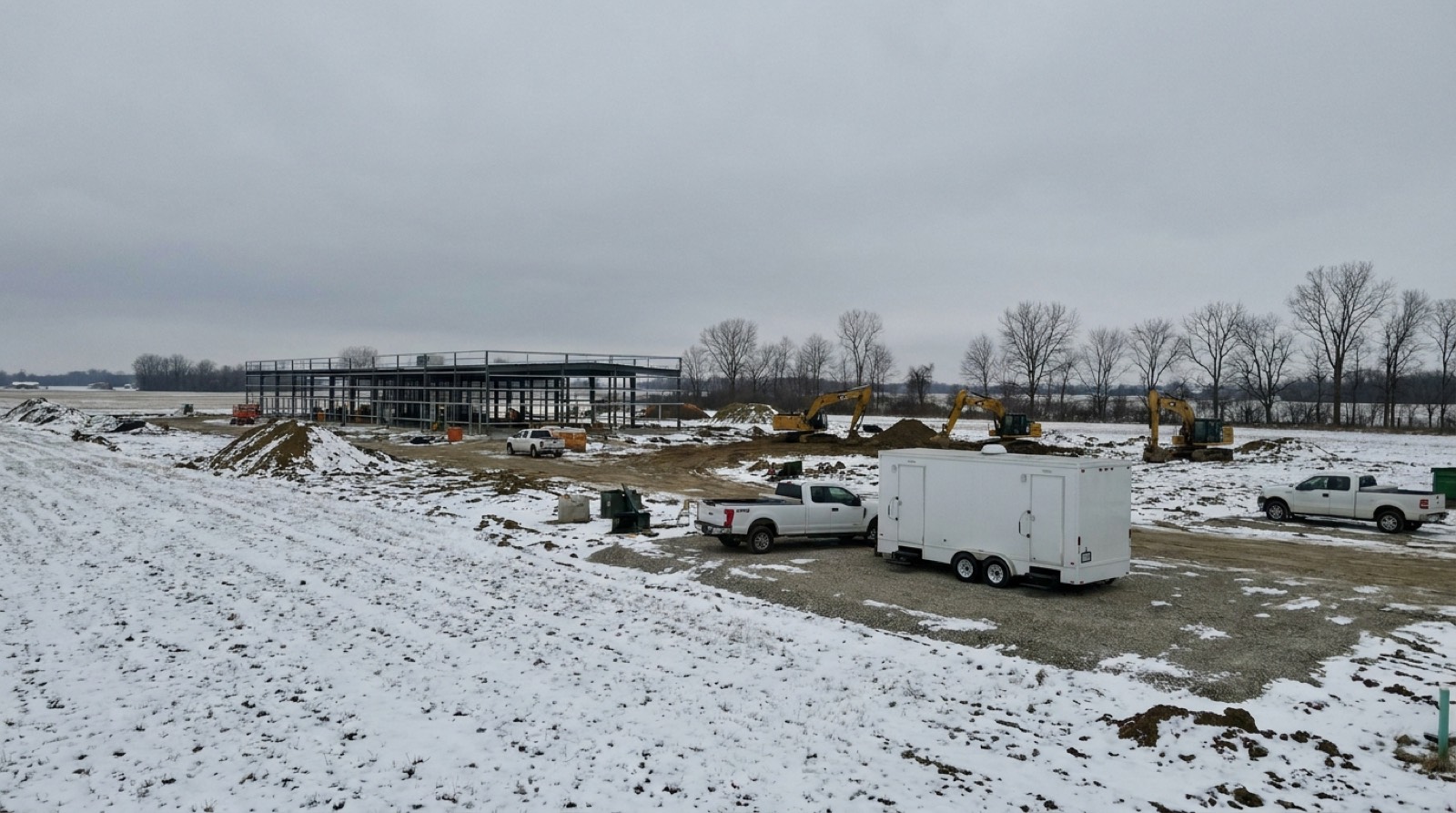
The corridor around Columbus, New Albany and Licking County is now one of the biggest data center construction markets in the Midwest. Campus projects are rising on ground that grew crops a few seasons ago. Greenfield sites this far north mean two things at once. No existing utilities, and a schedule that runs straight through real winter.
A frozen restroom trailer is out of the fixture count until it thaws and gets repaired. January is exactly when the site can least afford that. Ohio units run winterized: protected plumbing, heat trace, interior heating sized for weeks of cold. Service keeps running through winter on routes planned for snow, because the interval does not pause for weather.
These are multi-year programs where headcount steps up building by building. We plan fixture counts against each phase's peak and add units ahead of the ramp. Placements move as the campus advances. The deployment plan lives with your schedule and gets revised when the schedule does.
Columbus and Franklin County, New Albany and the Licking County corridor including Johnstown and Heath, the corridors following transmission capacity outward, and statewide mobilization beyond central Ohio.
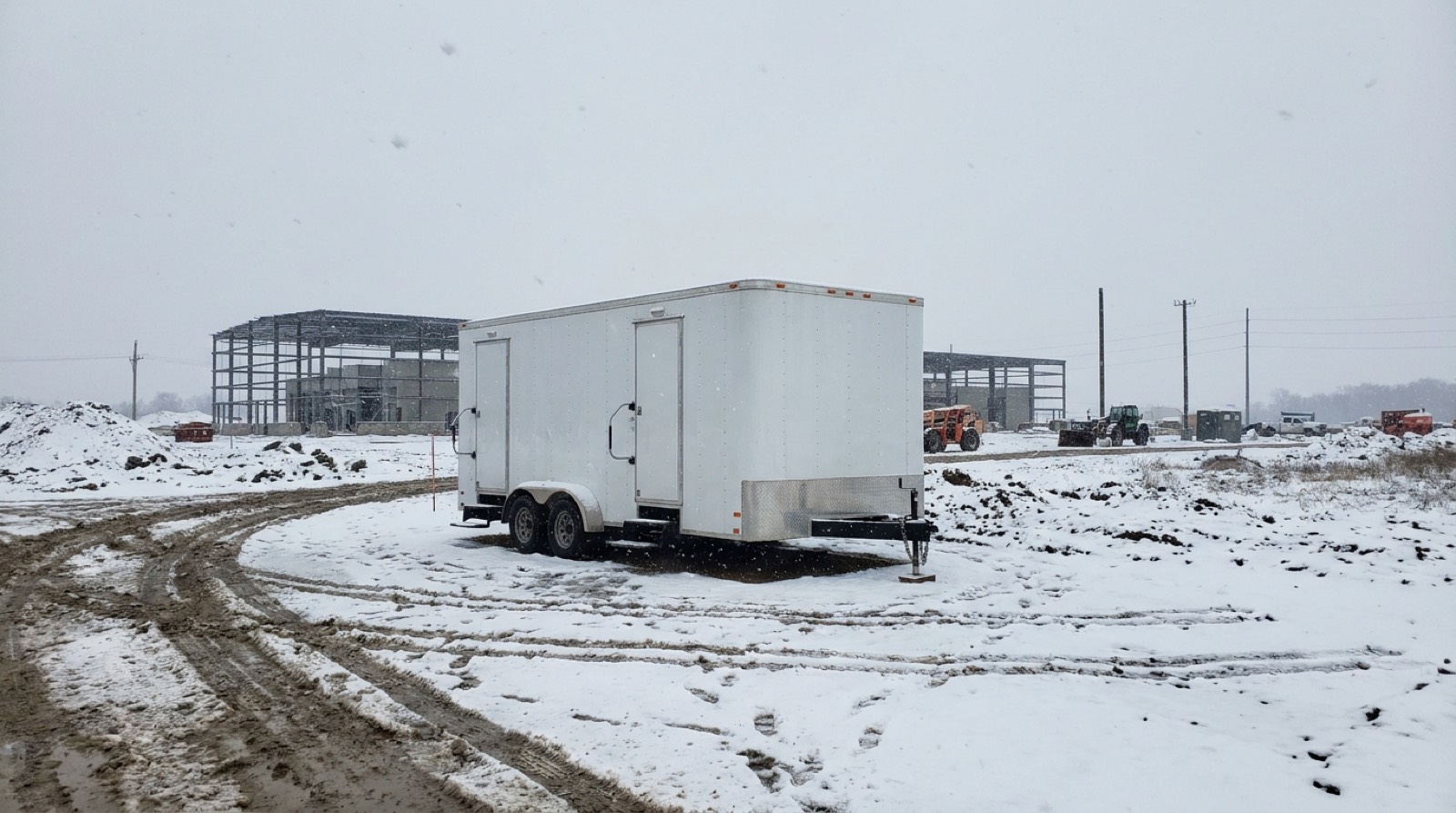
Most Ohio deployments bundle several units under one route. One contracted vendor, one dispatch, one escalation path, and a site plan that arrives already coordinated.
Food service and ice programs live or die on cold storage at the pad. Refrigeration trailer rentals in Ohio hold setpoint through the local season.
Water is the first thing safety plans ask about. Hydration station rentals in Ohio run on the same supply logistics as the rest of the package, so adding them costs one stop, not a second vendor.
Where crews rotate in from out of the area, the end of shift is its own rush hour. Shower trailer rentals in Ohio carry that peak so the workforce goes home clean.
The paperwork side of the job needs a roof too. Office trailer rentals in Ohio give supervision and inspections a place to meet without leaving the gate.
Extended-stay crews generate wash loads every week of the schedule. Laundry trailer rentals in Ohio keep that cycle on site instead of in a hotel sink.
The full reach of our restroom trailer rentals program runs beyond Ohio, covering every corridor we serve.
Where we deploy
Heaviest concentration in the corridors carrying the most active data center construction, with nationwide mobilization beyond them.
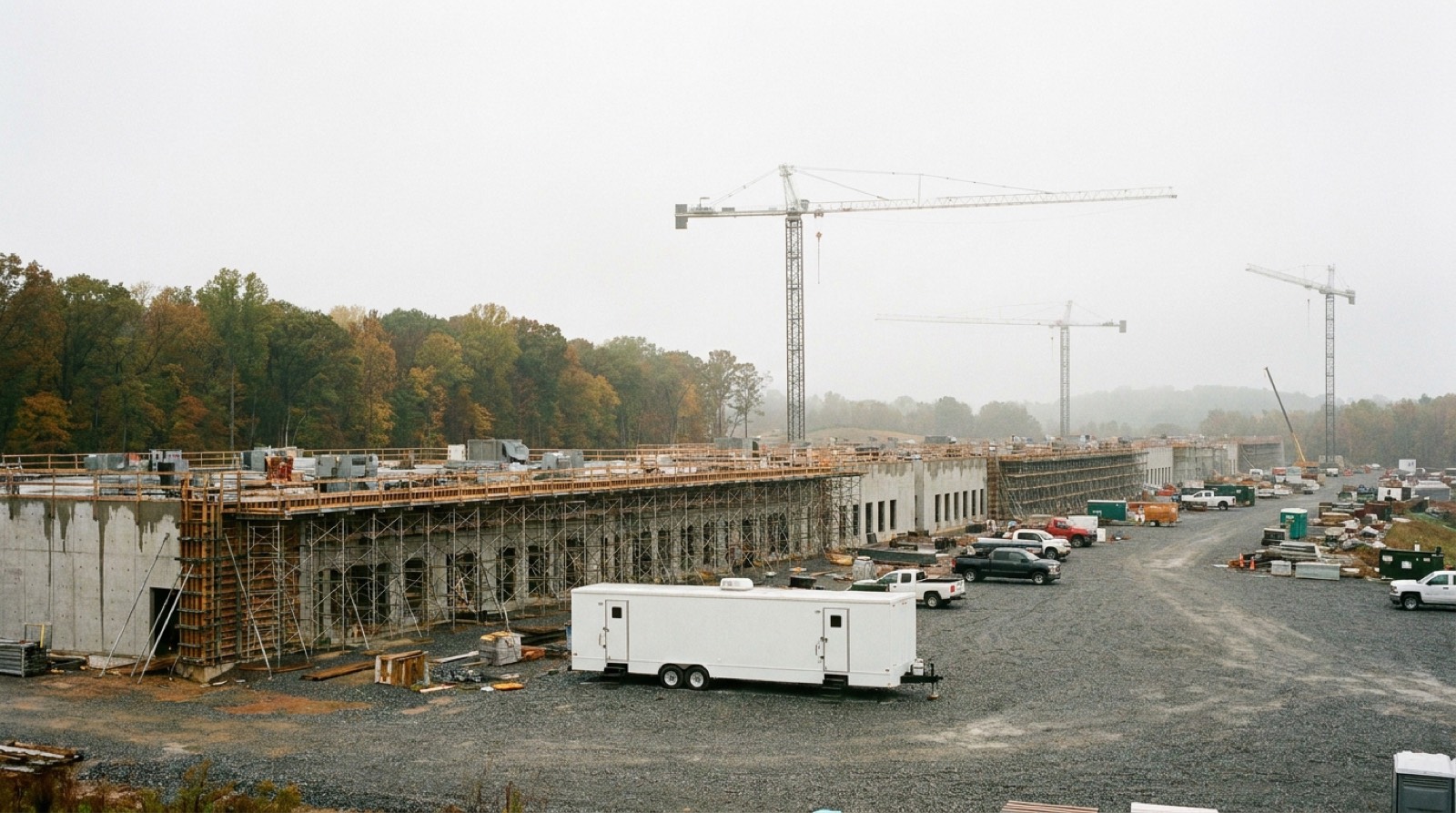
Loudoun County and Prince William run the densest data center concentration on earth. Multi-year campuses, badge-controlled access, crews in the hundreds, and facility requirements written into the subcontract.
View Northern Virginia →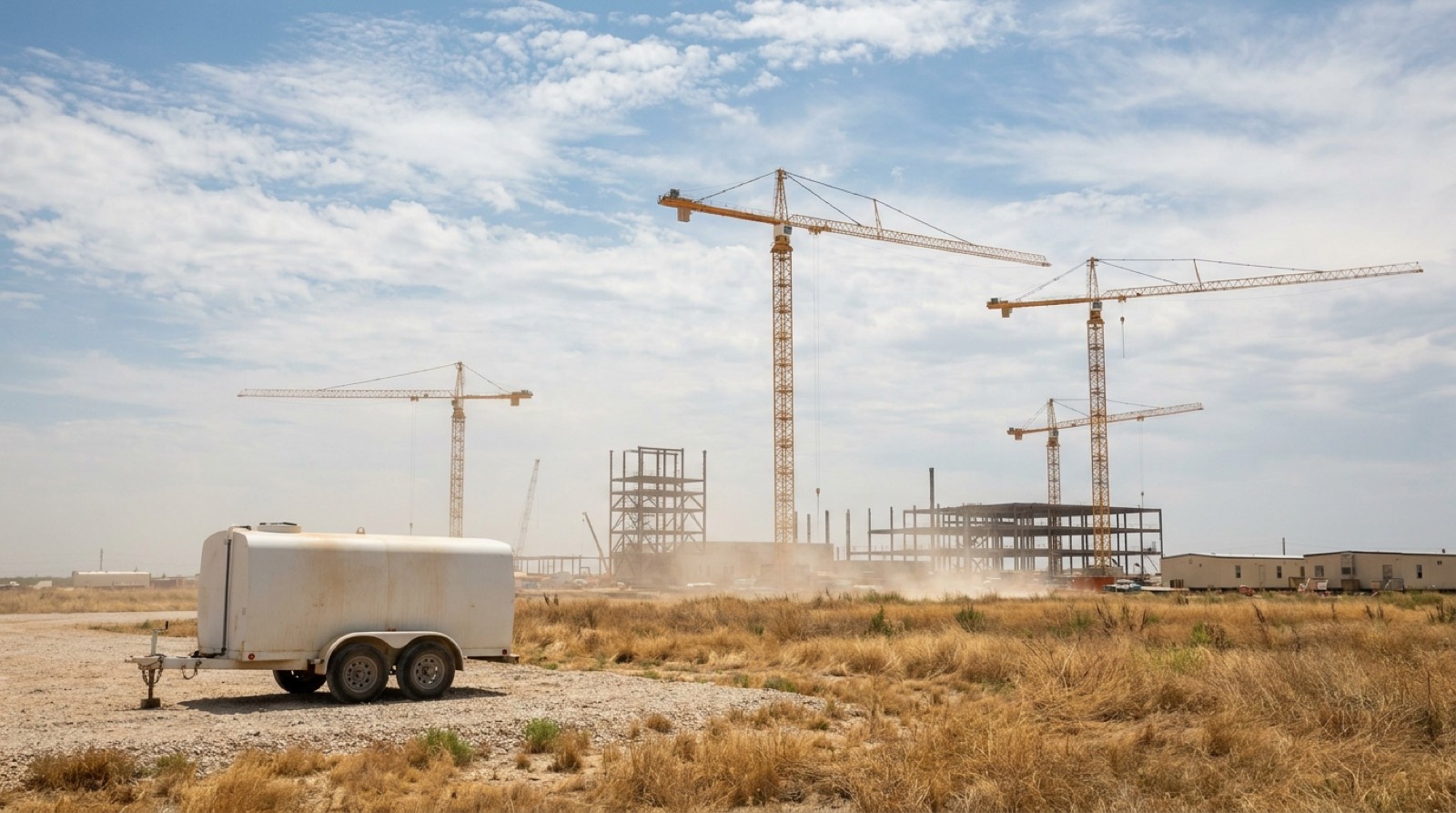
Dallas, Fort Worth, San Antonio and Abilene are carrying some of the largest campuses in the country. Summer heat makes hydration and shower capacity a safety line item, not an amenity.
View Texas →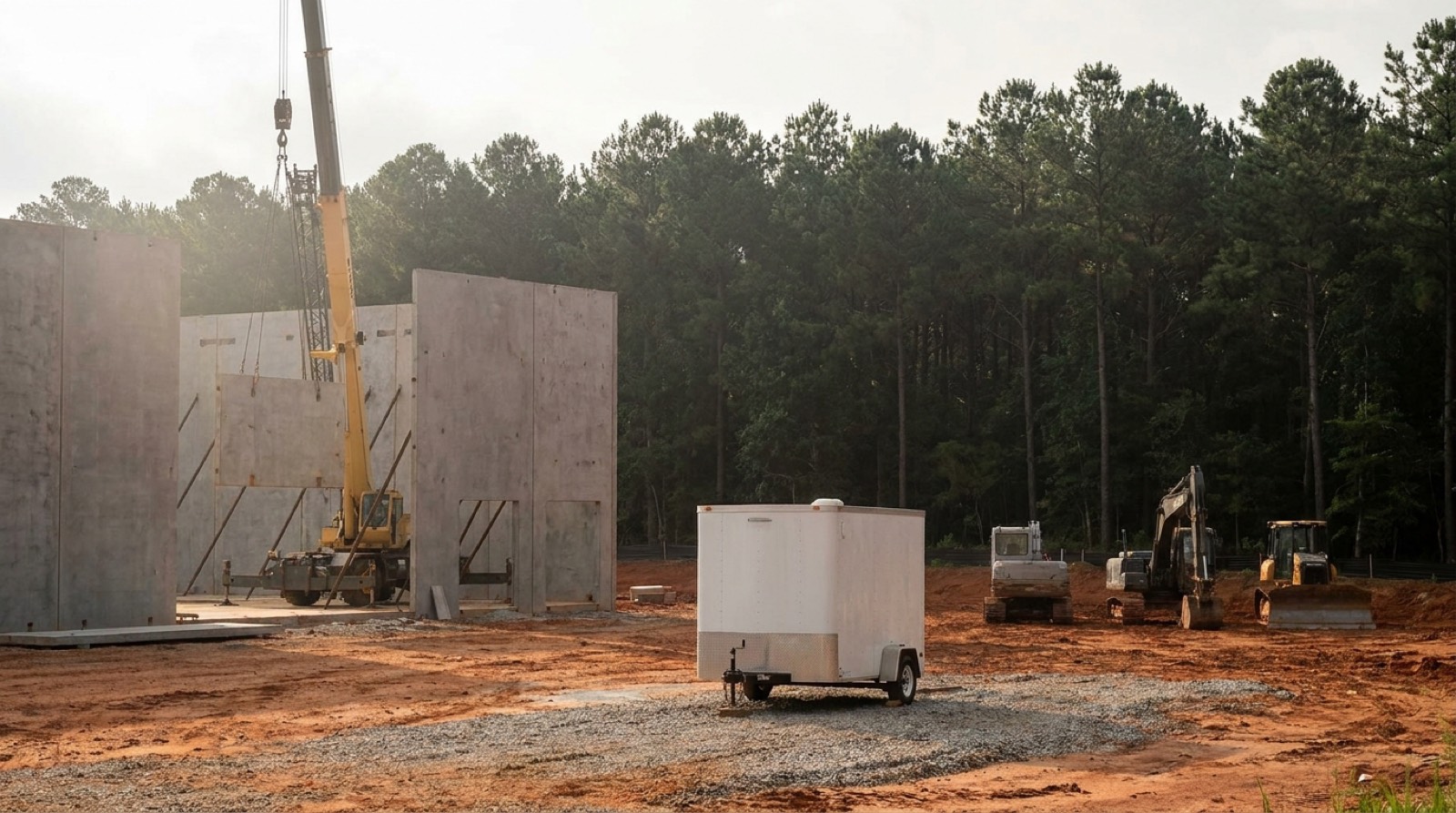
Atlanta metro and Douglas County, extending along I-20. Humid summers, long hauls between laydown and pad, and multi-phase schedules that keep facilities on site for years.
View Georgia →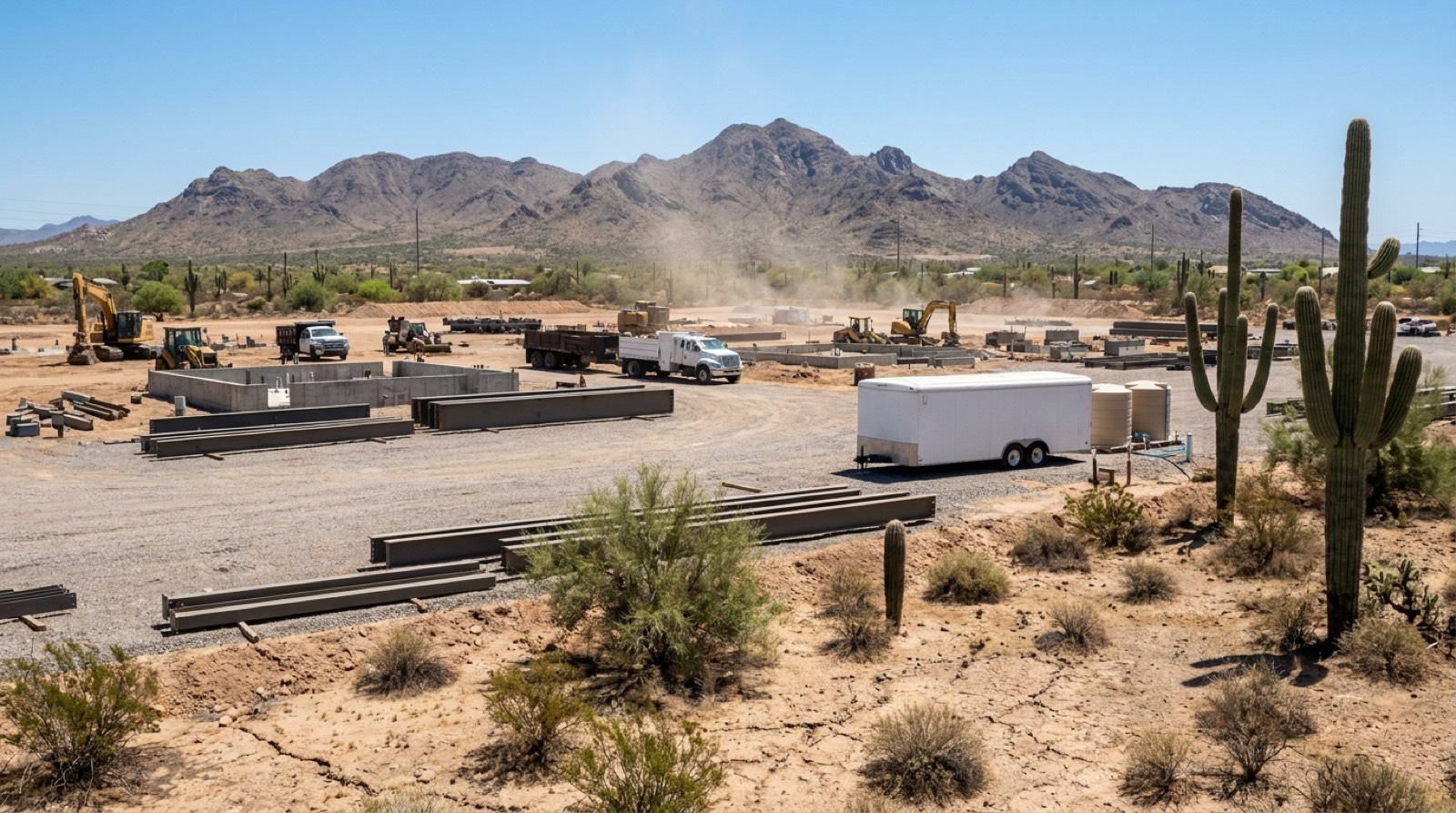
Phoenix and Mesa build through heat that regularly exceeds 110 degrees. OSHA heat-illness prevention drives water and shade requirements that our units satisfy directly.
View Arizona →Columbus and New Albany. Freeze protection and winter service access matter here in a way Sun Belt corridors never see.
View Ohio →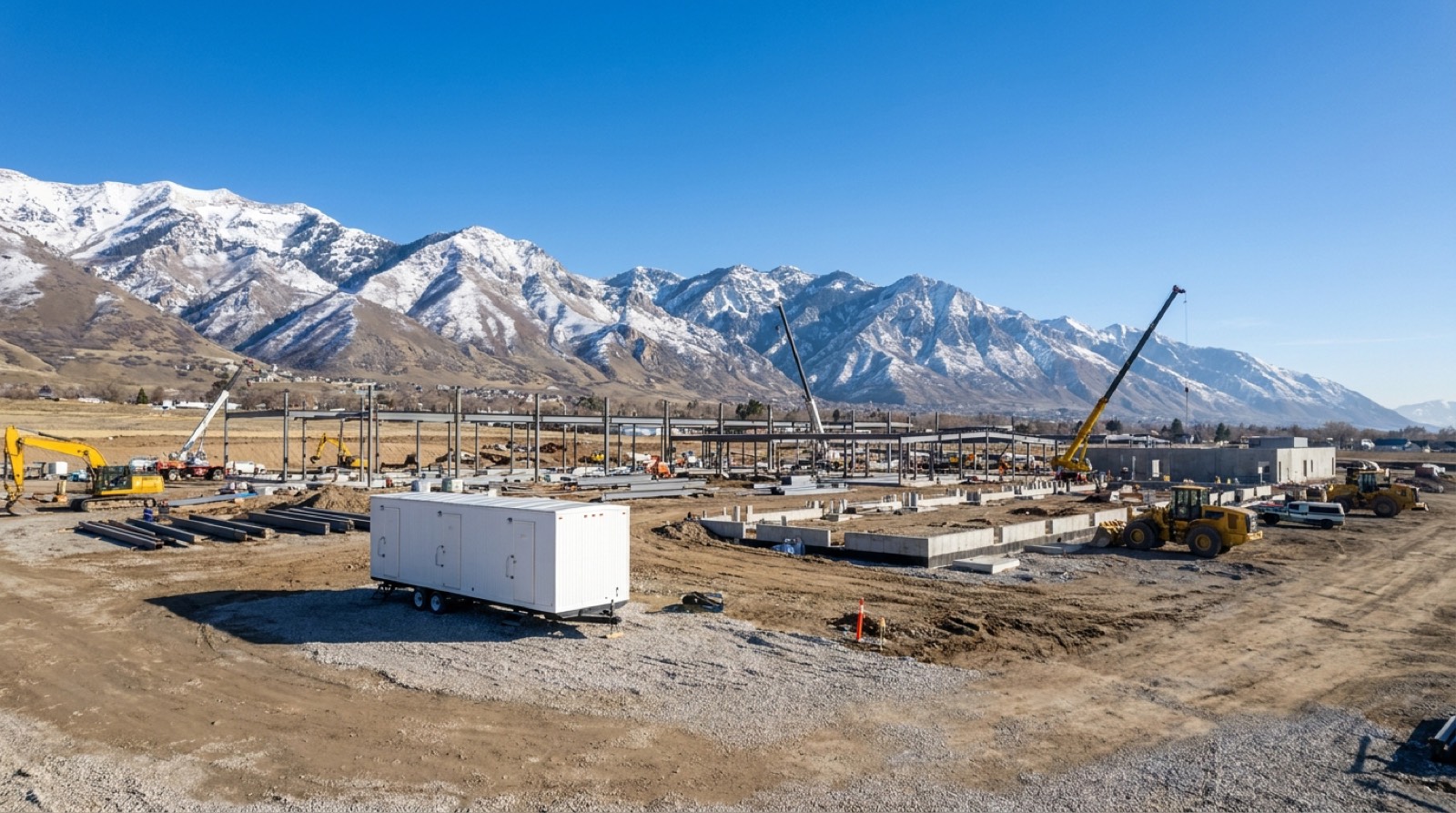
The Wasatch Front corridor runs through hard winters at elevation. Units are winterized and service intervals hold through snow.
View Utah →Questions we get
Yes, when deployed winterized, which is how we deploy here. Protected plumbing, heat trace and interior heating are specified in the plan, and service routes run through winter conditions.
That is the standard central Ohio engagement. Units are added ahead of each phase's manpower ramp, relocated as the campus advances, and drawn down on the taper.
Yes. Units run self-contained with generator power and onboard water where the site has neither, and the service route carries water in and waste out on the contracted interval.
Go deeper
Longer reads for teams writing the site plan. Open what applies to your build.
Columbus area winters deliver stretches where the temperature stays below freezing for days, with single digit nights riding in behind cold fronts. A restroom trailer full of water lines, tanks, and traps has one job in that weather. Do not freeze. A frozen supply line shuts a trailer down for a day. A burst fitting or a frozen waste valve can shut it down for a week. On a New Albany campus running full crews through January, that is not an acceptable outcome, so winterization is a build sequence for us, not an option box.
The package has layers. Heat trace wraps the fresh water supply line and critical plumbing runs, so the most vulnerable components carry their own warmth. Enclosed skirting closes off the underbelly, trapping ground warmth around the tanks and blocking wind, which is the real killer. Wind chill freezes exposed pipe far faster than still air at the same temperature. Interior heaters hold the cabin above freezing around the clock, protecting the traps and fixtures, and thermostats stay set whether or not anyone worked that day. Waste tanks get an antifreeze additive appropriate for pumped systems. And on service visits, our drivers verify all of it is actually running, because a tripped heater breaker on a Friday means a solid block by Monday.
Winterized trailers draw more power. Heat trace and cabin heat run continuously through cold snaps, so the temporary power circuit or generator has to carry a bigger continuous load than the summer spec. Placement matters too. A trailer tucked out of the north and west wind, or shadowed by a structure, holds temperature with less fight. Snow clearing belongs to somebody by name, since a trailer behind a plow berm is winterized and useless at the same time. Central Ohio winters are not extreme by northern standards. They are just relentless enough to punish every shortcut, which makes them a fair test of whether the sanitation vendor plans or reacts.
Even good winterization needs a backstop. Extreme cold snaps find the one fitting the heat trace missed, and a polar outbreak that drops Columbus below zero will test every unit on the route. Our cold weather protocol adds checks during those stretches, and we keep winterized spare units ready through the season so a frozen trailer gets swapped instead of leaving a crew without facilities while repairs happen indoors. Winter sanitation planning is really continuity planning. The goal is not that nothing ever freezes. The goal is that the crews never notice when it does.
A campus build in the New Albany and Licking County corridor is not a project, it is a series of projects. Multiple buildings, phased over years, with crews rolling from one data hall to the next while sitework starts on the following pad. A restroom trailer agreement written for a single twelve month job fits this badly. Somewhere around month nine the site map has changed and the headcount has doubled. The original trailer positions are inside a new fence. The contract should expect all of that on day one.
Four provisions do the heavy lifting. Scalability, so the site can add or release units with reasonable notice as phases overlap or close out, without renegotiating everything. Relocation terms, because on a phased campus every trailer will move at least once, and the move process, timing, and responsibility should be written down before the first one. Rate stability across the term, so a three year commitment is not exposed to surprise repricing every renewal. And an equipment refresh understanding, because a trailer that serves hard for two years is not the trailer it was at delivery. We build periodic swap outs into long agreements so the site is never running tired units in year three. Interiors wear, fixtures age, and crews notice long before procurement does.
On a multiyear campus, the vendor becomes part of the site's operating rhythm. Our route drivers learn the gate procedures and the superintendents by name. They learn the mud seasons and the spots that flood. That accumulated knowledge is worth more than any clause, but it only accrues if the agreement is structured so nobody is fighting about terms every quarter. Set the contract up to flex with the build, review it together once or twice a year, and the sanitation line item stays quiet for the duration. On a project measured in years, quiet is the goal.
There is a budgeting benefit hiding in this structure too. A campus owner planning years of construction wants predictable site services costs across phases, and a flexible multiyear agreement produces exactly that. The site team can forecast facilities against the labor curve instead of treating each building as a fresh procurement. It also removes the quiet risk of switching vendors mid campus, where the new provider relearns everything the old one knew about the gates, the ground, and the winters. Continuity is not glamorous. Over a five year build it is one of the most valuable things a site can buy.
Late February through April in central Ohio is its own logistics season. The ground gives up its frost, sites that were hard all winter turn soft from the bottom up, and counties post seasonal load limits on rural roads to protect thawing roadbeds. For a data center site outside the Columbus beltway, all three hit the sanitation program at once. The trailer is fine. Getting a loaded pump truck to it becomes the problem.
Seasonal weight restrictions in Ohio can cut the legal load on a posted road dramatically, and a vacuum truck carrying a full waste tank is exactly the vehicle those postings exist for. During thaw season we check posted routes across the counties we serve and replan around them. Sometimes that means approaching a site from a state route instead of the shorter county road. Sometimes it means servicing with a partial load, running lighter and more often. Occasionally it means shifting a service day to align with a road's posted schedule. Sites that hear about this in advance shrug. Sites that find out when the truck cannot legally reach them do not.
Inside the gate, freeze and thaw cycles turn winter ruts into spring mud, and the trailer placements that worked in January stop working. Ground that carried a service truck on frost collapses under the same truck in March. The fixes are the usual ones, done early. Gravel and matting on the truck's parking spot, placements reviewed before thaw rather than after the first stuck vehicle, and level checks at every visit while the ground moves. We walk our central Ohio sites as winter breaks specifically to catch this window. Thaw season ends by May and everyone forgets it. The programs that run smoothly are the ones that remembered it in February.
The fix is to put thaw season on the project calendar by name. Sometime in February, before the frost breaks, the site and the vendor should walk the placements, confirm the posted road situation for the coming season, and stage any gravel or matting the truck routes will need. That one meeting converts thaw season from a series of surprises into a managed month. Central Ohio delivers the same spring every year. The only question is whether the sanitation program treats it as weather or as a schedule item, and the schedule always wins.