Georgia
Restroom trailer rentals for Georgia data center sites
Restroom capacity for the Southeast's fastest-growing corridor, from Atlanta metro campuses out along I-20, sized for humid summers and multi-year schedules.
Restroom capacity for the Southeast's fastest-growing corridor, from Atlanta metro campuses out along I-20, sized for humid summers and multi-year schedules.
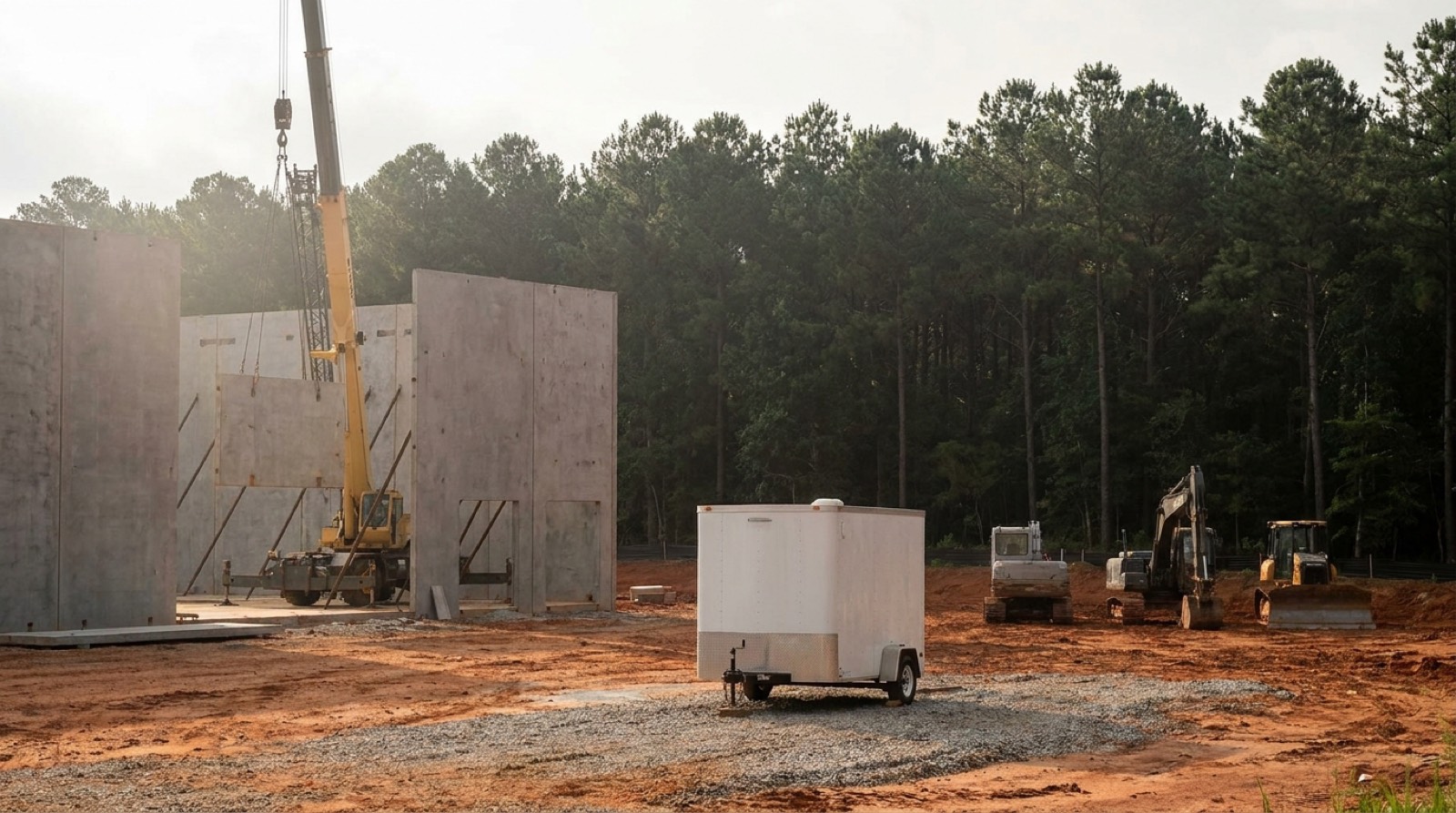
Georgia's data center growth concentrated first around Atlanta and Douglas County, then pushed west along I-20 and south toward newer campus sites. Parcels are large, treelines are dense, and the distance between the laydown yard and the pad can be a truck route of its own. Placements are planned against the haul reality: where the pump truck can actually reach, how red clay behaves after a week of rain, and which access roads survive a wet spring.
Georgia summers combine heat with humidity that pushes interior conditions harder than dry-heat markets. Climate control runs longer hours, water consumption climbs, and interiors need sanitation on a tighter cycle to stay usable. Service intervals here are set for the Southeast climate rather than copied from a drier market's schedule.
Red clay bears well dry and poorly wet. Our site survey looks at the placement surface in the context of the season, specifies matting or gravel where the surface will not hold, and positions units where service access survives the weather. A trailer that sinks in February was placed wrong in November.
Atlanta metro, Douglas County and Lithia Springs, the I-20 west corridor toward the Alabama line, Newton and Morgan County sites east of the metro, and the emerging corridors south of the city. Statewide mobilization is standard.
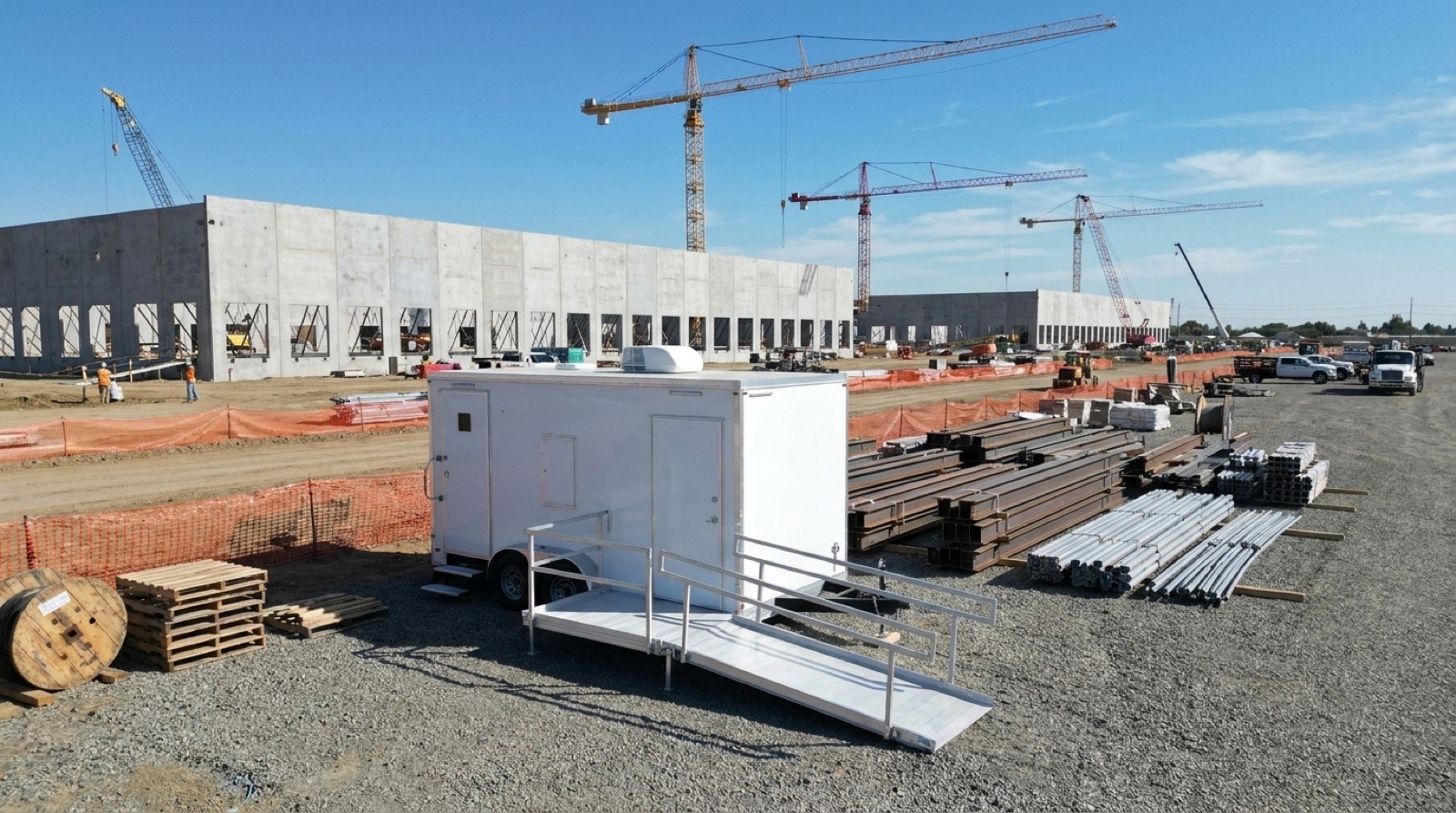
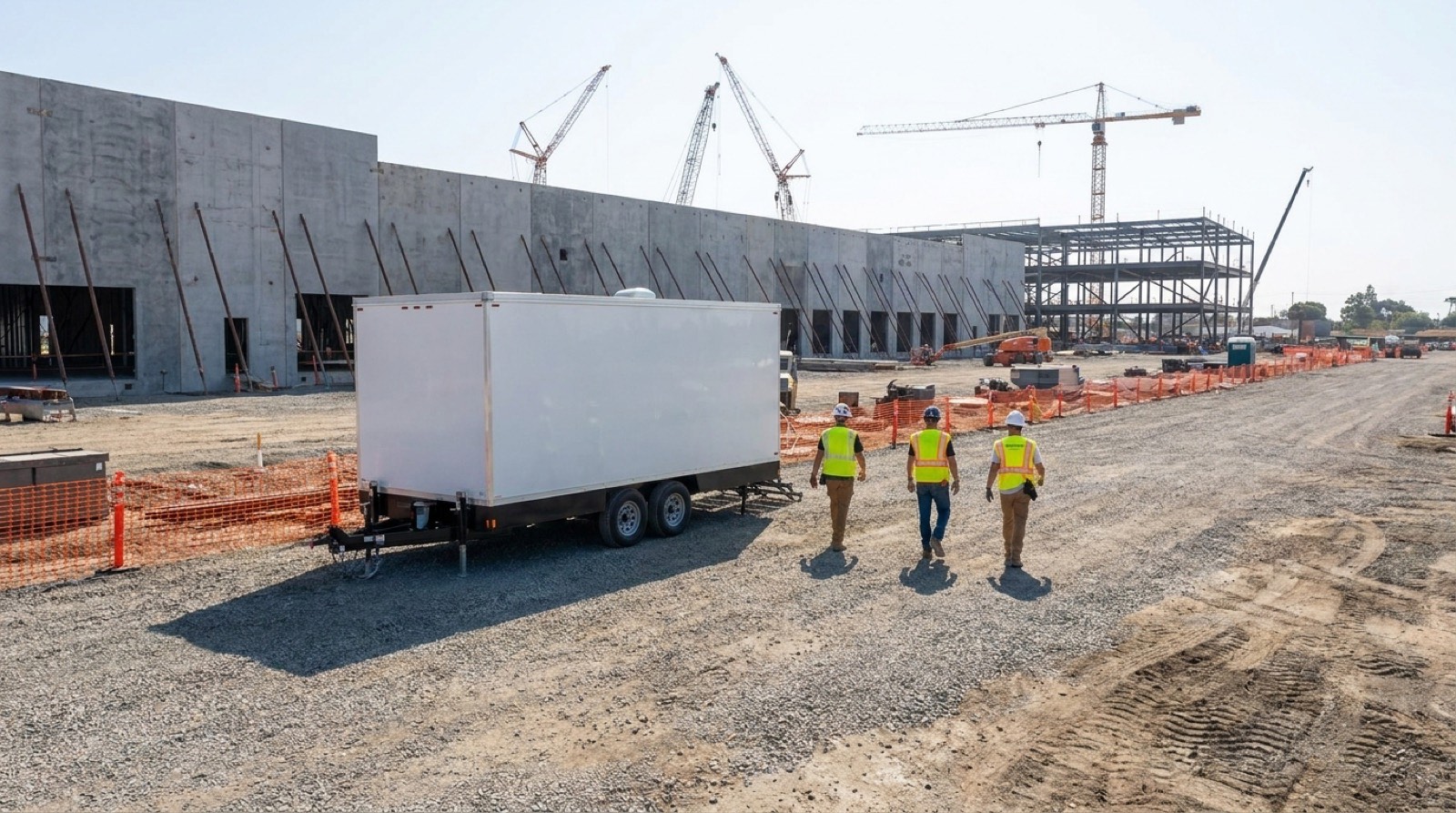
Most Georgia deployments bundle several units under one route. One contracted vendor, one dispatch, one escalation path, and a site plan that arrives already coordinated.
The paperwork side of the job needs a roof too. Office trailer rentals in Georgia give supervision and inspections a place to meet without leaving the gate.
Extended-stay crews generate wash loads every week of the schedule. Laundry trailer rentals in Georgia keep that cycle on site instead of in a hotel sink.
Food service and ice programs live or die on cold storage at the pad. Refrigeration trailer rentals in Georgia hold setpoint through the local season.
Water is the first thing safety plans ask about. Hydration station rentals in Georgia run on the same supply logistics as the rest of the package, so adding them costs one stop, not a second vendor.
Where crews rotate in from out of the area, the end of shift is its own rush hour. Shower trailer rentals in Georgia carry that peak so the workforce goes home clean.
The full reach of our restroom trailer rentals program runs beyond Georgia, covering every corridor we serve.
Where we deploy
Heaviest concentration in the corridors carrying the most active data center construction, with nationwide mobilization beyond them.
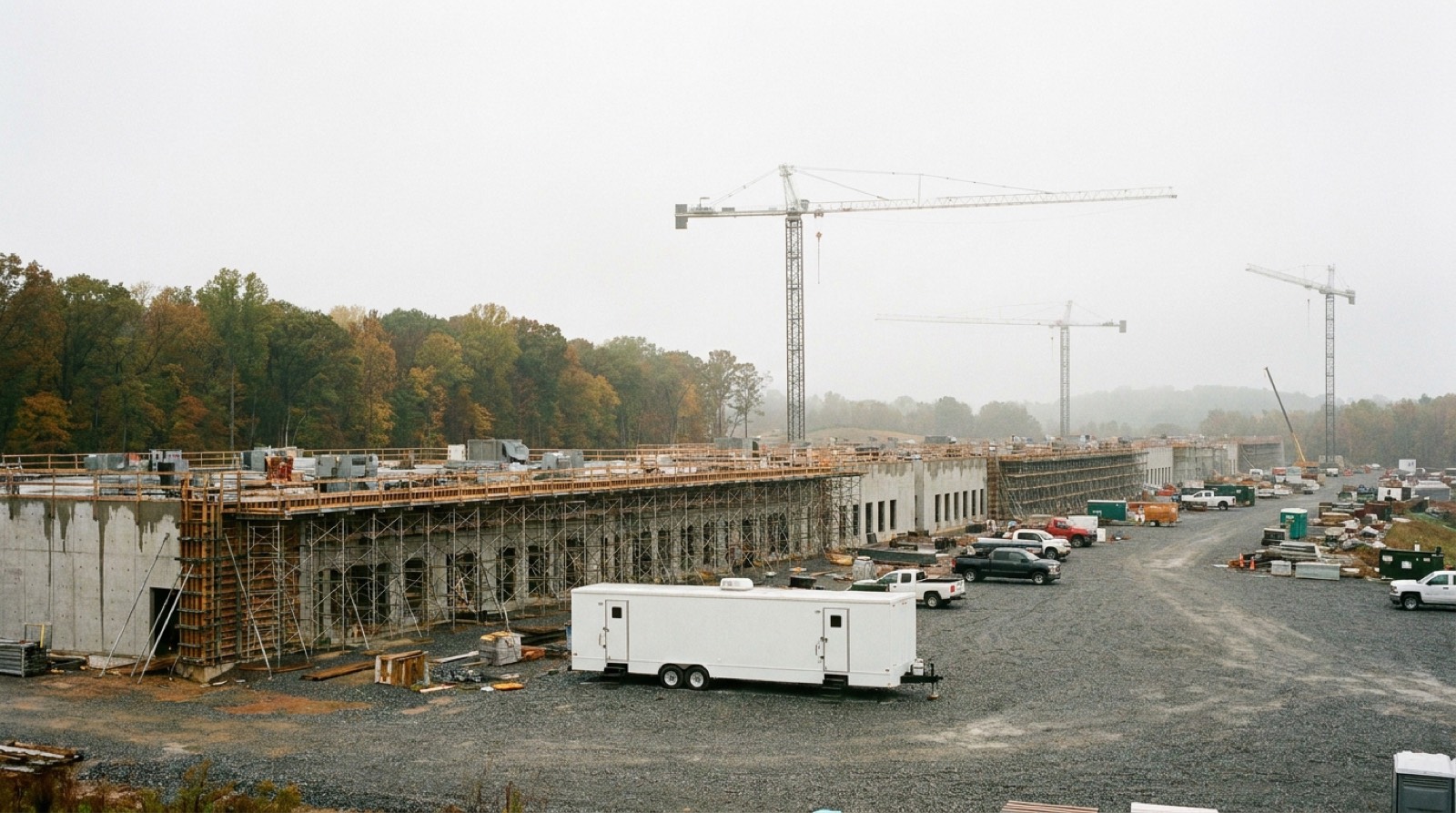
Loudoun County and Prince William run the densest data center concentration on earth. Multi-year campuses, badge-controlled access, crews in the hundreds, and facility requirements written into the subcontract.
View Northern Virginia →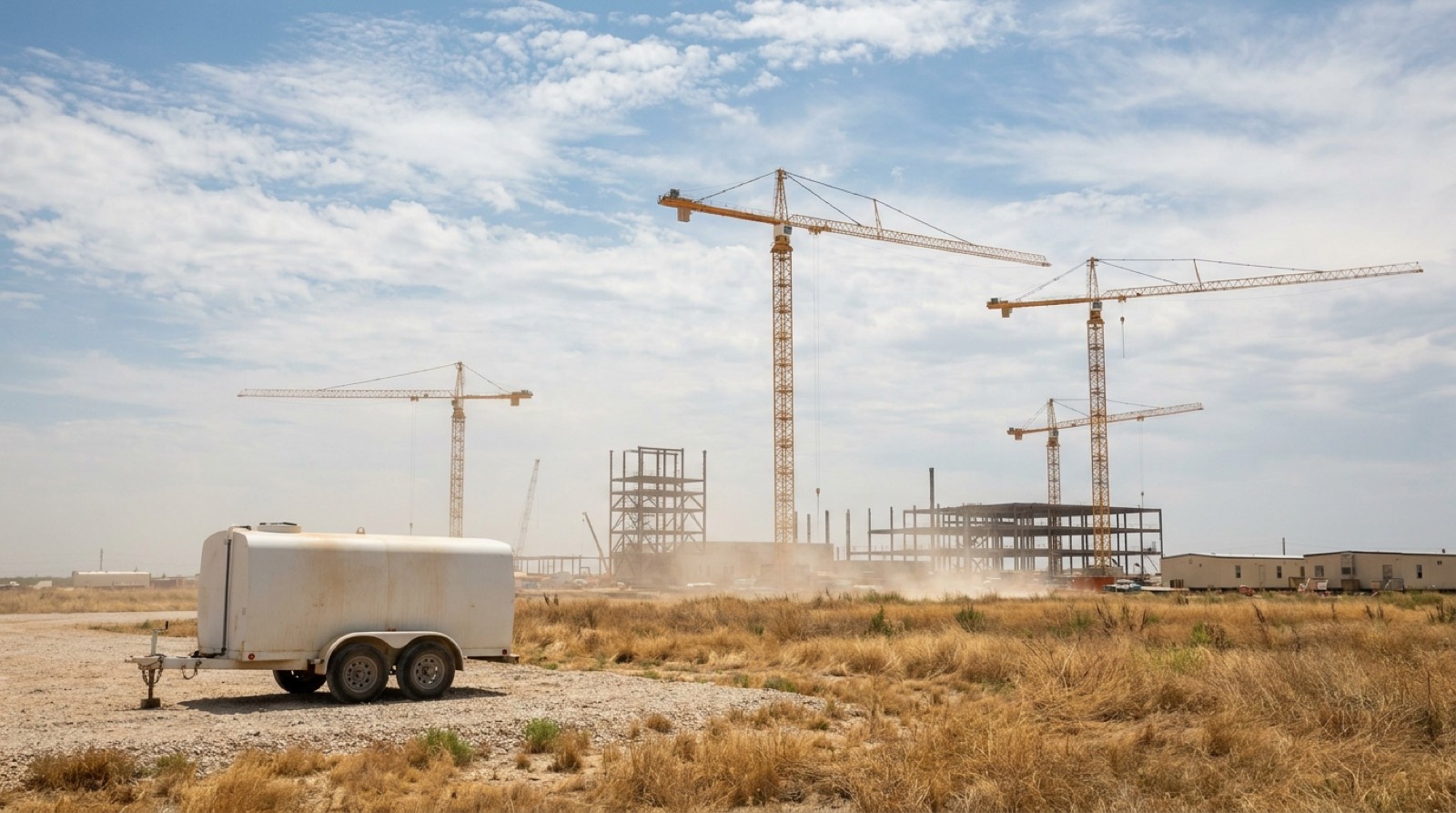
Dallas, Fort Worth, San Antonio and Abilene are carrying some of the largest campuses in the country. Summer heat makes hydration and shower capacity a safety line item, not an amenity.
View Texas →Atlanta metro and Douglas County, extending along I-20. Humid summers, long hauls between laydown and pad, and multi-phase schedules that keep facilities on site for years.
View Georgia →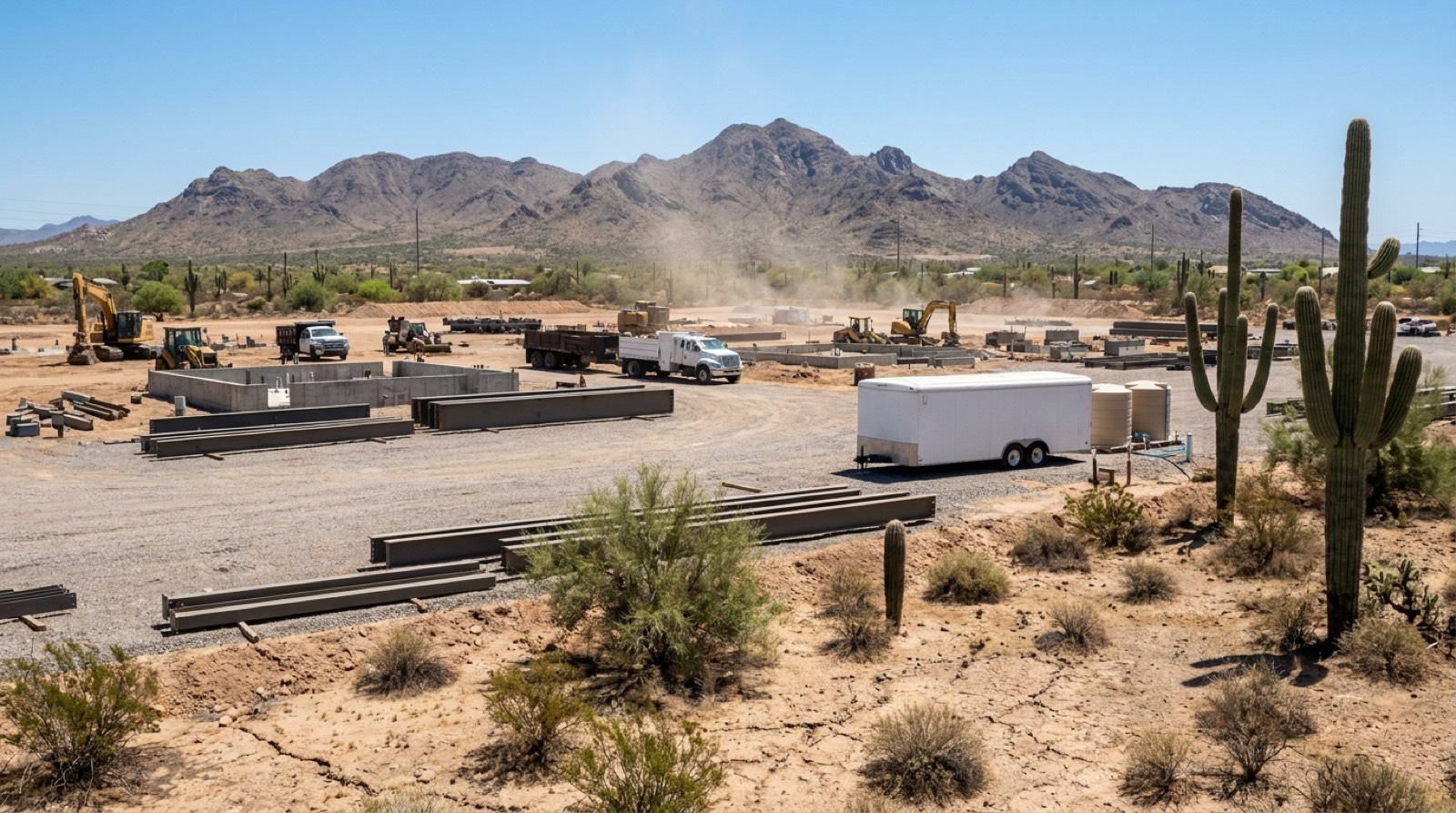
Phoenix and Mesa build through heat that regularly exceeds 110 degrees. OSHA heat-illness prevention drives water and shade requirements that our units satisfy directly.
View Arizona →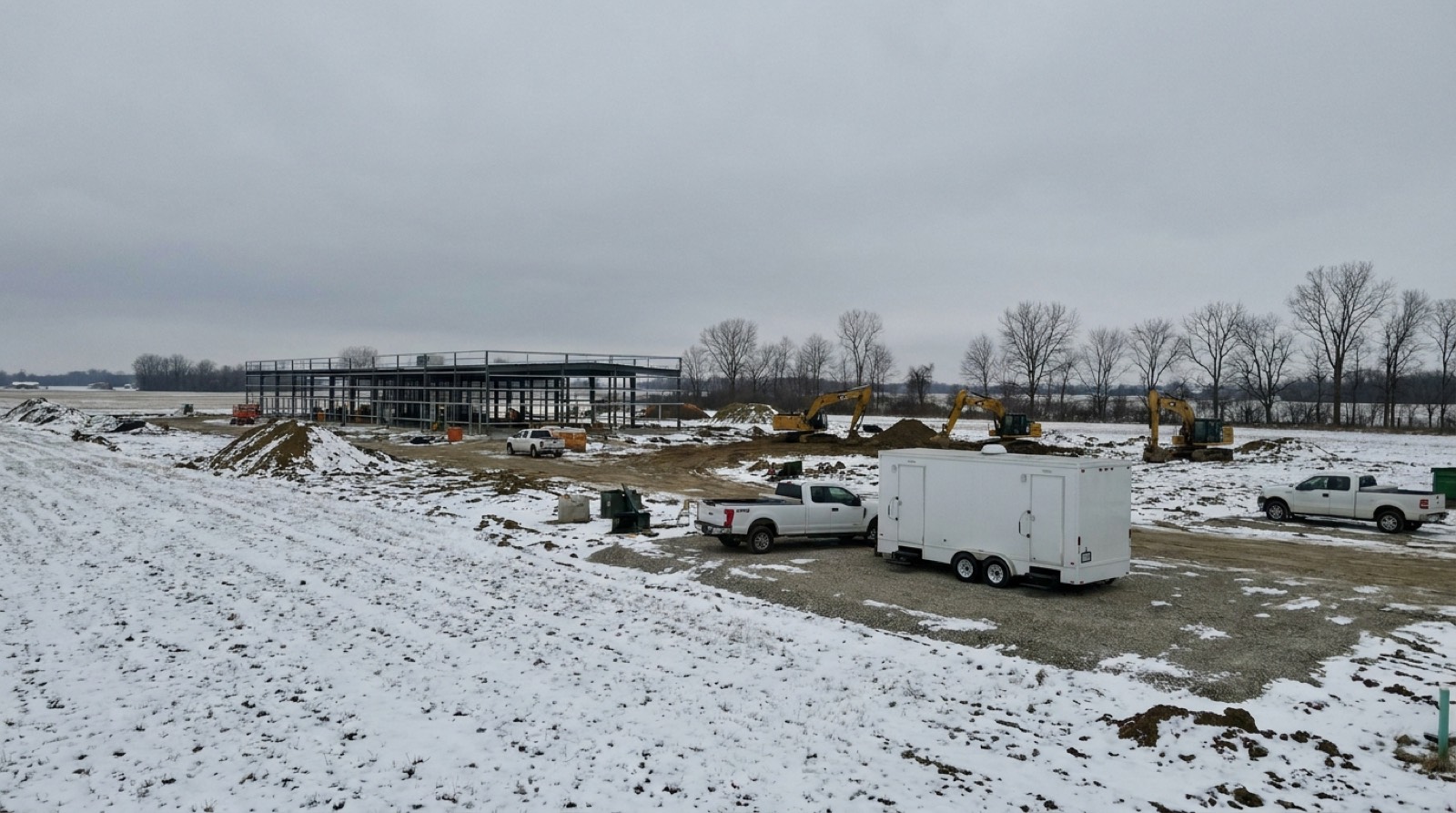
Columbus and New Albany. Freeze protection and winter service access matter here in a way Sun Belt corridors never see.
View Ohio →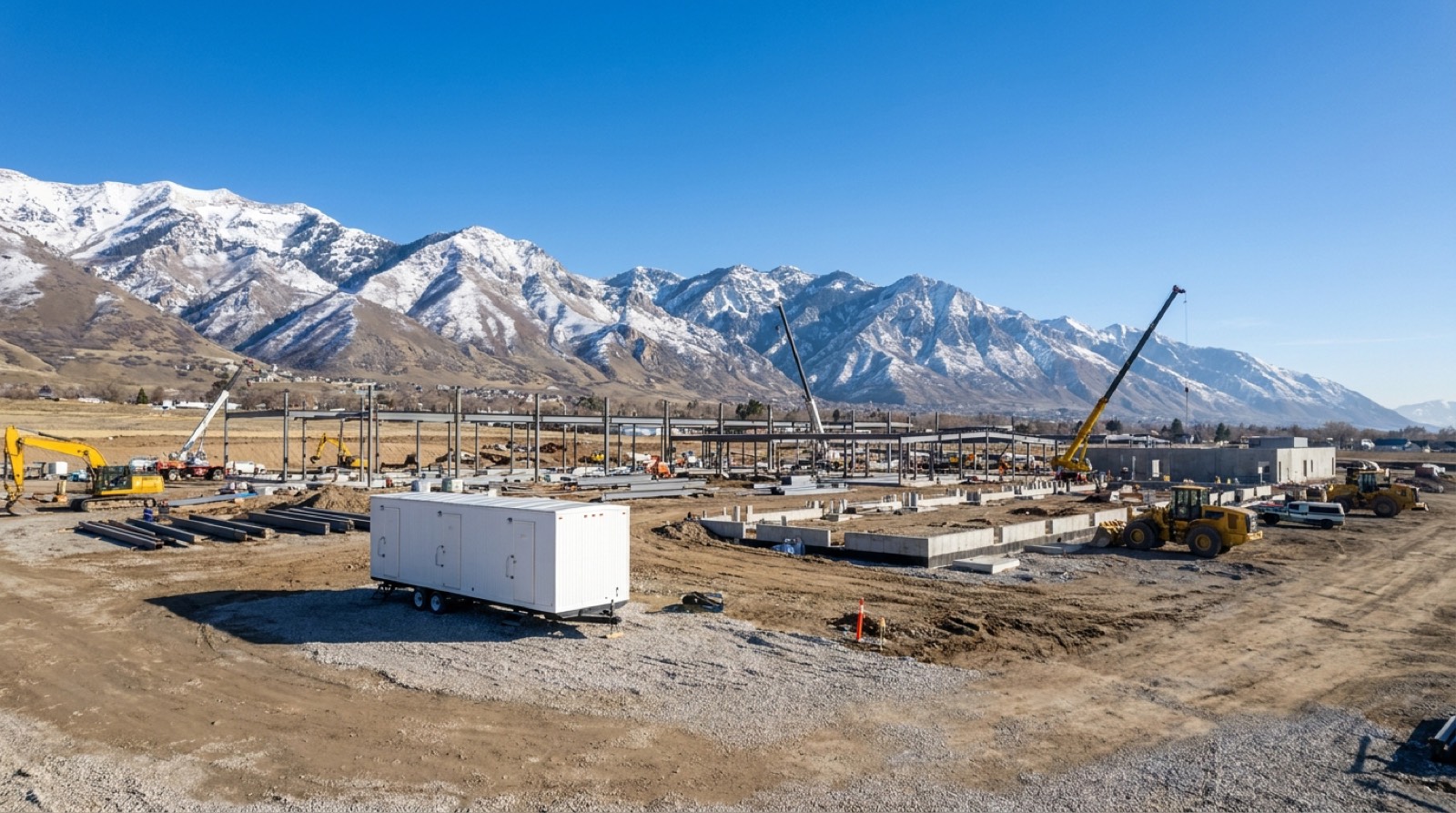
The Wasatch Front corridor runs through hard winters at elevation. Units are winterized and service intervals hold through snow.
View Utah →Questions we get
The pre-mobilization survey evaluates the bearing surface against the season, and the plan specifies gravel or matting where clay will not hold. Placement accounts for pump truck access in wet conditions, not just delivery-day conditions.
Yes. Humid-summer deployments run tighter sanitation and restock cycles because interior conditions and consumption rates demand it.
Yes. The I-20 corridor and the newer campus areas beyond the metro are standard deployments, and statewide mobilization covers the rest.
Go deeper
Longer reads for teams writing the site plan. Open what applies to your build.
Here is a scene from the Atlanta metro that repeats every year. A storm drops two inches of rain overnight. The next morning a service truck rolls across what looked like solid ground to reach a trailer, and by the time it finishes pumping, the rear axle has settled into red clay to the hubs. Now the site needs a tow and the truck needs a wash. The trailer misses its next two services while everyone renegotiates access. Georgia clay does this. It is hard as pavement in a dry week and grease after a wet one.
Our standard for clay soils in the Douglas County and greater Atlanta corridor is simple. The trailer sits on a compacted gravel pad, not on native ground. A geotextile fabric layer under the stone keeps the gravel from disappearing into the clay over a wet season, which is exactly what happens when stone is dumped straight on mud. The pad extends beyond the trailer footprint so steps and ramp landings sit on firm material too. Just as important, the service truck's parking spot and its route get the same treatment. A perfect pad at the end of an impassable path is a decoration.
Clay moves. It swells wet and shrinks dry, and a trailer set level in August can be visibly off by fall. An out of level trailer drains poorly, doors swing on their own, and tank sensors misread. Our drivers check level at service visits and re shim as needed, which takes minutes when done routinely. We also walk sites before the wet season to flag placements that will not survive it, because relocating a trailer in October costs a morning, while pulling one out of the mud in January costs a week of goodwill. On Georgia clay, the pad is the product.
Drainage completes the picture. The Atlanta area averages around 50 inches of rain a year, spread across every season, so the pad needs somewhere for water to go. A slight crown or a fall to one side sheds water off the stone instead of letting it pond around the steps. Downspouts and washout areas nearby should discharge away from the pad, not across it. When we walk a placement, we look uphill first. Most flooded trailer pads did nothing wrong themselves. They just sit downstream of a laydown yard that sheds water like a parking lot.
The data center corridor running west from Atlanta along Interstate 20 sits in one of the more active thunderstorm regions in the country. From late spring through summer, afternoon storms bring lightning, straight line winds, and the occasional tornado warning. A restroom trailer program in this corridor needs a weather plan the same way the crane program does, just with less paperwork.
Three storm effects matter for trailers. Wind first. A restroom trailer is a tall, light box with a big side profile. On exposed sites we chock and stabilize every unit as standard practice, and for placements with long open fetch we add tie down anchoring ahead of storm season. Water second. Trailers belong on high ground with drainage away from the pad, because a unit standing in six inches of runoff cannot be serviced and may float its steps loose. The site grading plan usually tells you where water will go. Believe it. Power third. Storms drop temporary power regularly in this corridor. A trailer without power loses lighting, flushing on some models, and climate control in the most humid weeks of the year. Sites that cannot tolerate that downtime keep a generator available as backup.
The post storm routine is short but real. Check that the unit is level and has not shifted. Check steps, ramps, and door operation. Confirm power is restored and air conditioning restarted, since some units need a manual reset. Look for debris on the roof and around vent stacks. We run this check after any significant storm on our route, without being asked, because a trailer that quietly lost power on Friday becomes a very unpleasant discovery on Monday. In Georgia storm season, the vendors worth keeping are the ones who show up after the radar clears.
It helps to put the trailer program inside the site's existing weather protocol rather than beside it. Most large projects in the corridor already monitor storms and make crane and pour decisions off the forecast. Adding two trailer lines to that checklist costs nothing. Before a warned storm, close and latch the units. After it, run the inspection before crews return. We share our own post storm findings with the site so their record and ours match. Storm season in Georgia runs for months, and the sites that make it routine stop losing days to it.
The Atlanta metro's data center growth has pushed projects into places where the property line backs up to subdivisions, churches, and schools. Douglas County and the western metro have plenty of sites like this. That changes the sanitation plan, because a restroom trailer program that is invisible on 300 rural acres is very visible from a kitchen window 200 feet away. Community friction over construction is real, and site facilities should never be what triggers it.
Two decisions do most of the work. First, placement. Put trailers on the interior of the site, screened by structures, laydown, or tree buffer, and keep them off the fence line nearest homes. The workers' walk gets slightly longer. The neighbors' view gets permanently better. That trade is almost always worth it. Second, odor control, which on a close quarters site has to be managed rather than assumed. Well maintained trailers with working ventilation and current deodorizer chemistry produce very little odor. The trouble comes from stretched service intervals in hot weather. Atlanta humidity amplifies whatever is there, so we tighten summer service on residential adjacent sites as a rule, before anyone has a reason to comment.
The pump truck is loud, and vacuum work has a sound signature nobody loves. Local noise ordinances typically restrict construction noise in early morning and evening hours, and even where the ordinance allows it, a 6 a.m. pump out next to a bedroom window costs the project goodwill it will want later at a rezoning hearing. We schedule residential adjacent service in mid morning or midday windows and route trucks along the site's industrial frontage instead of the neighborhood street where the layout allows. Small courtesies, cheap to give, and they keep the project's neighbors talking about traffic instead of toilets.
Appearance rounds out the program. On a rural site nobody cares what a trailer looks like from the outside. Next to a subdivision, a faded, mud caked unit visible from the street becomes part of how the neighborhood judges the whole project. We keep exteriors washed and units level on residential adjacent sites, and we place them so service doors and hose connections face into the site rather than out. These details cost minutes. The public meetings where data center projects get approved or fought are long, and every impression a project makes ahead of them counts.