Georgia
Shower trailer rentals for Georgia data center sites
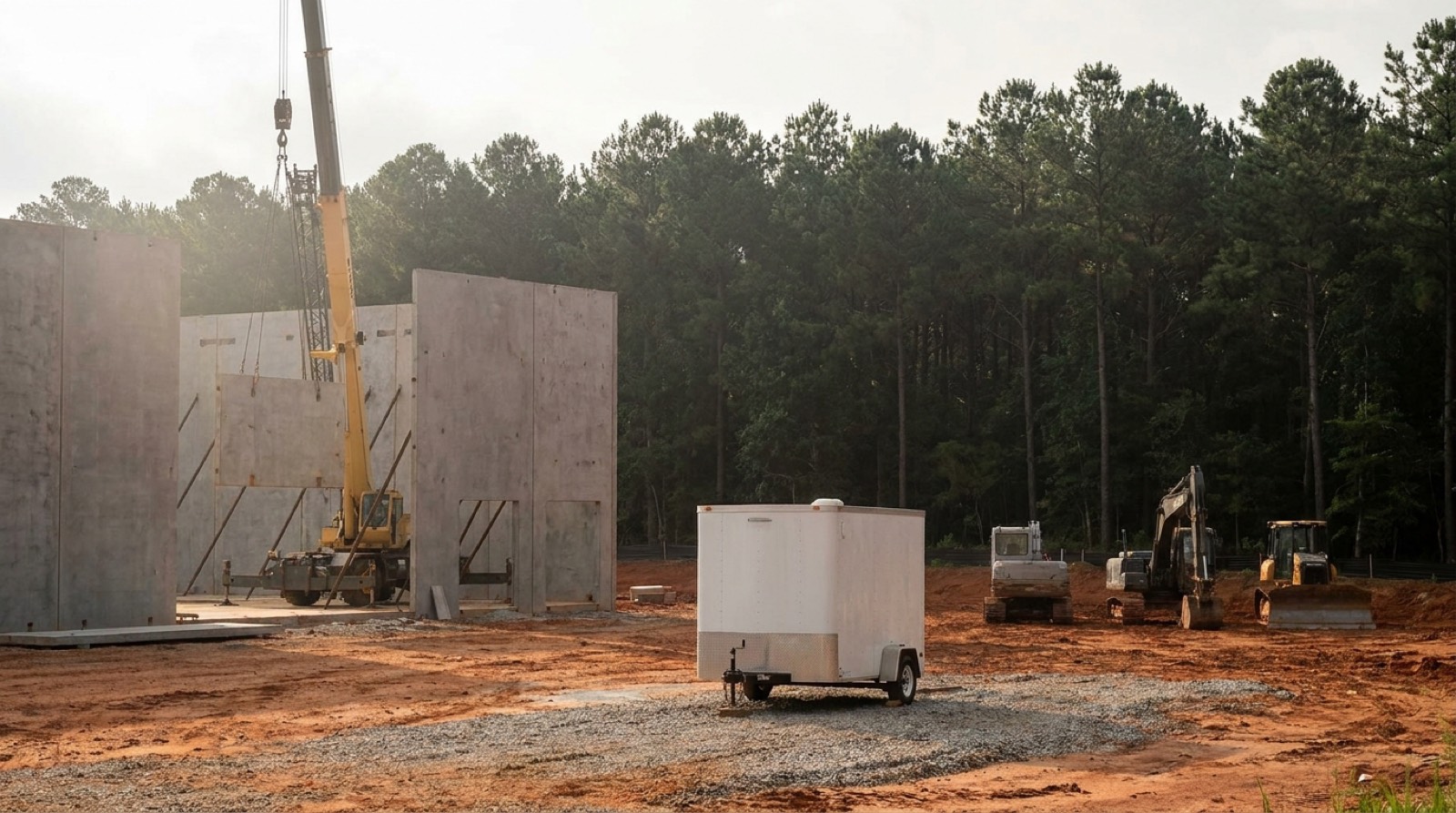
On Georgia sites the red clay comes home with the crew unless there is somewhere to wash it off. Shower capacity for the I-20 corridor's long builds.
On Georgia sites the red clay comes home with the crew unless there is somewhere to wash it off. Shower capacity for the I-20 corridor's long builds.
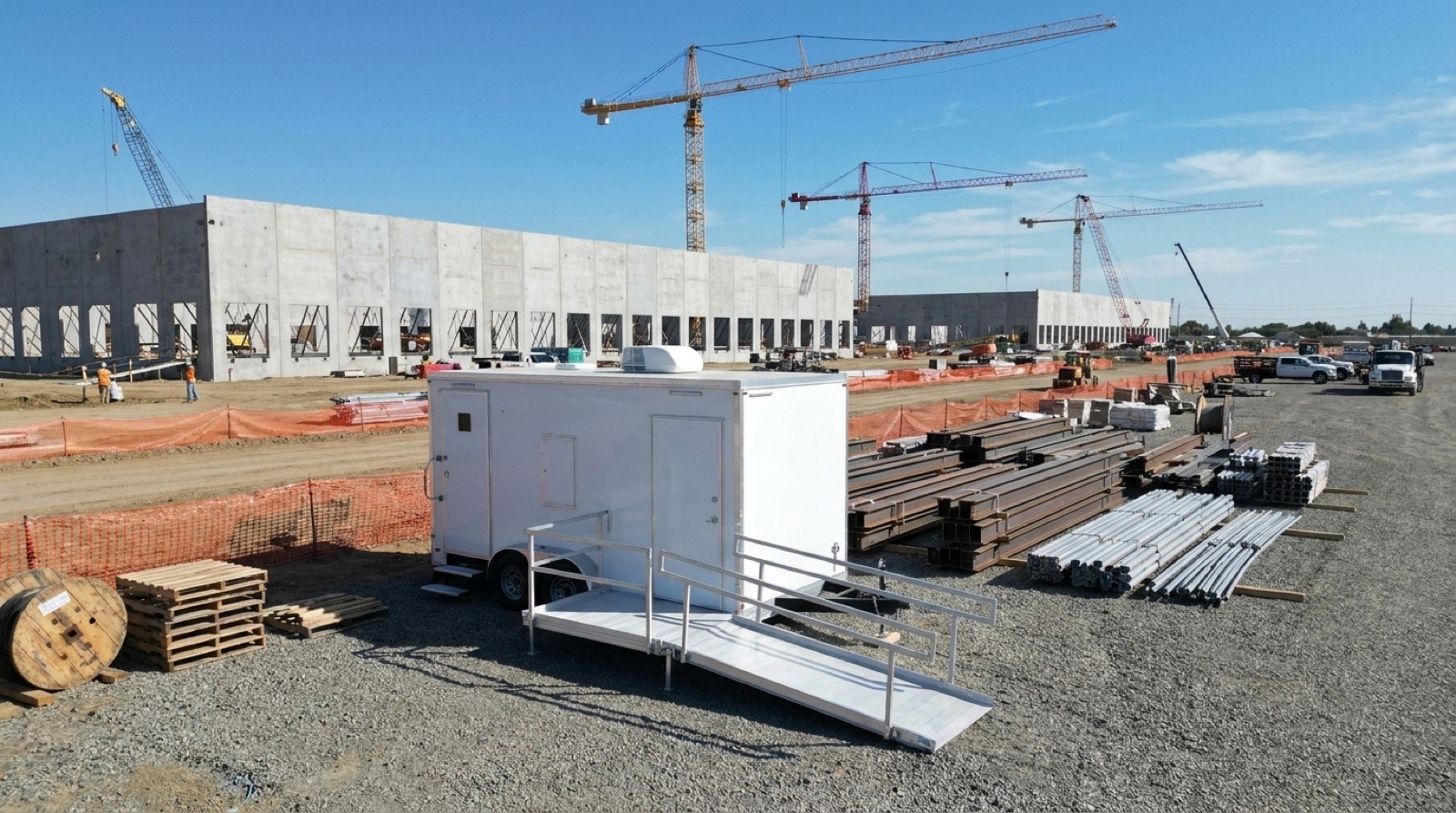
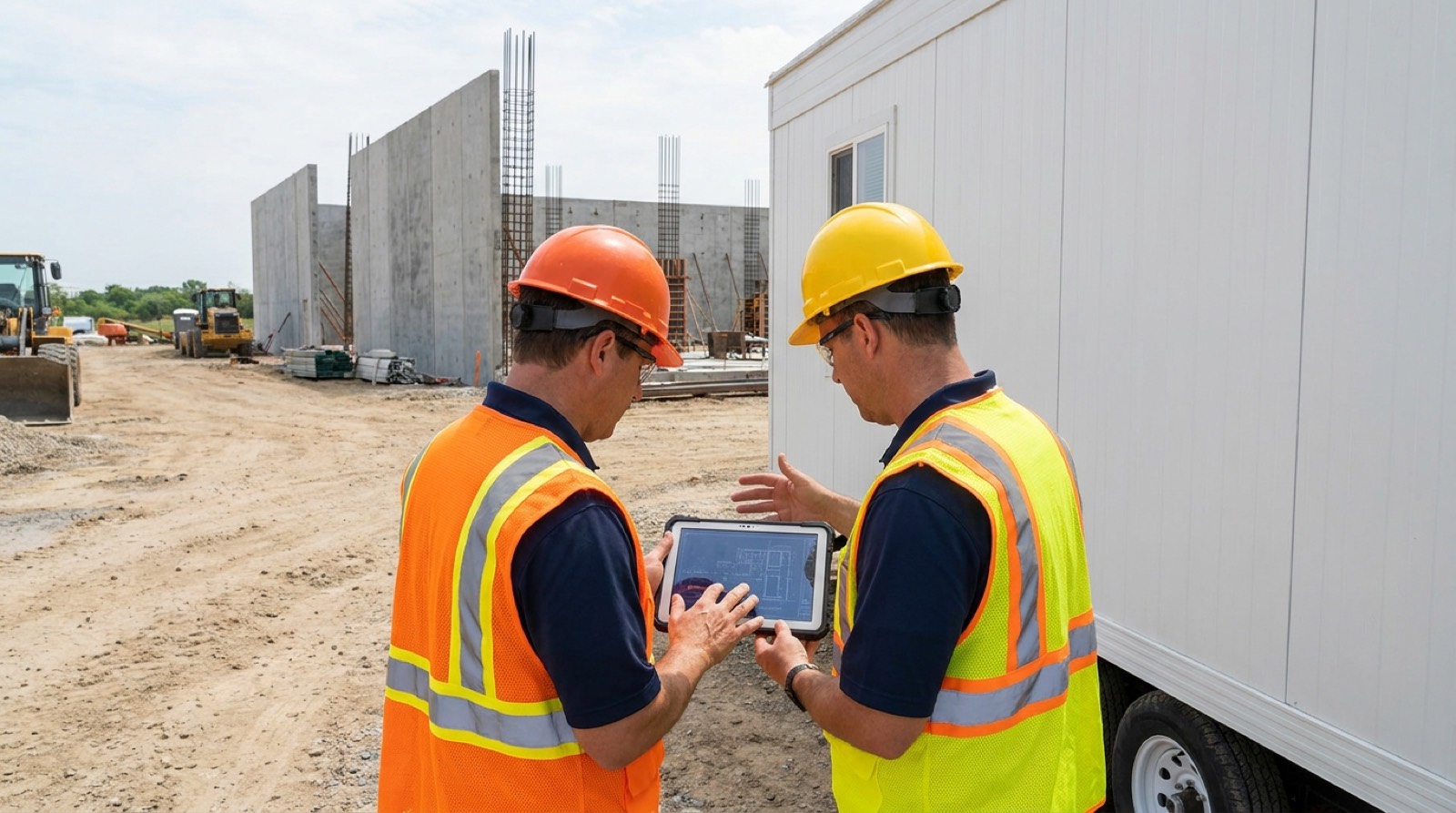
Anyone who has worked a wet-season Georgia site knows the clay: it stains everything it touches and it travels. Crews finishing a muddy shift with an hour's drive ahead want it off before the truck seat gets it. End-of-shift showers keep the site's mud on the site, and on long I-20 corridor builds that convenience compounds into retention.
Georgia's summer humidity means crews finish shifts soaked whether it rained or not. Shower demand tracks the heat index the way hydration does, and stall counts sized for a dry-climate site queue badly here. We size for the Southeast's real conditions.
Afternoon thunderstorms compress Georgia workdays, which concentrates shift-end into narrower windows. Hot water capacity is specified for that compressed surge, because forty crews reaching the stalls in the same half hour is the normal case, not the exception.
Most Georgia deployments bundle several units under one route. One contracted vendor, one dispatch, one escalation path, and a site plan that arrives already coordinated.
Restroom capacity anchors the plan. Restroom trailer rentals in Georgia sit closest to the workface and set the service route that every other unit rides on.
Water is the first thing safety plans ask about. Hydration station rentals in Georgia run on the same supply logistics as the rest of the package, so adding them costs one stop, not a second vendor.
The paperwork side of the job needs a roof too. Office trailer rentals in Georgia give supervision and inspections a place to meet without leaving the gate.
Extended-stay crews generate wash loads every week of the schedule. Laundry trailer rentals in Georgia keep that cycle on site instead of in a hotel sink.
Food service and ice programs live or die on cold storage at the pad. Refrigeration trailer rentals in Georgia hold setpoint through the local season.
The full reach of our shower trailer rentals program runs beyond Georgia, covering every corridor we serve.
Questions we get
Wet-season red clay and summer humidity. Crews finish dirty and soaked, and end-of-shift washing keeps site mud on site while making long-rotation work livable.
For the surge. Storm-shortened days push shift-end into narrow windows, so heating capacity is specified for consecutive use across that compressed period.
Yes. The I-20 corridor west of the metro and the newer campus areas beyond it are standard deployments.
Where we deploy
Heaviest concentration in the corridors carrying the most active data center construction, with nationwide mobilization beyond them.
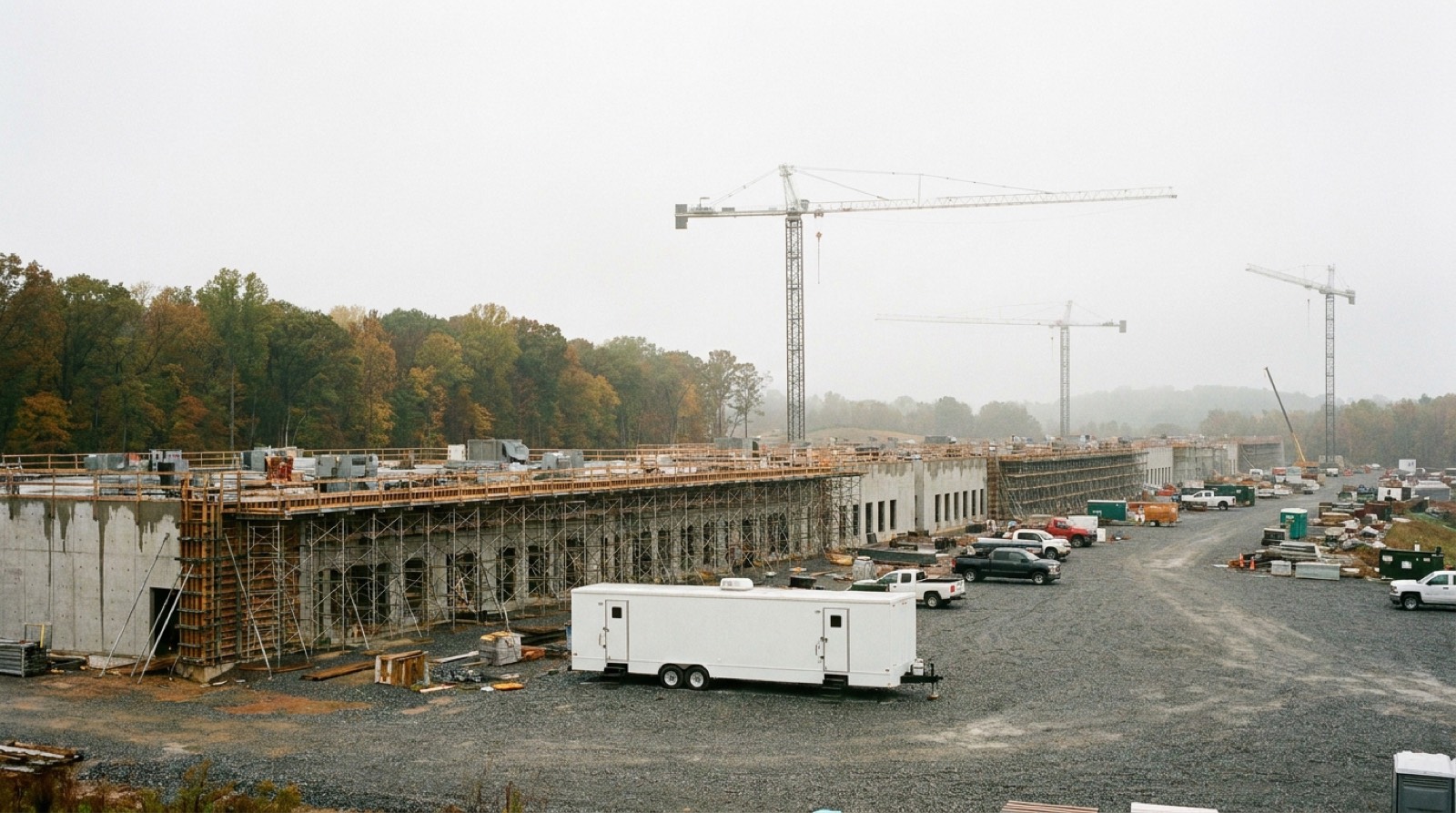
Loudoun County and Prince William run the densest data center concentration on earth. Multi-year campuses, badge-controlled access, crews in the hundreds, and facility requirements written into the subcontract.
View Northern Virginia →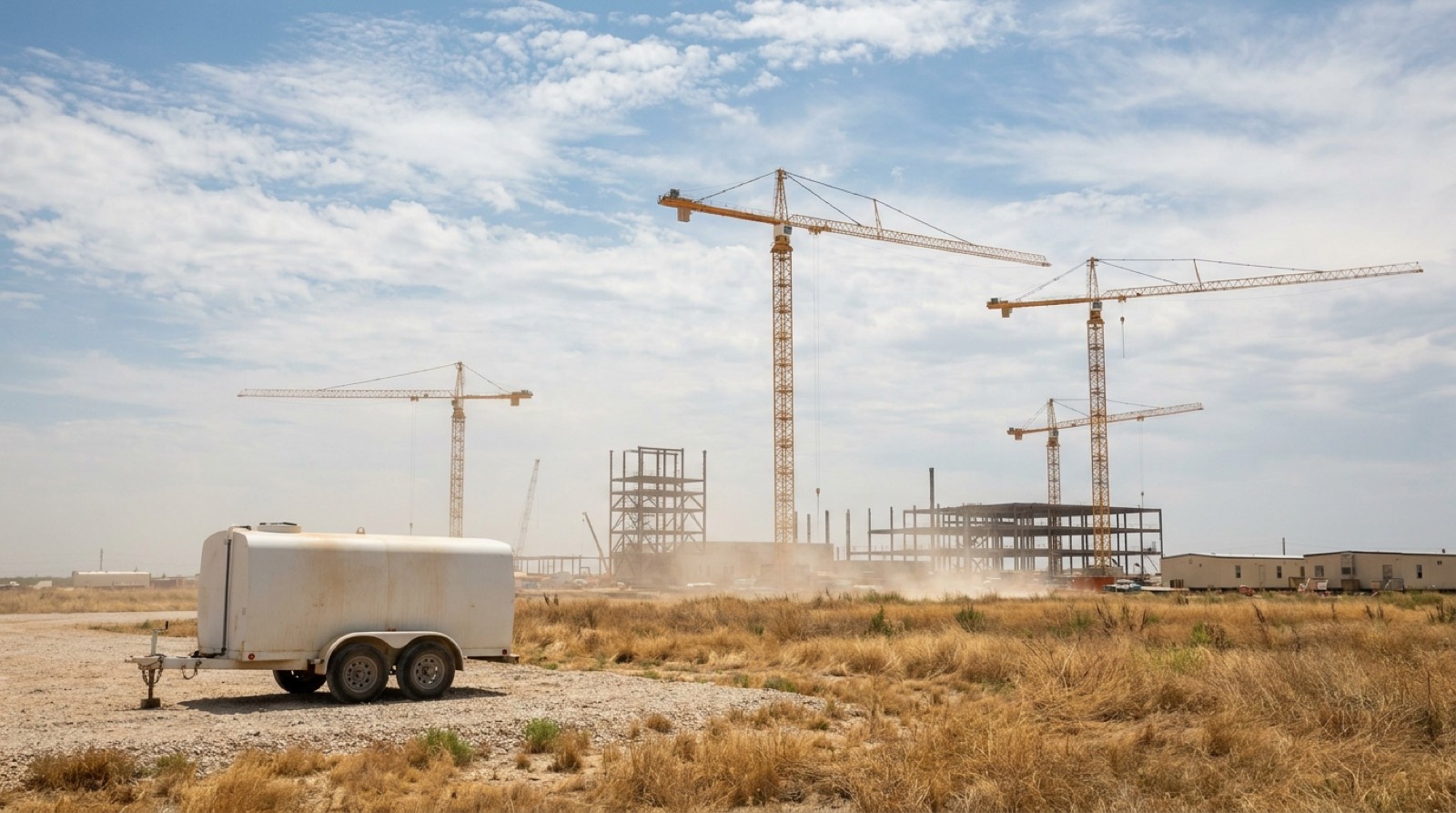
Dallas, Fort Worth, San Antonio and Abilene are carrying some of the largest campuses in the country. Summer heat makes hydration and shower capacity a safety line item, not an amenity.
View Texas →Atlanta metro and Douglas County, extending along I-20. Humid summers, long hauls between laydown and pad, and multi-phase schedules that keep facilities on site for years.
View Georgia →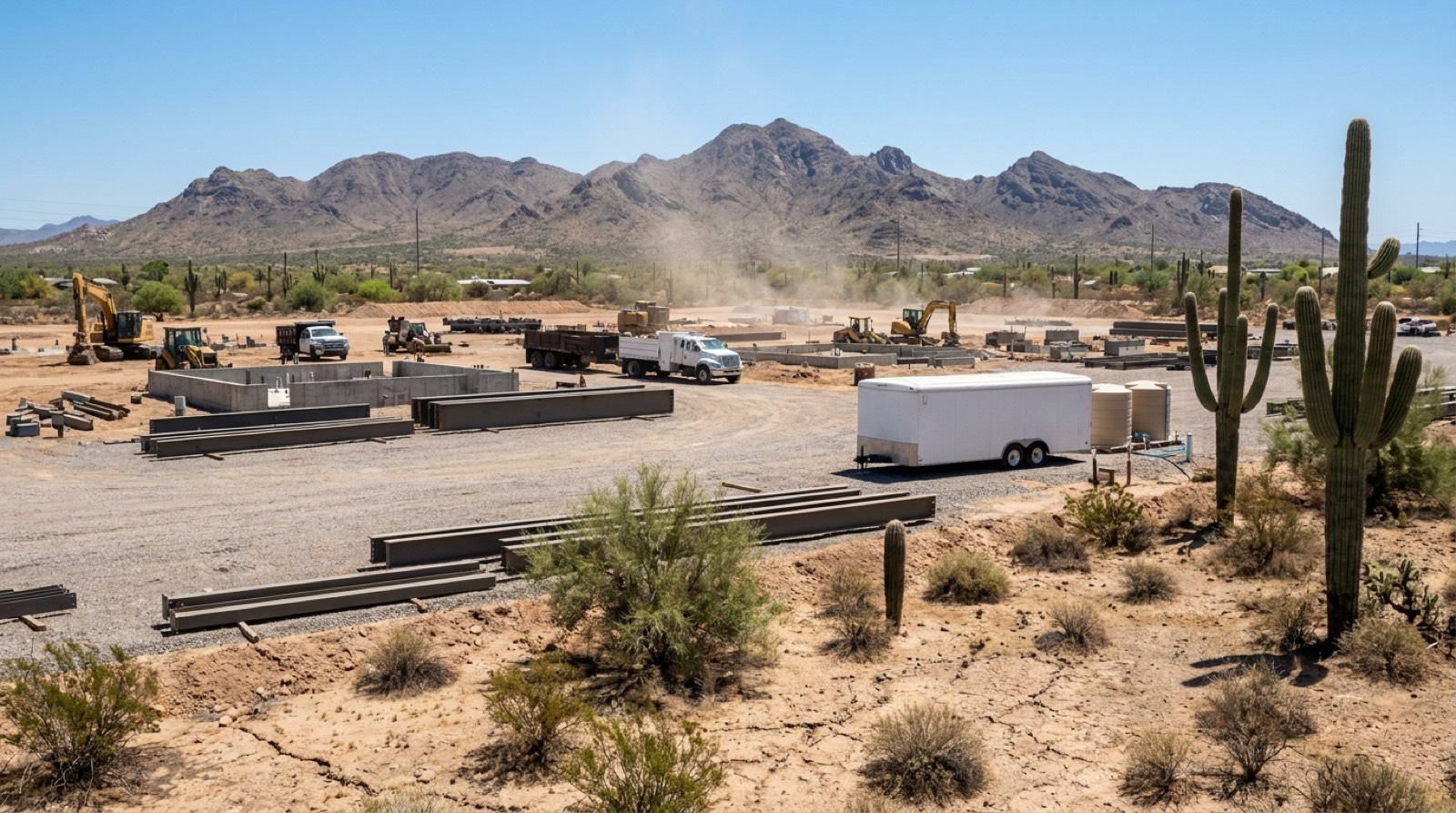
Phoenix and Mesa build through heat that regularly exceeds 110 degrees. OSHA heat-illness prevention drives water and shade requirements that our units satisfy directly.
View Arizona →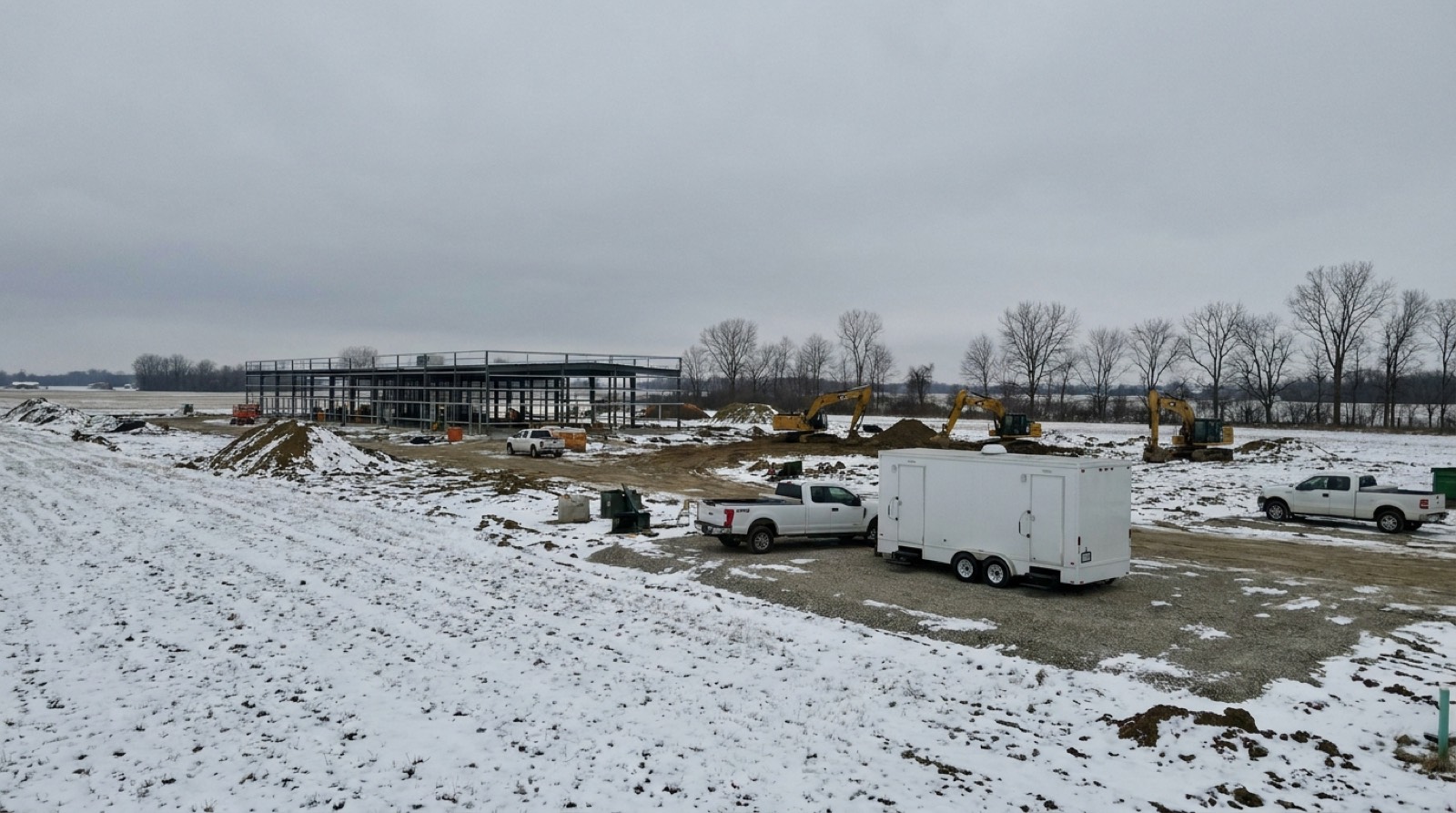
Columbus and New Albany. Freeze protection and winter service access matter here in a way Sun Belt corridors never see.
View Ohio →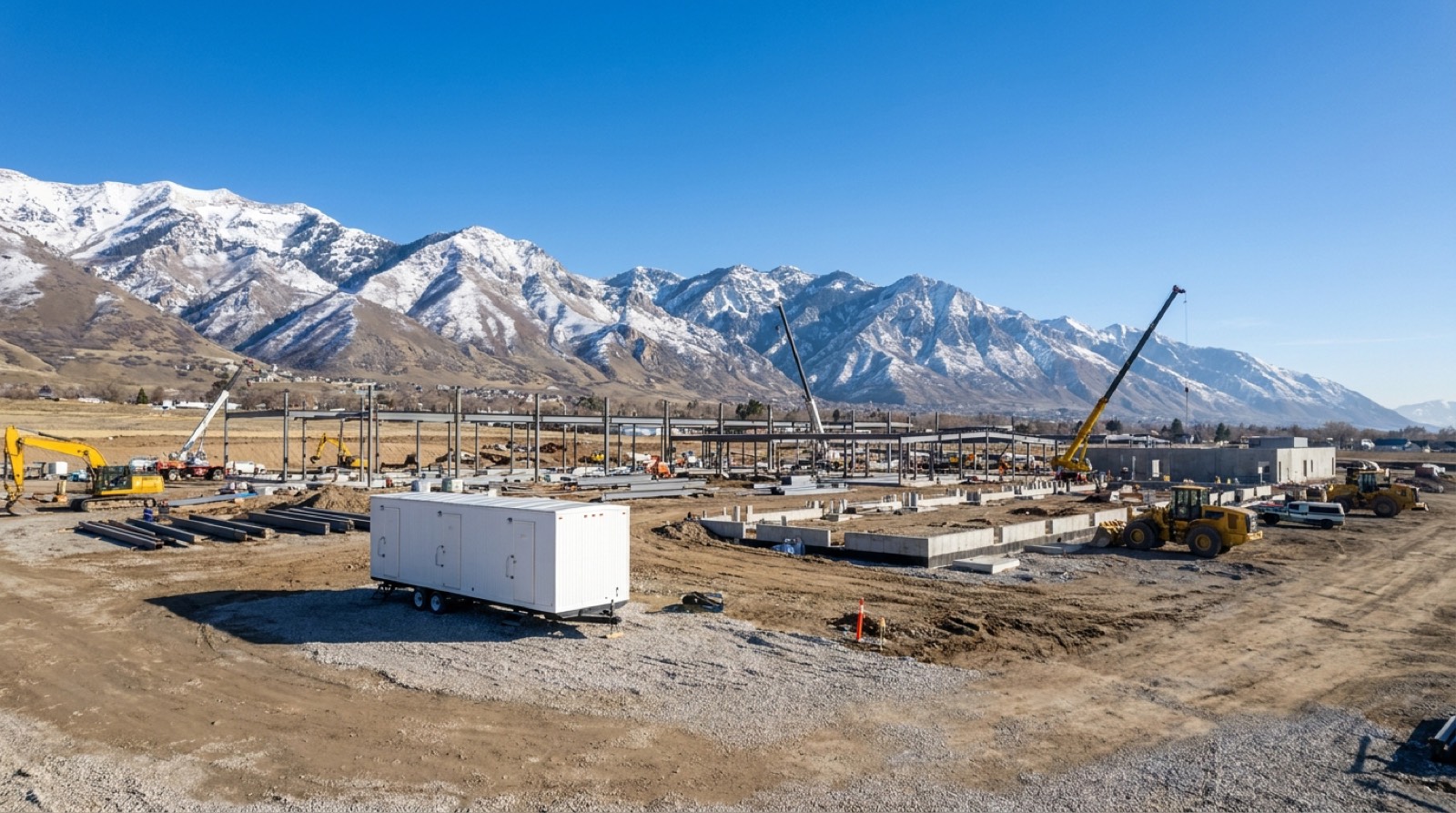
The Wasatch Front corridor runs through hard winters at elevation. Units are winterized and service intervals hold through snow.
View Utah →Go deeper
Longer reads for teams writing the site plan. Open what applies to your build.
Ask anyone who has worked civil construction around Atlanta what they remember, and red clay comes up fast. Georgia's iron-rich soil stains everything it touches. It cakes on boots in wet weather, powders into rust-colored dust in dry weather, and works into skin and clothing in a way sandy soils never do. On a data center site in Douglas County or along the I-20 corridor, earthwork phases coat entire crews in it by lunch.
Clay does not brush off. It bonds when it dries, and washing it out of skin creases takes real water and soap, not a rinse from a jug at the tailgate. Workers who go home coated in it destroy car interiors and washing machines, and the ones living in extended-stay rooms have it worse. This is the specific, physical reason shower trailers earn their spot on Georgia sites earlier in the schedule than almost anywhere else.
Most projects see peak shower demand during fit-out when headcount tops out. Georgia flips that pattern forward. Mass grading and utility trenching in red clay drive heavy usage from the first month, especially after rain, when the site turns to a sticky paste that finds every gap in rain gear. Plan for high usage per worker during sitework even when total headcount is still modest, then re-size as the crew grows into the building phases.
Clay also raises the housekeeping load inside the trailer. Floors and drains take more sediment than on a typical job, so cleaning frequency and drain maintenance need to be part of the service agreement, not an afterthought. We schedule our Georgia units accordingly, because a mud-fouled trailer stops getting used within a week.
Metro Atlanta has become one of the top data center markets in the country, with major campuses west along I-20, south toward Fayetteville, and east past Conyers. Power is the draw, and the buildouts are big enough to strain local trade labor, which pulls travelers into the market. Between the clay and the humidity, and with a rising traveler share, per-worker shower usage in Georgia runs above national norms in our experience.
Practical placement advice for a clay site: set the trailer on a stone pad with positive drainage, because the ground around a shower door becomes a slip hazard fast when clay gets wet. Put a boot-wash station or scrape rack outside the entrance and the inside of the trailer stays usable. Small details, big difference. We have the units and the service rhythm built for this soil, and we are glad to walk your grading plan before you set a location.
Douglas County and the I-20 corridor west of Atlanta have quietly become one of the Southeast's data center concentrations, with campuses in Douglasville and Lithia Springs, and more rising toward Villa Rica. The corridor works because power and fiber are there, land is cheaper than the northern arc, and I-20 gives trucks a straight shot to everything. That same highway access is worth thinking about when you plan site facilities, because a shower trailer is only as good as the service traffic that keeps it running.
Water deliveries, pump-out trucks, propane runs, and cleaning crews all need to reach the unit on a rhythm. A site two minutes off an interchange gets cheap, reliable service. A site down twenty minutes of county road still gets service, but the schedule needs more margin and the tanks need more buffer.
Set the trailer where the service loop and the worker walk-off path overlap. The ideal spot sits near the parking and badging area, reachable by a vacuum truck without crossing active work, on ground that drains. On the clay soils out here, that last part is not optional. A trailer set on bare ground becomes an island in a red pond after one summer thunderstorm, and Georgia delivers those storms all season long.
Think about the afternoon storm pattern in your service scheduling too. July and August bring downpours between 3 and 6 p.m., exactly when the shower rush happens. Covered or graveled approaches keep the path usable, and gutters on the trailer keep the doorway from becoming a waterfall. These sound like small things until eighty wet workers are filing through the door.
Several corridor sites sit on former industrial or timber land where water and sewer arrive with the project rather than before it. The standard play is tank-fed fresh water and scheduled pump-out through sitework, then a switch to plumbed connections once the wet utilities are live. Build both phases into the rental plan from the start so the transition is a plumbing day, not a new procurement cycle.
One more corridor-specific note. Atlanta traffic shapes everything, including who showers. Crews commuting back into the metro on I-20 East face an hour or more in the truck at quitting time. Given the choice, many will shower on site just to change clothes and let traffic die down. Usage on corridor sites runs higher than raw commuter math suggests. Count on it when you pick stall counts, and the trailer will absorb the rush instead of building a line beside it.
Georgia summer air holds enough moisture that nothing dries between June and September. Dew points camp in the low to mid 70s across the Atlanta metro. For a shower trailer, that outside air is the enemy of everything happening inside. You are adding steam from a dozen showers an hour to air that is already saturated, inside a metal box sitting in the sun. Without serious climate control and ventilation, the interior becomes a swamp by the second week.
The failure sequence is predictable. Surfaces stay wet around the clock. Mildew shows up in corners and door gaskets. The trailer starts to smell, workers stop using it, and the rental turns into wasted money parked on the laydown yard. Every part of that chain is preventable with equipment specified for this climate.
Air conditioning sized for latent load, not just temperature, is the core requirement. Cooling that cannot pull moisture out of the air will hit its setpoint while the interior stays clammy. Active exhaust in each shower bay pushes steam out instead of letting it drift into the changing area. Surfaces should be non-porous and coved for washdown, with lighting bright enough that cleaning crews can actually see what needs attention.
Service frequency completes the picture. In this climate we clean and inspect on a tighter cycle than we run in dry states, with attention to drains, door gaskets, HVAC condensate lines, and filters. Mildew prevention is a maintenance rhythm, not a product. Ask any prospective vendor what their summer service interval is in the Southeast, and be suspicious of an answer that matches their Arizona schedule.
Here is why this matters beyond hygiene. A shower trailer only delivers value when the crew uses it. Cool, dry, clean interiors get lines out the door in a Georgia summer, because stepping out of 95-degree soup into conditioned air is a genuine end-of-day reward. A sour, muggy trailer gets skipped, and the site loses everything it was paying for. The gap between those outcomes is equipment spec and service discipline, both of which are decided before the unit ever arrives.
The Atlanta area's data center pipeline runs years deep, and summer is a fact of every one of those schedules. If your project will be pouring, framing, or fitting out between June and September, make interior climate a line item in your shower trailer conversation. We build our Georgia fleet around this exact problem and will put the specs in front of you before you commit to anything.