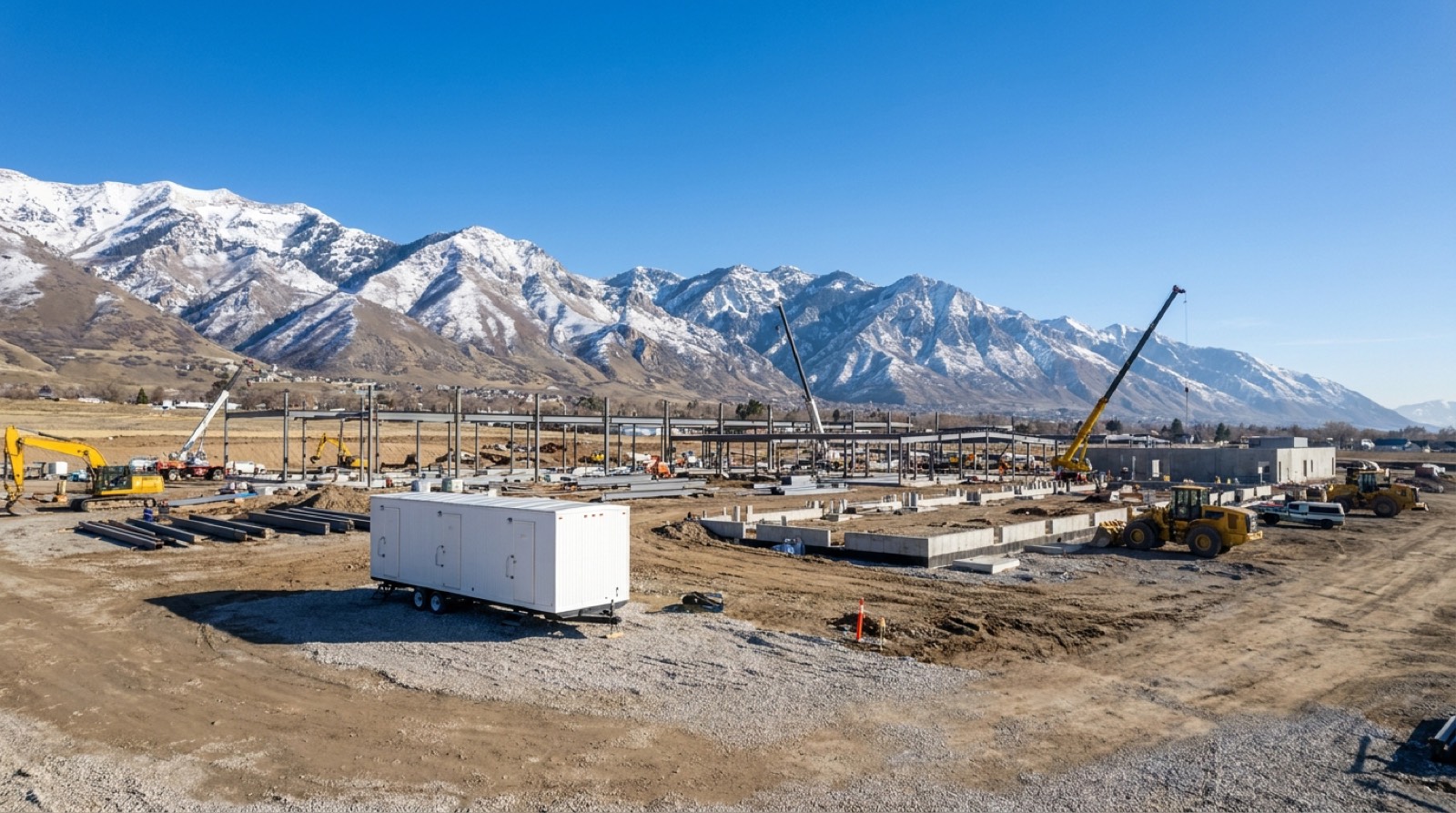
Utah
Laundry trailer rentals for Utah data center sites
Rotation-camp laundry for the Utah Lake corridor, winterized for elevation and supplied from our Wasatch Front home yard.
Rotation-camp laundry for the Utah Lake corridor, winterized for elevation and supplied from our Wasatch Front home yard.
Eagle Mountain rotations put crews at the site for weeks, and their laundry stays with them. Site machines sized to the rotation keep the camp in clean gear without a forty minute drive to the valley, and dust-season loads get the heavy cycles they need.
Laundry water freezes like any other, so Wasatch Front units run winterized: protected supply, heat trace, heated interiors. The wash program holds through the sub-freezing weeks because it was specified for them.
A down machine on a Utah site gets home-yard response, often same day. Our headquarters on the Wasatch Front makes this corridor our fastest for swaps and fixes.
Where we deploy
Heaviest concentration in the corridors carrying the most active data center construction, with nationwide mobilization beyond them.
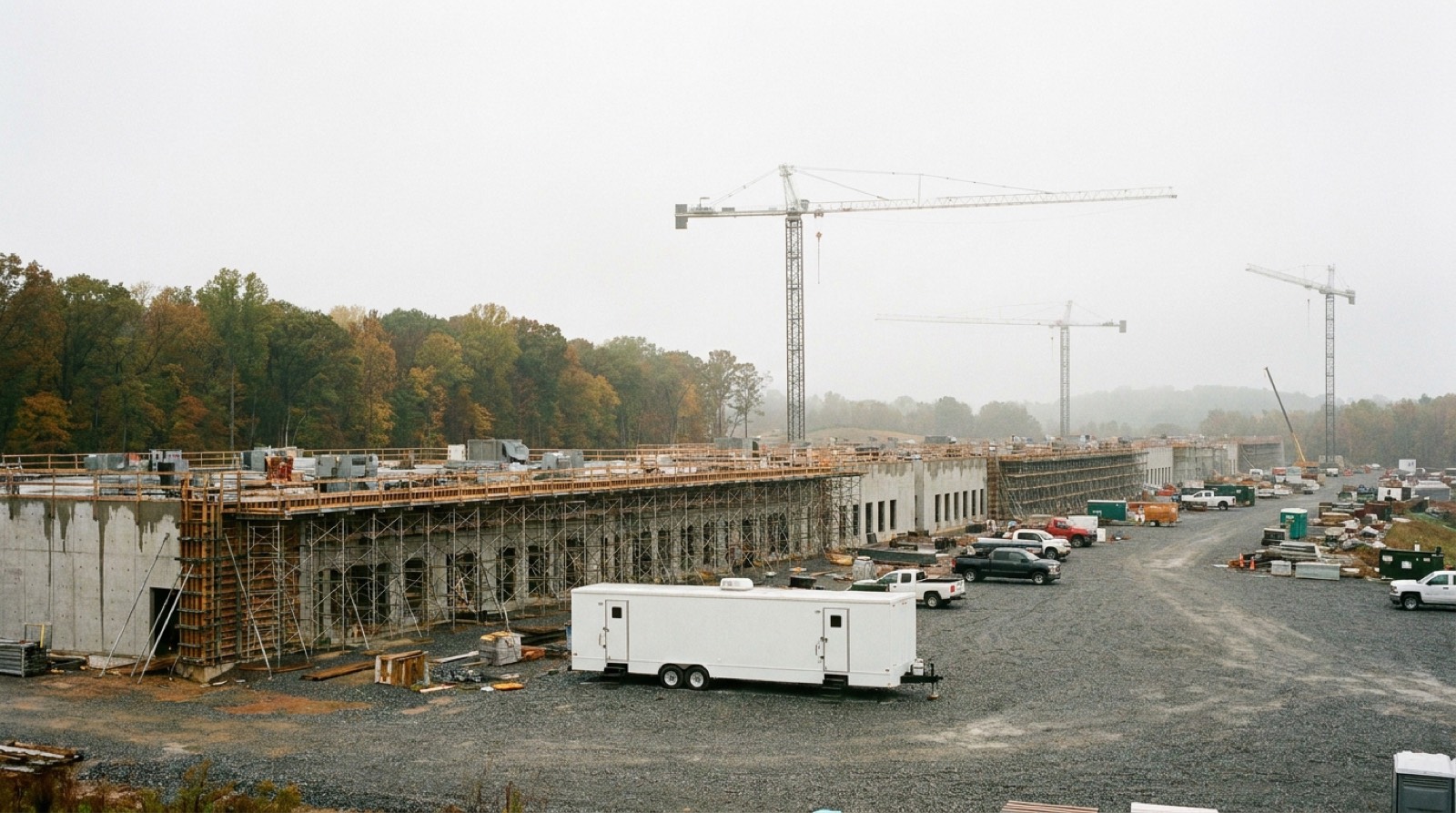
Loudoun County and Prince William run the densest data center concentration on earth. Multi-year campuses, badge-controlled access, crews in the hundreds, and facility requirements written into the subcontract.
View Northern Virginia →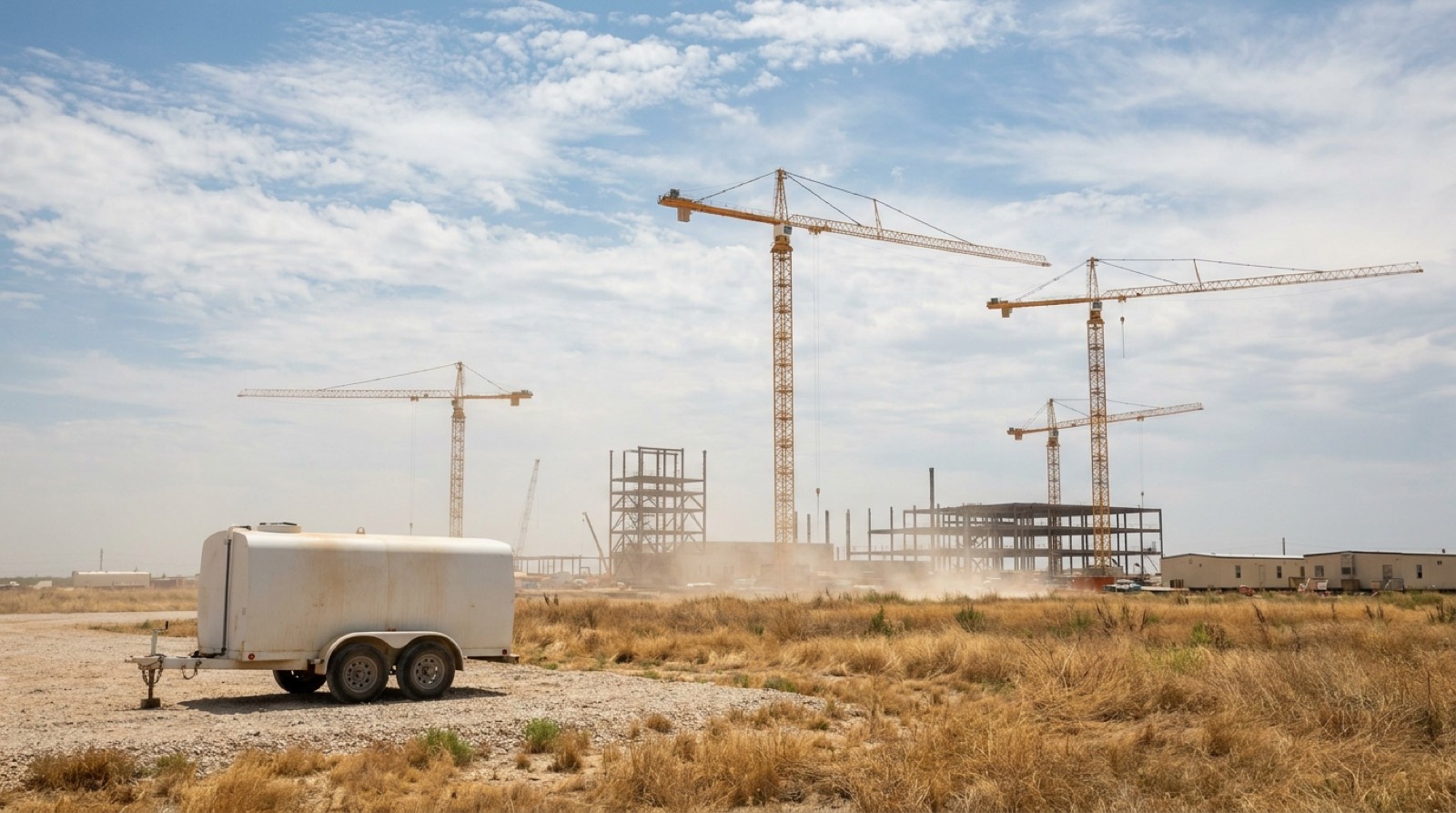
Dallas, Fort Worth, San Antonio and Abilene are carrying some of the largest campuses in the country. Summer heat makes hydration and shower capacity a safety line item, not an amenity.
View Texas →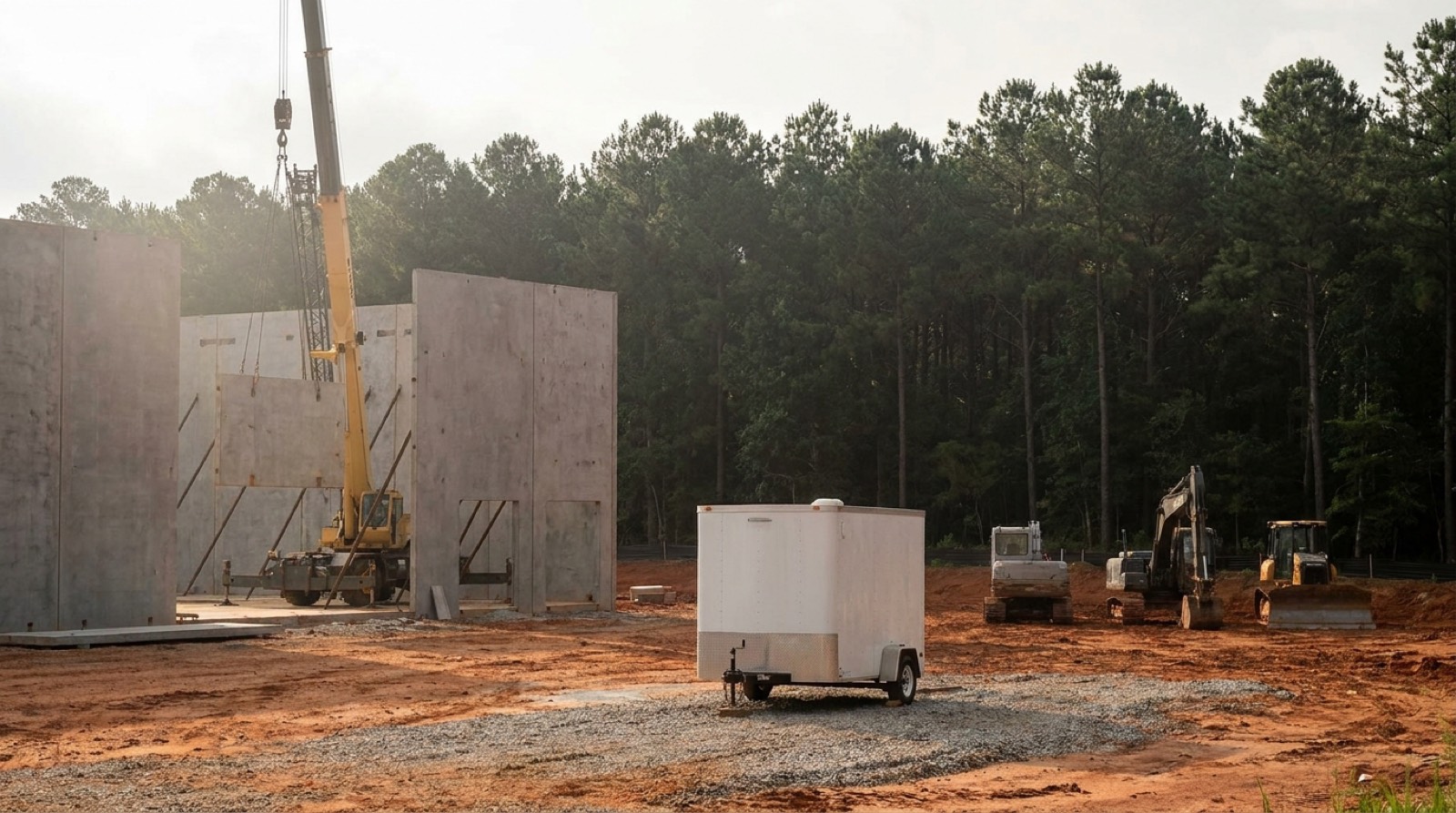
Atlanta metro and Douglas County, extending along I-20. Humid summers, long hauls between laydown and pad, and multi-phase schedules that keep facilities on site for years.
View Georgia →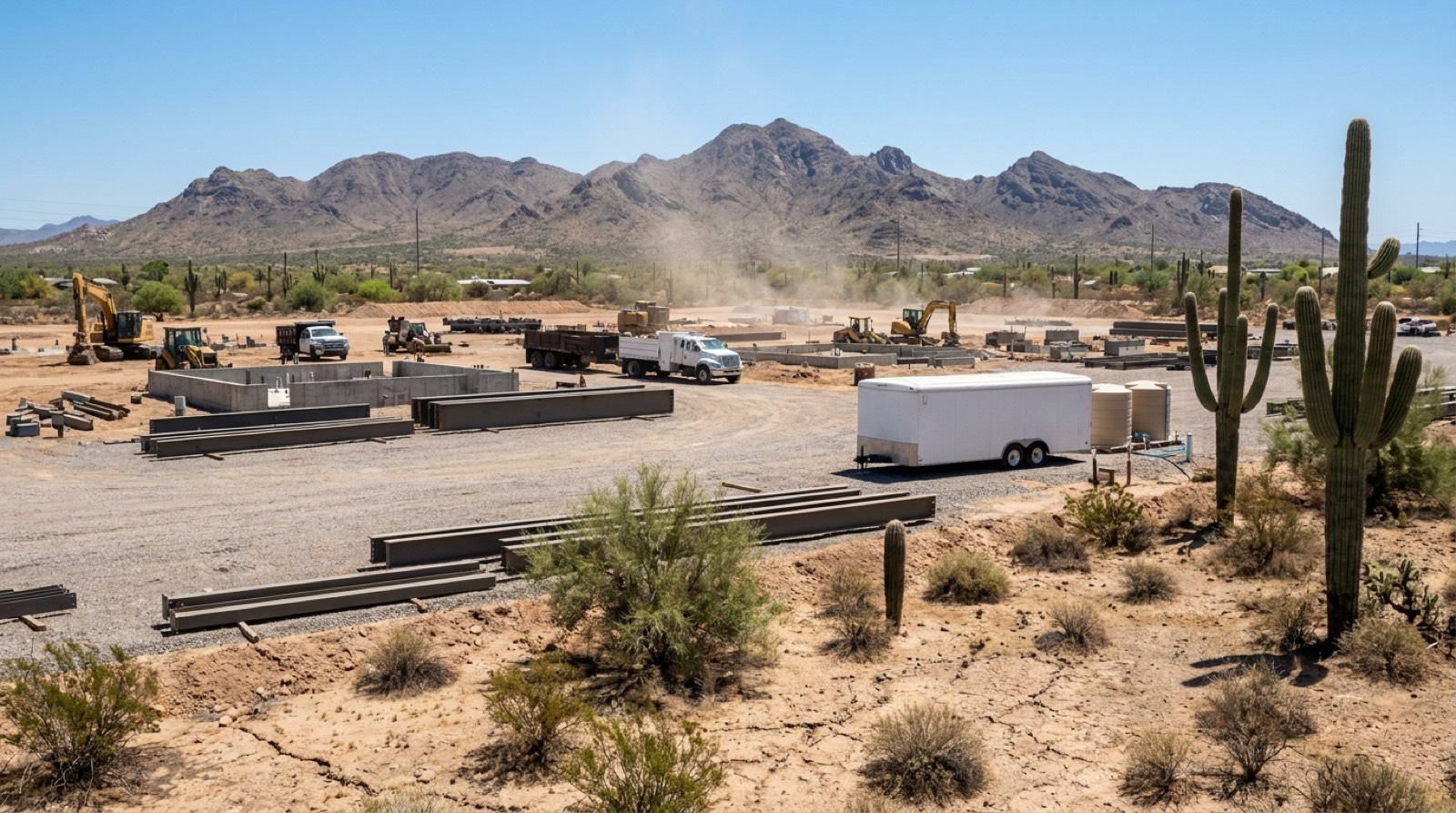
Phoenix and Mesa build through heat that regularly exceeds 110 degrees. OSHA heat-illness prevention drives water and shade requirements that our units satisfy directly.
View Arizona →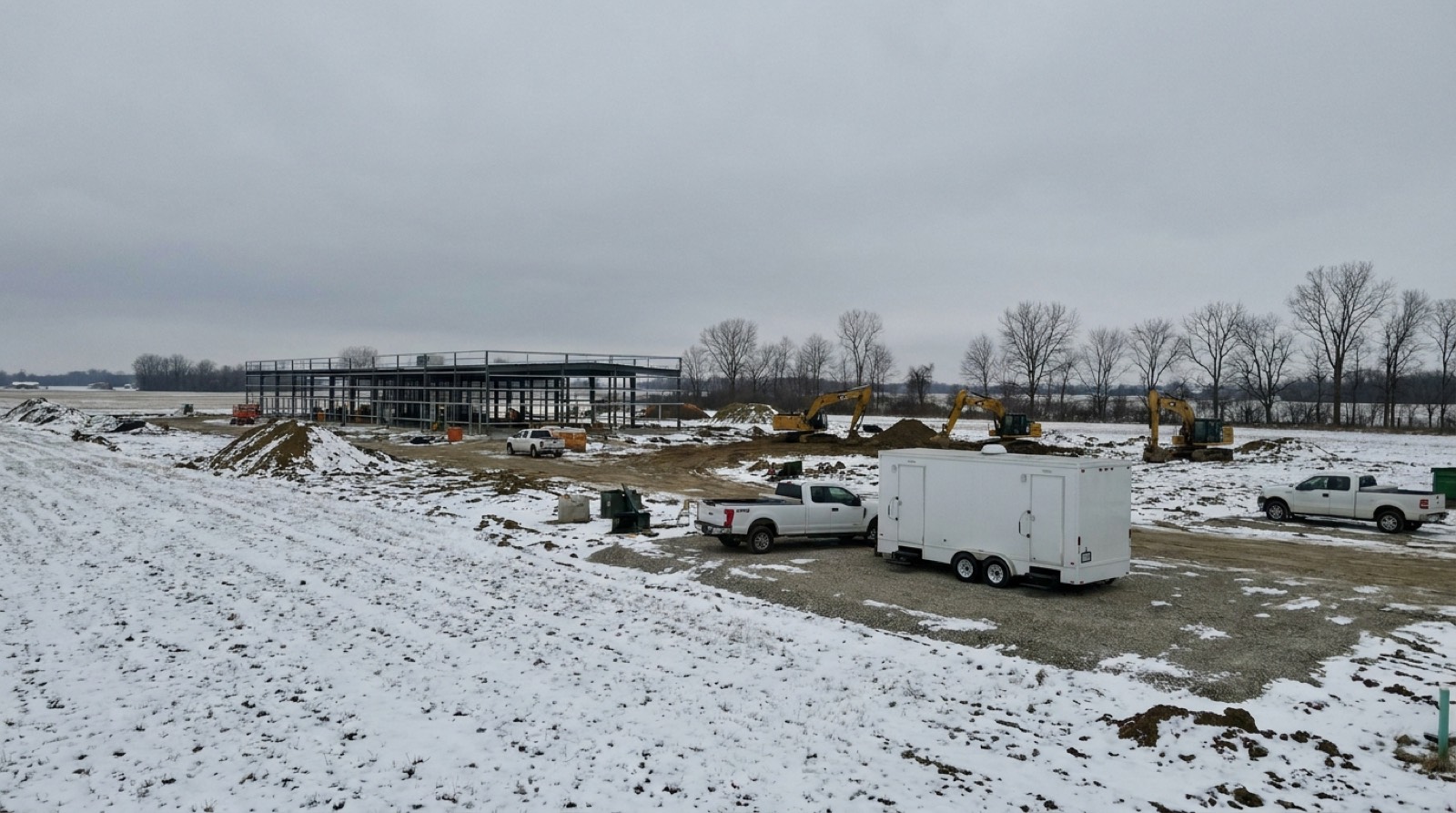
Columbus and New Albany. Freeze protection and winter service access matter here in a way Sun Belt corridors never see.
View Ohio →The Wasatch Front corridor runs through hard winters at elevation. Units are winterized and service intervals hold through snow.
View Utah →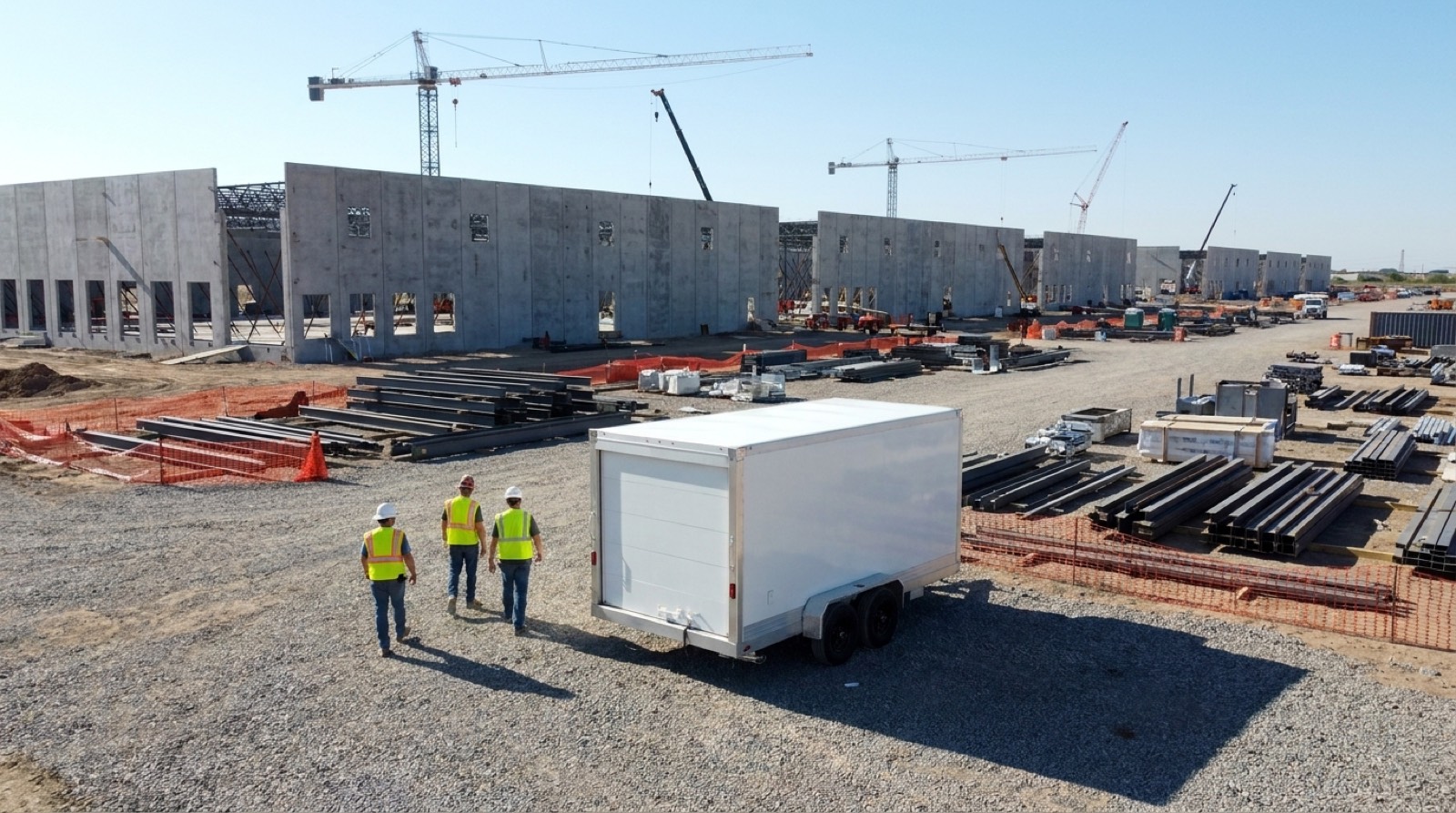
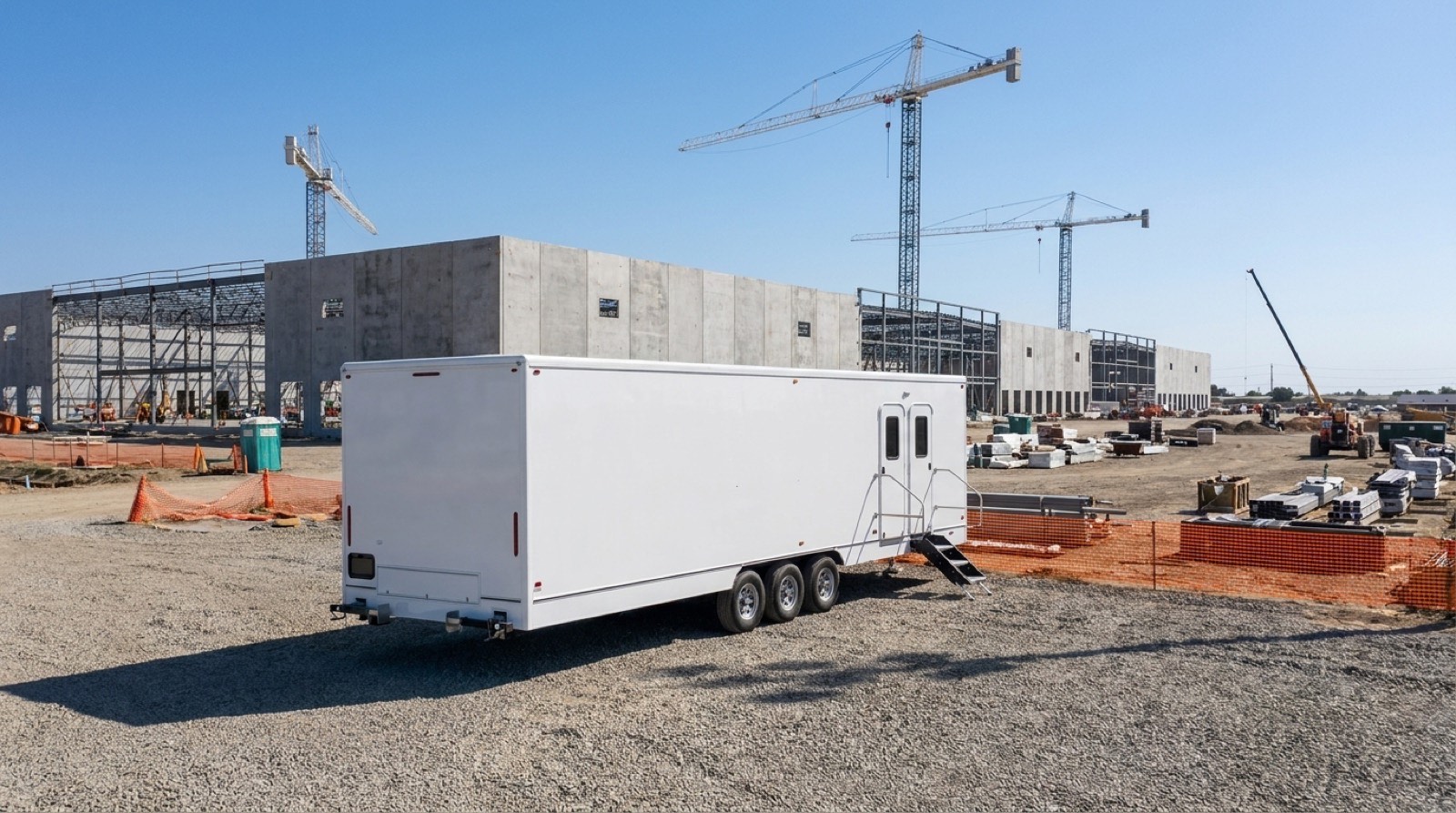
Most Utah deployments bundle several units under one route. One contracted vendor, one dispatch, one escalation path, and a site plan that arrives already coordinated.
The paperwork side of the job needs a roof too. Office trailer rentals in Utah give supervision and inspections a place to meet without leaving the gate.
Food service and ice programs live or die on cold storage at the pad. Refrigeration trailer rentals in Utah hold setpoint through the local season.
Restroom capacity anchors the plan. Restroom trailer rentals in Utah sit closest to the workface and set the service route that every other unit rides on.
Water is the first thing safety plans ask about. Hydration station rentals in Utah run on the same supply logistics as the rest of the package, so adding them costs one stop, not a second vendor.
Where crews rotate in from out of the area, the end of shift is its own rush hour. Shower trailer rentals in Utah carry that peak so the workforce goes home clean.
The full reach of our laundry trailer rentals program runs beyond Utah, covering every corridor we serve.
Questions we get
From the roster math: crew size, rotation length, loads per worker. Machines and supply scale from that number.
Yes. Winterization is the default: protected plumbing, heat trace and heated interiors rated for weeks of freeze.
Home-yard response from our Wasatch Front headquarters, often same day on this corridor.
Go deeper
Longer reads for teams writing the site plan. Open what applies to your build.
A rotation camp does not generate steady laundry demand. It generates tides. Crews working a two-and-one or three-and-one rotation all hit the same milestones together, and the days before a crew rotates out are the heaviest wash days of the cycle. Everyone wants to fly or drive home with a bag of clean clothes, and everyone wants it in the same 36-hour window. A laundry plan built on average daily volume misses this completely.
Utah data center construction leans on rotation labor because the sites draw trades from across the Mountain West. Camps and extended-stay clusters around the Wasatch Front region fill with crews on synchronized schedules. The trailer serving them has to be sized for the tide, not the average. Getting that sizing right is most of the assignment, and the calendar does the rest.
The rule we use is to size machine capacity so the heaviest rotation-end day clears without multi-hour waits. In practice that means dryer capacity well above what the weekly average suggests, because the surge is compressed and dryers are the slow half of every cycle. If two crews on offset rotations share one camp, the surges partly interleave, which helps. We map the actual rotation calendar during planning to see how the peaks stack.
Mid-hitch demand is gentler and spreads through evenings. That is when bedding and bulk items should move through the machines, keeping the surge windows clear for clothes. Small habits, posted as suggestions rather than rules, are usually enough to steer it. Camp managers appreciate not having to referee.
Utah sites sit a step higher than most of the country, and thinner air changes machine behavior slightly. Gas dryers need burner setups rated for altitude or they lose heat output. Dry times run a touch longer than sea-level specs promise. None of it is a problem when the equipment is configured for the elevation from the start, which ours is, because this is home ground for us.
The end state is a camp where rotation day does not include a fight over dryers. Crews leave with clean bags, come back to a working room, and the laundry trailer stays what it should be, a quiet utility that makes a hard schedule a little easier to live on.
Water is the working fluid of a laundry trailer, and at Utah elevations water spends a good part of the year trying to freeze. Sites along the Wasatch Front see hard freezes from November into March, with cold snaps that hold below freezing for days. A laundry trailer that was not winterized as a system, from supply line to drain tank, will announce the first real cold snap with burst fittings and a flooded machine room.
The failure points are predictable. Exposed supply hose freezes first. Then drain runs with standing water. Then pump housings and traps inside any unheated compartment. Every one of those is preventable with equipment built for the climate, which is the only kind we deploy in our home state.
Supply lines get insulated and heat-traced along their full run, with the heat trace on reliable power and checked on the service route. Drain plumbing is sloped so nothing stands in the line, and holding tanks are insulated or heated depending on exposure. The trailer underbelly is enclosed and heated so the machine connections live in conditioned space rather than in the wind.
Interior heat is the quiet backbone. The machine room needs to hold temperature around the clock, including the overnight hours when nobody is washing, because the plumbing does not get a night off. Thermostatically controlled heat with enough capacity for a below-zero night is the standard, and it doubles as a better experience for a crew washing gear at 5 a.m. in the dark.
Hardware handles most of the winter, and habits handle the rest. Service visits through the season include heat trace checks and tank heater verification, plus a walk of the exposed runs after every serious storm. If a site loses power in a cold snap, the response plan matters, and draining down a trailer ahead of an extended outage is a fifteen-minute job that prevents a five-day repair.
Mountain winters are not a surprise. They arrive on schedule every year, and equipment either respects that or it does not. Ours is built and serviced by people who live at this elevation and scrape the same windshields. We size the heat for the real January, not the brochure version.
A laundry trailer is only as good as the route that supports it. Machines need scheduled maintenance and supplies need restocking, and when something breaks, the clock starts on how long a crew goes without a working room. All of that is a function of distance. A provider servicing Utah from two states away makes every visit a logistics event. A provider headquartered here makes it a drive.
We are based along Utah's Wasatch Front, in the same corridor where the state's data center construction is concentrated. Our yard, our spare machines, our parts, and our service techs are all inside the region they serve. That is not a marketing line. It is the operational fact that shapes everything else on this page. Short distance shows up as short response time, every week of the rental.
Restock visits happen on a tight weekly rhythm because they are cheap for us to run. Detergent and the rest of the consumables stay ahead of use instead of chasing it. Preventive maintenance actually happens on schedule, since a tech can cover multiple Utah sites in a single day. When a machine does fail, the answer is a same-day or next-day visit with parts on the truck, and if a unit needs to swap out, the replacement is hours away in our yard rather than weeks away on a transport schedule.
Winter makes the short route worth even more. Storm response and freeze-season monitoring are practical when the sites are local, and a heat trace check after a cold snap is a quick detour instead of a dispatch. Nobody is dispatching across a mountain pass to check a tank heater.
Serving home ground also means the planning advice is grounded. We know which corridors freeze hardest and how elevation affects dryer specs. We know what rotation schedules look like in the camps here, because we have equipped them. New projects inherit all of that on day one instead of paying for a distant provider's learning curve.
For a Utah data center build, the practical question to ask any facilities vendor is simple. Where is the truck coming from? Our answer is measured in minutes up the interstate, and over a multi-year build that answer compounds into uptime no remote provider can match.